
Lamborghini Diablo: The Wild Bull That Chrysler Owned, Gandini Disowned and America Put on Its Bedroom Walls
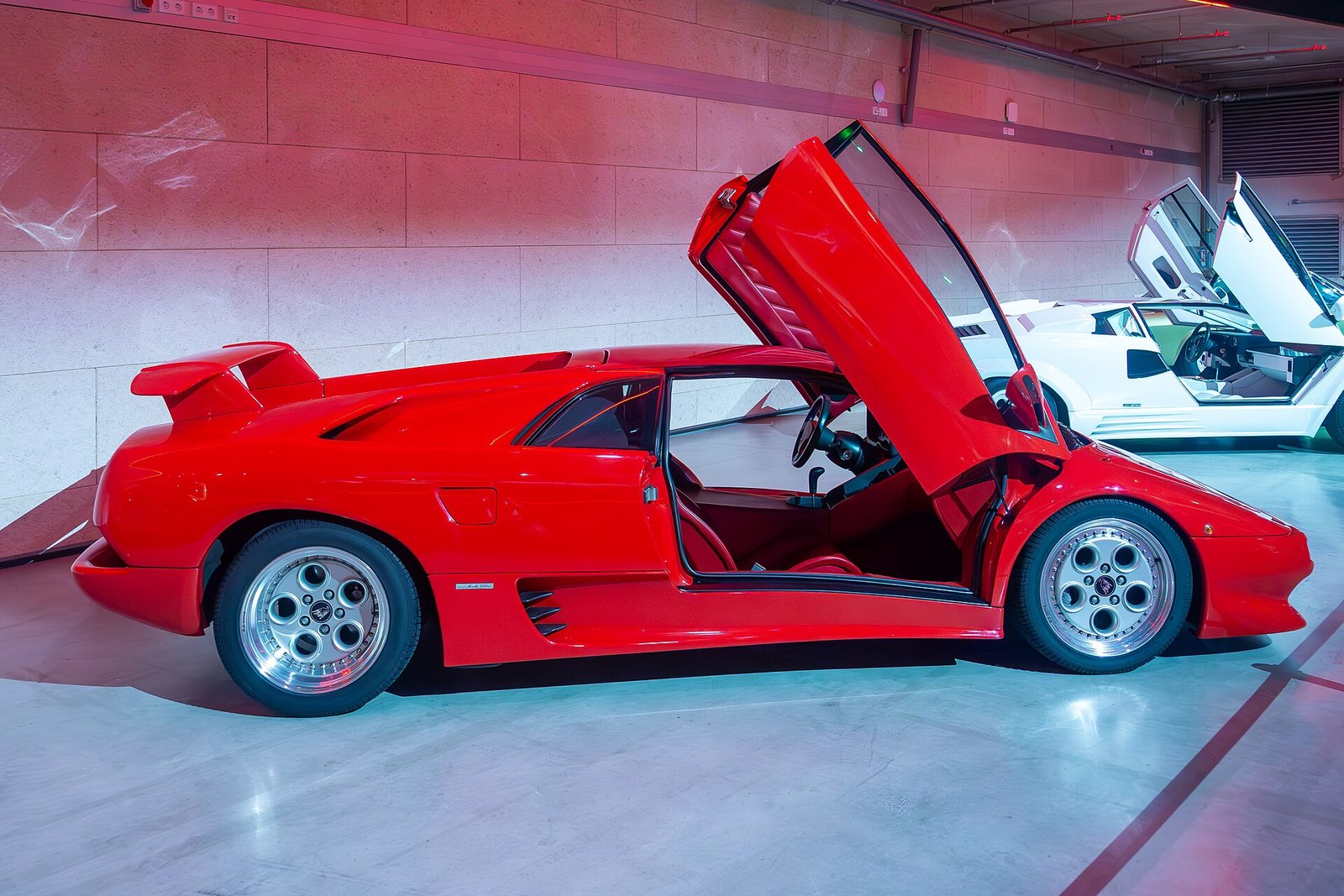
For a few years in the early 1990s, the fastest production car in the world was partly owned by the company that made the Dodge Caravan. Chrysler bought Lamborghini in 1987, and the car that came out of that marriage, the Diablo, became the poster on the wall of an entire generation of American kids, the star of the first Need for Speed and, according to its maker, the first production car to break 200 mph. It was also the car its original designer refused to put his name on. Few supercars have a better story, and fewer still have one this tangled.
A tractor maker’s revenge
To understand why a top speed figure mattered so much, you have to go back to the founder. Ferruccio Lamborghini made his money building tractors after World War II, then heating and air conditioning systems. He owned Ferraris, didn’t like how they were built and, according to the story he told for the rest of his life, got a frosty reception when he complained to Enzo Ferrari. In 1963 he opened his own car company a few miles from Maranello, hired engineers who had left Ferrari, and set out to beat Ferrari at its own game. The Miura, the Countach and the Diablo were all chapters in that argument.
Project 132
Work on a successor to the Countach began in 1985 under the code name Project 132. Lamborghini then belonged to the Mimran brothers, French-Swiss businessmen with a sugar empire in Senegal, who had bought it out of bankruptcy in 1980 and, to their credit, kept it alive through some of its leanest years.
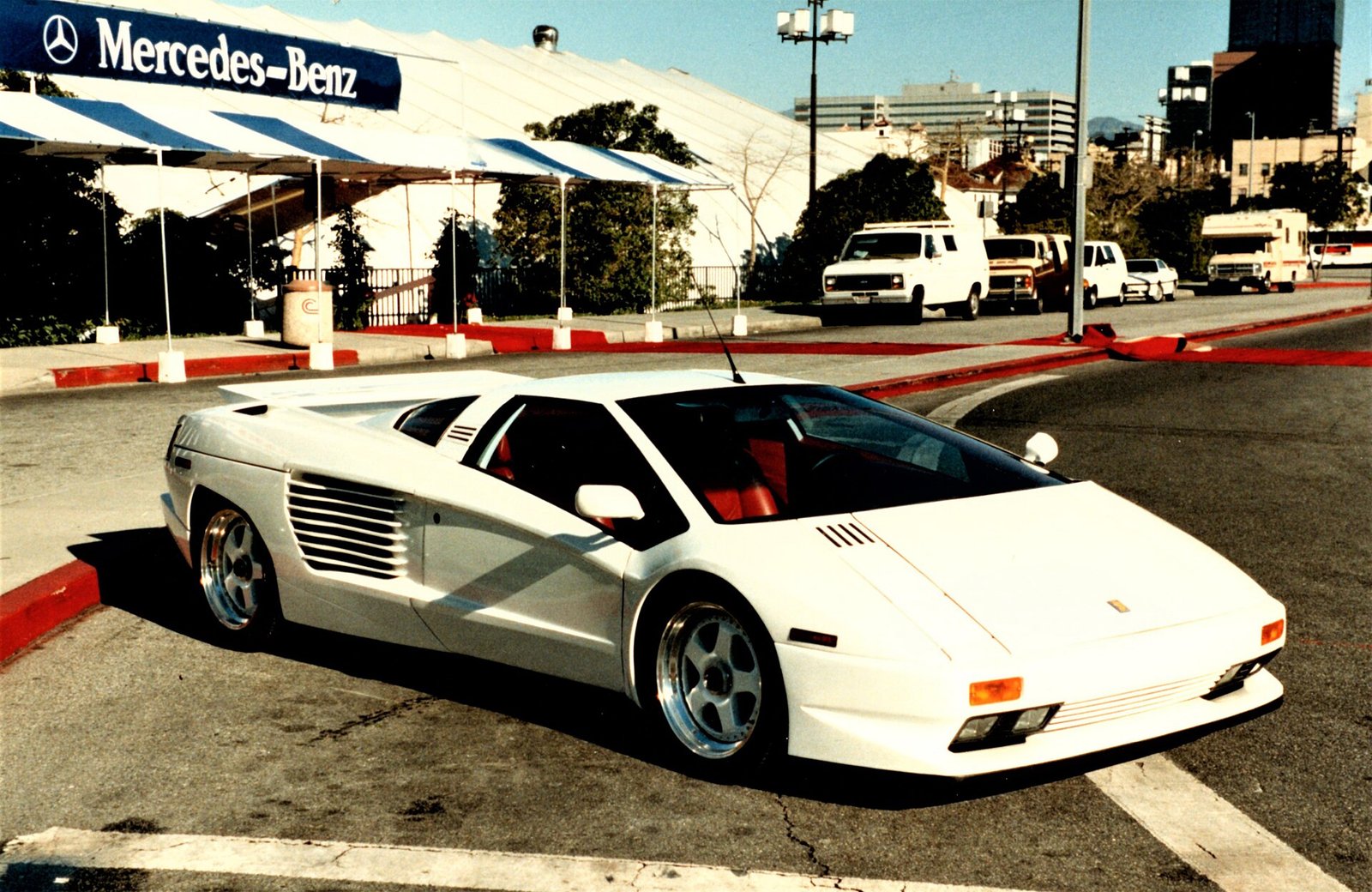
The design went to Marcello Gandini, who had drawn the Miura and the Countach at Bertone and was by then working independently. He produced something brutal and radical: sharp edges, extreme proportions and a shape like a weapon. Then the owners changed. In 1987, Lee Iacocca’s Chrysler bought Lamborghini. With the purchase came Detroit’s ideas about how a supercar should look, and Chrysler’s design boss, Tom Gale, the same man who would later oversee the Dodge Viper, softened Gandini’s lines. The most aggressive surfaces got rounded off and some details changed to suit American regulations.
Gandini was furious, enough to refuse to be associated with the final design. He took his unused ideas elsewhere, and you can see them in the Cizeta-Moroder V16T, the outrageous 16-cylinder supercar he drew for a small company backed by the disco producer Giorgio Moroder. Look at it next to a Diablo and you’re looking at a parallel universe, the car that Lamborghini didn’t build.
The numbers in 1990
The Diablo was unveiled in Monte Carlo in January 1990. Its engine was a 5.7-liter, 60-degree V12, the latest evolution of the engine Giotto Bizzarrini had designed for the first Lamborghinis in the early 1960s: four overhead cams, 48 valves, multipoint fuel injection and no turbos. It made 485 PS, about 478 hp, at 7,000 rpm.
The obvious comparison was the Ferrari F40, which made similar power with twin turbochargers. The Diablo did it with displacement alone. Lamborghini claimed a top speed of 325 km/h, or 202 mph, a hair above the F40’s figure, and with that the bull from Sant’Agata could call itself the fastest production car in the world. Ferruccio Lamborghini had founded the company to beat Ferrari, and here was the paper to prove it, at least until the McLaren F1 came along a few years later.
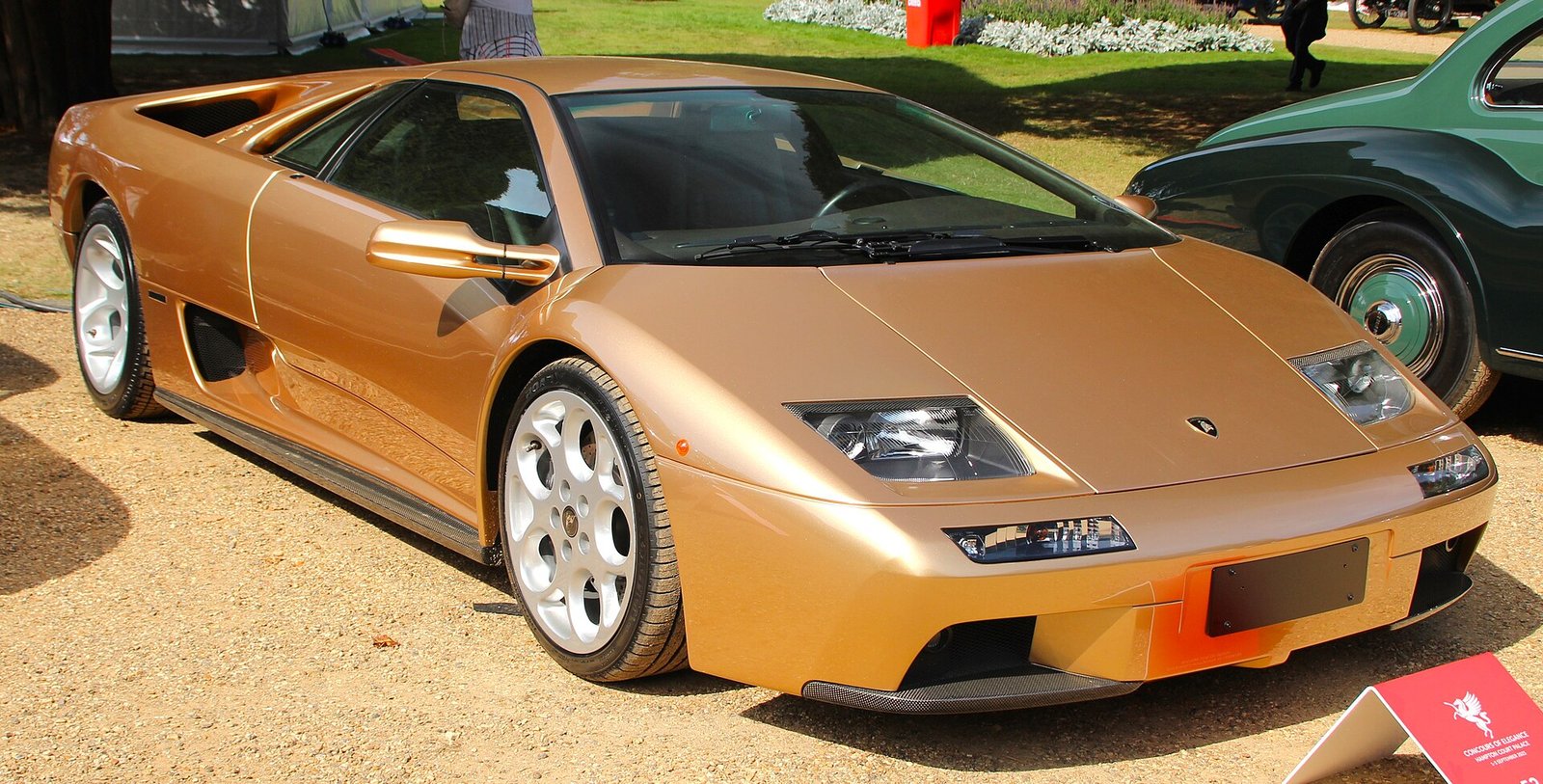
Zero to 62 mph took about 4.5 seconds, with no traction control, no launch control and no electronic help of any kind. It weighed 1,576 kg, or about 3,470 pounds. The steering wasn’t power-assisted. Parking was an upper-body workout.
Put it next to what Americans could buy in 1990 and the gap is obvious. The new Corvette ZR-1, the "King of the Hill" with its Lotus-designed LT5 V8, made 375 hp and topped out around 180 mph, and it was considered a monster. Ferrari’s Testarossa, the Miami Vice car, had 390 hp. The Diablo had roughly a hundred more than either and was some 20 mph faster than the Corvette. For a teenager staring at magazine spec tables, that was the end of the argument.
What Chrysler gave it
The usual story is that Chrysler watered the Diablo down. The reality is more interesting. Detroit’s money is what got the car into production at all, and Chrysler’s engineering discipline made it more usable than any Lamborghini before it. The same ownership period gave Sant’Agata the money to build a Formula 1 engine, a V12 designed by Mauro Forghieri, the man who had led Ferrari’s technical department. And the American connection had another long-term effect: the Diablo was sold in the U.S. with full federal certification, which hadn’t always been true of its predecessors. Americans could walk into a dealer and buy one.
The influence ran the other way as well. When Chrysler turned the Dodge Viper’s V10 from a cast-iron truck design into an aluminum sports car engine, Lamborghini’s engineers in Sant’Agata helped with the conversion, which is why the Viper has a little Italian blood in its block. The two cars that defined Chrysler’s performance image in the early 1990s were, in a sense, cousins.
Chrysler sold Lamborghini in 1994 to an Indonesian group, MegaTech, before Volkswagen’s Audi bought it in 1998. Over eleven years, the Diablo went through four owners and kept being a Diablo.
The Audi era left one of the oddest details in supercar history. When the Diablo was facelifted for 1999, the original pop-up headlights were replaced with fixed units, and the new lights came from the Nissan 300ZX, the Z32 sports car sold in America as a rival to the Corvette, with a Lamborghini badge on the cover. Look closely at a late Diablo and you’re looking at a Japanese part. Nobody at Sant’Agata advertised it, and nobody who owned one seemed to mind.
A ladder of versions
The VT of 1993 added all-wheel drive, with a viscous coupling that sent up to about a quarter of the torque to the front wheels when the rears lost grip. It turned a car that wanted to kill you into one that still wanted to kill you but gave you a safety net. It also brought power steering.
The SE30 of 1994 celebrated the company’s thirtieth anniversary with 525 PS, a lighter body, carbon interior panels and a run of about 150 cars. The SV of 1995, for Super Veloce, went back to rear-wheel drive with 510 PS and an adjustable rear wing. For many purists, it’s the definitive Diablo: rough, direct and frightening. The VT Roadster arrived the same year, because someone at Sant’Agata decided that a 500-plus hp car with no roof was a fine idea, and it sold well.
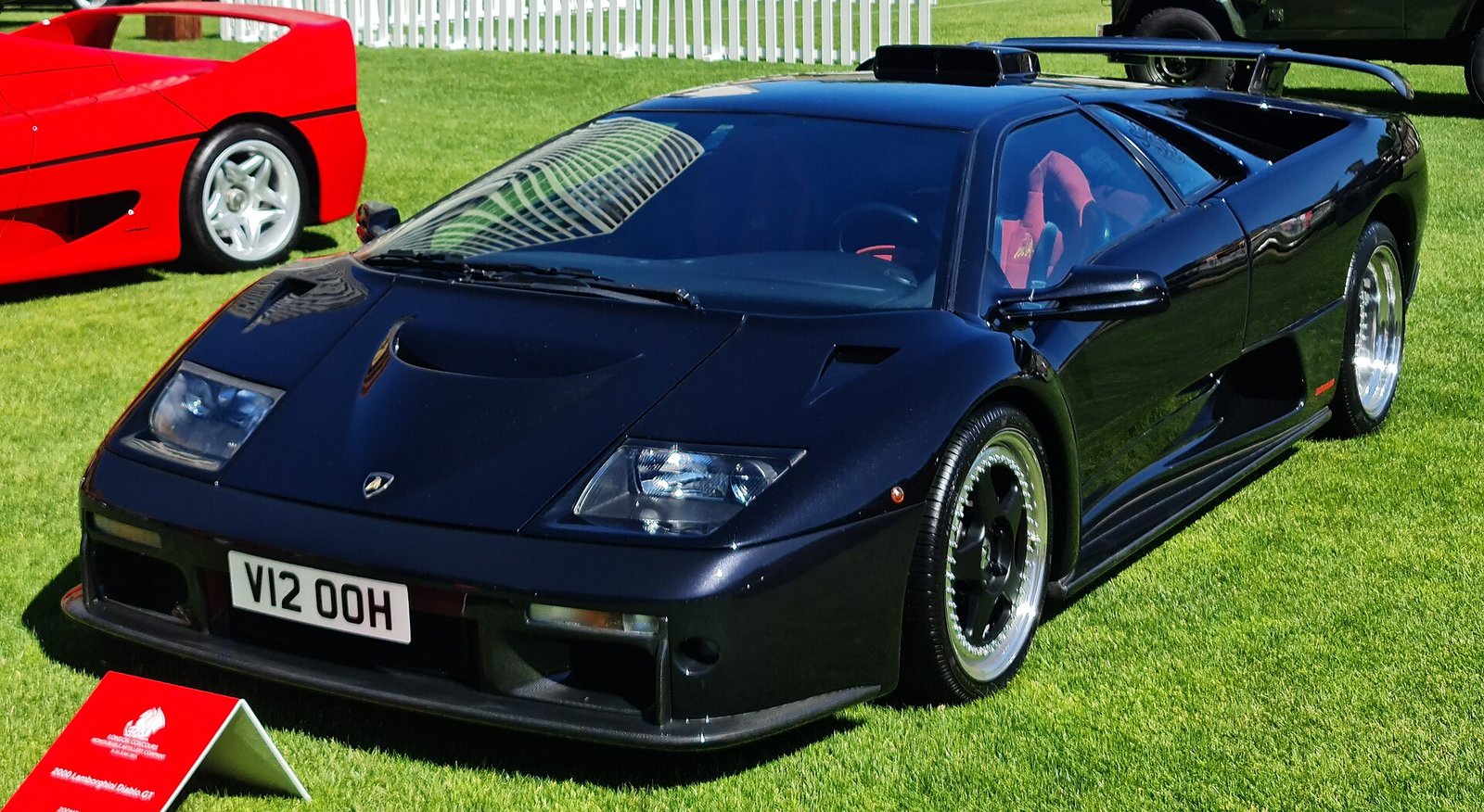
The SV-R of 1996 was a racing version with about 540 PS and a dry weight of around 1,385 kg, built for the one-make Lamborghini Supertrophy, which supported international GT racing. The GT of 1999, about 80 cars, made 575 PS, wore carbon fiber nearly everywhere and had a fixed rear wing. It’s the most extreme road Diablo, and the most expensive at auction today. Its racing twin, the GTR of 2000, had about 590 PS and a stripped interior, and it was built in a small run of around thirty cars for the Supertrophy, where gentlemen racers could find out exactly how much of a V12 they could handle. The 6.0 of 1999 to 2001, developed under Audi, grew the engine to six liters and 550 PS, got new headlights and an interior finally worthy of the price. Purists say it lost some of the wildness. Objectively, it’s the most complete Diablo.
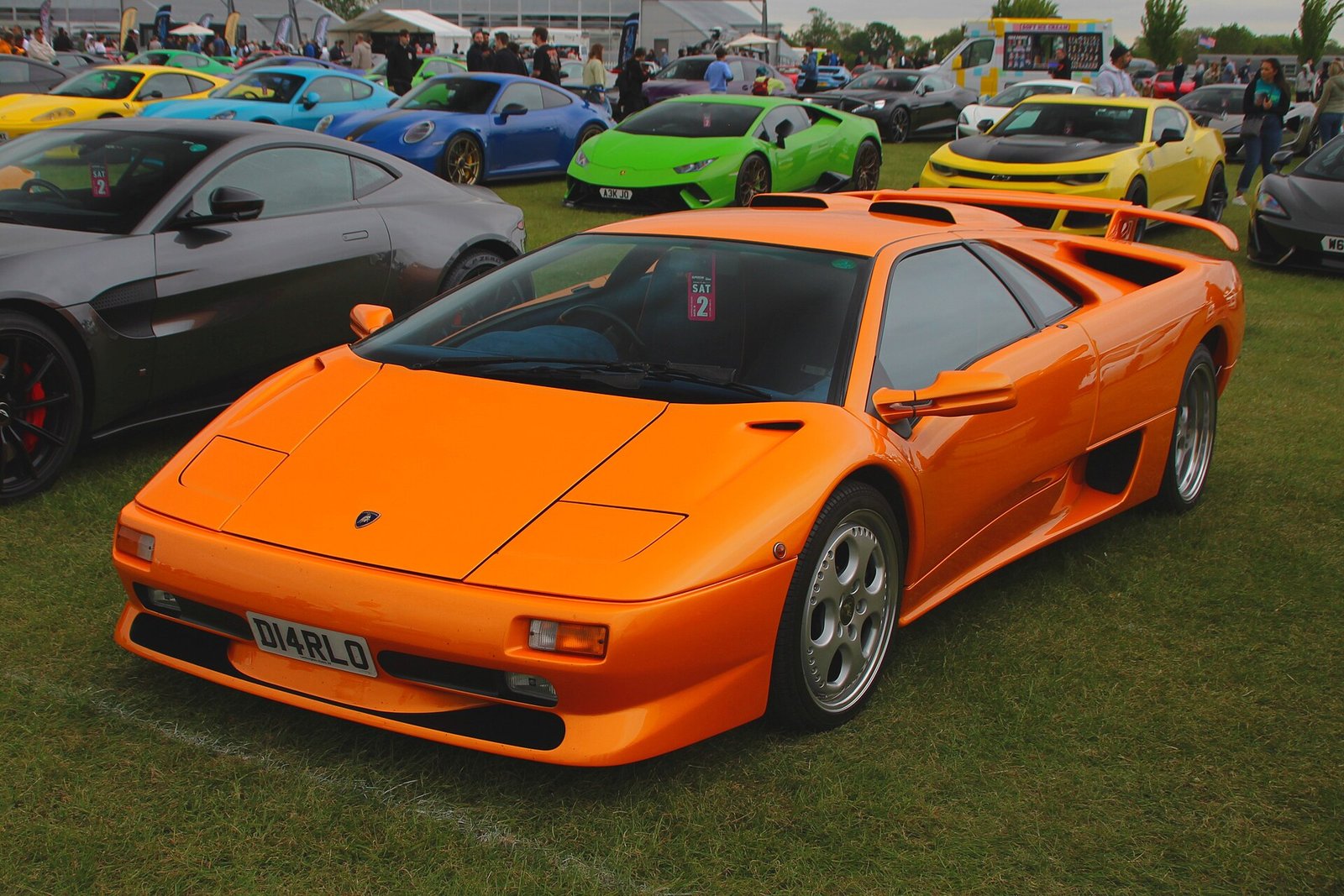
Bulls, garages and Need for Speed
The name follows the Lamborghini habit of naming cars after fighting bulls. Diablo was a bull bred by the Duke of Veragua, a Spanish noble line descended from Christopher Columbus, and it fought famously in Madrid in 1869. An American car company, then, was selling a car named for a Spanish bull through an Italian brand, and nobody found that odd.
The scissor doors became a symbol, with a practical problem: in a low garage you couldn’t open them fully. The cabin was famous for getting hot, with a V12 just behind your shoulders, and the clutch was heavy enough that drivers in traffic talked about cramp. And to millions of American teenagers, the Diablo wasn’t something on the road. It was a car you drove in the first Need for Speed, in 1994, on a PC or a 3DO. For a lot of people, that was their first contact with the brand.
A couple of stories that get repeated about the Diablo, such as celebrity owners stranded at the roadside, we couldn’t confirm with primary sources, and we’re leaving them out.
Why it matters
The Diablo was the last purely analog Lamborghini. No stability control, no drive modes and no screens. You got a steering wheel, three pedals, a gated shifter with a throw like a military truck’s and a naturally aspirated V12 that answered your right foot with nothing in between. The 1990s was the last great era of the analog supercar, with the F40, the F50, the Jaguar XJ220, the McLaren F1, the Bugatti EB110 and the Diablo, all cars that demanded skill and a little madness to drive at the limit.
It also made Lamborghini famous with everyone. The Miura was for connoisseurs, and the Countach was for people who read car magazines. Everybody knew what a Diablo was, thanks to posters, video games and pop culture, a lot of it American. That’s a legacy partly paid for by Chrysler, the company most enthusiasts like to blame for softening the design.
The Murciélago replaced it in 2001, and the Aventador came ten years later. Both were great cars. Neither had quite the same mix of danger, looks and noise. The Murciélago was faster and safer and built with German thoroughness, and the Aventador added carbon fiber and electronics that made 700 hp manageable for almost anyone. That’s progress, and nobody serious would swap a modern car’s safety for a Diablo’s clutch. But it also explains why the older car feels more alive to the people who have driven both. Prices for the Diablo have been climbing steadily, with the special editions, SE30, GT and 6.0 SE, bringing big numbers at auction, and even ordinary cars getting harder to find each year.
A lot of the character people remember came from one man. Valentino Balboni, the company’s test driver from the 1970s to the 2000s, spent years tuning how these cars behaved at the limit, and many owners say you can feel his hand in the rear-drive versions. Lamborghini later named a special edition of the Gallardo after him, a rare honor for a test driver. The Diablo’s wildness wasn’t an accident. Somebody in Sant’Agata wanted it that way, and drove it until it was right.
The bull theme kept going, too. The Murciélago that followed was named for another Spanish bull, spared in Córdoba in 1879 after surviving 24 sword strokes, an honor granted only to the bravest animals.
If the Miura invented the supercar and the Countach turned it into an icon, the Diablo turned it into something everyone understood. It took an Italian company, a French-Swiss family, a Detroit carmaker, an Indonesian conglomerate and a German group to get it there, and it still came out wild.
Gandini’s original Project 132 never got built, and the seven cars that tried, from the Cizeta V16T to a Mexican Coatl, are in Gandini’s lost Diablo design: seven tries, seven catches.
Check you’re still alive.
Photos: Lamborghini Diablo, Matti Blume (CC BY-SA 4.0), Calreyn88 (CC BY-SA 4.0) and MrWalkr (CC BY-SA 4.0); Cizeta-Moroder V16T, Alden Jewell (CC BY 2.0). Via Wikimedia Commons.