
Rat style and sleeper cars: the American art of hiding speed in plain sight
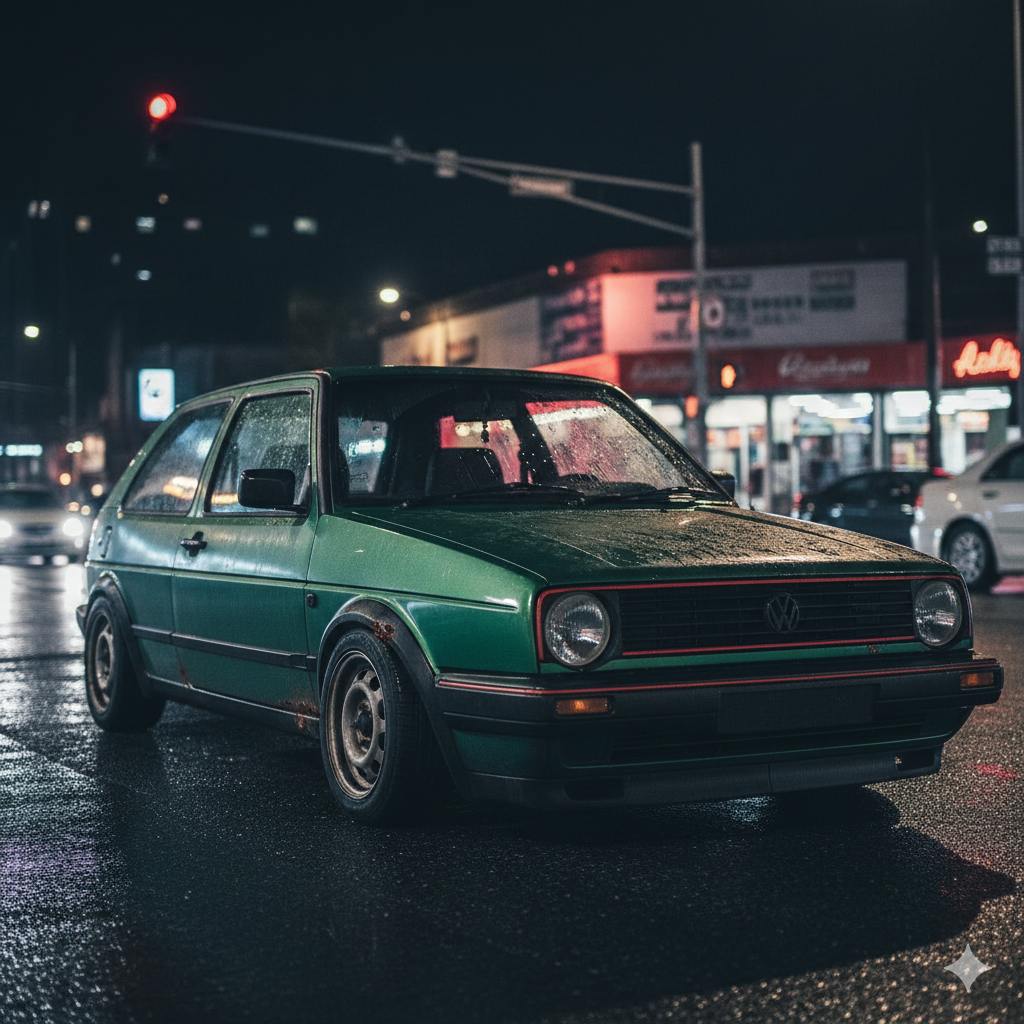
Rat style and sleeper cars are two answers to the same question: what if a car didn’t care what you thought of it? In a world of ceramic-coated paint, polished wheels and wraps in colors that don’t exist in nature, these are the cars that roll up to the light looking like they were dragged out of a barn, or like the dullest sedan in the company fleet, and then leave everyone else behind when it turns green. America invented both ideas. It’s worth knowing where they came from and why they still matter.
Where rat rods came from
The rat rod grew out of the hot rod. In the 1940s and 1950s, young men in Southern California and across the country bought cheap prewar Fords, stripped off everything that didn’t make them faster and stuffed in the biggest engine they could find and afford. Paint was expensive. Engines and speed were what mattered. Many of those early hot rods ran in primer or bare metal for years because their owners spent every dollar under the hood.
By the 1970s and 1980s, hot rodding had become big business, with show cars wearing flawless paint and chrome that cost more than a house. The rat rod was the reaction. Builders went back to the roots on purpose: rust left in place, mismatched parts, exposed welds, and a car that looked unfinished because the owner liked it that way. The name started as an insult. The builders adopted it as a badge. Today the best rat rods are often more inventive than the polished show cars, with frames, suspension and engines combined in ways no catalog would ever suggest, and a sense of humor that the glossy end of the hobby sometimes lacks.
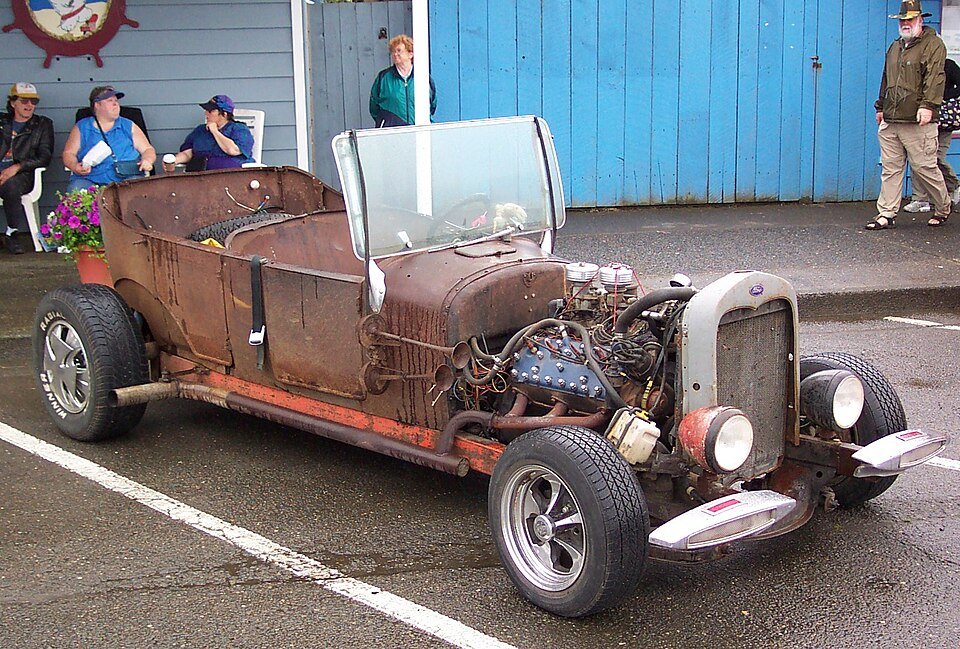
The rules, such as they are, are simple. Patina is sacred, so rust is stabilized rather than removed. Every dent tells a story. The mechanical side comes first, because under the decay the car has to run well. And no two are the same. Some owners add hand painting, pinstriping and old stickers. Others strip the interiors to bare metal and a worn bench. Others just let time do the work.
Rat style goes European
In Europe the same attitude took root in the Volkswagen scene of the 1980s and 1990s. Beetles, Type 2 buses and later Golfs and Passats became perfect canvases, especially in Germany, Britain and Scandinavia. European rat-style cars often keep their original paint, faded and chipped, and combine it with lowered suspension and carefully chosen wheels. It’s a slightly different look from an American rat rod, closer to a well-loved survivor than a junkyard monster, but the philosophy is the same: what’s underneath matters more than the shine.
Events like Bug Jam in England, a huge festival of air-cooled and water-cooled Volkswagens, became gathering points where a rusty, slammed Beetle could get more attention than a freshly restored one.
Sleepers: wolves in sheep’s clothing
If rat style is a visual statement, a sleeper is a mechanical ambush. A sleeper is a car that looks completely ordinary, even boring, and hides serious performance underneath. The British call it a Q-car, a term borrowed from the Q-ships of World War I, armed warships disguised as harmless merchant vessels to lure enemy submarines close.
Detroit was building sleepers long before the word caught on. In the early 1960s you could order a plain Chevrolet Biscayne, the cheapest full-size Chevy, with the 409 V8 that the Beach Boys sang about. Plymouth and Dodge sold stripped sedans like the Belvedere and Savoy with race-bred big-block engines, including the 426 Hemi. From the outside they were the accountant’s car. On the drag strip they were among the quickest things you could buy. Racers liked them precisely because the bare-bones cars were lighter than the fancy versions.
The factory sleepers
Later, carmakers built sleepers on purpose and sold them to the public.
The 1987 Buick GNX is the classic American example. Based on the Regal, a mid-size coupe your grandfather might have driven, it was painted all black and powered by a turbocharged 3.8-liter V6. Buick’s figure was 276 hp, widely believed to be underrated, and magazine tests put it among the quickest production cars of its time, quicker than the Corvette from 0 to 60 mph.
Only 547 were built, and they’re now collector cars. The GNX was the final version of the Buick Grand National, which had been sold from the mid-1980s with the same all-black paint and turbo V6, earning nicknames that referenced Darth Vader. At a time when the V8 muscle car seemed finished, a turbocharged Buick from GM’s most conservative division embarrassed Corvettes and Mustangs at stoplights across the country.
Japan had its own version of the idea. Large, quiet sedans like the Nissan Cedric and Gloria or the Toyota Crown carried powerful six-cylinder engines and, in some cases, the same mechanical hardware as famous sports cars, while looking like executive transport. For decades a gentlemen’s agreement among Japanese carmakers capped the official power figure of domestic cars at 280 PS, so many of those engines were also quietly more powerful than their paperwork admitted.
Ford’s Taurus SHO of 1989 put a high-revving Yamaha-built V6 into the best-selling family sedan in America. The 1994 to 1996 Chevrolet Impala SS took the police-style Caprice body, painted it dark and fitted the Corvette-derived LT1 V8. More recently, Mercury’s 2003 Marauder did something similar with the Crown Victoria platform.

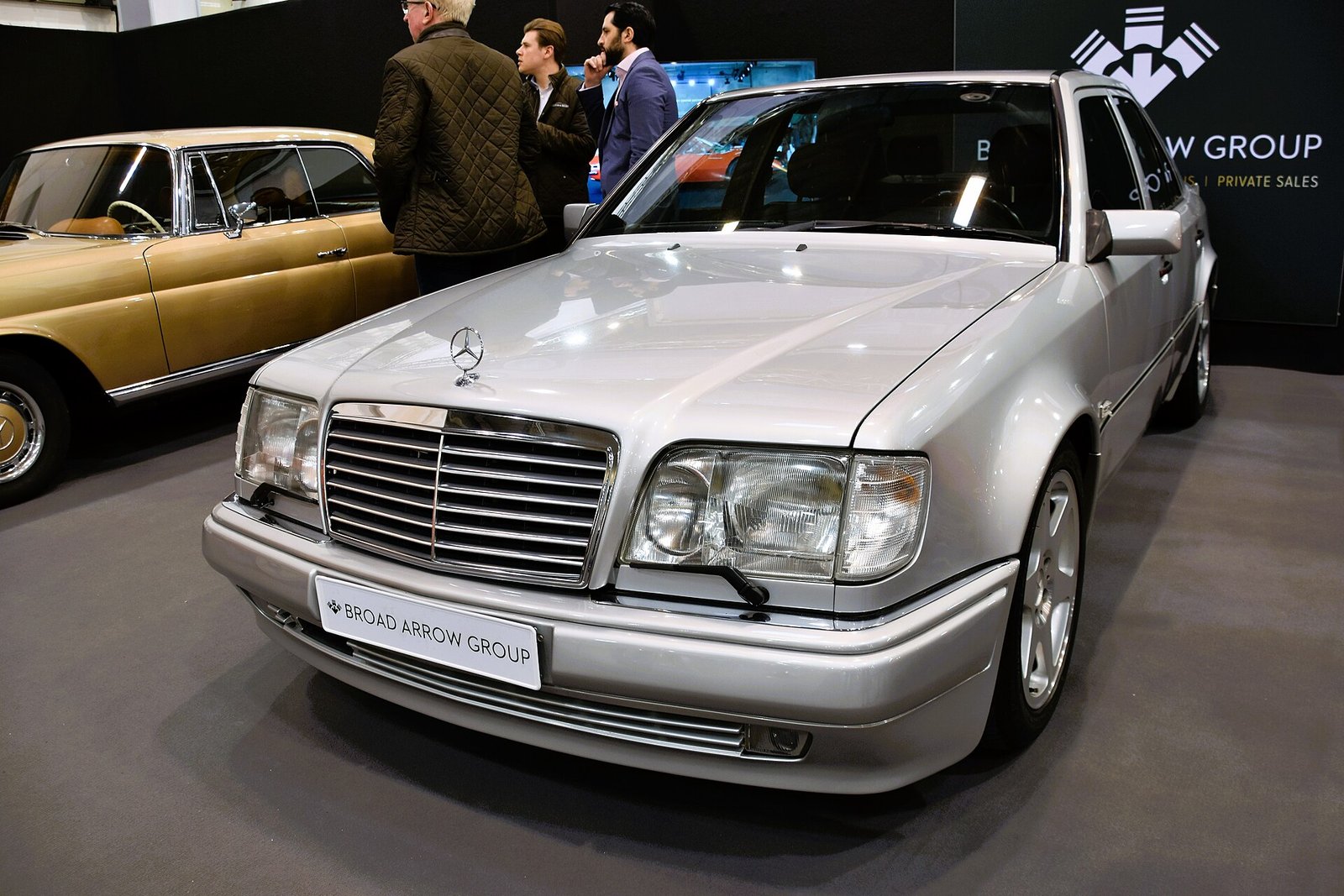
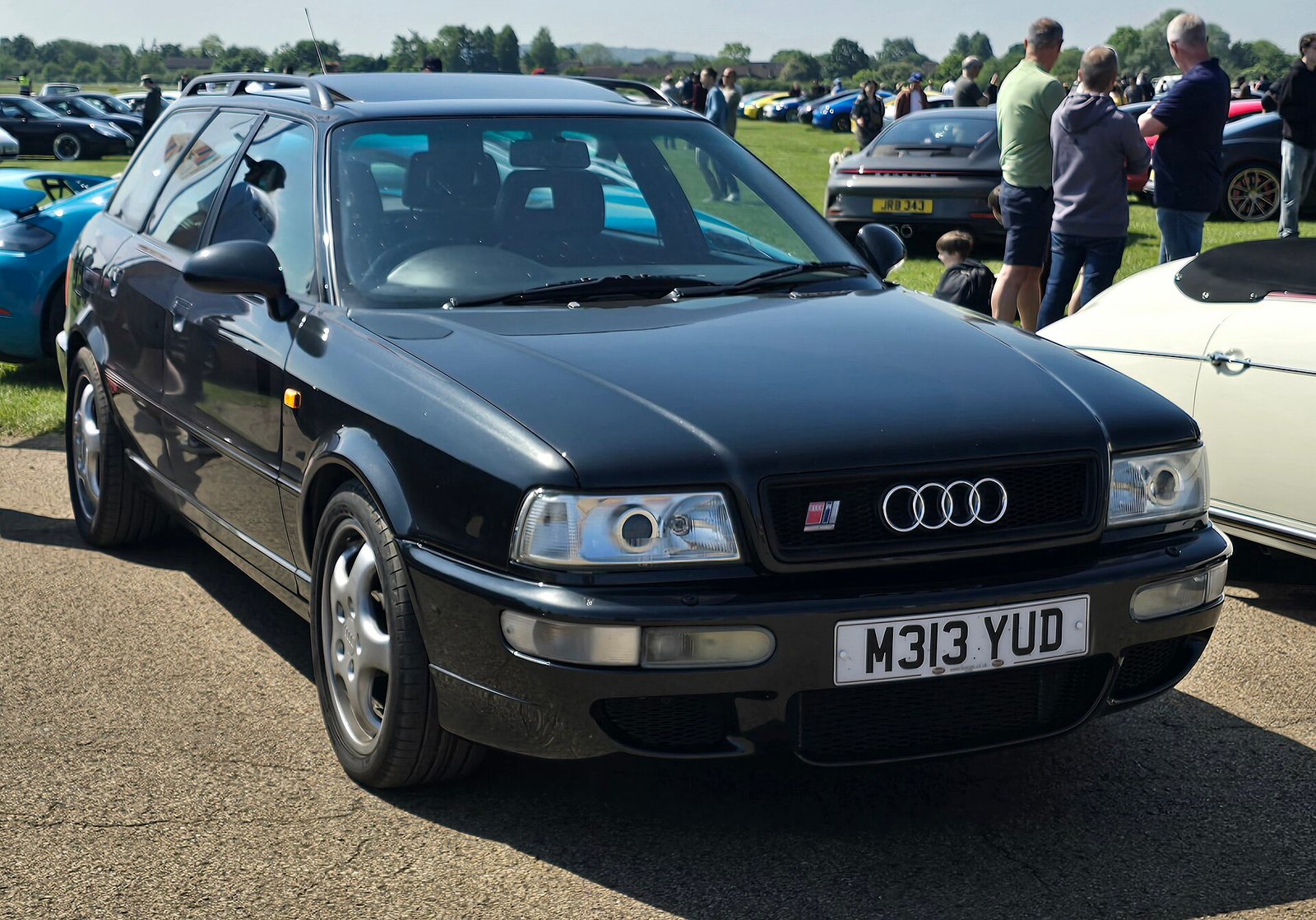
Europe had its own. The Lotus Carlton of 1990, sold as the Lotus Omega in some markets, was a family sedan from Vauxhall and Opel with a twin-turbo six-cylinder engine developed by Lotus. It made 377 hp and could top 175 mph, so fast for its time that British newspapers and politicians demanded it be banned. Mercedes-Benz built the 500E, a W124 E-Class with a 5.0-liter V8, partly assembled by Porsche in Zuffenhausen. Audi’s RS2 Avant of 1994, also developed and built with Porsche, was a station wagon with a turbo five-cylinder and 315 hp. Renault’s 21 Turbo Quadra was a business sedan with all-wheel drive and a turbo engine.
The home-built sleepers
The real fun starts when owners build their own. Some of the most famous combinations sound like jokes until you see them run. A Volvo 240 wagon, the most sensible car Sweden ever made, with a Toyota 2JZ turbocharged six from the Supra, can make hundreds of horsepower while still looking like it’s on its way to a garden center. American builders drop LS V8s into everything from minivans to old Volvos. A BMW E30 sedan with the M3 engine from a later generation looks like an ordinary 1980s 3 Series until it pulls away.
Even the factory sometimes ends up with an accidental sleeper. The Volkswagen Phaeton W12 looked to many people like a large Passat, but under the hood was a twelve-cylinder engine built by the same company that made Bentleys. It was sold in the US for a few years in the mid-2000s, and almost nobody noticed it.
How to build a proper sleeper
The art of the sleeper is in what you leave alone. The best ones keep the stock wheels, or at least wheels that look stock, the original badges, the factory ride height and the plain paint. Some owners even debadge the car or add the badge of a slower model. The upgrades go where nobody looks: under the hood, under the car and behind the wheels, where bigger brakes are hidden by modest rims.
Sound is the hardest thing to hide. A big turbo engine or a V8 with a free-flowing exhaust gives the game away at idle, so serious sleeper builders spend real money on quiet exhausts and mufflers that only open up under full throttle. The interior usually stays stock too, sometimes with a few discreet gauges hidden where a passenger wouldn’t notice them.
A rat-style build is almost the opposite in appearance but the same in priorities. The rust and dents are on display, but the engine, brakes, suspension and steering have to be sorted, because a car that looks like a wreck attracts attention from police and inspectors, and it had better be safe.
The legal side
In the United States, engine swaps are legal in most states, but the details vary. California has some of the strictest rules: under its emissions regulations, a swapped engine generally has to come from the same year as the car or newer, be from a vehicle of the same type and keep all the emissions equipment it was certified with, and the finished car has to pass an inspection at a state referee station. Other states that test emissions have their own versions, while many rural states barely check at all. Rusty bodywork is legal almost everywhere as long as the structure is sound and lights, glass and safety equipment work.
Insurance is the other catch. A sleeper that looks like a cheap old sedan but has several times its original power should be declared to the insurer. Many owners use specialist classic or modified-car insurers, which understand the value of the work done and won’t treat the car as a worn-out commuter if something goes wrong.
Where rat style and sleeper meet
The magic happens when you combine the two. Picture a second-generation Golf with flaking matte paint, steel wheels with rusty hubcaps and chrome bumpers pitted by decades of winters. It looks like it was pulled out of a barn after twenty years. Then you open the hood and find a turbocharged engine making several times the original power. That’s a rat sleeper.
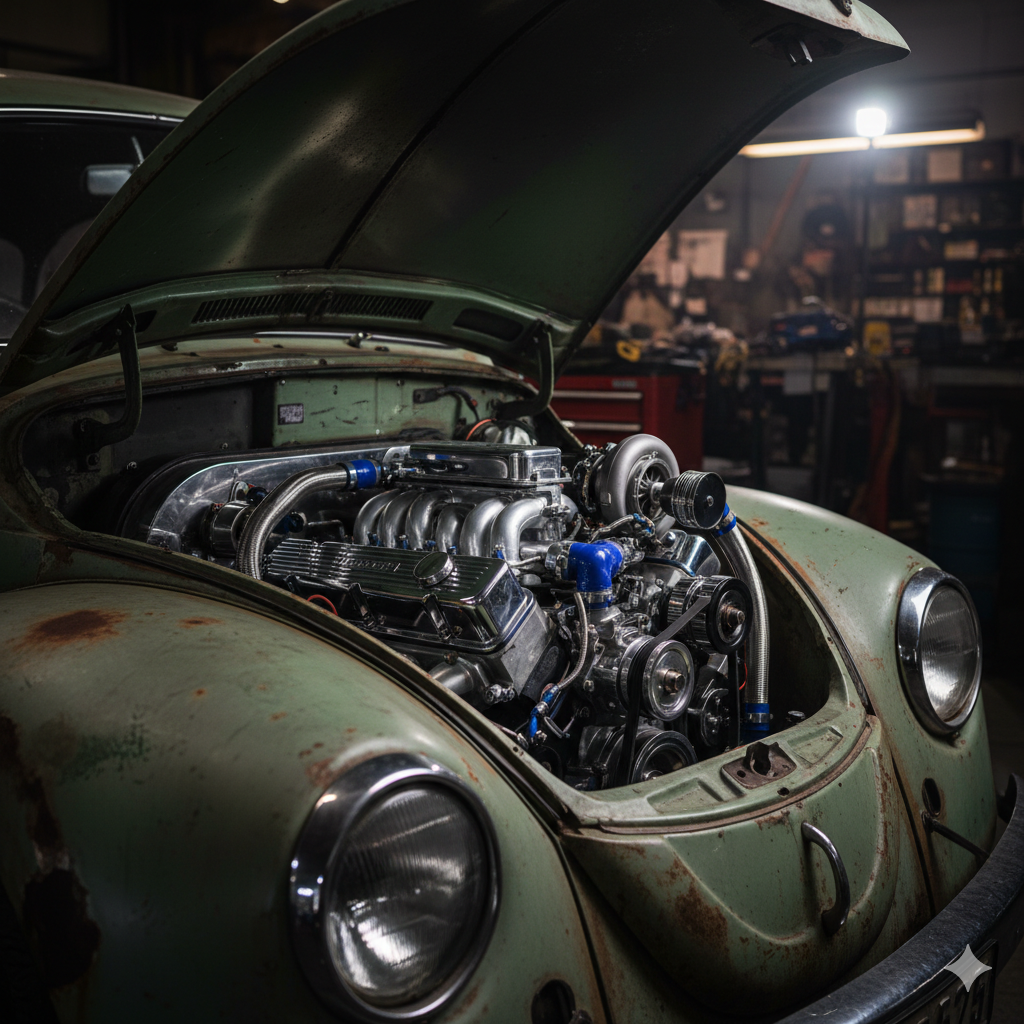
It’s a statement as much as a car. It says the owner doesn’t need your approval or your attention. But if you want to find out, go ahead and race him.
Why rat style and sleepers matter
In a car scene that sometimes feels like an Instagram contest, with the brightest wrap, the most expensive wheels and the most aggressive body kit, rat rods and sleepers are a reminder of something basic. A car is what it does, not what it looks like. The substance matters more than the surface, the history of a car is worth more than its shine, and speed doesn’t need advertising.
Next time you see a rusty car at a light, think twice before you laugh. That rust might be hiding more horsepower than you’d guess, and its owner might be smiling because he knows something you don’t.
Rat rods have their own gatherings in the US, like the Lone Star Round Up in Austin, Texas, where traditional hot rods and rat rods share the same lots. For more on the cars that made this culture possible, see our stories on the Volkswagen Beetle, the Volkswagen Type 2 bus, the Opel Vectra Turbo 4×4 and the Audi RS2 Avant.
Check you’re still alive.
Photos via Wikimedia Commons: rat rod, John Lloyd (CC BY 2.0); Lotus Carlton and Audi RS2, Calreyn88 (CC BY-SA 4.0); Mercedes-Benz E 500, Charles from Port Chester (CC BY 2.0).