
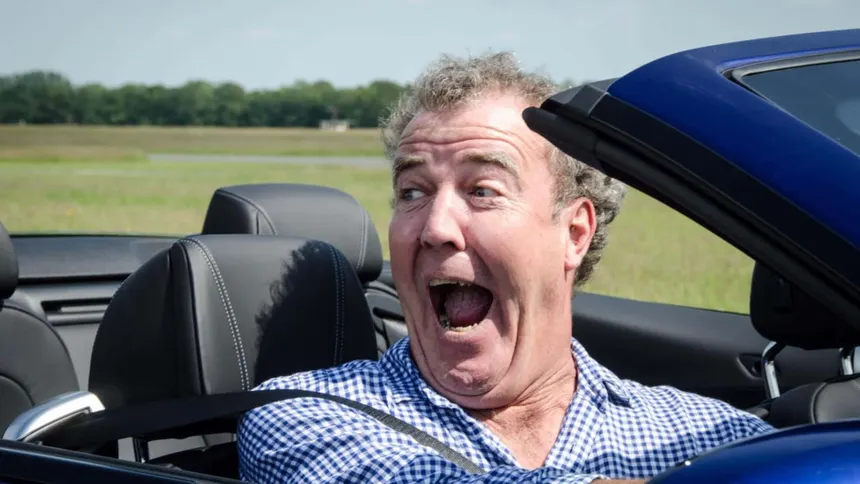
Jeremy Clarkson: The Man Who Taught Me to Tell It
A mechanic learns to love cars with his hands. Mine were black with grease before I could spell properly. My father put them there. He didn’t sit me down and explain torque curves or combustion cycles. He just handed me a wrench in his workshop and let the love seep in through my skin. That kind of thing doesn’t come from words. It’s caught, not taught.
So I had the fire. I’d had it my whole life. What I didn’t have, for a long time, was any idea that the fire was worth anything to anyone but me.
Then a very tall, badly dressed Englishman on a car show changed that. And this week, watching him say the word “cancer” on screen, I decided I wasn’t going to wait to tell you what he means to me.
Fire versus voice
Here’s the thing nobody tells you about loving cars: feeling it and communicating it are two completely different skills.
My father gave me the first one. He put the engine in my blood. I knew the smell of hot oil, the sound of a naturally aspirated engine climbing toward the red line, the bite of a spanner that’s seated properly on a nut. All of that lived in my hands. It was real and it was mine and it went absolutely nowhere, because I had no idea how to give it to anyone else.
Jeremy Clarkson gave me the second skill. He didn’t put the fire in me — that was already there. What he did was show me that the fire could be carried out of the workshop and handed to a stranger who’d never held a tool in their life.
That’s a different gift entirely. And it’s the reason he sits in my head as something separate from everyone else who shaped me.
What Top Gear actually did
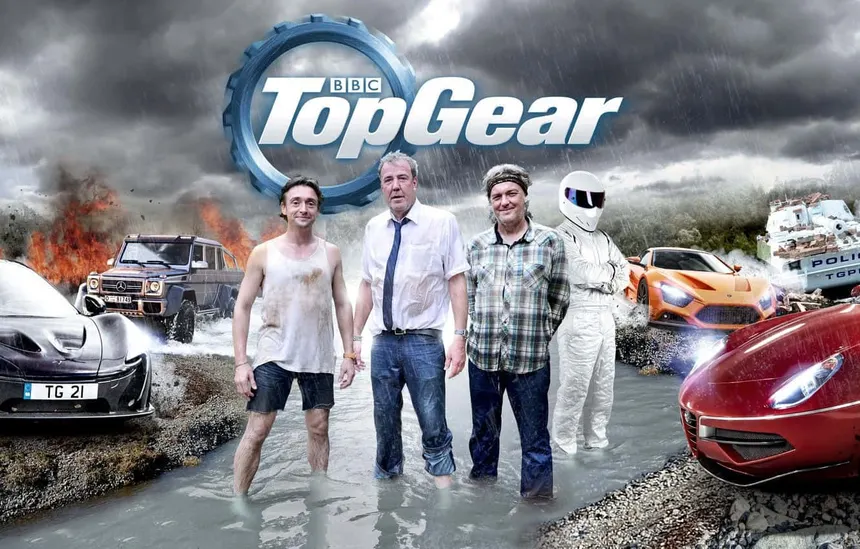
Before Clarkson, talking about cars seriously meant talking about numbers. Power figures, kerb weights, nought-to-sixty times. Spec sheets. And specs matter — every figure has to be checked, every claim verified — but a spec sheet has never once made anyone fall in love. Numbers don’t move you. They just inform you.
Clarkson took a fading motoring programme, the kind of show the network kept threatening to cancel, and turned it into something else. Not a programme for enthusiasts. A programme where someone who couldn’t tell a crankshaft from a connecting rod ended up gripped, laughing, feeling something for a machine they didn’t even understand. He fronted the original from the late eighties, came back in 2002 with the format that changed everything, and ran it until 2015 before building The Grand Tour. Along the way he dragged hundreds of millions of people into a place that used to belong to a handful of us with dirty fingernails.
That isn’t motoring journalism. It’s translation. He took a language only the workshop spoke and rendered it into something the whole world could understand — without dumbing it down, without making it stupid. He made it bigger by making it reachable, which is the hardest trick there is.
Even Chris Harris, who came along later and arguably knows more about car control than Clarkson ever did, was building on a road Clarkson laid. The audience was there because Clarkson taught a generation that cars were worth caring about in the first place.
A mirror, not a hero
A hero is someone you want to become. A mirror is something else. A mirror hands you back a piece of yourself you couldn’t see on your own.
I don’t want to be Clarkson. I don’t want his fame, his television, his farm, and I don’t share half the things that come out of his mouth. What he gave me isn’t a template to copy. It’s a confirmation. When I watched him tell cars the way he told them, I didn’t think “I want to be that man.” I thought: it can be done. My way of seeing a car has a place. I’m not mad.
That’s what a mirror does. It gave me back something already mine — my father’s fire — and showed me it could be taken outside, put into words, handed to other people. My father gave me the what. Clarkson showed me the how. One made me love it. The other taught me to tell it.
What he preached before he knew
There’s a detail here that looks like irony but isn’t. It’s consistency.
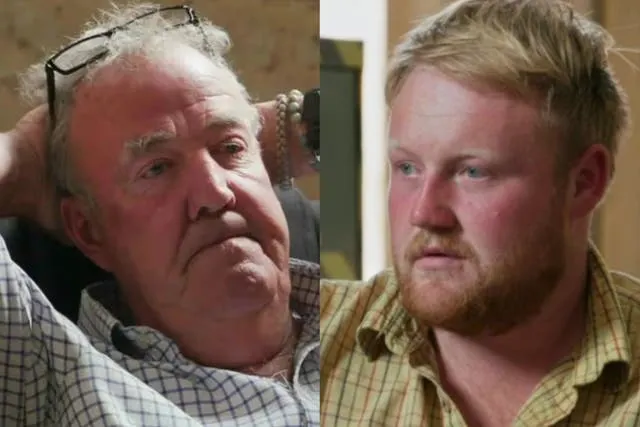
For years Clarkson pushed men to get checked. Talked openly about prostates, about screenings, about not playing the tough guy with your own health. There are men alive because they listened — blokes who booked an appointment because a man off the telly stripped away the fear or the embarrassment of going to the doctor. And now it’s him. Aggressive prostate cancer, caught early.
That’s not fate having a laugh. That’s a man who practised what he preached before he knew he’d need it himself. He warned everyone else, and when his own turn came, he told it just as plainly — on screen, no hiding. Consistent to the end with who he is: straight at you, no half-measures, no playing the victim.
I’m saying it now
I won’t wish him luck like this is a race. It isn’t. He’s a sixty-six-year-old man with a serious illness, and whatever happens next isn’t mine to write.
What is mine to write is this: thank you.
Thank you for teaching me that a car is told with the gut, not the spec sheet. Thank you for proving you could talk about engines from love instead of data. Thank you for being, without ever knowing it, one of the mirrors I look into every single time I sit down to write.
My father put the car in my blood. You taught me to tell it. That, Jeremy, I won’t forget.
I’m saying it today because today is when it gets said. Tomorrow I don’t know. Today I do.
5 thoughts on “Jeremy Clarksom”