
AdBlue (DEF): How to Kill a Perfectly Good Diesel Engine
Introduction: The Hit Nobody Asked For
Let’s get this straight from the jump: DEF (Diesel Exhaust Fluid) is the biggest load of garbage to hit the diesel engine since its inception (with all due respect to the EGR valve).
It’s not an upgrade. It’s not “progress.” It’s a parasite system that turns robust, million-mile engines into ticking time bombs that leave you stranded when you least expect it. And on top of that, you’re paying for the privilege.
I’ve spent 30 years with grease under my fingernails. I’ve wrenched on everything from farm equipment to high-performance rigs, and I’m telling you with authority: the engineers who designed this should be forced to drive these trucks daily. Let’s see how long it takes before they start pulling their hair out.
A diesel engine is, at its core, a brutal and simple thing: compression, injection, combustion. It works. It’s worked for over a century. So what do they do? They bolt on 15 extra components that break, freeze, and crystallize—and when they fail, your truck won’t even start.
Welcome to the wonderful world of DEF.
What the Hell is DEF and Why Does It Exist?
DEF is just water and urea. Literally, chemical piss in a bottle. A 32.5% solution injected into the exhaust to “clean” the gases. The system is called SCR (Selective Catalytic Reduction), and it works like this:
- DEF is sprayed into the exhaust pipe.
- Heat turns the urea into ammonia.
- The ammonia reacts with NOx inside the catalyst.
- Nitrogen and water vapor come out the tailpipe.
Sounds simple, right? Well, to make this “magic” happen, you need:
- An extra tank with a heater (because it freezes at 11°F).
- A precision supply pump.
- Heated lines.
- A dosing injector that operates at 1,100°F.
- Two NOx sensors that cost an arm and a leg.
- A specialized SCR catalyst.
- Temp, level, and quality sensors.
- A dedicated ECU.
- Software that literally blackmails you.
That’s 15+ components that can fail. In a system that didn’t exist before. In an engine that ran perfectly fine without it.
Anatomy of a Disaster: Everything That’s Going to Break
1. The DEF Tank
It’s not just a plastic jug. It contains:
- Level sensor (the #1 fail point).
- Temp sensor.
- Electric heater.
- Quality sensor (in newer models).DEF freezes at 11°F (-11°C). If you live in the Rust Belt or the Rockies, you have a block of ice in your truck every winter. If that heater fails, the system won’t prime.
2. The Supply Pump
A membrane or piston pump working at 70-130 psi. It has to dose a corrosive liquid with surgical precision—a liquid that turns into hard crystals the moment it dries. What could go wrong? Everything.
3. Heated Lines
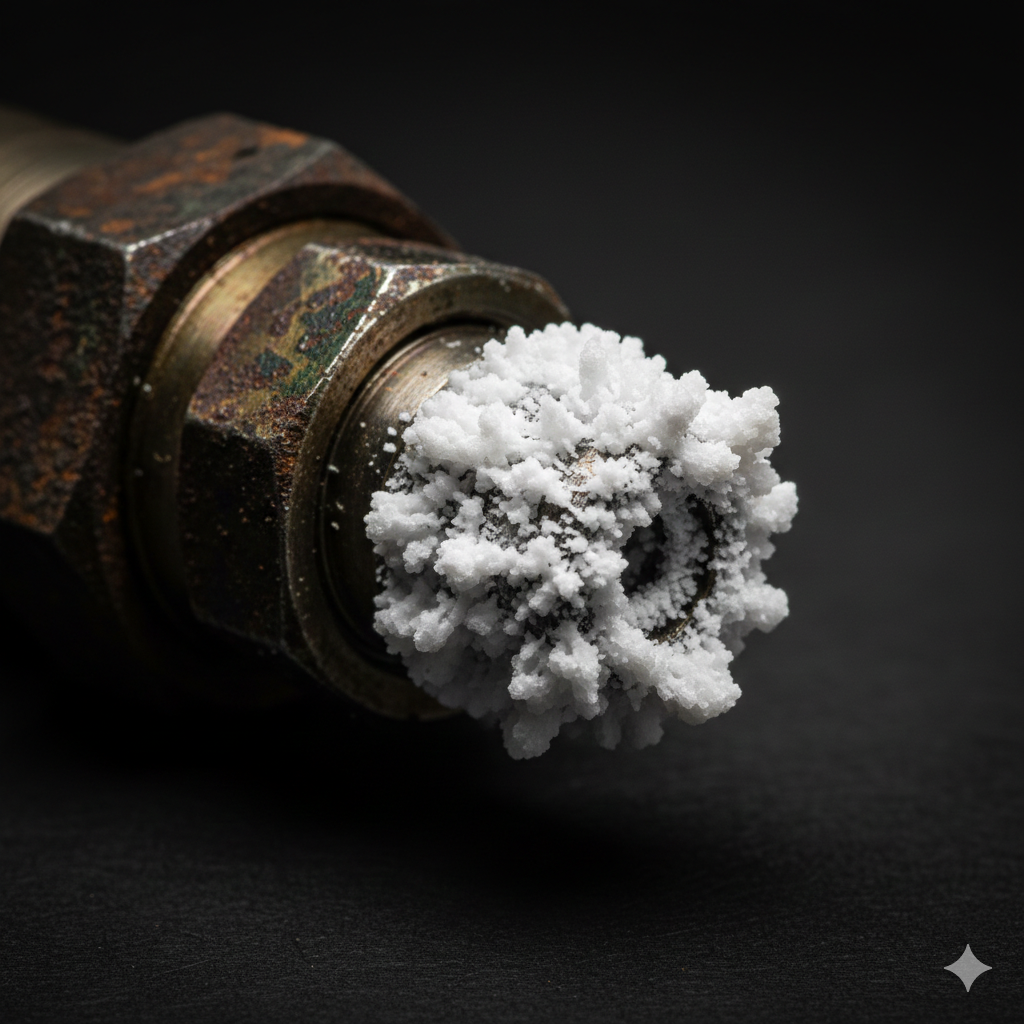
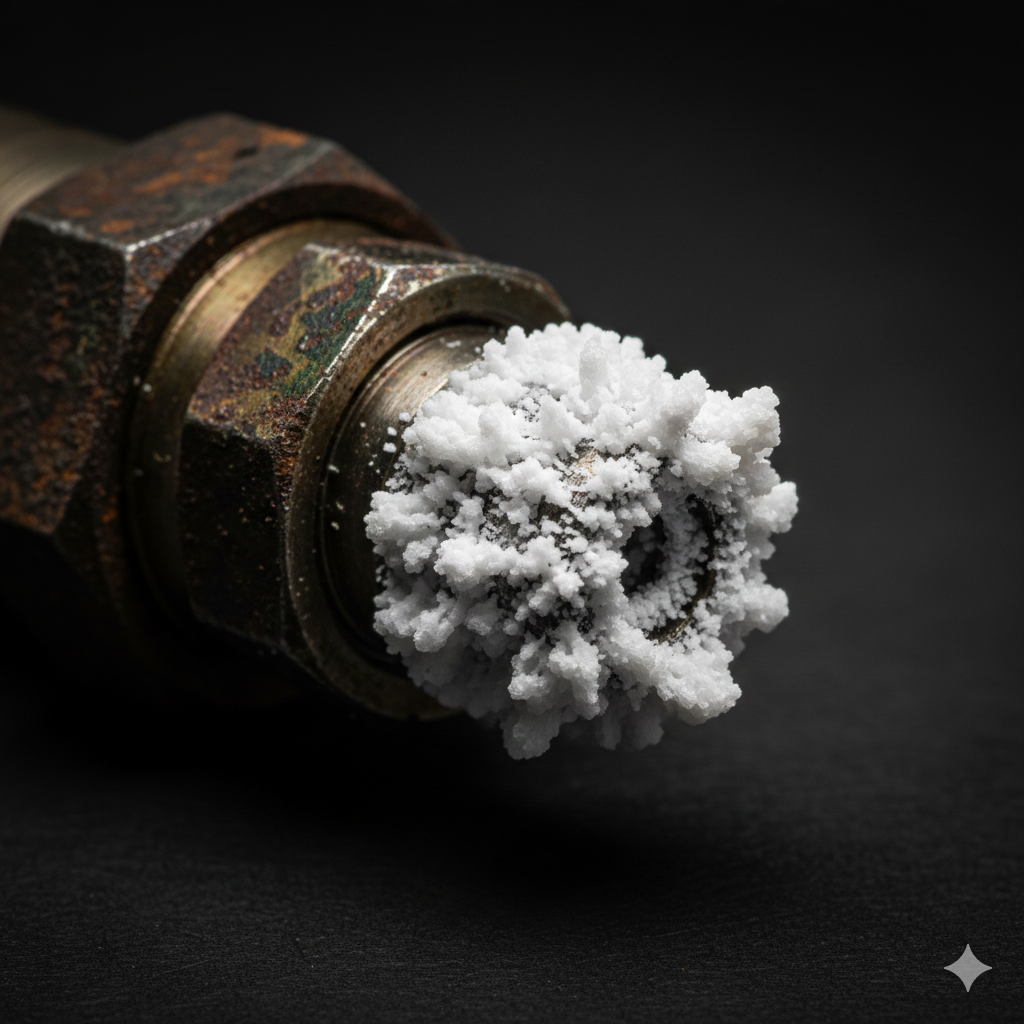
You can’t just heat the tank; you have to heat the veins too. More heating elements, more connectors, more failure points. The plastic connectors get brittle from heat cycles. They snap. Now you’ve got white crusty DEF leaking everywhere.
4. The Dosing Injector
This thing lives in the exhaust stream at 800-1,100°F. If the system doesn’t purge correctly when you shut the truck down, the urea crystallizes in the nozzle. Result? Clogged injector, “Service DEF” codes, and Limp Mode.
5. The SCR Catalyst
A ceramic monolith coated in zeolite. Theoretically, it lasts 150k-250k miles. In reality? It depends on your luck and fuel quality. When it dies, you’re looking at $2,000 to $5,000. And it will die.
6. NOx Sensors
One before the cat, one after. They “sniff” the air to make sure the system is working. They cost $300 to $700 each. They fail constantly. And when they do, the blackmail begins.
The Catalog of Failure: What’s Waiting for You
Here’s the real dirt. Estimated US prices for 2024 (parts + labor):
- Tank Level Sensor: Most common issue. It says you’re empty when you’re full.
- Cost: $300 – $600 (If integrated into the pump module: $1,200 – $1,800).
- DEF Pump:
- Symptoms: Codes P20E8, P2BA3, low pressure.
- Cost: $1,000 – $2,500. If you leave the truck sitting for a month, the pump can seize internally just from crystallization.
- DEF Injector:
- Symptoms: Rough dosing, white stalactites on the exhaust.
- Cost: $400 – $900.
- SCR Catalyst:
- Symptoms: Efficiency codes, excessive DEF consumption.
- Cost: $2,500 – $6,000. You can’t ignore this; the truck won’t let you.
- NOx Sensors:
- Symptoms: Check Engine Light, countdown to Limp Mode.
- Cost: $500 – $1,000 per sensor.
The Blackmail System: The Countdown
This is what pisses me off the most. When anything goes wrong in the SCR system, the truck gives you an ultimatum:
- RAM/Ford/GM: “500 miles until 5 mph max speed” or “Exhaust Fluid System Service Required – 10 restarts remaining.”
What happens when you hit zero? The truck doesn’t just run slow. It won’t restart. I’ve seen this happen: A guy is on a cross-country haul, the light pops on. He stops for fuel (loses a restart), stops for food (loses another), sleeps at a rest area (loses another). By the time he’s 30 miles from a dealer, he’s out of restarts. The truck is now a 7,000-lb paperweight.
The culprit? A $200 sensor with a bad reading. The software doesn’t know the difference between “broken sensor” and “catastrophic failure.” Same treatment. Same blackmail. Same tow truck.
The Numbers They Don’t Want You to See
Do the math:
- DEF Fluid: $15-$25 per 1,000 miles (depending on load/towing).
- Annual fluid cost (20k miles): $400 – $500.
- Typical repair (Sensor): $600.
- Mid-range repair (Pump): $1,500.
- The Big One (Cat): $4,000.
In 100,000 miles, the DEF system can easily cost you $4,000 – $7,000 in fluids and repairs. And that’s if you’re lucky.
The Comparison: My ’98 Diesel vs. Your 2024 Rig
| Feature | Old School Diesel (Pre-Emissions) | Modern Euro 6 / EPA Tier 4 |
| Emissions Systems | None / Simple Muffler | DPF + SCR + EGR + DOC |
| Fail Points | 0 | 15+ |
| Extra Fluids | None | DEF |
| Chance of being stranded | Near Zero | High |
| 100k Mile Maintenance Cost | $0 (Exhaust) | $4,000 – $7,000 |
| Will it start? | Always | “If the computer says so” |
| Does it blackmail you? | No | Every damn day |
My old 12-valve or 7.3 Powerstroke? It starts every morning. It doesn’t ask for “piss water.” It doesn’t threaten to shut down. If it breaks, I fix it with a wrench. Your new truck? You need a $5,000 diagnostic tablet just to talk to it.
The “Solutions”
I’m going to be straight with you:
- DEF Deletes: Taking the system off. It’s technically illegal for street use (EPA doesn’t play around). You’ll fail inspections in many states, and if you’re caught, the fines are massive.
- DEF Emulators: Little boxes that trick the ECU. Same boat—illegal and risky.
- Obsessive Maintenance: Buying high-quality fluid, keeping the tank full, and never letting the truck sit. It helps, but it doesn’t stop the inevitable. It just delays it.
Conclusion: They Ruined the Diesel on Purpose
I’m not a conspiracy theorist, but I believe in incentives.
Who benefits from a system that requires constant consumables, fails regularly, needs a dealer to reset, and has astronomical part prices? The manufacturers. The dealers. The parts industry.
The original diesel engine was too good. Too durable. Too easy to keep on the road. They turned it into a bill-generating machine. And you’re the one paying.
Has DEF ever ruined a road trip for you? How much have you dropped on this garbage system? Let me know in the comments. See you on the road.
Not Enough Cylinders 30 years of grease on my hands so you don’t have to.
5 thoughts on “DIESEL EXHAUST FLUID”