
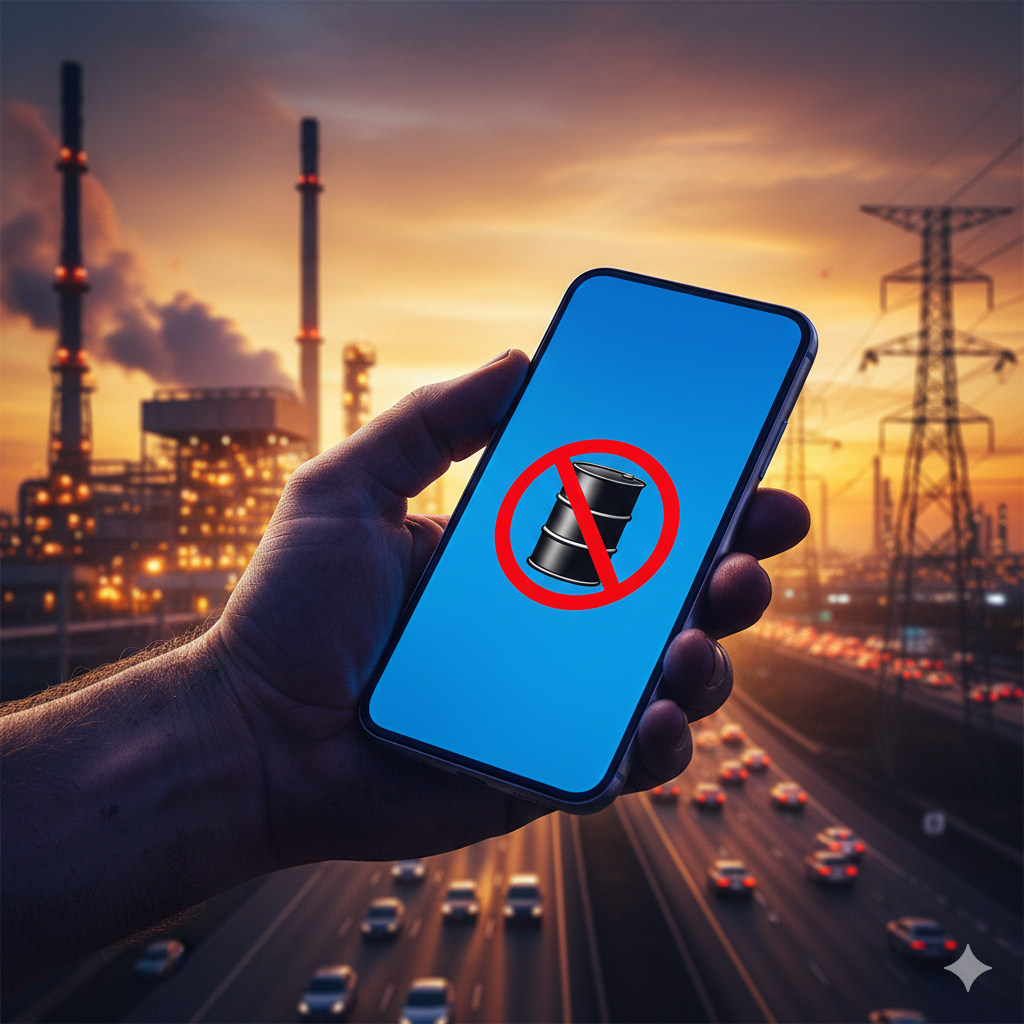
Biting the Hand That Feeds You: The Hypocrisy of Hating Fossil Fuels
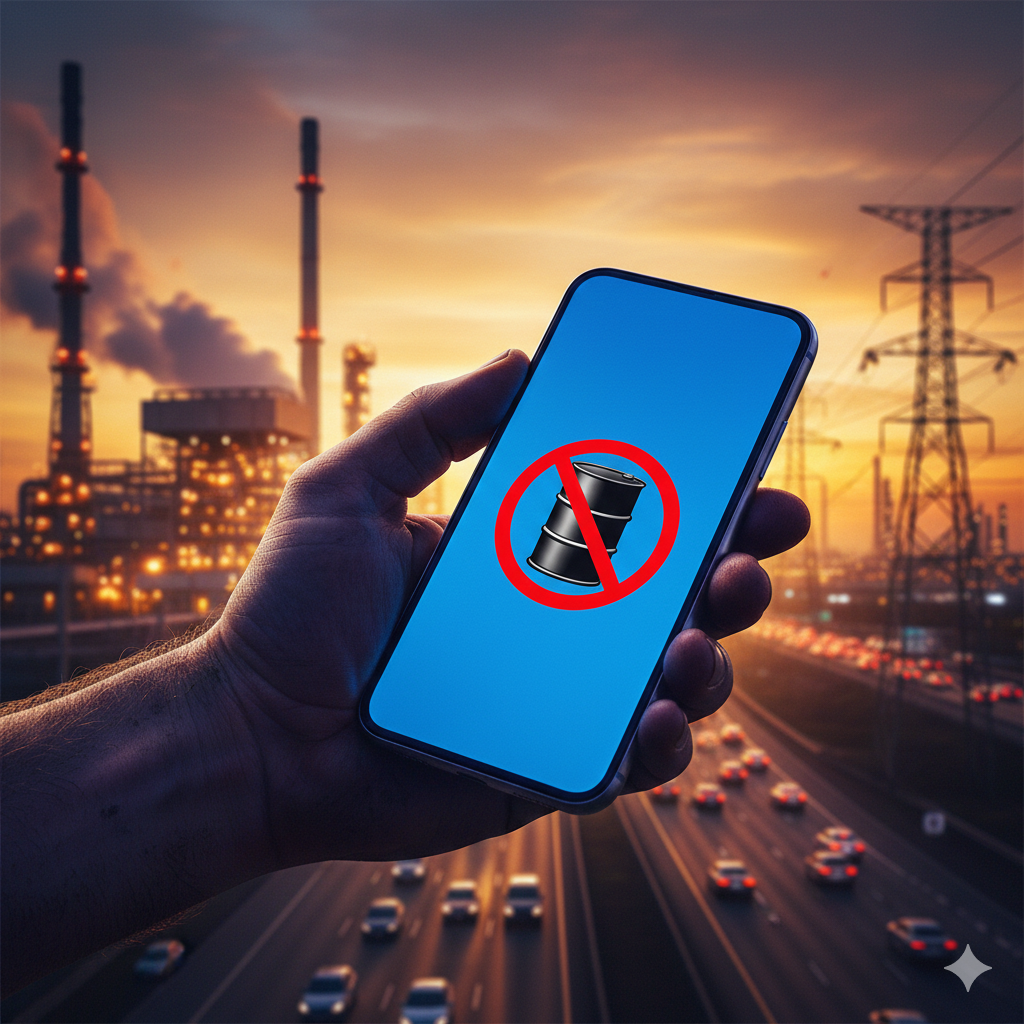
There’s something deeply ironic about a person typing on their iPhone, sitting inside a reinforced concrete building, wearing synthetic clothing, eating food that traveled 3,000 kilometers in a refrigerated truck, posting on social media that fossil fuels are humanity’s enemy.
It’s like spitting on the plate you eat from. And the worst part? You don’t even know you’re doing it.
Because here’s the reality: we live in a world built brick by brick, road by road, hospital by hospital, with the energy of fossil fuels. And now, from the comfort they’ve given us, we point our fingers at them as if they were the devil. Without understanding that without them, most of us wouldn’t even be here to complain.
Let’s talk about what nobody wants to talk about. With data. Without filters. And with grease-stained hands, as always.
The World You Live In Exists Thanks to Oil, Coal, and Gas
This is not an opinion. It’s an uncomfortable fact that most people prefer to ignore because it shatters their save-the-planet narrative.
Vaclav Smil, one of the world’s most respected thinkers on energy — Bill Gates says he looks forward to his books like some people look forward to the next Star Wars movie — laid it out with devastating clarity in his book How the World Really Works: modern civilization stands on four fundamental pillars: cement, steel, plastics, and ammonia. And all four require fossil fuels to produce.
They don’t “optionally use” fossil fuels. They require them. There is no viable alternative at industrial scale. Not today, not tomorrow, and probably not for the next two or three decades. No matter how much that hurts.
Let’s go through them one by one, because this is where things get serious:
Steel. The skeleton of the building you live in, the car you drive, the train you ride, the tools you work with, the bridge you cross every morning. Two billion tons are produced worldwide every year. To separate iron from iron oxide, you need coking coal. This isn’t a matter of energy preference or political will — it’s basic chemistry, the kind you learn in high school. The carbon monoxide generated by coke strips the oxygen from iron ore. Without coal, there’s no steel. Period. No debate. No alternative at scale. Anyone who tells you otherwise, ask them to show you the steel plant running on solar panels. I’ll wait.
Cement. Every road, every bridge, every hospital, every school, every dam, every tunnel, every airport. Cement kilns need temperatures above 1,400°C, sustained and constant. Powering those kilns with wind or solar energy is, being generous, a technical fantasy. Being honest, it’s nonsense from someone who has never stepped foot in a cement plant.
Plastics. Present in absolutely everything you touch throughout the day: from the medical components saving lives in operating rooms to the electrical wiring in your home, to the phone you’re reading this on, the screen protector on it, the case wrapped around it, and the charger that powers it. Over 99% of the world’s plastics come directly from fossil fuels. Three hundred million tons are produced every year. Are you going to replace that with bamboo? Sure, go ahead.
Ammonia. This one is the least known and arguably the most important of all. Ammonia is the base for all nitrogen fertilizers. Without the food produced with modern fertilizers, billions of people — literally, billions with a B — would starve to death. Before synthetic fertilizers, roughly three-quarters of the world’s population had to farm just to feed the remaining 25%. Fossil fuels freed humanity from the slavery of the field. Nobody tells you that on Instagram.
Your Hospital Runs on Fossil Fuels
It’s very easy to talk about clean energy when you’re not hooked up to a ventilator. It’s very easy to demand the closure of thermal power plants when your child isn’t in an ICU.
The healthcare sector contributes approximately 5.2% of global CO₂ emissions. And why? Because hospitals need constant, reliable, uninterrupted energy, 24 hours a day, 365 days a year. An operating room can’t shut down because the wind stopped. An ICU can’t function “when the sun’s out.” A diagnostic lab can’t wait for the solar farm’s battery to recharge.
Disposable medical equipment, syringes, gloves, masks, tubes, IV bags, medication packaging, prosthetics, implants — it’s all plastic. Plastic derived from petroleum. During the COVID-19 pandemic alone, the global healthcare system generated over 8 million tons of plastic waste, 73% of which was personal protective equipment. And before someone says “well, use biodegradable alternatives”: which ones exactly? Medical-grade plastic is sterile, lightweight, cheap, and disposable. There is no viable substitute at scale. None.
And here comes the statistic that nobody wants to hear, the one that should embarrass every armchair ecologist: approximately 59% of healthcare facilities in low and middle-income countries don’t even have access to reliable electricity. That means there are hospitals in Africa, in Southeast Asia, in Central America, where people die because there’s no power to keep a ventilator running. Are we going to tell them to wait for solar panels while their patients die? Really? Is that the solidarity of the first world?
The Food on Your Table
The modern agricultural revolution — the one that prevented Malthusian predictions of global famine from coming true, the one that stopped the population bomb from going off — was built on fossil fuels. All of it.
The tractors that plow. The trucks that transport. The refrigeration systems that preserve. The fertilizers that multiply production. The pesticides that protect crops. The greenhouses that extend growing seasons. The planes that distribute seeds and treatments. Everything, absolutely everything, runs directly or indirectly on petroleum derivatives, coal, or natural gas.
In every agrarian civilization before fossil fuels, 75% of the population had to work the land so the other 25% could do anything else: be a craftsman, a soldier, a merchant, a priest. Today, in developed countries, less than 3% of the population works in agriculture and feeds the rest. Three out of every hundred people produce food for the other ninety-seven.
Wind turbines didn’t do that. Solar energy didn’t do that. Diesel did it. Natural gas did it. Petroleum derivatives did it. Denying this isn’t environmentalism — it’s historical illiteracy.
The Environmentalist Who Flies Business Class
Few things in this world are more hypocritical than an environmental activist flying to a climate summit to tell you to stop using your car. And yet it happens every year. Every single year.
Climate summits generate thousands of tons of CO₂ emissions just in travel alone. The same people who ask us to reduce our carbon footprint have a personal carbon footprint that’s ten times higher than the average citizen’s. But that doesn’t matter, because they’re “fighting for the planet.” The end justifies the means. As always.
Global fossil fuel use multiplied fourteen times during the 20th century. Not out of whim, not out of greed, not out of ignorance — out of necessity. Because there were more and more people in the world, and those people needed to eat, stay warm, move, heal, and build. And fossil fuels were — and remain — the most efficient, reliable, and affordable way to make that happen.
Does that mean they don’t pollute? No. They pollute. Does it mean we shouldn’t look for alternatives? No. We should. But there’s a difference between searching for alternatives with intelligence and demonizing the tool that built everything you have while you’re still using it every single day.
The Transition Nobody Actually Wants to Make
A serious energy transition acknowledges several uncomfortable truths that no politician will tell you during campaign season:
First: You cannot replace fossil fuels overnight. Whoever tells you otherwise is lying to you or selling you something. Probably both.
Second: Renewables are part of the solution, not THE solution. In 2020, only 1.4% of electricity in low human development countries came from modern renewables. Eighty percent of investment in electricity generation in 2021 went to zero-carbon sources, which is encouraging, but the road ahead is long. Very long.
Third: The transition has a human cost that nobody wants to bear. Telling a developing country not to use coal is easy from an apartment with central heating in Europe. Telling it to a family in India cooking with cow dung because they have no other energy source is a very different conversation.
Fourth: Even “green” technologies — solar panels, wind turbines, electric cars, lithium batteries — require steel, plastics, cement, and rare minerals that are extracted and processed using… fossil fuels. The irony is so brutal it sounds like a joke, but it isn’t one.
Fifth: NOx emissions in the United States have been cut nearly in half since 2011, dropping from 15 million short tons to 7.64 million. You know how they did it? With smart regulations AND cleaner combustion technology. Not by eliminating fossil fuels, but by improving them. That’s what works. That’s what nobody wants to tell you.
The Bottom Line
You can hate pollution. You should. You can demand a faster energy transition. You should. You can invest in renewables, support fusion research, reduce your consumption, use public transport, buy local. All of that is legitimate, necessary, and respectable.
But what you cannot do is spit on the foundation of the building you live in and expect it not to collapse.
Fossil fuels brought you here. They gave you food, health, mobility, warmth, light, communication, education, and the ability to do something other than survive. Demonizing them without acknowledging this isn’t environmental activism — it’s ignorance dressed up as good conscience.
And ignorance dressed up as good conscience is perhaps the most dangerous form of ignorance there is. Because it disguises itself as virtue. Because it lets you feel morally superior while using the very thing you condemn. Because it turns you into a hypocrite who doesn’t even know he is one.
The next time someone posts from their smartphone — made with petroleum-derived plastics, shipped on a diesel truck, stored in a data center powered by natural gas — that fossil fuels must be eliminated by tomorrow, ask them three questions:
What was that phone made from? How did it get to the store where you bought it? What energy powers the data center storing your post?
The conversation will be very short. Or very long, if they have the honesty to admit the answer.
Did this make you uncomfortable? Good. Comfortable conversations don’t change anything. Share it, discuss it, argue about it. At Not Enough Cylinders, we’re not here to tell you what you want to hear. We’re here to tell you what you need to know.
1 thought on “FOSSIL FUELS”