Fiat Campagnola: The Italian Jeep That Beat Alfa Romeo and Carried a Pope
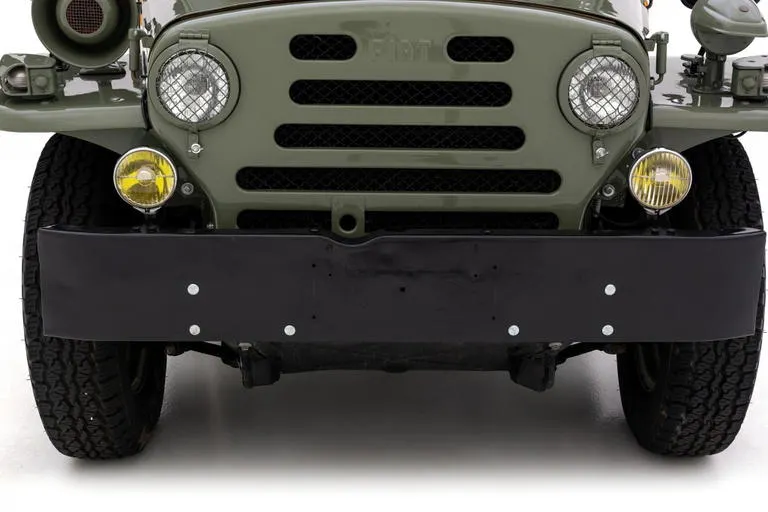
Classic & Sports Car counts 359,489 Willys MBs built between 1941 and 1945. Fiat built roughly 40,000 Campagnolas between 1951 and 1973. Same job description, about a ninth of the volume, and it still beat a more advanced Alfa Romeo in a military tender. You are unlikely to have seen one. Here is what you missed.
Every Country Gets One Bare-Bones Hero
Gear Patrol makes the point with a list: America has the Willys Jeep, Britain the Defender, Germany the G-Wagen, Japan the Land Cruiser. Italy has the Campagnola. Of the five, it is the one you are least likely to meet. Gear Patrol puts it this way: the car “was mostly kept in its home market,” so you are “very unlikely to see another on the road.”
That is odd, because the Campagnola did things the Jeep never did. The Willys MB rode on solid axles at both ends and had a three-speed gearbox. The Fiat had an independent front suspension and a four-speed box with a reduction gear. Four-wheel drive was selectable, and both axles had lockable differentials.
Italy wanted its own Jeep. In November 1950 the Ministry of Defense put out a call for a six-seat, torpedo-bodied, four-wheel-drive vehicle that could carry 500 kilograms, about 1,100 pounds. The war that had just ended had shown which armies had driven wheels and which ones walked.
Alfa Romeo Brought the Better Car
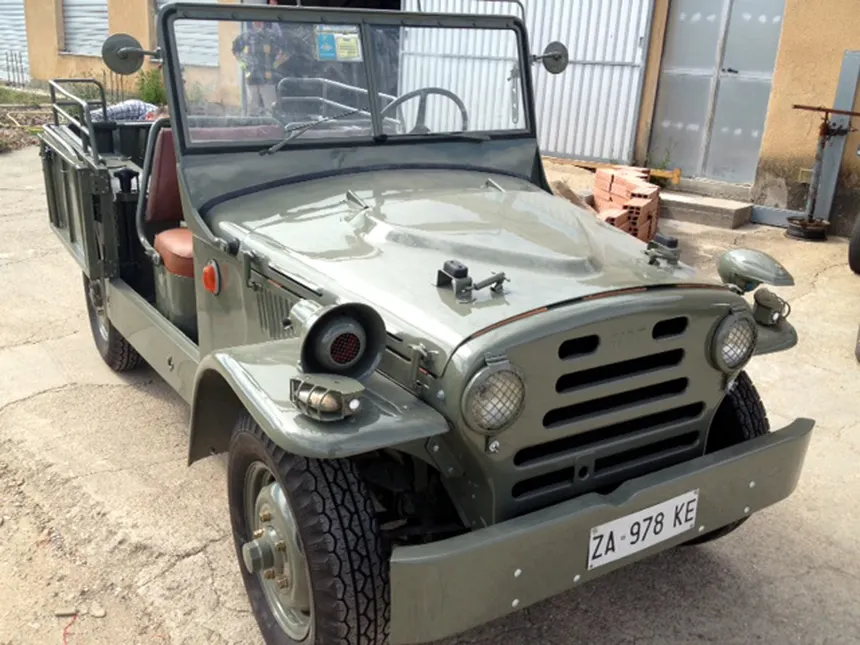
Two companies entered. Alfa Romeo sent the 1900 M, nicknamed Matta, which is Italian for “crazy.” Fiat sent the Type 1101, drawn by Dante Giacosa. Fiat had been calling it Alpina. By launch it was the Campagnola, “countrywoman,” because Fiat wanted the farmers as much as the generals.
Look at the two cars in US units, using Classic & Sports Car’s figures:
The Alfa weighed 2,756 pounds. Its 1,884 cc four had twin overhead cams, an aluminum head and a dry sump, and made 64 horsepower at 4,400 rpm. Top speed was about 65 mph. The Willys it was chasing made 60 hp from a 2.2-liter flathead and weighed 2,453 pounds.
The Fiat weighed 2,844 pounds, 88 more than the Alfa. Its 1,901 cc four was cast iron with overhead valves and one carburetor. Nobody agrees on what it made. Classic & Sports Car says 53 hp, Fiat’s heritage archive says 52, and the Italian Army’s own data sheet says 48. Top speed was about 62 mph.
Both Italian cars had independent front suspension and a live axle with leaf springs at the back. The Alfa used torsion bars up front, the Fiat coil springs and an anti-roll bar.
A twin-cam, dry-sump Alfa against an iron-block Fiat with a carb: it is not a fair fight, and Alfa won parts of it. The trials ran in May 1951 at Serravalle di Chienti, in the province of Macerata, and the Alfa came out on top in some of them. Fiat took the contract anyway, on a much lower cost and a simpler design.
One more oddity for anyone who likes paperwork. The Army called the winner AR 51, and it called the loser AR 51 too. AR stands for Autovettura da Ricognizione, “reconnaissance car,” and has nothing to do with Alfa Romeo.
The Alfa Doesn’t Deserve to Be Forgotten
Alfa built 2,161 Matta from 1952 to 1954: 2,007 military AR 51s and 154 civilian AR 52s. Its first public appearance, according to Classic & Sports Car, was a climb up a church staircase at the pilgrimage site of Assisi.
And the cars still work. Franco Melotti, who runs the Alfa Romeo Matta Club, hauled a stuck 2020 Jeep Cherokee out of the ice with his 65-year-old AR 51. That is a modern Jeep on a tow strap behind a 1950s Alfa, and Classic & Sports Car says the little twin-cam four seemed untroubled.
Nobody is arguing the Matta was a bad truck. The argument is about who writes the check.
Who Wrote the Check
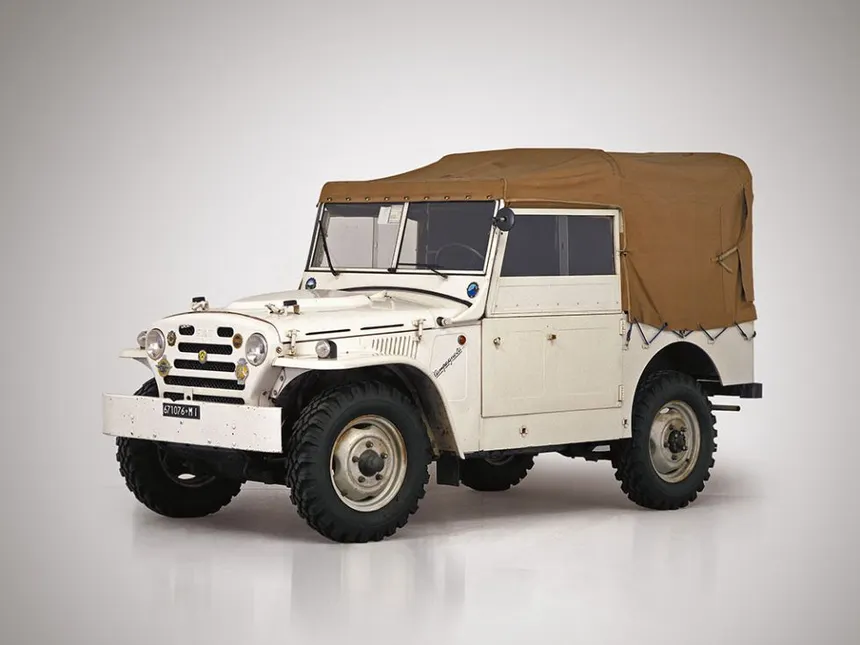
Fiat’s archive says more than 40,000 Campagnolas over more than 22 years. Classic & Sports Car counts 39,086 for 1951 through 1973. Take either number and you get more than eighteen Campagnolas for every Matta.
Customers included the police, the Carabinieri, the fire brigades, the Guardia di Finanza, the postal service, the electric utility Enel, the oil company Agip, the road agency Anas, the broadcaster RAI and private owners. A diesel arrived in 1953 with 40 hp and an indirect-injection precombustion chamber, and about one Campagnola in five left the factory with it. The AR 55 military version came in 1955. The 1959 AR 59 added waterproofed spark plugs and distributor, and the Army’s AR 51 data sheet describes a submersible electrical system with interference filters and a sealed voltage regulator.
Fiat pitched it at the Levante Fair in Bari in September 1951 as a vehicle with the suspension and comfort of a modern passenger car that could also work like a tractor. That was the sales line for a car that went to the Army and the farm in the same year.
Cape Town to Algiers
Driver Paolo Butti and Fiat test mechanic Domenico Racca left Cape Town on the morning of January 21, 1952, bound for Algiers. They arrived on February 1 after 11 days, 4 hours, 54 minutes and 45 seconds, two and a half days faster than the previous record.
The map distance was 14,193 kilometers, about 8,820 miles, and the odometer read 15,256, about 9,480 miles. That works out to an average of roughly 33 mph on the map distance, over African tracks.
Fiat prepared two long-wheelbase cars with special closed bodies. The outbound car pulled a trailer with the gear. The return car was modified along the way based on what the crew telegraphed back. The kit list: a roof rack, auxiliary headlights, a folding bed, a shovel, a pickaxe and a complete spare leaf spring. The record car also carried a 150-liter transverse tank, reinforced springs and Pirelli Aerflex tires.
Heavy rain left tracks nearly impassable. Several African territories restricted night driving. There was snow on the Little Atlas peaks. A timekeeper from the Automobile Club of France waited in Algiers. A cameraman from Istituto Luce, Aldo Pennelli, and Butti’s wife, Maria Pia, rode on the outbound leg. The record belongs to Butti and Racca, the Milan Fair celebrated it in 1952, and Fiat says it has never been broken. The car sits today in the Heritage Hub in Turin.
The Popemobile That Can’t Settle Its Own Age
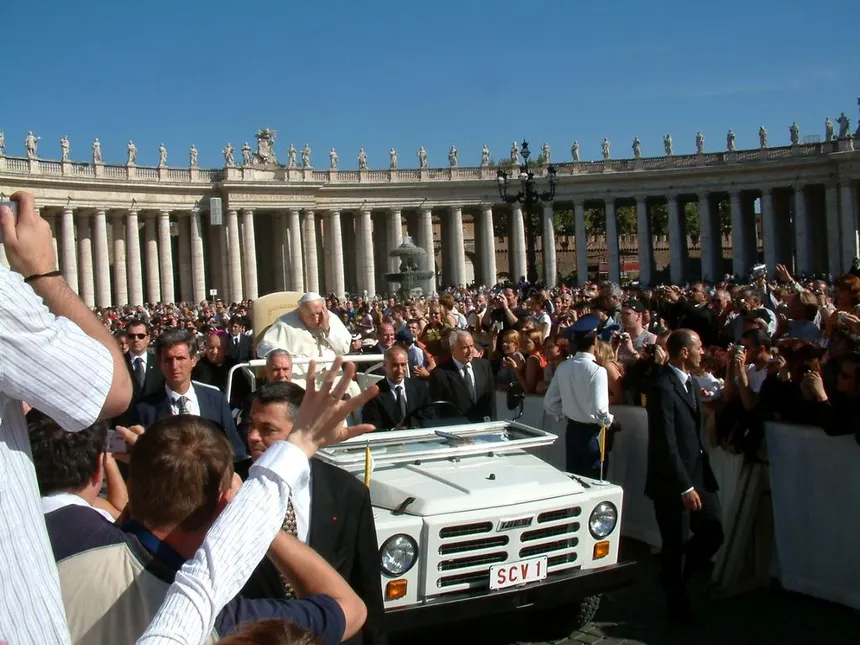
The first Campagnola had been retired by the time the second one made headlines. In 1980 Fiat gave John Paul II a Nuova Campagnola during his visit to Turin. The Vatican registered it on May 12, 1980. On May 13, 1981, at about 5:15 p.m., Mehmet Ali Ağca fired a 9mm Browning at the pope during the general audience in St. Peter’s Square. John Paul II was in that car.
Here is the part Americans rarely hear. The Vatican Museums, which show the car in the Carriage Pavilion, say it was the popemobile for “just one year and one day.” Fiat’s heritage archive describes a white popemobile donated in 1980 that served about thirty years under two popes, John Paul II and Benedict XVI. Both sources are official, and the numbers do not match.
May 13 is the day the Virgin is remembered appearing to the shepherd children at Fátima. John Paul II believed Mary had saved his life and had the bullet set in the crown of the statue of the Virgin venerated at Fátima.
Round Two
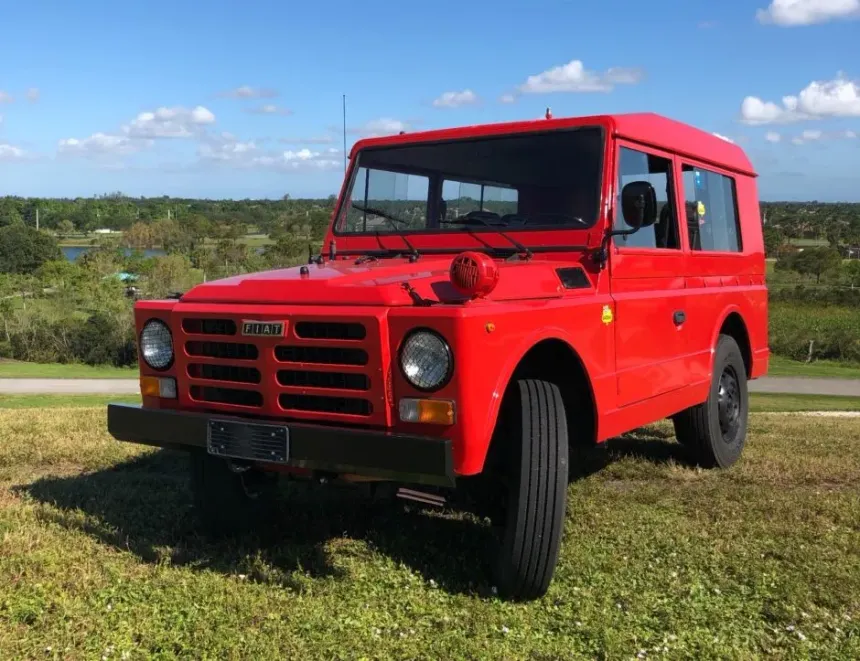
Fiat unveiled the Nuova Campagnola at the Belgrade show in May 1974. It went on sale in July, with the seven-seat torpedo priced at 4,076,800 lire. The frame gave way to a unibody. The solid axles gave way to independent suspension on all four wheels, with longitudinal torsion bars in a McPherson-style layout.
Under the hood was a 1,995 cc four rated at 80 hp, derived from the Fiat 132. A 2.5-liter Sofim diesel with 72 hp arrived in 1979 along with a five-speed gearbox in place of the four-speed. Top speed was above 120 km/h, about 75 mph, on gasoline, and about 71 mph on diesel. It could wade about 27 inches, climb 45-degree slopes and sit about 10.8 inches off the ground. Gear Patrol sets that wading depth against 20 inches for the Land Rover Defender. Its description of a 1975 example: a six-seater with jump seats in the back and no glove box.
The military version, the AR 76, was homologated in 1976. In 1979 the price list ran from 12,956,000 lire for the short gasoline torpedo to 16,142,000 for the long diesel hard-top. Production lasted until 1987 according to Fiat’s archive. A club source says 1986.
Fiat had also gone looking for customers outside Italy. Zastava built the Campagnola under license in Kragujevac, Yugoslavia. In 1976 Renault, working with Fiat, built about twenty Nuova Campagnolas with a Renault engine for the French Army’s tender. The vehicle was called the TRM 500. The Peugeot P4 won.
Can You Import One?
Short answer for US readers: the old ones, yes in principle. The 25-year rule exempts vehicles that age from federal safety and emissions standards. The Campagnola’s production ended in 1987 and the first one dates from 1951, so every original and every Nuova is past the line. Duties and registration still apply, since the rule waives only safety and emissions. Gear Patrol’s 1975 example was listed on Bring a Trailer. Check the details with an importer before you buy, because I am only repeating the rule as it is published.
The 2008 Iveco version is a different story. By a plain 25-year count it will not qualify for roughly another seven years.
The Spanish Campagnola
Iveco unveiled that new Campagnola at the Bologna Motor Show on September 15, 2008. It was built in Linares, in Spain’s Jaén province, at the Santana Motor plant, on the Santana Aníbal PS-10, which grew out of the Land Rover Series that Santana built under license. It had a 3.0-liter turbodiesel with 176 hp, a six-speed manual and part-time four-wheel drive with low range. Three doors, four seats, a launch price of 35,000 euros and a production run of 499 units.
So the heir to the Italian Army’s Jeep carried a Spanish birth certificate. The Iveco Massif was built at Linares until 2011. In 2010 Iveco ended the agreement with Santana, and the Andalusian government, which owned the company, closed the factory the following year. The payroll that went with it: 1,341 people laid off or retired early.
NEC Verdict
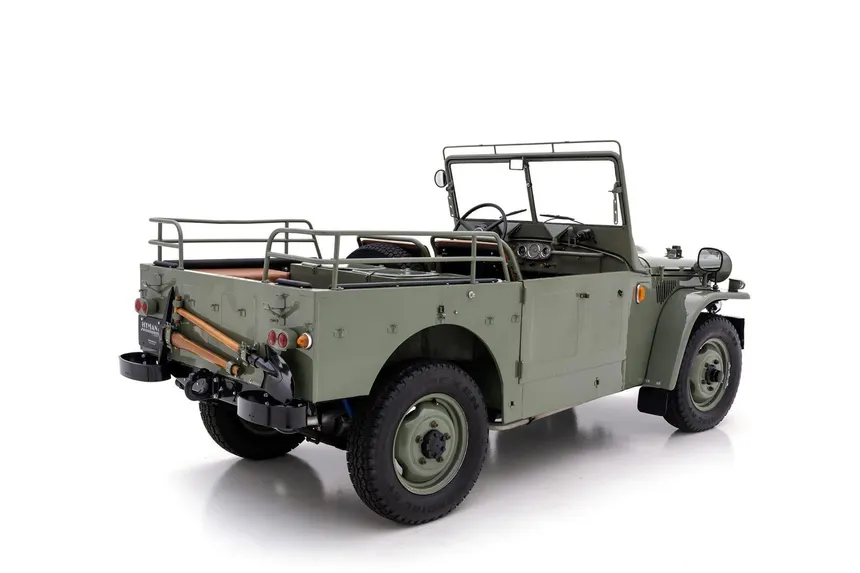
I’m taking Fiat’s side. Alfa built a car with a twin-cam, a dry sump and a staircase stunt, and ended up with 2,161 of them. Fiat built a car with a cast-iron four and a carb, and got the police, the farmers, the Carabinieri, an Africa record and a pope.
Think of it as a Corvette against a work truck. The Army needed the work truck. Alfa built what it wanted to build. Fiat built what the customer would pay for, and only one of those jobs pays the rent.
Next time somebody tells you the best car wins, put a Matta in front of them. An off-roader gets judged by how many are still standing when you need one, and the Fiat won that argument with 88 extra pounds and a coarser engine. The Campagnola that Iveco sold came from a plant in Jaén that closed in 2011.
So which would you have signed for: the brilliant one or the one still working twenty-two years later?
Check you’re still alive.
1 thought on “FIAT CAMPAGNOLA”