Fiat 750 Pulidori: a 1947 Mille Miglia class leader, on paper, that nobody wanted in Paris
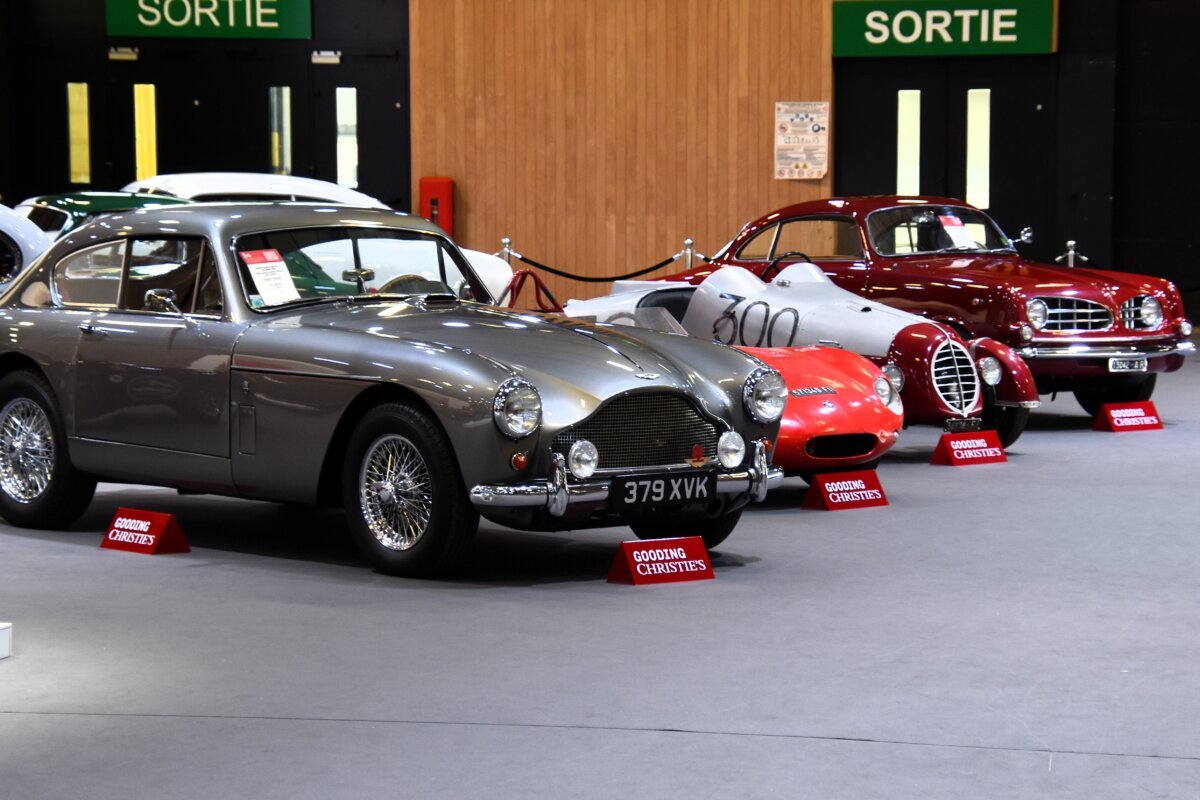
Provenance is the word that sells old race cars, and the Fiat 750 Pulidori had a little of it and a lot of gaps. In January 2026 a Santa Monica auction house took it to Paris with an estimate of €200,000 to €300,000 and a story that ran: 1947 Mille Miglia, hand-built body, Giannini racing engine, probably the only one left. Nobody bid enough. The car went home unsold.
The story deserves a closer look than the bidders gave it, because almost every line of it comes in two or three versions.
The house, the lot, the paperwork
The seller was Gooding & Company, the Santa Monica firm David Gooding founded in 2003 and built into one of the top names in the collector car business. Christie’s agreed to buy it in September 2024, and by 2026 it was trading as Gooding Christie’s. The Paris sale on January 29, 2026, its first auction in the European Union, ran as the official sale of the Rétromobile show.
The Pulidori was lot 21. Gooding’s description gives chassis 105121, engine G1006, a 750 cc inline four, a four-speed manual, independent front suspension on a transverse leaf spring and a live rear axle. The highlights claim three things: a 1947 Mille Miglia entry for Dario Pulidori and Giuseppe Cioni, documented by period photos; hand-built Pulidori coachwork with a Giannini 750 competition engine; and that it is believed to be the only surviving Pulidori-bodied Fiat 750 Special.
Believed. The catalog doesn’t say how many others there were.
Now compare that with what was known ten years earlier. In January 2016 the Italian Association for the History of the Automobile, AISA, wrote about the same car and said that information on its engine and chassis was missing. By 2026 it had numbers for both.
Four ways to spell one car
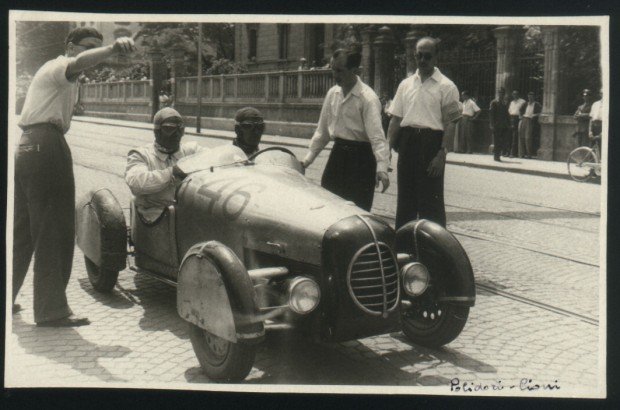
The 1947 Mille Miglia entry list, as published by Racing Sports Cars, has a Fiat S750, number 46, Sport class up to 750 cc, drivers D. Pulidori and Giuseppe Cioni. AISA calls it a Fiat 500 Pulidori. Gooding calls it a Fiat 750 Special with Pulidori coachwork.
And there’s a public-domain photo on Wikimedia Commons, taken during the race on June 22, 1947, that captions it “Fiat 500 Polidori Ceoni,” with an o in Pulidori and an e in Cioni. The caption says the car carried a 750 cc engine by Giannini and led the 750 class from Brescia to near Rome, and it cites an enthusiasts’ forum as its source.
None of that means there were several cars. Fiat S750, Fiat 500 and Fiat 750 Special can all describe the same machine from different angles: by class, by the Fiat it started as, or by who built it. What nobody has published is the chain of ownership linking the car Pulidori raced in 1947 to the car on the stand in Paris.
The race that made Nuvolari a legend again
Most American readers know the Mille Miglia from the modern regularity rally, a parade of million-dollar cars through Italian towns. In 1947 it was a flat-out road race over open public roads, the first after the war, dedicated to co-founder Franco Mazzotti, whose plane had been shot down in 1942.
That year’s route ran 1,822 kilometers, about 1,132 miles, the longest of any edition. On June 21 and 22, 155 cars started and 54 finished. Clemente Biondetti and Emilio Romano won in an Alfa Romeo 8C 2900 B Berlinetta by Touring in 16 hours, 16 minutes and 39 seconds, averaging 112.2 km/h, about 69.7 mph, for the whole distance.
Sixteen minutes behind them came Tazio Nuvolari and Francesco Carena in a Cisitalia 202 SMM spider. Nuvolari was the most famous racing driver in the world before the war, and Cisitalia owner Piero Dusio hired him for the publicity, at a point when he was no longer young or healthy. The Cisitalia was an open car with a 1,089 cc Fiat 1100-based four making 60 to 65 hp, good for about 112 mph. When rain came late in the race, Nuvolari sat in it, and Biondetti stayed dry in his closed coupe. Biondetti would win the Mille Miglia four times, in 1938, 1947, 1948 and 1949, more than anyone.
Number 46 started 32nd on the list, one of about 40 cars in the 750 class, according to AISA. That’s nearly one car in four.
Class leader, retired, or just DNF
What happened to it depends on whom you ask.
AISA says the car was very fast and led the 750 class almost to Rome. Motorizzazione Torino, an Italian car-history site, says it dominated its category and retired with a mechanical problem. The Racing Sports Cars results simply list it as a non-finisher. None of them says where it stopped or what broke.
That matters, because 101 of the 155 starters didn’t finish, and the results don’t separate the cars that broke in the first hour from the ones that ran most of the race. “Class leader” comes from AISA and a photo caption. There’s no published timing sheet behind it.
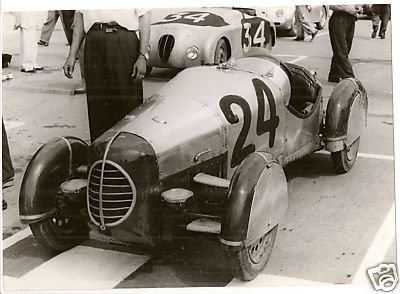
There’s one more period trace. A second public-domain photo on Commons shows a race-prepared Topolino wearing number 24 at the Circuito delle Cascine in Florence in 1947, credited to “Edo (possibly Dario) Pulidori.” The file name dates it June 20, two days before the Mille Miglia; the description says July 20. Neither date is confirmed anywhere else.
Built from Fiat’s smallest car
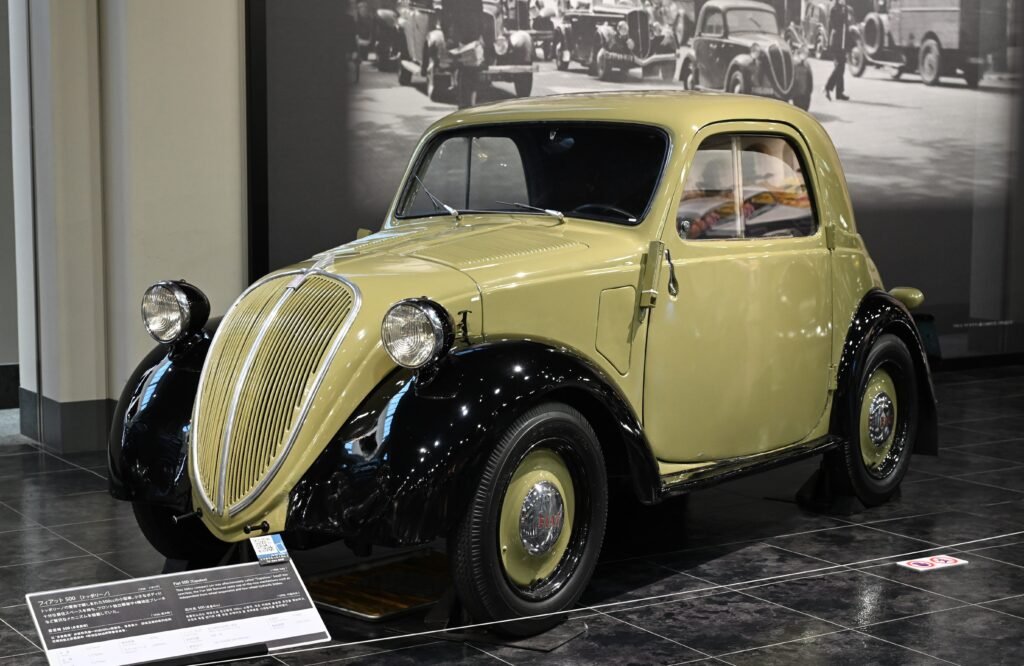
The base for all of this was the Fiat 500 Topolino, “little mouse,” Italy’s tiniest car, built from 1936 to 1955. In Model A form it had a 569 cc four with 13 hp, a top speed of about 53 mph and a weight of roughly 1,190 pounds. Production ran to somewhere between 511,000 and 520,000, depending on the source.
In 1936, with Italy under League of Nations sanctions over the invasion of Ethiopia, the country’s motorsport authorities created a national touring class for series-derived cars, renamed Sport in 1938. The Topolino became its workhorse, and tuners went to town on it. In 1938 SIATA started selling a cylinder head that became standard in the 750 class and was good for up to 27 hp at 5,000 rpm by 1939. By 1947 a Marino head was credited with 37 hp, a number AISA itself calls optimistic. Giulio Baravelli won the Italian 750 Sport Nazionale title in 1938 and 1939, and Sesto Leonardi went on to win 17 Italian titles in classes up to 1,000 cc.
The list of builders working on Fiat 500 racers reads like a phone book: SIATA, Stanguellini, the Avalle brothers, Giannini, the Casa dell’Auto in Turin, Zanussi in Treviso, and body shops Torricelli, Motto, Bertolini, Zagato and Vendrame. AISA counts several dozen Fiat 500-derived Sport Nazionale cars between 1937 and 1947. When a field has that many one-offs, “the only one left” is a claim worth checking.
One of those builders is a name most American car people know from somewhere else entirely. Enrico Nardi, Ferrari’s first test driver, built about 70 tiny 750 cc racers between 1946 and 1957 on Fiat 500 chassis, powered by BMW motorcycle flat twins in the nose. They weighed between about 880 and 1,000 pounds and won the Coppa d’Oro delle Dolomiti hillclimb in 1947 and 1948. Nardi later gave up building cars and concentrated on parts, including the wood-rimmed steering wheels that ended up in most Ferraris.
The Giannini problem
Gooding describes the engine as a Giannini 750 competition unit, as configured for sale. Giannini was a Rome garage founded in 1885 and run from 1920 by brothers Attilio and Domenico Giannini, who won their class at the first Mille Miglia in 1927 with an Itala Tipo 61 and set world records in 1938 with a 499 cc single-seater. By the 1930s they were Topolino specialists.
Here’s where the dates collide. Wikipedia puts the 750 cc Giannini G1 engine in 1949. AISA says Sesto Leonardi used one of the first G1s during the 1947 season, and that the G1 added a third main bearing to the Fiat block. The 1947 entry list calls the Pulidori a Fiat S750 and doesn’t mention Giannini at all; only the forum-sourced photo caption does.
The engine number G1006 tells you the auctioned car carries a block identified as a Giannini G1. It doesn’t tell you that block was in the car in June 1947.
The one that sold in Monterey, almost
The closest comparison went through an American sale. In 1949 Rome coachbuilder Faina built the Fiat-Patriarca 750 Berlinetta Sport, a one-off on a Fiat 500 C chassis. Sesto Leonardi and Agostino Prosperi drove it to a class win and 24th overall in the 1950 Mille Miglia. RM Sotheby’s offered it at Monterey on August 24, 2018, during Monterey Car Week, with an estimate of $200,000 to $250,000.
Same displacement, same Fiat roots, same six-figure ambitions. The Patriarca came with a class win anyone can look up. The Pulidori came with a DNF and three different accounts of how good it was before it stopped.
Unsold, between a record and a Campagnola
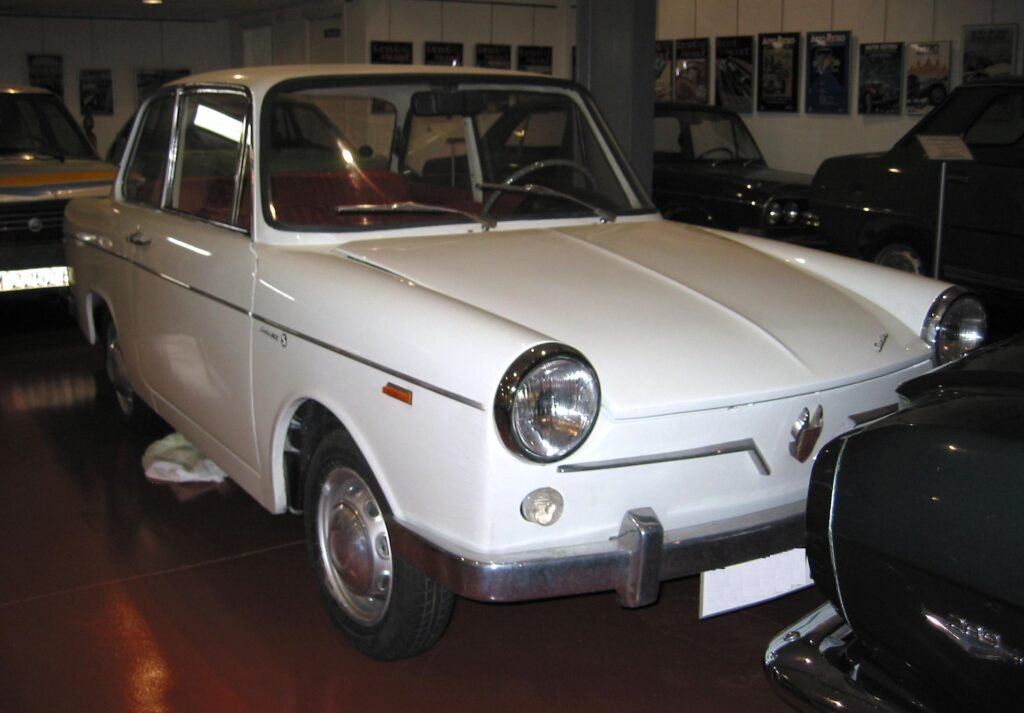
Auto Infos reported the Pulidori among the unsold lots. Its sale totals, which vary depending on how withdrawn lots are counted, were 83 lots offered, about €50.4 million in sales and 80 percent of lots sold. The top result was a 1984 Ferrari 288 GTO at €9,117,500, a record for the model.
Other Fiats in the same sale did find buyers: a 1962 1100 T2 Spiaggetta beach car at €224,250, a 1965 500 F Decathlon at €29,900, a 1983 Campagnola 1107 A from the Paris-Dakar at €28,750, a 1955 1100 Industriale at €26,450 and a 1974 127A Holiday at €12,650. The Pulidori and a 1953 1100 coupé speciale went home.
There’s also a Spanish footnote to SIATA, the firm whose head powered half the 750 class. In 1960 a group of Barcelona businessmen brought Franco Ambrosini, son of SIATA’s founder, to Tarragona to open Siata Española. In eleven years it built about 22,000 vehicles, mostly vans, plus a few hundred sporty cars like the Tarraco. The 750 cc Tarraco made 31 hp, four more than a SIATA-headed Topolino racer in 1939.
The bidders read it right
Biondetti won at nearly 70 mph in a Touring coupe. Nuvolari finished second and is still a name on posters. Dario Pulidori, if AISA is right, led his class almost to Rome in a car built by hand in Empoli, and the record gives him a DNF and a race number.
At €200,000, a buyer isn’t paying for a chassis and an engine. He’s paying for the claim that this chassis and this engine are the car that led the 750 class in 1947. Without a timing sheet, a retirement point or an ownership chain, that’s a three-line legend with two spellings, and the room in Paris treated it that way.
Check you’re still alive.