
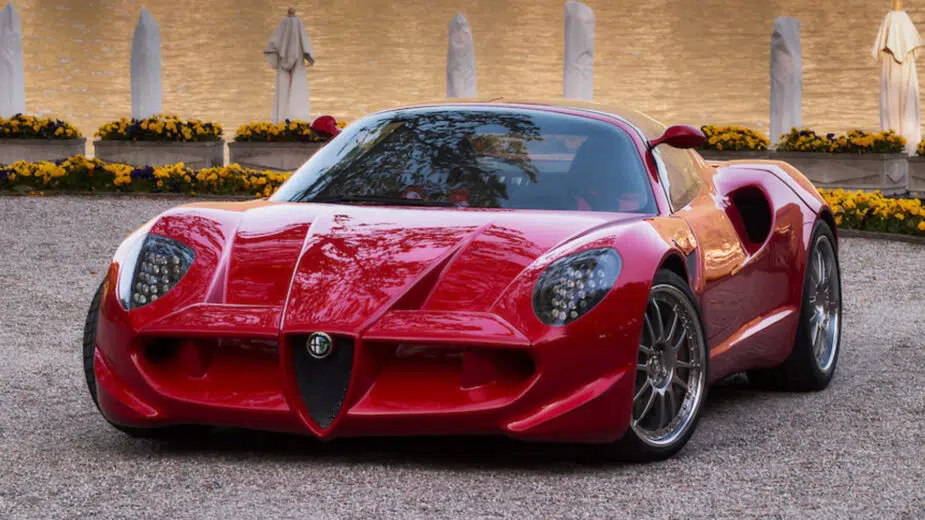
Alfa Romeo Diva: The Prototype Alfa Wouldn’t Sign
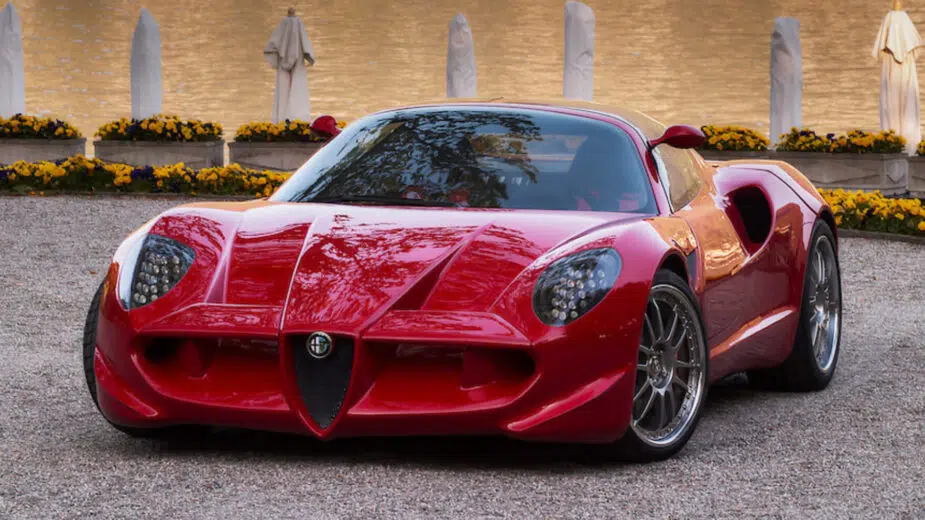
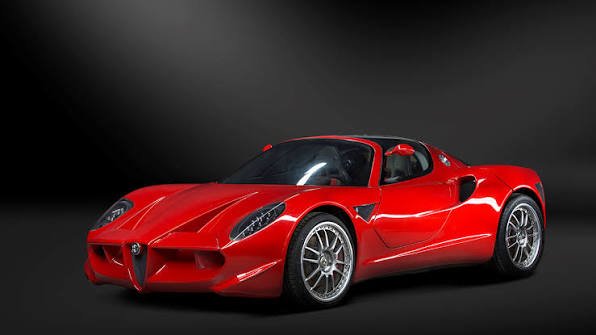
In 2006, while Alfa Romeo was preparing to return to the American market with a quarter-million-dollar grand tourer, it took a 1,100 kg mid-engined two-seater to the Geneva Motor Show and parked it in a Swiss design school’s booth.
Among student projects. With the doors shut for the entire show, because the interior wasn’t finished.
Alfa’s own stand was a few meters away. They didn’t want it there.
Fourteen years later that car went into the permanent collection at the factory museum in Arese. In between, most of the world assumed it was a Sbarro.
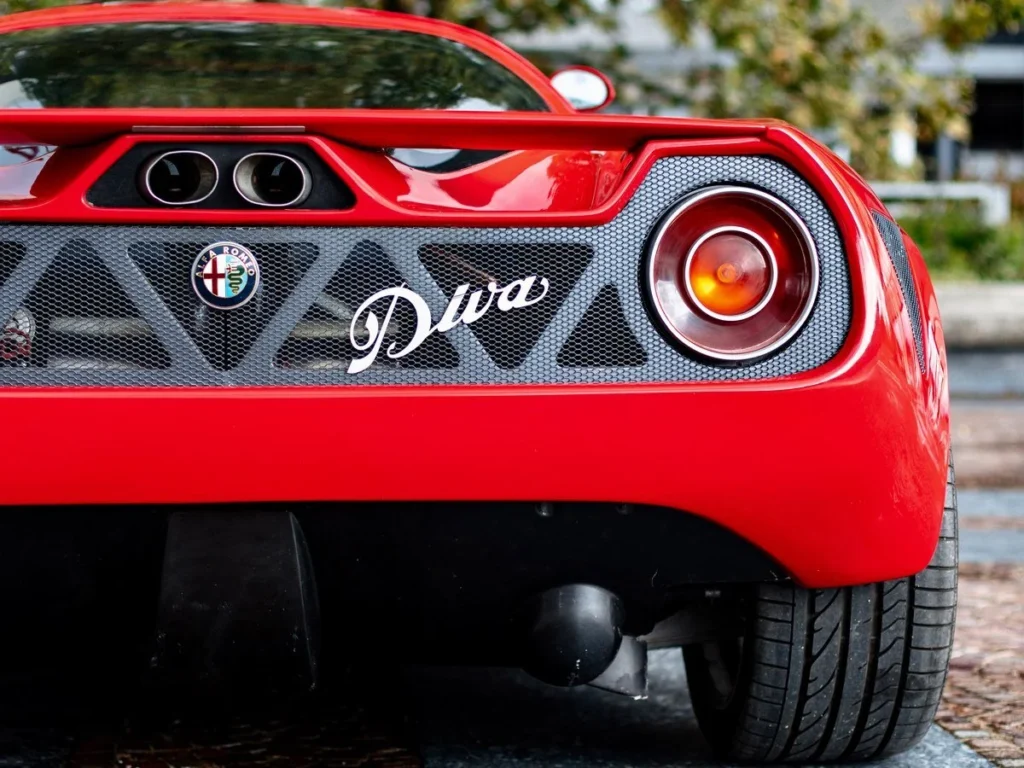
This is the story of the Alfa Romeo Diva. The story of a company that wouldn’t put its name on the best thing on its own table.
What was actually underneath it
Start with the detail almost nobody mentions, because it reframes the entire car.
The Diva ran Ferrari F430 suspension.
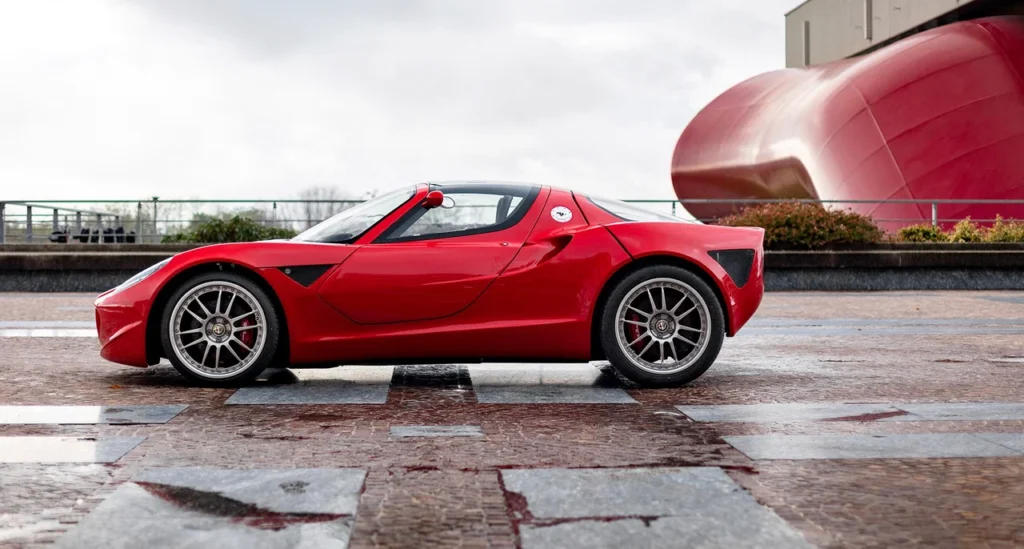
Not a nod to it, not an inspired-by part: the layout of a Maranello supercar underneath a prototype the factory claimed not to know much about. On top of that, a 3.2-liter Busso V6 lifted from the Alfa Romeo 147 GTA and pushed to 290 hp, mounted amidships. Weight: 1,100 kg. Claimed top speed 270 km/h. Zero to 100 km/h in under five seconds. Six-speed Selespeed automated manual. Butterfly doors. And a reading of the 1967 33 Stradale that went beyond tracing proportions.
Set that against what was on sale. The 2006 Porsche Cayman S made 295 hp, five more, at a curb weight around 1,340 kg. The Diva was roughly 240 kg lighter with effectively the same power. And the following year, the same company launched the 8C Competizione: 450 hp and 1,585 kg.
With those numbers the Diva wasn’t a styling exercise. It was a car.
Now the fine print, because precision matters here. There are two incompatible accounts of the chassis. At Geneva, the line coming out of the Sbarro camp was a tubular frame. Encyclopedia entries describe a heavily modified Alfa Romeo 159 chassis with the V6 mounted transversely. Some sources place assembly at Arese, with Carrozzeria Granturismo, while the account of one of its designers has the car being finished in Switzerland. Not all of these can be true at once, and none of these sources is primary. Flagged as it stands.
Three designers, three passports, four days
The project was started by the Italian Filippo Pierini. He didn’t finish it. Lamborghini made him an offer and he took it.
The car then sat for more than a year. No author, no budget.
What follows has to be attributed carefully, because it comes from a single source: the account given by Argentine designer Juan Manuel Díaz, who worked on the project and described it years later in an interview with the Buenos Aires daily Infobae, from which the European press picked it up. Alfa Romeo has neither confirmed nor denied it. With that caveat, here is what he says.
That the marketing department of the day did not want the car built. That he and the Polish designer Zbigniew Maurerwere told to finish it more or less in secret. That one day in 2005, while he was working on the future MiTo, he was sent to Switzerland without much explanation, and that the address turned out to be Franco Sbarro’s old workshop at Yverdon, on the lake, in the canton of Vaud.
And that there, modeling first in plaster and then transferring the shape to the bodywork, with instructions to refine the flanks and finish the tail, they completed the car in under four days.
The Sbarro students had nothing to do with it. By 2006 classes were being held a few kilometers away, in the French Jura. They saw the Diva for the first time on the stand, along with everyone else.
Both sides went quiet
What happened in Geneva is the strangest part of the whole thing.
On the Sbarro stand, alongside a Mille Miglia tribute to Italian classics, a hand-built GTS8 on a Ferrari 360 Spider base, and a mid-engined Citroën C1, sat the Diva. It stood out so far from the rest that you didn’t need to be an expert to see it hadn’t come from the same place.
Alfa Romeo’s press office said it didn’t know much about the car. Officially.
And Sbarro didn’t want to talk about it either, or produce the students who had supposedly designed it. Two technical details and that was it. The car stayed absent from Sbarro’s official communications for years.
Both sides passed the ball. For a long stretch, credit for the Diva went to a design school that never claimed it, while the manufacturer that paid for it looked away. It is hard to name another case of two organizations simultaneously refusing to sign the same object.
Finished twice
After the show, Alfa Romeo itself sent the car to Carrozzeria Touring in Italy to be rebuilt to the standard four days hadn’t allowed. In that finish it went to the Concorso d’Eleganza at Villa d’Este, in the concept car class.
That move gives the game away. You can choose not to display a car on your stand. What you don’t do is spend money rebuilding it from scratch and take it to a concours if you genuinely don’t care.
One more loop worth closing for anyone who read our 8C Competizione piece: Carrozzeria Touring Superleggera is the same firm that, seventeen years later, would hand-build the 33 units of the 2023 33 Stradale. The coachbuilder that fixed the prototype Alfa was hiding ended up building the 33 Stradale tribute Alfa now sells at supercar money.
From the concours, the Diva went to Elasis, the Fiat group engineering outfit. A laboratory car, per the factory. And then nothing, until it surfaced in the permanent display at Arese in early 2020.
Why it wasn’t built
There’s no conspiracy here. There’s a balance sheet.
Alfa Romeo was coming out of a failed arrangement with General Motors, which had left it with a platform and engines, including the V6 used in the 159 and the Brera. The 2006 range was the 159, the Crosswagon, the Spider and the Brera. Nothing high-volume except the 159. The company needed cars it could sell by the tens of thousands, not an expensive two-seater it would move by the dozen.
The figure that captures the drought best comes from Díaz himself: the Alfa Romeo Giulietta was ready in 2006 and didn’t reach the market until 2010. Four years of waiting to launch the compact the brand urgently needed.
In that climate, a mid-engined car on F430 suspension was never going to happen. Fine. The industrial decision makes complete sense.
The rest of it doesn’t.
The man who also drew the 8C’s cockpit
A note that ties this to our previous piece.
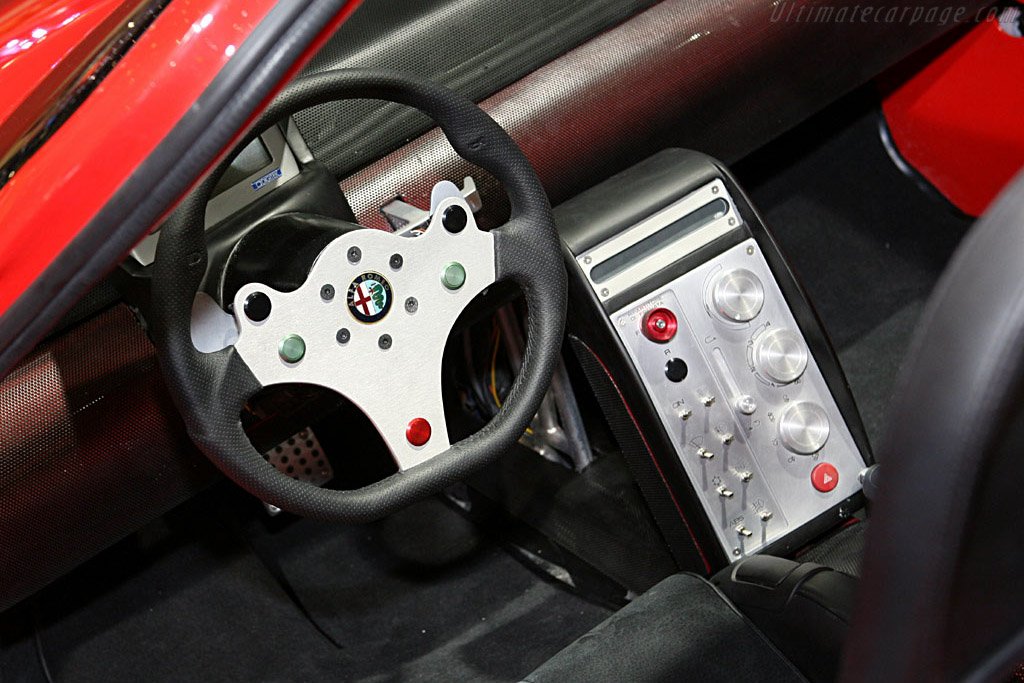
Juan Manuel Díaz, besides finishing the Diva, designed the interior of the Alfa Romeo 8C Competizione and the exterior of the MiTo. He later moved to SEAT, where he was behind the IBx that became the Ateca, and ended up as design director at Audi Motorsport.
So the same hands that shaped the cabin of the car Alfa Romeo used to re-enter the United States in 2008 also finished the car Alfa Romeo wouldn’t put on its own stand two years earlier. An Argentine, a Pole, and an Italian who left for Lamborghini. That was the team on the cursed prototype.
One more thing worth adding. The most detailed reconstruction of how the Diva was built didn’t come from the factory, or an Italian magazine, or a book out of Arese. An Argentine designer told it to an Argentine newspaper, in Spanish, fourteen years after the fact.
The closing argument: signing is harder than drawing
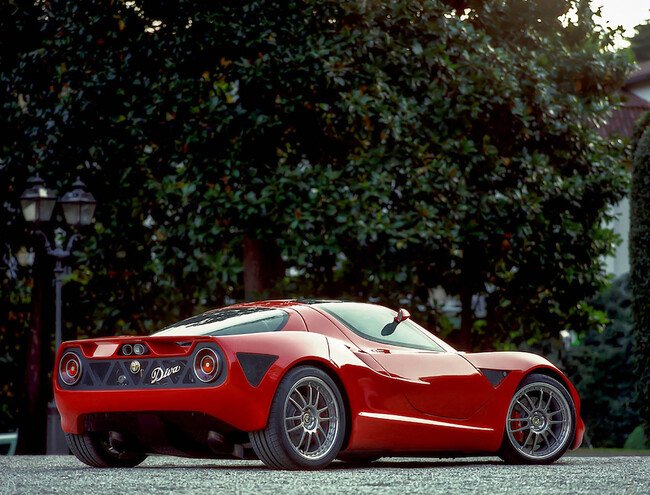
The Diva wasn’t perfect. It was built in four days out of plaster with no money, and its own author admits it lacked the quality expected of a major manufacturer. All true.
That isn’t what killed it.
What killed it is that in 2006 nobody inside Alfa Romeo would put their name on it. Not to announce it wasn’t going into production. Not to claim it as an exercise. Not even to take up two square meters of their own stand with the line “this is what we can do and right now we can’t pay for it.” That would have been true, it would have been cheap, and it would have been enormous.
Instead: silence, a borrowed booth, and closed doors. Then, once there was no risk left at all, a plinth in the museum with the badge nicely lit.
What galls me isn’t that Alfa Romeo didn’t build the Diva. It’s that its design went on to shape the 4C, and that the company has spent the years since selling 33 Stradale tributes at ever higher prices, while the best 33 Stradale tribute it ever had in its hands was left with a Swiss school to carry.
You’re allowed to have no money. You’re not allowed to have no nerve.
How many companies are hiding in a corridor today the car they’ll put in their own museum in fifteen years?
Check you’re still alive.