
The Ferrari 250 GTO: Why a Car Became the Most Expensive Object Ever Sold
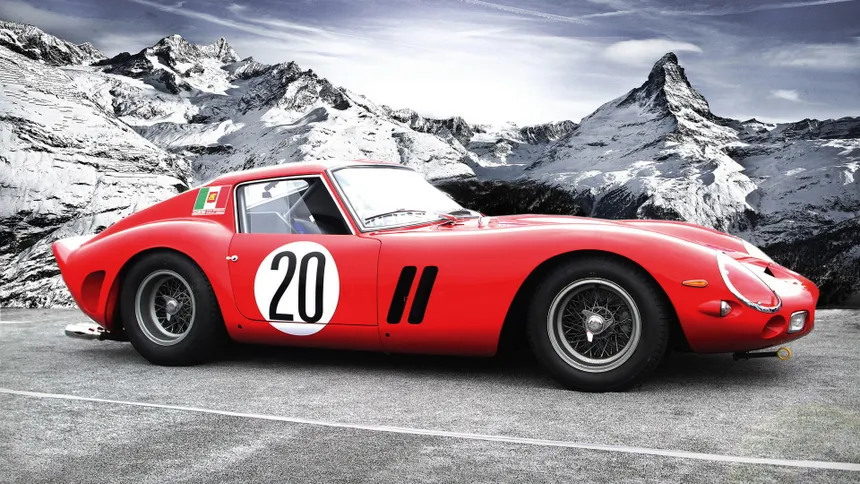
The $70 Million Question Nobody Asks
In 2018, a Ferrari 250 GTO sold for $70 million. Not a house. Not a Picasso. Not a yacht. A car. A machine built to depreciate, crash, and eventually rust into oblivion.
And yet, here we are.
But here’s what the auction headlines never explain: why this car? Ferrari built thousands of beautiful machines. Lamborghini made stunners. Aston Martin created rolling art. So what makes the 250 GTO worth more than all of them combined?
The answer isn’t about horsepower, racing wins, or even rarity. It’s about a perfect storm that will never happen again.
The Numbers That Don’t Add Up
Let’s start with what the 250 GTO actually is:
- Engine: 3.0-liter Colombo V12
- Power: 300 horsepower (in 1962)
- Top Speed: 174 mph
- Production: 36 units (plus 3 later variants)
- Racing Record: Three consecutive GT Championship wins (1962-1964)
Impressive? Absolutely. Worth $70 million? Not on specifications alone.
A modern Honda Civic Type R produces nearly as much power. A Tesla Model S Plaid would destroy it in a drag race. And you can buy a brand-new Ferrari 296 GTB with better performance in every measurable way for under $400,000.
So the value clearly isn’t about what the car does. It’s about what the car means.
The Homologation Loophole
Here’s where the story gets interesting.
In 1962, the FIA required manufacturers to build at least 100 units of any car entering GT racing. Ferrari wanted to race their new weapon—but building 100 cars would take too long and cost too much.
Enzo Ferrari’s solution? He claimed the 250 GTO was merely an “evolution” of the existing 250 GT, which had already met homologation requirements. The “O” in GTO stands for “Omologato”—homologated.
The FIA officials inspected the car. They could see it was entirely different. New body. New chassis modifications. New everything that mattered.
They approved it anyway.
Whether this was genuine acceptance of Ferrari’s argument or simply an acknowledgment that racing needed Ferrari more than Ferrari needed racing remains debated. What’s certain is that the 250 GTO was born from a bureaucratic sleight of hand that would be impossible today.
Bizzarrini’s Revenge
The 250 GTO wasn’t designed by some corporate committee. It was the fever dream of Giotto Bizzarrini, an engineer who had just led a mass walkout from Ferrari over management disputes.
Before leaving, Bizzarrini was tasked with creating Ferrari’s ultimate GT racer. He approached the project like a man with nothing to lose—because he didn’t. He knew he was leaving. The 250 GTO was his parting gift and his middle finger simultaneously.
Every curve of that body exists for a reason. The long hood isn’t styling—it’s aerodynamic necessity. The rear spoiler lip (revolutionary for 1962) manages airflow at high speed. The three nostrils on each front fender release wheel-well pressure.
Bizzarrini later claimed he barely slept during the car’s development. Looking at the result, you believe him. This is what happens when genius operates without oversight.
The Racing Years
Between 1962 and 1964, the 250 GTO dominated GT racing with mechanical brutality:
1962: Class wins at Sebring, Le Mans, and the Tour de France Automobile. First GT Championship.
1963: Near-total domination. GT Championship retained.
1964: Third consecutive GT Championship, despite facing newer competition.
The 250 GTO didn’t just win races—it demoralized competitors. Drivers reported that seeing a GTO in their mirrors meant fighting for second place. The car’s combination of power, handling, and reliability was simply unfair.
But here’s the crucial detail: by 1965, the car was obsolete. The mid-engine revolution, which Ferrari itself would lead with the 250 LM, made front-engine GT racers dinosaurs overnight.
The 250 GTO’s reign lasted exactly three years. And then it was over.
The Preservation Miracle
Of the 36 GTOs built, at least 33 are known to survive. For a racing car from the 1960s, this survival rate borders on miraculous.
Comparable Ferrari racing cars from the era have survival rates below 50%. Many were crashed beyond repair. Others were abandoned when they became uncompetitive. Some were literally scrapped for parts.
The GTO survived because collectors recognized its significance almost immediately. By the late 1960s, used GTOs were selling for more than their original price—unheard of for a racing car. Owners knew they had something special and treated the cars accordingly.
This early recognition created a self-fulfilling prophecy. Because GTOs were valuable, owners preserved them. Because they were preserved, they remained rare. Because they remained rare, they became more valuable. Repeat for sixty years.
The Pink Floyd Connection
In 1977, Pink Floyd drummer Nick Mason bought a 250 GTO for approximately $40,000. At the time, people thought he was insane. Forty thousand dollars for a fifteen-year-old racing car?
That car is now worth approximately $50-60 million.
Mason still owns it. He still drives it. He races it at historic events. He refuses to sell despite offers that would make most people’s heads spin.
When asked why he keeps the car, Mason’s answer is simple: “Where else would I put the money that would give me as much pleasure?”
This encapsulates the 250 GTO ownership philosophy. These aren’t investment vehicles locked in climate-controlled garages. Most owners actually drive them, race them in historic events, and use them as their creators intended.
The car creates a community. Owning a GTO grants access to a world of fellow enthusiasts, historic racing events, and Ferrari factory relationships that money alone cannot buy.
The Authenticity Wars
As GTO values climbed into eight figures, a predictable problem emerged: disputes over authenticity.
The most famous case involves chassis 4153GT, which was crashed heavily in 1962 and rebuilt using parts from multiple sources. Is it still a “real” GTO? The car has appeared at major events, but some purists refuse to acknowledge it.
Another ongoing debate concerns the “Series II” cars—four GTOs built in 1964 with different bodywork. Are they true GTOs or merely GTO-adjacent? The market treats them as slightly lesser, but they’re still worth tens of millions.
These debates might seem absurd when discussing machines built for racing, where components were regularly swapped, rebuilt, and replaced. But when $70 million hangs on the definition of “original,” suddenly everyone becomes a philosopher.
Why It Will Never Happen Again
The 250 GTO represents a convergence of factors that cannot be replicated:
Homologation pressure created tiny production numbers that seemed commercially foolish at the time but proved historically perfect.
Pre-corporate Ferrari meant a small team of passionate engineers with minimal oversight created exactly the car they wanted.
Racing success was immediate, dominant, and conveniently brief—long enough to establish legend, short enough to prevent the car from becoming dated.
Early collector recognition ensured survival rates that typically require decades to achieve.
Cultural timing placed the car at the exact moment when sports car racing captured public imagination but before commercial considerations overwhelmed authenticity.
No manufacturer today could recreate these conditions even if they tried. Modern homologation rules are stricter. Corporate structures prevent individual vision. Racing success is harder to achieve and easier to forget. And the collector market now moves too fast for organic legend-building.
The 250 GTO is, quite literally, unrepeatable.
What the Money Actually Buys
When someone spends $70 million on a 250 GTO, they’re not really buying a car. They’re buying:
- Membership in an exclusive community of fewer than 50 people worldwide
- Access to historic racing events that don’t accept lesser machinery
- A direct connection to Ferrari’s most romantic period
- An asset that has appreciated roughly 175,000% since 1962
- The right to own something that can never be replicated, reproduced, or replaced
Is it worth it? That depends entirely on what you value.
For a certain type of collector—someone who loves driving, appreciates history, and has more money than they could ever spend—the 250 GTO represents the ultimate acquisition. Not because it’s the fastest, the rarest, or even the most beautiful. But because it’s the most meaningful.
The Final Assessment
The Ferrari 250 GTO is simultaneously the most overvalued and most fairly priced car in history.
Overvalued because no machine made of metal and rubber, no matter how beautiful or historically significant, should logically cost as much as a small hospital.
Fairly priced because the market has spoken. Repeatedly. For sixty years. Every time a GTO sells, it sets a new record. Every owner who sells wishes they hadn’t. Every buyer feels they got a bargain.
The 250 GTO isn’t really a car anymore. It’s become something else entirely—a physical manifestation of automotive passion, racing heritage, and collector obsession compressed into 2,400 pounds of Italian aluminum and steel.
That’s either ridiculous or beautiful, depending on your perspective.
Probably both.
What would you do if you owned a 250 GTO? Lock it away or drive it until the wheels fell off? The comments section awaits your fantasy.
Pingback: Maserati: Seven Brothers, One Trident and Their Full History