
MA-FIA IV: The Stolen Spectacle — Everything the FIA Took from You that You Should Never Have Lost
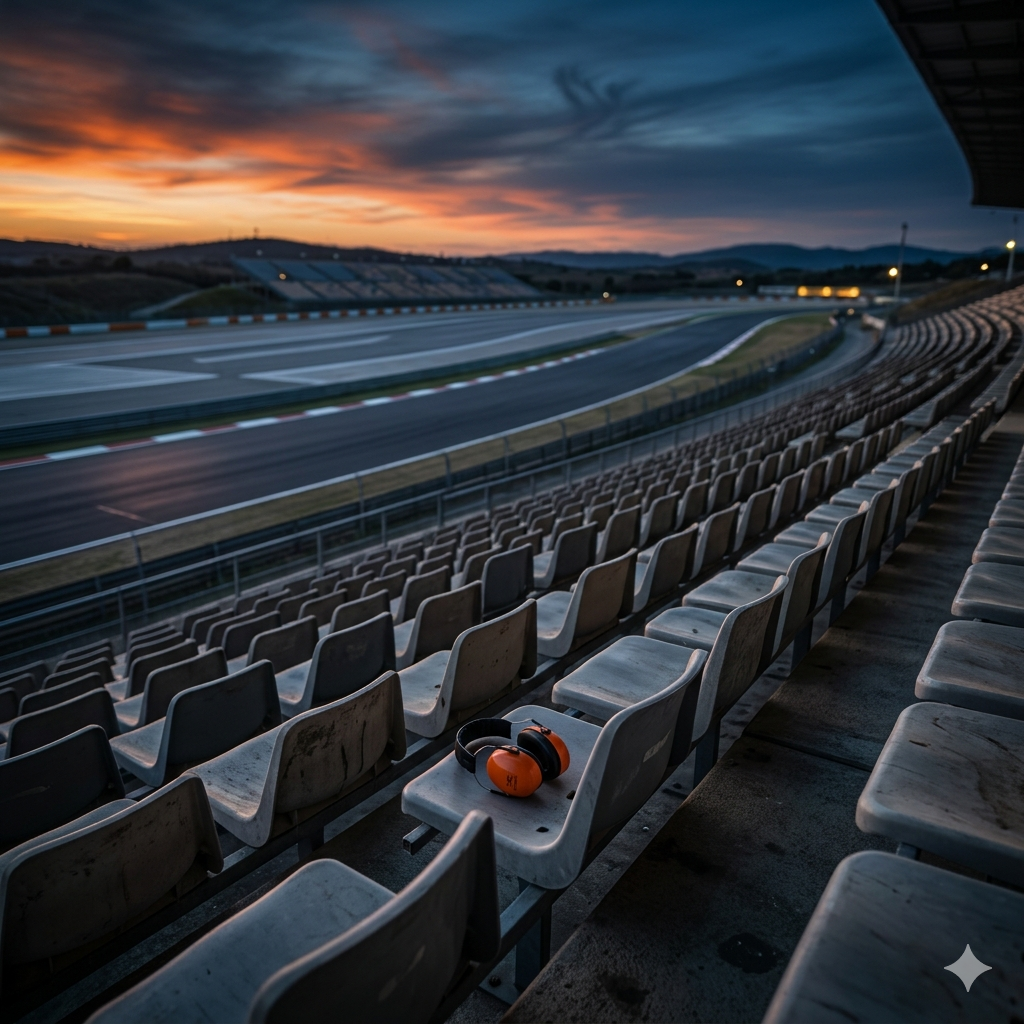
1,200 track limit infringements in a single Grand Prix. V10s at 19,000 rpm silenced by hybrid vacuum cleaners. Refuelling banned so the winner is now whoever exits the single pit stop first. And when drivers asked for gravel to come back, they were told for years it was “impossible.” Until it wasn’t.
This is the fourth MA-FIA instalment. The first three dismantled the rotten governance, Aramco’s Brussels lobbying operation, and the obscene price of racing. Today we tackle what hurts most on a personal level: how the FIA has gutted the spectacle that made you fall in love with motorsport. And done it to your face, selling it as “progress.”
They’ve Taken Everything and Told You It’s for Your Own Good
Think about what a race was 20 years ago. The roar of a V10 that rattled your ribcage from the grandstand. A mechanic wrestling a fuel hose against the clock while the driver waited with the engine screaming. A braking mistake that ended in the gravel, car buried to the axles, driver punching the wheel. A qualifying session where how much fuel you loaded was a strategic gamble that could change everything.
Tension. Risk. Consequences. Visceral emotion.
Now think about what you have today. An engine that sounds like an industrial hairdryer. A single tyre stop where the result is decided in the pit lane. Kilometres of tarmac run-off where you can sail off, lose nothing, rejoin and carry on as if nothing happened. And 1,200 track limit infringements in one weekend — Austria 2023 — because exceeding circuit boundaries has no real consequence.
They haven’t improved the sport. They’ve sterilised it.
Refuelling: When a Pit Stop Was a Battle
Refuelling was part of F1 from the very beginning. Fangio won the 1957 German Grand Prix with a mid-race fuel and tyre stop. Modern refuelling returned in 1994 with centralised Intertechnique rigs pumping fuel at 12 litres per second — 19 times faster than a standard petrol pump.
The refuelling era was chaotic, dangerous, strategically brutal and absolutely fascinating. Teams could gamble on fuel loads: start light, qualify higher, risk two or three stops. Or start heavy, hold station, and hope the rival’s strategy implodes. Every stop was a moment where everything could go wrong. Felipe Massa left Singapore 2008 with the hose still attached. Kimi Räikkönen was doused in fuel by Kovalainen’s loose McLaren hose in Brazil 2009. Jos Verstappen went up in flames at Hockenheim 1994.
Was it dangerous? Yes. Was it exciting? Absolutely. Could safety be improved without eliminating it entirely? Of course. IndyCar still refuels today. NASCAR still refuels. WEC still refuels. None of them decided the solution to risk was to remove the risk entirely.
The FIA banned refuelling in 2010. Official reasons: safety and cost-cutting. But the real effect on the spectacle was devastating. Fernando Alonso nailed it: “Before, if you weren’t competitive, you could run a more aggressive fuel strategy and qualify ahead. Now your qualifying position is more or less your race position.”
Processions. That’s what they left us. Races decided by a single tyre stop where the advantage goes to whoever exits the pit lane first. No drama. No risk. No tension of “will the strategy work or will it all fall apart?”
The Sound: From 140 Decibels to a Sad Hum
F1’s V12 engines exceeded 150 decibels. The V10s, dominant from 1996 to 2005, spinning beyond 19,000 rpm, measured close to 140 dB. So brutally loud that the Belgian GP nearly lost its contract because residents complained about the noise from 800 metres away. In the grandstands, without ear protection, the sound hit you in the chest. You felt the power of those machines in your bones.
In 2014, the 1.6-litre V6 turbo hybrids arrived. Volume dropped 11 decibels — from 145 dB to 134 dB. On a logarithmic scale, 11 dB isn’t “slightly less”: it’s a reduction of over 90% in perceived acoustic power. It’s the difference between an F1 car shaking the grandstand and the Porsche Carrera Cup support race being louder than the headline act.
Bernie Ecclestone opposed it furiously. Said the new engines would kill the sport’s appeal. Engineers argued the V6s were a marvel of thermal efficiency. They were right — technically extraordinary machines. But motorsport isn’t a laboratory. It’s a spectacle. When your support series sounds louder than your premier category, something in the equation doesn’t add up.
The FIA hired “acoustic consultants.” Discussed “megaphone” exhausts. Tweaking broadcast audio. Patches on a hole they’d drilled themselves.
And with 2026 regulations, the electric element of the powertrain becomes even more powerful. The possibility of quieter cars is real. The silence isn’t selling $1,600 tickets.
Gravel: When Mistakes Had a Price
This is the one that guts me the most.
For decades, F1 circuits had gravel traps in run-off areas. If you braked too late, lost the car in a corner, pushed half a metre too far, the gravel caught you. Lap over. Race possibly over. Real consequences for real mistakes. A natural punishment that needed no stewards, cameras or artificial intelligence to work.
From the late 90s, the FIA started replacing gravel with tarmac. The argument: tarmac slows cars more effectively (true in some high-speed lateral cases). Gravel can flip cars if a wheel digs in (true, especially for bikes). And the reason nobody says out loud: circuits depend on track day revenue, and track day clients don’t want to wreck their cars by running half a metre wide.
The result? Kilometres of tarmac where going off costs nothing. At the 2023 Austrian Grand Prix, 1,200 track limit infringements were recorded in a single weekend. Twelve hundred. Stewards spent more time watching track limit cameras than the actual race. Kevin Magnussen at Miami 2024 deliberately used tarmac run-offs to defend his teammate Hülkenberg’s position — racked up over 30 seconds of penalties, but the strategy worked.
And what did the drivers do? Asked for gravel back. Lando Norris at Imola 2024, where the circuit extended gravel zones: “I feel like we’re just returning back to how it was six or seven years ago. I don’t know why they made them tarmac.” Drivers had been asking for gravel for years. The FIA’s response was that “you can’t have gravel everywhere” — until circuits started installing it themselves and it worked perfectly.
Austria 2024: temporary gravel strips at Turns 9 and 10. Infringements collapsed. COTA: synthetic gravel and artificial turf. Infringements collapsed. Imola: extended gravel zones. Infringements collapsed.
It worked every time. The FIA just spent 20 years saying it couldn’t be done.
Gravel isn’t just a safety mechanism. It’s a contract with the driver and the spectator: if you make a mistake, you pay. Without that, races become video game simulators where you can go off, rewind, and carry on. The FIA killed that for two decades. Now, when circuits fix it themselves, they sell it as “innovation.”
What They Really Mean When They Say “Safety”
Let nobody misread this. Safety in motorsport matters. It matters enormously. We’ve lost too many drivers, mechanics and marshals over the years. Advances like the HANS device, the Halo, TecPro barriers, fire suits, on-site medical teams — these are achievements to celebrate and protect.
But there’s an enormous difference between improving safety and eliminating sporting risk.
The Halo saves lives without affecting the spectacle. The HANS protects necks without changing strategy. TecPro barriers absorb impacts without turning circuits into car parks. You can protect the driver without sterilising the competition.
What the FIA has done isn’t about protecting the driver. It’s about protecting the commercial product. A nasty crash on live TV is bad for sponsors. A car on fire in the pit lane is bad for the “sustainability” image. A mistake with real consequences is unpredictable, and unpredictability doesn’t sell well in a Liberty Media PowerPoint.
Safety is the excuse. Control is the motive.
Bloated Calendar, Soulless Circuits
And while they strip out everything that made a race exciting, they give you more races.
24 Grands Prix in 2024. Circuits in Saudi Arabia, Qatar, Bahrain, Las Vegas, Miami. Countries with zero motorsport tradition but enough cash to pay the hosting fee. Circuits designed with the same long straights, the same slow chicanes, the same tarmac run-offs and the same lack of character that means you can’t tell Jeddah from Lusail without checking the map.
Meanwhile, historic circuits like Spa, Monza, Silverstone and Interlagos survive because they have legacy contracts and a fanbase that fills grandstands. But the economic pressure grows every year. The fee a circuit pays to host an F1 race keeps climbing.
The French GP: gone. The Malaysian GP: gone. The German GP — the country that invented the car — hasn’t had a Grand Prix since 2019. But Saudi Arabia has one. Qatar has one. Las Vegas has one.
More races doesn’t mean better motorsport. It means more product. More events to sell to sponsors. More weekends to monetise. F1 mechanics work 14-16 hour days during race weekends. With 24 GPs a year plus testing, sponsor events and travel days, the season has no breathing room. Drivers have spoken out about burnout. Teams have warned about staff wellbeing. But the calendar keeps growing because every new race is a new cheque. The humans who actually make the show happen are just line items on a spreadsheet.
What We’re Left With
They took the refuelling — now whoever exits the pit lane first wins. They silenced the engines — now the support race is louder than F1. They swapped gravel for tarmac — now a mistake costs nothing and stewards need AI to count infringements. They bloat the calendar with cardboard circuits in countries that buy visibility with petrodollars. And they charge you $1,600 for the privilege of watching.
All wrapped in the paper of “safety,” “sustainability” and “the future.” The three magic words that justify every decision that benefits the business and damages the spectacle.
The motorsport we loved didn’t die by accident. It was murdered. Regulation by regulation, decision by decision, contract by contract. And those who killed it are still in charge.
That’s the MA-FIA. And in the next instalment we’re going after something the FIA sells as equality but which, when you look at the data, smells like the exact opposite. F1 Academy. Stay close.
Check you’re still alive.