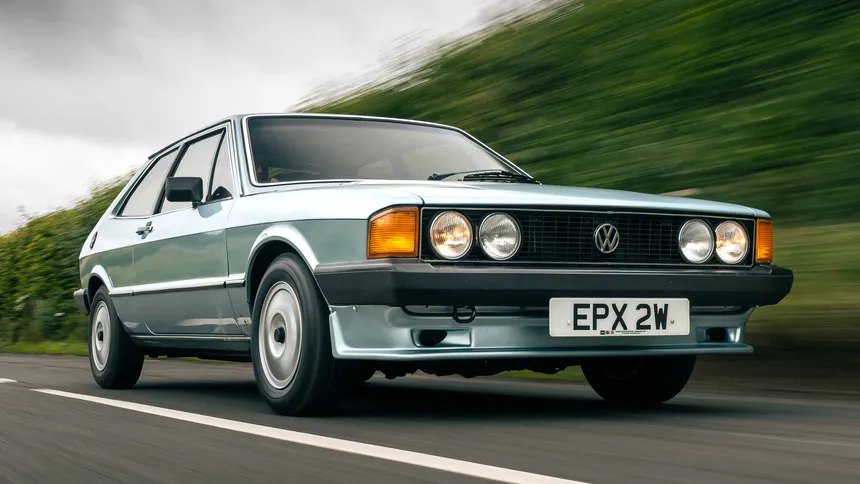
VW Scirocco: the handsome brother who went first to take the bullets for the Golf
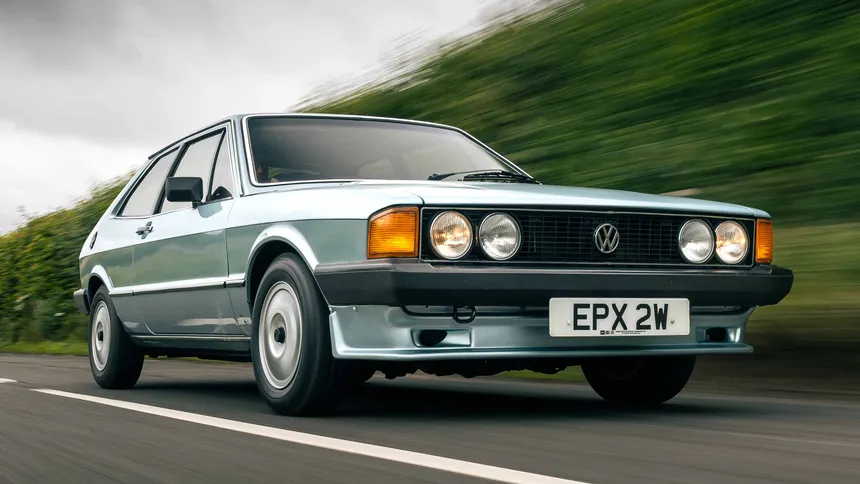
This year everyone celebrated the Volkswagen Golf’s fiftieth birthday. Fair enough: it’s one of the most important cars ever built, the one that saved Volkswagen, the one that invented a whole class. But there’s something almost nobody mentions while the Golf blows out its candles, which is that the Golf has an older brother. A better-looking brother. And that brother hit the road six months before it did.
Not by accident. On purpose. The VW Scirocco launched ahead of the Golf to act as a guinea pig, to walk through the minefield first, so that the factory gremlins would bite it rather than the million-selling hatchback coming up behind. The firstborn sacrificed so the heir could arrive fully sorted. And as if that weren’t enough, it was drawn by one of the greatest geniuses Italian design ever produced. Let me tell you the story of the car that went out front to watch the Golf’s back.
The Karmann Ghia problem
To the beginning. In the early 1970s, Volkswagen had a serious problem, and it wasn’t just the ageing Beetle. It was the entire philosophy. Its cars carried the engine in the back, air-cooled. A recipe dating from the 1930s that was going stale fast against rivals already fitting front-mounted, water-cooled engines driving the front wheels.
Among the cars crying out for replacement was the Karmann Ghia, that gorgeous coupé with Italian bodywork over Beetle mechanicals. Pretty but antique. At Karmann, the Osnabrück coachbuilder that made it, there was an urgent need for a successor.
And here Volkswagen made a decision that changed everything. In 1971, management resolved to develop an elegant coupé and the compact car that would become the Golf at the same time. Two cars, one base, a single design commission. And for that commission they called the very best.
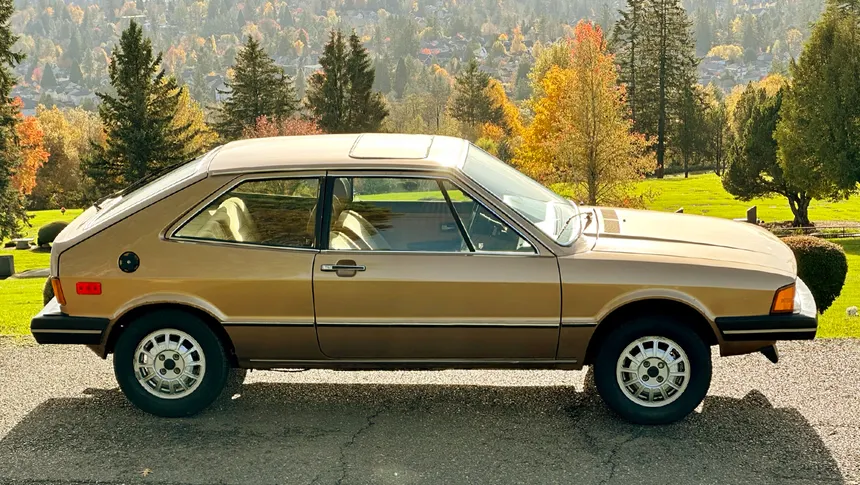
Giugiaro, the master behind both
The man chosen was Giorgetto Giugiaro. If you love cars, that name is hallowed ground. The founder of Italdesign, the pen behind the De Tomaso Mangusta, the Maserati Ghibli, the Lotus Esprit, an endless run of beautiful machines. A genuine Italian genius.
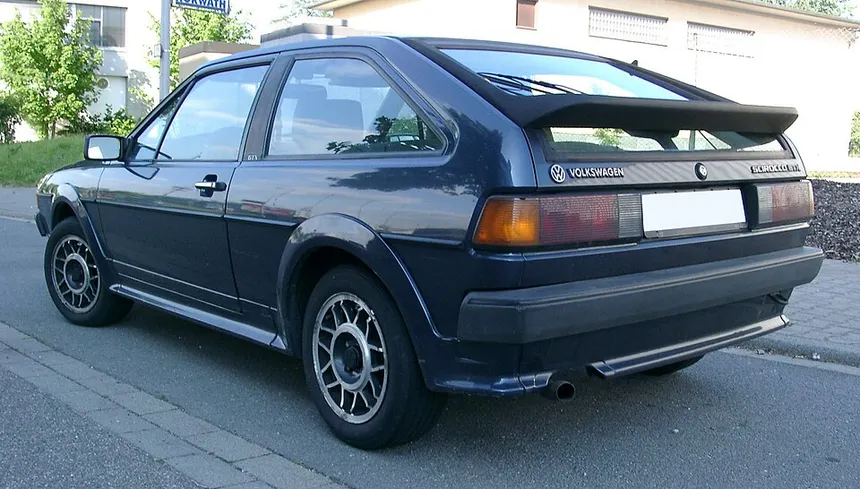
And here’s the detail I love: Giugiaro drew both cars, the Golf and the Scirocco. The same man, the same pencil, the same philosophy of clean, angular lines that, instead of dating, have turned timeless. But the Scirocco got something extra. The Golf had to be practical, rational, a two-box family hatch. The Scirocco was allowed to be handsome. Lower, sharper, sportier. While the Golf solved a problem, the Scirocco told a story.
By the early seventies, Giugiaro was living the most fertile stretch of his career. He’d just founded Italdesign in 1968 with Aldo Mantovani, and was about to revolutionise the very way cars were conceived with his “folded paper” style: taut lines, crisp edges, flat surfaces that broke with the baroque curves of the previous decade. The Golf and the Scirocco were among the first large-scale fruits of that stylistic revolution, and the fact that Volkswagen, the German colossus, trusted a Turin designer to shape the cars on which it staked its survival says everything about the prestige Italian design had reached worldwide.
The name came from the Scirocco, the warm Mediterranean wind. Volkswagen was starting a habit it would keep for decades: naming its cars after winds. Passat, Jetta, Bora, Polo. All winds. The Scirocco was the first.
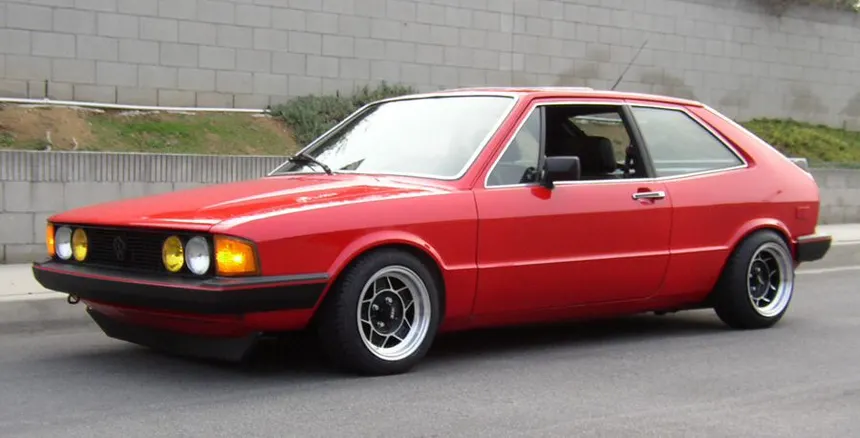
The masterstroke: go first to fail first
Now we reach the heart of this story, the thing that makes the Scirocco so special and so overlooked.
The Scirocco debuted at the 1973 Geneva show and went on sale in 1974. Six months before the Golf. And this wasn’t a question of which was ready first. It was a cold, brilliant strategic call.
Think about it from the factory’s side. The Golf was going to be Volkswagen’s most important car, its great bet for survival, a best-seller that had to launch perfect because it would be built in the millions. A teething fault in the Golf, multiplied by that production scale, was a catastrophe. But the Scirocco was built at Karmann, in far smaller numbers. So Volkswagen did the clever thing: it launched the Scirocco first, let any trouble with the new engines, the new platform, the new way of doing things surface on the lower-volume car, and ironed it out. By the time Golf mass production began, the gremlins had already been caught on the Scirocco.
The Golf still launched with plenty of teething faults. Imagine what it would have been without its brother breaking trail. The Scirocco was the scout who stepped on the mines so the heir could pass safely. And almost nobody thanks it.
There’s a ruthless industrial logic behind this choice, and it’s worth grasping fully. Launching an all-new car means facing the incognita every maker dreads: the faults that only surface when thousands of real customers use the car every day, on real roads, in conditions no test rig fully reproduces. Leaking seals, temperamental electrics, components that give way sooner than expected. If those problems erupt on a car sold in the millions, the reputational damage and warranty costs can sink a company. By launching the Scirocco first, built in a few tens of thousands at Karmann, Volkswagen built itself a safety buffer: a real-world test bed, paid for by the coupé’s customers, that let it reach the Golf’s launch with many knots already untied. Was it cynicism or genius? Probably both. But it worked.
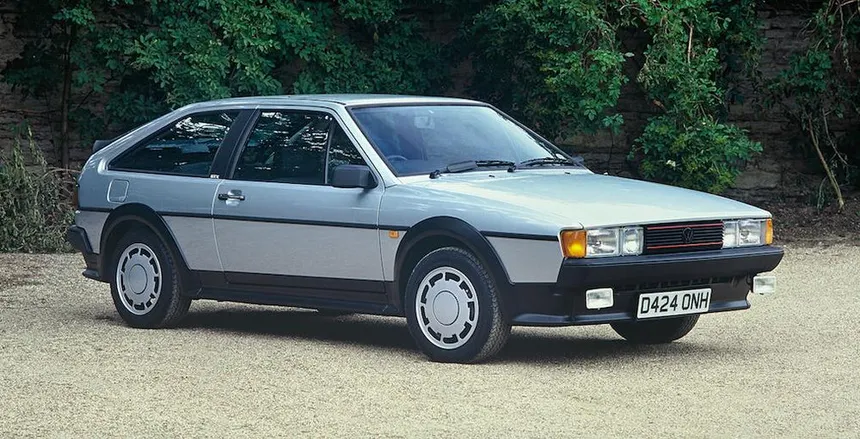
A total break with VW’s past
Although it shared the Golf’s platform, almost every part of the Scirocco was re-engineered for a sportier drive. But the most important thing was what it represented: the definitive break with the old Volkswagen.
Against the Karmann Ghia it replaced, the Scirocco changed everything. Where the Ghia had its engine in the back, the Scirocco put it up front. Where the Ghia was air-cooled, the Scirocco was water-cooled. Where the Ghia had soft, nostalgic curves, the Scirocco had modern edges. It wasn’t an evolution, it was a statement: this is the Volkswagen of the future, and the past stays behind.
You can’t overstate how radical this shift was for Volkswagen. For forty years the brand had been identified with one architecture: rear engine, air cooling, rear-wheel drive. That was the Beetle’s DNA, the car that motorised postwar Germany and conquered the world. Abandoning it meant disowning its own identity, admitting that the formula which had made the company’s fortune was now obsolete. It took nerve, and the Scirocco was the first to carry that confession onto the road. When a customer climbed into that coupé and turned the key, they no longer heard the characteristic burble of the air-cooled boxer behind them, but the clean hum of a water-cooled four up front. It was the sound of one era ending and another beginning.
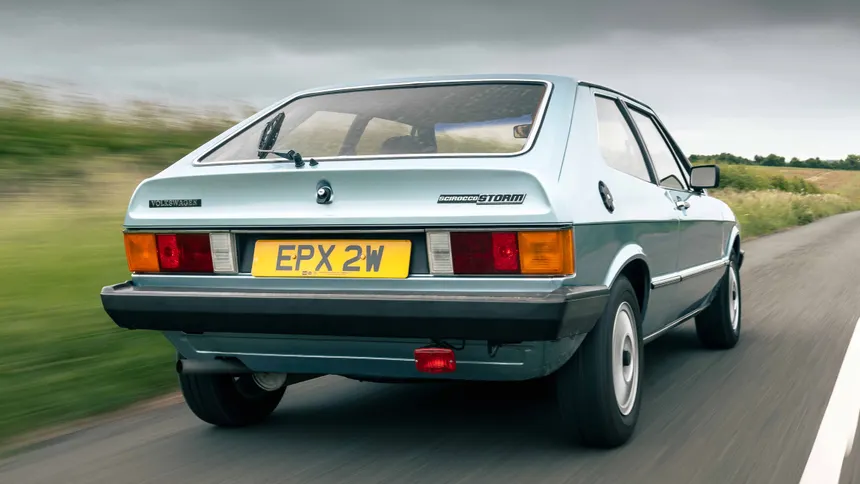
It was a genuine compact 2+2: 3,850mm long, barely 1,310mm tall, a gorgeous low, stretched line. And feather-light: without a driver, the first Scirocco weighed just 800kg. To anyone who knows cars, that’s half the battle won. A light car with modern engines will always be more fun than a heavy one with twice the power.
And those engines were the most advanced of the moment: belt-driven, single-overhead-cam inline fours, happy to rev without complaint. The range opened with a 50bhp 1.1 for the thrifty, rose to a 70bhp 1.5 and topped out in the 85bhp Scirocco TS. At 800kg, that TS moved beautifully. For context, a Lancia Beta Coupé of those years, refined and pleasant as it was, weighed appreciably more, and the Scirocco’s lightness told in every bit of its eagerness through a corner.
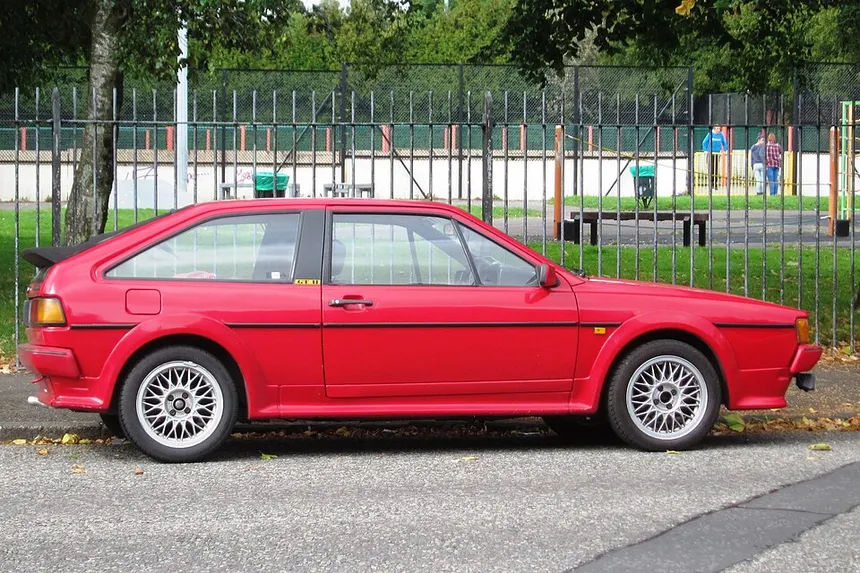
The headlight trick
Here’s a detail that’s pure garage sociology. The humbler Sciroccos, the L and S, wore two rectangular headlamps. The potent version, the 85bhp TS, was recognisable a mile off because it had four round headlamps. It was the ID card: one glance told you whether the bloke ahead had the good one or the weak one.
So what did many owners of the humble Sciroccos do? Swap their two rectangular lamps for the TS’s four round ones, so nobody knew they had the small engine. The ancient art of looking like more than you’ve got, solved with a set of headlights. I love this sort of detail, because it tells you more about how people lived with their cars than any spec sheet. The Scirocco was a car you wanted to be seen in.
A quiet success
The Scirocco Mk1 was built between February 1974 and February 1981. In those seven years, 504,153 rolled off the Karmann lines. More than half a million coupés. Not bad at all for a car that always lived in the shadow of its best-selling brother.
Then came the Scirocco Mk2, which lasted until 1992, and many years later Volkswagen revived the name with a Mk3 between 2008 and 2018. But the soul of the car, what made it special, was already there in that first Giugiaro Type 53. Everything that came later was a variation on a theme the Turin master had set down perfectly the first time, and half a century on those crisp original lines still look right in a way few designs from the era manage.
The NEC verdict
The Scirocco is, of this whole coupé series, the most generous. And that’s its lesson.
Because every other car in this series chased the spotlight. The Manta wanted to be the working man’s coupé, the Monza dreamed of rubbing shoulders with Mercedes, the Calibra sold a record, the Capri wanted to win championships. The Scirocco, by contrast, was born for a humbler and nobler role: go first, take the problems, and clear the path for its little brother to triumph. It was the firstborn who sacrifices himself for the family.
And the loveliest part is that it didn’t need to make noise to be good. While the Golf became a legend and took all the glory and all the anniversaries, the Scirocco was content to be what it was: the handsome brother, the one with the Giugiaro line, the light and fun one, the one you genuinely wanted to drive. The one who opened the road so everything else could exist.
So this year, when you hear once more about fifty years of the Golf, remember one thing: before the Golf, there was the Scirocco. It went first, it failed first so the other wouldn’t, and it did so with the grace of something that knows glory doesn’t always go to the one who deserves it most. Sometimes the best car in the family is the one who let the other shine.
Check you’re still alive.