Ford Capri: the Cortina in a tuxedo that humbled BMW and Alfa Romeo
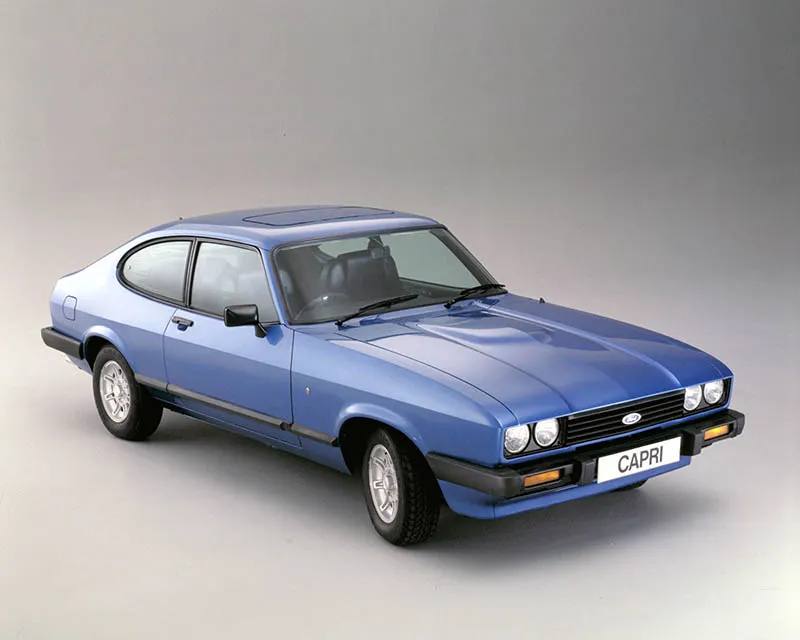
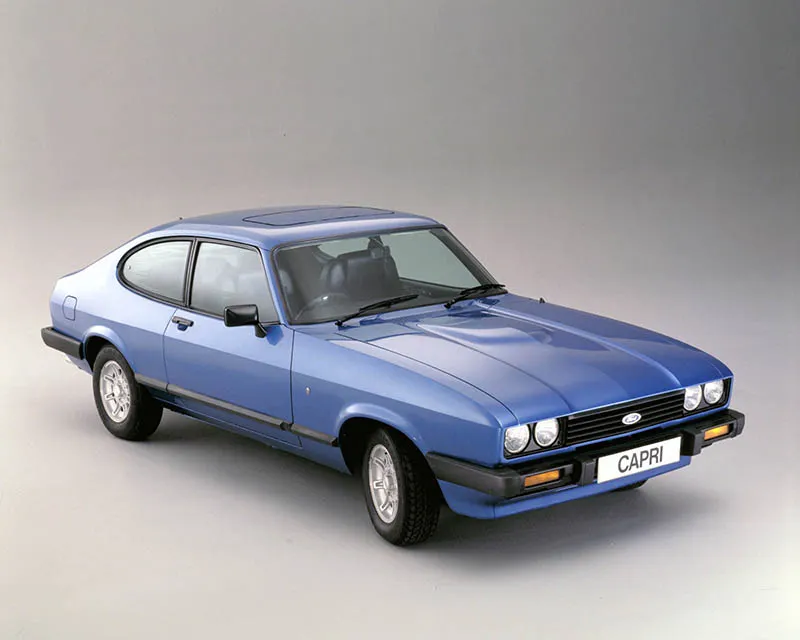
For a car that spent two decades being mocked as a hairdresser’s motor, the Ford Capri has a remarkable secret hiding under its skin. Underneath that long-bonneted, fastback glamour sat a humble Ford Cortina. The most ordinary of family saloons. And with that Cortina in a party frock, Ford went to Spa and the Nürburgring and beat BMW and Alfa Romeo to the European touring car crown, machines that were, on paper, far more sophisticated. The car you always promised yourself turned out to be the car that always won.
This is the story of the great equaliser, the coupé that put glamour within reach of the working man and then went racing and embarrassed the aristocracy.
The car you always promised yourself
Start with the line, because it’s one of the finest in motoring advertising history. When Ford launched the Capri in 1969, it sold the thing with a slogan that’s pure psychology: “the car you always promised yourself.”
Think about what that line does. It doesn’t sell you horsepower. It doesn’t sell you technology. It sells you a promise you made to yourself as a young man, dreaming of owning something beautiful one day. The Capri said: that day is here, and you can afford it. It was glamour on the never-never. And it worked like few things ever have: nearly 1.9 million sold across eighteen years. Eleven years after launch it was still a UK top-ten seller, something unthinkable today.
Europe’s Mustang
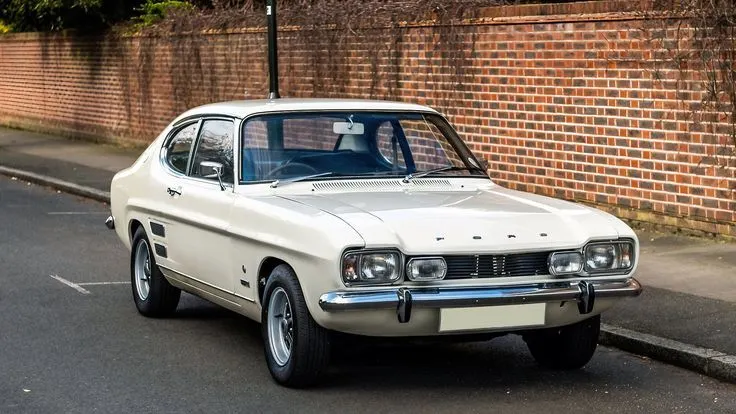
The idea came from America. In 1964, Ford had blown the market apart with the Mustang, an affordable four-seat sporty car built on the humble Falcon platform. The question in Europe wrote itself: why not do the same here?
So began Project Colt, signed off in July 1966 and unveiled at the Brussels show in January 1969. And here’s a detail almost nobody knew until 2010: the Capri was designed by Philip T. Clark, an American who’d worked on the Mustang itself, and had even chosen its name and drawn the famous running-horse badge. The same man behind both cars. Which is why, when you see a Capri in profile, with its endless bonnet, stubby tail and fastback line, you’re looking at a Mustang translated into European. Smaller, narrower, but with cleverer use of space inside, because Ford wanted to sell it as a genuine four-seater.
Mustang glamour, Cortina guts
And here’s the masterstroke, the very trick we’d watch the Opel Manta copy straight afterwards. To make the Capri cheap to build and cheap to run, Ford invented nothing new underneath. It took the guts of the Cortina Mk2, its best-selling family saloon. MacPherson struts up front, a live rear axle on leaf springs, rack-and-pinion steering lifted from the Escort, and engines that already existed across the Ford range.
Grasp this properly, because it’s the key to everything. The Capri’s whole philosophy was that there was no reason a four-seat coupé couldn’t look stunning and be quick while being as cheap and easy to live with as an Escort. Before the Capri, GT cars tended to be expensive, temperamental and impractical. The Capri democratised the coupé. It put it within reach of the ordinary worker. And it genuinely didn’t matter what lurked under the bonnet: the humblest 1.3 wore the same style as the 3.0, just without the punch. You bought the image, and the image was identical for everyone.
The range opened at 1.3 and climbed through the 1.6 and 2.0 Pinto units to the 3.0 Essex V6, which arrived in October 1969. That 3.0 had grunt and top speed to spare, but here’s a detail of the sort we enjoy: it was heavy, and that gave the Capri 3000 a real appetite for understeer. The engine that promised most on paper wasn’t always the one that balanced the car best. That’s what happens when you drop a big lump into a chassis born for something more modest.
The RS2600 and the humbling of the Germans
Now to the part that truly makes the Capri a legend, and it isn’t the telly car or the hairdresser’s car. It’s the racer.
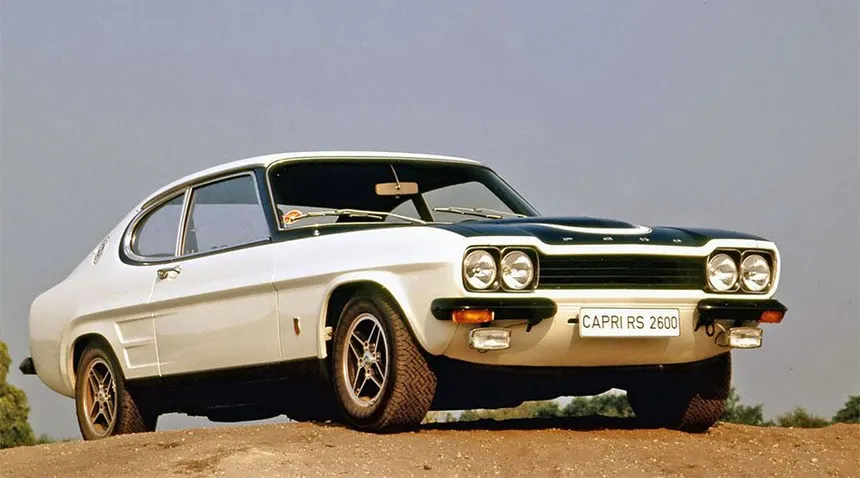
Ford of Europe had an obsession: winning the European Touring Car Championship, the ETCC. Its great enemy was BMW. To go racing, the rules demanded a homologated road version. Thus the Capri RS2600, developed by Ford’s special vehicles arm. It carried a bespoke version of the Cologne V6 fettled by the specialists at Weslake, with Kugelfischer mechanical injection. The road car did 0-62mph in 7.7 seconds, blistering for the era, and 3,532 were built, many of them genuine lightweight competition cars, some stripped even of bumpers to save weight.
And what happened on track? The Capri RS2600 won the European Touring Car Championship in 1971 and again in 1972. Two years running. And here’s the lovely bit: those wins were especially painful for BMW and Alfa Romeo, fielding cars that were, on paper, more technologically advanced and that should, in theory, have won comfortably. They didn’t. They were beaten by the car that was a Cortina underneath. At Spa, at the Nürburgring, on Europe’s most demanding circuits, the working man’s coupé brought German and Italian motoring royalty to its knees.
That’s the Capri’s real greatness. Not the sales, not the glamour. The day a car based on a family saloon beat the self-styled superior brands in their own back yard.
The RS3100 and the homologation fiddle
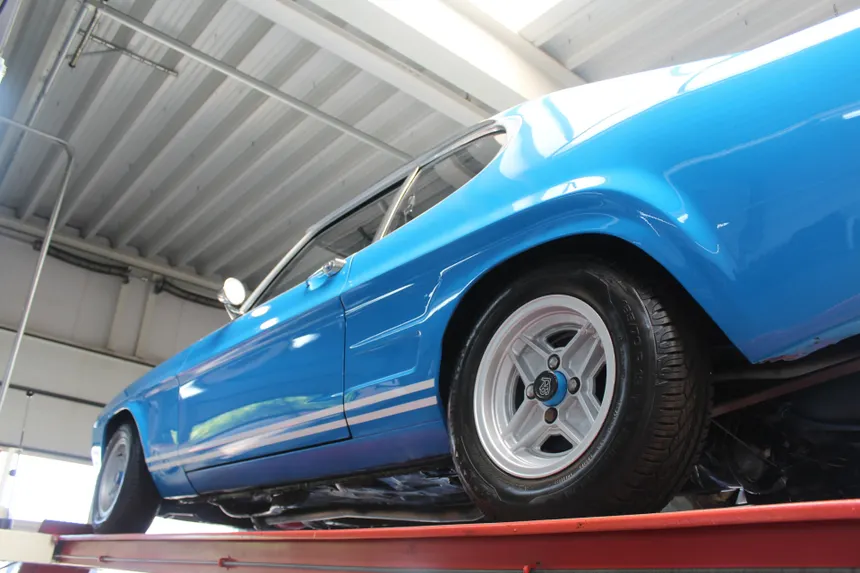
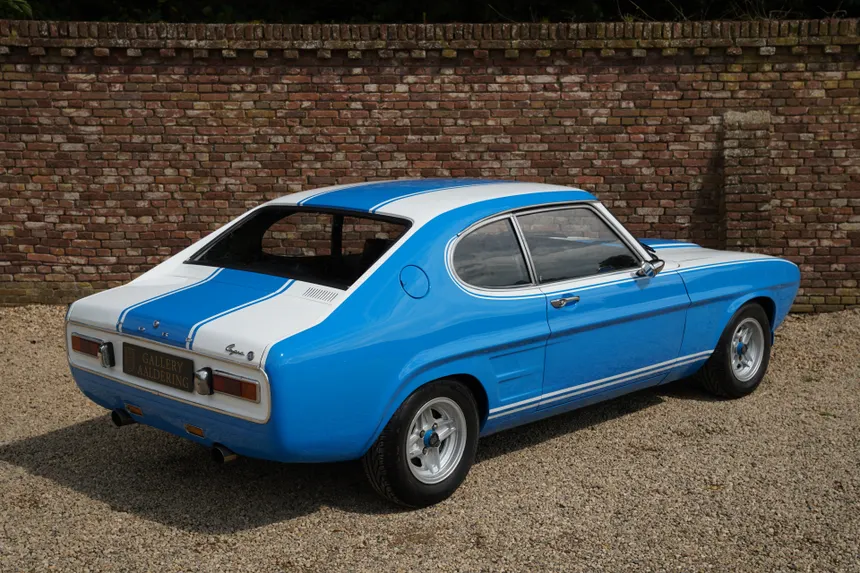
In 1973 came the second RS, the RS3100, this time British-built at Halewood. It ran an Essex V6 stretched to 3.1 litres, 148bhp, a ducktail spoiler to counter the BMW CSL‘s downforce, and sports suspension with Bilstein dampers.
And here’s a very Ford detail. To homologate the car for racing, the rules demanded a minimum run of road cars. The story goes that Ford diligently committed to building them… and actually made no more than 250. Well short of the requirement. Some had to be shipped to Australia to shift them, others ended up driven by Ford’s own area sales managers, because there was simply no selling them. The race version, by contrast, was a monster: with aluminium Cosworth heads, twin cams and four valves per cylinder, that V6 made up to 455bhp at 8,500rpm. From a car that started life as a Cortina.
The phantom 4×4
Here’s a gem almost nobody knows. Ford developed prototype Capris with four-wheel drive, using Ferguson technology, the same outfit tangled up in these schemes back then. The idea came from rallycross, that made-for-TV spectacle run on closed circuits.
But the project died for several reasons. Driver Roger Clark hated the car for its weight and preferred to keep rallying his Escort. And above all, Ford was selling every single rear-drive Capri it could build, so an expensive, complex 4×4 was commercially surplus to requirements. An enterprising New York dentist, convinced his Capri needed only all-wheel drive to win in the States, struck a deal with Ferguson for fifteen cars, several of which survive. The Capri 4×4 was the right car at the wrong time. That technology would surface years later in the Sierra XR4x4, a bigger car with room for all the hardware without eating the cabin.
The NEC verdict
The Capri is, to me, the great equaliser of its age. And its lesson is the loveliest of this whole coupé series.
Because the Capri understood something the Manta would try to copy and that defines all these cars: that desire isn’t bought with horsepower, it’s bought with image. That a lad in a 64bhp 1.3 could feel exactly as good as the bloke in the 3.0, because from the outside they were the same car, the same dream parked at the kerb. That’s democratising emotion. That’s putting glamour within reach of the man who clocks on every morning.
But the Capri wasn’t only image, and that’s why it’s bigger than the Manta. When it pulled on its racing overalls, that same humble-gutted car went to the cathedrals of European motorsport and beat whoever claimed to be better. The Capri proved both things at once: that a people’s car could make millions dream, and that the same people’s car could humble royalty when it chose to.
That’s why, all through this series, the Capri has been the shadow the others measured themselves against. Not because it was fastest or most sophisticated. But because it understood everything first. The car you always promised yourself turned out to be the car that always won.
Check you’re still alive.