
Turbocharger explained: how it works and why turbo lag isn’t one thing
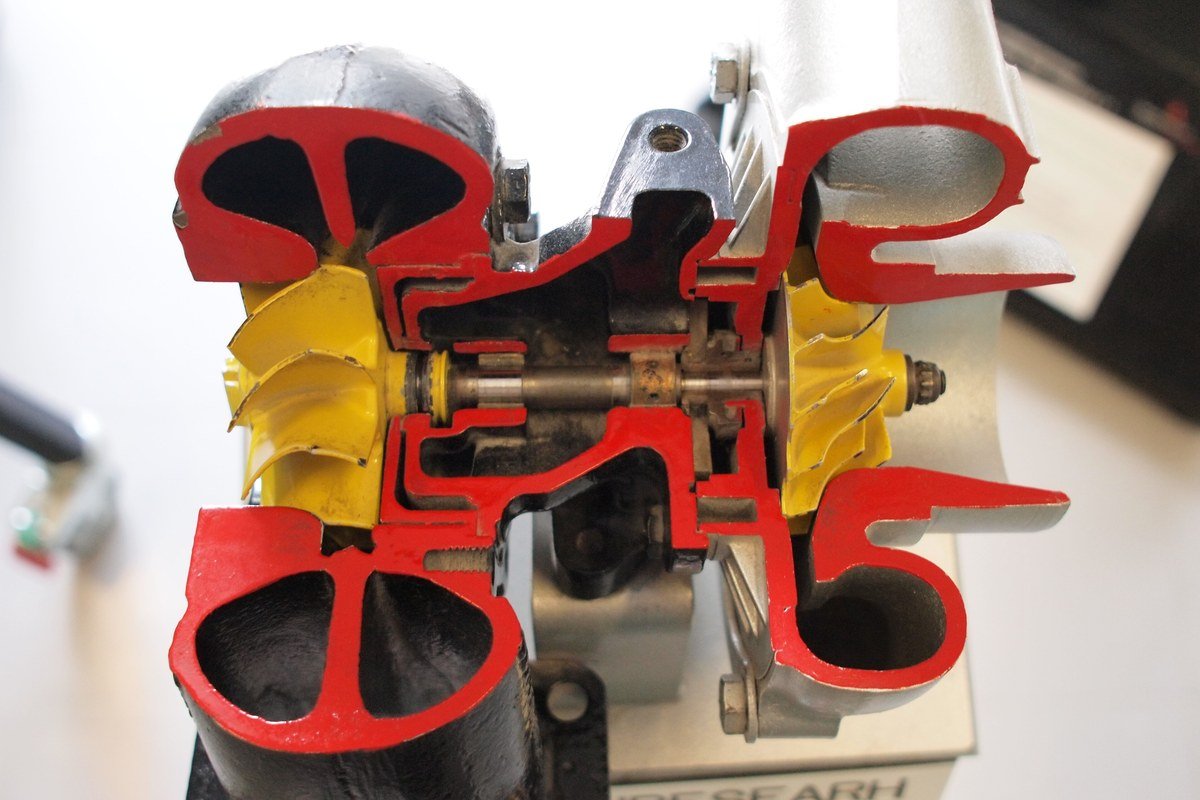
Every engine you have ever driven throws away roughly a third of the fuel you paid for straight out of the tailpipe, as heat and pressure. Not a rounding error. A third. Somebody had to look at that hot, roaring mess and see money in it, and the first man who wrote it down properly was a Swiss engineer named Alfred Büchi, who patented the idea in 1905. Spin a turbine with the exhaust, put a compressor on the other end of the same shaft, and let the engine’s garbage pay for its own breathing.
In the last chapter we looked at the supercharger, which does the same job of stuffing extra air into the cylinders but takes its power off the crankshaft with a belt or gears. Every horsepower that blower eats is a horsepower the wheels never see. The turbocharger was supposed to be the clean answer to that, and for the most part it is. But it comes wrapped in two pieces of folk wisdom that get repeated at every cars-and-coffee in the country: that a turbo is free power, and that “turbo lag” is a single thing. Both are wrong, and the second one is wrong in a way that explains why some turbo cars feel brilliant and others feel broken.
A pinwheel at each end
Strip a turbo down and it’s two fans and a stick. On the hot side, exhaust gas comes out of the manifold and rushes through a snail-shaped housing, where it hits a turbine wheel and spins it. That turbine is bolted to a shaft. On the far end of the shaft, in a second snail-shaped housing on the cold side, sits the compressor wheel, which turns at exactly the same speed because it’s the same piece of metal.
The two wheels do opposite jobs. The turbine pulls energy out of the gas flowing through it. The compressor wheel puts energy into air: it sucks fresh air in at the center, slings it outward at enormous speed, and the housing slows that air down and turns the speed into pressure. That pressurized air goes into the intake, the cylinders get a denser charge than the atmosphere alone could give them, and you can burn more fuel per stroke. More fuel burned, more power.
If that compressor wheel sounds familiar, it should. It is the same kind of impeller as the centrifugal supercharger, the ProCharger and Vortech stuff bolted onto Mustangs and Camaros, the type that sits in the “dynamic” family rather than the positive-displacement family of Roots and twin-screw blowers. The cold half of a turbo and a centrifugal blower are cousins. What changes is who’s paying for the spin: the crank, through a belt, or the exhaust, which was headed for the muffler anyway.
The bill nobody mentions
So the exhaust is free, the turbo eats exhaust, the turbo must be free. That’s the logic, and it’s about ninety percent right, which is the kind of right that gets people into trouble.
Think of a water wheel dropped into a river. The current turns the wheel, fine, but the wheel also gets in the current’s way. The river backs up behind it. A turbine in an exhaust pipe does the same thing: it’s an obstacle, and the gas piles up in front of it. Engineers call that exhaust backpressure. On every exhaust stroke the piston has to shove the burnt gas out against that pressure, and that shove costs work. It shows up as pumping loss, and it comes straight out of what the crankshaft delivers.
The backpressure has a second side effect. Some burnt gas doesn’t make it out of the cylinder before the intake valve opens, and it hangs around. That residual gas takes up room that fresh air should have filled, it carries no useful oxygen, and it’s hot, so it heats up the next charge. How much of this happens depends on the engine, the rpm, the load and the cam timing. Anybody who quotes you a single tidy percentage for it is guessing.
Now the other side of the ledger. While the turbine is raising pressure in the exhaust, the compressor is raising pressure in the intake, and high intake pressure actually helps the piston on its way down. The real pumping balance comes from both pressures together over the whole cycle. In most of the places an engine actually runs, the deal comes out clearly ahead, which is the entire reason turbos took over the industry. There are corners of the map, certain rpm and load points, certain designs, where the margin gets thin. A turbo recovers wasted energy and charges a commission on it. It’s a great deal. It just isn’t a free one.
Lag and boost threshold are two different animals
Here’s the one that matters. Ask ten people what turbo lag is and nine will describe the same thing: you floor it, nothing happens, nothing happens, then the car tries to rip your arms off. They call all of that lag. It’s actually two separate effects with separate causes, and once you can tell them apart you’ll never feel a turbo car the same way again.
Lag is a delay in time. The turbine and compressor are a spinning mass, and a spinning mass doesn’t like to change speed. When you open the throttle at, say, 4,000 rpm, the engine immediately starts pushing out more exhaust, but the rotor needs a moment to accelerate from whatever it was idling at to the speed where it makes real boost. Rotor inertia is the big part of it. So is how fast the exhaust energy itself rises, how long it takes to fill the intake tract with pressure, and whatever the engine computer and wastegate allow. Bottom line: lag is a wait. It ends.
Boost threshold is a limit in rpm. It’s the lowest engine speed at which the turbo can hold a given boost pressure at a given load. Below that point there just isn’t enough exhaust energy to spin the turbine fast enough, and waiting won’t fix it. At 1,800 rpm a big turbo might make a few psi, but never the boost it was sized for, no matter how long you hold the pedal down. Load matters too: at the same rpm, a wide-open throttle sends a lot more energy down the pipe than cruising does.
That’s the practical test. Lag is a pause you feel even when you’re already in the right rev range. Threshold is a zone on the tach where the boost simply isn’t available. A turbo can have hardly any lag and a sky-high threshold, or the reverse. The classic old-school turbo experience, dead below 4,000 and then a sledgehammer, is mostly threshold, with some lag on top. Calling the whole package “lag” is like calling every engine problem “the transmission.”
It flew before it drove
Büchi’s 1905 patent was right on paper and stubborn in metal. His first working prototype, finished in 1915, couldn’t hold steady boost and never went into production. The turbo’s first real customer turned out to be the sky.
Engines lose power as they climb because the air thins out, and that was a problem for military aircraft in World War I. General Electric put an engineer named Sanford Moss on it. Moss hauled a Liberty L-12 aircraft engine up Pikes Peak, above 14,000 feet, fitted it with an exhaust-driven compressor and showed that he could claw back most of the power the altitude was stealing. By World War II, GE turbo-superchargers were hanging off the engines of the B-17 and B-24 bombers and the P-38 Lightning, which is why those airplanes could do their work at altitudes where unblown engines gasped.
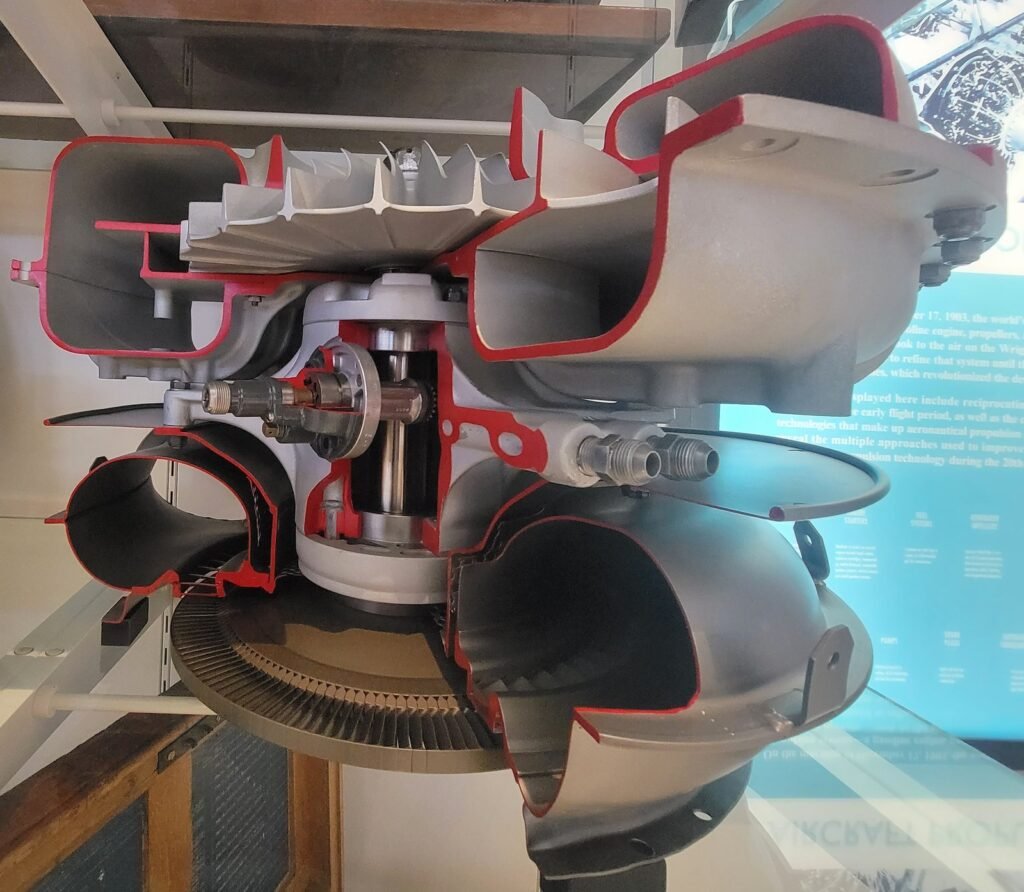
On water, Brown Boveri delivered its first heavy-duty turbocharger in 1924, and in 1925 Büchi’s turbos went onto the ten-cylinder diesels of two German passenger liners, the Preussen and the Hansestadt Danzig, raising output from roughly 1,750 to 2,500 hp. On a ship, nobody cares how big the turbo is or how quickly it responds.
Before turbos ever reached a showroom, they took a shot at the Brickyard. In 1952 the Cummins Diesel Special, a turbocharged diesel race car, put Fred Agabashian on pole for the Indianapolis 500. It didn’t finish. The turbo’s intake sat low on the car and swallowed rubber and debris off the track until it choked, about seventy laps in. A diesel on pole at Indy, done in by its own turbo’s appetite.
Detroit got there first, and wished it hadn’t
The first turbocharged production cars were both American and both from 1962. Oldsmobile beat Chevrolet by a few weeks with the F-85 Jetfire, which took the little 215-cubic-inch aluminum V8 and pushed it to 215 hp, one horsepower per cubic inch, a big talking point at the time. To keep it from detonating itself to death, Olds added a water-methanol injection system fed from a reservoir the owner had to keep topped up with what the company called Turbo-Rocket Fluid. Owners didn’t. Engines suffered, and plenty of dealers ended up converting Jetfires to a conventional four-barrel setup.
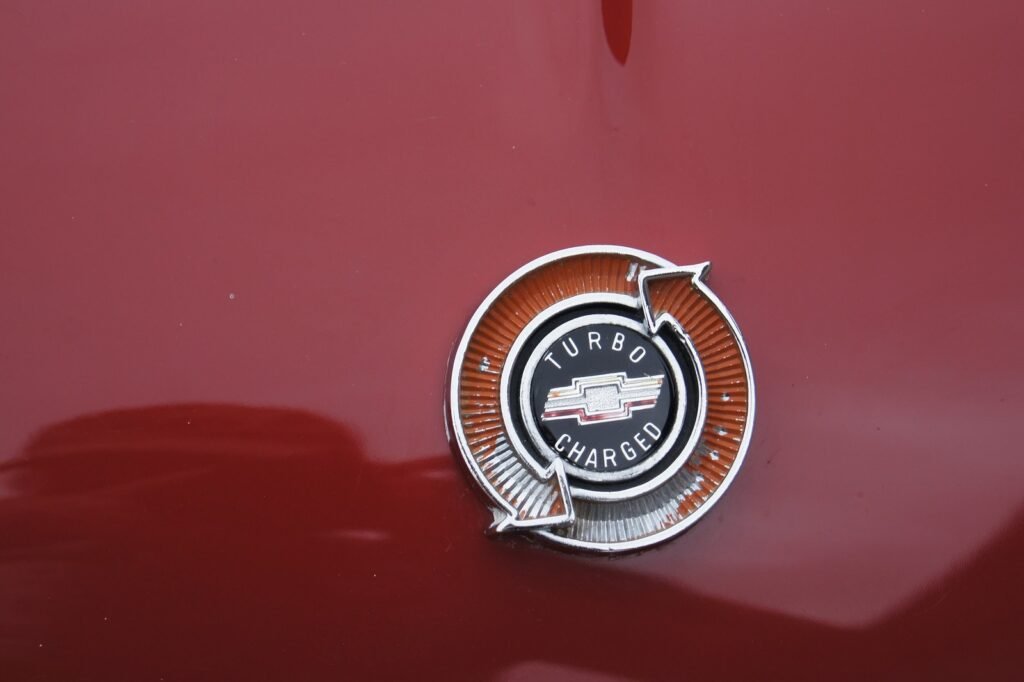
Chevrolet’s answer was the Corvair Monza Spyder, with a turbocharged air-cooled flat-six making 150 hp. It was better behaved than the Jetfire and lasted longer, but it was a niche car in a lineup that was about to get hit by Ralph Nader. Both cars were early, ambitious and short on development. GM walked away from turbos for years.
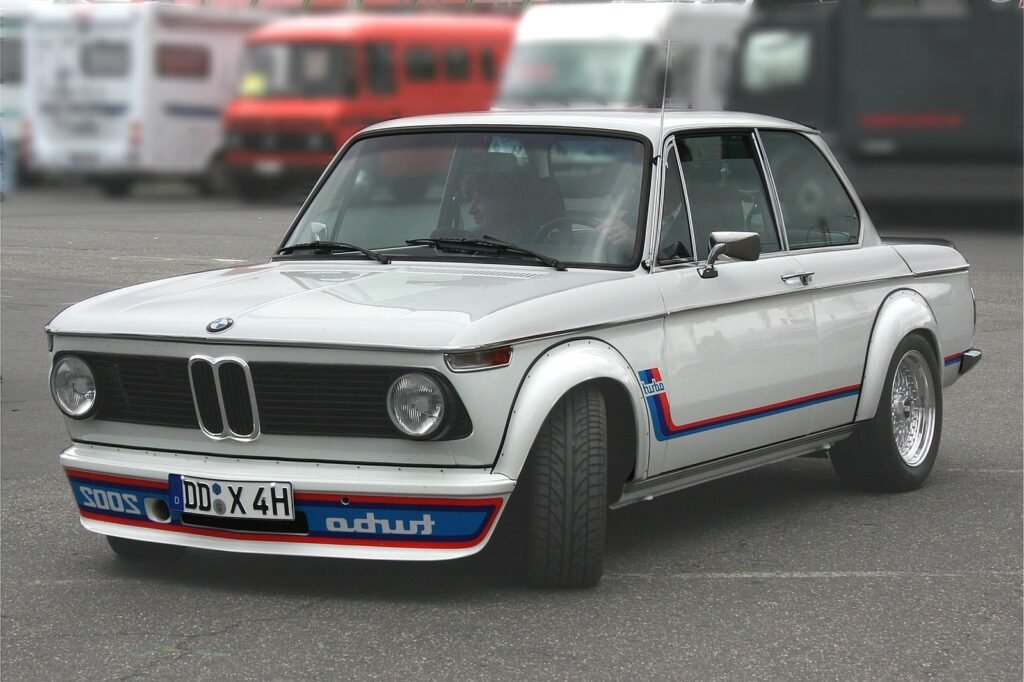
Europe’s turn came at the 1973 Frankfurt show with the BMW 2002 Turbo, the first turbocharged production car from a European maker. A KKK turbo blowing just over half a bar, around 8 psi, took the 2002’s fuel-injected four from about 130 to 170 hp. It had the full old-school character: almost nothing below the threshold, then everything, sometimes right as you turned into a corner. The front spoiler carried the word “turbo” printed backwards so it would read correctly in the rear-view mirror of whoever was about to be passed, which went down about as well as you’d expect with German politicians. Then the oil crisis hit weeks later, with car-free Sundays and a 100 km/h limit on the Autobahn. BMW built 1,672 of them and none were sold new in the States.
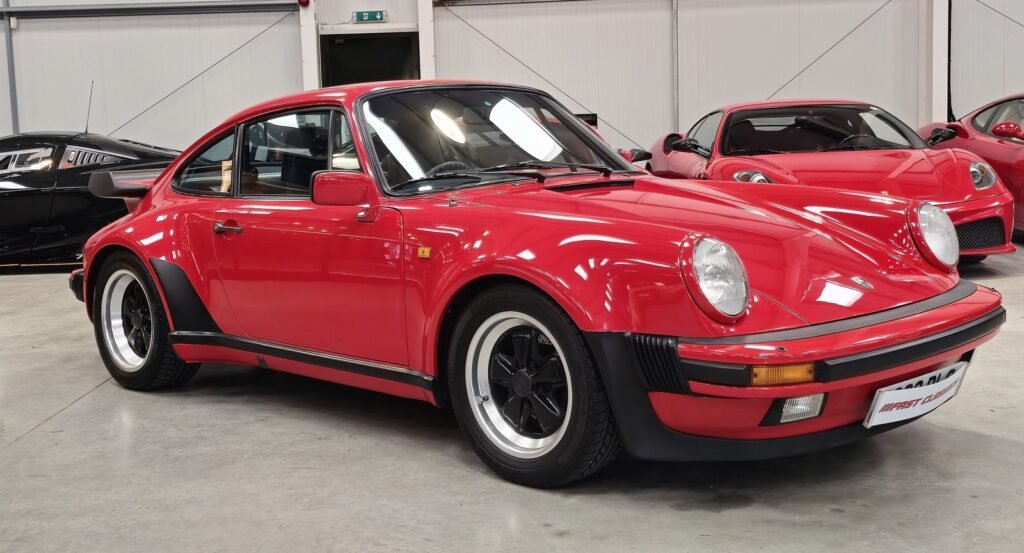
Porsche showed up with the 911 Turbo, the 930, in 1975, and gave turbo lag its legend. The engine sat behind the rear axle, the boost came in late and hard, and if it arrived mid-corner with your foot planted, the tail went where physics told it to. The nickname “widowmaker” stuck. It became a bedroom-wall poster for an entire generation of American kids anyway, maybe because of it.
The Spanish angle: 1972, a turbo truck
Here’s a piece you won’t find in most turbo histories written in English. While turbo street cars could still be counted on one hand, the Spanish state truck maker Pegaso was already putting turbos into heavy trucks.
At the 1972 Barcelona Motor Show, Pegaso launched its new heavy range with a 10.5-liter six that made 200 hp naturally aspirated and 260 hp with a turbo. That’s a year before the BMW 2002 Turbo went on sale. A diesel truck and a gasoline sports car aren’t the same contest, so nobody should claim Spain was out-engineering Munich. The point is that where a turbo made the most obvious business sense, a big diesel that has to pull away loaded and recover after every gear change, a Spanish manufacturer adopted it early. At the same show Pegaso announced a new 12-liter engine, and the turbocharged version of it went on to make 352 hp, which made it the most powerful truck on sale in Europe, two horsepower clear of the Scania 141.
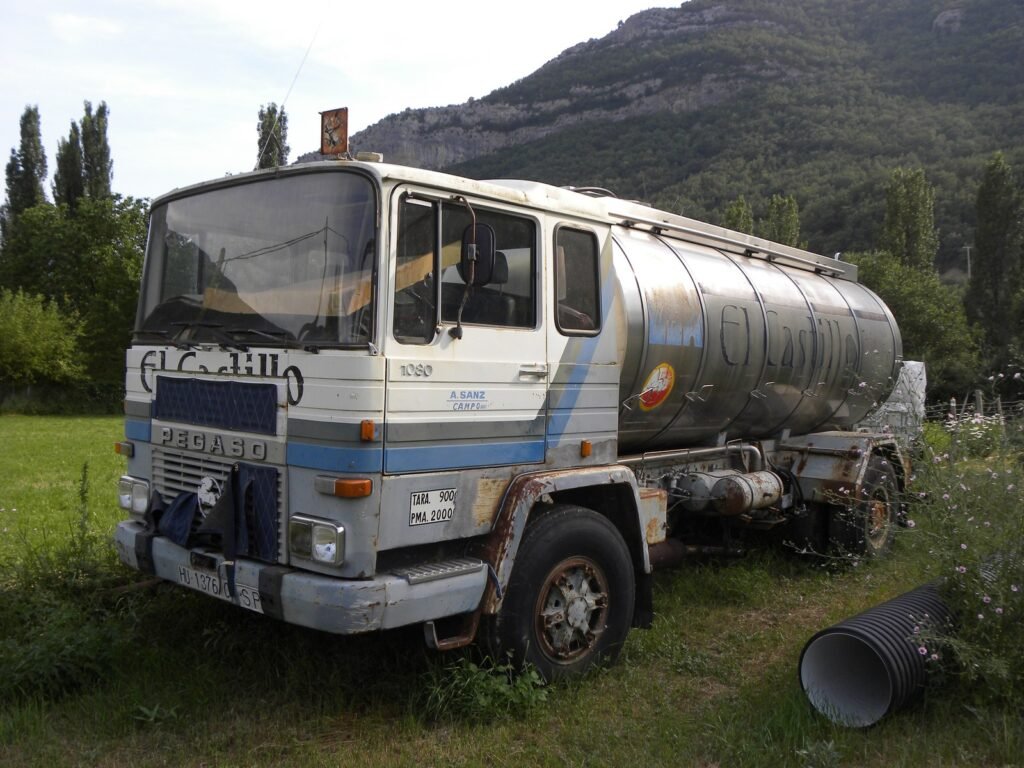
In 1985 Pegaso followed up with the TECNO range: a 12-liter turbo making 310 hp, and an intercooled version, with the compressed air cooled before it entered the engine, making 340 hp. We’ll get to intercoolers properly in a later chapter. For now, picture a Spanish truck with a turbo and an intercooler in the mid-’80s, at a time when plenty of sports cars still breathed through carburetors. Pegaso’s story is better known for the Z-102 sports car, but the trucks are what paid the bills.
What came after the slow ones
From there the turbo moved down the food chain. By the mid-’80s Europe was full of small hatchbacks running boost, the Renault 5 GT Turbo and the Fiat Uno Turbo i.e. among them, with lag and threshold you could feel in your spine, and Detroit came back to the idea with cars like the Buick Regal turbos. The engineering never really stopped trying to fix the same complaint.
So here is where the series stands. The naturally aspirated engine waits for the atmosphere to push air in. The supercharger pushes for itself and bills the crankshaft. The turbo pushes with energy that was going out the tailpipe anyway, and charges a smaller fee in backpressure. That’s why it won almost everywhere. What it brought with it, and what the blower never had, is that response problem, which you now know is really two problems: the transient delay called lag, and the rpm floor called boost threshold.
The war on both has been going for half a century: variable geometry, sequential twin turbos, rally anti-lag systems that fire flames out the exhaust, electric turbos. The cleverest weapon was Formula 1’s MGU-H, an electric motor-generator sitting on the turbo shaft. It could harvest energy from the exhaust like a normal turbine, and it could also run backward and spin the compressor up with electricity before the exhaust had caught up. Lag, handled at the source. Mercedes even put one in a road car, the AMG ONE. Then F1’s 2026 rules threw the MGU-H out for being too expensive and too complicated for new manufacturers to build. The best answer to lag got killed in a budget meeting.
Next chapter: the war on lag itself, from variable vanes and twin-scroll housings to anti-lag and the electric turbo, and how engineers spent fifty years trying to get boost down low without losing the hit up top.
Check you’re still alive.
Photos: Tommi Nummelin (CC BY-SA 3.0), Votpuske (CC BY 4.0), Greg Gjerdingen (CC BY 2.0), Lothar Spurzem (CC BY-SA 2.0 de), Calreyn88 (CC BY-SA 4.0), Joost J. Bakker (CC BY 2.0).