Title: The Ford GT40: How a Billionaire’s Grudge Built the Greatest Race Car in American History
There are cars born from engineering. Others from passion. And then there’s the Ford GT40 — born from pure, unfiltered revenge. This isn’t just a race car story. It’s the story of corporate America going to war with old-world European racing royalty, and winning in the most spectacular fashion imaginable.
If you grew up anywhere near American car culture, you’ve heard pieces of this story. Maybe from the movie. Maybe from your dad. But the full, unvarnished truth of how Ford built the GT40 is wilder than any Hollywood script — and a lot messier.
The Deal That Blew Up
To understand the GT40, you need to go back to 1963. Henry Ford II — “The Deuce” — was running Ford Motor Company and had a problem. Ford’s image was practical. Reliable. Boring. The brand that built the F-Series and the Falcon wasn’t exactly setting hearts racing. Meanwhile, Ferrari was winning everything in European motorsport and dripping with prestige.
Ford’s solution was simple: buy Ferrari. The negotiations went on for months. Enzo Ferrari was in financial trouble, and a deal worth approximately $18 million seemed close to done. Then it fell apart. Enzo had one non-negotiable demand: total control over Ferrari’s racing program. Ford’s lawyers wouldn’t allow it. And Enzo, never one to mince words, reportedly told the Ford delegation to go back to making trucks for farmers. That Ford was nothing but a factory for the common man.
Henry Ford II didn’t just walk away mad. He walked away with a mission: beat Ferrari at Le Mans. Not compete. Not show up. Beat them into the ground. And when the man running the biggest automaker in America puts his mind — and his checkbook — behind something like that, things move fast.
Building the Weapon
Ford had zero experience building prototype endurance racers. So they did what American corporations do best: bought the talent. The project kicked off in 1963 when Ford acquired rights to Eric Broadley’s Lola Mk6 GT. Broadley’s design already showed promise with a Ford V8 powertrain, and it became the foundation.
Ford Advanced Vehicles (FAV) was established in Slough, England, under John Wyer’s direction. Why England? That’s where the chassis and aerodynamics expertise lived. American muscle needed British finesse. The combination looked unbeatable on paper.
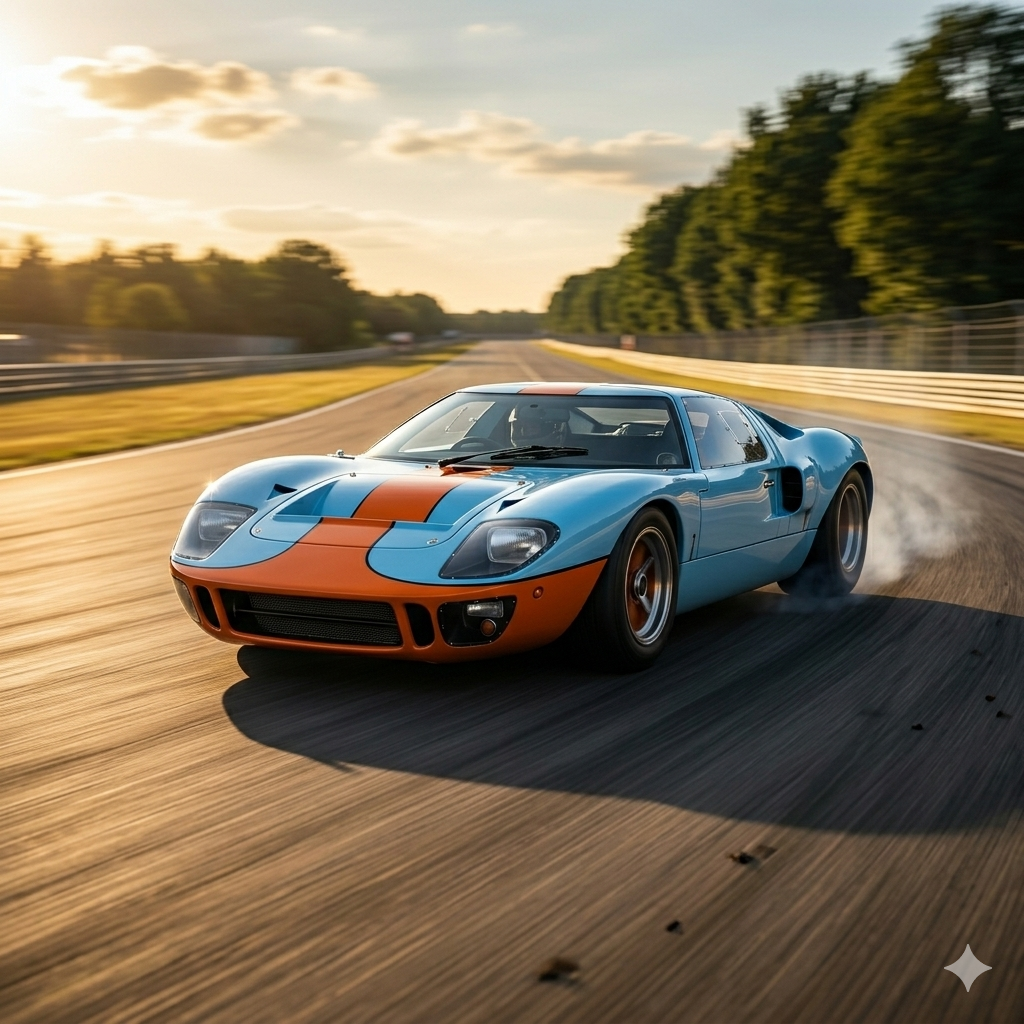
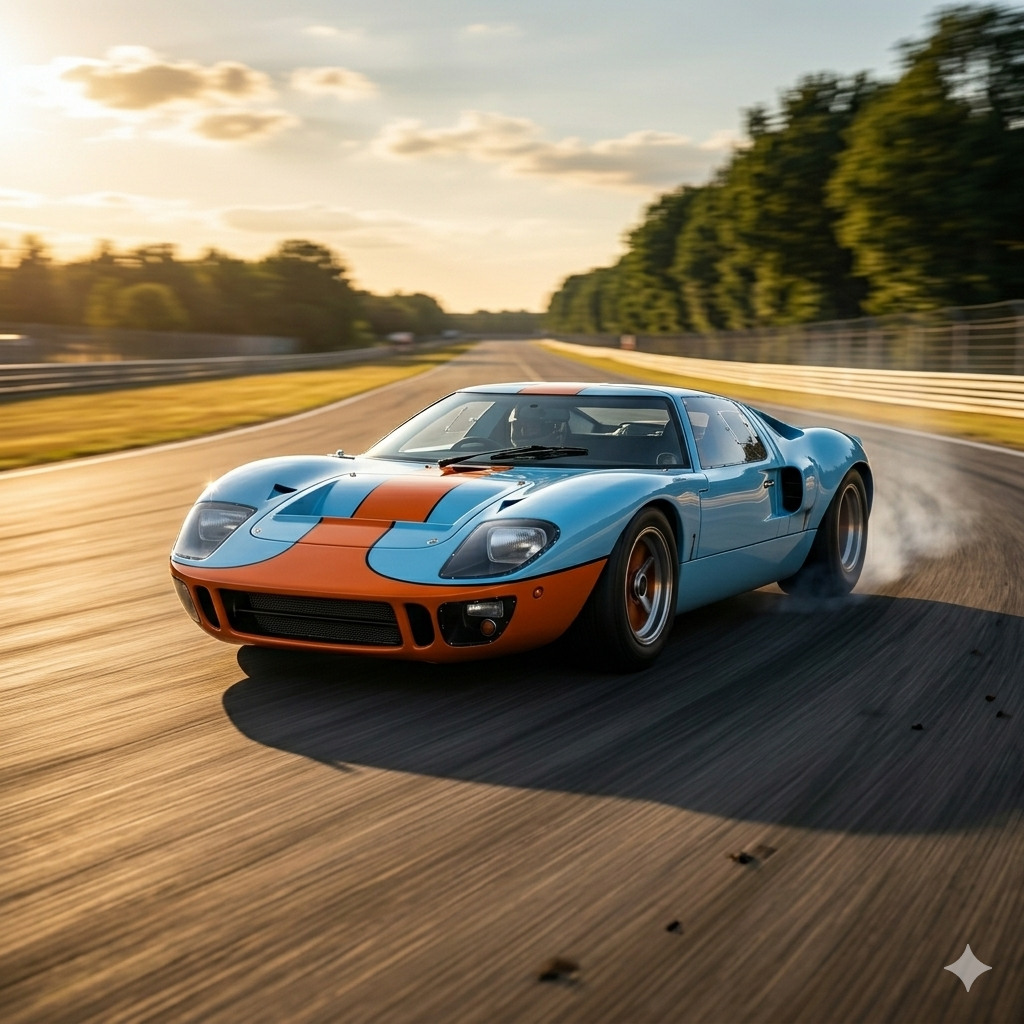
The name “GT40” came from the car’s total height: just 40 inches from ground to roofline. That’s 101.6 centimeters. For reference, a modern Ford Bronco stands about 74 inches tall. The GT40 barely reached your waist. It was essentially a missile with seats.
The original GT40 Mk I ran a Ford 289 cubic-inch (4.7-liter) V8 producing around 350 horsepower in race trim. The chassis was a steel monocoque with a tubular subframe — advanced for the era but plagued by rigidity and cooling problems. Brakes were four-wheel Girling discs, and the transmission was a Colotti four-speed manual that proved about as reliable as a screen door on a submarine.
1964-1965: Expensive Failure
Here’s where it gets humbling. The early GT40s were fast but fragile. At the 1964 24 Hours of Le Mans, Ford entered three GT40s. None finished. Gearbox failures. Suspension failures. Cooling failures. Ferrari won that year with the 275 P, and you can bet Enzo enjoyed every minute of it.
1965 was marginally better but the result was the same: DNF. Ford was fast in qualifying — they actually set the fastest time — but the car couldn’t survive 24 hours. Ferrari won again with a 250 LM driven by Masten Gregory and Jochen Rindt.
Henry Ford II was burning through millions with nothing to show for it. So he made a call that changed everything: he brought in Carroll Shelby.
Shelby Takes Over: Enter the Mk II
Carroll Shelby — the Texan who’d won Le Mans as a driver in 1959 with Aston Martin and was already building the legendary Cobra — got the mandate to make the GT40 work. And Shelby wasn’t a man who did anything halfway.
First order of business: the engine. The 289 was out. The 427 was in — a 7.0-liter big-block V8 pumping out approximately 485 horsepower in race specification. This was an engine originally developed for NASCAR. Fitting it into the GT40 required significant chassis and aerodynamic modifications, but the resulting power advantage was devastating.
The unreliable Colotti gearbox was replaced with a Ford T44 four-speed — much more robust. Cooling was improved, the chassis was reinforced, and aerodynamics were refined. The GT40 Mk II weighed approximately 2,458 pounds (1,115 kg) in race trim — featherweight considering what lurked under the rear bodywork.
Le Mans 1966: The Photo Finish That Changed History
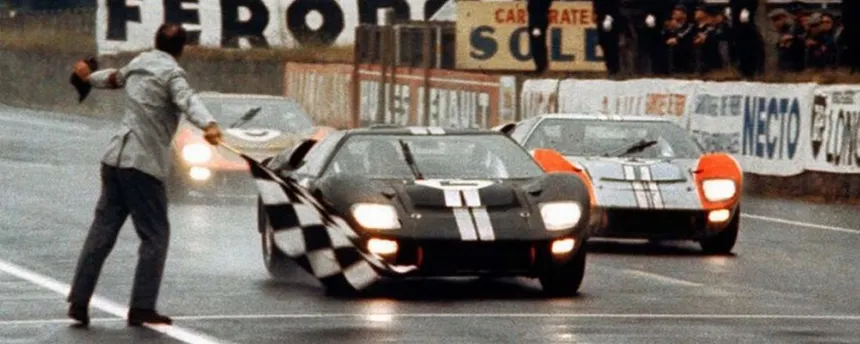
June 18-19, 1966. Ford brought eight GT40 Mk IIs to Le Mans. Eight. It was a show of force unprecedented in endurance racing. Ferrari lined up several 330 P3s and a Dino prototype.
What happened was a demolition derby — in Ford’s favor. Within hours, the GT40s dominated the top positions. Ferraris dropped out one by one with mechanical failures. By Sunday morning, three Ford GT40s ran 1-2-3 with no serious challenge.
Ford’s corporate suits wanted the perfect photo: three cars crossing the finish line together. And here’s where the story turns bitter. Ken Miles, leading in car #1, was told to slow down and let the other two catch up. They crossed nearly together. But Le Mans regulations at the time stated that in a close finish, the car that started further back — and therefore covered more distance by crossing the line at the same time — would be declared the winner.
Bruce McLaren and Chris Amon in car #2 got the official victory. Ken Miles, who had been the fastest driver all weekend, was classified second because of a bureaucratic technicality. He never got over it. Two months later, on August 17, 1966, Miles was killed testing the experimental J-car prototype at Riverside, California. He was 47 years old.
But the scoreboard told the story Ford wanted: 1-2-3 at Le Mans. First American manufacturer to win the 24 Hours. Henry Ford II’s revenge was complete.
1967-1969: Total Domination
Ford didn’t stop at one win. The GT40 Mk IV — a radical evolution with a honeycomb chassis and entirely new bodywork designed stateside — won Le Mans in 1967 with Dan Gurney and A.J. Foyt behind the wheel. Gurney celebrated by spraying champagne on the podium, which is widely credited as the origin of that tradition in motorsport.
In 1968 and 1969, with regulations changed to cap engine displacement at 5 liters, the GT40 Mk I with the smaller 289/302 V8 returned to the front. John Wyer Racing secured two more Le Mans victories with updated GT40 variants. Four consecutive wins at Le Mans — 1966, 1967, 1968, 1969. A streak that wouldn’t be matched for decades.
For American racing fans, this was bigger than just endurance racing. This was Detroit taking it to Maranello and winning. Repeatedly.
Key Technical Specifications: Ford GT40 Mk II (1966)
- Engine: Ford 427 FE V8, 6,997 cc (427 cubic inches)
- Power: ~485 hp at 6,000 rpm
- Torque: ~398 lb-ft at 3,700 rpm
- Weight: ~2,458 lbs (1,115 kg)
- Top speed: ~215 mph (Le Mans Mulsanne Straight)
- Transmission: Ford T44, 4-speed manual
- Brakes: Girling ventilated discs, all four corners
- Chassis: Steel monocoque with tubular subframe
- Overall height: 40 inches (1,016 mm)
The Legacy: Bigger Than Racing
The GT40 didn’t just win races. It fundamentally changed the relationship between American manufacturing and European motorsport. It proved that Detroit — with enough resources, determination, and the right talent — could beat the Italian craftsmen on their home turf.
The GT40 transformed Ford’s brand identity overnight. Suddenly, the company that built the Mustang and the pickup truck was also the company that humiliated Ferrari at Le Mans. That racing halo filtered straight into dealerships, advertising, and consumer perception. Total Performance wasn’t just a slogan anymore — it was a fact.
As for Ferrari? Enzo sold 50% of the company to Fiat in 1969. The war with Ford had drained the coffers. The irony is thick: Enzo ended up selling exactly what he refused to sell to Ford — financial control of his beloved company. Except he got a worse deal.
Today, an original GT40 in good condition can fetch over $10 million at auction. Chassis P/1075, which won Le Mans in both 1968 and 1969, sold for over $11 million in 2012. Not bad for a car born from a billionaire’s bruised ego.
The GT40 in American Culture
For American car enthusiasts, the GT40 holds a special place. It’s the car that proved we could build more than muscle cars and land yachts. “Ford v Ferrari” (2019) brought the story to a new generation, with Matt Damon as Shelby and Christian Bale delivering an Oscar-nominated performance as Ken Miles. The film captured the corporate politics and the human cost of the GT40 program in a way that resonated far beyond car culture.
The modern Ford GT — both the 2005 retro homage and the 2017 twin-turbo V6 supercar — exist because of the GT40’s legacy. Every time Ford builds a mid-engine supercar, it’s a direct callback to those four years of dominance at La Sarthe.
The Bottom Line
The Ford GT40 is the ultimate proof that motivation matters as much as engineering. You can have all the money in the world, but without the fury of a humiliated Ford, the brilliance of Shelby, and the raw talent of drivers like Ken Miles — who died without ever receiving the credit he deserved — this car doesn’t exist.
Born from wounded pride. Forged through two seasons of spectacular failure. Perfected into one of the most successful racing machines in history. Four consecutive Le Mans wins. A 1-2-3 finish that remains one of motorsport’s most iconic images.
All because a proud Italian told a rich American to go back to building tractors.
Greasy hands, no filter. That’s NEC.