Opel Speedster: The German Sports Car Built in England That Saved Lotus and Embarrassed Cars Costing Ten Times More
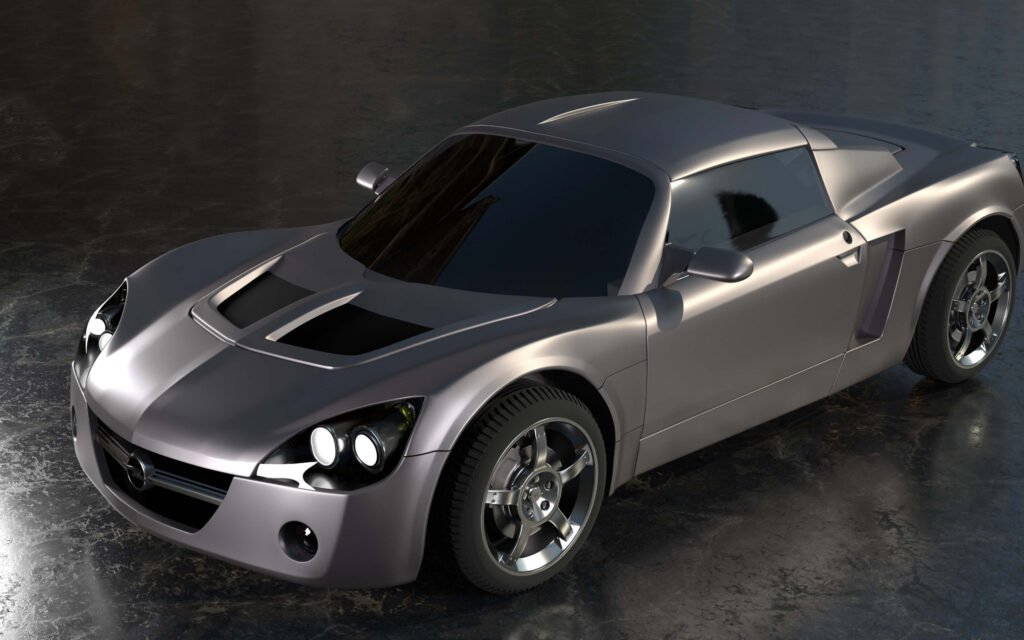
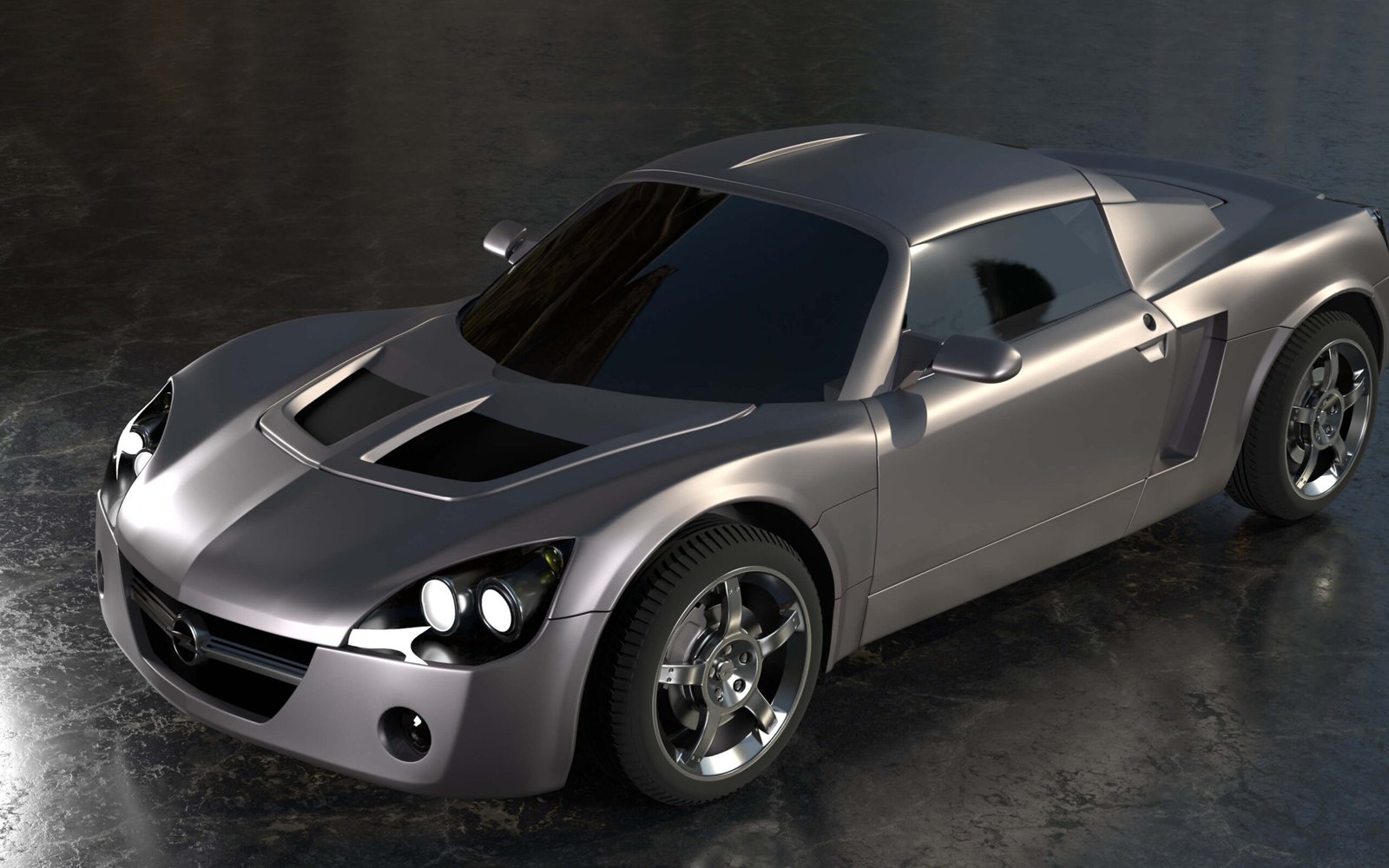
Some cars are born with an identity crisis. The Opel Speedster is one of them. A sports car wearing a German badge, built on a British chassis, powered by an economy car engine, and priced low enough to make a Porsche Boxster sweat through every corner. It was produced for exactly five years — from July 17, 2000 to July 22, 2005 — and only 7,207 units ever left the factory floor. Not in Rüsselsheim. Not in any GM plant. At Lotus Cars in Hethel, Norfolk. The same building where they assembled the Lotus Elise.
That’s not a footnote. That’s the whole story.
The Deal That Saved the Elise
By the late 1990s, Lotus was cornered. The Elise Series 1 had saved the company from oblivion, but new European crash safety regulations for the 2000 model year meant it couldn’t be produced any longer. Lotus needed to design an entirely new Elise — the Series 2 — and didn’t have the money.
In October 1999, the deal was signed: General Motors would provide the funding in exchange for Lotus developing and manufacturing a sports car on the new Elise S2 platform for the Opel and Vauxhall brands. Lotus expanded its Hethel factory to a 10,000-car annual capacity, with roughly 3,500 slots allocated to the Speedster.
Think about that for a second. Without GM’s money for the Speedster project, Lotus likely couldn’t have funded the Elise Series 2. Without that deal, the Elise might have died in the year 2000. The most iconic Lotus of the 21st century exists, in part, because Opel needed a sports car it didn’t know how to build.
The 72-Kilogram Chassis
The Speedster’s platform was a modified Elise S2 with a 30mm longer wheelbase and lower door sills for easier ingress and egress. The chassis was a bonded aluminium extrusion tub — Lotus’s absolute specialty — weighing just 72 kilograms. The body panels were entirely fibreglass. The result: 875 kg for the naturally aspirated version. A hundred kilos lighter than a contemporary Toyota MR2. Two hundred kilos lighter than a Porsche Boxster.
Only around 10% of parts were interchangeable between the Speedster and the Elise, according to Opel’s own statements. But what they shared was what mattered: the aluminium architecture, the double-wishbone suspension at all four corners, and that torsional rigidity that made the car communicate with the road surface like an extension of your nervous system.
The unassisted rack-and-pinion steering was identical to the Elise’s. Multiple specialist journalists described it as telepathic. Through the Momo steering wheel, you could feel every irregularity in the tarmac, every shift in grip, every grain of sand beneath the front tyres.
The Man Who Drew the Quattro Also Drew This
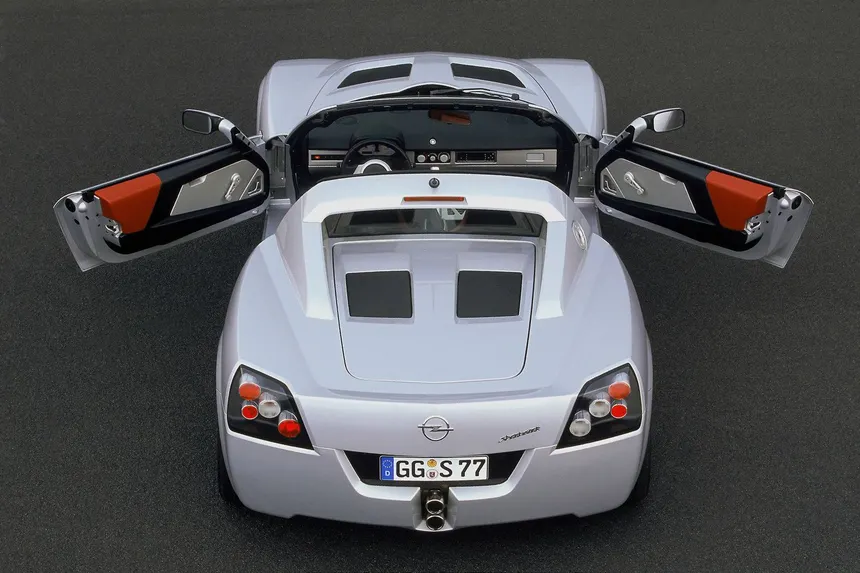
The exterior design was the work of two people: Australian Niels Loeb as chief designer and Briton Martin Smith as design director. The interior was signed by Steven Crijns from Lotus.
Martin Smith’s story deserves its own article. As a boy, he wrote letters to Alec Issigonis — creator of the Mini — asking how to become a car designer. Issigonis replied kindly and advised him to study engineering. Smith followed the advice. He studied engineering at the University of Liverpool, earned a master’s degree in vehicle design from the Royal College of Art in London, and in 1973, at age 23, landed his first job: at Porsche. His first project there was the Martini Porsche 911 RSR racing car.
From Porsche he moved to Audi, where he transformed the unremarkable Audi Coupé into the legendary Audi Quattro — the car that changed rallying forever. In 1997 he arrived at Opel as design director for compact cars, where he created the Speedster. In 2004, Ford poached him to lead design in Europe, where he invented the “Kinetic Design” language that defined the Mondeo, Fiesta, and Focus for an entire generation.
The same mind that drew the Quattro and the Speedster later designed the Ford Fiesta that sold millions. If that doesn’t fascinate you, check you’re still alive.
Astra Engine, Lotus Soul
The engine was the detail that made badge snobs nervous. The naturally aspirated version used the 2.2-litre Z22SE Ecotec all-aluminium inline four — the same block found in the Opel Astra. In the United States, that exact engine powered the Chevrolet Cobalt, the Pontiac Sunfire, and the Saturn Vue. It produced 147 PS and 203 Nm of torque — enough for a 0-100 km/h time of 5.9 seconds and a 217 km/h top speed. At 875 kg, it didn’t need more.
But customers wanted more. In 2003, the Turbo arrived with the 2.0-litre Z20LET from the Opel Performance Center (OPC): 200 PS, 250 Nm, 0-100 in 4.9 seconds, and 242 km/h. Weight rose to 930 kg. Still a featherweight. The power-to-weight ratio — 4.65 kg/PS — matched sports cars costing three or four times as much.
The gearbox was a Getrag F23 five-speed manual, shared with the Astra OPC. The mechanical feel of the shift, in a car this light and this direct, turned every gear change into a deliberate act.
And here’s the most delicious paradox: the most exotic-looking car in the Opel showroom ran on parts you could buy at any auto parts store. Oil filters, spark plugs, brake pads — all from the standard GM catalogue. Servicing a Speedster cost the same as servicing an Astra.
The Version Almost Nobody Knows: VXR220
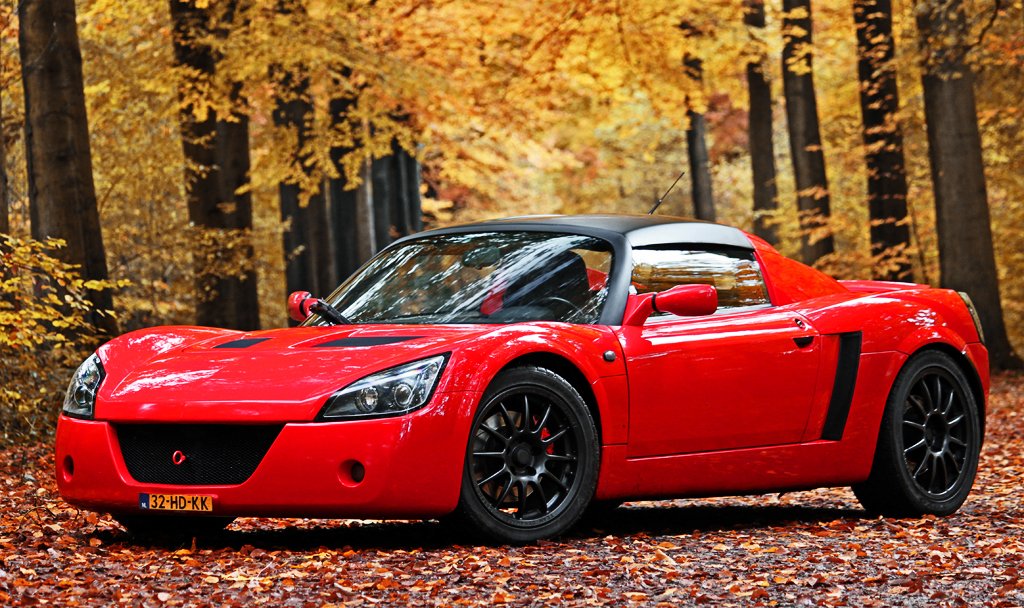
In 2004, Vauxhall produced a limited run of just 60 VXR220s — the ultimate expression of the concept. Turbo engine boosted to 220 PS and 300 Nm. Larger brakes. Lowered suspension. Upgraded tyres. Speedline alloy wheels — 16 inches at the front and 17 at the rear — returning to the Elise’s original philosophy, which Opel had abandoned by fitting 17-inch wheels on both axles for aesthetic reasons, sacrificing agility.
The only available colour was Calypso Red. Sixty red cars, hand-built at Hethel, with OPC internals pushed to the limit. Today they’re collector’s items.
8:34 at the Nordschleife. With 200 PS.
In April 2004, German magazine sport auto timed the standard Speedster Turbo at the Nürburgring Nordschleife: 8 minutes and 34 seconds. For context, that was just two seconds slower than a Porsche Boxster S and a BMW Z4 3.0 SMG. And faster than a Maserati Coupé Cambiocorsa, a BMW M5 E39, a Mercedes CLK 55 AMG, and an Audi S4 Avant.
With 200 PS. In a car weighing 930 kg. Against machines with double or triple the power and budget.
You don’t achieve that with horsepower. You achieve it with kilograms. With rigidity. With suspension geometry. With Lotus.
The Press Loved It. The Dealers Had No Idea What to Do With It.
The VX220 Turbo won Top Gear’s Car of the Year in 2003. It also took Car magazine’s Performance Car of the Year and What Car?‘s Best Roadster three consecutive years (2001, 2002, and 2003). Jeremy Clarkson said on television after driving it: “There’s only one thing that’s going to get me off this racetrack today, and that’s when it runs out of fuel — and that’s the first time I’ve ever thought that, while behind the wheel of a Vauxhall.”
But the Speedster had a problem no engineer could solve: the badge. It wore the Opel logo. And Opel dealers sold Corsas, Astras, and Vectras to families. They didn’t know how to sell a mid-engined, roofless two-seater with no boot, no fixed roof, and no heated seats. The Speedster was better equipped than the Elise — ABS and an airbag came as standard, something Lotus didn’t even offer — it was faster and it cost less. But the Elise sold better. Because it said “Lotus” on the nose.
The Speedster and VX220 sold seven times better in Germany and the UK than in France. The badge mattered more than the product. And that’s a lesson the car industry still refuses to learn.
The ECO Speedster: 17 World Records With a 1.3-Litre Diesel
At the 2002 Paris Motor Show, Opel unveiled the ECO Speedster: a concept based on the Speedster with an entirely new carbon fibre body, gullwing doors, no wing mirrors, and a drag coefficient of just 0.20. It weighed only 660 kg. And it ran on diesel.
Not just any diesel. It was the new 1.3 CDTI Ecotec four-cylinder with common-rail injection, a variable-geometry turbocharger, and 112 PS. The first engine developed by the Fiat-GM Powertrain joint venture. You know that engine even if you don’t think you do: it’s the direct ancestor of the Fiat 1.3 MultiJet — arguably the most mass-produced diesel engine in history, fitted to millions of Puntos, Corsas, Swifts, and Pandas worldwide.
Opel’s goal was to demonstrate the “2.5 x 250” formula: reach 250 km/h while consuming just 2.5 litres of diesel per 100 km. On July 27, 2003, at Opel’s Dudenhofen test centre, the ECO Speedster achieved exactly that. And along the way, it broke 17 international records for turbocharged diesel prototypes during 24-hour endurance runs. Recorded top speed: 256.739 km/h. Average fuel consumption: 2.54 litres per 100 km. Average speed over 24 hours: 225 km/h.
This wasn’t even new territory for Opel. In 1972, a modified Opel GT with a 2.1-litre turbodiesel engine producing 95 PS had already broken world speed records for diesel passenger cars at Dudenhofen, hitting 197.5 km/h. The ECO Speedster was the spiritual heir to that lunacy, 30 years later. Only three prototypes were ever built.
A Car Without a Successor
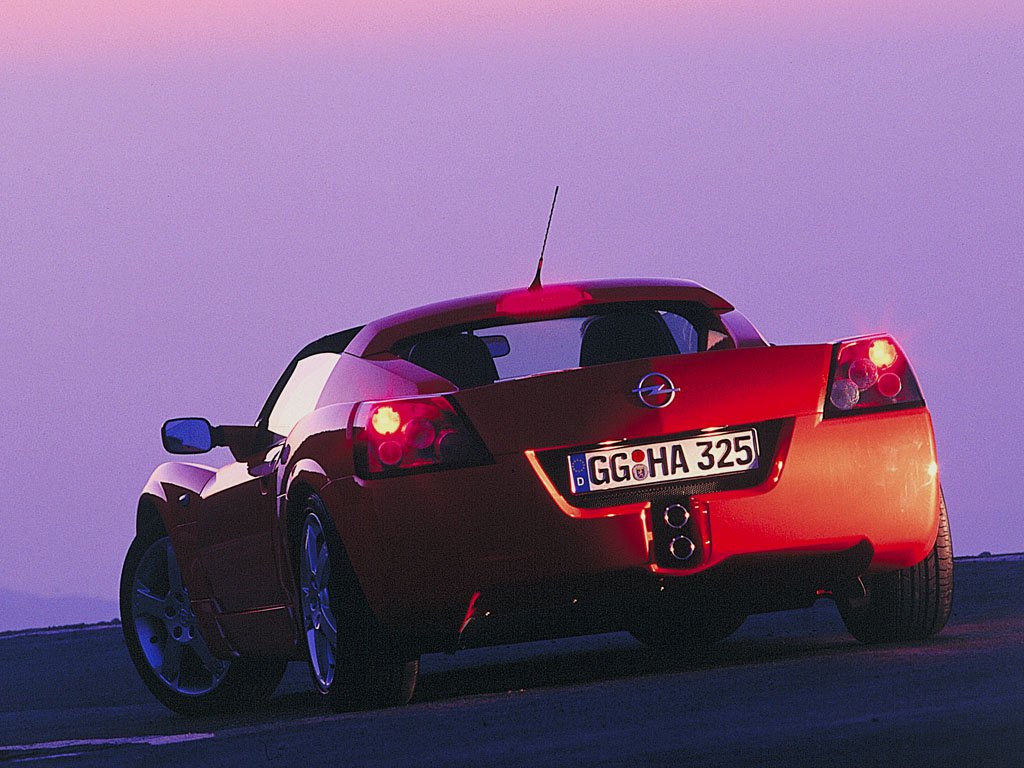
Production ended on July 22, 2005. GM had no direct replacement until February 2007, when the Opel GT — based on the Pontiac Solstice and Saturn Sky — arrived in Europe. But the GT had no right-hand-drive version for the UK market. And it wasn’t the same thing. It carried no Lotus DNA.
And then, as a cosmic punchline, there existed a single Vauxhall VX220 wearing a Daewoo badge, displayed at Incheon International Airport in South Korea as a promotional piece. Just one. A car built in England, designed by an Australian and a Briton for a German brand, powered by an American economy car engine, wearing a Korean badge, and displayed in an airport. If that doesn’t summarise automotive globalisation, nothing does.
Why the Speedster Still Matters
The Opel Speedster proved something the industry still resists accepting: that subtracting weight is more effective than adding power. That a 200 PS car weighing 930 kg can embarrass 400 PS machines weighing 1,800 kg on a real circuit. That chassis engineering matters more than horsepower on a spec sheet. And that the name on the badge shouldn’t be more important than what lies beneath it.
And now, in 2026, the industry has decided to go in exactly the opposite direction. The average electric car weighs over 2,000 kg. The Tesla Model S Plaid tips the scales at 2,162 kg — more than double a Speedster Turbo — and needs 1,020 PS just to compensate for the physics of moving that mass. We’ve swapped 72-kilogram aluminium chassis for 500-kilogram battery packs. We’ve replaced weight engineering with the brute force of kilowatts. The Speedster ran an 8:34 at the Nordschleife with 200 PS because Lotus engineers understood that the best horsepower is the kilogram you don’t have to carry. But of course, that doesn’t look as good on an Instagram spec sheet. Right, EV lovers?
7,207 units in five years. A 72-kilogram aluminium chassis. An Astra engine. And the ability to make a Porsche Boxster S nervous at the Nordschleife.
Check you’re still alive.
Verified Technical Specifications — Opel Speedster (2000-2005)
| Specification | Speedster 2.2 | Speedster Turbo | VXR220 |
|---|---|---|---|
| Engine | 2.2L Z22SE I4 | 2.0L Z20LET Turbo I4 | 2.0L Z20LET Turbo I4 |
| Power | 147 PS / 108 kW | 200 PS / 149 kW | 220 PS / 164 kW |
| Torque | 203 Nm @ 2,500 rpm | 250 Nm @ 1,950-5,500 rpm | 300 Nm |
| Gearbox | Getrag F23, 5-speed manual | Getrag F23, 5-speed manual | Getrag F23, 5-speed manual |
| Kerb weight | 875 kg | 930 kg | ~930 kg |
| 0-100 km/h | 5.9 s | 4.9 s | ~4.5 s |
| Top speed | 217 km/h | 242 km/h | 246 km/h |
| Chassis | Bonded aluminium extrusion | Bonded aluminium extrusion | Bonded aluminium extrusion |
| Chassis weight | 72 kg | 72 kg | 72 kg |
| Body | Fibreglass | Fibreglass | Fibreglass |
| Layout | Transverse mid-engine, RWD | Transverse mid-engine, RWD | Transverse mid-engine, RWD |
| Suspension | Double wishbone (all four) | Double wishbone (all four) | Double wishbone (all four) |
| Wheelbase | 2,329 mm | 2,329 mm | 2,329 mm |
| Length | 3,790 mm | 3,790 mm | 3,790 mm |
| Width | 1,707 mm | 1,707 mm | 1,707 mm |
| Height | 1,113 mm | 1,113 mm | 1,113 mm |
| Assembly | Lotus, Hethel (UK) | Lotus, Hethel (UK) | Lotus, Hethel (UK) |
| Units produced | — | — | 60 |
| Total production | 7,207 units (all variants) | ||
| Nürburgring Nordschleife | — | 8:34 (sport auto, 04/2004) | — |