Ford Crown Victoria: the body-on-frame dinosaur that outlived the people who tried to kill it

Every American who grew up between 1992 and 2011 knows the Crown Victoria’s face, whether they ever cared about cars or not. It was the shape in the rearview mirror that made your stomach drop on the interstate. It was the yellow cab you flagged outside Penn Station. It was the black sedan the feds stepped out of on every TV procedural. It was the car your grandparents drove to Florida, wearing a Mercury badge instead. Nobody hung a poster of one. Almost everybody rode in one.
That is a strange kind of fame, and it was built on a platform Ford had designed in the late 1970s and never really replaced. When the last Crown Victoria left the St. Thomas Assembly Plant in Ontario in September 2011, police chiefs, cab owners and limo operators all faced the same problem at once: nothing on the market did what it did.
In short: the Ford Crown Victoria was built on the body-on-frame, rear-drive Panther platform Ford introduced for 1979, with a 4.6-litre Modular V8 from 1992. Tough, cheap to fix and easy to repair after a crash, the P71 Police Interceptor defined American policing and taxis for two decades. The last one left the St. Thomas plant in Ontario in September 2011.
The Panther: a 1979 answer to a 2011 question
Underneath every modern Crown Vic sat the Panther platform. Ford introduced it for the 1979 model year, when it downsized its full-size cars in response to the fuel crises, and then kept it alive for more than three decades. The recipe was old-school Detroit: a separate steel frame with the body bolted on top, rear-wheel drive, and a V8 up front.
By the 1990s the rest of the industry had moved on to front-wheel drive and unibody construction, where the body itself is the structure. That is lighter, more space-efficient and better for fuel economy. Body-on-frame is heavier, but it has one big advantage for anyone who abuses cars for a living: when you hit something, the damage is often limited to bolt-on parts and a frame that can be straightened, instead of a crumpled structure that writes the car off.
After General Motors ended the Chevrolet Caprice and its siblings in 1996, the Panther cars were the only full-frame, rear-drive, V8 sedans built in North America. There were three of them: the Ford Crown Victoria, the Mercury Grand Marquis and the Lincoln Town Car.
The 4.6 that would not quit
The Crown Victoria redesign of 1992 brought a new engine with it: the 4.6-liter V8 from Ford’s Modular family, which had debuted a year earlier in the Lincoln Town Car. It was Ford’s first overhead-cam V8 for its big cars, replacing the pushrod engines that had powered full-size Fords since the days of the pony car wars. In the Crown Vic it used a single overhead camshaft per bank, driven by chains, and two valves per cylinder. It was not fast. In 1992 it made 190 hp with single exhaust, or 210 with dual exhaust, and the police versions of the 2000s were rated at about 250 hp.
What it had was durability. The 4.6 was low-stressed, simple to work on and built in huge numbers, so parts were everywhere and cheap. It paired with a four-speed automatic that was equally unexciting and equally tough. The same Modular family would later grow four camshafts and become the Coyote 5.0 that saved the Mustang GT. Put together, the 4.6 and its transmission produced a drivetrain that fleet managers could plan around, which matters more to a city budget than any 0-60 time.
Small changes, never a revolution
Ford’s secret with the Panther was that it never stopped improving it, and never started over. The 1992 car brought the aerodynamic body, the 4.6 V8 and four-wheel disc brakes. The 1998 refresh gave the rear axle a Watt’s linkage, a set of pivoting links that keeps a solid axle centered under the car as it moves up and down, which made the big sedan noticeably more composed in corners and over bumps.
The biggest change came for 2003. Ford rebuilt the front of the frame with hydroformed rails, steel tubes shaped by high-pressure fluid inside a die, which made the structure stiffer and more precise. It also switched from the old recirculating-ball steering to rack-and-pinion and gave the car a new front suspension. Police officers noticed the difference immediately. The Crown Vic still drove like a big American sedan, soft and floaty by European standards, but it went where it was pointed with far more confidence than before.
Each step kept the parts and the knowledge from the step before. That continuity is what fleet buyers were really paying for.
P71: the car that defined American policing
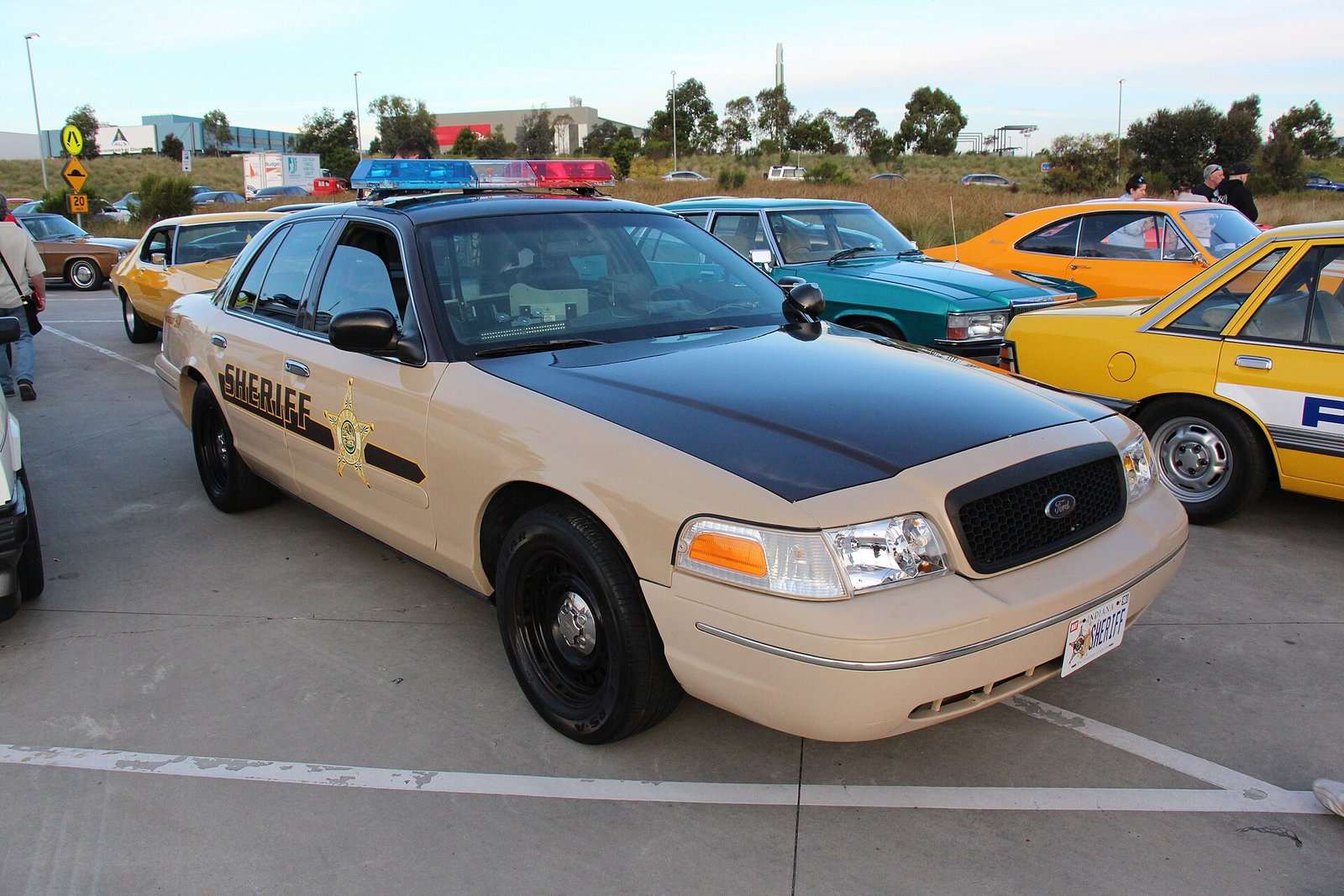
From 1998 the police version was officially called the Crown Victoria Police Interceptor, and its internal code, P71, became a name in its own right. It was not a regular Crown Vic with a light bar. It had a heavy-duty cooling system to survive hours of idling with the air conditioning running in a Texas summer, a higher-output alternator to power radios, computers, radar, cameras and lights, heavier-duty suspension, and a calibration that let the transmission survive the brutal launches that come with the job.
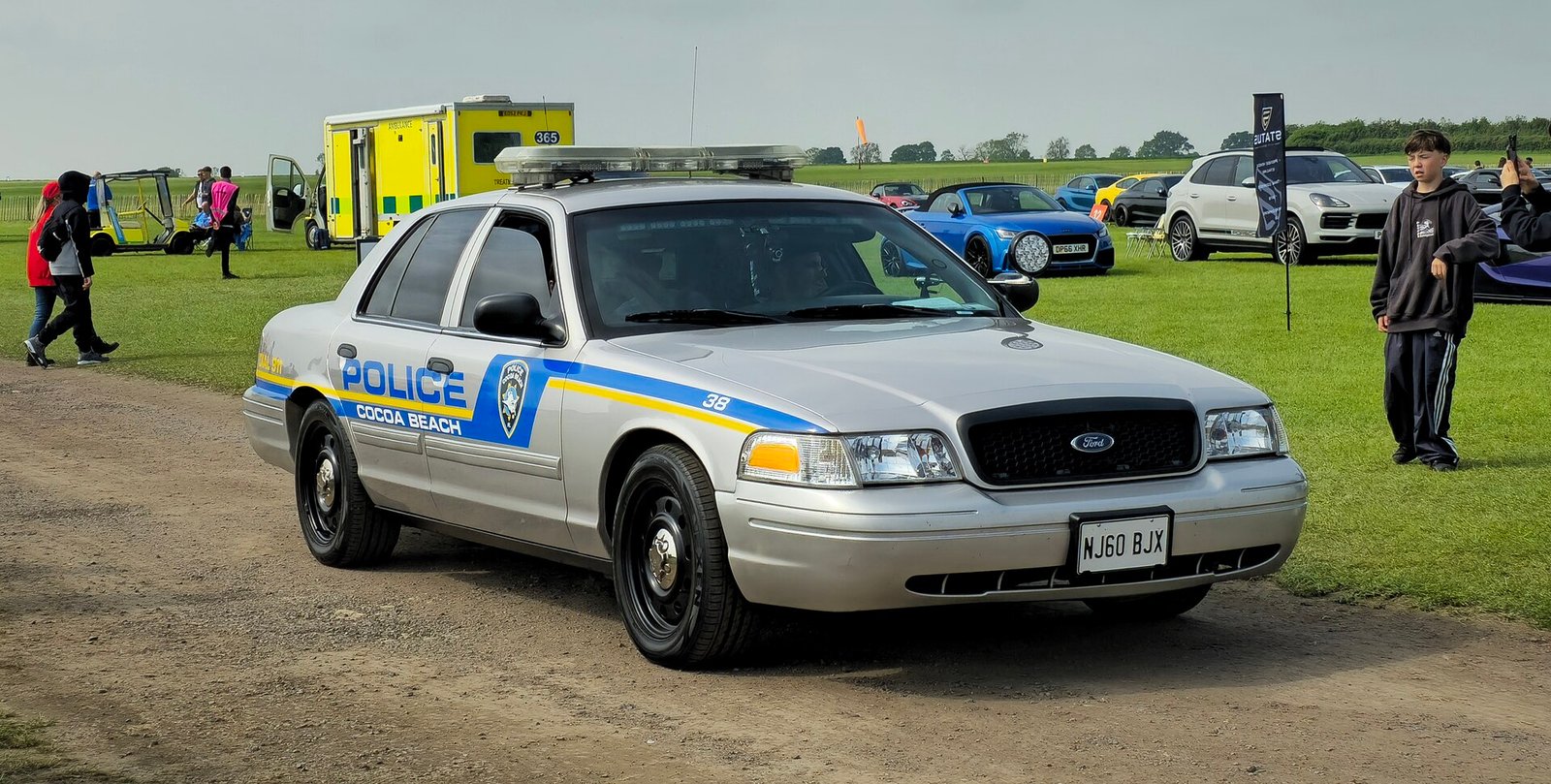
For more than a decade the Police Interceptor dominated police fleets across the United States and Canada. The Chevrolet Impala and later the Dodge Charger fought for a share, but the Crown Vic was the default. Its long trunk swallowed radios, batteries and equipment. Its frame shrugged off curb strikes and PIT maneuvers. Officers knew how it behaved, and mechanics knew how to fix it.
It also had a dark chapter. In the early 2000s, a series of fatal high-speed rear-end collisions, in which troopers were killed when the fuel tank behind the rear axle was punctured and caught fire, put the Police Interceptor under scrutiny. Ford responded with shields and a "trunk pack" to keep sharp equipment away from the tank, and later offered an optional fire suppression system. The cars stayed in service, but the episode is part of the story.
Seven years of New York potholes
If you want to know whether a car is tough, forget the test track. Make it a New York City taxi. Two shifts a day, every day. Potholes that swallow a wheel. Hard braking every block. Hours of idling. Passengers who slam doors and drivers who never turn the engine off.
The Crown Victoria became the default yellow cab, and Ford leaned into it with a long-wheelbase version for fleet buyers, six inches longer between the axles to give rear passengers more legroom. By the time Ford announced the end of production, about 7,400 Crown Vics were working as New York taxis, more than half of the city’s medallion fleet.
Some of them refused to die. New York papers wrote about cabbies whose 2011 Crown Vics had passed half a million miles when the Taxi and Limousine Commission’s age limits forced them off the road. The cars hadn’t failed. The rules simply hadn’t imagined a taxi lasting that long.
Three cars on one frame
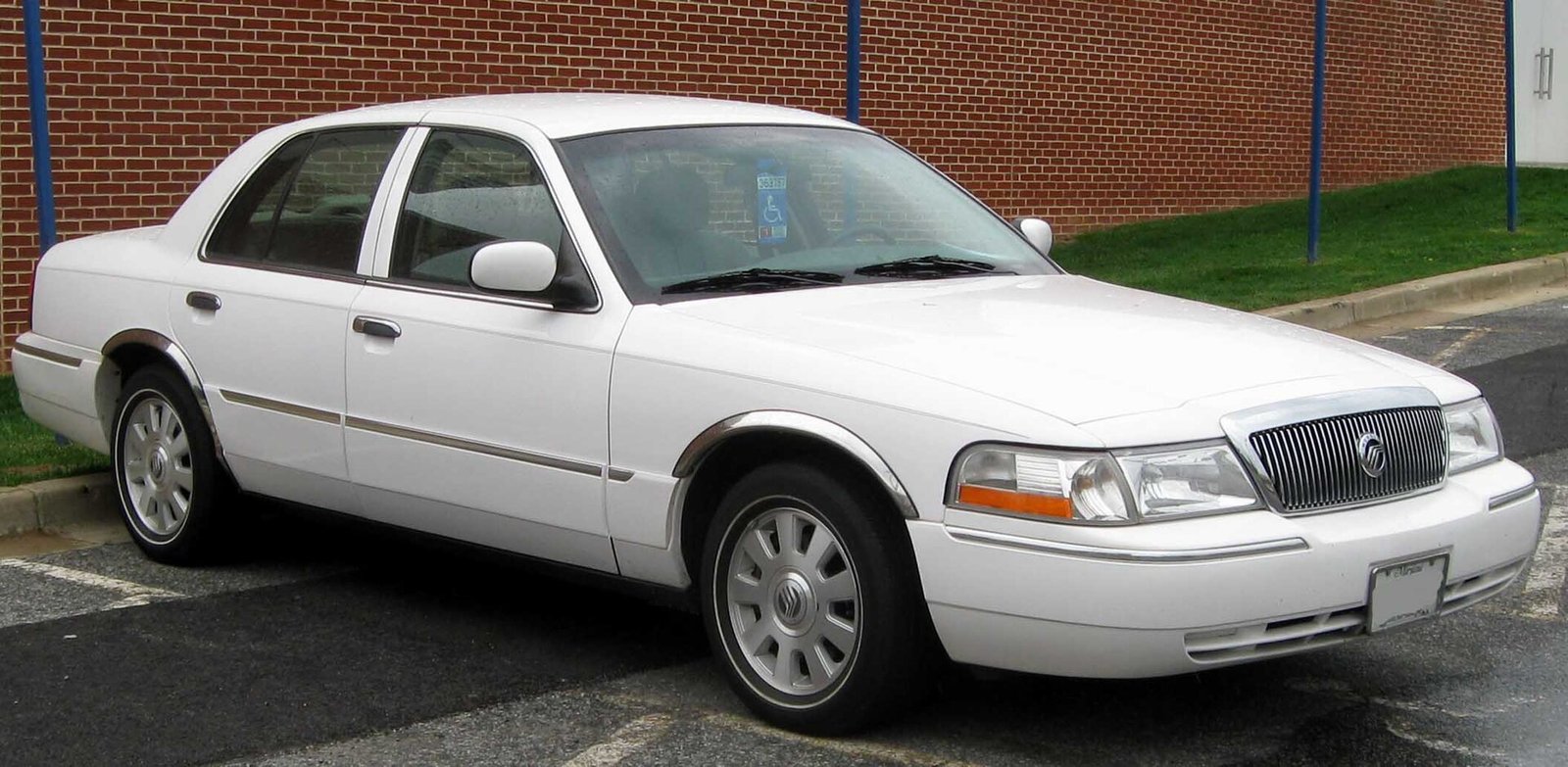
The Crown Victoria was only one-third of the Panther family. The Mercury Grand Marquis was the same car with chrome trim and a softer, plusher feel for older private buyers, the sedan you’d find in every retirement-community parking lot in Florida and Arizona. It lasted until early 2011, when Ford closed the Mercury brand.
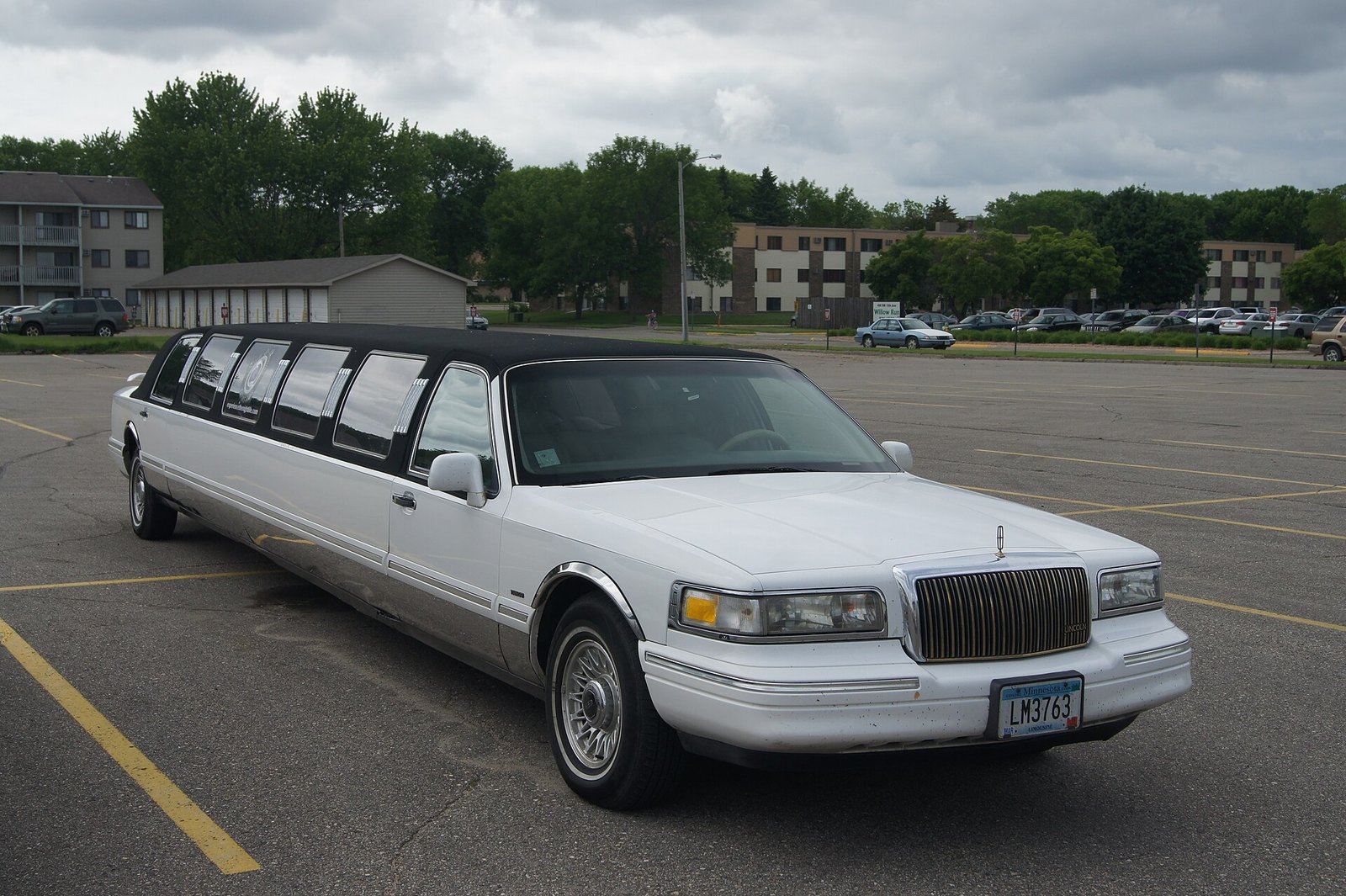
The Lincoln Town Car took the same bones upmarket. It was the black car at every airport curb in America, the limo-company workhorse, and the basis for most of the stretch limousines that carried prom dates, wedding parties and politicians. Its production ended in August 2011, a few weeks before the Crown Vic’s.
The factory itself is part of the story. St. Thomas Assembly opened in 1967 in rural southwestern Ontario, near the town of St. Thomas, and for most of its last two decades it built nothing but Panther cars. When production ended, the plant closed with it, taking well over a thousand jobs. The quintessential American cop car and New York cab had been Canadian-built all along, something few of the people who rode in one ever knew.
The three cars together, built on one frame in one Canadian plant, gave Ford economies of scale no rival could match for this kind of use. When the plant closed, three different markets lost their default car on the same day.
Why Ford finally let it go
Ford announced the end of the Crown Victoria well in advance, and the reasons made sense on paper. Federal fuel-economy rules were tightening. A heavy body-on-frame sedan with a 4.6 V8 was never going to meet them. Sales to private buyers had dried up, and Ford wanted to spend its money on global platforms that could be sold around the world. The final cars, badged as 2012 models, went mainly to fleet customers outside the U.S., many of them in the Middle East, where Crown Victorias and Grand Marquis had long been popular with police forces and private buyers alike.
The Middle East connection was no accident. In Saudi Arabia, Kuwait, Bahrain and the other Gulf states, big rear-drive American sedans had been a default for police forces, taxi operators and families for decades. Cheap fuel made the V8’s thirst irrelevant, the body-on-frame construction suited rough roads and hot climates, and the Crown Vic and Grand Marquis had a reputation there that matched the one they had in American fleets. When Ford’s home market moved on, the Gulf kept buying until the very end.
For American police departments the transition was messy. Ford replaced the P71 with two new Police Interceptors, a sedan based on the Taurus and a utility based on the Explorer. Chevrolet pushed its Caprice PPV and Tahoe, Dodge its Charger, a nameplate that had once meant something very different. What had been a near-universal standard turned into a menu, and every department chose differently. Within a few years the Explorer-based Interceptor Utility became the new default, a sign of how much the American market had shifted from sedans to SUVs.

New York’s cab drivers got the oddest replacement. In May 2011 the city named the Nissan NV200, a small front-wheel-drive van, as its "Taxi of Tomorrow." Passengers liked the space. Plenty of drivers missed the Crown Vic from day one.
Hollywood never had to be asked
The Crown Victoria never had a famous ad campaign. It became a pop-culture fixture because, for twenty years, it was what was there when a prop department needed a cop car, a cab or an unmarked federal sedan. Whole generations of moviegoers around the world learned what "American police car" looks like from a Crown Vic, without anyone at Ford placing it in a single scene.
Directors used it as shorthand: a Crown Vic sliding to a stop told the audience who had arrived before anyone stepped out. That kind of presence can’t be bought. It comes from being everywhere, for a very long time, doing an unglamorous job.
Life after duty
Retired Police Interceptors went on to a second career. Auctions sold ex-police P71s by the thousands, cheap, with known maintenance histories and heavy-duty hardware. They became budget daily drivers, demolition-derby cars, and favorites of racers in endurance series for cheap cars, where the indestructible frame and simple V8 made them hard to kill. Mechanics joke that the Crown Vic is one of the few cars that can be run into the ground twice by two different owners.
There’s also a small but real enthusiast following now. Owners swap in parts from the Mercury Marauder, the 2003-2004 Grand Marquis-based muscle sedan with a 4.6 DOHC V8, or simply keep clean Police Interceptors as a slice of late-century Americana. For a car nobody loved, it has a lot of people who refuse to let it go.
The verdict
The Crown Victoria never won a comparison test that mattered to enthusiasts. It wasn’t fast, it wasn’t modern and it wasn’t pretty. What it did was simpler and harder: it worked, every shift, for twenty years, for the people who used cars hardest. Ford kept improving it in small steps without throwing away what already worked, and mechanics, police officers and cab drivers rewarded that with a loyalty no marketing campaign could buy.
In 2023 New York’s Taxi and Limousine Commission retired the last two Crown Victoria cabs in the city, and a commission spokesman put it in the same line as the Model T, the Checker Marathon and the Chevrolet Caprice. None of those cars were sports cars. All of them shaped what Americans picture when they think of a taxi.
Ford Crown Victoria FAQ
When did Ford stop making the Crown Victoria?
The last Crown Victoria was built at the St. Thomas Assembly Plant in Ontario in September 2011.
What engine does the Crown Victoria have?
A 4.6-litre Modular V8 with a single overhead cam per bank, introduced in 1992. It made 190 hp with single exhaust or 210 with dual exhaust, and police versions of the 2000s were rated at about 250 hp.
Why did police use the Crown Victoria?
Its separate steel frame, rear-wheel drive and V8 made it tough and cheap to repair: after a hit, damage was often limited to bolt-on parts and a frame that could be straightened. The police version was known as the P71 Police Interceptor.
What is the Panther platform?
Ford’s full-size, body-on-frame, rear-wheel-drive platform launched for 1979 and used until 2011 by the Crown Victoria, Mercury Grand Marquis and Lincoln Town Car.
Check you’re still alive.
Photos via Wikimedia Commons: Crown Victoria NYC taxi and Nissan NV200 taxi, Jason Lawrence (CC BY 2.0); 2002 Police Interceptor, Sicnag (CC BY 2.0); 2010 Police Interceptor, Calreyn88 (CC BY-SA 4.0); Mercury Grand Marquis, IFCAR (public domain); 2004 Lincoln Town Car limousine, Greg Gjerdingen (CC BY 2.0).