BMW Z8: The Car Top Gear Trashed in 2000 Now Outprices Every Rival It Lost To
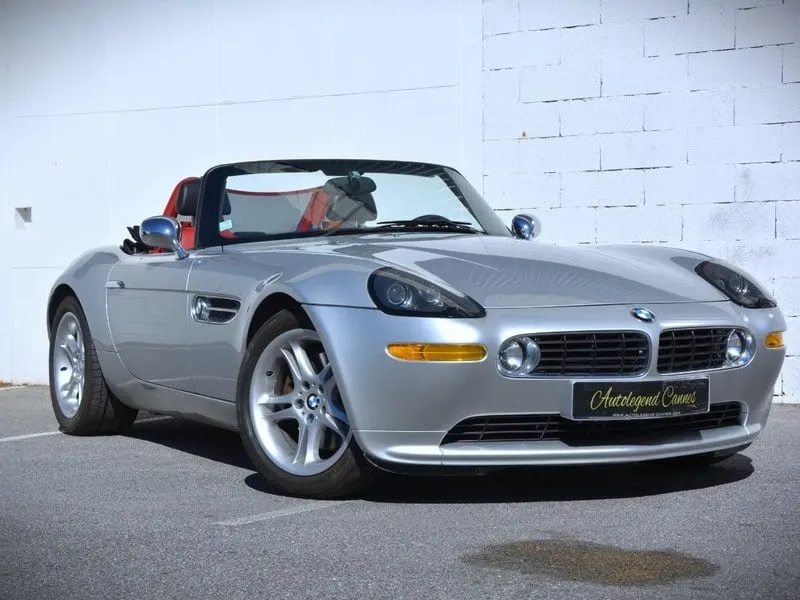
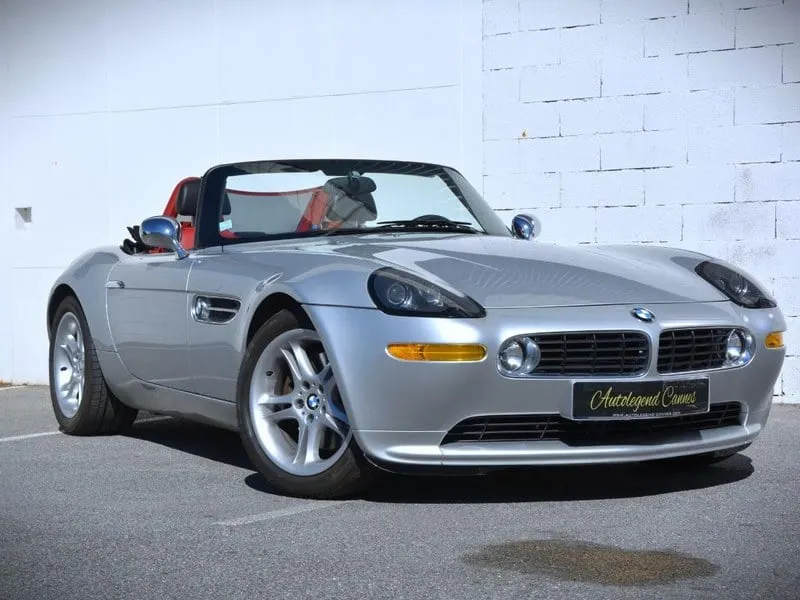
Two hundred grand. That’s what a concours BMW Z8 trades for today, on either side of the Atlantic. A pristine Aston Martin DB7 Volante from the same year sits at about fifty. A Ferrari 360 Spider, seventy to eighty. A 996 Carrera cabriolet from 2001, maybe sixty-five if you’re lucky. The Z8 has tripled the rest of its contemporary peer group in appreciation, and it has done it while sitting on a shelf with the cabin closed.
This is the same car Jeremy Clarkson eviscerated on Top Gear when it launched. The same car PistonHeads called “disappointing to drive”. The same car Evo magazine docked for steering feel and on-the-limit understeer. The British press, in a chorus, decided in 2000 that the Z8 was neither a sports car nor a grand tourer, and therefore not much of either. Twenty-six years later, that verdict has aged worse than the run-flat tyres BMW shipped the car on.
Here’s the story without the launch-month bile.
A glass of Dom Pérignon next to a 507
The Z8 came out of a lunch in 1993. Bernd Pischetsrieder, about to take over as BMW chairman, and Wolfgang Reitzle, head of product development and the man who’d assumed he was next in line for the top job, found themselves standing in front of a classic 507 at a corporate event. Hagerty UK reports that there was champagne involved — the very finest, naturally — and that the two men walked around the car, slid into the driver’s seat, and concluded between them that BMW ought to make a modern interpretation of the most beautiful car the company had ever built.
That’s it. That’s the entire business case. A conversation between the two most powerful people in Munich, watered with Dom Pérignon, in front of a car that almost bankrupted the company forty years earlier. The idea filtered down to design director Chris Bangle, who started an out-of-hours sketching project to imagine how the 507 would have evolved had BMW kept developing it for four decades. A young Danish designer called Henrik Fisker volunteered for the assignment and cancelled his summer holiday to throw himself into it. That decision later won him the top design job at Aston Martin and a global reputation. The Z8 was Fisker’s calling card before anyone outside the trade knew his name.
In BMW — a company that normally moves on focus groups, committee approval and quarterly forecasts — the Z8 was approved for production under the E52 code before the public had even seen the concept. The Z07 went to the Tokyo Motor Show in October 1997 not to gauge reaction, but to announce a decision already taken. The world went mad for it anyway. The press release that accompanied the show car explicitly framed the brief as imagining what the 507 would have become had BMW continued building it. By the time the Z8 reached dealerships in 2000, only the windscreen rake, the front splitter and Fisker’s double-bubble Zagato-style roof had been changed from the show car.
What’s underneath: the aluminium recipe
Here’s the part the launch reviews glossed over. The Z8 is one of the most engineering-intensive cars BMW produced in the entire decade.
The chassis is a full extruded-aluminium spaceframe, MIG-welded by hand at Dingolfing in roughly thirty-one manual operations per car, then shipped to a dedicated assembly hall at the Munich plant where the body panels — also hand-formed aluminium, painted in Dingolfing — are fitted around it. The spaceframe alone weighs 230 kilos, about thirty percent less than the equivalent in steel. The hand-build process is closer to Aston Martin’s Newport Pagnell tradition than to anything BMW was doing elsewhere in 1999. Audi had just put aluminium space-frame construction into series production with the A8. The Z8 was the second large-scale aluminium-framed production car in Germany, and the only one of its size with a hand-assembled body.
Suspension is a clever mix of parts-bin and bespoke. Front MacPherson struts taken from the E39 5 Series but with fifteen percent less travel and stiffer calibrations. Rear multi-link from the 7 Series lower arms and subframe, with everything else — springs, dampers, anti-roll bars, upper links — Z8-specific. The detail that matters under the hood, and which Hagerty noted on a dry day with the DSC off, is that BMW replaced many of the rubber bushings other BMWs used with rigid rod ends. Rubber absorbs road information. Rod ends transmit it. That’s not a coincidence; that’s a chassis engineer telling you what he wanted the driver to feel.
Brakes lifted directly from the 750i saloon. The car they were designed to stop weighs two tonnes. Put them on a 1,585-kilo roadster and you have brakes that never get tired. Anyone who has driven a Z8 hard down a switchback will confirm: the pedal stays where you put it lap after lap.
Steering is where the Z8 broke a BMW tradition. It was the first V8 BMW to use rack-and-pinion instead of the recirculating ball setup that had been Bavarian orthodoxy for forty years. The reason is packaging: the S62 V8 is mounted behind the front axle line — genuine front-mid-engine, not marketing speak — to achieve the 50:50 weight distribution the platform was built around, and that pushes the steering column into territory recirculating ball can’t easily occupy. Rack and pinion was the only way to package the geometry, and BMW took the leap.
The engine itself is the S62, identical in every respect to the E39 M5’s: 4,941 cc, naturally aspirated, 400 horsepower at 6,600 rpm, 500 Nm of torque at 3,800, a 7,000 rpm cut. A Getrag six-speed manual, no automatic option throughout the entire Z8 production run. Either you operate the clutch or you don’t drive the car. BMW were uncompromising on that point.
The S62 deserves a paragraph of its own on how it sounds, because in a car like this the soundtrack is half the reason for the cheque. Two engineering decisions explain the noise. First: individual throttle bodies. One butterfly per cylinder, eight in total. Most production V8s share a single plenum feeding all eight cylinders. The S62 ditches the plenum and gives each cylinder its own throttle plate, a configuration normally reserved for racing engines because it’s expensive, complicates ECU mapping, and demands mechanical synchronisation that has to be checked on a dyno. The payoff is throttle response with no measurable delay and an induction roar no plenum motor can replicate. When all eight throttles open together climbing through the rev range, you’re hearing air pulled through eight separate trumpets, and that’s the sound. Second: double-VANOS, BMW’s variable valve timing system on both intake and exhaust camshafts. The S62 was the first BMW V8 to receive it. It alters valve timing across the rev range, which means the exhaust note doesn’t just get louder as the revs climb — it changes character. Deep and beefy at idle and low load, transitioning around 4,000 rpm, and developing a hard metallic edge from 6,000 to the cut. Top Gear’s retrospective called the characteristic Z8 sound “burble and woofle”, which is about right for the lower half of the rev range.
The Z8’s exhaust system is calibrated differently from the M5 E39. The M5 runs four rear silencers grouped together; the Z8, being a convertible with less floor-pan ground clearance, uses a shorter system with less attenuation. Hagerty’s review on a UK road described it as far more vocal than the M5, sitting somewhere between a TVR Griffith and a Chevrolet Corvette of the period. That’s coherent with the brief. The 507’s V8, with its twin Zenith carburettors, was an audibly mechanical engine that announced itself everywhere. The Z8 inherits that filter, fifty years later. You drop the roof so you can hear what’s behind you, not in spite of it.
What the Z8 did not inherit from the M5 was the limited-slip differential. And that, more than anything else, is the decision that defined how the car drove and how the press reacted.
Why the press kicked it
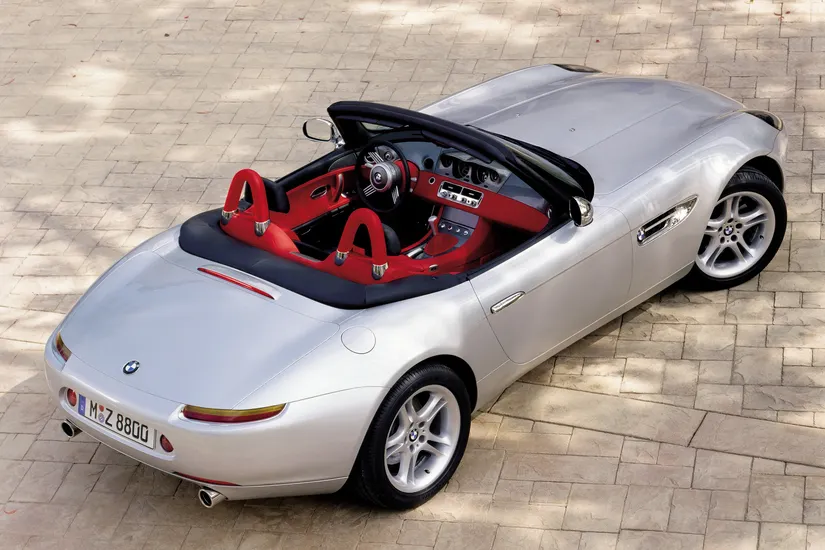
BMW’s product planners made an explicit call: the Z8 was the spiritual successor to the 507, not to the M5. The 507 was an open-road grand tourer for transcontinental drives, not a circuit car. So they pulled the LSD, softened the dampers slightly from M5 spec, fitted run-flat tyres — which in 2000 were still in their first-generation form and ride quality wasn’t a priority — and handed the keys to the press.
Result: every reviewer expected an M car and got something else. Clarkson called it a confused boulevard cruiser. PistonHeads filed a feature titled “Tell Me I’m Wrong” arguing the Z8 was a monument to what should have been, blaming the lifeless steering and the engineered-out oversteer. Hagerty, with the benefit of two decades of hindsight, still notes that the low-to-medium-speed ride never settles unless you’re either really driving it or on glass-smooth tarmac.
There’s a workshop point worth making about the ride complaint. Run-flat tyres, in their first generation, had reinforced sidewalls that simply didn’t flex the way conventional sidewalls do. What you gain in puncture safety you pay back in vertical compliance. A lot of current Z8 owners refit conventional tyres — accepting they’ll need a recovery truck if they pick up a nail — and the car settles down considerably. The criticism the press wrote in 2000 was partially a criticism of the tyre, not the chassis. Nobody had time in a launch weekend to swap rubber and find out.
The understeer issue is more honest territory. Strip an M-spec V8 of its limited-slip differential and ask it to pull cleanly out of a tight corner, and the inside rear wheel will spin while the outside does the work. The car pushes wide at the front because the engine is heavy and the rear isn’t gripping cleanly. That’s physics, not bad engineering. BMW knew this; they did it on purpose because they didn’t want the Z8 oversteering and ending up in a ditch driven by a tycoon who’d never tracked a car in his life. Jalopnik’s review of an Alpina Z8 driven back-to-back with a pair of tuned E30 M3s captured the point: the Z8 isn’t a sports car, and trying to drive it like one is the surest way to be disappointed.
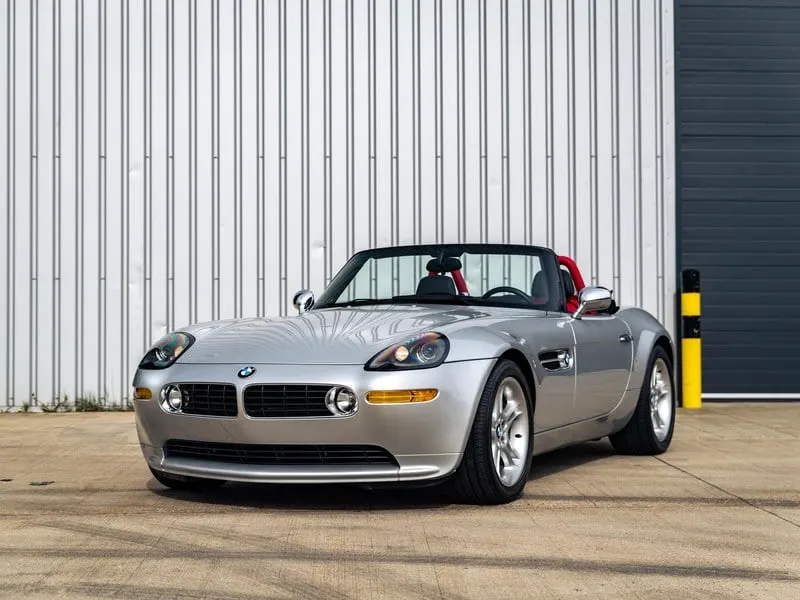
The Alpina that closed the argument
In late 2002, BMW stopped production of the Z8 with the S62 manual drivetrain and replaced it with the Alpina Roadster V8. The new car looked identical from twenty paces but was mechanically different. Out went the M-division S62; in went a stroked-and-bored Alpina version of BMW’s M62 V8, sharing internals with the Alpina B10 V8S saloon. Capacity 4,837 cc, 381 horsepower, 520 Nm of torque — fifteen Nm more than the Z8 normal but with the peak available earlier in the rev range. The six-speed manual was retired in favour of a five-speed ZF Switch-Tronic automatic with steering-wheel paddles. Suspension softened. Twenty-inch wheels in place of the eighteens. The car shifted character entirely, from quasi-sportscar to confessed grand tourer.
The reason for the change was Andy Bovensiepen — son of Alpina’s founder — who happened to be working inside the Z8 programme and had spotted how many American customers were requesting an automatic option. He took the proposal up the chain, got it approved, and ran a limited production of 555 cars, 450 of which crossed the Atlantic. It marked the first time Alpina cars were ever sold through BMW dealerships in the United States.
Here’s the kicker. Today, the Alpina Roadster V8 — with its less powerful engine, its automatic gearbox, and the two original sins of the enthusiast catechism — sells for more than the standard Z8. Not by a small margin either. Rarity beats specification at auction. Five hundred and fifty-five examples against five thousand seven hundred and three. If a concours Z8 trades for £200,000, an Alpina sits at £250,000. That’s four contemporary Ferrari 360 Spiders, or five DB7 Volantes. The automatic gearbox that cost Alpina points with the press in 2003 is adding zeros to the auction estimate in 2026. The market, which has more patience than the motoring press, eventually puts everything where it belongs.
The Bond cameo and the secret most people don’t know
The Z8 was Pierce Brosnan’s Bond car in The World Is Not Enough, released in November 1999. It was the third Brosnan Bond film and the third time BMW had bagged the contract, after the Z3 and the 750iL. What few people know is what happened on set.
When the producers visited Munich and chose the Z8 as their hero car, BMW only had two pre-production examples to lend. The car wasn’t even on sale yet. So for the action sequences — including the famous scene where a Eurocopter fitted with horizontal saw blades cuts the Z8 lengthwise in half — BMW refused to supply real cars. Chris Corbould, Bond’s veteran special effects supervisor, and his team built their own “Z8s” from scratch. Fibreglass body panels moulded in-house, hand-fabricated chassis, a Chevrolet 5.7-litre V8, a Tremec five-speed manual gearbox, suspension components borrowed from a Jaguar. Each stunt car was built in two halves so the saw blades could pass cleanly through with no metal binding. The car that gets bisected on screen is an American hot rod wearing a Z8 dress. The camera, and the public, didn’t notice. That sequence has done more for the Z8 mythology than any magazine road test ever could.
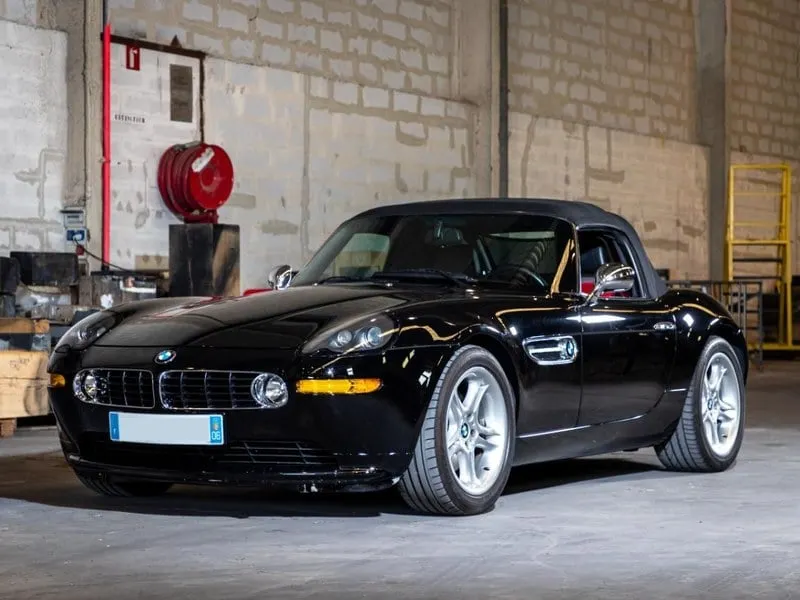
What 2000 didn’t understand and 2026 does
Look at a Z8 today and the launch-period reviews start to feel like they were reviewing a different car. The criticism — that it isn’t a sports car — was true. The conclusion that followed — that it therefore wasn’t much of anything — was wrong, and it was the wrong question to ask in the first place. BMW didn’t build a sports car. They built what Reitzle described over champagne: a modern interpretation of the 507. The 507 wasn’t a sports car either. It was a continental express for people who could afford to spend their time well. The Z8 inherited that brief.
What you get for two hundred thousand pounds in 2026 is a hand-built aluminium spaceframe roadster with a naturally aspirated V8 from the best M5 BMW ever made, a manual gearbox, brakes that won’t quit, steering that — once you stop pretending it’s a 911 — communicates plenty, and a body shape that has aged better than every contemporary it competed against. The DB7 Volante looks dated now. The Ferrari 360 Spider has gone from supercar to used Ferrari. The SL500 of the era looks like a Mercedes mid-life crisis. The Z8 still looks like the future people imagined for sports cars in the late 1990s, except it actually happened.
That’s why the market has tripled its value while flattening everyone else’s. The press got it wrong because they were grading the wrong exam. The buyers in 2000 knew exactly what they were buying. The buyers in 2026 are paying for the privilege of being a generation late.
Check you’re still alive.