
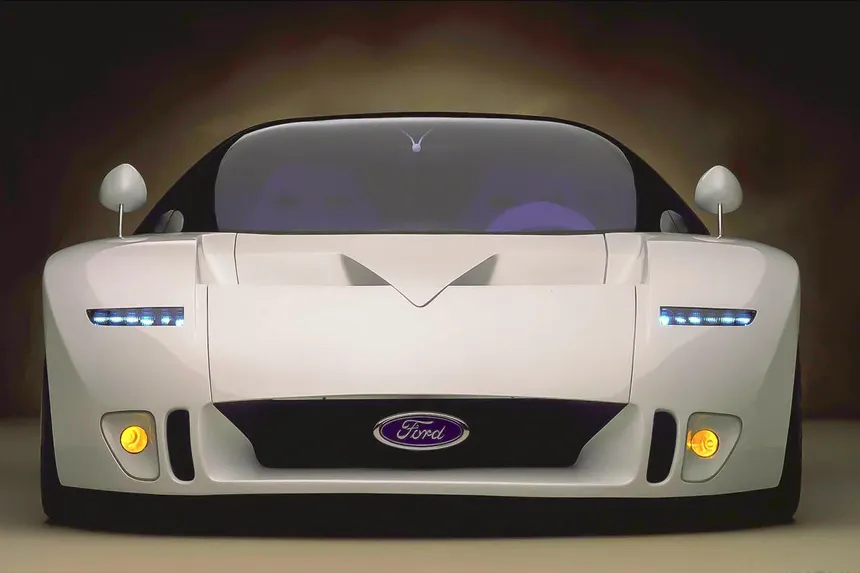
The American supercar that needed the Space Shuttle to not melt itself
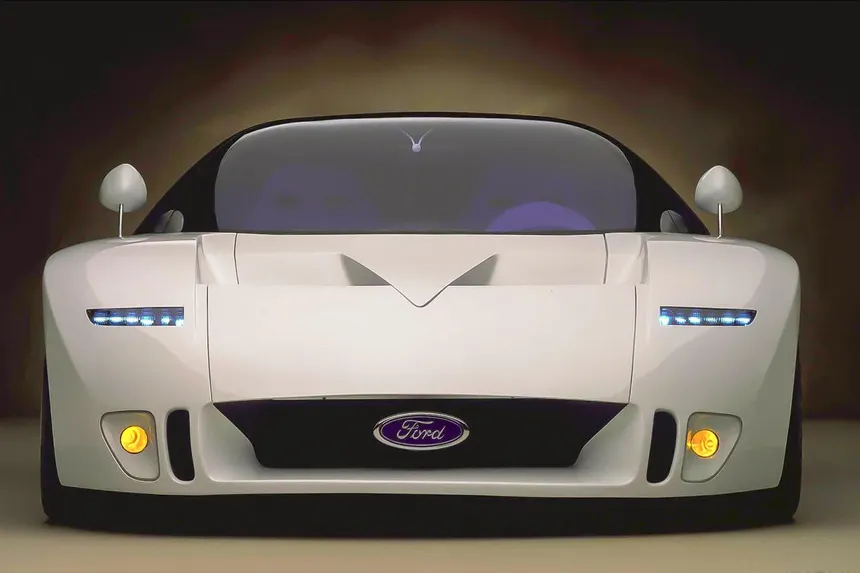
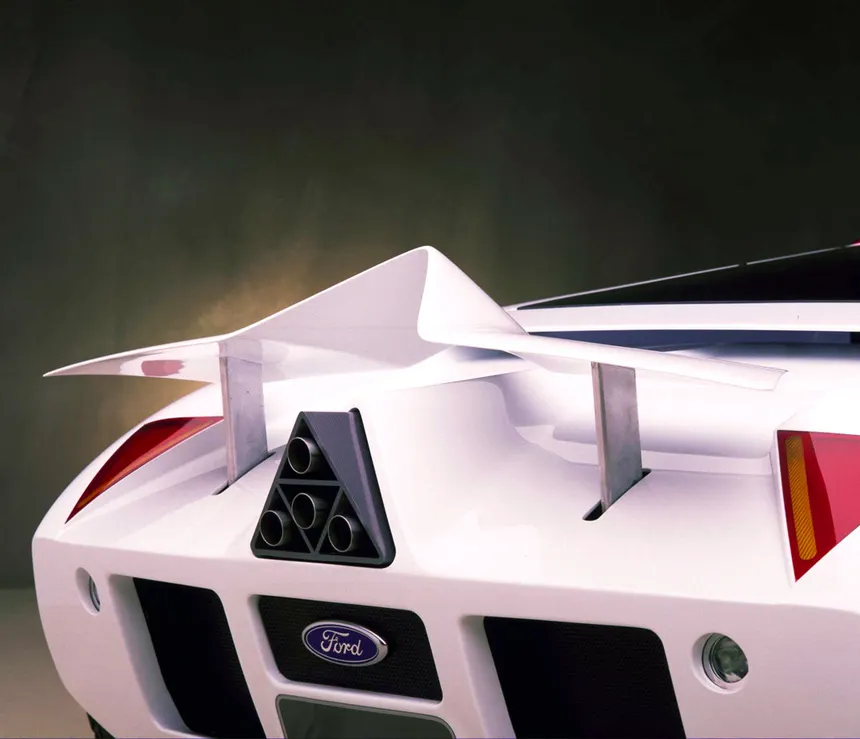
In January 1995, Ford had an engineering problem that no car manufacturer had ever needed to solve before. The exhaust system of its most ambitious concept car generated so much heat that it could melt the carbon fibre body panels surrounding it. The solution didn’t come from the automotive industry. It came from NASA. Ceramic tiles of the same type used to protect the Space Shuttle during atmospheric re-entry, installed between the exhaust system and the bodywork to stop the car from destroying itself.
That is the Ford GT90. An American supercar whose primary enemy wasn’t the McLaren F1 or any European rival. It was its own powertrain.
Two V8s, a welder and a questionable idea
The GT90’s engine is the centrepiece of a story that oscillates between genius and madness, and the line separating the two is so thin that nobody at Ford’s Special Vehicle Team probably knew which side they were on.
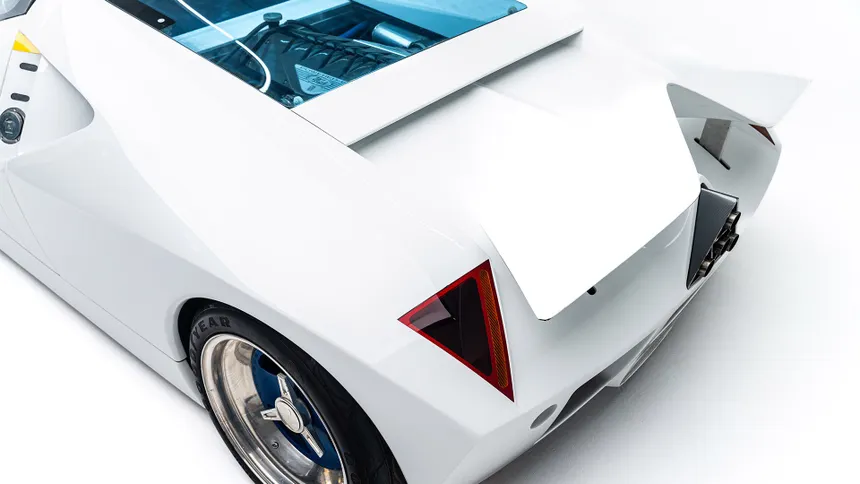
It starts with two Ford Modular 4.6-litre V8 engines. Ford took the first and removed its last two cylinders. Took the second and removed its first two. Joined them at a 90-degree angle. The result was a 6.0-litre V12 — 5.9 litres exact — with 48 valves that never existed in any Ford catalogue and probably shouldn’t have existed outside the mind of an engineer with more ambition than caution. The cylinder heads came from the Aston Martin DB7 development programme, because in 1995 Ford owned Aston Martin and British luxury componentry was at Dearborn’s disposal.
On top of that Frankenstein V12, Ford bolted four Garrett T2 turbochargers. The result: 720 horsepower at 6,300 rpm and 660 lb-ft of torque. At maximum boost, Ford admitted internally the engine could reach 900 horsepower. For perspective: in 1995, the McLaren F1 — the fastest car in the world, the holder of the production car speed record — produced 627 horsepower from a naturally aspirated BMW V12. The GT90 exceeded it by nearly a hundred horsepower in standard trim.
But there is a fundamental difference between the two cars, and that difference explains everything that follows. Gordon Murray designed the McLaren F1 as a complete automobile: engine, chassis, aerodynamics, cooling, all integrated from first sketch to final fastener. Ford built the GT90 by welding together two engines that weren’t designed to coexist, fitting them into a chassis that wasn’t designed for that engine, and covering the result with a body that couldn’t withstand the heat the engine produced. That’s the difference between engineering and willpower.
The engine was developed in secret, hidden under the bonnet of a Lincoln Town Car test mule. A quad-turbo V12 producing 720 horsepower inside the most boring luxury saloon in America. If anyone ever writes the history of the most absurd disguises in the car industry, that Lincoln is chapter one.
Six months, three million dollars
The GT90 was built in just over six months on a budget of approximately three million dollars. Those two facts together explain simultaneously the most impressive and the most problematic aspects of the car.
To appreciate the scale of the madness: Gordon Murray spent over three years developing the McLaren F1. The Jaguar XJ220 needed nearly five years from first sketch to production line. The Ferrari F40 — already legendary by 1995 — was developed in eighteen months, and Enzo Ferrari considered that timeline an extraordinary feat. Ford did the GT90 in six. With a small team. On a budget the McLaren F1 programme would have burned through in cabin ventilation testing alone.
The impressive part is that Ford SVT — a small, specialised team within the Ford structure — managed to create a functional supercar in that timeframe on that budget. The chassis is an aluminium honeycomb monocoque taken from the Jaguar XJ220, another toy from Ford’s nineties empire. The transmission is a five-speed FFD-Ricardo manual, also from the XJ220. The suspension is double wishbone all round, once again from the XJ220. Ford took the best components available across its luxury portfolio — Jaguar, Aston Martin — and packaged them into a car intended to be the fastest in the world.
The problematic part is that six months isn’t enough time to solve the problems a quad-turbo V12 creates inside a chassis that wasn’t designed to house it. Heat was the constant enemy. Exhaust temperatures were so extreme that the carbon fibre panels adjacent to the exhaust system faced permanent risk of thermal degradation. Hence the Space Shuttle tiles: they weren’t a marketing detail or a technical curiosity. They were the only solution the engineers found to prevent the car from destroying itself.
The design that changed Ford without Ford realising
While the GT90’s engine is an exercise in brute force, the exterior design is the opposite: an exercise in radical discipline that would reshape Ford’s visual identity for a decade.
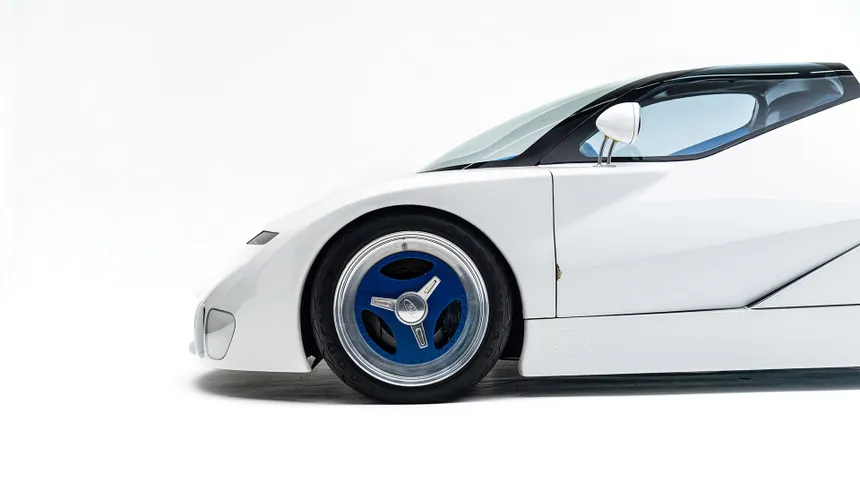
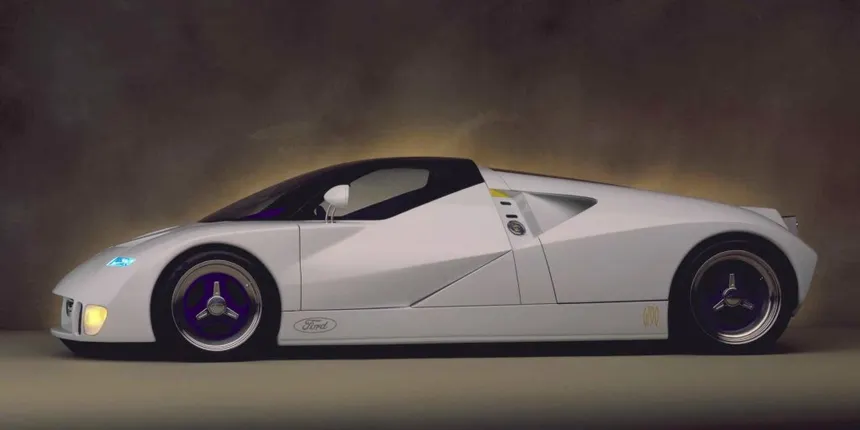
The GT90 is the first Ford to implement the “New Edge” design philosophy. If you don’t recognise the term, you recognise the result: aggressive angles, flat surfaces stretched taut like paper over a drum, a total absence of the curved, organic body lines that defined automotive design in the early nineties. The GT90 looks cut with a blade. Every panel has a defined edge. Every surface meets the next at a deliberate angle that rejects softness.
That design philosophy, born in a concept car that never reached production, filtered into Ford’s entire range over the following years. The 1996 Ford Ka, the Ford Puma, the Ford Cougar — all carry the GT90’s visual DNA, translated into cars ordinary people could buy at ordinary prices. And the direct line from the GT90 leads to the 2002 Ford GT concept and the 2004 production Ford GT — the spiritual successor that actually managed to exist in the real world.
Jacques Nasser, then a senior Ford executive who would later become CEO, kept a scale model of the GT90 on his desk. That’s the kind of detail that sounds like a footnote until you understand what it means: the head of Ford looked at that car every day. The design decisions Ford made in the years that followed reflect what Nasser saw from his chair.
Clarkson drives it: forty miles per hour and a cartoon
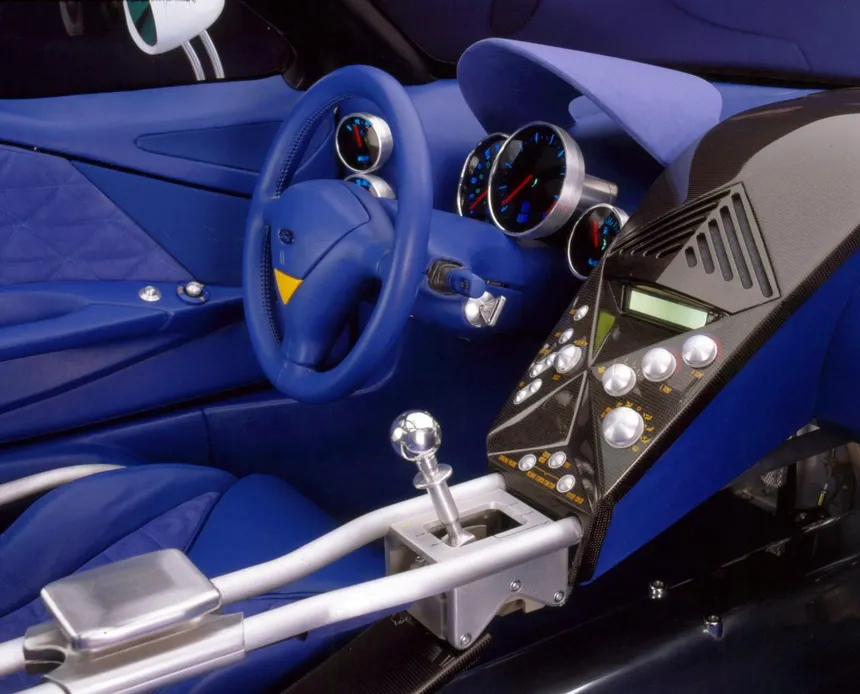
Jeremy Clarkson drove the GT90 for Top Gear. His verdict is one of the most efficient demolitions in the history of motoring journalism. He said the car managed a maximum of 40 miles per hour and handled like a cartoon.
Forty miles per hour. From a car with 720 claimed horsepower and a stated top speed exceeding 235 miles per hour. That’s not a critique. It’s a diagnosis. The show GT90 wasn’t prepared for real driving. It was a concept car in the most literal sense: a concept. An idea with wheels. A visual argument with an engine but without the supporting engineering that transforms a prototype into an automobile. The steering wandered, the throttle response was vague, the entire experience suggested a machine that had been built to be looked at and photographed, not to be driven by anyone who expected a car to behave like a car.
The claimed top speed of over 235 mph — some sources stretch to 253 mph — was never officially verified. Ford never tested the GT90 at maximum speed. The claimed quarter-mile time of 10.9 seconds at 140 mph was never independently confirmed either. Everything the GT90 promised on paper stayed on paper. That’s the gap Clarkson identified at forty miles per hour: the distance between what a concept car says it is and what a concept car can actually do.
Why it never happened
There was talk of a limited production run of 100 GT90s. It never materialised. The reasons are the ones any engineer could have predicted from the moment someone said “let’s weld two V8s together.”
The quad-turbo V12 created cooling problems that were manageable in a show prototype making short runs and cooling between them, but would have been catastrophic in a production car that has to function in traffic, in summer, with the air conditioning running and a customer who’s paid more than the price of a house. The cost of solving those problems — redesigning the cooling system, the exhaust, the thermal protection, the engine management — would have multiplied the original budget by a factor nobody at Ford was willing to approve.
The GT90 died because the distance between “works at a show” and “works in real life” was too great to bridge with the available budget and timeline. Ford knew how to make a fast car. What it didn’t know — or didn’t have the money to discover — was how to make a fast car that didn’t need Space Shuttle tiles to keep from melting.
That’s the GT90 paradox: the car that was supposed to prove America could compete with Europe in the supercar segment proved exactly the opposite. It proved that power without integration is a spectacle, not an automobile. That you can out-muscle the McLaren F1 on a power-output spreadsheet with a three-million-dollar engine and still not have a car capable of doing 40 miles per hour without Clarkson laughing at you. The McLaren F1 wasn’t just faster than the GT90. It was faster because it was better engineered. And that’s something no additional turbocharger can compensate for.
What survived the heat
The GT90 never reached the road, but it reached screens. It appears in Need for Speed II, Gran Turismo 2, Sega GT 2002, Ford Racing 2 and 3, and Project Gotham Racing 3. For a generation of players, the GT90 is a supercar that exists exclusively in digital form — like the Furai, like so many concept cars that deserved more than the real world gave them.
But the GT90’s true legacy isn’t in video games or in power figures that were never verified. It’s in what came after. New Edge as a design language transformed Ford’s visual identity for a decade. And the road that begins with the GT90 in Detroit in January 1995 ends with the Ford GT rolling on public streets with a supercharged V8 that actually works, that actually cools itself, that can actually do everything the GT90 promised without needing NASA protection to avoid self-destruction.
The GT90 is proof that sometimes disproportionate ambition, insufficient budget and suicidal timelines produce something that doesn’t work as a car but works as a seed. Ford needed nearly a decade to grow that seed into the 2004 GT. But without the GT90, without the welded V12, without the Shuttle tiles, without Clarkson declaring it handled like a cartoon at forty miles per hour, the Ford GT probably wouldn’t exist.
Sometimes the most important car a manufacturer ever builds is the one that never went anywhere.
Check you’re still alive.