Mazda Furai: the rotary-powered Le Mans racer disguised as a concept car, and the fire Mazda kept quiet for five years
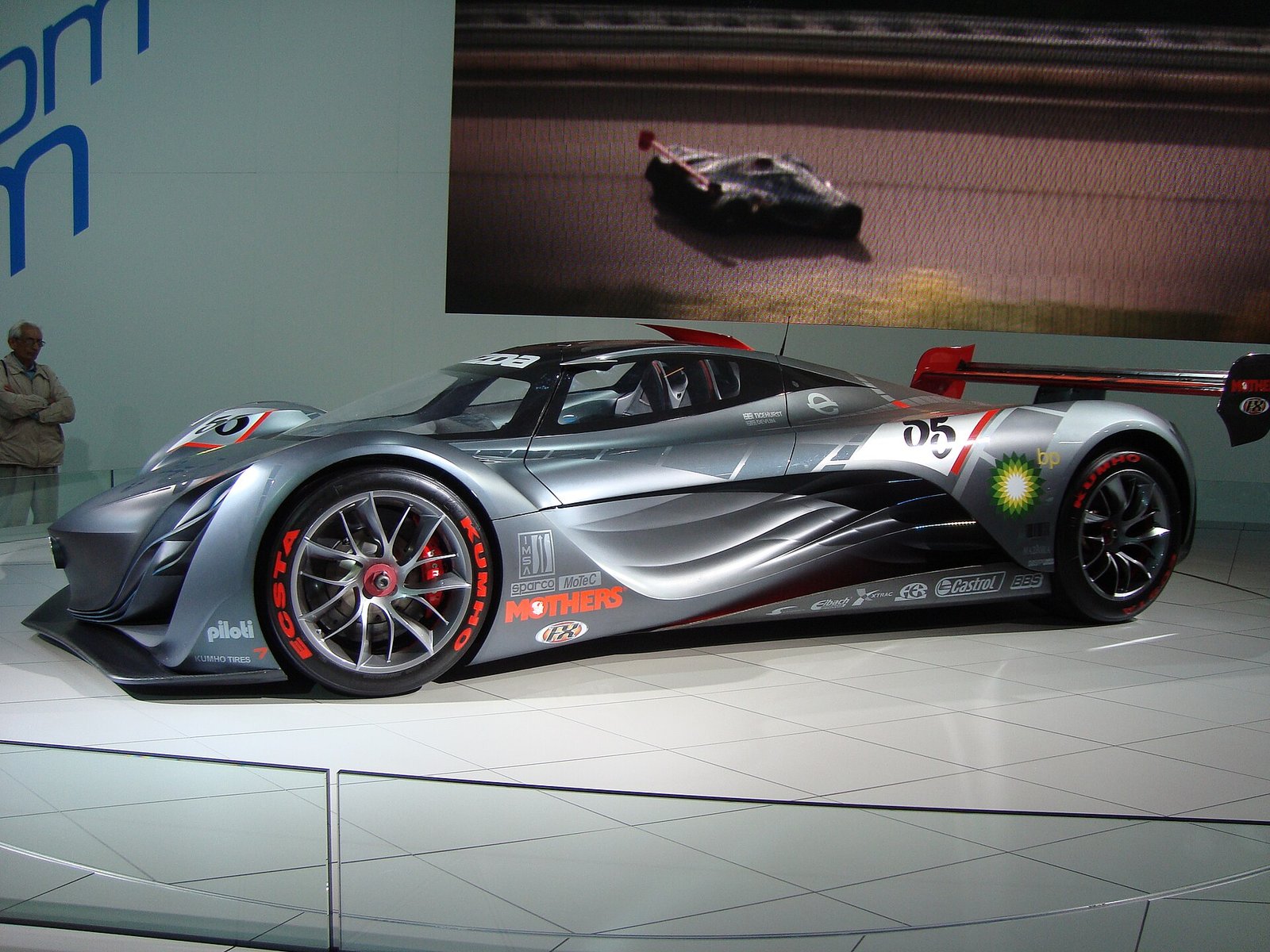
Somewhere in Mazda’s design studio in Irvine, California, according to the few accounts that have been published, are the burned remains of one of the most beautiful race cars of the century. You can’t see them. Mazda has never put them on display. For most people the Mazda Furai exists only as a Hot Wheels car, a model in Gran Turismo and a handful of photographs of an orange-and-white prototype with the number 55 on its side.
That’s because the real car burned to the ground in 2008, during a magazine photo shoot in England, and Mazda didn’t let anyone tell the story for five years.
A concept car that was actually a race car
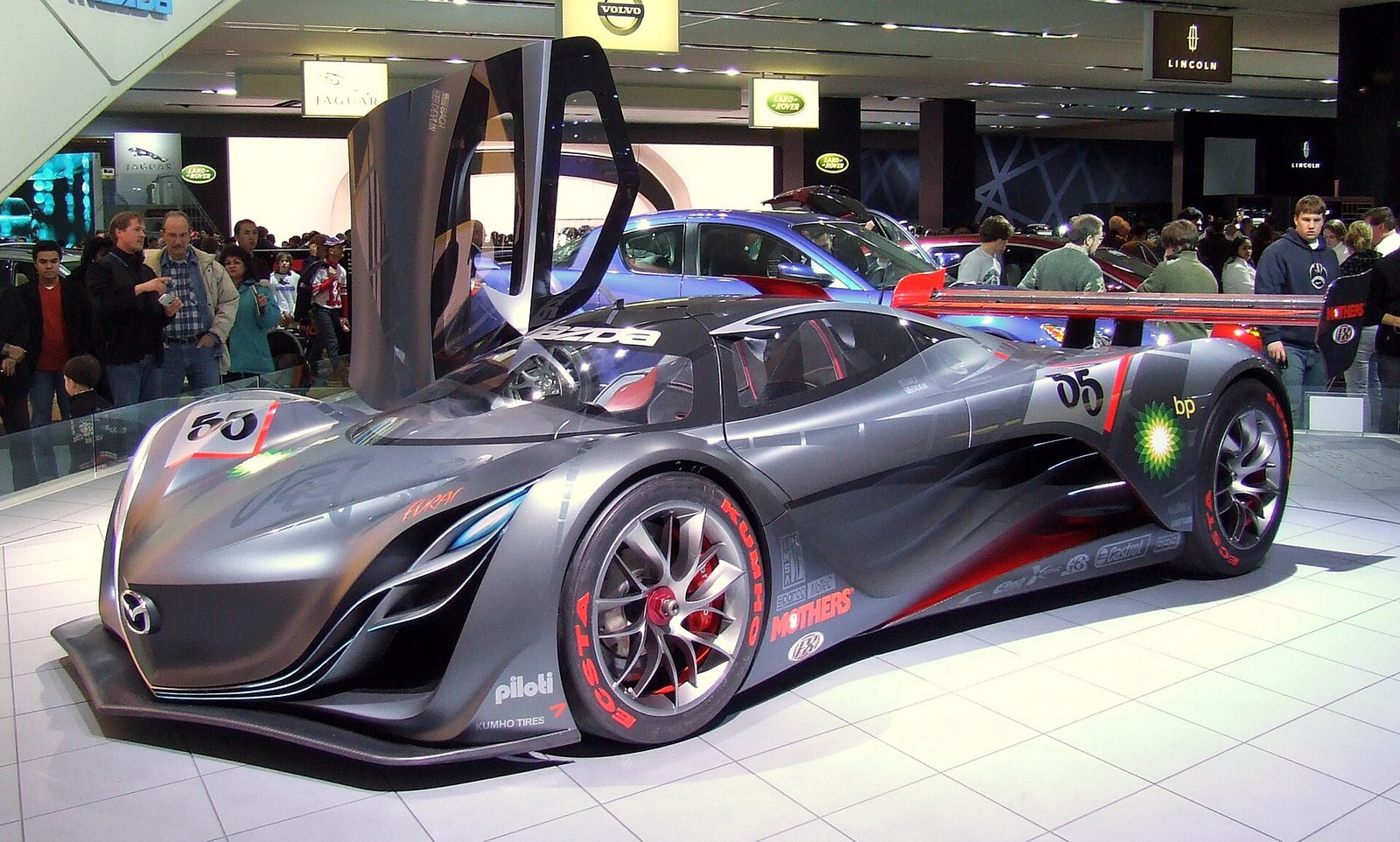
Mazda unveiled the Furai at the Detroit Auto Show in January 2008. The name means "sound of the wind" in Japanese, and the car was the fifth and final design study in Mazda’s Nagare series, a run of concepts built around the idea of flow, shapes inspired by the way wind and water move.
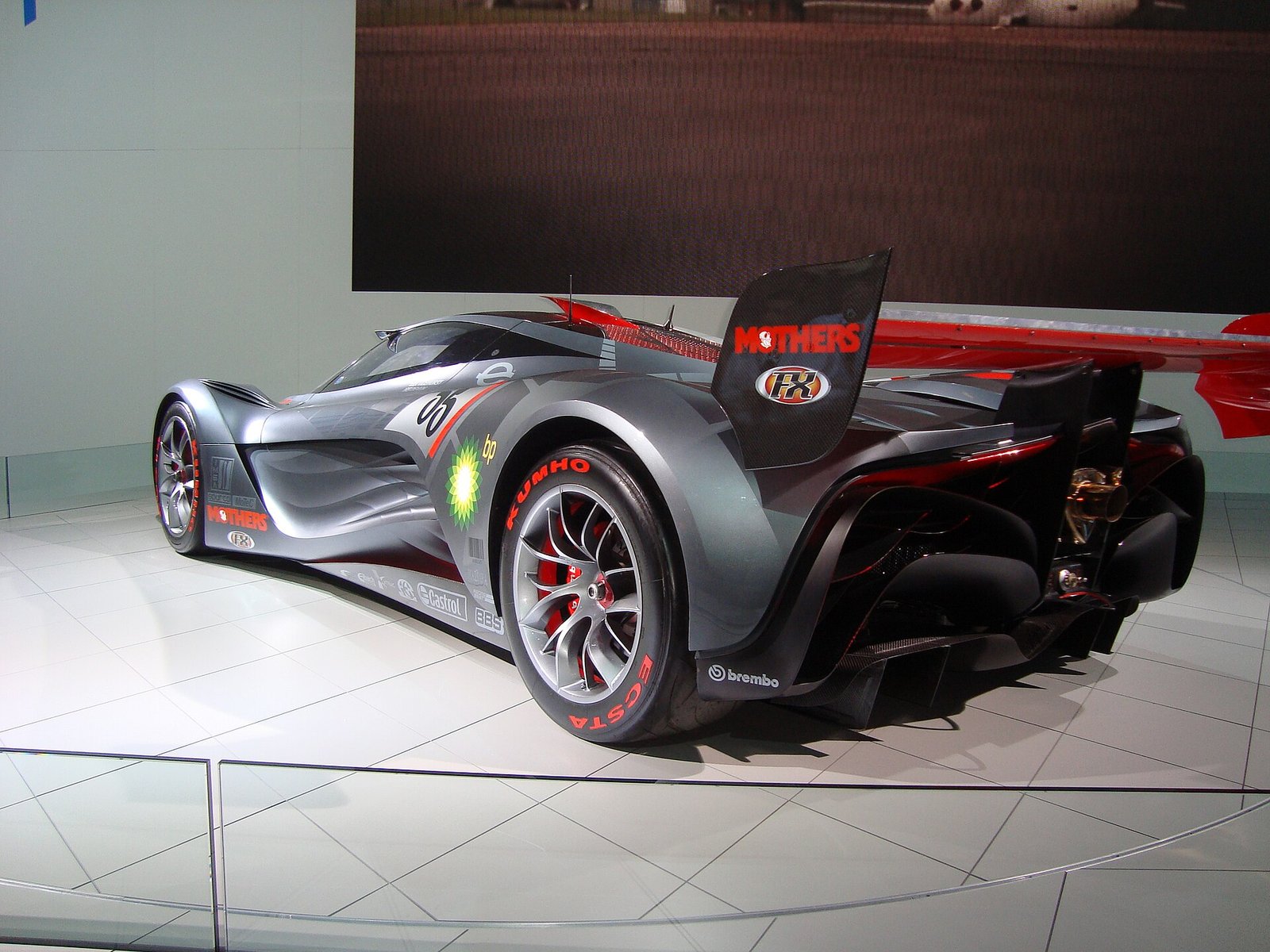
The first four Nagare concepts were styling exercises. The Furai was something else. Under its carbon-fiber body sat a Courage C65, a real LMP2 prototype chassis of the kind Mazda had supported in the American Le Mans Series a few years earlier. It had a racing safety cell, competition harness mounts and suspension designed for endurance racing speeds. The body was shaped with computational fluid dynamics to produce real downforce, not just to look fast.
Courage Compétition was the small French constructor founded by Yves Courage, a former Le Mans driver who spent decades building prototypes for the 24 Hours on a fraction of the budget of the factory teams. The C65 was his LMP2 car of the mid-2000s, and in the American Le Mans Series it raced with Mazda rotary power, which is why Mazda had chassis on hand. Taking a real race car from Courage’s workshop and dressing it in a Nagare body was cheaper than building a concept from scratch, and far more convincing.
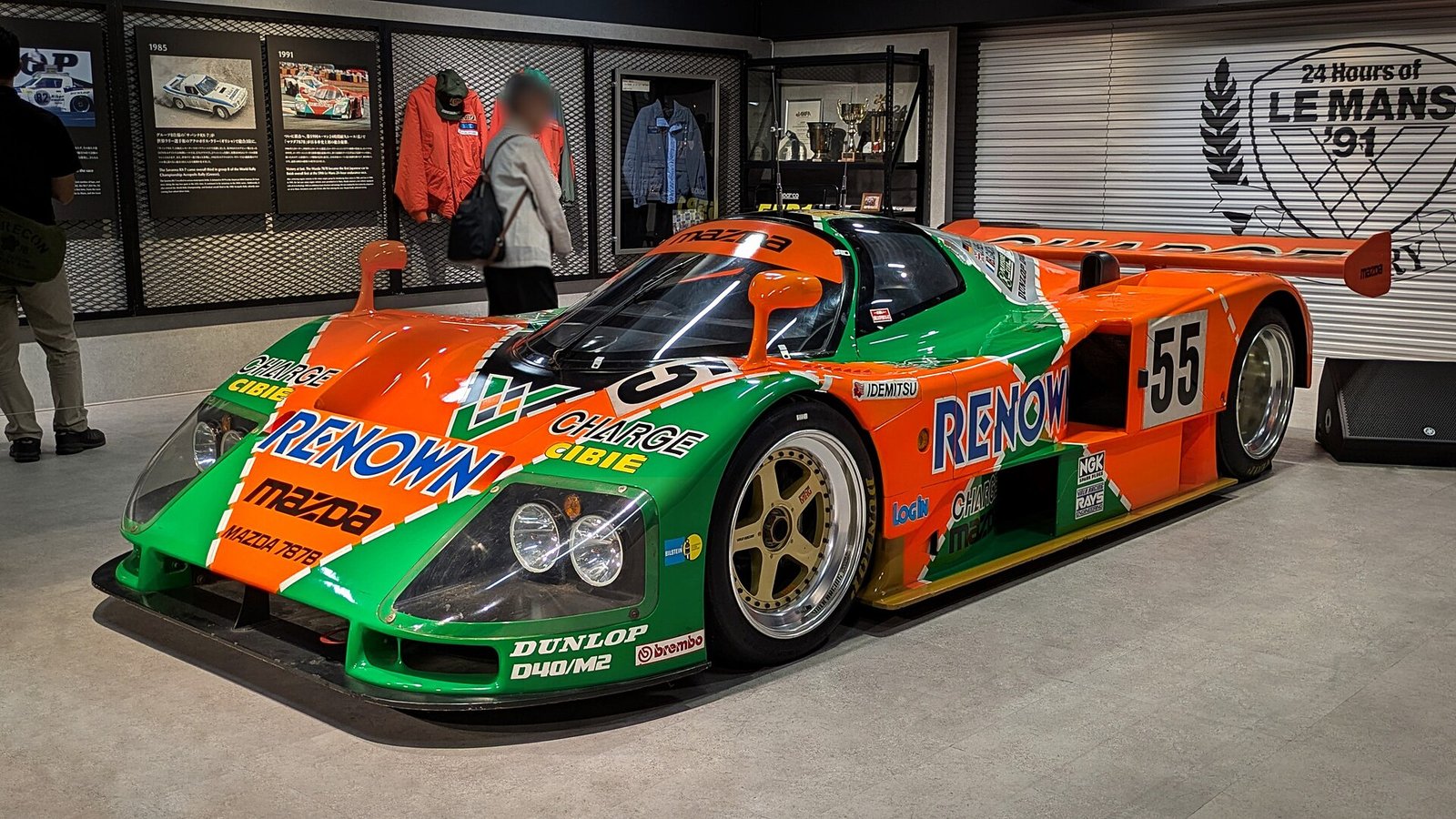
And it carried a meaningful number. The 55 on its flanks was the number of the Mazda 787B that won the 24 Hours of Le Mans in 1991, the first Japanese car to win the race, years before Nissan tried with the R390 GT1, and still the only winner with a rotary engine.
Five concepts, one idea
Nagare was the brainchild of Laurens van den Acker, the Dutch designer who ran Mazda’s global design from 2006 and later left to lead design at Renault. The series opened with the Nagare concept at the Los Angeles Auto Show in November 2006, a wedge with flowing lines etched into its surfaces like sand shaped by water. The Ryuga followed at Detroit in January 2007, the Hakaze at Geneva and the Taiki at Tokyo later that year. Each one played with the same visual language: grooves and ripples in the bodywork that looked like the traces wind leaves on a dune.
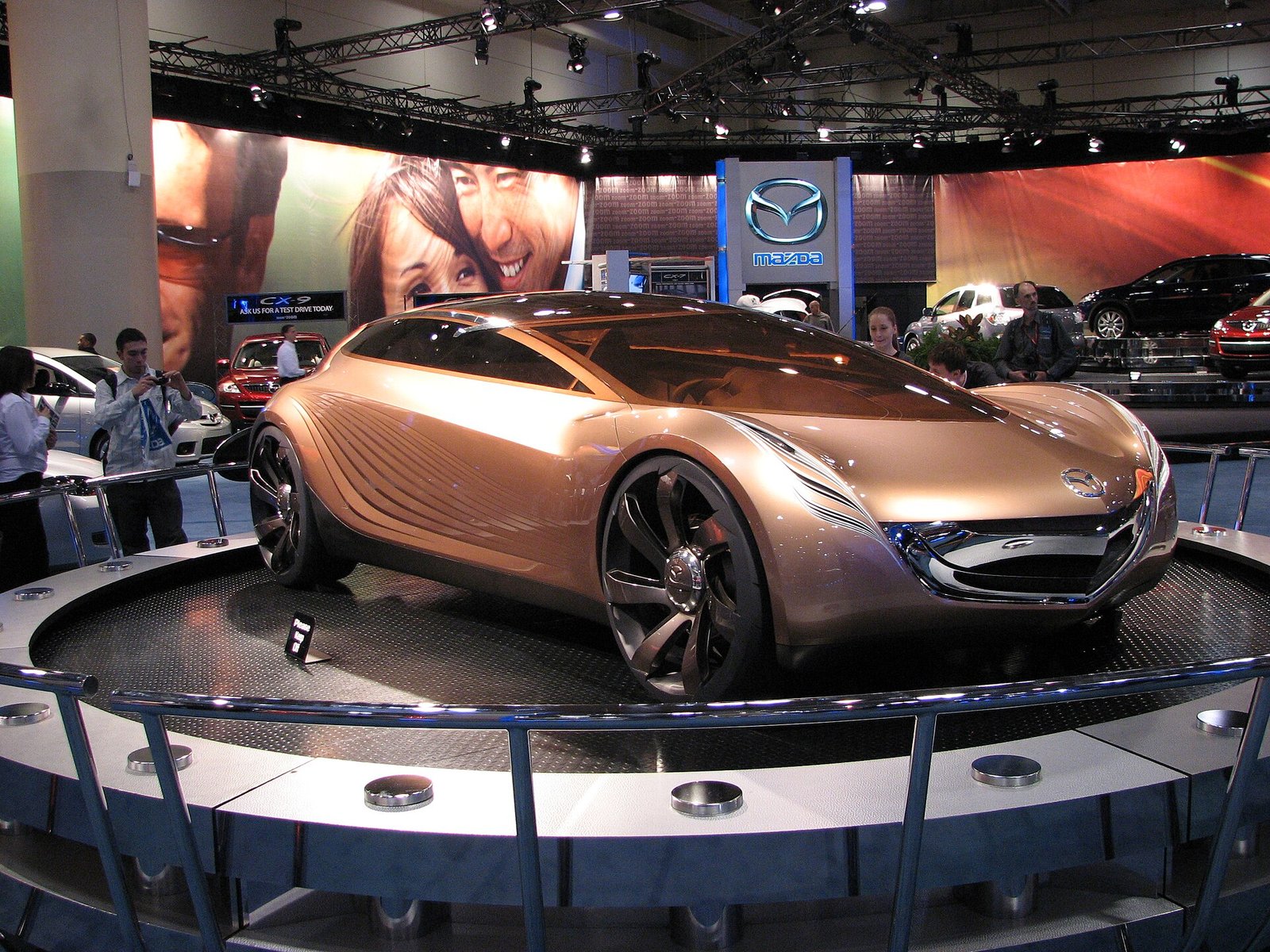
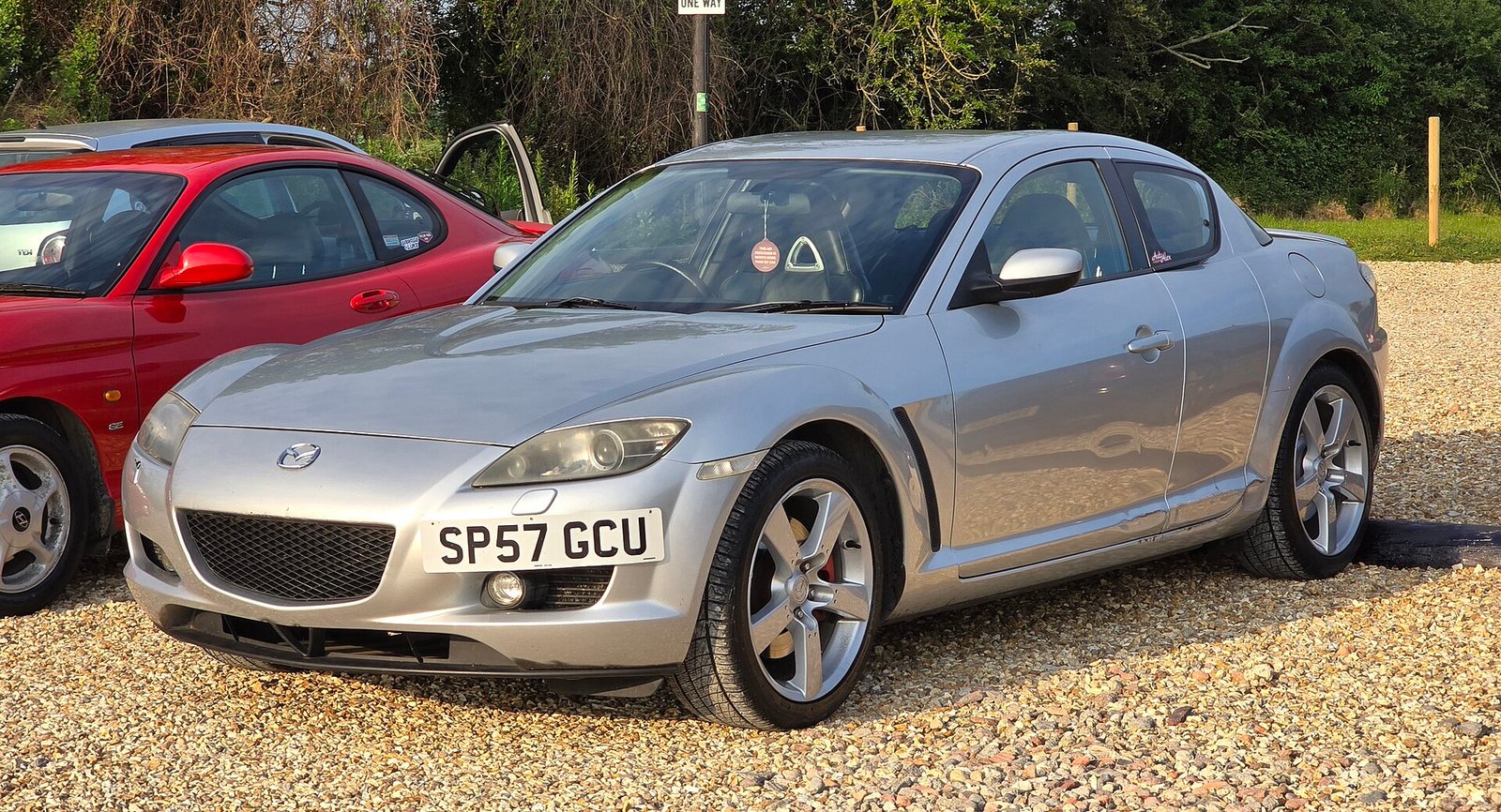
Some of that language reached showrooms in diluted form, in the creases on the flanks of the 2009 RX-8 refresh and the Mazda5. But the four earlier Nagare cars were sculptures. The Furai was the first time the theme was applied to something that had to cut through real air at real speed, and the designers couldn’t cheat. Every ripple on its body had to survive a CFD run and a test session.
The heart: three rotors on ethanol
The Furai’s engine was a three-rotor Mazda rotary, the R20B, built by the American tuning specialist Racing Beat and set up to run on E100, pure ethanol. Output was quoted at around 450 hp.
A rotary engine, also called a Wankel after its German inventor Felix Wankel, works differently from a normal piston engine. Instead of pistons moving up and down, triangular rotors spin inside an oval-shaped housing, and the changing spaces between the rotor and the housing take in, compress, ignite and expel the fuel mixture. There are no connecting rods or valves in the usual sense. The result is a compact, light, smooth engine that loves to rev and makes a sound unlike anything else, a high, buzzing howl that fans of Mazda’s racing cars recognize instantly.
The choice of ethanol mattered. In 2008, with environmental pressure growing, Mazda was arguing that the rotary could run on renewable fuels. The Furai was meant to prove it in the most dramatic way possible.
Mazda said it wasn’t going racing
Context makes the Furai stranger. In 2008 Mazda had no rotary racing program. The RX-8, its last rotary production car, was aging, with falling sales and a reputation for oil consumption and engine wear that the company couldn’t shake. The rotary, Mazda’s signature since the Cosmo Sport of 1967, looked like a technology on borrowed time. Officially, Mazda had no plans to race it.
Yet here was a running LMP-based prototype with a three-rotor engine on ethanol, a carbon body optimized in a wind tunnel and the number of the Le Mans winner. If that wasn’t a statement of intent, it was very close to one: the rotary could run on renewable fuel, make race-winning power and fit inside a structure built for top-level endurance racing.
A very American rotary story
Here’s the part of the Furai story that matters most on this side of the Pacific. The rotary may have been born in Germany and industrialized in Hiroshima, but its racing legend was written in large part in the United States. Through the 1970s and 1980s the RX-7 turned IMSA’s GTU class into its personal playground, and by 1990 the RX-7 had collected its hundredth IMSA race win, a record for a single model in that series. Club racers in SCCA events kept the rotary alive long after the factory stepped back.
The Furai’s engine came from that same world. Racing Beat, the company that built its R20B, is based in Anaheim, California, and has been developing rotary performance parts since the 1970s. The car was designed with input from Mazda’s North American studio in Irvine and tested on California tracks. And Laguna Seca, where it ran, carried Mazda’s name for years as Mazda Raceway Laguna Seca. In many ways the Furai was a Japanese idea built with American rotary know-how, which makes its fate in an English field feel even more like a car lost far from home.
Proving it worked
The Furai wasn’t a static display car. Mazda ran it at Laguna Seca, the famous California circuit with the Corkscrew, and at Buttonwillow, the test track in California’s Central Valley that American race teams use for development. It went up the hill at the Goodwood Festival of Speed in England in front of huge crowds. Drivers who tried it described a car that felt much closer to a real LMP2 racer than to a show car, accelerating, braking and cornering with genuine downforce.
That’s what makes what happened next so painful.
August 19, 2008
The setting was Bentwaters Park, a former Royal Air Force base in Suffolk, England, used as a private test track. Top Gear magazine had arranged a photo shoot with the Furai for a feature. The Stig, the show’s anonymous test driver, shook the car down on the 1.3-mile circuit. Then journalist Bill Thomas drove it, becoming the first outside journalist to drive the Furai. He was also the last.
Afterward Mark Ticehurst, a works driver for Mazda, took over for the final photo runs. The photographer wanted a shot of flames from the exhaust on the overrun. During one of the last passes, a fire broke out in the engine bay. The car was in an isolated part of the circuit, and the fire crews couldn’t reach it in time. Ticehurst got out unhurt. The Furai burned until there was almost nothing left: carbon-fiber body, chassis, three-rotor engine and interior all destroyed.
Five years of silence
What Mazda did next was, in a way, the most revealing part of the story. It said nothing. No press release, no statement. Top Gear had the photographs, the video and Thomas’s account, but couldn’t publish without Mazda’s permission, and Mazda didn’t give it.
The story finally came out in September 2013, when Mazda allowed Top Gear to tell it. By then the RX-8 had gone out of production, in 2012, and the rotary was gone from Mazda’s showrooms as a source of propulsion. The car that was supposed to prove the rotary had a future had itself become a footnote. The exact cause of the fire has never been officially published.
Why the silence makes sense, sort of
It’s easy to criticize Mazda for hiding the loss. But consider the position it was in. The Furai was meant to show that the rotary was reliable, clean and competitive, at a time when the RX-8’s reliability record was already a problem for the brand. Announcing that the showcase rotary race car had burned to the ground during a magazine shoot was the worst possible message. Mazda chose to let the car disappear quietly.
The cost was the story itself. For five years, the most beautiful Mazda of the century simply vanished from public view, and fans wondered why it never appeared at another show.
Gran Turismo and Hot Wheels
For most people today, the Furai lives in other forms. It appears in Gran Turismo 5, Gran Turismo 6 and Gran Turismo PSP, modeled in detail by Polyphony Digital, the same series that made a cult object of Tajima’s Suzuki Escudo from Pikes Peak, so millions of players have driven it, heard its engine and taken it around virtual Laguna Seca. There’s also a Hot Wheels Furai, a die-cast car that costs a few dollars and is, in a strange way, the most accessible physical object connected to a prototype that cost millions.
That digital afterlife is part of why the Furai is so widely known. A car most people never saw in person became one of the most recognizable concepts of its generation through screens and toy aisles.
The rotary’s long goodbye
The Furai was the last great gesture of Mazda’s rotary era before production ended. Since the Cosmo Sport of 1967, the rotary had powered the RX-7 in its three generations, the 787B at Le Mans and finally the RX-8. Mazda keeps flirting with a comeback, most recently with the Iconic SP concept and its rotary range extender. In 2023 the rotary returned in a very different role, as a compact generator charging the battery of the MX-30 R-EV plug-in hybrid. It doesn’t drive the wheels. The dream the Furai represented, a rotary racing car running on renewable fuel, is still unrealized.
Had the car survived, Mazda would have had a tangible, drivable argument for the rotary’s future in racing and in a world of alternative fuels. Instead it has photographs, a toy and some burned remains in California. Its ancestor, the 787B, is still the only rotary-engined car ever to win Le Mans, and the story of Wankel’s engine and of Le Mans is where you’ll find the context for both.
The sound of the wind
Furai means the sound of the wind. It’s a fitting name for a car that exists now mainly as an echo: a howl captured on video at an old airbase in England, a shape that still tops lists of the most beautiful concept cars ever made, and a reminder that the most extraordinary prototypes are also the most fragile. Concept cars are usually built to be looked at. This one was built to run, and it ran right up until the end.
Keep reading: Alfa Romeo Diva: The Prototype Alfa Wouldn't Sign
Check you’re still alive.
Photos via Wikimedia Commons: Mazda Furai front and rear at the 2008 British Motor Show, luke wilson (CC BY 2.0); Mazda Furai at the 2008 Detroit Auto Show, Tronno (CC BY 3.0); Mazda Nagare concept, Ian Muttoo (CC BY-SA 2.0); Mazda 787B No. 55, Aos.1905 (CC BY 4.0); Mazda RX-8, Calreyn88 (CC BY-SA 4.0).