In the early 1970s, General Motors was so sure the rotary engine was the future that it paid a reported fortune for the license and planned to put one in the Chevrolet Vega. A mid-engined Corvette prototype was built around rotary power. Then the 1973 oil crisis hit, the emissions and fuel economy numbers didn’t add up, and GM shelved the whole program. American Motors, which had designed the Pacer around a GM rotary, had to scramble for a conventional engine instead.
That’s how most of the industry’s love affair with Felix Wankel’s engine ended: quietly, expensively and in a filing cabinet.
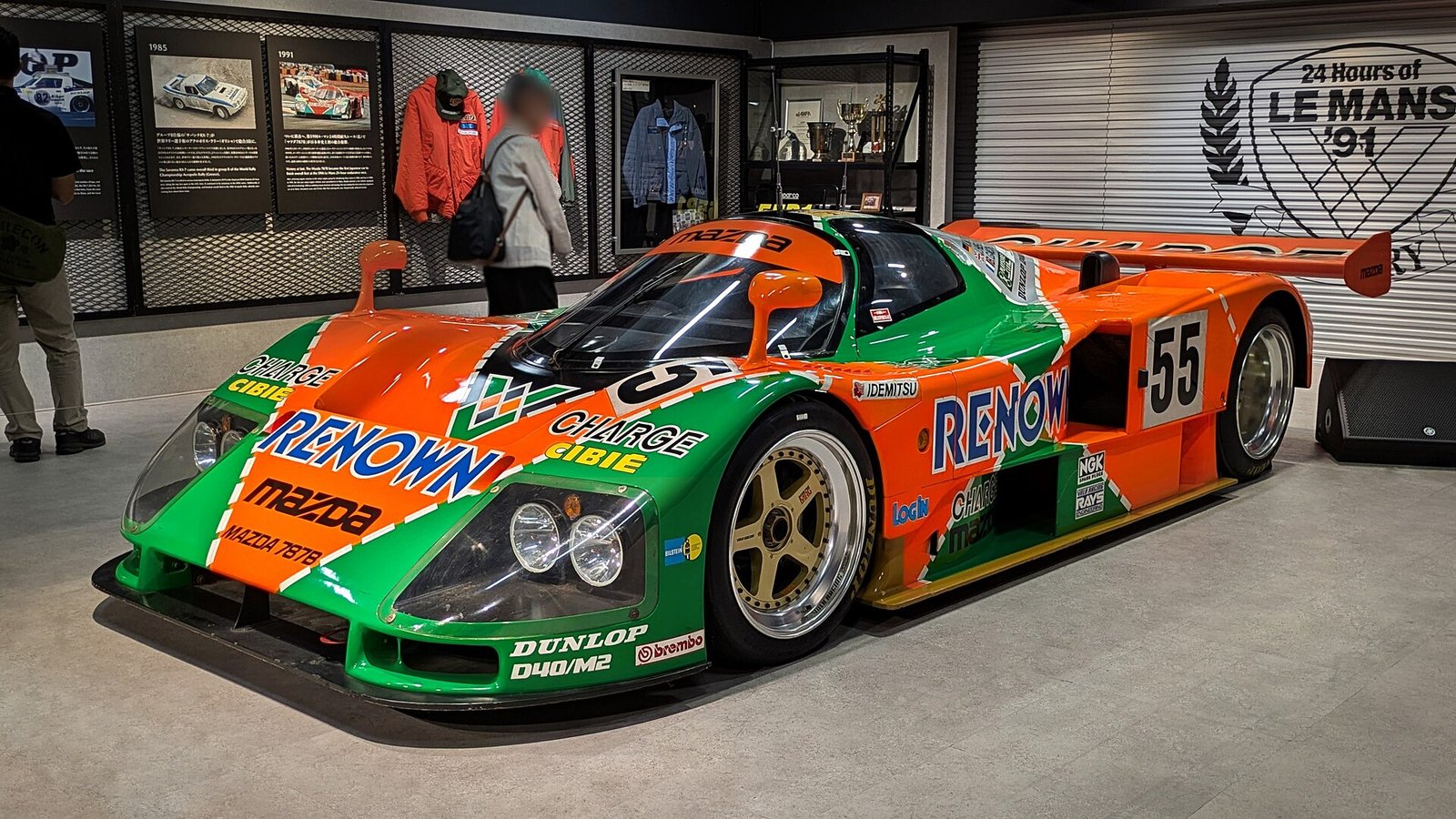
Mazda didn’t quit. And on June 23, 1991, a Mazda 787B with a four-rotor engine screaming to 9,000 rpm won the 24 Hours of Le Mans, the only car without conventional pistons ever to do it. Then Mazda built a sports car around the same idea that American enthusiasts still worship: the RX-7.
How a rotary works, in one paragraph
Felix Wankel first patented his rotary engine in 1929. Instead of pistons going up and down, a rounded triangular rotor spins inside an oval-ish housing, a shape called an epitrochoid. As it spins, the three chambers between the rotor’s faces and the housing grow and shrink, so each face goes through intake, compression, power and exhaust, just like a four-stroke piston engine. Fewer moving parts, no valves, almost no vibration, and a lot of power from a small, light package. It sounds perfect. The catch was always the seals.
Everyone tried, everyone failed
Germany’s NSU put it into production first, with the Wankel Spider shown in 1963 and then the futuristic Ro80 sedan in 1967. Citroën tried with the GS Birotor in 1973. Mercedes built rotary prototypes. GM, as we said, bet big.
The problems were always the same. The apex seals, the strips that seal the three tips of the rotor against the housing, wore out fast and left chatter marks inside the housing that NSU engineers nicknamed "the devil’s fingernail marks." Rotaries burned oil by design, emitted more hydrocarbons and used more fuel than piston engines. When the 1973 oil crisis arrived, thirsty engines became unsellable. Citroën went bankrupt in 1974, with the Birotor among the reasons. The NSU Ro80 ended production in 1977.
Everyone gave up on the Wankel. Everyone but Mazda.
The 47 samurai of Hiroshima
Kenichi Yamamoto, the engineer who led Mazda’s rotary program and later ran the company, put together a team of 47 engineers, nicknamed the "47 samurai" after the famous Japanese legend, dedicated to nothing but making the Wankel work. He reportedly told them the rotary should be on their minds at all times, asleep or awake.
One of the key breakthroughs was an apex seal made of carbon impregnated with aluminum that could finally survive the constant scraping against the housing. In 1967, the Cosmo Sport became Mazda’s first production rotary car. In 1968, Mazda entered two nearly stock Cosmos in the Marathon de la Route, an 84-hour endurance event on the Nürburgring. One retired after 82 hours with an axle problem. The other finished fourth.
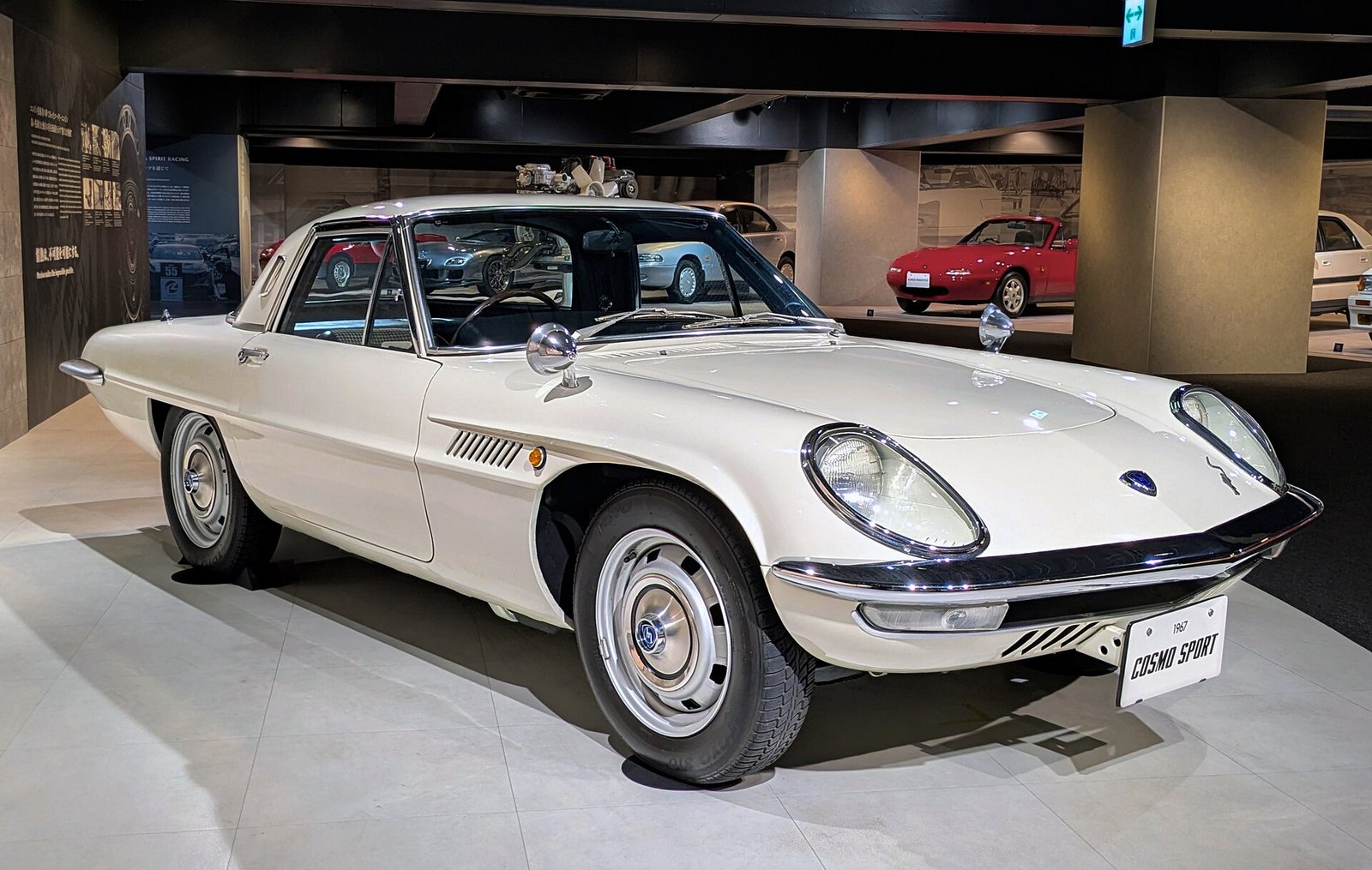
Mazda’s message: this engine lasts.
Le Mans, the long way round
Mazda’s rotary first appeared at Le Mans in 1970, in a Chevron B16 entered by a Belgian privateer team. Through the ’70s and ’80s, Mazda came back again and again, earning respect and class results but never the overall win. The 767 and 767B prototypes of the late ’80s were quick but fragile.
In 1990 the 787 debuted with the new R26B four-rotor engine, and reliability problems ended its race early. Then came the news: the rules were changing, and from 1992 the top class would be built around 3.5-liter piston engines like those in Formula 1. 1991 would be the rotary’s last chance.
June 1991: the scream
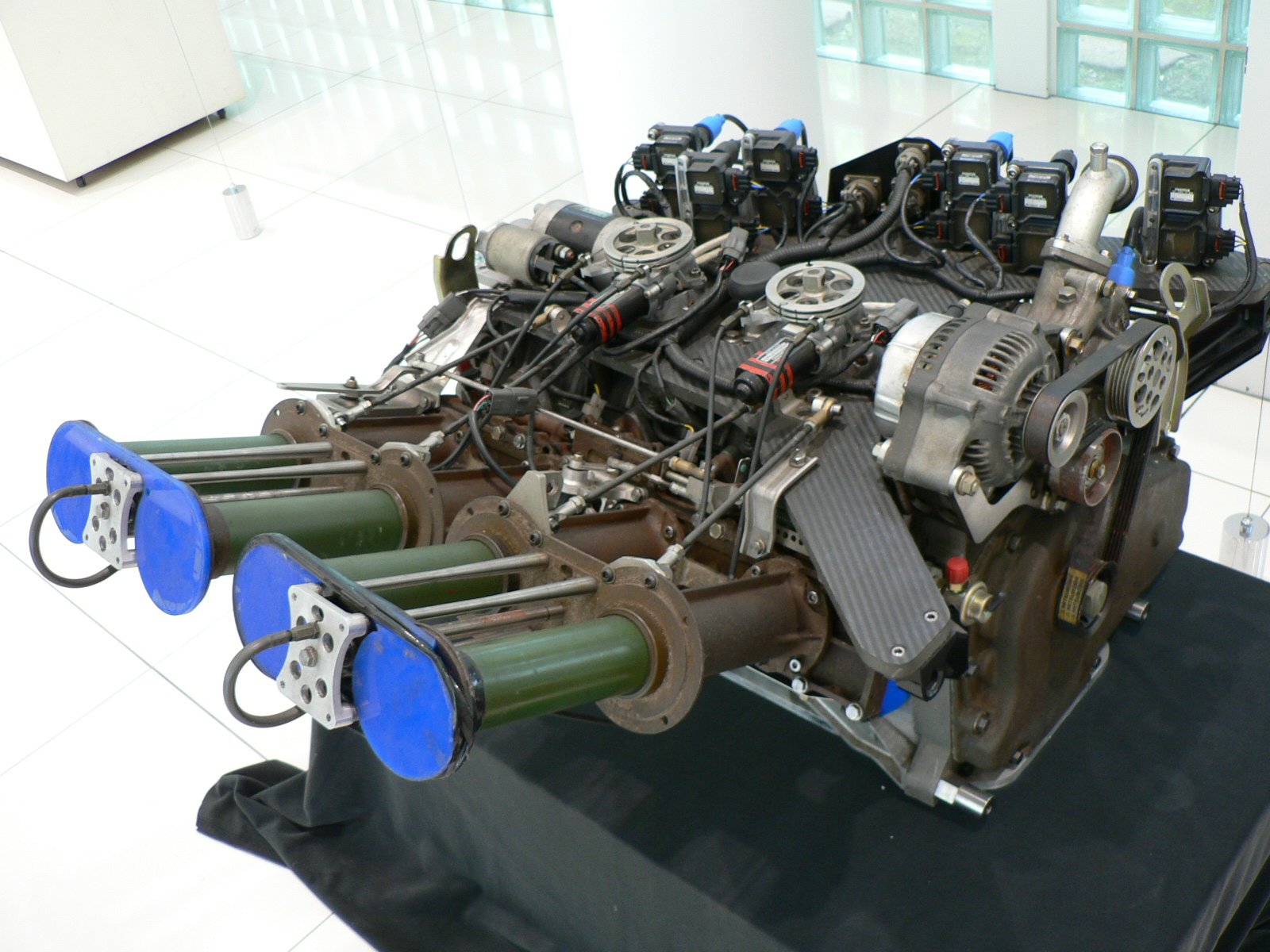
The R26B in the 787B had four rotors, 2,616 cc, a continuously variable intake system and three spark plugs per rotor. Mazda quoted about 700 hp at 9,000 rpm. The car weighed 830 kg, about 1,830 pounds, while the big-engined Jaguar XJR-12s and Mercedes C11s had to run ballasted up to 1,000 kg. Mazda also prepared the race with the French team ORECA and hired six-time Le Mans winner Jacky Ickx as an adviser.
The #55 car, in its now-legendary orange and green Renown "Charge" livery, started from 19th on the grid. On paper it had no chance against the Sauber-Mercedes C11s, one of them driven by a young Michael Schumacher, the Jaguars and the Peugeot 905s.
Mazda’s plan was simple: play to the 787B’s strengths, reliability and fuel economy, and keep it out of the pits. The Peugeots dropped out early. The Mercedes fell one by one. The last one, the #1 car, was leading comfortably until gearbox wear and an overheating V8 slowed it shortly before 1 p.m. on Sunday, around the 22nd hour. The Mazda took the lead and never gave it back.
Johnny Herbert, Volker Weidler and Bertrand Gachot shared the driving, with Herbert taking the final stint. He crossed the line ahead of two Jaguar XJR-12s, so dehydrated that he couldn’t make it to the podium. It was the first Le Mans win for a Japanese manufacturer, and nobody from Japan would win again until Toyota in 2018.
Mazda came back in 1992 with the MXR-01, a piston-engined prototype with a Judd 3.5-liter V10 and a chassis derived from the Jaguar XJR-14, and finished fourth. Then the prototype program ended. The 787B went to Mazda’s museum in Hiroshima, and the rotary scream at Le Mans fell silent.
The RX-7: an American love story
If the 787B was the rotary’s moment of glory, the RX-7 was its daily life, and a lot of that life was lived in America.

First generation, SA/FB (1978-1985)
Designer Matasaburo Maeda’s first RX-7 was a light, simple sports coupe that put the compact rotary behind the front axle for better weight distribution and a low, pointed nose with pop-up headlights. The 12A twin-rotor engine was small, about 1.1 liters, and modest in power, but the car weighed little more than a ton and cost far less than a Porsche 924. For young American enthusiasts in the late ’70s, buried in smog-choked V8s, it was a revelation.
It was a racing hit, too. It won its class at the 1979 24 Hours of Daytona on its first try and racked up a long string of IMSA GTU titles through the ’80s. In 1984, the GSL-SE got the fuel-injected 13B. Close to half a million first-generation cars were built, the most of any RX-7.
Second generation, FC (1985-1992)
The FC grew up: bigger, heavier, more sophisticated, with styling that invited comparisons to the Porsche 944. Motor Trend named it Import Car of the Year for 1986. The 1987 Turbo II made 182 hp and could hit 60 mph in well under seven seconds. A convertible followed. In Japan, the lightweight Infini special editions became collector’s items. More than 272,000 FCs were built.
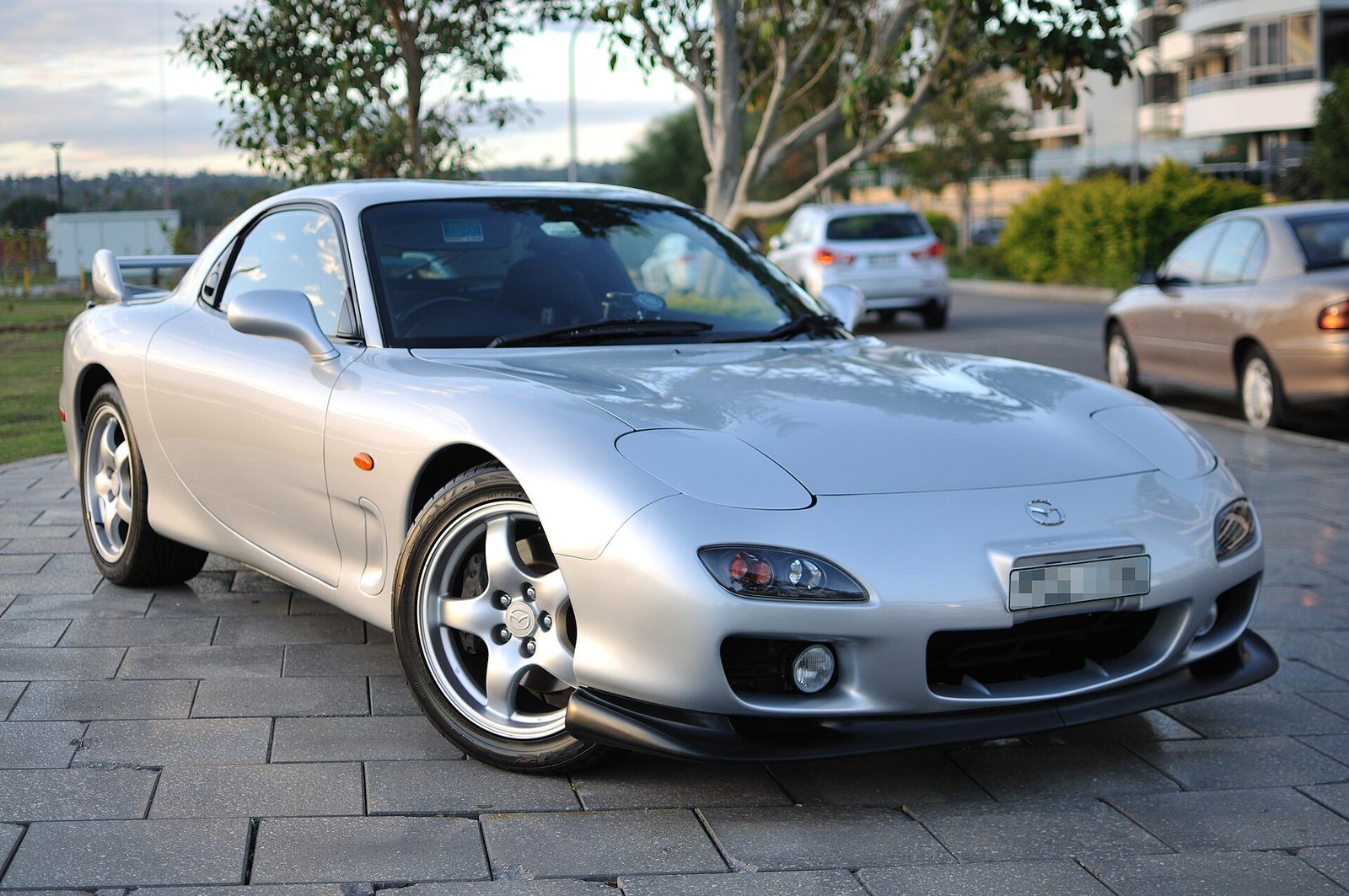
Third generation, FD (1992-2002)
For many, the FD is the high point: one of the purest sports cars ever made. It came out of a design competition among Mazda’s studios, and the winner was the studio in Irvine, California, with a design by Wu-huang Chin working with Tom Matano, the man behind the original Miata.
Its 13B-REW was the first mass-produced sequential twin-turbo engine exported from Japan. A small turbo provided boost at low rpm; above about 4,000 rpm, the second one joined in. US cars made 255 hp, Japanese versions eventually 280 PS. With roughly 50:50 weight distribution, double wishbones up front and a multilink rear, a Torsen limited-slip differential and a curb weight around 1,260 kg, it was a scalpel.
Car and Driver put it on its 10Best list in 1993, 1994 and 1995, the only three years it was sold in the US. Then the price climbed out of reach for its natural buyers, the Japanese economy collapsed and emissions rules tightened. America lost it after 1995. Japan kept it until 2002, ending with the Spirit R, a final run of 1,504 cars.
The apex seal curse
The rotary’s reputation as a ticking time bomb is both unfair and understandable. Apex seals do the job of piston rings in a far harsher environment: extreme heat, constant pressure, high sliding speeds. Different parts of the housing run at very different temperatures, which causes uneven expansion. And the rotary deliberately injects oil to lubricate those seals, so it burns oil by design.
Specialists will tell you a well-maintained naturally aspirated RX-7, warmed up properly and kept topped up with oil, can go a long way before a rebuild; turbo cars are harder on themselves. There’s no single number, because how the car is driven and maintained matters enormously. The cars that feed the bad reputation are usually the ones run hard, cold and low on oil, often with bigger turbos and no upgrades to match.
Why rotary people are different
A V8 shoves you from 2,000 rpm. A modern turbo four gives you a flat, predictable wall of torque. A 13B is almost uneventful until 4,000 or 5,000 rpm. Then it comes alive, smooth as silk with none of a piston engine’s pulses, and climbs to 8,000 or 9,000 rpm with no sign of strain, the sound changing from a buzz to a howl. Nothing else sounds like it.
Then there are the practical upsides. The engine is tiny and light, which lets designers drop the hood and push the engine behind the front axle. Lower center of gravity, better weight distribution, a car that turns in like it’s reading your mind. In exchange, you commit: you watch the oil, you service it more often, you accept worse fuel economy, and you know one day it will need a specialist rebuild. It’s an engine for believers.
From Gunma to Hollywood
Pop culture sealed the deal. In Initial D, the anime that introduced a generation to Japanese mountain-road driving, the Takahashi brothers drove a white FC and a yellow FD. In The Fast and the Furious, Dom drove a red FD, and in Tokyo Drift, Han’s orange-and-black VeilSide FD became one of the most copied cars on the planet. Gran Turismo and Forza did the rest.
The engine that won’t die
The RX-8, with its naturally aspirated Renesis engine, kept the rotary alive until 2012. The 2015 RX-Vision concept promised a comeback that never came. Today a small single-rotor engine works as a generator in the MX-30 R-EV, a range-extended EV, and Mazda keeps flirting with rotary sports car concepts, as we covered with the Iconic SP and Skyactiv-Z. Before that, in 2008, the rotary-powered Mazda Furai concept showed how wild the company could get on a race track. The same Le Mans history that made the 787B immortal is part of the race’s real story, and the NSU Ro80 shows what happened to the company that tried first.
From Spain, where we write, the FD is now a blue-chip collectible: on Spanish classic-car listings, 1992 FDs have been advertised for roughly €50,000 to €95,000. A car that few Spaniards ever saw in a showroom now trades like a European exotic.
Mazda won Le Mans with an engine nobody else wanted, then built a sports car around it that, more than twenty years after production ended, still stirs more passion than most new cars. Not bad for an engine the industry declared dead in 1977.
The RX-7’s sequential twin-turbo and the three-rotor Eunos Cosmo, explained alongside every other combination, are in twincharging and twin-turbo explained.
Check you’re still alive.
Photos: Aos.1905 (CC BY 4.0); Aos.1905 (CC BY 4.0); 160SX (CC BY-SA 3.0); TTTNIS (CC0); Aaron Lai (CC BY 2.0). Via Wikimedia Commons.