The Car That Was Too Honourable to Survive
Chris Harris has a line he reaches for when a car does something special: it feels like it was built by people who cared more than the accountants wanted them to. He usually means it as the highest praise. But there’s a version of that sentence that isn’t praise at all. It’s an epitaph.
Because caring too much is exactly what killed NSU. Not bad engineering. Not a flop nobody bought. The opposite. NSU built a car so good it won European Car of the Year, a saloon that made Mercedes look about ten years out of date, and then watched that same car bleed the company dry until it had to be sold off for parts. The reason it bled them dry? The factory simply refused to let a single customer down.
This is the story of the NSU Ro80. It’s one of the most unfair things that ever happened in the car business.
From Sewing Machines to the Most Advanced Saloon in Europe
If you’d visited Neckarsulm in the early fifties and bet that this company would one day build Europe’s most futuristic executive car, people would have laughed. NSU made motorbikes. Brilliant ones, mind you — by the mid-fifties they were the biggest motorcycle manufacturer on the planet, not just in Germany. But motorbikes. Before that, sewing machines and bicycles.
When motorcycle sales started shrinking, NSU did what hungry companies do and jumped into cars. Small, cheap, rear-engined things. The Prinz. Sensible little boxes to take the family to church. Nothing about them suggested what was coming.
But NSU had an ace up its sleeve. They’d hired a strange, self-taught, famously bad-tempered engineer named Felix Wankel, and Wankel had an idea that was going to change everything. Or sink everything. Depends which year you’re looking at it from.
The Engine That Spun Instead of Thumping
You can’t understand the tragedy without understanding what sat under that bonnet — and why everyone who drove it lost their minds over it.
A normal engine works by thumping. Piston goes up, piston comes down, up, down, thousands of times a minute. Every single time it changes direction it has to stop dead and fire off the other way. That stopping and starting is vibration. It’s stressed components. It’s noise. It’s an engine fighting itself, all day long, forever.
The Wankel does none of that. Instead of a piston going up and down, it has a rounded triangular rotor spinning continuously inside an oval housing. Always the same direction. Nothing stops, nothing reverses, nothing fights. The physics are dead simple: no reciprocating mass means no inertia to fling about, and no inertia means no shaking. That’s why it felt the way it did. Smooth as an electric motor, happy to spin to the moon, and small enough to fit in a shoebox while weighing half what a conventional engine of the same power weighed.
On Top Gear’s old format this is exactly the kind of party trick that would have got a balancing-a-coin-on-the-rocker-cover demonstration. The thing barely vibrated. Half the industry in the sixties was convinced this was the future. Mazda bought a licence. Norton bought one for bikes. GM, Mercedes, Citroën — all of them paid for the secret out of Neckarsulm. When the giants pay to copy your homework, you’ve usually got it right.
NSU had got it right. The trouble was hiding in the details. The trouble always hides in the details.
Three Bits of Metal Against an Entire Company
The triangular rotor has to seal against the housing walls so the combustion pushes the rotor round instead of leaking past it. That job falls to tiny pieces at each tip of the triangle: the apex seals. Three per rotor. Bits of metal about the size of a fingernail.
NSU made all three from the same material, in three pieces. On paper, fine. In the real world, a death sentence. On cold starts the centre piece of the seal wore differently from the corner pieces. The pieces shuffled together, got out of position, and let combustion gases blow straight past where they shouldn’t. The engine lost compression. It got hard to start. Then harder. Then it didn’t start at all.
The brutal part was the timing. Not at 150,000 miles. Cars were killing their engines before 15,000. Some didn’t make 20,000. Brand-new cars, just bought, sitting at the side of the road with an engine that was now scrap.
And here is where the story gets enormous. Because NSU had two roads in front of them.
The Choice That Did Them Credit and Did Them In
Road one: shrug. “Read the small print, sir. New technology, these things happen.” Leave the customer stranded with an expensive paperweight.
Road two: stand behind it. Replace the engine under warranty. Again. And again. As many times as it took.
NSU took road two. And they took it all the way past sanity. There are documented cars that went through nine engines under warranty. Nine. The factory building brand-new engines to drop into older cars, free of charge, one after another, while the customer drove around happily and NSU’s bank balance drained like a bath with the plug pulled.
Think about it from the workshop floor, because that’s where this stuff makes sense. Every returned engine isn’t just the cost of parts. It’s labour. It’s a car off the road. It’s a mechanic stripping a unit you were paid for months ago instead of building new ones to sell. Every warranty job is money walking out the door twice for the same car. Multiply by thousands. No company NSU’s size survives that.
And meanwhile the reputation was rotting. People talked. “The Ro80? Gorgeous thing, but the engine grenades itself.” Once that sticks, no Car of the Year trophy unsticks it. Sales, never huge to begin with, fell off a cliff.
There was a second poison in the tank, too, and it’s worth understanding because it explains why the Wankel never really got a second chance. That same smooth-spinning rotor had a shape problem nobody could engineer away: the combustion chamber was long and thin, a sliver stretched around the housing, which is just about the worst possible shape for burning fuel cleanly. A lot of the mixture never got the chance to burn properly. That meant two things — a thirst that would embarrass a V8 and an exhaust full of unburned hydrocarbons. The Ro80 would happily drink its way through fuel at a rate that made owners wince, and it got through spark plugs and oil at a pace nobody was used to. In the easy-money sixties you could just about look past it. Then 1973 arrived and the price of petrol went vertical, and suddenly a thirsty car was a car nobody wanted. The rotary’s smoothness had always come with a bill attached, and the world finally decided it wasn’t worth paying.
The Bit That Stings: the Car Was a Masterpiece
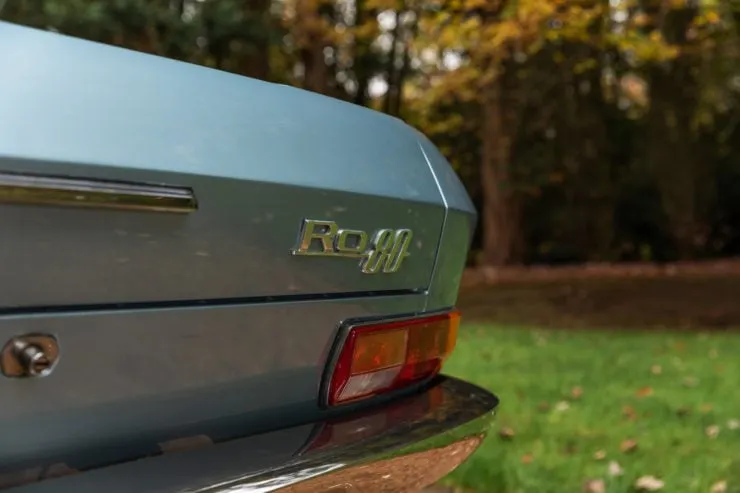
What makes this unbearable is that, apart from those wretched seals, the Ro80 was from another planet.
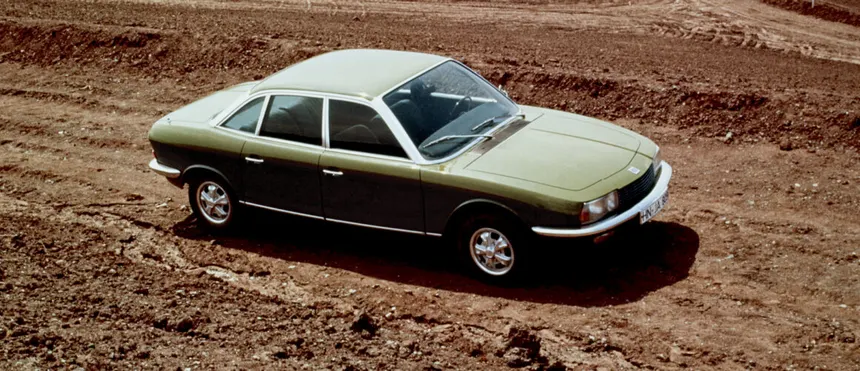
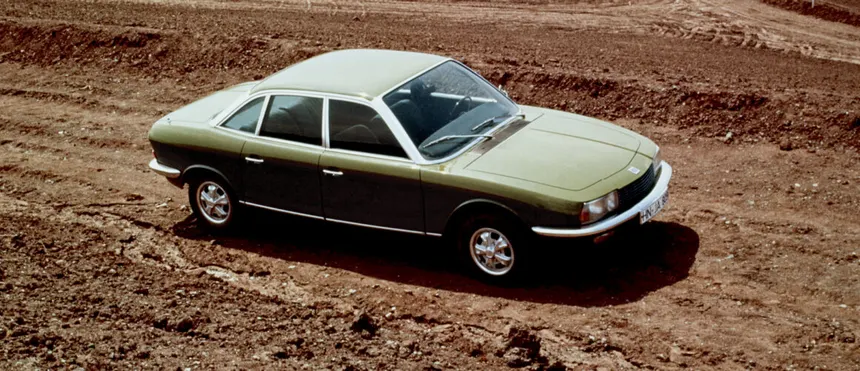
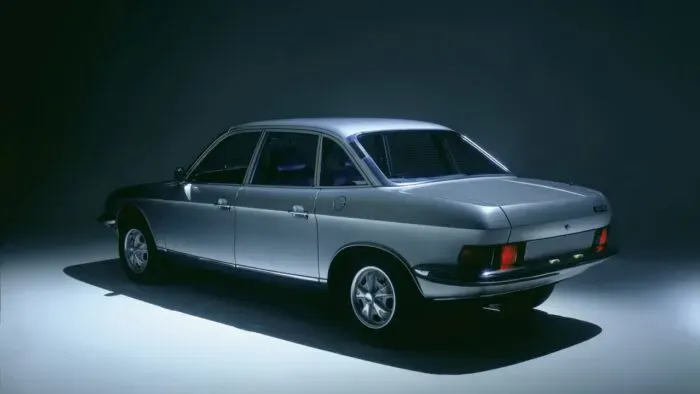
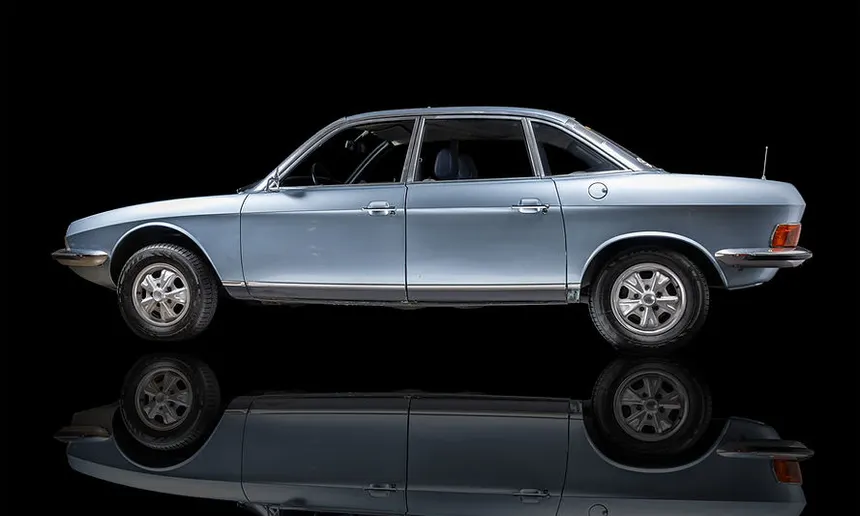
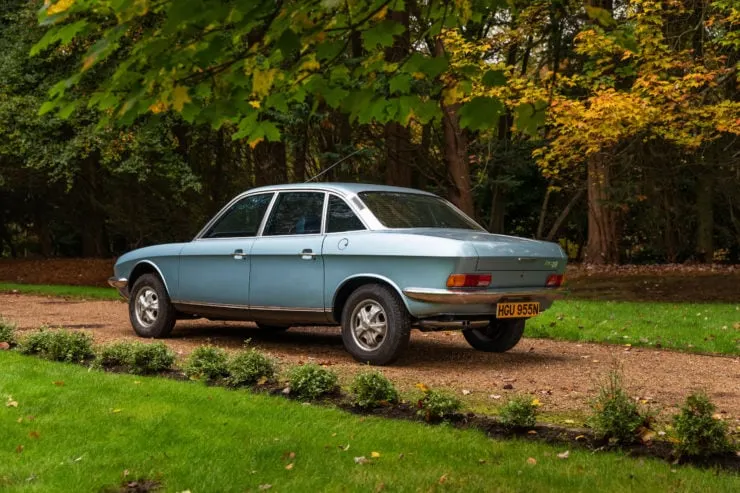
Claus Luthe penned it — he’d later go on to run design at BMW. A clean wedge, low nose, acres of glass, a shape that in 1967 looked like it had been beamed back from twenty years in the future. And it wasn’t just for show: NSU developed it in a wind tunnel and came away with a drag coefficient of 0.355. To put that in context, that was around 40% slipperier than the average saloon of its decade. Cars that looked like wardrobes parked next to that wedge.
Four-wheel disc brakes, the fronts mounted inboard to cut unsprung mass — a racing-car trick. Power steering. Fully independent suspension. Front-wheel drive when almost nobody used it in this class. It was, no argument, the most technically advanced saloon in Europe.
Now the final knife. You know the 1982 Audi 100, the one people remember as the car that reinvented saloon aerodynamics? Park it next to a Ro80. It’s the same car. Same wedge, same idea, same proportions. The Audi that went down in history for being slippery turned up fifteen years late to a thought NSU had already put on the road — except by then NSU didn’t exist as an independent name any more.
The Ending: Bought More or Less by Accident
By 1969, with the tills empty and the reputation in tatters, NSU lost its independence. Volkswagen bought it.
And here’s a detail almost nobody tells you, and it’s one of the bitterest in the whole saga. Volkswagen didn’t especially want the Ro80. They didn’t especially want the Wankel either. What VW was after were other NSU assets and projects, above all a conventional saloon called the K70 that NSU had designed and very nearly finished. VW launched it with its own badge, and it became the first front-wheel-drive Volkswagen ever made.
So the jewel — the revolutionary car, the award winner, the one that ran two decades ahead of everyone — was almost collateral in the deal. The thing they actually wanted was the boring car parked next to it.
Volkswagen merged NSU with Auto Union, and out of that mixture came the modern Audi. The NSU name faded until it was gone. The Ro80, astonishingly, kept being built until 1977, the seals finally fixed with a new material from 1970, even fitted with a buzzer to stop owners over-revving. Too late. The 1973 oil crisis finished what was left: a thirsty engine in the middle of a fuel price spike had no future at all.
What Actually Killed the Ro80
It’s easy to file this under “the engine that failed.” But that’s the comfortable version. The textbook version.
The engine did fail. Three bits of badly calculated metal. But engines fail at every manufacturer, always have, and almost none of them sink the company. What sank NSU wasn’t the failure. It was what they chose to do about the failure.
NSU chose to leave nobody stranded. To eat every broken engine, every time, no argument, until there was no company left to eat them with. In a world where the norm was — and still is — to wriggle out and hide behind the warranty wording, a factory in Neckarsulm decided to stand behind its car to the last possible consequence. The last possible consequence was ceasing to exist.
Some brands die from doing things badly. NSU died, in large part, from trying to do them right with a car that ran so far ahead of its era that seal technology simply couldn’t keep up with its ambition.
The Ro80 is still out there, in industrial design museums, that wedge still looking modern half a century on. A car that was right about everything except three fingernails of metal. And sometimes, in engineering as in life, being right about almost everything doesn’t save you. Getting the small thing wrong is enough to pay for the lot.
1 thought on “NSU Ro80”