Citroën Méhari: the plastic beach car designed by a Soviet-decorated fighter ace
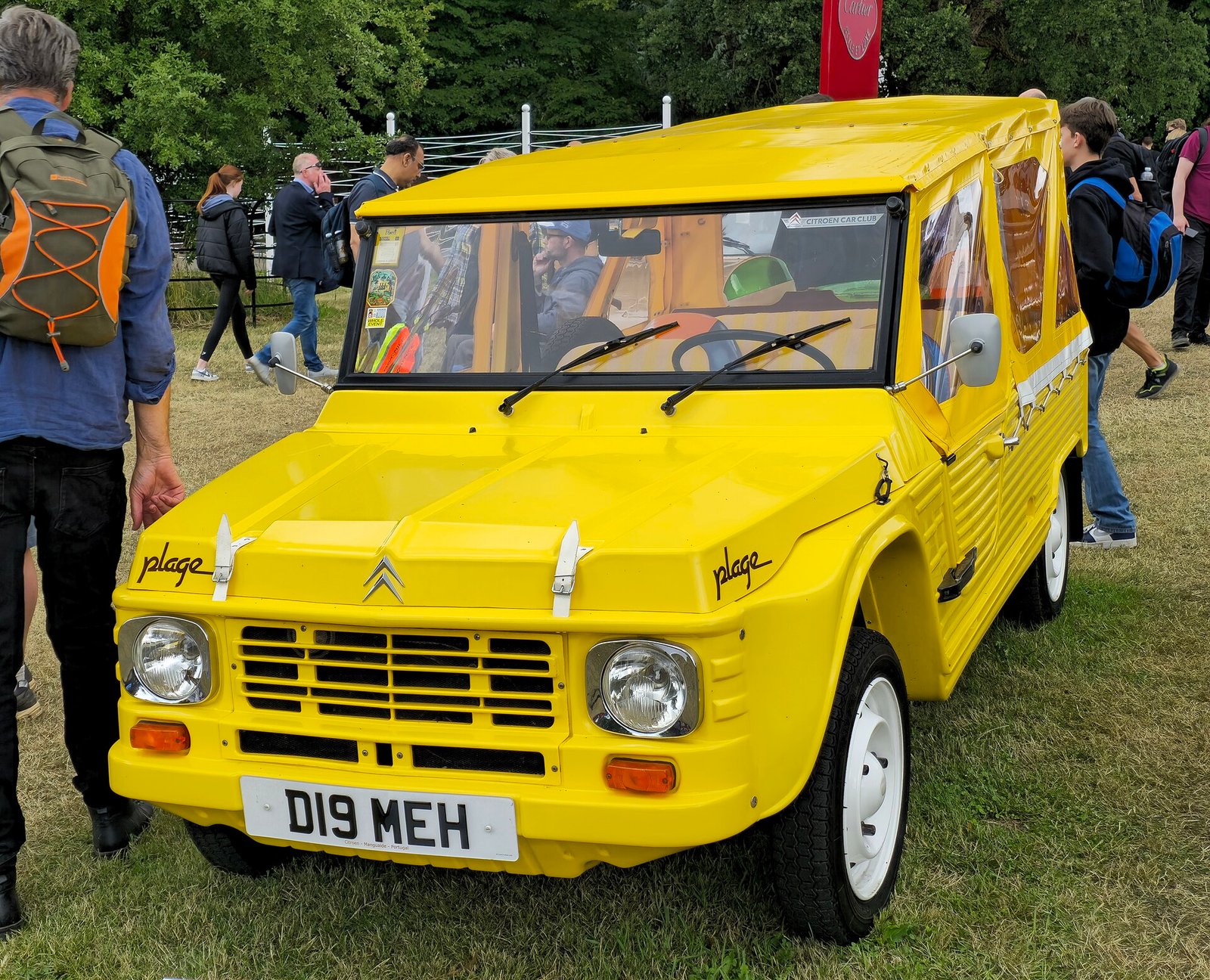
If you grew up in California, you know the type. A doorless, roofless, bright-colored thing you could hose out after a day at the beach, the kind of car that belonged in a surf movie. In America that role went to the Meyers Manx dune buggy and later the Volkswagen Thing. In France it went to a yellow plastic box called the Citroën Méhari, and the man who invented it was not a surfer or a hot rodder. He was a World War II fighter pilot with sixteen victories, a hero of the Free French and a Hero of the Soviet Union, who after the war decided his next battle would be fought with plastic.
A launch nobody noticed
Citroën picked the worst possible moment to unveil the Méhari. On May 16, 1968, France was paralyzed. Students had taken over the Latin Quarter in Paris, millions of workers were on strike and riot police were fighting in the streets. On a golf course in Deauville, on the Normandy coast, Citroën presented a doorless plastic utility car called the Dyane 6 Méhari. Almost nobody covered it. The country had other things to worry about.
Twenty years later the Méhari had sold 144,953 units. The French army had bought thousands. It had crossed the Sahara with the Paris-Dakar Rally. And it had become as much a part of the Mediterranean summer as straw hats and cheap rosé. Not bad for a car whose debut was buried under a revolution.
The pilot
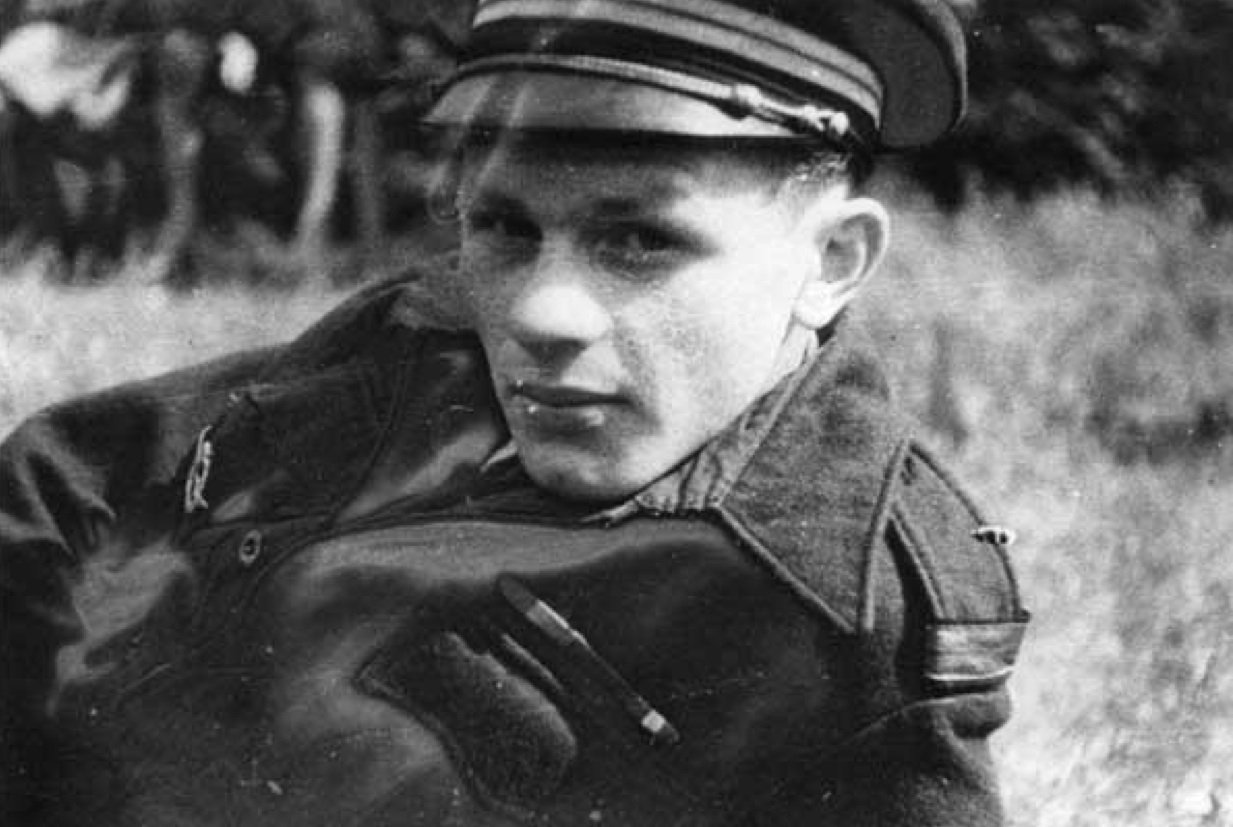
Roland Paulze d’Ivoy de la Poype was born on July 28, 1920, in the Puy-de-Dôme region of central France, into an aristocratic family. He was a nineteen-year-old cadet at the French air force school in Étampes when the Germans overran France in 1940. His father was killed in the fighting. Roland heard Charles de Gaulle’s radio appeal from London on June 18 calling on the French to keep fighting, and with a group of fellow cadets he made his way to Saint-Jean-de-Luz near the Spanish border, boarded a ship and reported to the Royal Air Force in England.
He flew Spitfires with No. 602 Squadron, where the Irish ace Paddy Finucane chose him as his wingman. When the Free French formed a fighter group to fight alongside the Soviets on the Eastern Front, the unit that became known as Normandie-Niemen, de la Poype volunteered. He flew Yak fighters against the Luftwaffe in some of the hardest air combat of the war and ended it with sixteen confirmed victories.
His decorations tell the story. He was made a Companion of the Liberation, the Free French order that de Gaulle awarded to only 1,038 people. And he was named a Hero of the Soviet Union, one of only four Frenchmen to receive the honor. At the end of the war, the Normandie-Niemen pilots were allowed to fly their Yak-3 fighters home to France as a gift from Stalin. De la Poype was twenty-five.
From fighter planes to shampoo packets
Most men with that résumé would have stayed in uniform. De la Poype left the air force in 1947 and went into plastics, an industry that was exploding after the war. In 1952 he founded SEAB, a company specializing in molded plastics, in Bezons, just outside Paris.
His first big hit had nothing to do with cars. He designed a small pyramid-shaped plastic sachet for single doses of shampoo, the berlingot, and sold it to L’Oréal for its Dop brand. Millions of French households bought shampoo in those little packets. The war hero had become a packaging innovator, and he’d learned exactly how to form plastic quickly, cheaply and in volume.
The idea: a car you could wash with a hose
By the mid-1960s, de la Poype had noticed a strange success story across the Channel. The Mini Moke, a doorless open utility vehicle built on Mini mechanicals, had been designed by Alec Issigonis’s team as a light military vehicle. The British army didn’t want it. But beach resorts, hotels and young people in the south of France, the Caribbean and Australia loved it. Without really meaning to, the British Motor Corporation had invented the beach car.
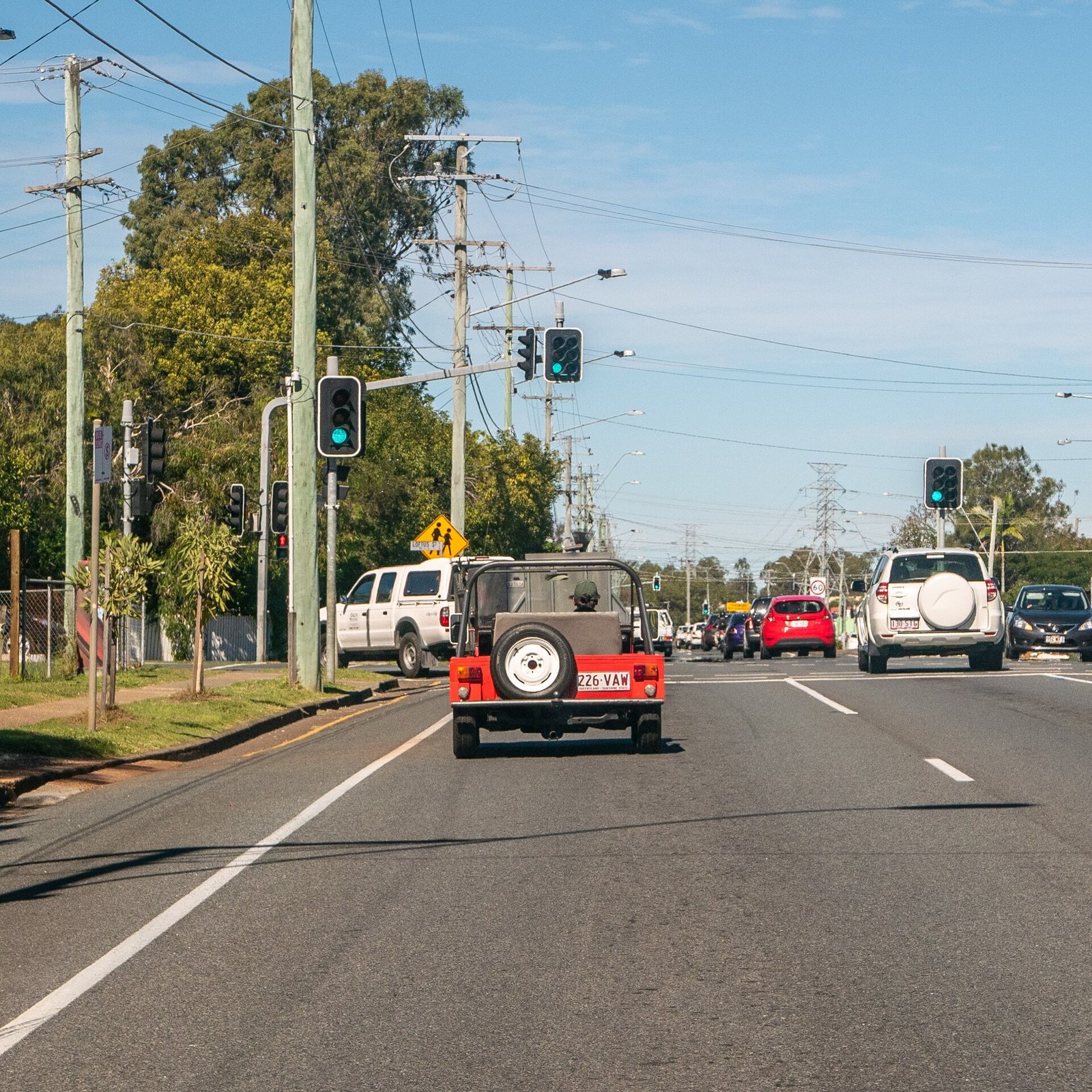
De la Poype saw the flaw immediately. The Moke was made of steel, and steel near salt water rusts. If you made the body out of thermoformed ABS plastic instead, you’d have a car that never rusted, weighed less, could be washed with a hose, and didn’t even need paint, because the color could be mixed into the plastic itself. Best of all, ABS panels could be produced with tooling far cheaper than the huge steel presses used to stamp car bodies.
His first plan was to sell the car as a kit, under the name "Donkey." But SEAB already supplied plastic parts to Citroën, and de la Poype had connections. He showed a prototype to Pierre Bercot, Citroën’s president from 1958 to 1970, and Bercot made him a better offer than he expected: Citroën would put the car in its official catalog and sell it through its dealers.
In early 1968 SEAB built a small pre-production run on 2CV van chassis, and eight of those cars appeared at Deauville. The production version used the chassis of the Dyane 6, itself a modernized 2CV, which is why it was launched as the Dyane 6 Méhari. The name came from a breed of fast dromedary used in North Africa, which tells you what Citroën thought its little plastic car could do.
Why the plastic mattered
To understand why the Méhari matters to engineers, you need to know a little about plastics.
There are two big families. Thermosets, once molded and cured, are permanent: heat them again and they burn rather than melt. Thermoplastics soften when heated and harden when they cool, and you can reshape them again and again. The famous East German Trabant, built from the late 1950s, had a body of Duroplast, a thermoset made of resin reinforced with recycled cotton fiber, pressed under high pressure. Chevrolet’s Corvette, since 1953, and Lotus’s Elite had fiberglass bodies, another thermoset, laid up by hand in molds, which is slow and labor-intensive.
The Méhari used ABS, short for acrylonitrile butadiene styrene, a thermoplastic. It’s the same material LEGO bricks are made of. ABS combines hardness, some flexibility and resistance to chemicals. For the Méhari, flat sheets of colored ABS were heated until soft, pulled over a mold by vacuum, cooled, trimmed and drilled. It was fast, repeatable and cheap, an industrial process rather than a craft.
So when people call the Méhari "the first plastic car," they’re not quite right. The Trabant and the Corvette came first with plastic bodies. What the Méhari did, and few if any production cars had done before it, was use a thermoformed thermoplastic for the whole body in series production. Citroën itself describes it as a bold innovation of its time without claiming a world first, and that’s the fairest way to put it.
The body was made of eleven ABS panels bolted to a welded tubular frame, which was in turn fixed to the Dyane platform. The steel underneath carried the loads. The plastic only had to keep the weather and the sand out.
Color all the way through
Because the color was mixed into the plastic before forming, the Méhari’s panels weren’t painted. A scratch didn’t reveal primer or bare metal, just more of the same color. Light scuffs could be polished out. For a beach rental car or a farm runabout that was going to get banged around, it was a huge advantage.
The colors were part of the car’s personality. Citroën offered a range of bright and practical shades, including Atacama yellow, Hopi red, orange, beige, white and a khaki green that appealed to farmers, foresters and the military. Buyers chose colors for the job as much as for looks.
Built like a tool
The Méhari weighed about 535 kilograms, around 1,180 pounds, roughly what a big motorcycle with a sidecar weighs, and it still carried four people and a payload of up to 400 kilograms. It managed that by leaving almost everything out. There were no real windows, just transparent plastic curtains. The doors were canvas panels. The roof was a folding canvas top. The seats were simple frames with fabric. The dashboard had a speedometer and not much else, and the windshield could fold forward for open-air driving, with Citroën even selling goggles as an official accessory.
Mechanically it was pure Citroën recycling. The engine was the 602 cc air-cooled flat twin from the Ami 6, with around 26 to 29 hp depending on the year, driving the front wheels through a four-speed gearbox. Suspension was the soft, long-travel interconnected system of the 2CV family, and brakes were drums at all four corners. Top speed was about 100 km/h, a little over 60 mph, if you had the road and the patience.
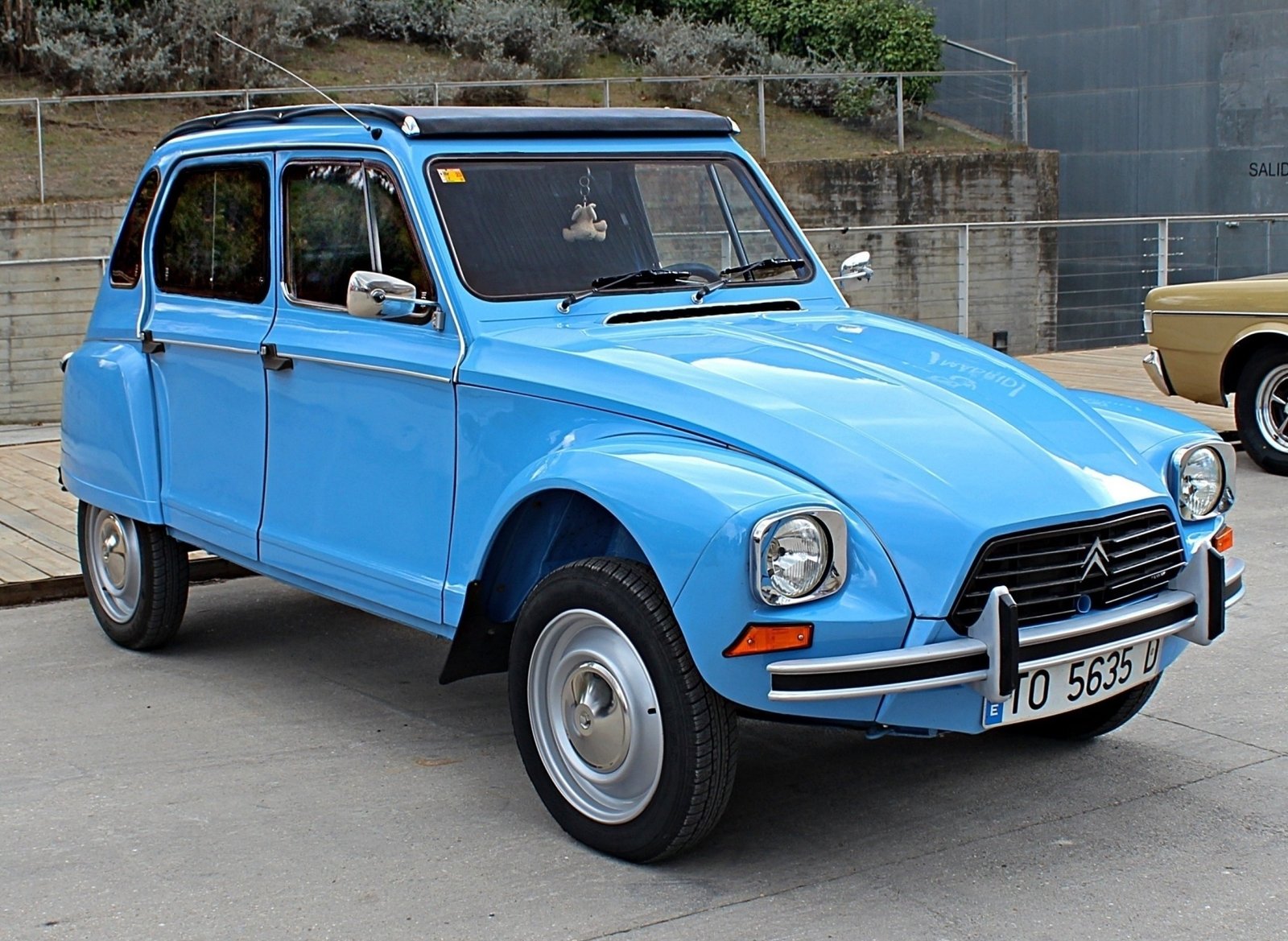
That simplicity was the point. A Méhari could be fixed by any village mechanic in France with parts from a 2CV or a Dyane.
The American chapter
Americans did get a brief taste of the Méhari. Citroën offered it in the United States around 1969 and 1970, positioned as a light utility vehicle rather than a passenger car, and it sold in small numbers before disappearing from the market. Today the few survivors in the U.S. are collector’s items.
For Americans, the nearest equivalents tell you a lot. Bruce Meyers’s Manx, launched in 1964 in California, put a fiberglass tub on a shortened Beetle chassis and became the symbol of beach culture. The Volkswagen Type 181, sold in the U.S. as the Thing in 1973 and 1974, was a German military runabout repackaged as a fun car. And the Jeep CJ, the civilian descendant of the wartime Jeep, was the American default for doorless off-road fun. The Méhari did the same job with a different material and a lot less weight.
There’s also a link to Detroit’s later experiments. In the 1990s General Motors launched Saturn, whose cars used dent-resistant plastic body panels on a steel structure, and marketed them as a revolution. The Méhari had shown the basic idea decades earlier.
Gendarmes, firemen and the French army
The Méhari was supposed to be a leisure car, but its real life turned out to be much more varied.
On the Riviera, the Balearic Islands, the Greek islands and the Costa del Sol, hotels and rental companies bought them by the fleet, and families used them as weekend cars. That was the expected market.
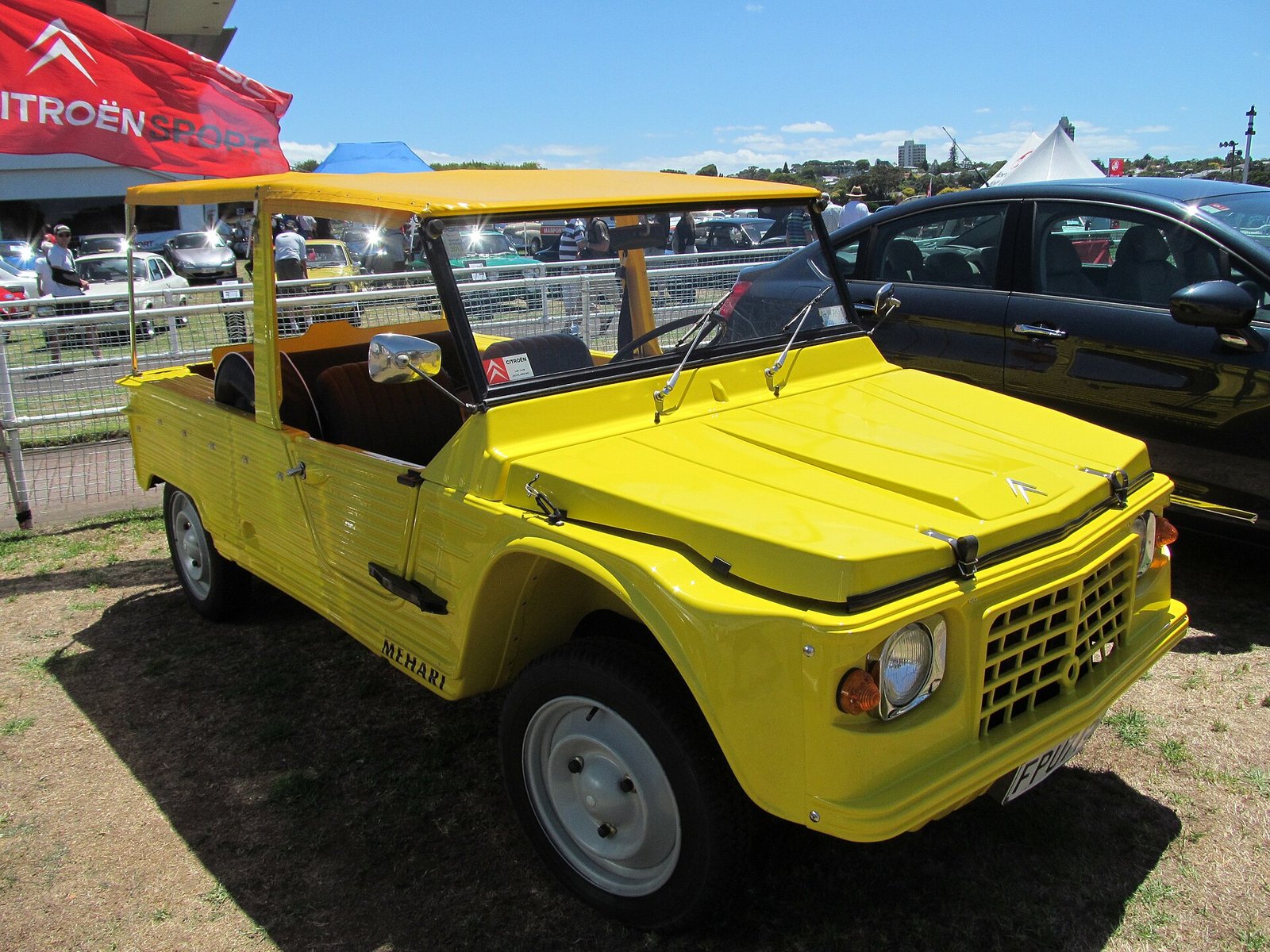
The unexpected market was public service. The French gendarmerie used Méharis for rural and coastal patrols. Forest firefighters, civil protection units and rural ambulance services used them. Airports, racetracks, fairgrounds and golf courses used them as runabouts. A light, cheap vehicle that couldn’t rust and could be repaired anywhere was perfect for jobs where a Land Rover was overkill.
The French army was the biggest surprise. It bought more than 7,000 Méharis from the early 1970s, according to official records, and used them for base security, light transport and patrols. Some were configured to be dropped by parachute. A plastic beach car became a military vehicle, and served for decades.
The Méhari 4×4 and the Sahara
In 1979 Citroën added a four-wheel-drive version, the Méhari 4×4. Unlike the earlier 2CV Sahara, which used two separate engines, the Méhari 4×4 had one engine, the same 602 cc twin, with a transfer box sending power to the rear axle, a low-range gear set and a lockable rear differential. Citroën claimed it could climb a 60 percent slope. Production ran until 1983, with around 1,200 built.
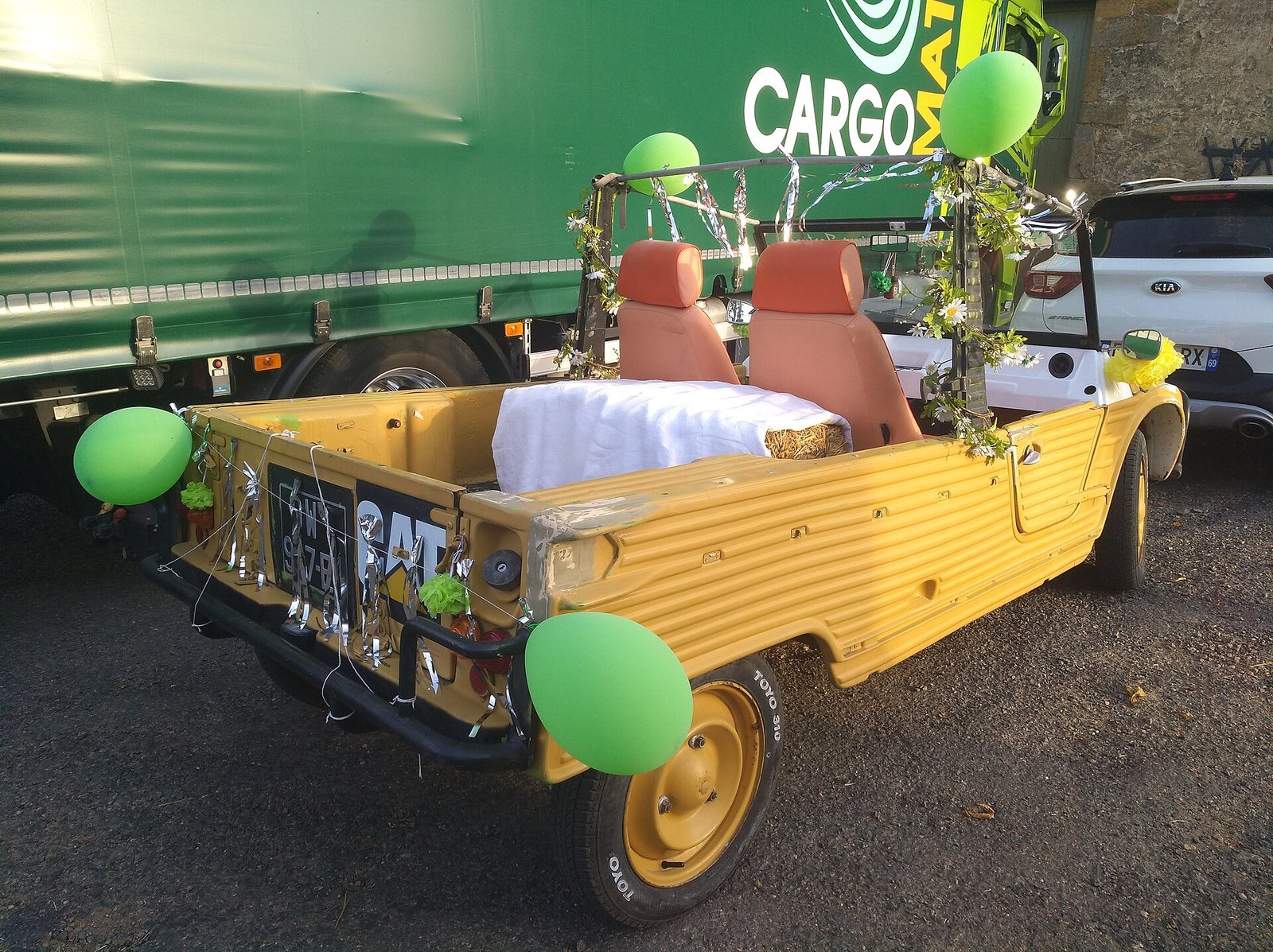
In the 1980 Paris-Dakar Rally, Méhari 4x4s ran as medical support vehicles, crossing thousands of kilometers of sand, rock and mud through Algeria, Niger, Mali and Senegal. Think about that for a moment: a plastic car with a 602 cc engine, designed for driving to the beach, serving as an ambulance in the hardest rally in the world.
Built everywhere
Production was centered at Citroën’s plant in Forest, near Brussels, but Méharis were also assembled in France, in Spain at the Vigo factory, in Portugal at Mangualde, and in Argentina, Uruguay and the former Yugoslavia. Few Citroëns have been built in so many countries. The car got one significant facelift, for the 1978 model year, with a new grille and revised front end, and otherwise stayed almost unchanged for two decades.
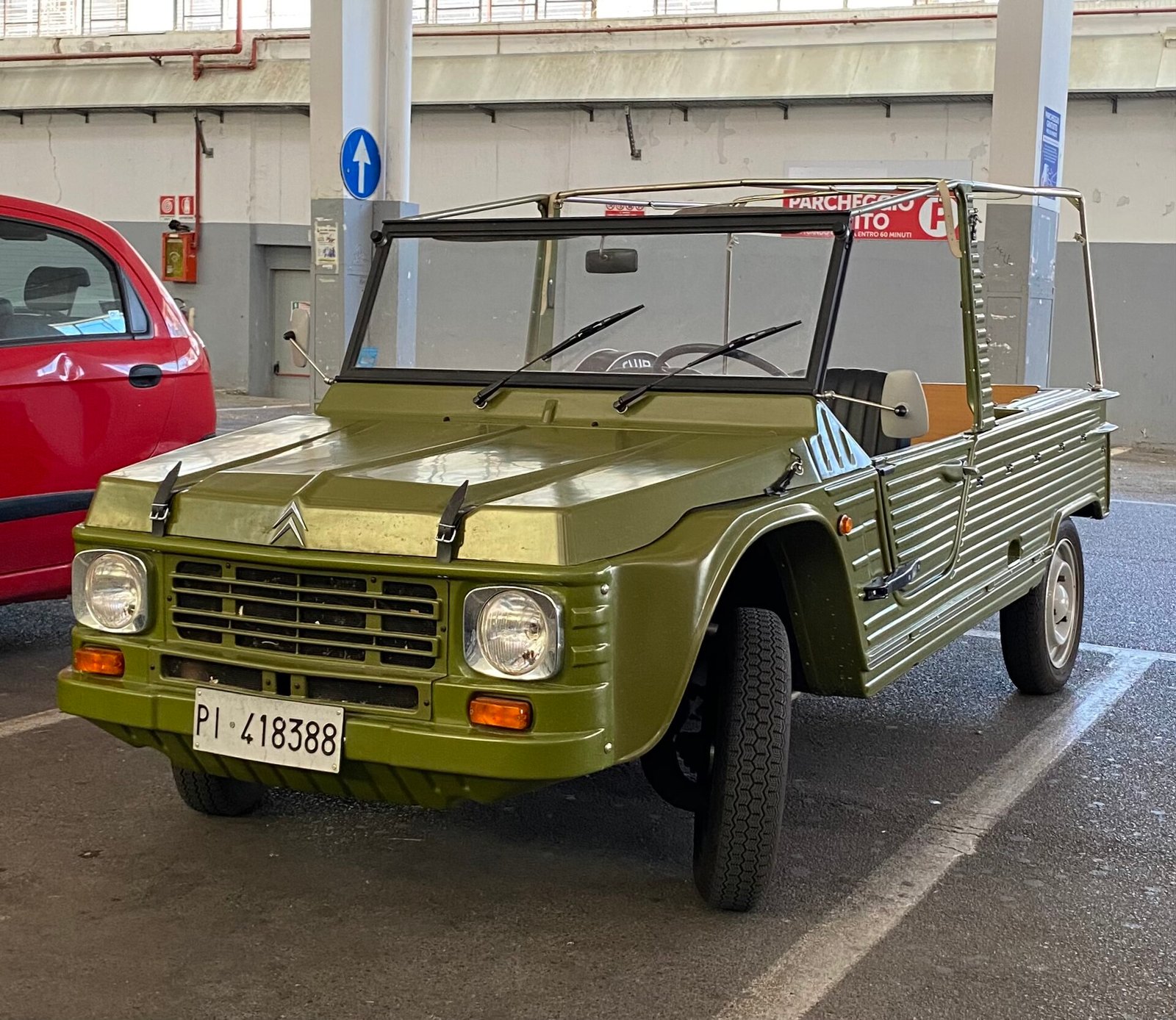
European production ended in 1987, with some sources putting the last cars into early 1988. The final count was 144,953.
Dolphins, too
De la Poype’s second career didn’t stop at plastics and cars. In 1970 he opened Marineland in Antibes, on the Côte d’Azur, one of the first big marine parks in Europe, with dolphins, killer whales and sea lions performing for summer crowds. It became one of the most visited attractions on the Riviera. So the same man gave the south of France its favorite beach car and one of its best-known summer attractions, a few kilometers apart.
It also says something about how he thought. He wasn’t a car guy who happened to know plastics, or a plastics guy who happened to like cars. He was an entrepreneur who looked at what people did on their holidays, in their bathrooms and on their farms, and asked how to make it easier or more fun. The Méhari came out of that mindset. It wasn’t designed to win comparison tests in car magazines. It was designed to make a day at the beach, or a day on the farm, simpler. For a car that sold almost 145,000 copies, it’s remarkable how little it cared about what the industry considered important.
Why the Méhari still matters
The Méhari proved three things the car industry took decades to accept.
First, that an all-plastic body could work in series production, as long as the structure underneath did the heavy lifting. Saturn, the Smart city car and the first Renault Espace all used versions of that idea later on.
Second, that a light car doesn’t need exotic materials. The Méhari weighed about as much as a big motorcycle and sidecar using cheap industrial plastic, not carbon fiber or aerospace aluminum. It’s the same lesson Colin Chapman preached at Lotus, applied to a utility car instead of a sports car.
Third, that you can design a car around a material instead of a market survey. De la Poype didn’t start by asking what car Citroën was missing. He started by asking what he could do with thermoformed ABS that nobody had done before.
The platform under all that plastic was, of course, the one André Lefebvre’s team drew up for the Citroën 2CV in the 1930s. A car built from Pierre-Jules Boulanger’s brief for French farmers ended up underneath a beach car designed by a fighter pilot, a military runabout and a Sahara ambulance. If you need proof that a good basic design can be pushed in directions its creators never imagined, it’s hard to beat.
De la Poype died in 2012, at ninety-one. He is remembered in France as a war hero first, and as a businessman who made shampoo packets second. But every summer, on some island in the Mediterranean, someone climbs into a faded yellow Méhari, flips down the windshield and drives to the beach, and that’s his legacy too. Few inventors can say they shaped both the war in the skies over Russia and the way the Riviera goes to the beach. Then again, few car designers have ever had a résumé that could make Ettore Bugatti feel underqualified.
Keep reading: Aston Martin V8 Cygnet
Check you’re still alive.
Photos via Wikimedia Commons: 1987 Citroën Méhari Plage, Calreyn88 (CC BY-SA 4.0); 1970s Citroën Méhari, Riley (CC BY 2.0); Roland de la Poype, unknown author (public domain); Citroën Méhari 4×4, Sebleouf (CC BY-SA 4.0); Mini Moke, John Robert McPherson (CC0); 1977 Citroën Dyane 6, Txemari (CC0); Citroën Méhari in Avellino, Corvettec6r (CC BY 4.0).