Aston Martin V8 Cygnet: The City Car With Balls
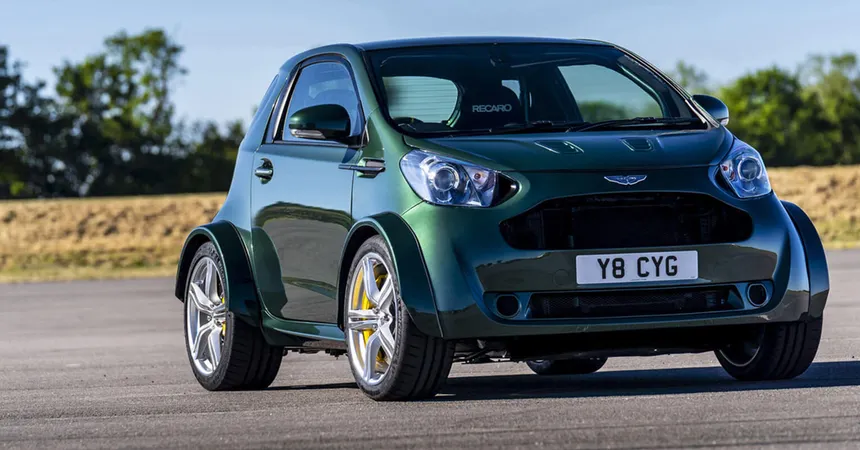
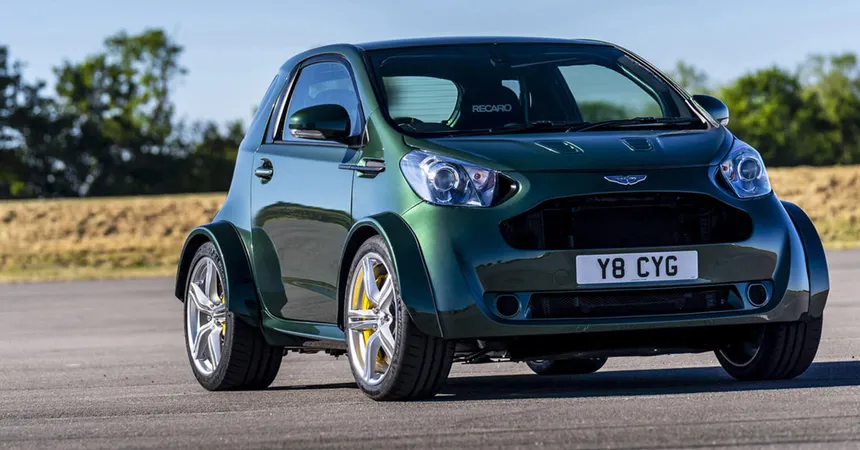
The Aston Martin Cygnet was the brand’s most expensive joke: a Toyota iQ in a ballgown that almost nobody bought. And then, six years after that flop, Aston Martin did the one thing only a company that has decided to laugh at itself with a completely straight face would do. It took that economy car and dropped a supercar’s V8 into it.
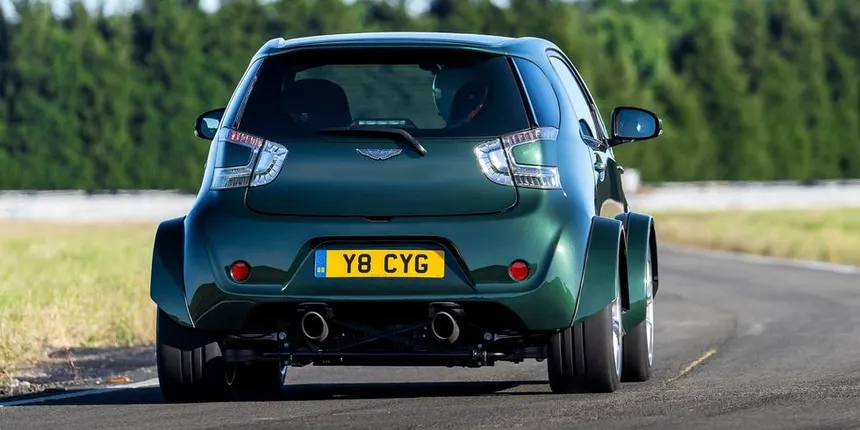
One customer. One car. 430 horsepower in a ten-foot body. And one of the funniest—and most genuinely respectable—engineering stories ever to come out of Gaydon.
Here’s the American translation of the absurdity: imagine somebody took a Scion iQ, the little runabout Toyota sold at Scion dealers, and stuffed the engine from a proper Aston Martin sports car under the hood, sent the power to the rear wheels, and made it hit 60 in the low fours. That’s this car. That actually happened.
If the standard Cygnet was the sin, this is penance performed with pride. Let’s get into it.
A Cygnet on steroids storms Goodwood
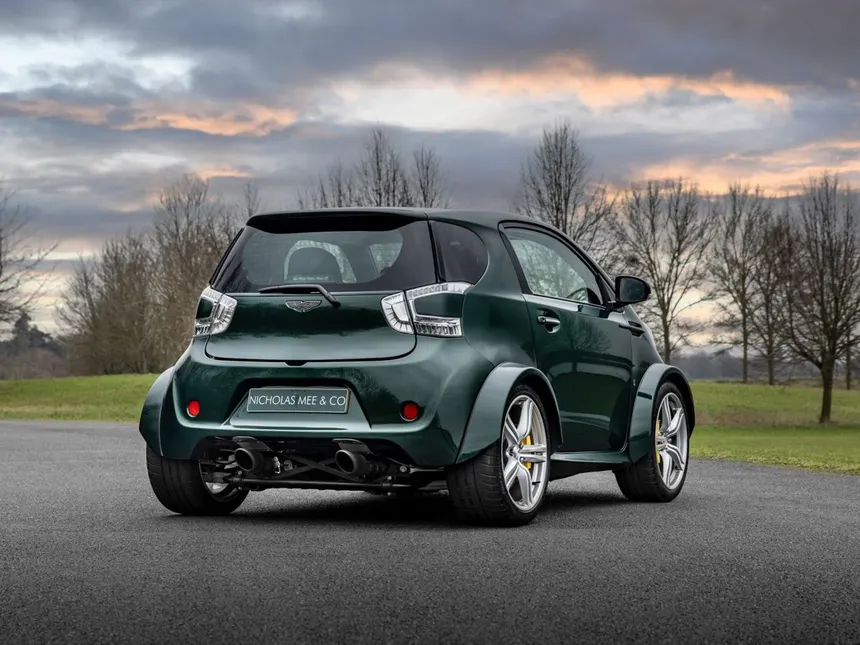
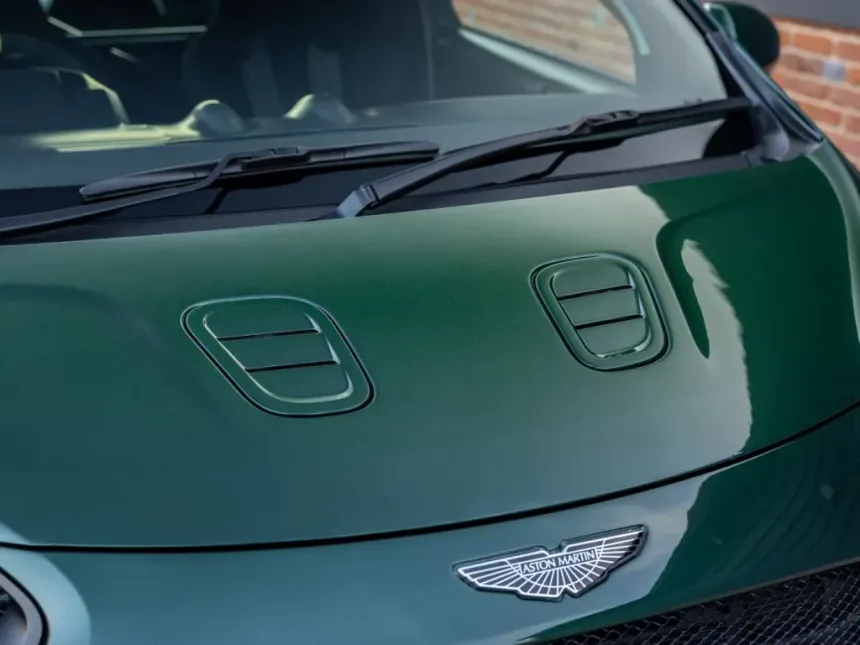
At the Goodwood Festival of Speed on July 12, 2018, among hypercars and prototypes that cost as much as a house, something that shouldn’t exist climbed the famous hill: a Cygnet. The same tiny body as the failed economy car. But the sound wasn’t a 1.33-liter four-cylinder begging for mercy. It was the unmistakable bellow of a naturally aspirated 4.7-liter V8.
The crowd froze. Applause. Disbelief. They called it “The Ultimate City Car,” and for once the slogan undersold it.
The project was born through the “Q by Aston Martin – Commission” service, the brand’s extreme personalization division—the same one that lets a customer request almost any madness, provided the wallet can cover it. And one customer requested this.
When the surgeons lost their minds
This is where the joke becomes a feat of engineering that deserves real respect, and where precision on every figure matters.
The starting point was a right-hand-drive Cygnet body shell. From there, almost everything was rebuilt. A roll cage was welded in to stiffen a structure never meant for these forces. A new front bulkhead and a new transmission tunnel were fabricated to make room for an engine that had no business fitting.
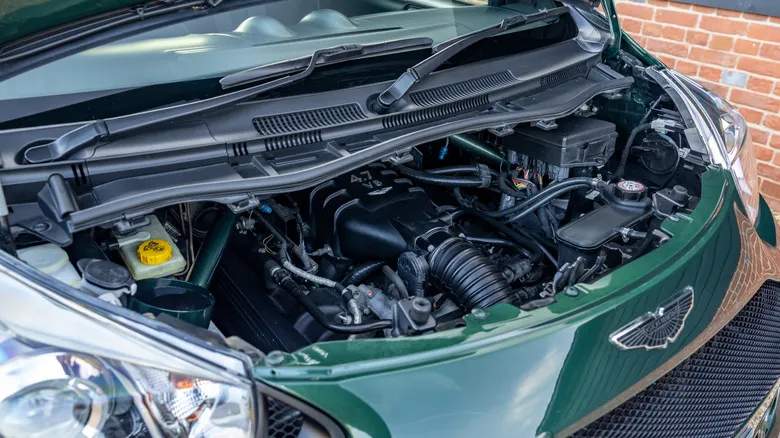
The heart: the naturally aspirated 4.7-liter V8, all-alloy, quad-cam, dry-sump lubricated, pulled straight from the previous-generation Vantage S. Mounted front-mid. Output: 430 bhp, with 490 Nm (361 lb-ft) of torque. And the detail that changes everything versus the original Cygnet: drive now goes to the rear wheels.
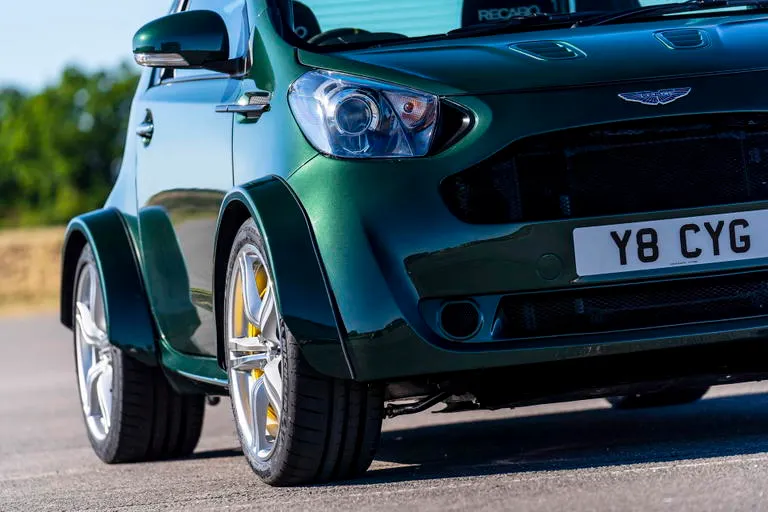
To send that power rearward, Aston went back to the Vantage S parts bin: a seven-speed Sportshift II transmission, a bespoke torque tube with a steel propeller shaft, and a limited-slip differential. The suspension—independent double wishbones front and rear, coil springs, anti-roll bars, passive dampers—is Vantage-derived too. The brakes are the full V8 Vantage S system: six-piston front, four-piston rear. The wheels grew from the runabout’s puny 16s to 19-inch rims that nearly burst the arches.
The full build took around ten intense months of work by the engineering department alongside Q. This wasn’t a weekend stunt. It was a real car, really built, road-legal, first registered in 2018.
An elephant in a phone booth
To understand why this engine makes the Cygnet serious, you have to know where it came from—and here it pays not to oversimplify the way half the internet does.
The block has Jaguar DNA. The engine, codenamed AJ37, derives from the Jaguar AJ-V8, the eight-cylinder architecture Coventry launched in 1996 that—under Ford’s Premier Automotive Group umbrella—ended up shared among Jaguar, Land Rover, Lincoln, and Aston Martin. But stopping at “it’s a Jaguar” would be as false as the opposite. When Aston took it for the 2005 Vantage, it reworked the thing almost beyond recognition: block, heads, crankshaft, connecting rods, pistons, camshafts, intake and exhaust manifolds, lubrication, and engine management were all made specific to Aston Martin. Even the firing order differs from the rest of the AJ-V8 family. It was hand-assembled at the brand’s Cologne facility—the same one that built the V12s for the DB9 and Vanquish.
The technical detail that says the most about its intentions is the dry-sump lubrication, unusual on a road car. It lets the engine sit as low and far back as possible, dropping the center of gravity and improving weight distribution. That’s a race-car solution. The same block, in competition trim, powered the endurance Vantage GT2 and GT4.
It started as a 4.3-liter, 380-hp unit in 2005. In 2008 it grew to the 4.7 liters in question, with more power and new pressed cylinder liners in place of cast-in ones. In its hottest form—the Vantage S version—it’s the one that ended up, against all odds, under the hood of a former Toyota iQ. An engine with endurance-racing lineage, hand-built in Germany, dropped into the most improbable car in the brand’s history. That’s the scale of the madness.
Straight to the numbers, no mercy
Be careful with a myth here, because the notion floats around that the V8 fattened the Cygnet so much it ruined it. The official figures say otherwise.
Aston quoted a weight of 1,375 kg (about 3,030 lb) with fluids. With 430 bhp on tap, that’s a power-to-weight ratio of 313 bhp per tonne. To put that number in perspective: it’s pure supercar territory. The result, per Aston Martin’s own figures: 0–60 mph in 4.2 seconds and a top speed of 170 mph.
Sit with the contrast, because it’s the soul of this story. The standard Cygnet did 0–62 mph in 11.8 seconds and topped out at 106 mph. The V8 cuts the sprint to roughly a third and adds more than 60 mph of top speed over the original. Same silhouette. Same glass. Same lights. Everything else, different.
Aston was explicit on a delicious point: the only things shared with the production Cygnet are the body panels, glazing, and lighting. Absolutely everything else is unique to this single example. It’s a Vantage S wearing an economy-car costume, not an economy car with a bigger engine. That distinction isn’t a footnote—it’s the whole reason this car works and the standard one flopped.
An interior just as unhinged
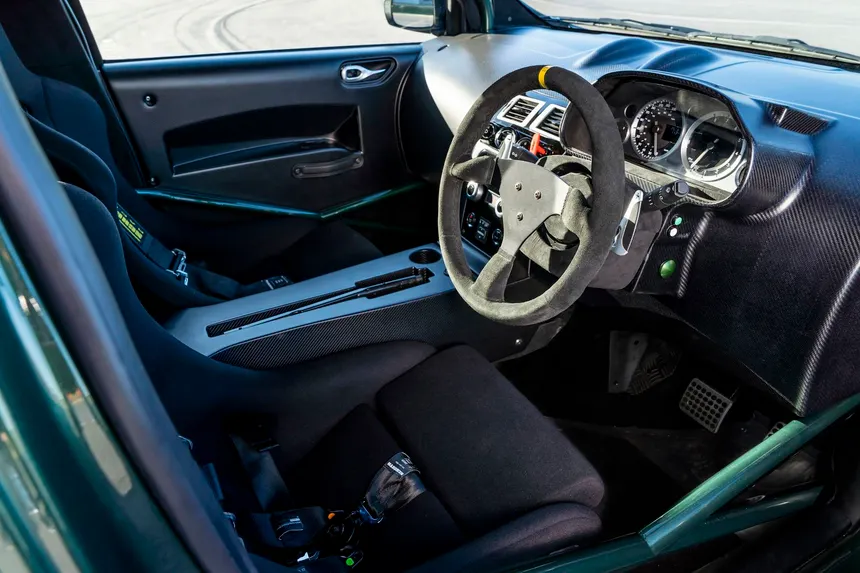
Inside, the madness continues with a coherence that’s a joy. Air conditioning that, against all odds, still worked with that engine up front. A carbon-fiber dashboard. Instrumentation lifted directly from the Vantage. Recaro seats. And that full roll cage, reminding you every time you climb in that this isn’t a toy—it’s a tool with a sense of humor.
Aston went as far as claiming the car wasn’t far off being certifiable for FIA motorsport. The electrical architecture even includes an FIA-compliant cutoff and isolation system and a rear-mounted battery. Somebody at Gaydon fantasized, half-joking and half-serious, about a one-make Cygnet V8 race series. Think about it for a second: a grid of ten-foot economy cars with V8s and roll cages, howling around a circuit. It’s the dumbest and most wonderful idea a serious manufacturer ever had.
From punchline to collector’s grail
After dazzling Goodwood, Aston handed the car to its single owner. Years later it resurfaced for sale through Nicholas Mee, an Aston Martin specialist dealer north of London. The Super Cygnet had closed its loop: from regulatory humiliation to absolute object of desire for the collector who gets it.
Because that’s the point. The standard Cygnet failed because it tried to be something it wasn’t: a real Aston. The V8 Cygnet triumphs precisely because it embraces what it is—a rolling contradiction, a joke executed with a surgeon’s precision. It doesn’t hide the absurdity. It celebrates it.
The NEC closing argument
There’s a lesson the V8 Cygnet teaches the standard Cygnet, and the whole industry along with it. The same brand took the same body shell twice. The first time, it tried to sell you an elegant lie: “this is a real Aston, don’t look underneath.” It failed. The second time, it screamed the truth at you through a V8: “yes, it’s an iQ, and we gave it 430 horsepower—got a problem?” And it worked.
The difference between the flop and the legend wasn’t the money, the engineering, or the badge. It was dropping the pretense. The standard Cygnet was ashamed of its origin. The V8 Cygnet made that origin the punchline, and the public forgives anything except being taken for a fool.
It took Aston seven years to learn that its ridiculous little car only made sense once it stopped pretending. That sometimes the way to honor a mistake is to exaggerate it until it becomes art.
And here’s where this car reaches into a very specific kind of brain. Because some people look at a tiny economy car and don’t think about parking. They think about what would fit in there if nobody stopped them. You see a Cygnet with a V8 and something lights up. You start scheming about a classic Fiat 500 with a V10. A little hatch with a mid-mounted twin-turbo six. Something the size of a shopping cart swallowing a Lamborghini engine. It’s the American LS-swap instinct taken to its most unhinged conclusion: the irrational need to build something more savage than any marketing department would ever sign off on.
The best part is that this isn’t idle fantasy—it’s a whole genre now. Vilebrequin’s 1000tipla took the most mocked minivan in history, the Fiat Multipla, and jammed in a Corvette V8 tuned toward 1,300 hp until it ran at Le Mans—a direct descendant of the Renault Espace F1 with its Formula 1 engine. DOP Motorsport’s twin-engined Lupo runs two compound-turbo VR6s making a combined 3,600 hp and clears the quarter-mile in 7.71 seconds. Someone crossed a Fiat 500 with a Lamborghini V12. And Volkswagen itself signed off on the Golf GTI W12-650: the Bentley Continental’s twin-turbo W12 mounted behind the front seats of a Golf, rear-wheel drive, a Gallardo rear axle, 650 hp and 0–62 mph in 3.7 seconds, built in eight weeks purely to stun the crowd at a GTI festival.
Notice the pattern. The instinct that feels like a barstool delusion to you is, for a handful of maniacs with a welder—and sometimes the factory itself—just another Tuesday. That’s why the V8 Cygnet lands so well with us: it’s that same fantasy, but with a budget and a warranty. Aston did what the rest of us only dare sketch on a napkin. It legitimized the madness. It told us, without saying it, that cramming too much engine into too little car isn’t a sin. It’s an art form.
Which do you prefer: the bird that thought it was an eagle, or the bird that hit the gym to become one? And while we’re here: what small, sensible little car would you ruin with an engine it was never meant to have?
Check you’re still alive.