The Toyota Celica MK1 That Beat Detroit at Its Own Game
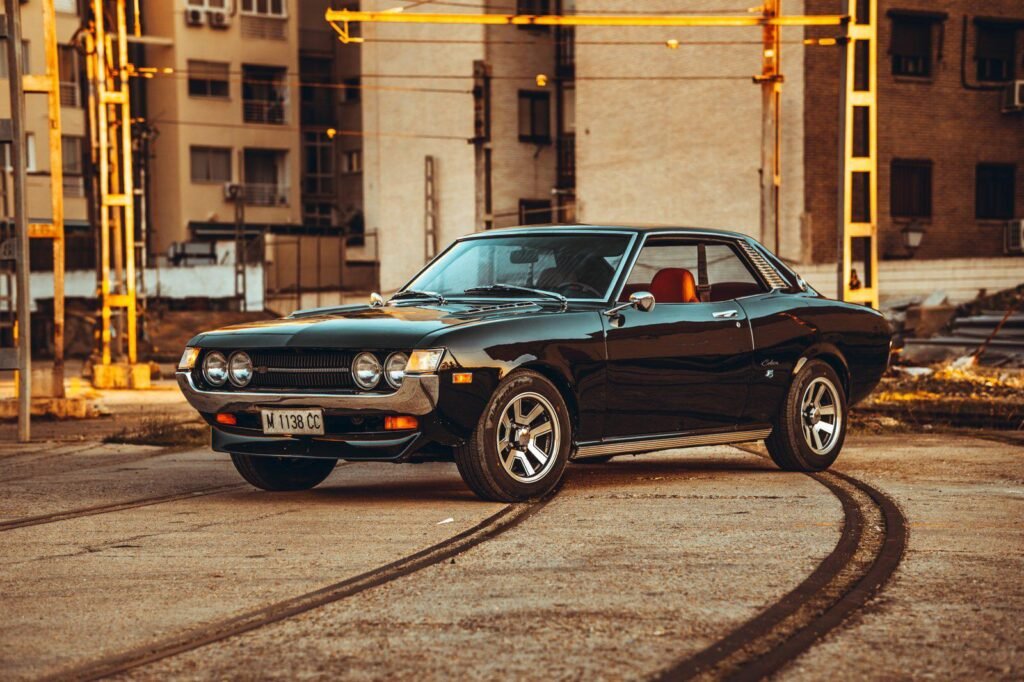
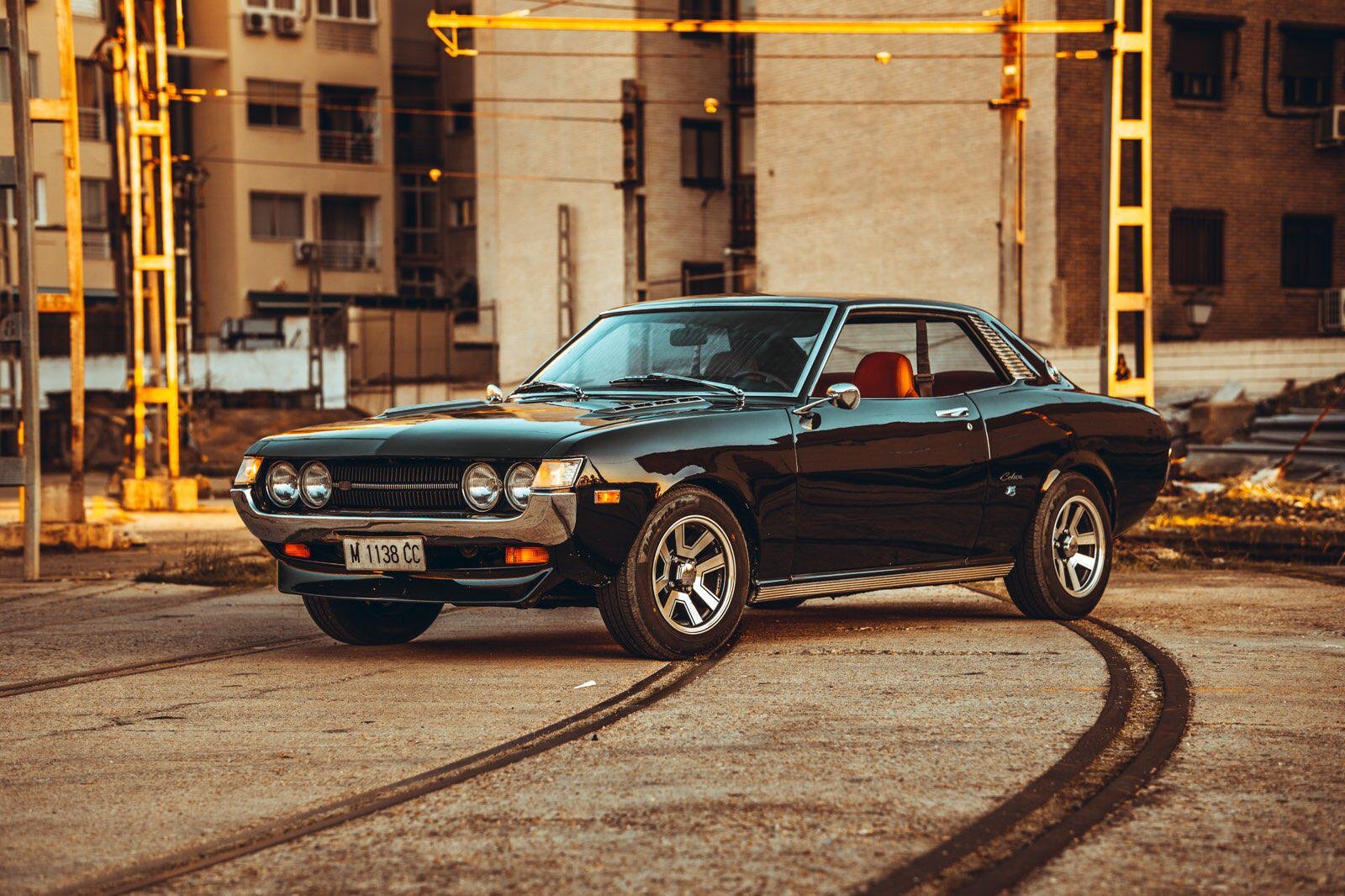
Walk into any cars and coffee in California today and you’ll spot them: rounded little Japanese coupés with sunken headlights and a face that looks faintly surprised to still be here. Daruma Celicas. Their owners polish them like relics, because that’s what they are. Survivors of a moment when the rules of the car world got rewritten by the people nobody was watching.
Here’s the thing the Anglo car press took decades to admit. While Detroit was building cathedrals to horsepower in the 1960s, a Japanese engineer named Tatsuo Hasegawa was quietly studying the blueprint and finding the flaws. Hasegawa was no parts-bin hack. He came from aviation engineering and had already put his name on the Toyota 2000GT, the car that told the world Japan could build a proper sports car when it felt like it. His next job was the opposite challenge: build a sports car a kid stepping off a motorbike could actually afford.
The result was the Celica. And it didn’t just borrow the American pony car formula. It read it more carefully than the people who invented it, then handed it back across the Pacific with interest.
The Mustang trick, performed by a better magician
The Ford Mustang’s genius was almost insulting in its simplicity. Take a dull economy car, the Falcon, drape something gorgeous over it, and sell dreams instead of transport. Lee Iacocca knew exactly what he was doing. So did Toyota, watching from the other side of the world.
The Celica was built on the Carina, a saloon that shared its platform and running gear. Same trick as the Falcon-to-Mustang sleight of hand. But there’s a detail the lazy histories skip over. Ford built the Mustang on a Falcon that had been kicking around for years. Toyota developed the Carina and the Celica simultaneously, in parallel, starting in 1967. More work, more risk, far more control over how the finished car turned out. The Japanese weren’t taking a shortcut. They were doing the harder version of the same idea.
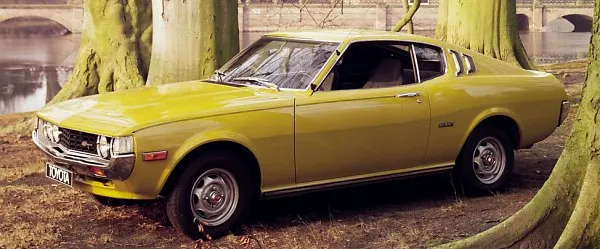
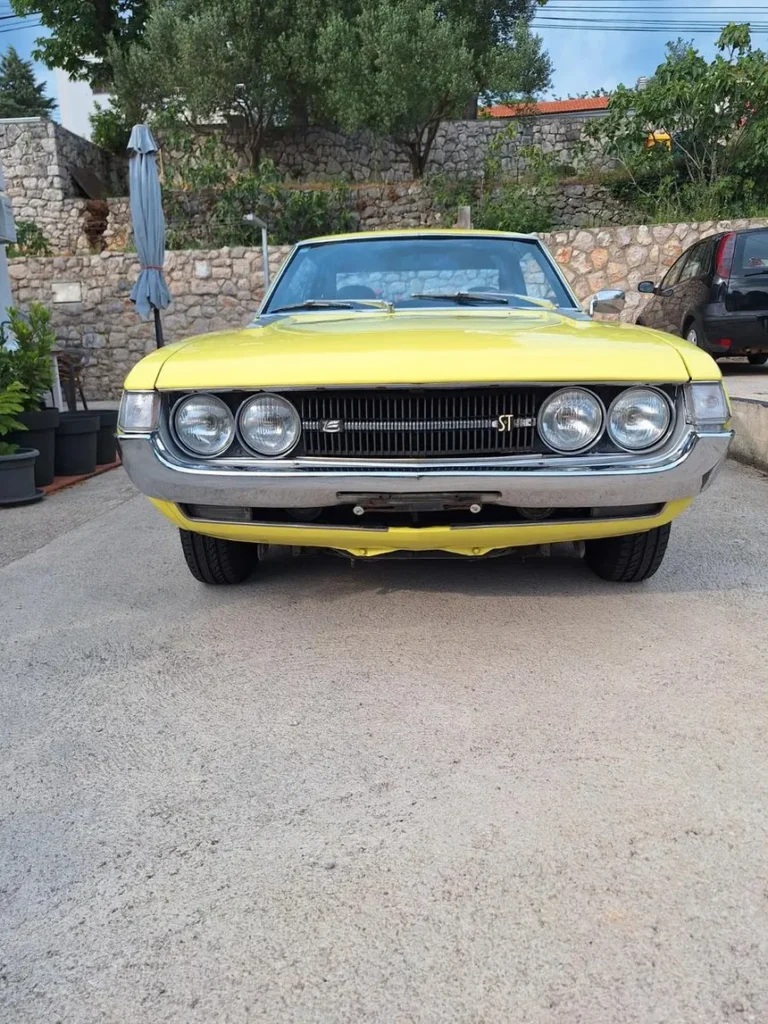
The Celica broke cover at the Tokyo Motor Show on 30 October 1970 and went on sale that 1 December. What showgoers saw on the stand looked like nothing else. The bodywork pulled directly from the EX-1 concept Toyota had shown a year earlier, all rounded flanks and headlamps recessed into the nose. The Japanese gave it a nickname that stuck for life: Daruma, after the round-faced, sunken-eyed good-luck doll. Half a century on, enthusiasts still call this first generation the Daruma Celica. Precious few cars earn a term of endearment before they’ve left the showroom floor.
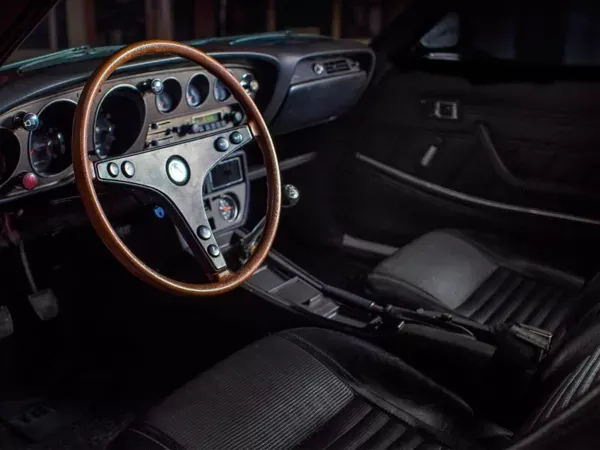
Mechanically, the thing was aggressively ordinary, and that was the masterstroke. Rear-wheel drive. MacPherson struts up front, shared with the humble Corolla. A live rear axle on four trailing links. Assisted front discs. Not a single component to frighten a spanner-wielding owner. Every bit of cleverness went where you could feel it from the driver’s seat, not where it would look impressive on a cutaway poster. Chris Harris built a career explaining that the cars that matter aren’t the ones with the wildest spec sheets. The Daruma was preaching that gospel in 1970.
When buying a car worked like ordering off a menu
Here’s where the Celica story gets genuinely nerdy, and stays with you.
In Japan, Toyota launched the Celica with something called the Full Choice System. On paper it reads like a marketing line: buyers could mix and match engine, gearbox, trim and options almost freely, building the exact car they wanted. In 1970 Japan, that was science fiction.
But the brochure isn’t the interesting part. The machinery behind it is. To actually fulfil all those bespoke orders, Toyota built the Daily Order System. Every single day, dealers across Japan telexed in that day’s orders. Toyota gathered them, built a daily assembly-sequence plan that balanced order priority against production levelling, and fired it down to the body plant, which issued instructions to each process through its line-control system.
The payoff was brutal in the best way. Under the old ten-day order cycle, a customer waited at least 16 days from order to delivery. Under the daily system, that dropped to 10 or 11 days on average, and as little as eight. They cut the wait roughly in half.
Anyone who’s stood on a production line understands what that actually means. Levelling output, sequencing daily against real demand, stopping the factory choking on a configuration mix that never stops shifting. That is manufacturing engineering of the highest order, and Toyota was doing it in 1970, over telex, before half the world had a word for “logistics”. The Celica wasn’t just a pretty, affordable coupé. It was a shop window for how Toyota built cars, which is precisely why Toyota still builds cars the way it does.
And to be fair, the system was so ambitious it briefly bit them. Within a year, specifications had splintered so badly that sales negotiations dragged on and confusion crept in. Toyota redrew the whole thing as the New Order System in March 1974. But the problem they had was a maker offering customers too much freedom, not too little. There are worse problems to have.
The bit that matters: the 2000GT and Yamaha’s fingerprints
Now for the part the petrolheads came for.
The Celica started modestly. In Japan, T-series fours from 1.4 to 1.6 litres, topping out at the twin-cam 2T-G with twin Solex carbs and a respectable-but-modest 113 bhp. In the US, where it arrived in 1971 as the ST only, it got the Corona’s 1.9-litre 8R-C and 108 bhp by Toyota’s numbers. No monster. But it weighed 1,043 kg against the 1,451 kg of a Mustang 302 Mach 1. Light, eager, alive. Not fast, but quick on its feet.
Everything changed in April 1973 with the generation’s biggest move: the Liftback. And with it, the two-litre engines. At the very top sat the name that counts: 2000GT, powered by the 18R-G.
The 18R-G is where the Celica stops being a handsome car and becomes a piece of engineering folklore. A two-litre with double overhead cams, and that cylinder head was designed and built by Yamaha. Yes, the motorcycle and piano people. Stop here, because this is exactly where most write-ups get it wrong.
Yamaha didn’t materialise out of nowhere for the Celica. The relationship ran deep. Yamaha had already designed the twin-cam head for the 9R, then the legendary 10R that was renamed the 8R-G, and the 18R-G grew out of that lineage. The DNA of the whole family, the direct valve actuation via bucket-and-shim, traced back to the work on the Toyota 2000GT’s cylinder head, that ferociously expensive sports car they only built a handful of. The same valvetrain architecture would go on to define the 2M, the 8R-G, the 2T-G, and decades later the immortal 4A-GE of the AE86 that drift culture built a religion around. Every one a Yamaha head. When you rev a free-spinning twin-cam Toyota, you’re hearing the echo of that partnership.
A detail to keep the engineers in the comments happy: most 18R-Gs wore a Yamaha head, stamped with the tuning-fork logo, but a very small number ran Toyota heads. Not every 18R-G is a Yamaha 18R-G. That’s the kind of thing that separates someone who read the car from someone who copied the spec sheet.
The 2000GT Liftback (chassis code RA25) made 145 PS JIS from its 1,968 cc, twin Solex carbs and hemispherical chambers, at 1,040 kg. Set that against 1973 reality. A Mustang strangled by emissions was making maybe 100 real horsepower and gaining weight every model year. A two-litre Japanese four matching or beating a malaise-era American V8 wasn’t a footnote. It was a statement. The student had passed the master while the master bled out by the roadside.
The Liftback: the fastback Detroit no longer dared to build
The Liftback deserves its own moment, because it’s the Celica that lodged in the world’s memory.
It wasn’t born as a Mustang fastback knock-off, however much it looked like one. It came from the SV-1 concept Toyota showed at the 1971 Tokyo Motor Show, originally pitched as a sporty, do-anything machine for the outdoorsy crowd. Fold the rear seats and the tailgate swallowed surfboards and camping kit, right as those hobbies exploded across Japan. A sporting shooting brake before the term was fashionable.
But seen in profile, with that roofline, the C-pillar louvres and the tail lights, the lizard brain just said Mustang. And fairly so. The Liftback channelled the nostalgia of the good-era American fastback, the late-sixties shape, at the exact moment the real Mustang had bloated into a charmless slab. Toyota was selling America the silhouette America had walked away from, wrapped in reliability Detroit couldn’t match and fuel economy that made sense in the teeth of an oil crisis. The right car, in the right place, at the right moment.
It worked. In June 1977 the one-millionth Celica rolled off the line. A gleaming Liftback, naturally. Toyota had sold a million cars that were, underneath, a Carina in its Sunday best, and it had done it while the industry that invented the genre sank.
The price that did the quiet damage
There’s one more number worth sitting with, because it explains how the Celica won without anyone quite noticing.
In the US, an early Celica listed at $2,598. That undercut a comparably equipped Opel 1900 Rallye, the federalised Manta, and a Mazda RX-2 by more than $200. Back home in Japan the four-speed 1600ST started at ¥783,500, with the twin-cam 1600GT at ¥875,000. For context, the cheapest Nissan Fairlady Z, the proper sports car of the range, kicked off at ¥930,000, and that was the basic two-litre. The Celica gave you the look, the badge and a serious chunk of the driving thrill for noticeably less money.
That’s the bit Detroit never saw coming. The Celica didn’t beat the Mustang in a drag race. It beat it in the showroom, on the forecourt, in the monthly payment a part-timer could actually meet. American makers were used to fighting on horsepower, a fight they were losing to their own government anyway. Toyota changed the terms of the contest to value, reliability and build quality, and on that battlefield Detroit had brought a knife to a gunfight.
Why this car matters
The Celica MK1 wasn’t fast. It wasn’t exotic. It didn’t carry a single engineering solution the world hadn’t seen before. And it still changed history, which is why it’s here.
It matters because it proved that a car’s greatness doesn’t live in its blueprint. It lives in how the pieces come together. Styling lifted and improved, mechanicals that were straightforward and bulletproof, a Yamaha-built head descended from a legend, a manufacturing system that lapped the industry by twenty years, and a ruthless commercial instinct to give people exactly what they wanted at the precise moment nobody else would.
Detroit built its identity on power and cheap petrol, and when both were taken away it stood there naked. Toyota built its identity on something you can’t legislate away or price out of existence: doing things properly. That’s why the Daruma is still here, round and grinning, while the muscle of its era rusts in the breakers’ yards.
The student didn’t copy the master. It understood him. And in the end, that always wins.
At Not Enough Cylinders we don’t tell you about cars. We tell you what a car says about the people who built it.
1 thought on “TOYOTA CELICA MK1”