LaFerrari: The Most Powerful Ferrari of Its Day Is the One That Lets You Drive Least
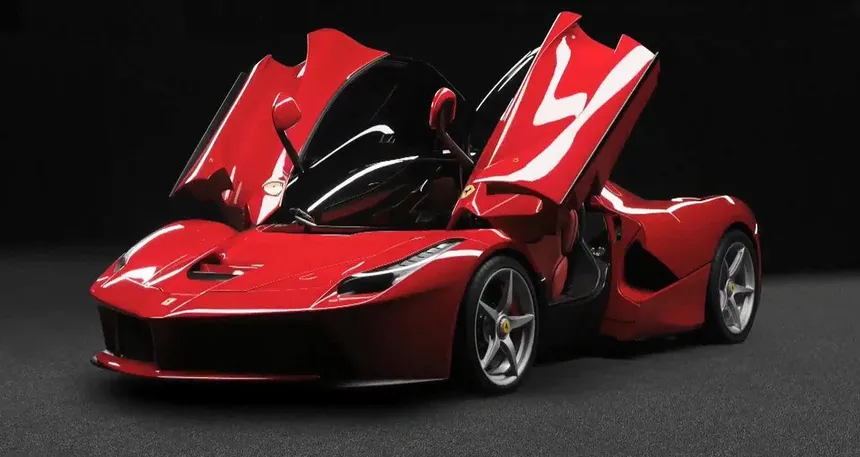
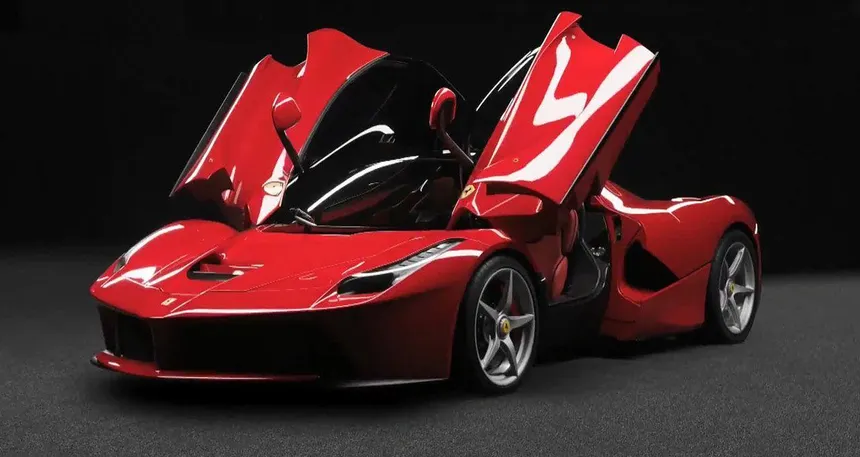
Every other outlet is about to tell you the same thing, so let me not waste your time with it. They’ll hit you with the 963 horsepower, the F1-derived HY-KERS, the Fiorano lap five seconds quicker than the Enzo, the Holy Trinity alongside the P1 and the 918. All true. All findable on any car site in thirty seconds flat. That is not where I’m taking you.
I’m taking you to a question nobody asks: when LaFerrari goes fast, whose achievement is it? Pull that thread and half the legend unravels in your hands.
First angle: the day Ferrari stopped trusting you
The Enzo could still kill you. That’s the difference, and it isn’t garage romanticism — it’s pure mechanics. The Enzo was a 660-horsepower naturally aspirated V12 hung behind your head, an automated single-clutch gearbox, and a traction control that was there but, switched off, left you alone with the animal. No electric motor filling anything in. No instant torque papering over the bottom end. Open the throttle at the wrong moment out of a corner, with the engine below its sweet spot, and the car punished the mistake: either you were short on shove, or it arrived all at once when the naturally aspirated V12 woke up. The power lived up top, where these engines live, and you had to put the engine there. You read the traction. The car handed you horsepower and you supplied the talent — or the lack of it. That’s the inheritance running back through the F40 and the 288 GTO: cars that handed you a monster and stepped aside.
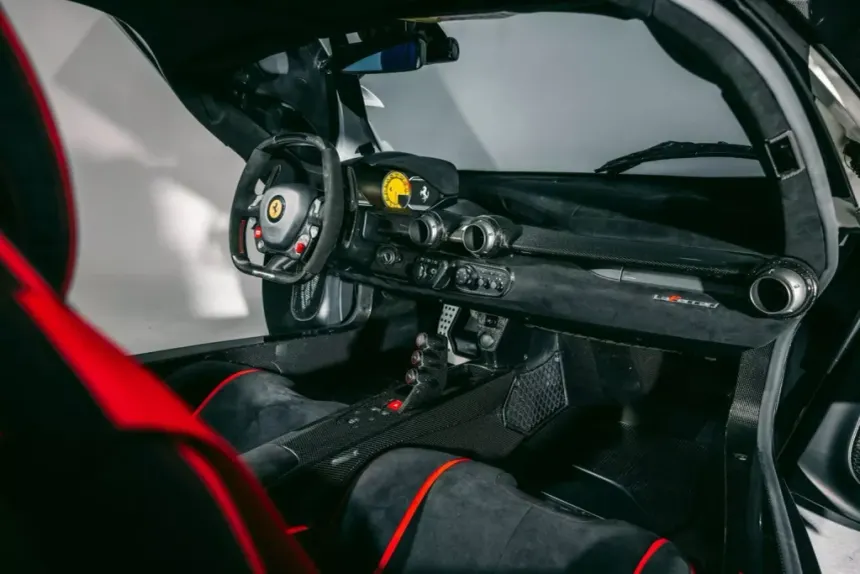
Now look at LaFerrari. The 120 kW electric motor — 163 horsepower — isn’t only there to add power. It’s there to fill torque instantly, to plug the hole the naturally aspirated engine leaves down low while the V12 catches its breath. And here’s a detail almost nobody mentions: LaFerrari runs not one but two electric motors. One drives, the other feeds the ancillary systems. The car carries an entire electrical plant dedicated to managing itself while you think you’re driving. Read it again slowly: the car covers the engine’s weak spot for you. Where the Enzo left you with a torque hole and you sorted it yourself, LaFerrari dumps in electrons and erases the problem before it ever reaches your hands. The active aero moves on its own — diffusers and wing deploying and retracting without your input, deciding for you when you want downforce and when you want top speed. The traction control and torque vectoring are calculating a thousand times a second how much of this absurdity can reach the road without it ending against a wall.
Here’s the uncomfortable line no brochure will print: the most powerful car Ferrari had ever sold for the road is also the one that lets you drive least. The Enzo handed you the weapon and prayed. LaFerrari hands you the weapon, holds your wrist, corrects your aim and fires half a second before you decide. It’s brutally faster — nobody disputes that. The question is whose time that Fiorano lap actually is. Yours, or the software’s? Five seconds quicker than the Enzo, yes. But you drove the Enzo whole. You drive LaFerrari in partnership with an engineering department that never gets out of the car.
It’s not a criticism of the machine. It’s an observation about where Maranello went. And about what we lost on the way with barely a hand raised. Because here’s the thing a mechanic understands that a journalist often doesn’t: a fast lap and a satisfying lap are not the same lap. The Enzo could be slower and more rewarding, because the reward was yours to earn. LaFerrari hands you the result pre-cooked. You get the number without the apprenticeship.
And it wasn’t just Ferrari. LaFerrari arrived alongside the McLaren P1 and the Porsche 918, the three crowned the Holy Trinity. Every outlet sells the Trinity as a numbers race — most power, most speed. Read it the NEC way and you see something else. All three, each in its own fashion, are cars that began driving for you. The 918 with all-wheel drive and two electric motors metering torque to every corner. The P1 with active aero and a road-going DRS. LaFerrari filling torque gaps you never even feel. The Trinity wasn’t only the birth of the hybrid hypercar. It was the moment three marques decided, simultaneously, that the driver was no longer entirely to be trusted, and that the stopwatch mattered more than the sensation. They won time. They lost something else. The Top Gear crowd called these the cars of the decade; almost nobody asked what the decade cost.
Second angle: the hybrid wasn’t about speed — it was the alibi
Now the part that genuinely stings, the one Ferrari has buried under layers of “Formula 1 technology” marketing.
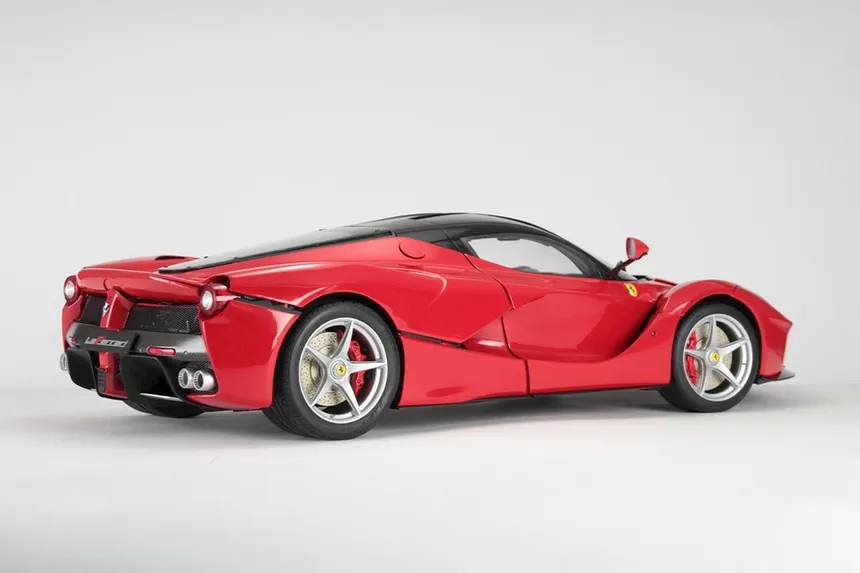
The official story says the HY-KERS went in to make the car faster. And it works — the numbers are there. But think about the moment. 2013. The European Union already had emissions rules on the table that would squeeze the whole industry, including its most expensive, thirstiest corner: supercars. The marques saw it coming. And Ferrari, which lives by selling naturally aspirated V12s to the wealthy, had an existential problem: how do you keep justifying twelve atmospheric cylinders in a world about to penalise you for every gram of CO2?
The answer was equal parts brilliant and dishonest: dress electrification in racing overalls. Call it HY-KERS, stamp it with the Scuderia’s name, say the racing department assembles the batteries, and suddenly the electric motor isn’t a humiliating green tax — it’s a weapon. The same device that in a Prius means surrender, in LaFerrari means performance. Pure narrative alchemy. And the genius of it is that the engineering backs the story up just enough to make it unfalsifiable: you can’t accuse Ferrari of greenwashing when the car laps Fiorano five seconds faster than its predecessor. The performance is the smokescreen. Real horsepower hiding a regulatory motive.
Is it a lie? Not entirely. The system really does improve the car: the batteries recharge under braking and every time the V12 makes surplus torque, mid-corner for instance, exactly like a single-seater. Nothing wasted. Real, good engineering. But the deeper why — the reason Ferrari decided its flagship would carry electrons — wasn’t born on the Fiorano circuit. It was born at a desk, staring at an emissions spreadsheet and a regulatory calendar. LaFerrari was the dress rehearsal. The laboratory where Maranello learned to put hybridisation in an expensive car without clients experiencing it as castration. Look at the tell: LaFerrari isn’t even a plug-in, can’t move on electricity alone beyond a few metres at walking pace. The system isn’t built for genuine economy, for getting you home without burning fuel. It’s built for performance and, along the way, for normalising the word hybrid in the Maranello customer. It’s performance electrification with a hidden objective of regulatory adaptation. And did it work: a decade later, every high-end Ferrari is a hybrid and nobody protests, because LaFerrari taught them to swallow it with pride. The trick wasn’t technical. It was psychological. Turning obligation into desire.
Third angle: the car that killed the Enzo twice
Now the finish, because the move has a victim and it deserves naming.
LaFerrari killed the Enzo twice. The first time, in the showroom, the obvious way: replaced it, made it obsolete, shoved it to the back of the catalogue. That’s the cycle of life; every flagship buries the last. But the second death is dirtier, and it’s the one that matters.
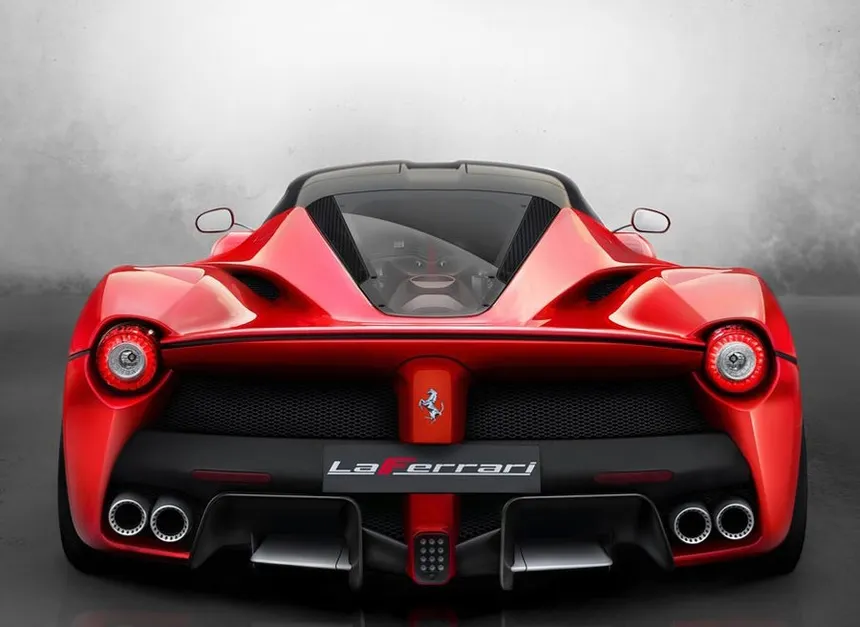
The Enzo was Ferrari’s last pure naturally aspirated V12. Twelve cylinders, air, fuel, and nothing else between your foot and the combustion. The last time Maranello built its most extreme car without a single electrical wire involved. It was the end of a bloodline stretching back seventy years, running through all the greats: the F50 with its near-undiluted Formula 1 V12, the F40, the 288 GTO, the whole saga the Big Five article walks end to end. And LaFerrari, on arrival, didn’t merely replace it: it turned that — the pure naturally aspirated engine — into a museum piece. A relic. Something no longer made because it’s “been surpassed.”
Read the trap: LaFerrari sold the electric crutch as evolution, as progress, as giving the V12 “another life.” But to grant that new life it had to kill the old one. The narrative tells you LaFerrari saved the naturally aspirated V12 by making it viable in the modern era. The workshop reality is the opposite: LaFerrari signed the death certificate of the pure naturally aspirated engine as king of Maranello, and dressed the funeral as a party. After it, no Ferrari flagship was ever just fuel and air again. Never. The unassisted atmospheric engine — that honest, brutal thing where you and the motor were alone together — ended here. With a smile and a red carpet.
Don’t get it wrong: LaFerrari is an engineering masterpiece. Nobody with half a brain denies it, and you won’t catch NEC pretending otherwise. But a masterpiece can also be a door closing. And this one closed the door on the pure naturally aspirated V12 while telling you it was opening it.
The closing argument
This is where most outlets would leave you with “and that’s why LaFerrari is a legend.” We don’t.
LaFerrari is all three things at once, and that’s what makes it genuinely fascinating — not the spec sheet. It’s the car that stopped trusting you and started driving with you, stripping out half the credit and nearly all the risk. It’s the elegant alibi with which Ferrari learned to survive incoming regulation, rehearsing on its most expensive car what it would later impose on the whole range. And it’s the executioner of the pure naturally aspirated V12 disguised as its saviour.
Does that make it a bad car? The opposite. It’s one of the finest ever built. But a car’s greatness and what that car represents are two different things, and confusing them is amateur hour. LaFerrari is magnificent. And it’s also the precise moment Maranello decided the future meant holding your hand, electrifying out of obligation dressed as desire, and burying what the Enzo still was: a car that respected you enough to let you fail.
That’s the question LaFerrari leaves hanging, the one no brochure wants you to ask. When a car protects you from yourself, covers your mistakes, corrects for you and goes faster than ever — is the driving still yours? Or are you just the man sitting there while Maranello drives?
Think about that the next time you read it called “the definitive Ferrari.” Definitive isn’t always the same thing as free.
Check you’re still alive.