Ugo Sivocci: The Missing Corner of the Quadrifoglio
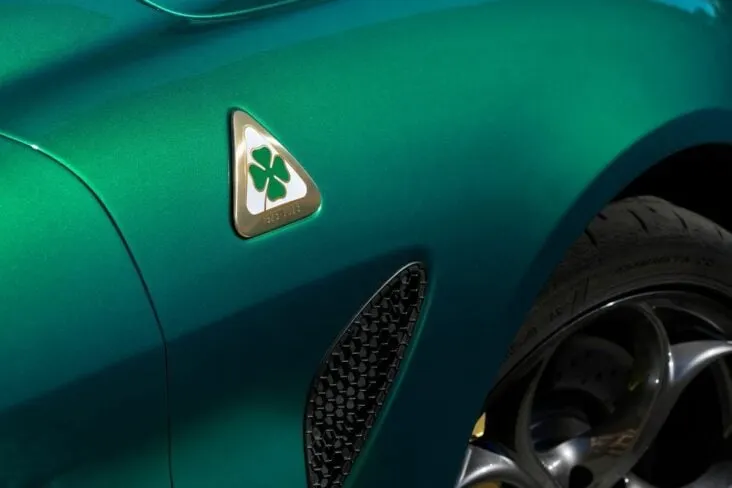
Next time you see an Alfa Romeo Quadrifoglio, lean in and look at the badge on the front wing. Forget for a second that the four-leaf clover is one of the most recognisable performance markers in motoring, alongside the M of BMW M Sport, the AMG of Mercedes and the RS of Audi Sport. Look instead at what’s around the clover. It isn’t sitting in a circle. It isn’t sitting in a shield. It isn’t sitting in a clean square. It’s sitting in a white triangle. A geometric shape with one corner fewer than it should have.
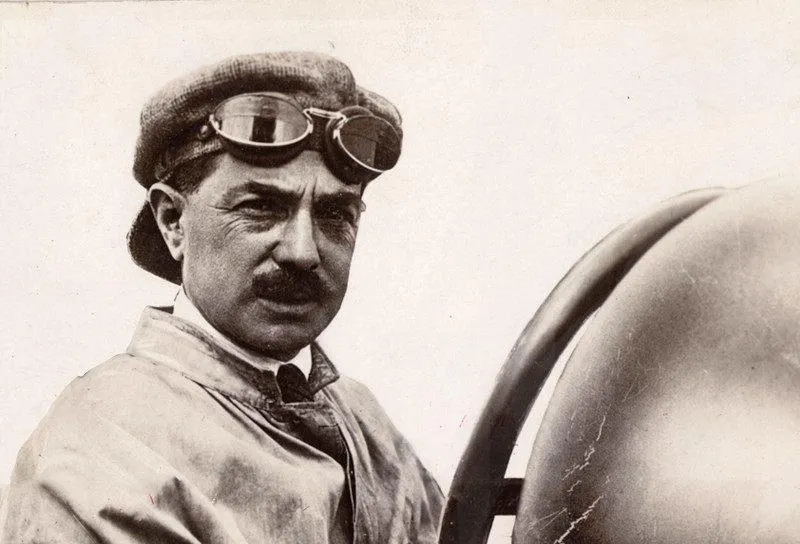
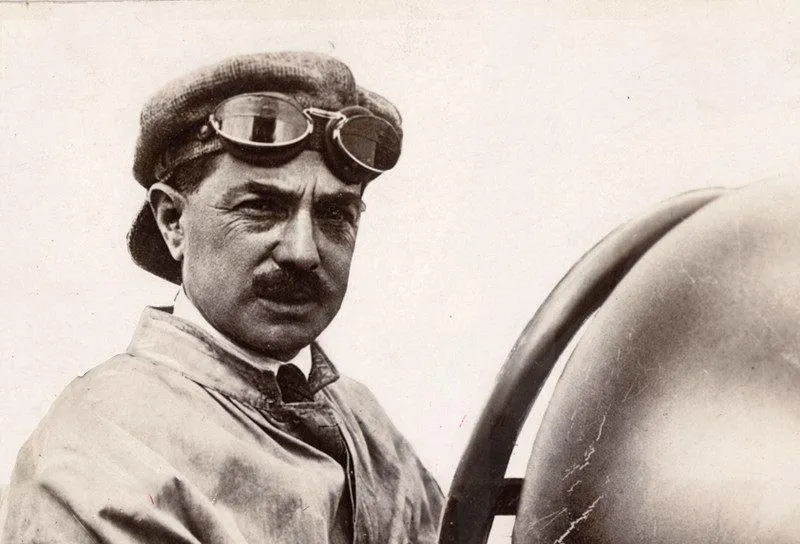
That missing corner is a man. A racing driver the public has almost completely forgotten in a hundred years, but whom Alfa Romeo has been quietly memorialising on every serious car it builds since 9 September 1923. His name was Ugo Sivocci. He was born by accident in the small town of Aversa, lived his entire life in Milan, won the 1923 Targa Florio with a four-leaf clover he had painted by hand on a square white background on his radiator that morning, and was killed twenty-two weeks later at Monza while driving a different car — a car nobody had painted the clover on yet. The marque, in mourning, made two decisions in the days that followed. One: the clover, which had been Sivocci’s personal superstitious mark, became the official competition badge of the brand. Two, and this is the part that’s harder to find in coffee-table books: the square that originally framed the clover, with its four corners representing the four drivers of the Alfa Corse works team, lost one corner. Permanently. To remember the one who was no longer there.
This is the story of the racing driver who signed off the most quietly devastating piece of design grammar in twentieth-century motoring without ever knowing he was doing it. When he picked up two paint cans and a brush on the morning of 15 April 1923 in Cerda, Sicily, his only goal was to break a personal curse of finishing second. He had no idea he was painting the future shorthand for fast Alfas on every continent.
A child of musicians, born during a tour
Ugo Sivocci was born on 29 August 1885 in Aversa, in the province of Caserta, a small town north of Naples. The birth was geographical happenstance. His father, Giuseppe Sivocci, was a piano teacher and a conductor. His mother, Maria Clerice, accompanied him on his tours, and the couple travelled extensively through the Italian peninsula following Giuseppe’s engagements. During one of those tours through Campania they were in Aversa when Ugo arrived. As soon as the engagement was finished, the family moved on.
It matters because Sivocci’s actual life was lived entirely in Milan. The “born in Aversa” line is a postcard, not a cultural origin. Some sources — including the English Wikipedia entry — give Salerno as his birthplace. The corrected version comes from family archive material preserved by Sivocci’s grandson Giorgio Sivocci, and from research by Elvira Ruocco, the most serious historian the Centro di Documentazione Alfa Romeo has had in living memory. Aversa is right. Caserta province. Musical family on the move.
It also matters because it puts a face on the cliché. The English-language motorsport press has a habit of slotting Italian pre-war drivers into a single archetype: the aristocrat-with-a-fast-car or the engineer-turned-racer. Sivocci was neither. He was the son of a working musician, raised among scores and pianos, brought up with discipline and rhythm but no inherited money. The performance-art training matters. So does his younger brother Alfredo Sivocci, who became one of the major figures of early-twentieth-century Italian cycling. A family that produces two competitive cyclists in successive generations isn’t a coincidence. It’s a household built on physical disciplines.
From two wheels to four
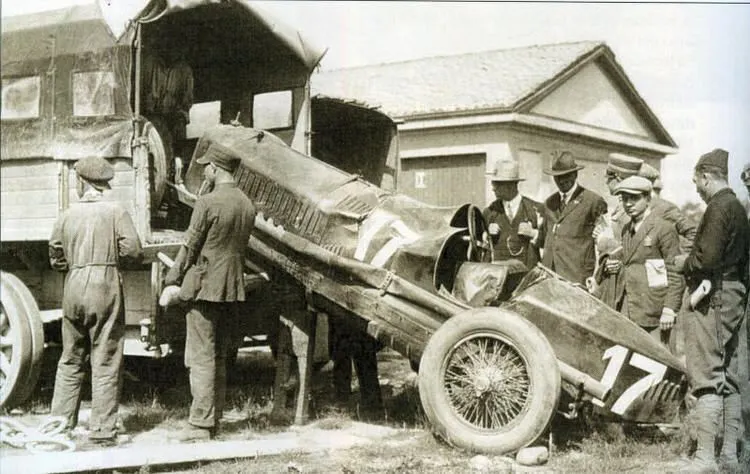
Cycling, in late-nineteenth-century Italy, was what football is now. The sport for the working population. The Sivocci brothers grew up in it. Ugo was an early-generation Italian cyclist, riding in steel-frame races on unsurfaced roads with no team support, no spare bicycles, and a couple of spare tubulars taped to the frame. His documented career highlight on a bike: second place in the 1904 Corsa Nazionale, a 600-kilometre single-stage road race. Two wheels, six hundred kilometres, no rest days. The Tour de France of that decade.
That second place is worth remembering. The “always second” theme is going to follow him for the next two decades.
In 1906 he switched to motor cars, but not as a driver. He went in as a test pilot for O.T.A.V., a small Milanese factory making both cars and bicycles. His first competitive entry, the Turin-Sestriere mountain climb, asked him to pick a line through Alpine switchbacks rather than mash a throttle on a straight. He didn’t win it. But he finished it, and he earned a paddock reputation: a driver who matched the car to the road rather than asking the road to match the car. In British terms, a driver who treated mechanical sympathy as a discipline, not an option.
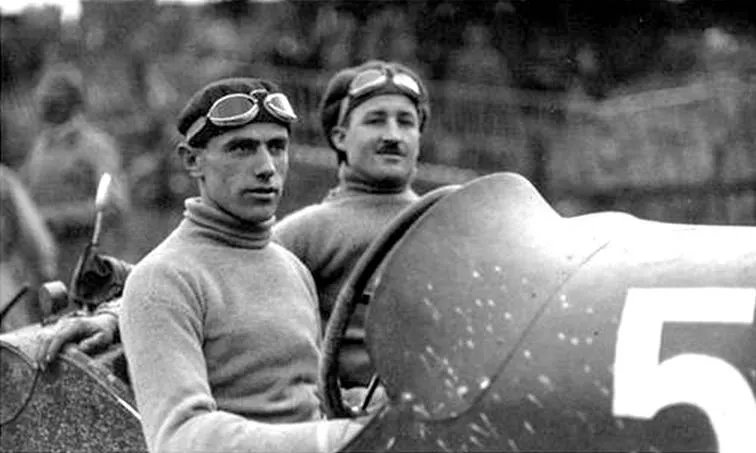
In 1911 he joined De Vecchi, another Milanese sports-car manufacturer. There he met Antonio Ascari, four years younger, with the look of a future major-league talent. The two became close friends. They raced the 1913 and 1914 Targa Florios together in De Vecchi machinery. No major wins, but they were piling up real miles on Sicilian roads, building up a mental catalogue of corners on the Madonie circuit — the kind of catalogue you only acquire by riding the same stones, year on year.
The First World War interrupted everything. De Vecchi survived the war but only just. In the post-war shake-out, the company was absorbed into CMN (Costruzioni Meccaniche Nazionali), also in Milan. Sivocci moved with it. And there, in CMN, between 1919 and 1920, he met a young mechanic from Modena who was going to change the trajectory of his life — and through that meeting, of motorsport itself.
The reverse Ferrari story
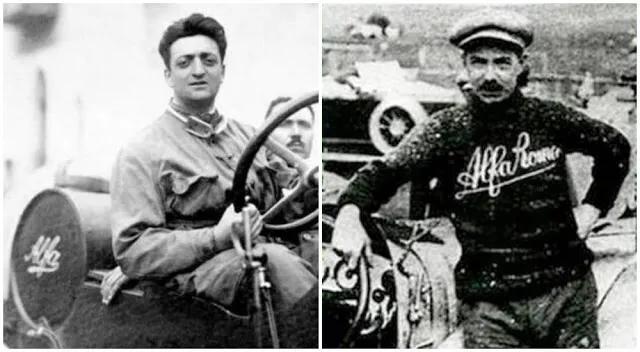
Enzo Ferrari, in 1919-1920, was not yet Enzo Ferrari. He was a 22-year-old mechanic from Modena who was earning his living delivering ex-military truck chassis from a recycling outfit called Giovannoni in Bologna to a coachbuilder in Milan. He drove the chassis up, the Milanese workshop fitted lightweight torpedo or roadster bodies, and the resulting cars were sold to private customers. Ferrari was, in 1919, a logistical link in a chain. He had ambitions, but they were vague.
The popular history of the period gets the Sivocci-Ferrari relationship backwards. The British and American motoring press tends to say that Ferrari helped Sivocci. It was the other way around. It was Sivocci who pushed Ferrari to get behind the wheel of a racing car, not the other way around. Sivocci, with two decades of competitive experience already in the bank, saw something in the young man delivering chassis to Milan and told him bluntly that he should be racing, not driving lorries. He took him into CMN, gave him his first proper opportunities, and when Alfa Romeo set up its full works team Alfa Corse in 1920, Sivocci was instrumental in getting Ferrari into the line-up alongside himself.
Ferrari never forgot it. When he wrote his memoirs decades later, he cited the death of Sivocci in 1923 as one of the most emotionally devastating losses of his entire life. That isn’t paddock politeness. That’s a man recording a real debt that he was never able to repay.
Alfa Corse and the Three Musketeers
The Alfa Corse line-up from 1920 onwards reads like a roll call of pre-war Italian motorsport: Antonio Ascari, Giuseppe Campari, Enzo Ferrari, Ugo Sivocci. Three established seniors and Ferrari coming up. The contemporary Italian press christened them the Three Musketeers when talking about Sivocci-Ascari-Campari, or the Four Musketeers when they included Ferrari. The Dumas reference was deliberate: four young Italian drivers, fiercely loyal to a recently resurrected marque, fighting Fiat for national supremacy. Romance baked into the press releases.
Sivocci debuted with the HP 20-30 ES Sport — the first car ever designed from scratch as an Alfa Romeo (we covered it in the Nicola Romeo piece earlier in this series). His result at the Parma-Poggio Berceto hill climb: second. Second again. Sivocci, who had been second in the 1904 Corsa Nazionale on a bicycle, had now been second across two distinct racing disciplines over a span of sixteen years. The paddock began calling him “the eternal second.” They meant it as a friendly tease. He took it personally. Much more personally than anyone realised.
In 1922 he came fourth at the Targa Florio. Fourth, not second, but the win remained out of reach. By the early winter of 1922 Sivocci had reached a quiet decision. The problem wasn’t the car. The problem wasn’t his foot, or his copilot, or the track. The problem, he concluded, was luck. Fortuna in Italian, with a weight closer to religious belief than to English casual fortune. He was going to do something symbolic to break the run.
The morning of 15 April 1923
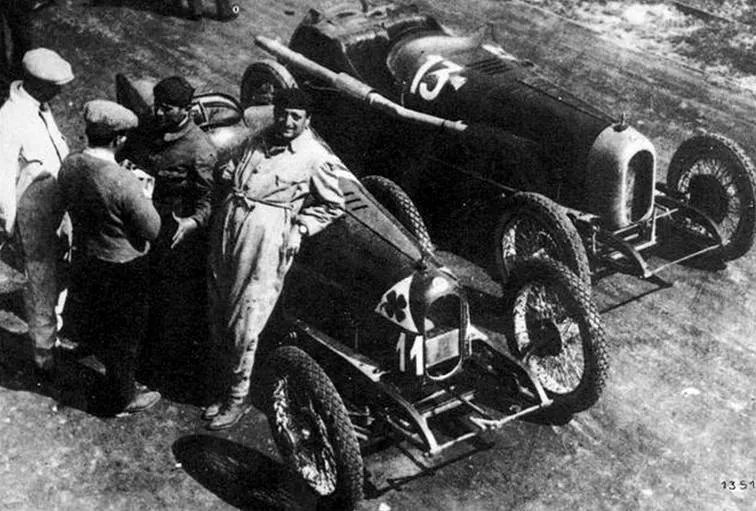
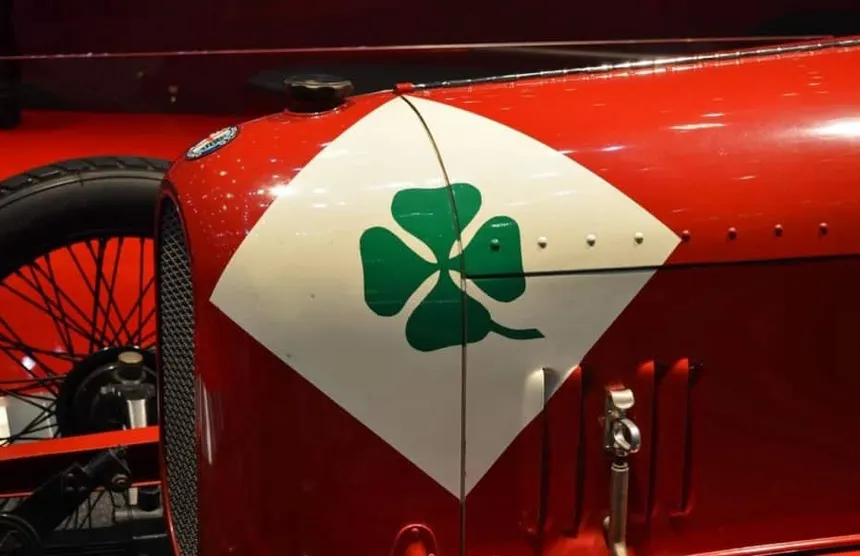
In Cerda, the small Sicilian town that hosted the start and finish of the Targa Florio, Sivocci woke up early on the morning of the race. He found two cans of paint somewhere in the team’s makeshift workshop. One white, one green. He found a brush. And on the nose of his Alfa Romeo RL TF (Targa Florio), directly on the radiator shell, he painted by hand a white square with a green four-leaf clover inside it. The Quadrifoglio Verde. The four-leaf clover, in Italian and pan-European folklore, signals luck. Finding one in a field is statistically rare. Sivocci didn’t find one. He painted one. Forcing the issue, you could say. Negotiating with fate.
His starting number, painted directly under the clover: 13. The thirteen, the unlucky number in Italian folklore as much as in the Anglo-Saxon tradition. That a superstitious driver would accept the 13 says something significant. Either it was ironic acceptance, or it was a deliberate dare to chance. Probably the second. The man who paints clovers to compel luck is the same man who accepts the 13 to neutralise its opposite. Belt and braces.
The race was four laps of the Piccolo Circuito delle Madonie, 432 kilometres total through the mountains and villages of the Sicilian interior, on rough roads with dust, potholes, livestock, and nothing whatsoever resembling modern circuit safety. The car was the RL TF, three litres, in-line six, overhead valves, mechanically signed off by Giuseppe Merosi (covered in the previous article in this series). Alongside Sivocci on the entry list were Ascari, Campari, Masetti and Ferrari, all on RL TFs.
Sivocci won. Total time 7 hours and 18 minutes. Average speed 59.177 km/h. Ascari set the fastest lap but suffered an engine problem on the last corner of the final lap, took ten minutes to restart, and crossed the line three minutes after Sivocci to take second. Masetti was fourth in another RL TF. A historic triple-finish for Alfa Romeo on the most prestigious endurance race in the international calendar of 1923. Bigger than Le Mans (the 24 Hours wouldn’t be founded until 1923 itself but had only just run its first edition). Bigger than the Mille Miglia (which didn’t exist yet — it would launch in 1927). Bigger than any World Championship (the inaugural Manufacturers’ title was two years away). The Targa Florio, in April 1923, was the race. And Sivocci had won it with a four-leaf clover he had painted on the car that morning with a brush.
The eternal second had finally not been second.
The P1 with no clover painted on it
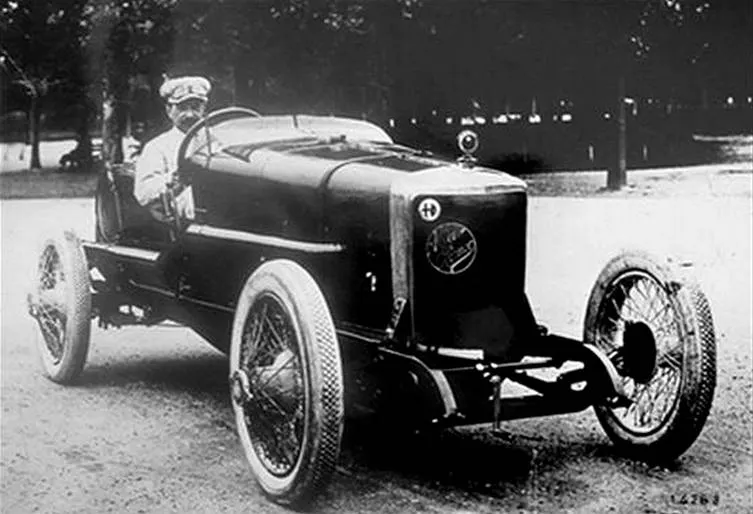
Twenty-two weeks passed. Five months almost to the day. On 8 September 1923, the international racing calendar was preparing for the Italian Grand Prix at Monza, the first serious running of what would become one of the cornerstone events of European motorsport. Alfa Romeo had decided to make a statement. Three units of the brand-new P1, the first single-seater Grand Prix car ever built at Portello (covered in the Merosi article). Drivers entered: Antonio Ascari, Giuseppe Campari and Ugo Sivocci.
The P1 was a fresh car. Just out of the workshop. And for reasons that are recorded variously in different sources, the car Sivocci took out on Saturday’s practice session did not have the quadrifoglio painted on it. One version says there hadn’t been time to paint it before the session. Another says the regulations of the Monza meeting didn’t permit non-homologated decorative elements on a competition chassis. A third says the team had planned to apply the clover for Sunday’s race, not for Saturday’s practice. The truth is probably some combination of the three. What is certain is that the car Sivocci drove that Saturday afternoon onto the Monza track did not carry the symbol that he himself had turned into a talisman five months earlier.
Sivocci entered the Curva del Vialone, at the time one of the fastest corners of the original Monza layout. He lost control. The P1 left the track. Sivocci was killed instantly. He was 38 years old. He had been the lead test driver of the P1 in the weeks leading up to the race. He knew the car better than anyone else at Portello.
Enzo Ferrari was among the first to reach the wreckage. And here is the detail that almost no English-language history bothers to mention. The P1, like most racing cars of the era, was a two-seater designed to carry both a driver and a riding mechanic — the mechanic relayed engine data verbally as the car rolled, a function partly performed by gauges in modern cars. Sivocci’s riding mechanic was in the P1 with him when it crashed. Against the odds, the mechanic survived. Ferrari pulled him alive out of the wreckage. The man went on to live many more years, scarred psychologically but physically intact. His name is not preserved in most accounts. Another empty corner in this story.
Alfa Romeo withdrew the other two P1s from the race. The marque did not run on Sunday. Out of respect. Out of grief. And honestly, out of the simple human fact that no driver in the paddock was psychologically prepared to climb into the same model of car that had just killed a teammate twenty-four hours earlier.
The square broken into a triangle
In the days that followed, while the team mourned and the Italian motoring press was processing the shock, somebody at Portello — not a single named individual in the surviving records, almost certainly a collective decision among the racing department, Romeo, and the Alfa Corse leadership — made two design choices that would define the visual identity of the brand for the next century.
First choice: the green four-leaf clover, which had until then been Sivocci’s personal superstitious mark on his personal racing car, was elevated to the official competition badge of Alfa Romeo. From September 1923 onwards, every Alfa Romeo entered in any official race anywhere in the world would carry the green clover painted on its bodywork. Without exception. Converting a private talisman into a corporate emblem is an unusual industrial instinct. It means the company is assuming the symbolic burden of the person who invented it. It means the symbol stops belonging to the inventor and becomes institutional. Few brands have the reflex to do this well. Alfa did it almost overnight.
Second choice, and this is the subtlety worth pausing on. Sivocci’s original square had an internal meaning. The four corners represented the four Musketeers of Alfa Corse: Sivocci himself, Ascari, Campari, Ferrari. Human geometry. Four drivers, four corners, one closed square. When Sivocci died, the Musketeers dropped from four to three. Someone in the racing department, whose name has never been confirmed in writing, proposed removing one corner from the square. Turning it into a triangle. A permanently empty corner as a reminder of the one who was no longer there.
From that point onwards, and for the following century, every Alfa Romeo competition car has carried the green clover inside a white triangle, not a square. The missing corner is Sivocci. The brand has never explicitly clarified this in its modern marketing materials because it doesn’t need to. The Alfisti know it. The historians know it. Anyone who has gone seriously into the marque knows it. And anyone who hasn’t, once they’re told, can never look at a Quadrifoglio the same way again.
What this story leaves on the workshop floor
There are brands that commemorate their dead with plaques, monuments, minutes of silence at car launches. Alfa Romeo commemorated Sivocci by breaking the geometry. By taking a corner away from a symbol. By turning a visual absence into a permanent scar baked into the product. That is a one-time editorial decision. Get it right and it defines corporate culture for a century. Get it wrong and it becomes a footnote in an anniversary book.
Look at the drawing. A square has four corners, all equal, all stable, all carrying the same structural role. Remove one corner and you get a triangle. A triangle is mechanically more rigid than a square. Any structural engineer will tell you that. The triangle is the most rigid shape you can draw with three points — it’s why bridges, roof trusses and aircraft frames are full of them. That means that when Alfa Romeo lost Sivocci, the three remaining Musketeers (Ascari, Campari, Ferrari) closed into a more rigid, more cohesive structure, not a weaker one. The geometric metaphor doubles as a human one. When a driver dies, the team doesn’t fall apart: it tightens around the absence, becomes denser, more bonded. That’s the reading I take to this story from the assembly bench. Probably nobody at Portello in 1923 was thinking in terms of structural rigidity when they proposed the change. But the collective subconscious of a group of mechanics caught in the middle of grief found the right geometry. By instinct.
There’s something else this story leaves with me. Sivocci’s life is the example of a driver who signs a brand’s symbol without intending to. He painted two clovers because he was superstitious and because he was sick of finishing second. He won the Targa Florio. He died five months later in a car nobody had painted a clover on. And since then, every Alfa Romeo competition car ever built has carried his involuntary signature into the lap of the people who buy it. That is the difference between a symbol designed by a marketing department and a symbol born from one person’s actual hand. The first is decoration. The second is inheritance.
When you see a Giulia Quadrifoglio today with its 510-horsepower Ferrari-derived twin-turbo V6, you’re not looking at another performance trim. You’re looking at a car that has been carrying, glued to its rear flank since 9 September 1923, the signature of a mechanic from Aversa who lived in Milan, who told a young Enzo Ferrari that he should be racing instead of delivering chassis, who won a single race in his life and was killed five months later testing the next car. The marque has kept that signature without blinking for a hundred years. And it has kept it with the only piece of decoration that actually means anything: one corner missing. One empty corner where he ought to have been.
Check you’re still alive.
1 thought on “UGO SIVOCCI”