Alfa Romeo Giulia GTA: The Most Successful European Touring Car in History Nobody Quite Names Correctly
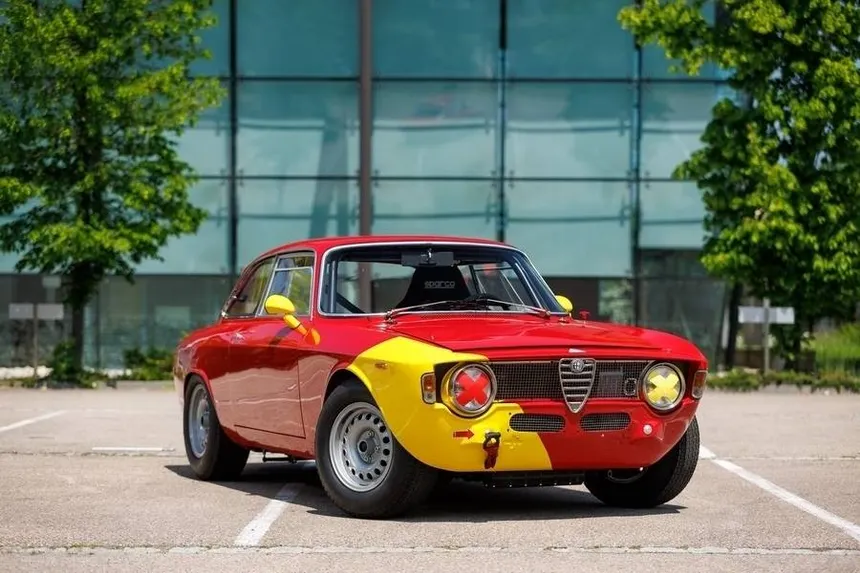
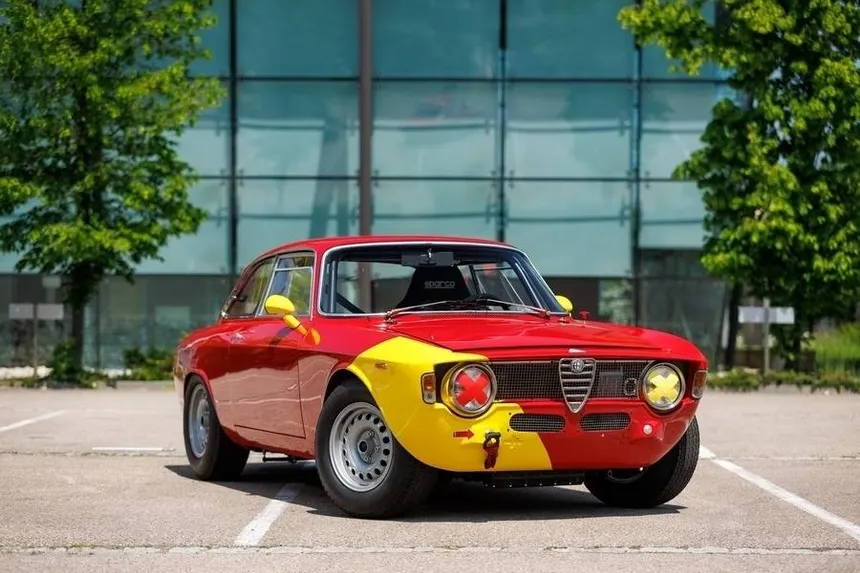
Two hundred and five kilograms. That’s the weight difference between a 1965 Alfa Romeo Giulia Sprint GT — the kind you might have seen parked outside a Bologna café — and an Alfa Romeo Giulia GTA, the car this article is about. Two hundred and five kilograms less. More than a serious athlete loses in six months on a strict diet. More than the unladen weight of a 1960s Vespa. More than a passenger seat, a steering wheel, an instrument panel and a pair of doors combined. And that weight saving was distributed evenly across the four corners of the car without altering the original chassis balance. That requires an industrial discipline you don’t see in any modern hot hatch, however much the marketing department tries to sell you “weight-saving programme” buzzwords in the corporate launch presentation.
Six European Touring Car Championship titles in seven years. Between 1966 and 1972, the ETCC was effectively Alfa Romeo property. Three consecutive titles 1966, 1967 and 1968 with the GTA 1600. Two more in 1970 and 1971 with the GTAm. Add to that: a 1966 Trans Am Series title in the under-2-litre class with a young Austrian called Jochen Rindt (the man who would later become the only posthumous Formula 1 World Champion in the sport’s history). Add: seven consecutive top-7 finishes in a single race (1966 Monza 4 Hours, debut event). Add: crushing domination of the ETCC 1300 cc class between 1968 and 1971 with the GTA 1300 Junior variant, putting an end to the Mini Cooper’s near-decade-long stranglehold on that category.
Five hundred Stradale examples built between 1965 and 1969. Twenty-eight Corsa “factory team” cars prepared by Autodelta. Forty GTAm units between 1970 and 1971. Ten GTA-SA supercharged cars between 1967 and 1968. Total industrial output of the entire operation: around 600 cars. For context, BMW was building roughly 12,000 of the 2002 coupé per year in the same period. Twenty times more. And Autodelta’s GTA still beat them on track for seven straight seasons.
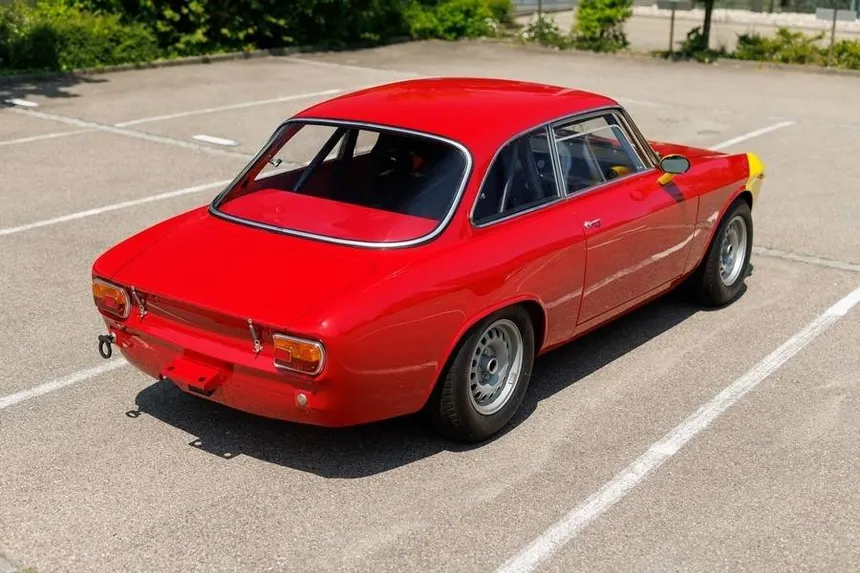
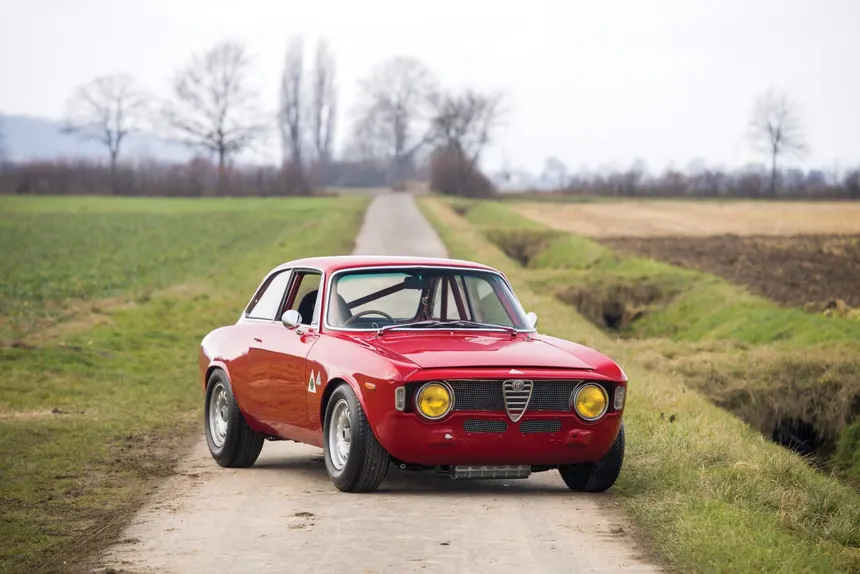
This is the Alfa Romeo Giulia GTA. And the story goes like this: in the middle of the 1960s, when European touring car racing was the most-watched motor racing championship on the continent after Formula 1, a small Italian motorsport department managed by an ex-Ferrari engineer the marque had absorbed as a phantom subsidiary took a perfectly ordinary road coupé, stripped it to the bone, replaced almost every external panel with an aluminium-magnesium-copper-zinc alloy called Peraluman 25, fitted it with a twin-cam engine running two spark plugs per cylinder derived from the standard Giulia Sprint GT four, and turned it loose on Europe’s circuits. It won every race that mattered for seven consecutive years.
When you hear about Autodelta today, remember the two cars that genuinely put the operation on the international map were the GTA (touring car) and the Tipo 33 (sports prototype). The Tipo 33 has been covered in NEC. The GTA, until today, has not.
Why Alfa needed a GTA
At the start of the 1960s, the European Touring Car Championship (ETCC) was the second most-watched motor racing championship on the continent after Formula 1. Run under FIA Group 2 regulations (modified production cars), it attracted manufacturers eager to show their road models could win on track — which translated directly into showroom sales. It was the “win on Sunday, sell on Monday” philosophy at its commercial peak.
The 1300 cc class of the ETCC was indisputably the property of the British Motor Corporation, whose Mini Cooper S had been winning the category almost unopposed since 1962. The 1600 cc class was more contested between the Ford Lotus Cortina, BMW 1800 Ti and various small Italian coupés. Alfa Romeo had been selling the Giulia Sprint GT since 1963 (Giorgetto Giugiaro design at Bertone, 1.6-litre twin-cam, 109 horsepower), so they had the perfect platform — but no serious competition derivative. They needed a lightweight, race-prepared version of the Sprint GT, with enough units built to clear the FIA Group 2 homologation minimum.
The FIA Group 2 homologation minimum was 500 units built within 12 months. This explains why Alfa Romeo produced exactly 500 GTA 1600 Stradale units between 1965 and 1969. That number isn’t industrial accident. It’s a regulatory requirement. Without those 500 road-going units, the GTA couldn’t compete in Group 2 of the ETCC.
Autodelta and the Chiti connection
To develop the car, Alfa Romeo did not use an in-house competitions department (one didn’t officially exist as such). They subcontracted the work to Autodelta, an external entity based in Udine that had run the marque’s motorsport programme since the creation of Delta Automobili in 1961. The two founders were Carlo Chiti, a Florentine engineer ex-Ferrari (he had worked at Maranello between 1957 and 1961 before the famous mass exodus of engineers after the dispute with Enzo Ferrari) and Ludovico Chizzola, an Alfa Romeo dealer in Udine who knew the engineer well. The detail is in the Tipo 33 Stradale article, but worth refreshing: Autodelta was Alfa Romeo’s back-door racing division, formally external until 1965, formally internal from then on.
When Chizzola decided to stay in his Udine home town rather than move to Milan when Autodelta relocated there (to Settimo Milanese), he sold his shares to Alfa Romeo, who acquired 100% of the capital in 1965 and turned Autodelta into the marque’s official competition department. Chiti remained as technical and sporting director. And the first serious industrial operation of the newly all-Alfa-Romeo Autodelta was the GTA.
Peraluman 25: the alloy almost nobody names
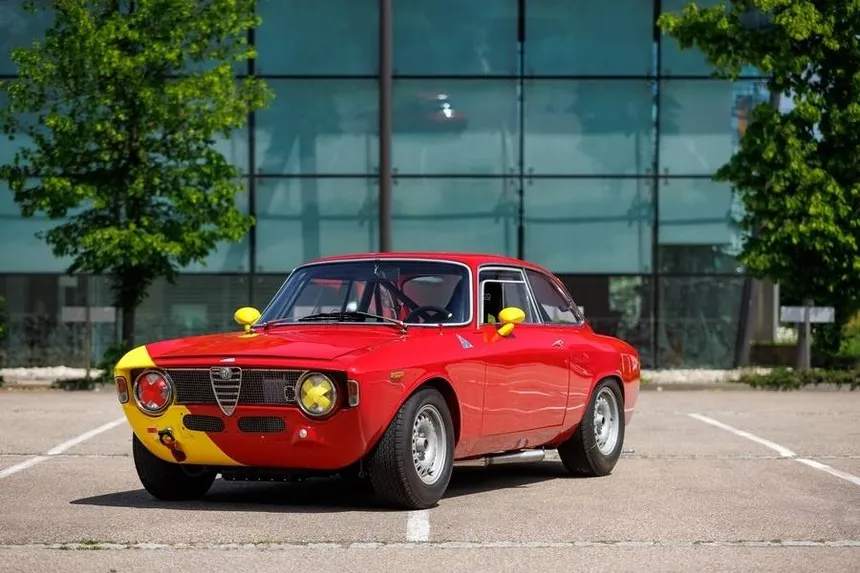
Here comes the technical detail that defines the car, and it rewards a careful telling. The body of the standard Giulia Sprint GT was stamped steel for every exterior and interior surface. Steel, everywhere. That accounts for its 950 kg kerb weight. To reduce that to the GTA’s 745 kg, Autodelta did not strip components — they stripped the material of the external body itself and replaced it with a specific industrial alloy.
That alloy is called Peraluman 25. It’s an aluminium alloy with magnesium, copper and zinc developed by Pechiney in France for aerospace and competition applications. Stronger than pure aluminium, lighter than steel, with fatigue properties suitable for a racing body shell. Chiti’s team replaced almost every external panel of the car with Peraluman 25.
The panels converted to Peraluman 25 were:
- Complete outer body shell, except for the sills which were kept in steel
- Outer skins of the doors
- Bonnet
- Boot lid
- Air deflector
- Dashboard support panel
- Spare wheel tray
- Rear inner panel
- Number plate bracket
- Bracket for the optional oil cooler
- Front floor panels (on the most extreme racing variants only)
The method used to attach Peraluman to the underlying steel chassis was pop rivets. Not welding, not industrial adhesive. Rivets. That allows dissociation between the two materials (steel chassis + aluminium body) and prevents the galvanic corrosion that occurs whenever two dissimilar metals stay in continuous electrical contact in the presence of moisture. It’s the kind of solution an engineer who knows what they’re doing implements. In modern industrial manufacturing terms, this is a hybrid structural body model. In 1965 it was pure motorsport engineering applied to a road car.
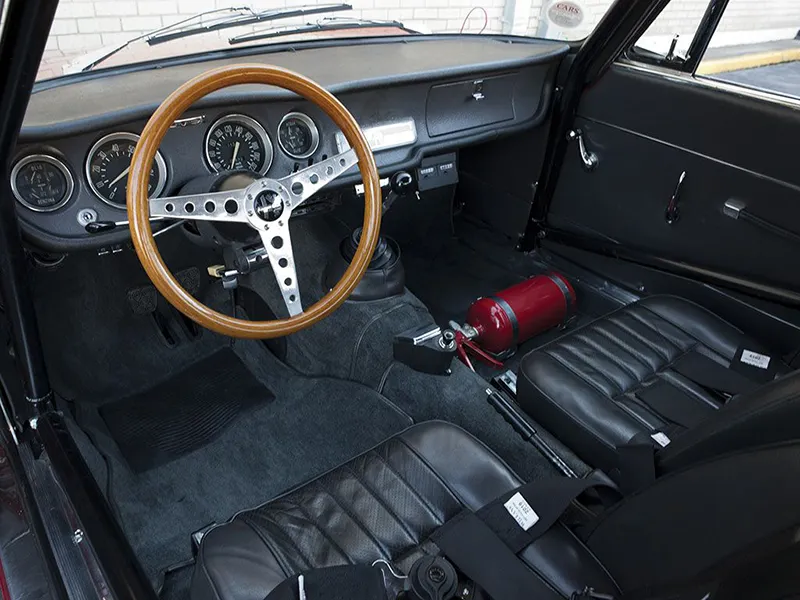
The side and rear windows were replaced with Plexiglas. More weight saving. The interior steel panels were retained but in thinner gauge sheet. More weight saving. Final result: 745 kg with engine fitted. For context, a 2024 BMW M2 Competition weighs 1,625 kg. The GTA weighed less than a current Mazda MX-5 with five litres less displacement than the German M2.
Magnesium in the engine: Elektron
The weight saving didn’t stop at the bodywork. It continued into the engine. Autodelta replaced several structural components of the 1,570 cc Sprint GT engine with parts made of magnesium alloy, an industrial specification known in the trade as Elektron (a German trademark registered in the early twentieth century for magnesium alloys intended for aviation use). The components converted:
- Camshaft cover
- Oil sump
- Timing cover
- Bell housing
Magnesium for all. Several additional kilograms subtracted from the total engine weight. The difference between a road engine and a competition engine in keeping with the rest of the car.
Add: a special steel crankshaft with eight counterweights (in place of the cast crankshaft of the standard Sprint GT). Lightened flywheel. Dropped oil sump for lower centre of gravity. Short side exhaust system exiting under the driver’s door on the left. Battery relocated to the boot for improved front-rear weight distribution.
The twin-spark engine: 90° to 80° and the Merosi signature
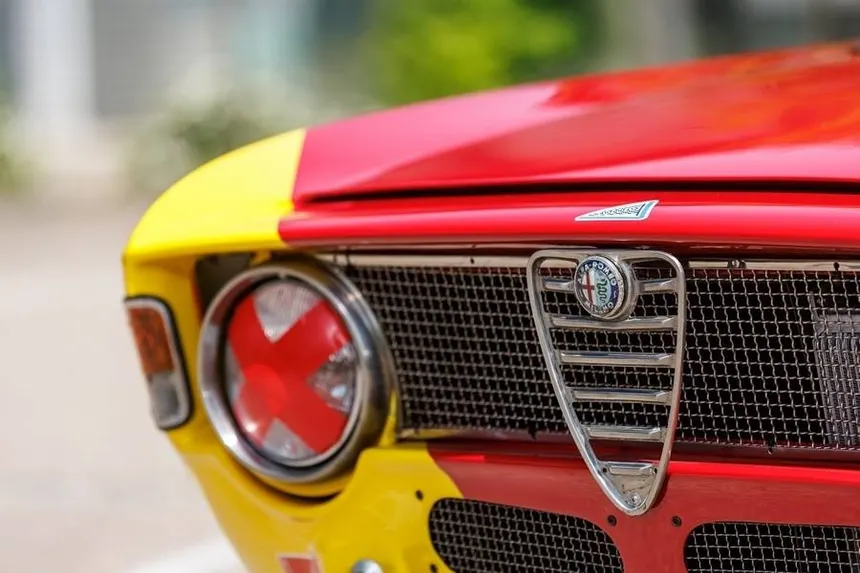
The GTA engine is the same all-aluminium 1,570 cc inline-four as the Giulia Sprint GT, but with structural modifications to the cylinder head. The angle between the two valves per cylinder (intake and exhaust) was reduced from 90 degrees to 80 degrees. That allowed larger individual valves, since closing them at a tighter angle made room for bigger valve heads within the same combustion chamber. Bigger valve diameter = better airflow = more power.
But making the valves larger and closing them tighter together left no central space for a single spark plug. The solution: two spark plugs per cylinder, in lateral positions rather than central. That is the GTA’s twin spark.
A moment’s pause is worth it here. Twin spark is not a 1965 Autodelta invention. It’s an invention of Giuseppe Merosi in Alfa Romeo’s 1914 Grand Prix engine. I told you about it in the Merosi article. Fifty-one years later, Autodelta returned to the same mechanical principle: when there isn’t space for a single central spark plug, two lateral plugs fire simultaneously from opposite sides of the chamber, ensuring more complete and faster combustion. It’s the same principle. Only the industrial context is different. Alfa Romeo’s technical signature runs across the decades.
Ignition: Magneti Marelli distributor, the same unit fitted to the Ferrari Dino of the same era. A telling detail. The GTA engine and the Ferrari Dino engine share the same ignition system.
Carburation: two Weber 45 mm, replacing the standard Sprint GT’s 40 mm units. Five millimetres more venturi diameter = more mixture flow = more power.
Result: 115 horsepower at 6,000 rpm in the GTA Stradale (road) version. Up to 160-175 horsepower in the GTA Corsa (race-prepared by Autodelta) version. Specific output nearly double that of the original Sprint GT block, keeping the same displacement.
The Arese-Settimo Milanese double industrial process
Here’s a detail almost nobody tells and which shows the level of care Autodelta put into its racing cars. Every “factory team” GTA was built twice.
First build: at the main Alfa Romeo plant in Arese, northwest of Milan. There the complete car was assembled with all GTA modifications in place: Peraluman 25 body, twin-spark engine, the lot. It left Arese as a complete GTA Stradale.
Second build: the car was transported to the Autodelta plant in Settimo Milanese, where it was completely disassembled (engine out, transmission out, suspension out, interior out). Every engine component was individually balanced and polished. The flywheel was lightened. The special steel crankshaft was installed. An oil cooler and catch tank were fitted. The dropped oil sump was installed. The short side exhaust was fitted. The battery was relocated to the boot. The lightweight windscreen was installed. The ZF special-steel limited-slip differential was fitted in place of the standard unit. The Peraluman floor panels were installed in place of the steel ones (where the version allowed).
Complete disassembly and reassembly. The car entered Settimo Milanese as a GTA Stradale and left as a race-prepared GTA Corsa. Process time: several weeks per car. Additional cost: virtually equal to the full price of a GTA Stradale on top. The Autodelta-prepared GTA Corsa cost almost double a GTA Stradale to the customer. That is why only 28 of the approximately 500 GTAs built passed through this full Autodelta preparation. They were the factory team cars. The rest were customer cars that private teams could prepare to their own specifications.
The debut: Monza, 20 March 1966
The GTA made its racing debut on 20 March 1966 at the Monza Circuit, in the Jolly Club 4 Hours event. Andrea De Adamich and Teodoro Zeccoli won. De Adamich, a Trieste-born Italian driver who had been racing touring cars and junior single-seaters for years, quickly became Autodelta’s lead GTA pilot and would go on to win two consecutive European Championships (1966 and 1967). Zeccoli, a Florentine driver with previous single-seater experience, became the second works driver throughout the GTA era.
That same 1966 season, the GTA took the first 7 places of the Monza Junior Trophy race (some sources speak of an outright class 1600 win, others of seven consecutive top finishes). And, above all, Andrea De Adamich won the 1966 European Touring Car Championship in a season where the GTA dominated almost every race in its class. He repeated in 1967. Another team driver, Spartaco Dini, would win the championship in 1969. Three consecutive titles in Europe’s most important touring car championship.
The US adventure: Jochen Rindt and BOBCOR
Meanwhile in the United States, the GTA began racing in the Trans Am Series in the under-2-litre class (the big American V8s like the Ford Mustang and Camaro raced in the over-2-litre category). Alfa Romeo Inc., the American importer, decided to run a factory effort. The driver was the Austrian Jochen Rindt, then a Cooper F1 rising star. Rindt won the 1966 Trans Am under-2-litre drivers’ title in the GTA.
Four years later, BOBCOR Racing (Bob Cozza’s outfit in Buffalo, New York, the one covered in the Montreal article) took over the baton. BOBCOR ran GTAs in Trans Am from 1968 to 1972, dominating the under-2L class while GTAs remained competitive. But in 1972, the Datsun 510s of the works Datsun USA team arrived with sharper Japanese commercial reflexes and better industrial preparation. They broke the GTA’s streak. BOBCOR, with no immediate GTA upgrade in sight, decided to jump to the road-going Alfa Romeo Montreal prepared as a racer. As I told you in the Montreal article, the BOBCOR Montreal effort failed. The GTA was a better racing car than the Montreal — lighter, more proven, refined by years of Autodelta preparation.
The GTA 1300 Junior: the Mini Cooper killer
In 1968, Autodelta launched the 1300 cc version of the GTA, called the GTA 1300 Junior. Engine reduced to 1,290 cc with a smaller twin-spark cylinder head. Targeted specifically at the ETCC 1300 cc class, where the Mini Cooper S had been dominating almost unchallenged for half a decade.
The GTA 1300 Junior crushed the Mini Cooper on track from 1968 onwards. Two consecutive ETCC 1300 cc class championships (1970 and 1971), with overwhelming dominance. The Mini Cooper, which had been Europe’s most successful small-displacement touring car for the 1962-1967 period, lost its class to the GTA 1300 Junior within two seasons. The British era of small-bore European touring car racing ended the moment a 1,290 cc Italian car turned up in the paddock.
The GTAm: 1750 GTV US + Lucas injection + 1.99 litres
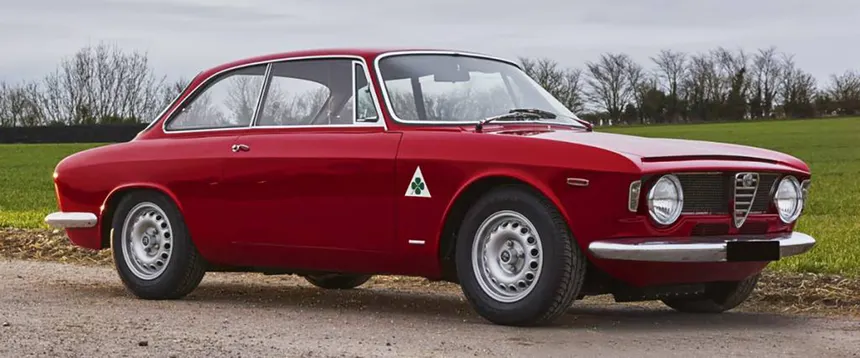
By 1970, FIA regulations had shifted and Autodelta needed a 2-litre GTA to compete in the larger class. But the Sprint GT engine didn’t originally extend to 2 litres, and producing 500 homologation units with a completely new block was expensive. The creative solution: start from the 1750 GTV US, the GTV sold in the United States with a 1,779 cc engine and SPICA mechanical fuel injection (the same system that would later be fitted to the Montreal, as I told you).
To that 1,779 cc block, Autodelta did two things: inserted a single monosleeve in place of the original four individual cylinder liners, which allowed the bore to be increased and the displacement first to 1,985 cc and then to 1,999 cc, just under the class limit of 2 litres. And replaced the SPICA injection with Lucas injection. Result: 208 horsepower at 6,500 rpm.
That car became the GTAm (lowercase “m”, not GTAM as it’s often incorrectly written online). Built on the chassis of the 1750 GTV US with all the usual Peraluman + magnesium + special crankshaft modifications of the GTA. Approximately 40 units built by Autodelta and private workshops using factory-supplied components. The GTAm won the European Touring Car Championship in 1970 and 1971, closing a run of five ETCC titles in a row for Alfa Romeo (1966, 1967, 1968, 1970, 1971). Only 1969 went to BMW with the 2002 Ti.
The GTA-SA: two oil-driven superchargers
Here comes the catalogue’s odd creature. GTA-SA. “SA” stands for Sovralimentato (“supercharged” in Italian). Only 10 units were built between 1967 and 1968. Intended for FIA Group 5, which permitted forced induction on touring cars derived from production.
The engine was the standard 1,570 cc twin-spark, with two low-speed Roots-type superchargers installed on the side. But the technical decision that makes the GTA-SA most interesting is this: the superchargers were not belt-driven from the crankshaft, as in any conventional supercharged car. They were driven by hydraulic oil pressure. Hydraulic oil moving mechanical turbines that compressed the intake air. That allowed the supercharger speed to be decoupled from engine speed, providing near-constant boost across the rev range rather than the classic peak-and-drop curve of conventional superchargers.
Result: up to 250 horsepower at 7,500 rpm in a 745 kg car. 335 horsepower per tonne in a 1967 touring car. A figure that in 2026 is still competitive with many modern hot hatches.
The GTA-SA won the 1967 Hockenheim 100 Mile race with German driver Carl-Ludwig Hagenberg. The FIA closed Group 5 to that type of car in early 1968 and the GTA-SA was left without a competitive home. But those 10 examples, when they appear at auction (which happens roughly once every five or six years), routinely sell above one million euros apiece.
What I take from the GTA on the workshop floor
There’s a workshop-floor lesson few cars in history illustrate as clearly as the GTA: less weight changes more things than more power. Almost any engineer who has worked in race preparation will tell you the same. It’s easier to gain track time by stripping 50 kg from a car than by adding 50 horsepower to its engine. The reason is physical: weight affects acceleration, braking, mechanical grip, lateral grip, weight transfer, fuel consumption, tyre durability and mechanical wear. Power only affects longitudinal acceleration.
Autodelta understood this in 1965 better than most of the competition manufacturers of the era, who were obsessed with large displacements and big horsepower figures. The GTA is the result of that philosophy applied with serious industrial discipline over six years. 205 kg less on a 1965 body shell = a car that weighs the same as a modern karting unit and drives with the precision of a single-seater. And even running only 1,570 cc under the bonnet, it beat on track cars with engines almost twice its size for seven consecutive seasons.
Today, modern industrial culture has unlearned the alleggerita principle. Modern cars keep gaining weight from one generation to the next because each iteration adds more electronics, more passive safety, more comfort features, more sound insulation, more options. A current BMW M3 weighs 1,730 kg. A Mercedes AMG C63 weighs 1,945 kg. These cars are in the weight bracket of 1960s light commercial vehicles. The modern engineer’s obsession with adding mass to enable performance is the exact negation of Autodelta’s 1965 principle.
When somebody tells you today that “modern cars are far better than the classics”, remind them that a 1967 GTA Corsa weighed 745 kg with engine fitted and that the same principle is still the physical principle that separates a track car from a showroom poseur. Alleggerita isn’t nostalgia. It’s engineering. And serious engineering doesn’t go out of date.
If one day you get the chance to drive a GTA on track (which probably will never happen, since there are fewer than 100 examples in active racing condition across the whole of Europe), remember you’re driving the most successful European touring car in history between 1965 and 1972. Six ETCC titles in seven years. Around 600 total units built in six years of production. Five hundred kilograms less on the scales than any serious rival of the era. Twin spark inherited from Merosi in 1914. Industrial Peraluman 25. Magnesium Elektron in the engine. Double manufacturing process across Arese and Settimo Milanese. And still, a car you can park on a normal street.
That is what Autodelta was when it did things properly. That was Alfa Romeo at its finest competition-and-road moment of the last half century.
Check you’re still alive.