What the Car Leaves Behind: The Wake Matters More Than the Nose (AeroNEC · 4)
A few years back the MythBusters tucked a car ten feet behind a lorry on a track and watched the fuel economy climb by nearly 40%. Terrifying to do, illegal to copy, but the number was real — and it points straight at the most misunderstood thing in car aerodynamics. The car wasn’t saving fuel because of anything at its nose. It was saving fuel because it had crawled into the hole the lorry was leaving behind it.
For three chapters we’ve stared at the front of the car and underneath it. The air hitting the nose, the air over the wing, the air sucked under the floor. All the action seemed to be on the face the car shows the wind. It isn’t. The part that matters most is the part nobody looks at: what the car leaves in its trail.
Here’s the figure, then we’ll take it apart. Somewhere between 80 and 90% of a car’s entire aerodynamic drag doesn’t come from the punch at the nose. It comes from what happens at the tail — the pocket of churned-up air the car drags along behind it. The front, the bit that looks like the star of the show, contributes only a fraction. The real enemy rides behind, invisible, and it’s called the wake.
Welcome to chapter four of AeroNEC. Today: why the shape of a car’s backside matters more than its nose, why drafting genuinely saves fuel, and why a single wing mirror can wreck an entire engineering team’s work.
The hole the car never quite fills
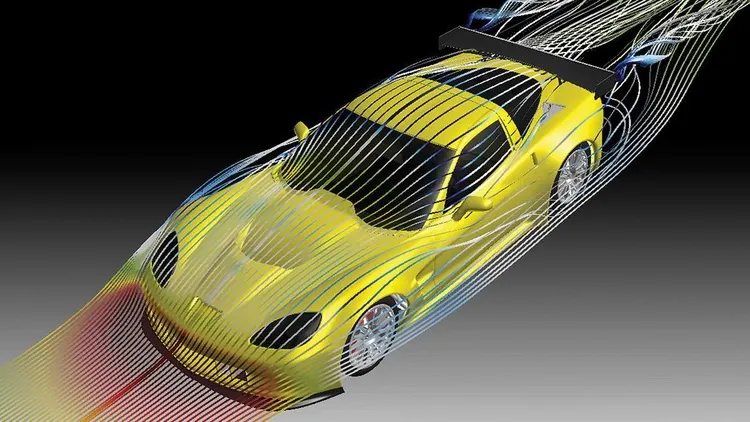
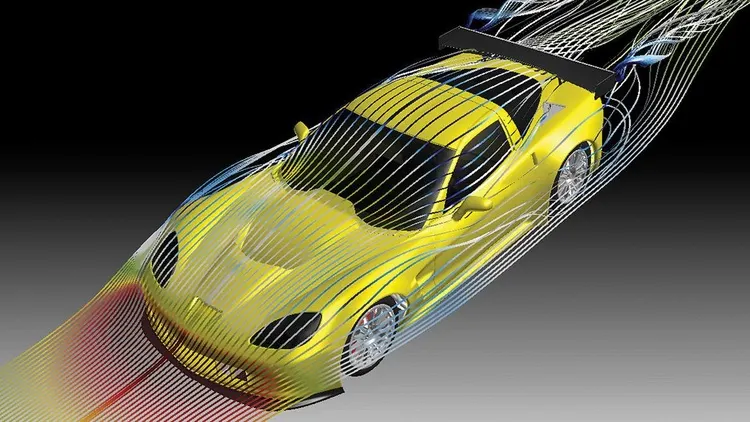
Picture the car moving. At the front it shoves the air aside, compresses it, builds a high-pressure zone. You know that from the earlier chapters. But behind, something less obvious and far more expensive happens: the air the car has just pushed apart has to close back in to fill the hole left as the car passes. And it almost never manages it cleanly.
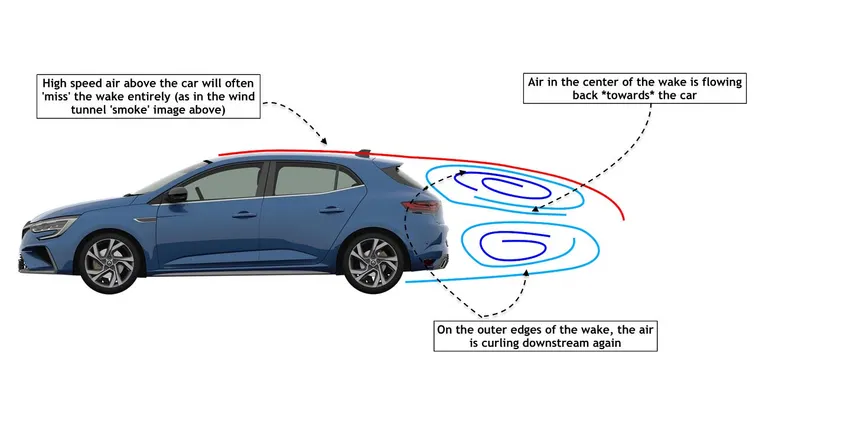
Instead of closing in tidily, the air peels away from the bodywork at the rear and collapses into a churning, turbulent mess of little vortices spinning in every direction. That’s the wake. And here’s the key bit: the wake is a low-pressure zone. A partial vacuum stuck to the back of the car.
Now put the two together. High pressure shoving at the front, low pressure pulling at the back. The car is trapped between them, one hand pushing it and another hand braking it at the same time. That rearward suction — the vacuum tugging the car backwards — is the bulk of all the resistance you pay for. Not the frontal smack. The tug from behind.
And the wake isn’t a little puff that stays at the bootlid. Right behind the car there’s a violent recirculating region, but out of it stream two long, coiled vortices that trail for tens or even hundreds of metres. It’s the same breed of whirl an aircraft leaves in the sky — the kind that forces takeoffs to be spaced apart. A car, at its own scale, lays down that turbulent signature mile after mile without you ever seeing it. And that signature, as you’re about to see, is exactly what a second car can cash in on.
Why the tail decides more than the nose
If the wake is the big problem, then the shape of the car’s rear matters far more than people think. You can have a perfect, knife-sharp nose and throw it all away with a badly resolved tail that leaves an enormous wake.
That’s why cars genuinely chasing efficiency taper towards the back, like the stern of a boat — engineers literally call it “boat-tailing.” Drawing the sides together at the rear lets the air close in more tidily, shrinks the wake and eases the vacuum tugging the car back. It’s the teardrop shape from chapter one, and it isn’t styling — it’s open war on the wake.
But here’s a lovely, counterintuitive twist. Sometimes, instead of stretching the tail into a long taper, a car gets a rear edge chopped off sharp and clean. Shouldn’t that make more turbulence? Not necessarily. That sharp cut forces the air to let go at one fixed, controlled point, rather than dragging dirtily along the bodywork making yet more resistance. A slightly bigger but clean, predictable wake can cost less than a small but messy one. It’s why nearly every modern car has that crisp edge along the bootlid or tailgate. It isn’t a design flourish. It’s tail physics. Anyone who’s watched Chris Harris talk about why a Kammback works has heard this without the maths.
Three tails, three different wakes
The neat part is that every rear shape makes its own kind of wake, which is why cars don’t differ by accident. There are roughly three families, and each is a different answer to the same problem.
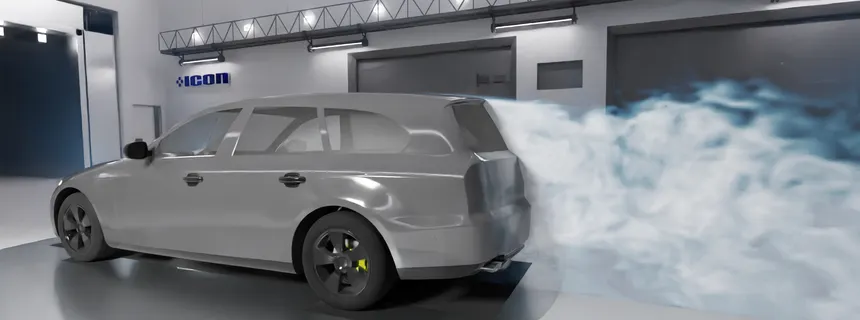
The fastback has the falling, sloping tail of a coupé. The air follows the slope for a good stretch before letting go, which can leave a relatively clean wake — as long as the angle isn’t too steep, because if it is, the air separates all at once and the whole thing falls apart. The notchback is the classic three-box saloon, with its stepped boot: the air separates at the rear screen and reattaches on the bootlid, creating a bubble in between that brings its own complications. And the estate, with its sheer vertical tail chopped off square, leaves the biggest and messiest wake of the three — but in exchange it’s predictable and stable.
There’s no outright winner. Each tail is a compromise between how much drag it makes, how much room it gives you inside, and how the car behaves at speed. Because the rear doesn’t only decide fuel economy — it decides stability too. A badly resolved wake can make a car pitch or feel nervous at motorway speed, which is why engineers fight over the shape of a car’s backside as hard as they fight over its nose, if not harder.
Drafting: stealing the hole from the car ahead
Now you understand the wake, you instantly understand one of the oldest and most spectacular tricks in motorsport: drafting. The slipstream.
When a car leaves that low-pressure zone behind it, the car right behind can climb inside it. And when it does, its nose stops meeting full-speed air head-on — it meets the hole the leader has already opened. The trailing car barely has to shove any air aside. Its drag collapses.
And these aren’t joke numbers. In racing, a car sitting in another’s slipstream can cut its aerodynamic drag by more than 25%. In highway truck tests, the second lorry saved around 24% on fuel and the third about 23%, purely by sheltering in the leader’s wake. It’s why NASCAR cars run nose-to-tail in packs, and why on any circuit the car running second uses the tow to build a run and attack down the straight.
And here’s the bit that drops jaws: the lead car saves too. Not much, but it does. Because the following car, by partly plugging the leader’s rear vacuum, raises the pressure at its tail and eases that backward tug. In the truck tests, the one running in front saved nearly 18%. Even cyclists feel it — the rider in front spends a little less just from having someone glued to their wheel. Drafting is a deal where, surprisingly, both sides win. The one behind just wins a lot more.
The dark side: dirty air
But the same wake that gifts a tow on the straight is poison in the corners. Because the air a car leaves behind isn’t just low-pressure — it’s a turbulent, scrambled chaos, what racers call “dirty air.”
And aerodynamic devices — wings, splitters, everything from chapters two and three — need clean, ordered air to work. When the chasing car dives into the leader’s dirty air, its wings stop getting the flow they were built for and lose downforce exactly when it’s most needed, mid-corner. The pursuing car goes greasy, loses grip, and can’t get close enough to strike.
This apparently technical detail has shaped the whole of modern Formula 1. Remember chapter three, where I said F1 went back to ground effect in 2022? This was the real reason. A car making its grip from the floor instead of from wings leaves a cleaner wake behind it, dirties the air less for whoever’s chasing, and so cars can follow closely and overtake. An entire rulebook rewritten to tame the wake. What the car leaves behind matters so much they redesigned the sport around it.
The little assassins: mirrors and wheels
I’ve saved the most maddening for last, because it’s the smallest and the most damaging. All through this series I’ve kept telling you a daft little detail can ruin a whole car’s aero work. Time to name the culprits.
Pressure studies across the bodywork are blunt about it: the spots where the air goes wildest, where pressure fluctuates most and turbulence is born, are two. The wing mirrors and the front wheels. Two things that look trivial and are in fact a source of drag and of churned-up air that contaminates everything downstream of them.
A mirror is a blunt object stuck out at mid-height right in the flow, shedding its own miniature wake and flinging it down the side of the car onto the door. The front wheel is worse still: it spins, it’s not remotely aerodynamic, and it scrambles the air that ought to slide cleanly down the car’s flank. That’s why the most efficient prototypes hide their wheels, panel over the underbody and run cameras instead of mirrors wherever the rules allow it. Each of those little assassins, added up, eats kilometres of range and tenths of top speed.
And it’s a fight the engineers don’t always get to win. Mirrors are a legal requirement on most road cars, so a designer who knows full well the mirror is wrecking the flow often can’t simply delete it — the best they can do is shrink it, shape it, move it onto the door instead of the windscreen pillar. Open wheels in many racing categories are mandated by the rulebook too. A huge chunk of aerodynamic work isn’t chasing the perfect shape; it’s salvaging the best result possible around the ugly bits the law forces the car to wear.
So next time you look at a car, don’t stop at the pretty nose. Look at its tail, look at its mirrors, picture the whirlpool it drags behind it. There, in what you can’t see, in what the car leaves behind, is where most of the battle against the air is actually fought.
In the fifth and final chapter of AeroNEC we come down out of the clouds and into the street. To your car, your neighbour’s, the bloke down the road with the enormous wing. We’re going to separate the aero that works from the aero that’s just expensive sticker. And it’s going to sting.
Check you’re still alive.
1 thought on “THE WAKE”