
The Mate’s Rear Wing: What Works and What’s Just Expensive Sticker (AeroNEC · 5)
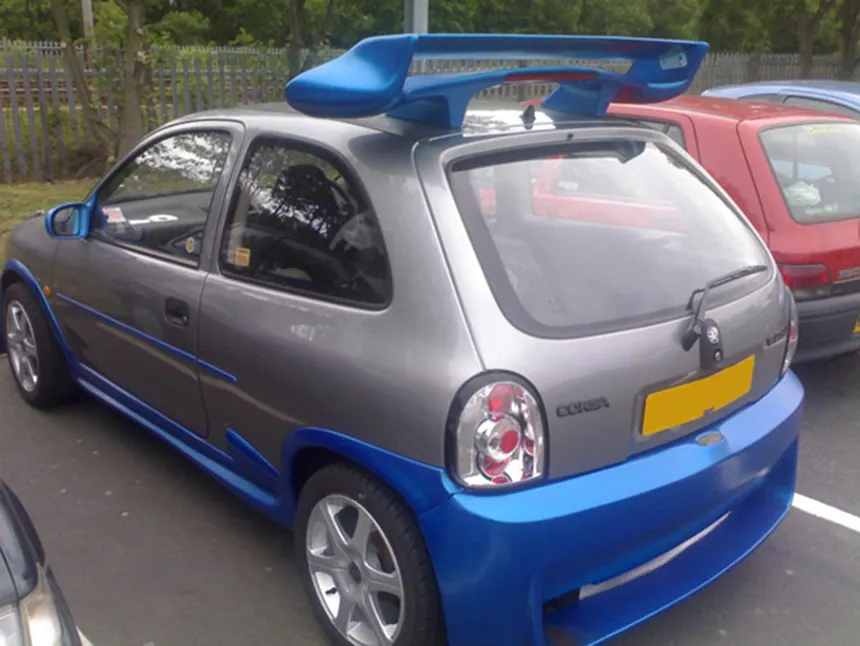
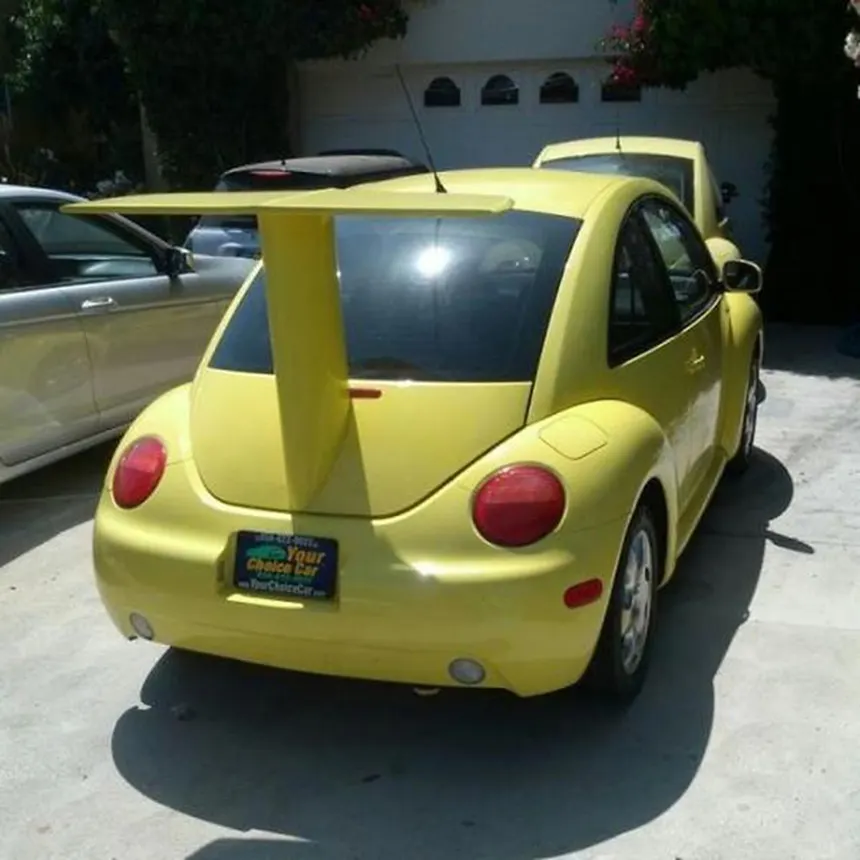
You know the car. Hatchback, lowered, and a rear wing the size of a picnic table bolted to the bootlid, tall enough to serve tea on. Top Gear built a whole comedy strand out of cars like it. And the question that’s been hanging over this whole series finally has to be answered: all that downforce, all those wings, all that air gluing cars to the road — does any of it do a single thing for an ordinary car on an ordinary road?
The short answer is almost always no. The long answer is this chapter. And I’m not here to take the mickey out of anyone — I’m here so you can tell what genuinely does something from what’s a very expensive lump of plastic. What you do with that afterwards is entirely your business.
We’ve spent four chapters in the world of people who know what they’re doing: F1, hypercars, wind tunnels, ground effect so good it had to be outlawed. Now we come down to the car park.
A wing and a spoiler aren’t the same thing
First tangle to undo, because nearly everybody mixes them up. A wing and a spoiler are two different things doing two different jobs.
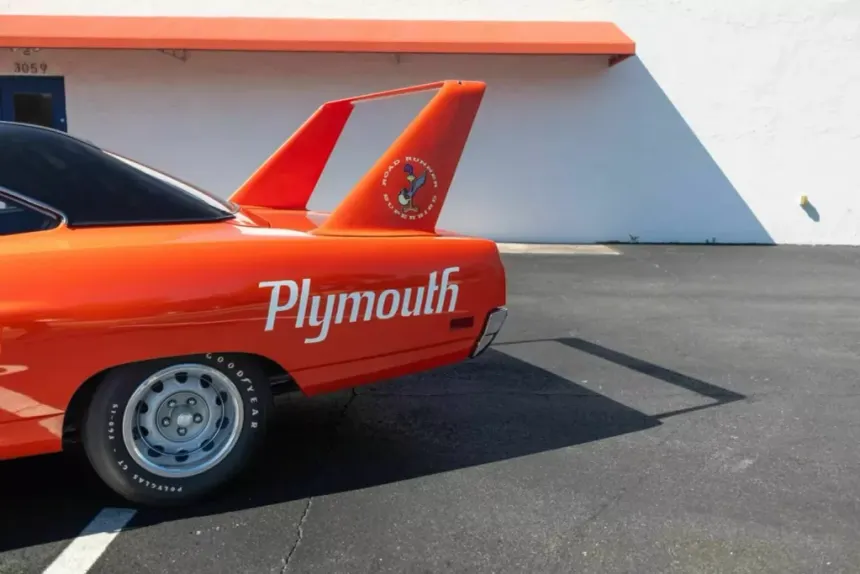
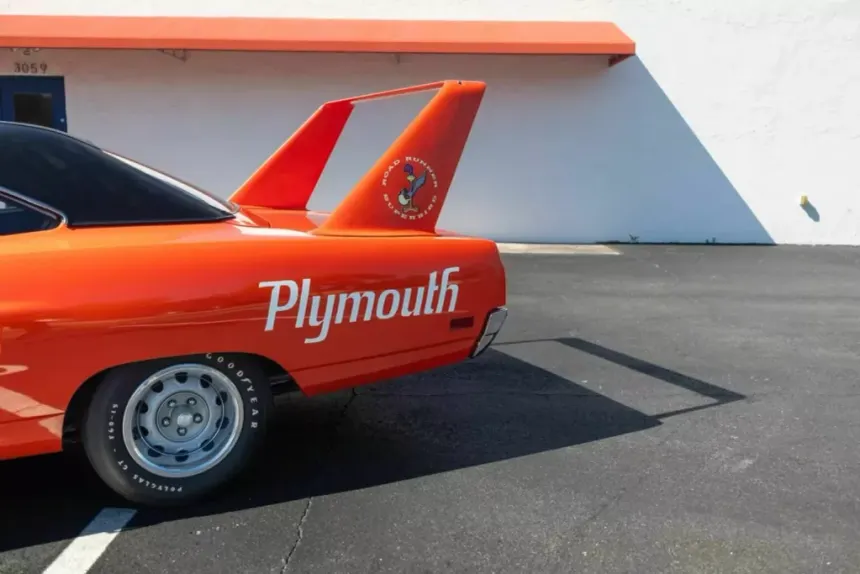
The wing — the raised blade standing up on two struts, held clear of the bodywork — is the chapter-two device: an aerofoil the air passes over and under to make load, to press the car into the road. It’s active. It manufactures downforce.
A spoiler is something else. It’s the little lip or ducktail sitting flush on the edge of the bootlid, with no gap underneath. It makes no load. What it does is “spoil” the airflow coming down off the rear screen, breaking it up in a controlled way to cut lift — the force that, at speed, tends to lighten the back of the car. It doesn’t push the car down; it stops the car going light. Different things. And that difference is exactly what separates what works from what doesn’t.
Why your wing does nothing — and physics doesn’t have an opinion, it has proof
Back to chapter two for a second. Aerodynamic load grows with the square of speed. Which means a wing at low speed does next to nothing, and all its magic lives up high, at speeds you simply never reach on a public road.
A wing starts making usable load when the car’s going genuinely fast, on track, and sustained. At 50 km/h in town, 90 on a back road, even 120 on the motorway, the wing on your car makes such a laughably small amount of downforce that it moves no needle anywhere. It doesn’t improve grip you’ll ever feel. It doesn’t help in any corner you take legally. It just sits there, cutting the air, charging you its drag toll, and handing nothing back.
And that’s assuming it’s even mounted right, which it frequently isn’t. A wing has an angle of attack — its tilt relative to the air crossing it. Push that angle too far — and plenty of shop-bought wings are bolted on at an aggressive angle because it looks the part — and the wing stalls: the air stops following its shape, the little load it was making collapses, and drag rockets. The worst of both worlds. More braking effect, and not even the grip that supposedly justified fitting it.
Add a detail almost nobody thinks about: that wing is usually screwed to the sheet metal of the bootlid. Thin metal, made to cover a hole, not to take real aerodynamic forces. If by some miracle the wing made the load its looks promise, it would have nothing to anchor it — it’d rip the bootlid off before it pinned the car down. Don’t worry, because at road speed it makes no such load. But it tells you plenty about what the thing is actually for.
And while it’s doing nothing for grip, it is doing something in the opposite direction. That wing weighs. Several kilos sat in the worst possible spot: high up and right at the back, exactly where they hurt the weight distribution and the centre of gravity most. Remember chapter two, where weight turned out to be dumb grip — ballast you have to haul up, brake and wrestle into every corner. Here it doesn’t even give you the dumb grip in return. It’s pure dead weight, slung up high, nudging the way the car moves slightly worse. You pay drag, you pay kilos, and the column of what you get back stays on zero.
The even more painful case: front-wheel drive
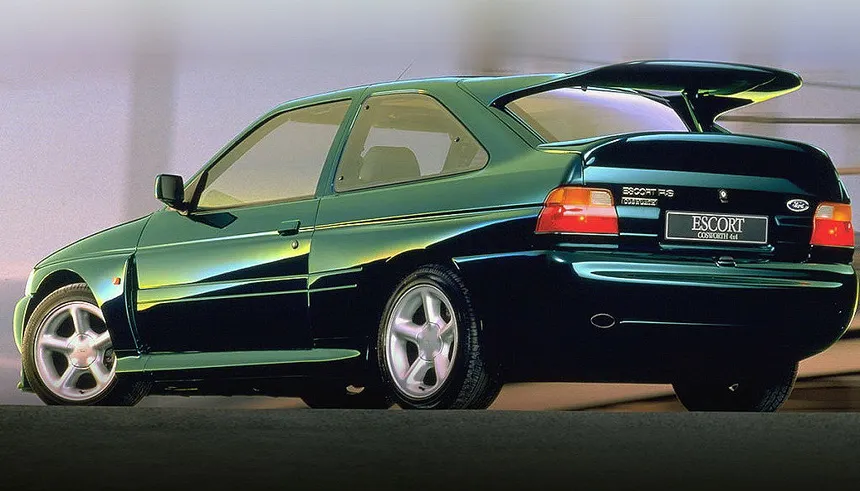
There’s a twist that gives the whole game away. Picture that giant wing fitted to a front-wheel-drive hatch — the kind that drives through the front wheels.
Even if the wing did make load — and we’ve established it doesn’t at that speed — what would it do? Press the rear axle into the road. The exact axle that isn’t driving anything in that car. Meanwhile any downforce at the back tends to lighten the nose a fraction, and the nose is where that car stakes its grip, its traction and its steering. So in the impossible case where the wing worked, it’d be helping the axle that doesn’t need it and robbing the one that does. The perfect contradiction.
I’m not laying this out to humiliate anyone. I’m laying it out because it’s the cleanest proof that the wing often gets fitted by looking at a photo of a race car, without pausing to note that the race car was rear-wheel drive, going three times the speed, wearing a wing designed in a tunnel for that specific chassis. Copying the look without the physics — that’s exactly where the expensive sticker begins.
How to spot, by eye, one that works from one that doesn’t
Since this whole series is about learning to look, here’s what actually gives a functional wing away — no wind tunnel needed, no taking anything on faith.
First, where it anchors. A serious wing isn’t screwed to the bootlid skin: it mounts to a rigid point in the structure, sometimes passing through the bodywork to the chassis, because it has to feed real forces in without tearing anything off. If the struts die in a panel of thin sheet metal, you already know the story. Second, the profile. A real wing is wing-shaped: a curved section, a leading edge and a trailing edge, like the slice through an aircraft. A flat plate bent at one corner isn’t a wing, it’s a tea tray. Third, height: a wing needs clean air, and the air tumbling dirty off the roof is no use to it, which is why racing wings stand up tall, hunting the flow the car hasn’t touched. One stuck flush to the tailgate, buried in turbulence, is fighting a losing battle.
Then there’s the detail I have a soft spot for: the end plates, those vertical fences on the wing’s tips. They aren’t decoration. They stop the air spilling off the ends and ruining the load — the same job the skirts did sealing ground effect in chapter three. A wing with proper end plates is the work of someone who knows. A wing with none, or with fake ones cut for looks, is telling you its truth.
So what does work on the street?
For the record, it isn’t all smoke. There’s road aero that genuinely earns its keep, and it’s worth knowing which, so you don’t tar everything with the same brush.
A well-made spoiler — the factory sort — does its job. It cuts rear lift at motorway speed, lends a little stability as the back of the car starts to go light, and does it with barely any fuel penalty and no harm to visibility. That’s why manufacturers fit them as standard on so many cars: because they work within what a road car can actually use. The discreet lip, the ducktail that so many sports cars wear, the integrated spoiler that barely protrudes — all of them do their small job and ask for nothing back. Same goes for complete factory aero kits, the OEM ones: if they came from the maker, it’s because they spent months in a wind tunnel balancing front against rear, building a package that adds up.
And there’s a front-end piece that can genuinely earn its keep too: the splitter, that flat lip under the nose we met in chapter two. Designed properly, it splits the air and cuts front lift, helping balance the car. The catch is the same one as ever: the factory or the calculated one works; the plastic item bolted on for looks — the one that tears off on the first kerb — is just another sticker, this time down low.
The difference between that and a catalogue wing is precisely that: one is designed and validated for your specific car, the other is designed to look good in the photo and sell. Without a wind tunnel or CFD software behind it, hanging a huge wing on a car is rolling dice with the air. Sometimes it does nothing. Sometimes, badly out of balance, it makes the car behave worse — loading the rear without loading the front and serving up the oversteer we talked about in chapter two.
Closing the series
And with that, AeroNEC is done. Five chapters to land one idea: air is the invisible opponent every car fights for every metre, and understanding it changes how you look at anything on wheels.
We started with air as a wall that steals your fuel and your speed. We saw how that same air, used right, glues a car to the road. We crawled under the floor for the dirty trick of ground effect. We looked behind, at the wake nobody sees that carries most of the bill. And we’ve finished here, in the car park, sorting real physics from the plastic sticker.
If you’ve made it this far, you don’t look at a car the same way. You know why a hypercar is wide and low, why an efficient car looks like a teardrop, why an F1 car scrapes the tarmac, why overtaking is so hard. And you can look at a wing and ask, first thing, whether the thing does anything at all or is just there to be seen.
What you do with that is your call. If after these five chapters you still want to bolt the biggest wing in the catalogue onto your car purely because you love how it looks, go for it: it’s your car and your money. It’s just that now it isn’t ignorance. It’s a choice. And that — that exactly — was the whole point of the series.
Check you’re still alive.
1 thought on “CAR WINGS”