
ASTON MARTIN DB SERIES (1948-1970)
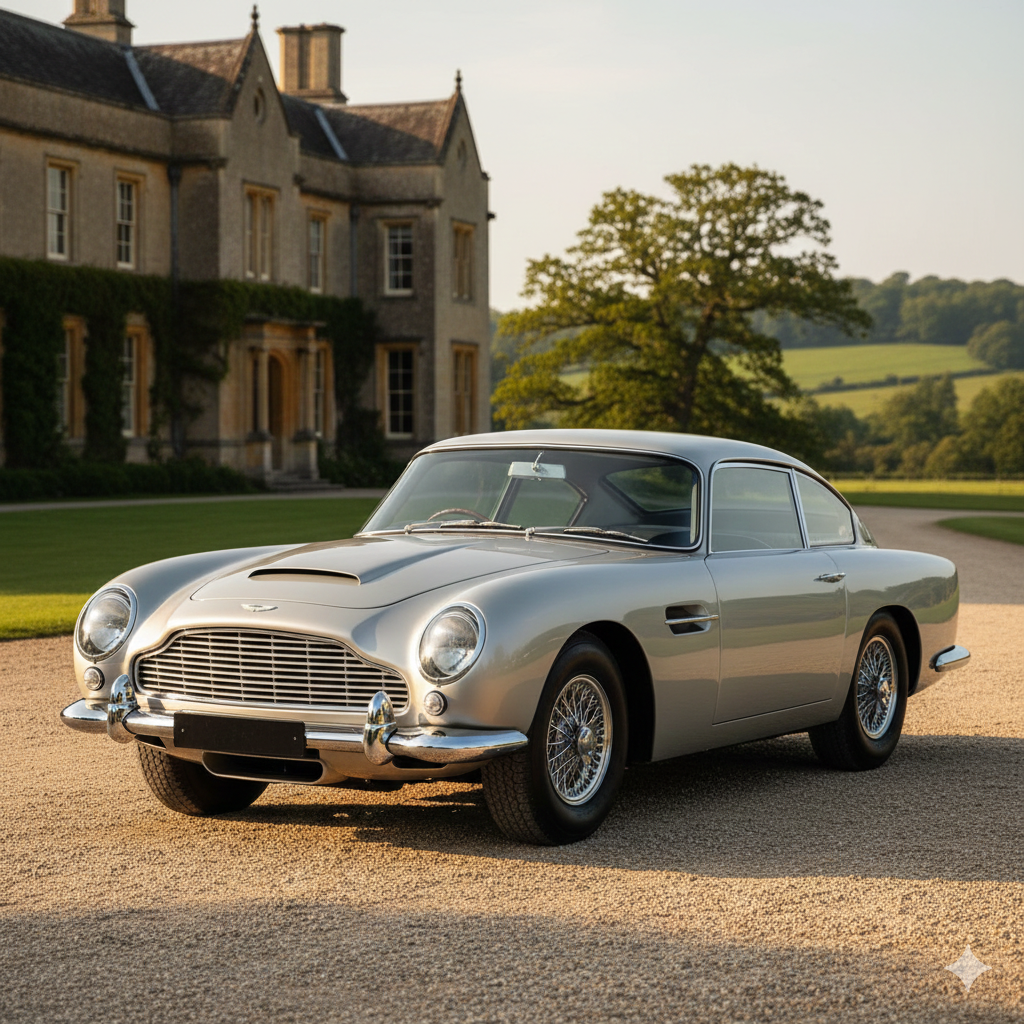
“The Cars That Defined British Elegance”
The Man Who Bought a Brand Because of a Classified Ad In February 1947, David Brown read a classified ad in The Times: “High-class motor business for sale”
That business was Aston Martin, a legendary brand in a state of perpetual bankruptcy. It had changed hands five times in 30 years. Their cars were beautiful but impractical, and the company lost money on every single unit sold. David Brown paid £20,500—roughly $1.2 million in today’s money—for a company most considered a lost cause.
Four months later, he bought Lagonda—another struggling British marque—for another £52,500. Why? Because Lagonda had something Aston Martin desperately needed: a six-cylinder engine designed by none other than W.O. Bentley. In less than a year, David Brown had acquired two legendary brands and the engine that would unite them.
The “DB” Initials: A Personal Legacy When Aston Martin unveiled its first car of the new era in 1948, David Brown made a move many considered arrogant: he named it the “DB1.” The letters “DB” were his initials. Every future Aston Martin would carry his name integrated into the model.
It was cocky. But it was also a commitment. Brown wasn’t just investing cash; he was putting his personal reputation on every car that left the factory. If the cars failed, his name would be synonymous with failure. They didn’t.
DB1 (1948-1950): The First Step The DB1—officially the “2-Litre Sports”—was a transition car. It used a pre-war 2-liter engine, an elegant but un-aerodynamic body, and a chassis that revealed its handcrafted origins. Only 14 units were ever made. It was a collector’s item the day it left the shop.
Fun Fact: The first DB1 owner drove it from the Feltham factory to his home in Essex and broke down three times on the way. Brown personally organized the rescue. This level of personal involvement would define his management style.
DB2 (1950-1953): The Lagonda Engine Takes the Stage The DB2 is where the magic started. The 2.6L straight-six Lagonda engine—designed by W.O. Bentley—pushed 105 hp in standard trim and 125 hp in the “Vantage” version. For 1950, those numbers were exceptional.
But what really set the DB2 apart was its body: designed by Frank Feeley, it combined the elegance of a Talbot-Lago with the sportiness of a Ferrari barchetta.
- Production: 410 units.
- Original Price: £2,724 (at a time when a Jaguar XK120 cost £1,263). The DB2 established the Aston Martin formula: expensive, exclusive, and deliberately impractical. They didn’t compete on price. They competed on distinction.
DB2/4 and DB Mark III (1953-1959): Progressive Refinement The DB2/4 added two rear seats (tiny, but they were there) and a rear hatchback, becoming one of the first luxury “shooting brakes.” The 1957 DB Mark III introduced front disc brakes—Le Mans racing tech—and an expanded 2.9L engine pushing 178 hp.
Interesting Note: The DB Mark III was the first Aston Martin to appear in a James Bond movie… sort of. In the 1959 Goldfinger book, Bond drives a DB Mark III. The 1964 film swapped it for the DB5, changing history forever.
DB4 (1958-1963): The Masterpiece by Touring The DB4 was a total clean break from the past. Instead of designing the body in-house, Aston Martin collaborated with Carrozzeria Touring of Milan. The result was the “Superleggera” (super light) technique: aluminum panels mounted over a tubular steel frame.
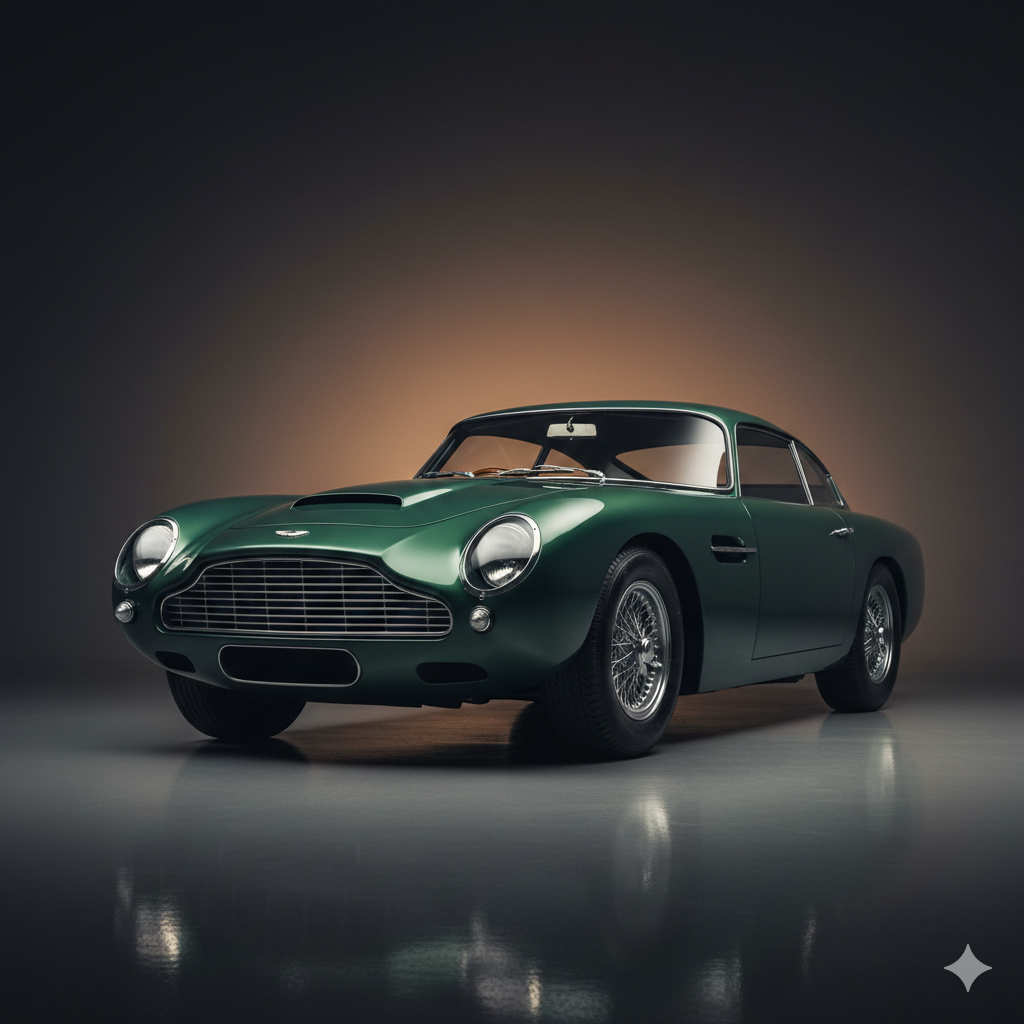
The new engine—designed by Tadek Marek—was a 3.7L DOHC straight-six. It produced 240 hp in standard form and up to 302 hp in the terrifying “GT Zagato” version. The design was flawless: the signature grille, lines that flowed without interruption, and proportions that still define how a British GT should look.
The DB4 GT Zagato (only 19 made) is one of the most valuable cars on earth today. In 2018, one sold for £10.1 million ($13M+).
DB5 (1963-1965): The James Bond Car You can’t talk about the DB5 without talking about 007. They are inseparable. In 1963, Goldfinger producers were looking for a car for Bond. They wanted a Jaguar E-Type, but Jaguar wouldn’t play ball. They approached Aston Martin, who handed over TWO DB5s for free in exchange for the product placement.
The Goldfinger DB5 featured:
- Front-mounted machine guns
- Rear bulletproof shield
- Oil slick sprayer
- Smoke screen
- Ejector seat (the famous “red button”)
- Revolving license plates
The film grossed $124 million in 1964 ($1.2 billion today). The DB5 was on screen for less than 15 minutes. Those 15 minutes made Aston Martin one of the most recognizable brands on the planet. Sales tripled overnight, waitlists hit 18 months, and David Brown had to expand the factory.
- Engine: 4.0L I6 DOHC
- Power: 282 hp (325 hp in Vantage spec)
- 0-60 mph: 8.1 seconds
- Top Speed: 145 mph
- Production: 1,023 units
DB6 (1965-1970): The End of an Era Technically, the DB6 was the best car of the series. The integrated rear spoiler improved high-speed stability. The lengthened wheelbase offered more interior room. The 325 hp engine was more refined. But it never captured the imagination like the DB5. Bond kept using the DB5 in later films, and collectors preferred the older look. The DB6, despite being objectively superior, lived forever in its younger brother’s shadow.
- Production: 1,575 units (the most produced Aston of the Brown era).
- Final year: 1970.
The Sale and the Legacy In 1972, David Brown sold Aston Martin. The company was, once again, in financial trouble. DBS development costs and U.S. emission regulations had drained the coffers. Brown was 68. He had run the show for 25 years.
In that time, he:
- Won Le Mans (1959)
- Won the World Sportscar Championship (1959)
- Created the entire DB series
- Made Aston Martin synonymous with British class
- Permanently linked the brand to James Bond
When he died in 1993, obituaries called him “the man who saved Aston Martin.” Accurate, but incomplete. He didn’t just save it. He defined it.
DB Series Trivia
- “Silver Birch”: The Bond DB5 was a specific silver called Silver Birch. When a DB5 in that exact color hits the auction block, the price automatically jumps 30%.
- The “Racing” Engine: The DB4 GT engine was developed for racing but never properly homologated. Aston Martin repeatedly paid fines for using unauthorized specs.
- Sean Connery’s DB5: Connery bought a personal DB5 after filming Goldfinger and kept it for 15 years. That specific car sold for $2.5 million in 2010.
- Handbuilt: At its peak, the Newport Pagnell factory produced 5 cars a week. Each engine was built by a single tech who signed his work.
- The Secret Zagato Deal: They agreed not to make more than 25 units. They stopped at 19 because they couldn’t find buyers. Decades later, those 19 are worth more than the other 1,000+ DB4s combined.
The Debate: Which DB is the Best? This has split enthusiasts for 60 years.
- The Case for the DB4 GT Zagato: The purest design, 302 hp performance, maximum exclusivity (19 units), and the highest market value.
- The Case for the DB5: The perfect balance of class and sport, the Bond connection, and the most iconic engine note.
- The Case for the DB6: Technically superior, more room, more refined, and unfairly underrated.
My take: The DB5 won the culture war, but the DB4 GT Zagato is the car. If you’re choosing one to drive, the Zagato has no rival. If you want a status symbol, the DB5 is unbeatable.
The Current Market: Legendary Prices (2024 Estimates) | Model | Concours | Driver | Project | | :— | :— | :— | :— | | DB1 | Unique | Unique | Unique | | DB2 | $450k-$570k | $250k-$380k | $150k+ | | DB4 | $640k-$1M | $450k-$640k | $250k+ | | DB4 GT | $2.5M-$3.8M | $1.9M-$2.5M | Ultra Rare | | DB4 GT Zagato | $13M-$19M | N/A | N/A | | DB5 | $1M-$1.5M | $640k-$900k | $380k+ | | DB5 (Goldfinger) | $25M (2019) | N/A | N/A | | DB6 | $450k-$640k | $250k-$380k | $150k+ |
Trend: DB5 prices have surged 150% in the last decade, fueled by Bond nostalgia and Gen X buyers entering the high-end market.
Conclusion: The Power of One Decision The DB story starts with an impulse: a man reads an ad and buys a bankrupt company. David Brown knew nothing about sports cars—he was a tractor and industrial gearbox manufacturer. But he had something better: the grit to do things right and the bankroll to fund that vision. Every DB car carries his initials as a personal promise. It wasn’t arrogance. It was accountability. These aren’t just machines; they are reminders that one person with a vision can save a brand and create a legacy that lasts forever.
Discussion Question: If James Bond had driven that Jaguar E-Type in Goldfinger as originally planned, would Aston Martin even exist today? How much of the brand’s value is pinned to that one movie?