
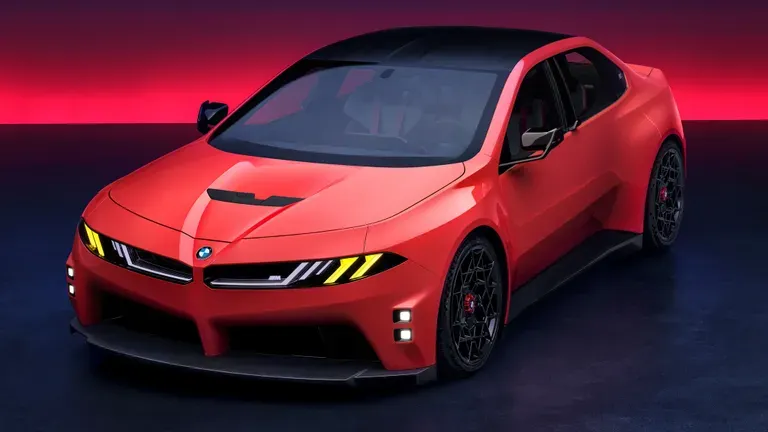
M Neue Klasse: The Day the M Lost Its Voice
There’s a noise you can’t put into a spec sheet.
If you grew up watching an E30 M3 attack a touring car grid, or you’ve ever stood at the side of a track and heard an E46 M3 scream past at full chat, you know the one I mean. It isn’t volume. It’s a particular kind of mechanical voice — a naturally aspirated engine climbing toward a redline that feels like it has no business existing, and then climbing some more. That sound, more than any lap time, is what the three colours on the badge meant to a lot of us.
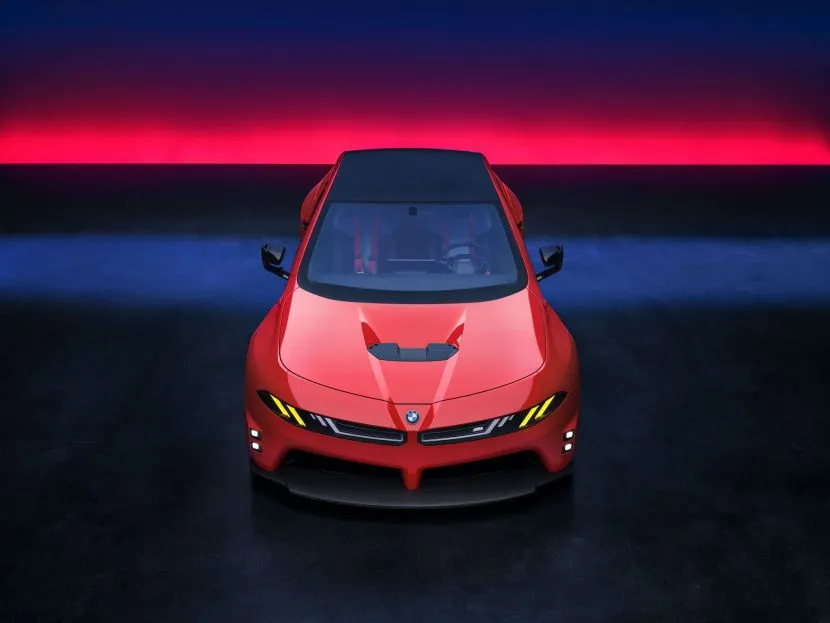
BMW just unveiled the M Concept Neue Klasse at the 24 Hours of Le Mans. It has four electric motors and a central computer called Heart of Joy. And whatever else it is, it does not have that voice. So let’s talk about what’s actually being lost, because the number on the brochure isn’t the point.
What BMW showed at Le Mans
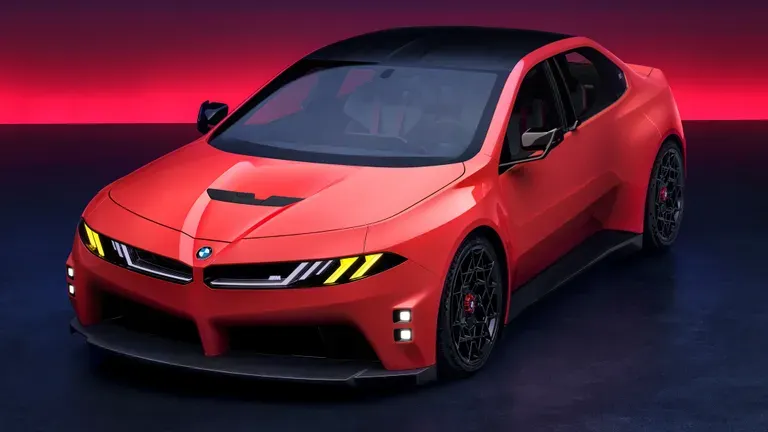
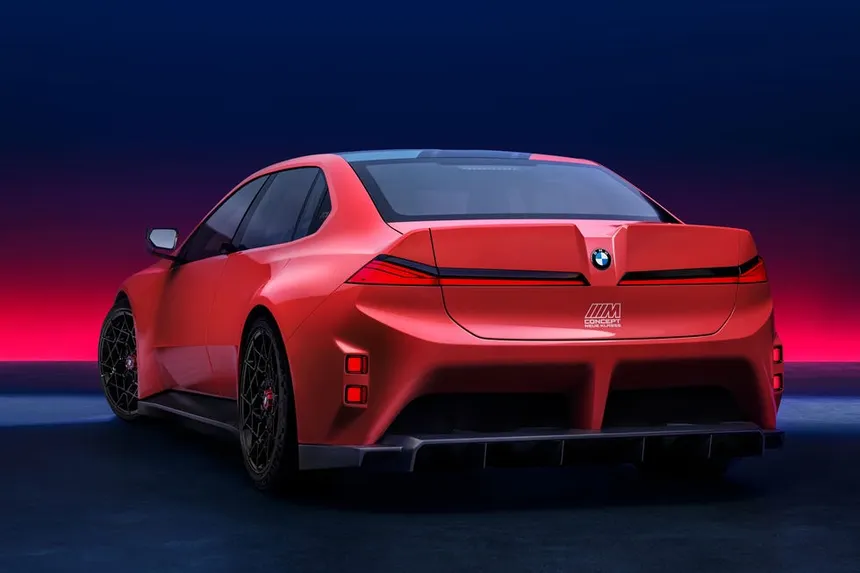
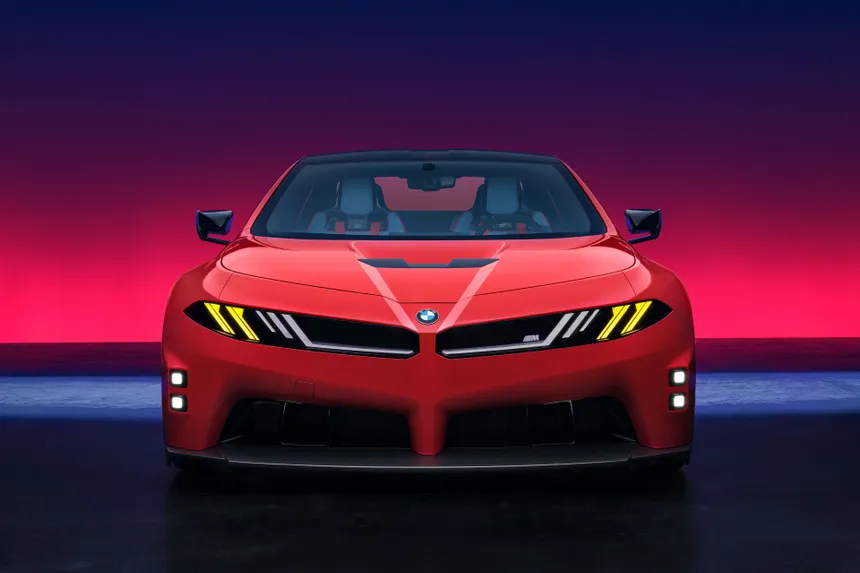
The M Concept Neue Klasse broke cover on 12 June 2026 during the Le Mans weekend. Officially it previews the design language for future all-electric M cars; unofficially it’s about as clear a look at the 2027 electric M3 as we’re going to get before the real thing. It sits on the i3 sedan platform.
The hardware BMW will confirm: four electric motors, one per wheel. An 800-volt architecture. A battery north of 100 kWh using an M-specific version of sixth-generation cylindrical cells. And the Heart of Joy computer running the chassis and drivetrain. The motoring press is throwing around figures between 800 and 1,000 horsepower for the production version, though none of that is official yet, so treat it as estimate rather than fact.
On paper it’s a monster. Four-figure power. Torque-vectoring all-wheel drive. Almost certainly a Nürburgring time that embarrasses every M car that came before it.
And it’s still missing the one thing money was never able to buy.
The thread that ran through every M3
Here’s the bit Chris Harris would call the soul of the thing, and he’d be right.
Start with the original. The E30 M3 ran the S14 — a 2.3-litre naturally aspirated four. In its final Sport Evolution form, the 2.5-litre S14B25 made 238 hp at 7,000 rpm. Four cylinders, yes. But four cylinders with individual throttle bodies, no hydraulic lifters, an eight-counterweight crank, and a head derived from BMW’s M88/S38 six. It didn’t sound like a 3 Series. It sounded like motorsport that had escaped onto the road, because that’s literally what it was.
Then the inline-six, which for a lot of people is THE M engine. The E36 M3 opened that door. But the one that stayed with us forever was the S54 in the E46 M3: 3.2 litres, 343 hp, redlining at 7,900 rpm — the highest-revving naturally aspirated straight-six ever fitted to a production car. Individual throttle bodies again. A noise that lodges itself permanently in your memory the first time you hear it open up. The CSL version, with its carbon airbox, pushed it to 360 hp. That engine doesn’t accelerate so much as shriek. Every Top Gear film that featured one let the camera linger on the sound for a reason.
And then BMW did something you only get to do once. They took the S85 V10 from the E60 M5 — five litres, 507 hp at 7,750 rpm, an 8,250 rpm redline, drawn directly from their Formula 1 programme — lopped off two cylinders, and dropped the resulting S65 V8 into the E90/E92 M3. Four litres, 420 hp, an 8,300 rpm redline. A V8 that revs like a superbike and sounds like nothing else legal on a public road. It won its International Engine of the Year category five years running.
See the pattern? From the E30 to the E92 — four generations of M3 — every one shared the same thing inside: natural aspiration, sky-high revs, and a powertrain that forces you to be precise, to listen, to take part. That’s the voice I keep going on about. It isn’t noise — it’s information. The engine telling you precisely what it’s doing, where it is, how much it has left. A conversation between you and the machine.
Why the electric one doesn’t do it for me
This part isn’t poetry. It’s physics.
An electric motor delivers nearly all its torque from zero rpm. That’s why an EV flattens you on the first squeeze of the throttle. I get it. I respect it. As engineering, I think it’s brilliant.
But that’s exactly why it doesn’t move me the same way.
There’s no climb. No crescendo. No high-rpm zone where the engine wakes up. No rev limit you chase with intent. No narrow band where everything clicks and the car turns into something else. The delivery is linear. Savage, too. But linear.
And for me the pleasure of an atmospheric engine was never just the result. It was the process. The effort. Taking it up there. Holding it in the right place. Feeling the music change when the engine enters its good zone. An EV hands you everything at once. It asks nothing of you. And precisely because of that, for me, it has no conversation in it.
Even the paddles on the concept feel like a confession. There are paddles on a car with no gears. BMW hasn’t said yet what they do — the speculation is brake regeneration. But it doesn’t matter. The gesture is already there: imitating something that used to have mechanical meaning. And that imitation says more than any press release.
It isn’t betrayal
Let me be fair.
The M brand was born on the racetrack. “Born on the racetrack, made for the streets.” And the racetrack, like it or not, is going electric. BMW isn’t betraying the marque’s history; it’s trying to survive in the place it’s been handed to live in.
This car is probably better at almost everything you can measure. Faster. More effective. More capable. More brutal on a timesheet.
The problem is the M was never just a timesheet. It was a very specific emotion. A very specific sound. A very specific way of understanding a sports car. And that part isn’t inherited. It doesn’t fit in a battery. No computer manages it, however lovely they make the name sound. For some of us, the heart of joy was something else entirely: a crankshaft spinning at eight thousand rpm.
What really stings
It isn’t that BMW built this car that bothers me. It’s what it confirms.
It confirms that the M which made me look at cars differently is never coming back. That the voice you’d recognise instantly has changed language. That what used to turn your head will never sound the same again.
I understand perfectly well that an EV can be a tremendous machine. It will be. It’ll probably be the most savage car ever to wear an M badge on its nose. But you’re not going to convince me it replaces an inline-six climbing to the limit, an atmospheric V8 singing up top, or a four-cylinder built with racing DNA.
I don’t need to hate the new car to admit what it does to me. What it does is this: I look at it and I understand the engineering. But I don’t hear the M.
And for me, that’s the problem.
1 thought on “BMW M Concept Neue Klasse”