
DTM: How German Brands Created, Dominated, and Killed Their Own Championship
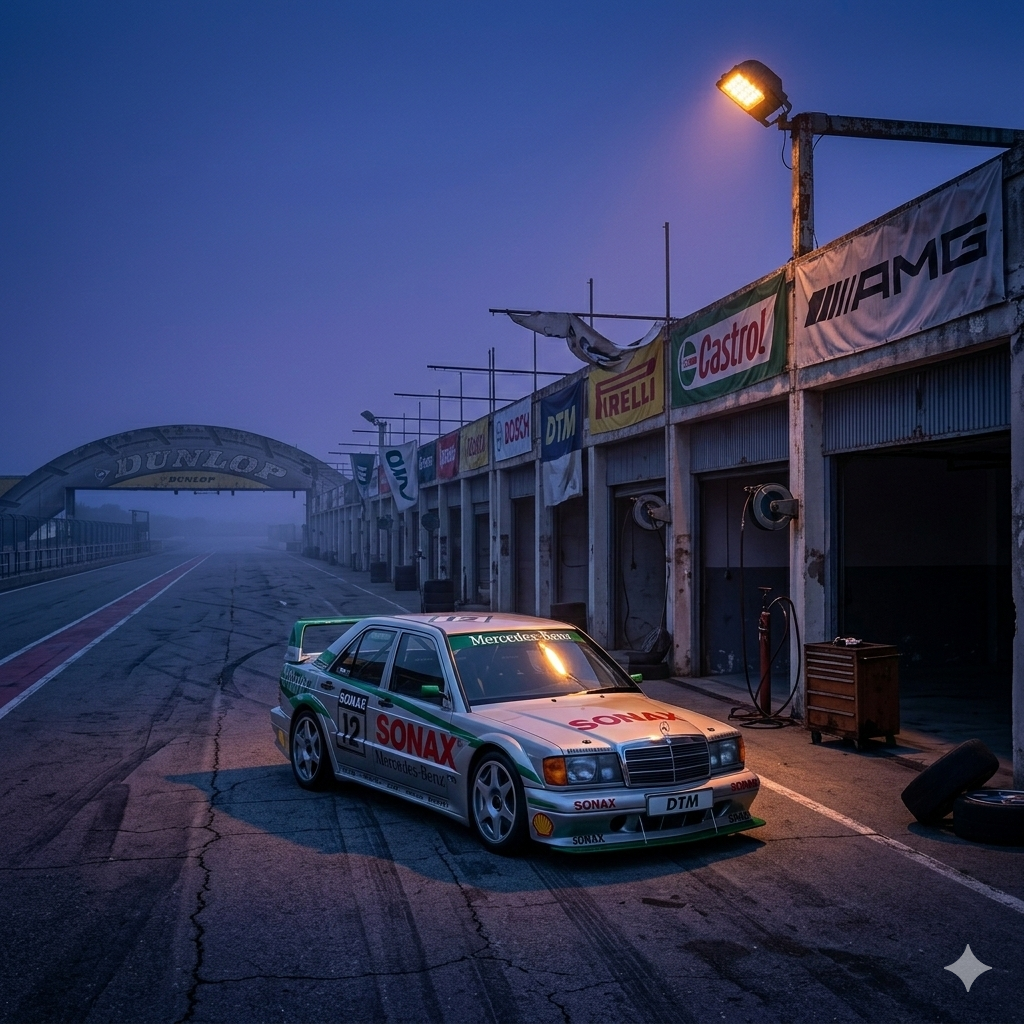
DTM is the story of a suicide in slow motion. A brilliant championship, with the best touring cars in the world, cutting-edge technology, and elite drivers, that was destroyed by the very brands that created it. It wasn’t an accident. It wasn’t bad luck. It was ego, corporate politics, and a series of decisions so absurd they seem lifted from a dark comedy script.
If you want to understand how to kill a motorsport championship from the inside, study DTM. It’s the perfect manual.
The origins: when touring cars were real
The Deutsche Tourenwagen Meisterschaft was born in 1984, and in its early years it was exactly what it promised: real touring cars competing for real. Mercedes 190E, BMW M3, Audi V8 — cars you could see on the street, prepared for competition.
The magic of the original DTM was that the cars maintained a real connection to their street versions. When a BMW M3 E30 won in DTM, the guy who had one parked in his garage felt his car was special. That emotional connection was the engine of the championship, much more than any television contract.
The late 80s and early 90s were the golden age. Races were brutal, with real contact, aggressive overtaking, and a rivalry between brands that felt genuine. Drivers were stars in Germany, races filled circuits, and the public felt it was THEIR championship.
But the brands were already planting the seeds of destruction.
The first death: 1996
The original DTM died in 1996. The reason? Costs skyrocketed because the brands turned “touring cars” into disguised prototypes. Budgets multiplied tenfold in a decade, private teams disappeared because they couldn’t compete with factory programs, and races became parades of three brands.
When Alfa Romeo and Opel withdrew, the championship was left with Mercedes and… nobody else willing to foot the bill. It was over.
Lesson nobody learned: if you let manufacturers dictate the rules, they’ll end up destroying the competition. Write that down, because it’s going to happen again.
The rebirth: DTM 2000 and the broken promise
In 2000, DTM was resurrected under new regulations and with the updated name Deutsche Tourenwagen Masters. Mercedes and Opel returned. Then Audi came. And later BMW. The championship seemed stronger than ever.
The cars were spectacular. The Mercedes CLK-DTM, the Audi A4 DTM, and later the BMW M4 DTM were brutal machines with over 500 HP, competition aerodynamics, and a sound that gave you goosebumps. Technically, they were masterpieces.
But here’s the trick: they were no longer touring cars in any real sense. They were carbon fiber prototypes with bodywork that vaguely resembled a street model. The connection that made the original DTM special had been broken. The guy with a C-Class in his garage looked at DTM and saw a car that had absolutely nothing to do with his.
And the costs, again, skyrocketed. Each brand spent between 100 and 200 million euros per year. For a German national championship. The ratio between investment and media return was absurd.
Team orders: the open secret
If anything defined modern DTM, it was team orders. And we’re not talking about subtle strategic hints. We’re talking about blatant, public, humiliating instructions.
Mercedes was especially flagrant. In multiple races, Mercedes drivers were seen letting their teammate through — the one fighting for the championship. Without disguise. Without strategic pretext. Simply: “let him past because he needs the points.”
The most embarrassing moments came in several races where leading Mercedes cars literally braked to let the designated driver through. Television commentators didn’t know where to look. The crowd booed. And Mercedes didn’t flinch.
Audi wasn’t much better. Their team orders were perhaps more subtle in execution but equally effective. When you have six cars on the grid and only one fighting for the title, the other five become strategic pawns.
BMW, arriving later, tried to maintain a “fair play” image, but the pressure of competing against two rivals who used team tactics shamelessly eventually pushed them into the same game.
The result was a championship where individual racing mattered less than each brand’s internal politics. The best driver didn’t win; the driver with the best support team behind him did.
Regulations that changed suspiciously
DTM’s technical regulations had an interesting peculiarity: they changed with a frequency and direction that conveniently seemed to favor one brand or another at convenient moments.
When Mercedes dominated, adjustments appeared that cut their advantage. When Audi found a brilliant technical solution, rules changed to neutralize it. When BMW complained about disadvantage, concessions appeared.
Was it a conspiracy? Probably not in the literal sense. But when you have three manufacturers who are also the main sponsors of the championship, and each one has an army of engineers and lawyers analyzing every paragraph of the technical regulations, the “coincidences” pile up.
The ITR (the DTM organization) had a fundamental conflict of interest: it depended economically on the very brands it regulated. Trying to be an impartial referee when your income depends on keeping the players happy is, being generous, complicated.
The Mercedes-Audi cold war
The Mercedes-Audi rivalry in DTM transcended sport. It was an extension of the commercial war between the two brands in the premium car market. Every DTM victory was ammunition for the marketing department. Every defeat was a corporate headache.
This dynamic turned DTM into a proxy battlefield between boardrooms. Decisions about drivers, strategies, and even about continuing in the championship were made in offices in Stuttgart and Ingolstadt, not in the paddock.
Drivers were pawns. Good drivers, yes. Some excellent. But pawns nonetheless. Their racing freedom was limited by corporate directives that prioritized the team-brand result over any individual aspiration.
The Audi and Mercedes exodus: abandoning ship
In 2018, Mercedes announced it was leaving DTM for Formula E. The official argument: “electrification is the future and we want to be there.” The real argument: DTM’s ROI no longer justified the investment. Viewership had dropped, the format didn’t generate enough international media exposure, and Formula E offered a platform more aligned with the “green” narrative Mercedes wanted to sell.
Audi followed shortly after, with similar arguments. And suddenly, DTM was left with BMW as the only German manufacturer. The championship that celebrated the rivalry between the three great German brands was left without two of them.
The irony is brutal: Mercedes and Audi invested hundreds of millions over the years in DTM, shaped the championship according to their interests, used it as a marketing tool when it suited them, and abandoned it when they found something better. Like someone who uses a restaurant as a meeting room and leaves without paying the bill.
The GT3 conversion: admitting failure
Without Mercedes or Audi, DTM needed to reinvent itself or die. The solution was to abandon the proprietary Class One cars and adopt GT3 regulations — modified production cars like the Ferrari 488 GT3, the Lamborghini Huracán GT3, or the Mercedes AMG GT3.
In theory, this opened the door to more brands and teams with more reasonable budgets. In practice, it was admitting that the original DTM concept had failed. A championship that prided itself on having exclusive cars and cutting-edge technology now shared regulations with dozens of GT3 championships around the world.
Was it the right decision? Probably yes, given the situation. Was it what fans wanted? Definitely not. DTM purists saw the GT3 conversion as the death certificate of what the championship represented.
And let’s be honest here: DTM with GT3 had good moments. Grids were more diverse, more brands were represented, and some races were genuinely exciting. But it was no longer the DTM people remembered. It was a GT3 championship with the DTM name slapped on top.
Gerhard Berger and the attempted resurrection
Gerhard Berger, former F1 driver and ITR president, fought for years to keep DTM alive. Credit where it’s due: the man tried everything. He sought Asian manufacturers, explored mergers with other championships, negotiated with supercar brands, and finally accepted the GT3 conversion as the lesser evil.
But Berger was fighting against the tide. DTM’s business model depended on manufacturers paying millions to compete, and in a world where marketing budgets were being redirected toward digital content and sustainability, a German touring car championship was no longer on the priority list.
The ADAC (Allgemeiner Deutscher Automobil-Club) finally took control of the championship, and DTM continued to exist, but as a shadow of what it was. It’s like watching a legendary band playing bars after having filled stadiums. Technically it’s the same band, but everyone knows something was lost.
What DTM teaches us about modern motorsport
DTM’s story is a warning for any motorsport championship in the world. The lessons are clear:
When manufacturers control a championship, the championship dies. Always. It’s not a question of if, but when. Manufacturers enter when it suits them, shape the rules according to their interests, and leave when they find something more profitable. They did it in DTM, they’ve done it at Le Mans, and they’ll keep doing it.
Team orders kill the spectacle. When the public knows the result is predetermined by a corporate decision, they stop caring. DTM suffered this for years, and when viewership dropped, the brands used those same low ratings as an excuse to leave.
Disconnection from the street product is fatal. DTM lost its magic when the cars stopped resembling something the public could buy. The emotional connection between fan and brand broke, and without that connection, DTM was just another racing championship.
And the most important lesson: a motorsport championship is not a marketing department. It’s a sport. And when you forget that, you lose everything.
DTM deserves to be remembered for what it was at its best: brutal, competitive, technically brilliant, and emotionally intense. But it also deserves to be studied for how it was destroyed: with ego, politics, and corporate short-sightedness.
Rest in peace. Or at least, in whatever remains of it.
— NEC
Moved by DTM’s story? Then don’t miss our articles on Le Mans and its absurd regulations and NASCAR: from bootlegging to corporatism. And if German sedans with soul are your thing, check out our European classics section.
Pingback: Alfa Romeo 155 V6 TI: How Italy Humiliated Germany's DTM
Pingback: Alfa Romeo 155: The Ugly Duckling That Won Where Nobody Expected