
Cadillac: The Standard of the World That Detroit Forgot
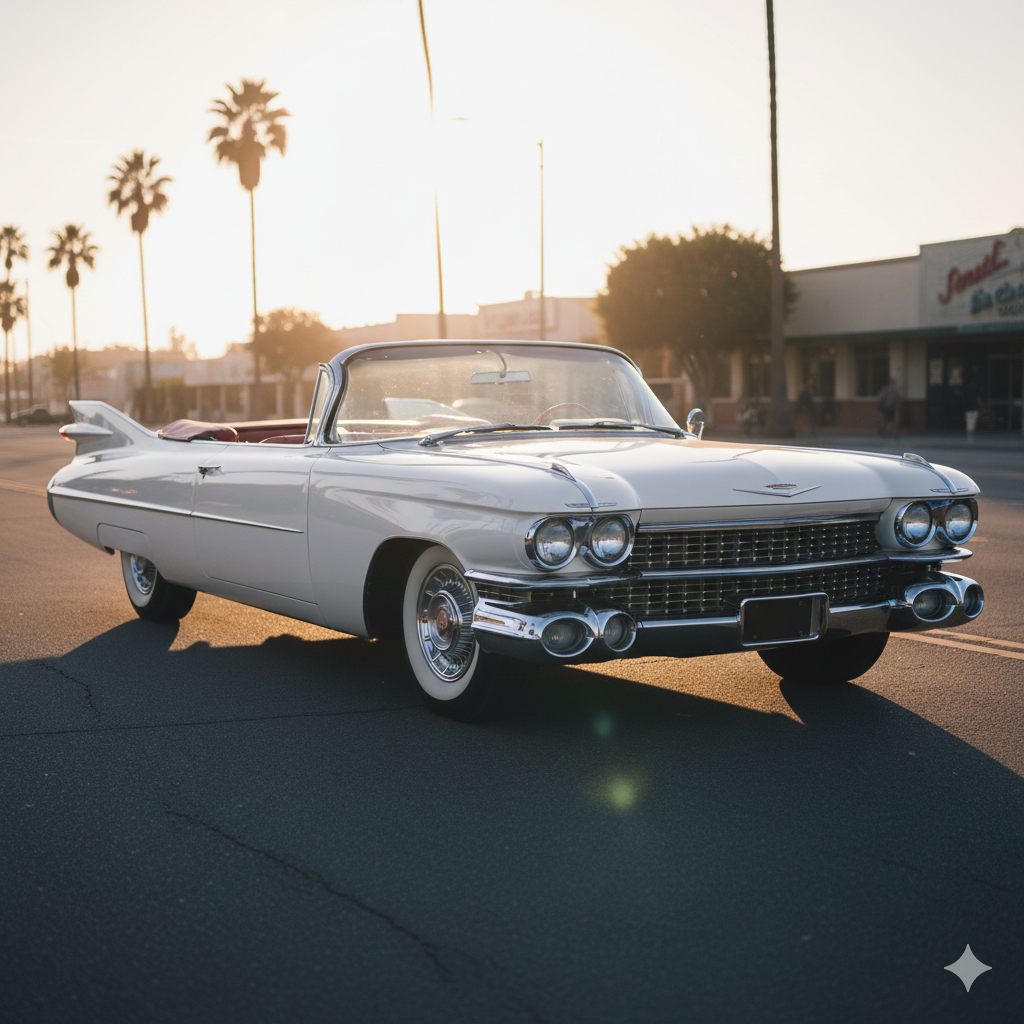
The brand that taught the world the true meaning of “luxury”
There are brands that manufacture cars. And then there is Cadillac, which for half a century manufactured the benchmark against which everything else was measured. This isn’t just a hollow advertising slogan. It is the motto the brand carried with legitimate pride since 1908: “Standard of the World.” And for decades, it truly was.
But to understand the magnitude of what Cadillac once meant, you have to go back to the beginning. And the beginning, like everything good in the automotive industry, starts with a brilliant guy who was kicked out of his own company.
A French Watchmaker and a Vengeance on Wheels
Cadillac owes its name to Antoine de la Mothe Cadillac, the French explorer who founded Detroit in 1701. But its true father was Henry Martyn Leland, a precision engineer obsessed with tolerances to the thousandth of an inch. Leland came from the world of watchmaking and gunsmithing, where the interchangeability of parts wasn’t a luxury—it was a necessity.
In 1902, the Henry Ford Company was in trouble. Ford left (yes, that Ford), and the investors called Leland to liquidate the company. Instead of closing it, Leland repurposed it. Cadillac was born. The irony is delicious: the company Ford abandoned became the symbol of luxury that Ford could never reach.
1908: The Test That Humbled Europe
Cadillac didn’t earn its reputation through marketing. It earned it with a demonstration that left the European industry speechless.
In 1908, the Royal Automobile Club of Great Britain subjected three Cadillac Model Ks to the Dewar Trophy test. They completely disassembled the three cars, mixed the 721 parts of each, replaced some with standard off-the-shelf spares, and reassembled them. All three started on the first try and completed a 500-mile (800 km) run without a single failure.
In an era where every European car was practically handcrafted and parts were filed by hand to fit, this was science fiction. Cadillac won the Dewar Trophy and, with it, the right to call itself the “Standard of the World.” The engineers at Rolls-Royce took note. And they didn’t like what they saw.
The Electric Starter: Cadillac Literally Saves Lives
In 1910, Byron Carter, a friend of Cadillac’s founder, stopped to help a woman whose car had stalled. When he turned the hand crank to start it, the handle kicked back violently and broke his jaw. The wound became infected, and Carter died weeks later.
A devastated Henry Leland vowed that no Cadillac would ever need a hand crank again. He contacted Charles Kettering, a young engineer from Dayton, Ohio, who had invented an electric cash register for NCR. Leland proposed a challenge most considered impossible: an electric motor small enough to fit in a car but powerful enough to start an internal combustion engine.
In 1912, the Cadillac Model 30 became the first mass-production car with integrated electric starting, electric ignition, and electric lighting. In one fell swoop, Cadillac made the automobile accessible to anyone who didn’t have the brute strength to fight a hand crank.
Second Dewar Trophy. The only manufacturer to win it twice. No one has ever matched it.
V8s and V16s: When Power Was Poetry
If the electric starter was the brain, the 1914 V8 was the heart. Cadillac didn’t invent the V8, but it was the first manufacturer to mass-produce one. The Type 51 offered 70 hp from a silk-smooth engine at a time when most cars shook as if they had a fever.
But the real madness arrived in 1930, in the middle of the Great Depression. While the world was sinking economically, Cadillac presented the Series 452: the first production car with a V16 engine. Yes, sixteen cylinders. 7.4 liters. 165 hp. An engine so smooth that, according to legend, you could balance a coin on its edge at idle.
Who buys a V16 during the worst economic crisis in history? The answer: exactly the people Cadillac wanted as customers. Al Capone had an armored one weighing over 4 tons. Marlene Dietrich drove hers through Hollywood. The Maharaja of Orchha ordered several with custom bodies. Cadillac produced the V16 until 1940. Only about 4,000 units were made. Today, each is a masterpiece worth more than most houses.
The Fins: When Cadillac Invented the Future
The 1950s were the Golden Age of Cadillac, and one man is to blame: Harley Earl.
Earl, General Motors’ first chief designer, was obsessed with aviation. After seeing the Lockheed P-38 Lightning—a twin-engine, twin-boom fighter—during World War II, he decided the cars of the future should look like planes.
In 1948, the Cadillac Series 62 debuted small tail fins inspired directly by the P-38. They were discrete, almost shy. But something clicked in the American collective imagination. Every year, the fins grew. And grew. And kept growing.
The 1959 Cadillac Eldorado represents the absolute peak of this madness. The tail fins reached a height of over 16 inches. The taillights looked like rockets about to blast off. The car was nearly 19 feet long. It was absurd, it was excessive, it was glorious, and it was absolutely American.
Elvis Presley bought several. He collected Cadillacs like others collect stamps. It is estimated he owned over a hundred throughout his life, many gifted to friends, family, and complete strangers. His pink 1955 Eldorado is probably the most iconic car in American pop culture.
The Names That Defined an Era
Cadillac didn’t just make cars; it made categories:
- Eldorado (1953–2002): The name evoked the mythical city of gold. The first 1953 Eldorado cost $7,750 when the average worker earned $4,000 a year. It was the most expensive car in America and didn’t apologize for it. The late-’50s Eldorado Biarritz convertible is, for many collectors, the most beautiful American car ever made.
- DeVille (1949–2005): The name comes from the French de ville, “of the city.” It was the Cadillac for the doctor, the lawyer, the successful businessman. Not as ostentatious as the Eldorado, but unmistakably luxurious. The 1959 Coupe DeVille, with its panoramic windshield and shark fins, is a rolling sculpture.
- Fleetwood (1935–1996): Named after the Fleetwood Metal Body Company in Pennsylvania, the Fleetwood was the Cadillac for the President, the CEO, the guy with a chauffeur. The 1970s Fleetwood Brougham was a living room on wheels: 19 feet long, leather seats like sofas, and an interior silence that rivaled a library.
- Series 75: The limousine. The car of the President of the United States for decades. Armored, stretched, with a glass partition between the driver and passengers. When you saw a black Series 75 approaching, you knew someone important was inside.
Stories Only Cadillac Can Tell
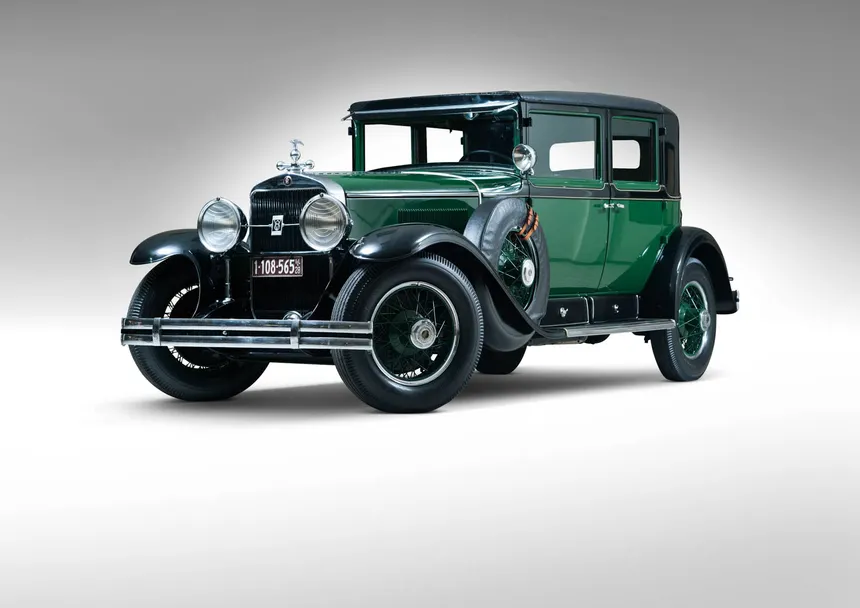
- The Gangster’s Cadillac: During Prohibition, Cadillac was organized crime’s favorite brand. Not by accident: they were the fastest, toughest, and easiest cars to armor. Al Capone’s V16 weighed nearly 10,000 lbs with armor and had an escape package including 1-inch thick glass and a fake police siren.
- General Patton’s Cadillac: George S. Patton insisted on using a Cadillac Series 75 as his command car during World War II. He painted it with more stars than he was entitled to and used it for triumphal entries into liberated cities. He said an American General should arrive in an American car.
- The JFK Funeral: The car in which John F. Kennedy was assassinated in Dallas on November 22, 1963, was a Lincoln. But the irony is that the hearse that transported his body was a Cadillac Miller-Meteor. Cadillac dominated the American funeral industry for decades. If you were born in a hospital, you probably arrived in a Cadillac ambulance. And when you died, you were likely taken to the cemetery in a Cadillac. From the cradle to the grave.
- Elvis and the Pink Cadillac: In 1955, Elvis bought a pink Cadillac Fleetwood Series 60 for his mother, Gladys. The car became such a potent symbol that it is now displayed at Graceland and receives over 600,000 visitors a year. Elvis even bought Cadillacs for complete strangers: once, seeing a woman admiring an Eldorado at a dealership, he walked in and bought it for her on the spot.
The Fall: When the Standard Stopped Being the Standard
The 1980s were the beginning of the end for the classic Cadillac. The 1982 Cimarron—a Chevrolet Cavalier with Cadillac badges and an inflated price—is considered by many as the worst car ever made by the brand. It was an insult to decades of engineering and tradition.
The first-generation Cadillac Seville (1975) had been an honest attempt to compete with European Mercedes and BMWs. But as GM forced “badge engineering”—placing premium badges on cheap cars—Cadillac lost the one thing that made it special: the feeling that you were buying something genuinely different and superior.
When a Cadillac DeVille shared a platform, engine, and even body panels with a Buick or an Oldsmobile, why pay the difference? Customers who could afford it went to Mercedes, BMW, and Lexus. Those who couldn’t simply stopped aspiring to a Cadillac.
The Legacy That Can Never Be Taken Away
Despite decades of questionable decisions, the classic Cadillac—let’s say anything manufactured between 1930 and 1970—remains one of the most glorious chapters in automotive history.
A 1959 Eldorado Biarritz in good condition sells for over $200,000 today. A 1930s V16 with a special body can exceed a million. Even a 1965 DeVille in decent condition, a car made by the thousands, goes for $40,000–$60,000.
Cadillac proved that American luxury didn’t have to apologize to anyone. That you could build a car with the precision of a Swiss watch, the presence of an ocean liner, and the engine of an airplane, and the result could be as valid as anything coming out of Crewe, Stuttgart, or Maranello.
The Standard of the World. For a few glorious decades, it wasn’t just a slogan. It was the absolute truth.
Not Enough Cylinders — Where cars are respected, or they aren’t mentioned.
Pingback: Cadillac Escalade History: The American King of Luxury SUVs
Pingback: Small Block Chevy: The Most Produced Engine in History