The Maserati Brothers Who Quit Maserati to Avoid Building Road Cars — Then Put Their Engine in a Fiat
Here’s a question worth chewing on. What do you do when you’ve built one of the most famous names in motoring, sold it, and then legally lost the right to ever use your own surname on a car again?
If you’re the Maserati brothers, you don’t sulk. You start over with four blunt letters, you go racing, and you spend twenty years quietly proving that the magic was never in the badge. And then, in the kind of twist that no scriptwriter would dare invent, the very thing you walked away from comes knocking — and you say yes.
This is the story of OSCA. Almost nobody outside serious Italian-car circles knows it. By the end of this, you will, and you’ll understand why it’s one of the most quietly brilliant second acts the car world has ever produced.
A surname that wasn’t theirs anymore
To understand OSCA, you have to understand a wound.
In 1937, the three remaining Maserati brothers — Bindo, Ettore and Ernesto — sold Officine Alfieri Maserati to the Orsi family, industrialists from Modena who’d made their money in steel and tooling and fancied a move into motor racing. The deal came with strings: the brothers agreed to stay on for ten years, providing technical assistance and consultancy. A decade working inside the company that carried their own name but was no longer theirs to command.
And then, halfway through that contract, the Second World War swallowed years of it whole. By the time 1947 came around and the agreement finally ran out, the brothers had made up their minds. No renewal. They didn’t get along with the new owner, and they wanted out.
But there was a catch the size of a mountain. When they sold Maserati, they sold the name with it. The surname “Maserati” no longer belonged to them as a car marque. They had handed over, perhaps without fully grasping it at the time, the single most valuable thing they owned: their own signature.
OSCA: four letters and a fresh start
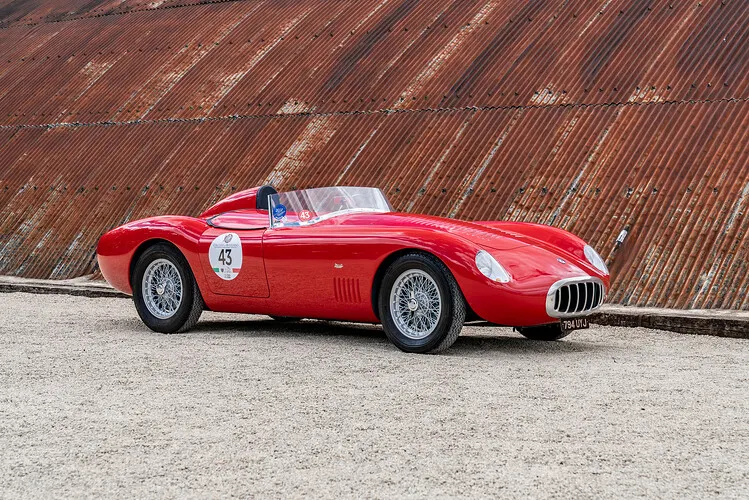
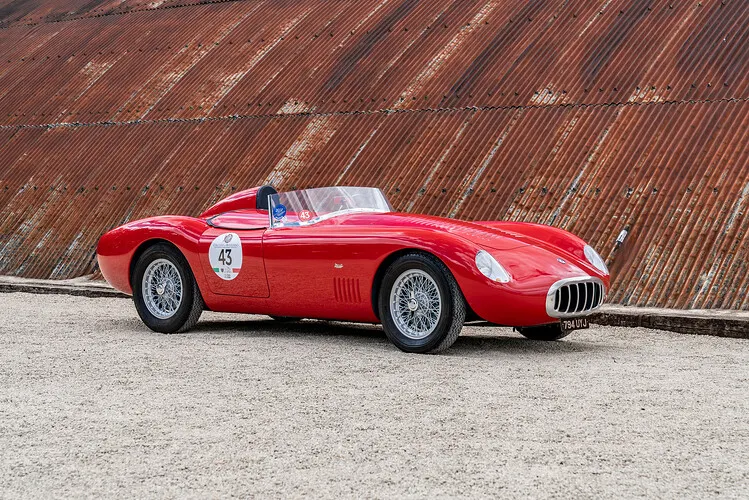
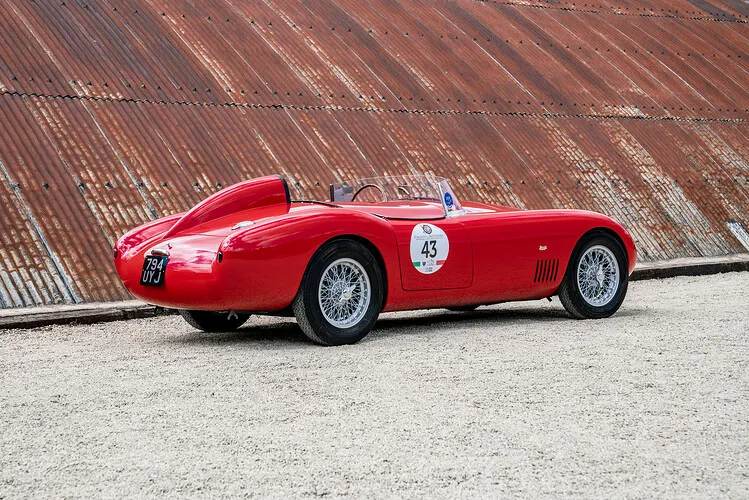
So in 1947 they did the only thing left to them. They founded a brand-new firm near Bologna and gave it a dry, technical acronym: OSCA. Officine Specializzate Costruzione Automobili — Specialised Workshops for the Construction of Automobiles. And tacked onto the full name, so there could be no doubt about who was in charge: Fratelli Maserati. The Maserati brothers.
They couldn’t use the surname as a brand, so they smuggled it into the company’s full title like a signature hidden in the corner of a painting. A wink. A quiet “it’s us, in case you hadn’t noticed.”
And here’s the first thing you need to grasp about this whole story, because it sets up everything that follows. The brothers didn’t leave Maserati over money or ego. They left over something close to principle. Under the Orsi family, Maserati was starting to flirt with the idea of building road cars — luxury grand tourers to sell to the public. And that bored the Maserati brothers to tears. They were racers. Pure ones. They wanted to build machines that won races, full stop. Road cars were somebody else’s problem.
Hold onto that, because by the end of this story that very statement comes back to bite them in a way they never saw coming.
The firstborn: the MT4
OSCA’s first car wore a name that was a declaration of intent in disguise. The MT4. Maserati Tipo 4. Even though they couldn’t use the surname as a brand, they baked it into the model name itself. “MT” told you where they came from. “4” was for its four cylinders.
It was a small, light barchetta with an engine of barely 1,092cc and a touch over 70 horsepower. No monster numbers. No vast displacement. The precise opposite of what half of Italy was doing. While everyone else chased brute power, the Maseratis bet on small, sharp and precise — cars that weighed little, handled beautifully and squeezed every last drop out of each horsepower.
And the heart of that little machine told you everything about the minds that conceived it. A twin-cam — double overhead camshafts — an architecture that in those years belonged to elite racing engines, not small workshops. The Maserati brothers had been building engines like this for decades, going right back to their years running the marque that no longer bore their name. They weren’t improvising. Every part of that engine was the product of a lifetime spent understanding how to spin a crankshaft at high revs without anything letting go. That was their real edge: they didn’t have the big players’ money, but they had the knowledge money can’t buy.
And it worked from the off. In 1948, with Luigi Villoresi at the wheel, the MT4 won the Naples Grand Prix. The newborn already had teeth.
Sebring 1954: the day the minnows humiliated the giants
If this whole story had to be boiled down to a single scene, it would be this one. And it’s the sort that leaves people genuinely slack-jawed.
The 12 Hours of Sebring, 1954. A round of the World Sports Car Championship. A category with no limit on engine size — you could turn up with whatever displacement you liked, the bigger the better. Works teams, factory budgets, big-bore monsters snarling on the grid.
And dotted among all that heavy artillery, a handful of privately entered OSCAs. One-and-a-half litres apiece. Small cars, run by privateers, with no great factory behind them. David against an entire grid of Goliaths.
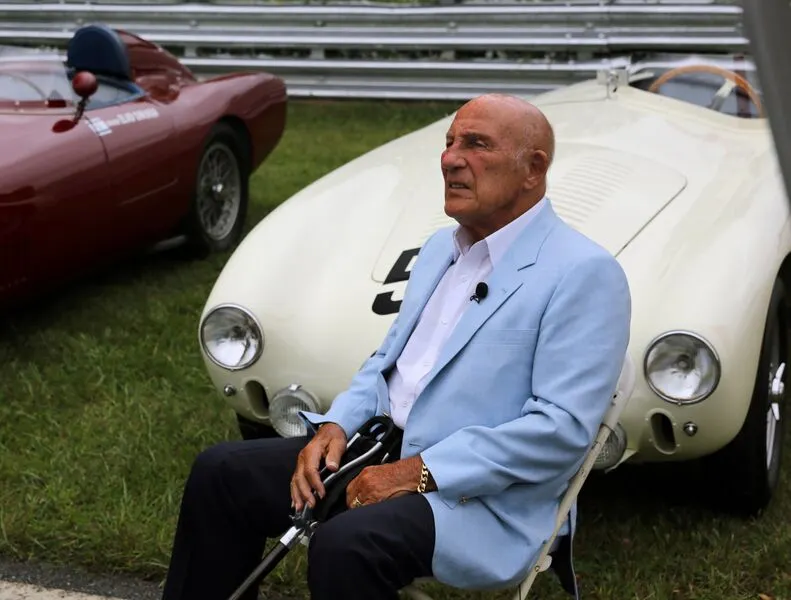
The result? The 1.5-litre OSCAs finished first, fourth and fifth. First. In a no-limit-displacement class, against works teams, with roughly half the engine of their rivals or less. The man at the wheel of the winning car was a young Stirling Moss. It’s the kind of result that isn’t just surprising — it’s almost impossible to believe when you lay the numbers out in front of you.
That was OSCA in one race. The Maserati philosophy pushed to its limit: you don’t need the biggest engine, you need the best-built car. Less weight, more balance, finer engineering. And their most persistent rival through those years wasn’t some other Italian outfit. It was Porsche. Two firms chasing the same obsession with lightness and precision, trading wins all over the world.
And it’s worth pausing on what that meant for a workshop OSCA’s size. We’re not talking about a factory with hundreds of workers and a racing department on an unlimited budget. We’re talking about a handful of people in a modest building near Bologna, building each car almost entirely by hand, piece by piece. That machines capable of beating the world’s great factories came out of there isn’t just a sporting footnote. It’s proof that real talent doesn’t need an enormous payroll behind it. It needs hands that know what they’re doing and a clear idea of where you’re headed.
The irony that flips everything: the engine that ended up in a Fiat
Now comes the part that turns this from a nice tale into a proper one. The part nobody tells you — and the one that, once you know it, casts everything before it in a completely different light.
The Maserati brothers left Maserati, remember, because they refused to build road cars. Racing and nothing but. Fine. Brace yourself.
By the late 1950s, OSCA had the one problem no workshop of pure racers ever fully solves: money. Their beautiful twin-cam engine — that finely tuned four-cylinder they won races with — cost a fortune to build in the tiny numbers a boutique constructor turns out. They wanted to sell that engine to racing teams, but they couldn’t raise the funds to put it into proper series production.
So in 1957, Ernesto Maserati did something that years earlier would have been unthinkable. He went and knocked on Fiat’s door. Specifically, on the door of Dante Giacosa, Fiat’s head of engineering, the man behind half of postwar Italy’s road fleet. And he proposed a deal: you’ve got the industrial muscle to build my engine in numbers, I’ve got the engine. Let’s do it together.
Fiat said yes. And here something rather wonderful happened from an engineering point of view. To “productionise” that racing twin-cam — to turn it into something reliable and buildable at scale — Fiat handed the job to a man with a legendary CV: Aurelio Lampredi. Yes, that Lampredi, the one who’d designed engines for Ferrari. An ex-Ferrari man adapting a Maserati engine so it would fit a road-going Fiat. Three of the biggest names in Italian motoring, all crossing paths inside a single lump of aluminium.
The result? OSCA’s twin-cam, refined by Lampredi, ended up under the bonnets of the road-going Fiat 1500 S and 1600 S, bodied by Pininfarina. Cars anyone with a bit of money could buy from a dealer. The racing heart of the Maserati brothers, beating away inside a genteel boulevard convertible.
Read that again. The brothers who walked away from a legendary marque because they refused to build road cars ended up putting their most cherished engine into one of the most elegant road cars of its era. Life, it turns out, has a sense of humour.
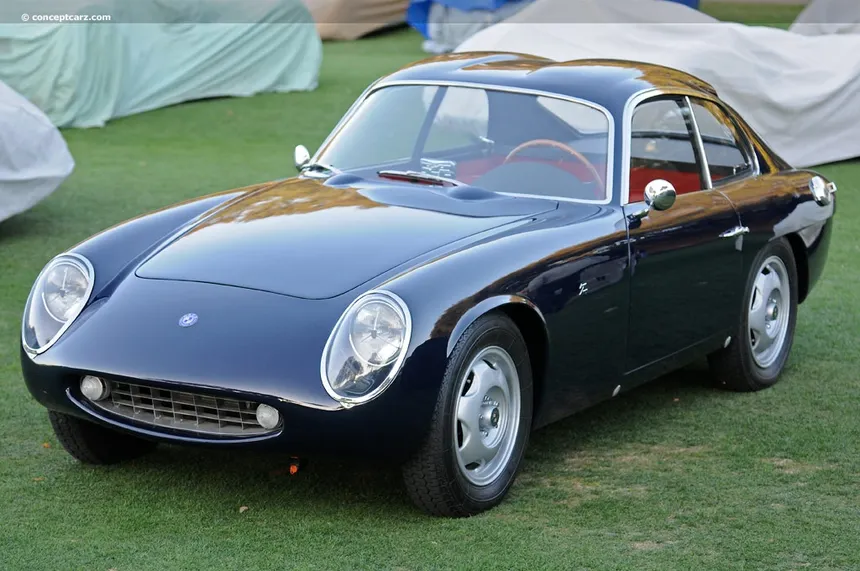
And as if the irony weren’t thick enough already, OSCA then did the very last thing you’d expect of them: it started building its own road-going GT, the 1600 GT, clothed by Zagato, Touring and Fissore. Gorgeous cars, yes. But road cars. Exactly the thing they’d fled. They’d come full circle, almost against their will, right back to the spot they’d escaped from in 1947.
The quiet ending
Every good story ends, and OSCA’s ended without fireworks. In 1963, the brothers — by now elderly — sold the company. And the buyer carries its own poetry: MV Agusta, the racing-motorcycle manufacturer. From racing on four wheels to racing on two. OSCA production gradually wound down until it stopped altogether in 1967.
Twenty years. That’s how long the Maserati brothers’ second life lasted. Twenty years in which, barred from using their own surname, they proved that what made a Maserati great was never the name painted on the nose. It was how the cars were built underneath.
What remains
Today, say “Maserati” and everyone nods. Say “OSCA” and you’ll get blank stares. And that’s precisely the injustice worth correcting. Because OSCA is, in its purest form, what the Maserati brothers truly were once nobody was telling them what to build. No Orsi, no pressure, no grand name to defend. Just three brothers, a small workshop near Bologna, and an obsession with building light cars that beat machines twice their size.
They hid their signature in four letters. They humiliated giants at Sebring with cars that looked like toys. And when the money got tight, their racing engine wound up singing under the bonnet of a weekend Fiat. This isn’t a story about failure. It’s a story about men who wanted to race above all else, and who — even while running away from road cars — ended up creating one of the most beautiful road-car engines Italy ever produced. Sometimes fate drags you back to the very thing you rejected. And sometimes, that turns out to be the best thing that could have happened to you.