GM XP-500: The 1956 Dream Car With No Crankshaft That Could Run on Peanut Oil
The most radical engine General Motors ever put in a car didn’t have a crankshaft, didn’t have connecting rods, and had been run on whale oil in the lab. GM installed it in a bubble-topped two-seater called the XP-500, showed it off on national television in 1956, and pulled the plug three years later. Most Americans who have seen a photo of it think they are looking at a Firebird.
Eisenhower, Cronkite and a car nobody remembers
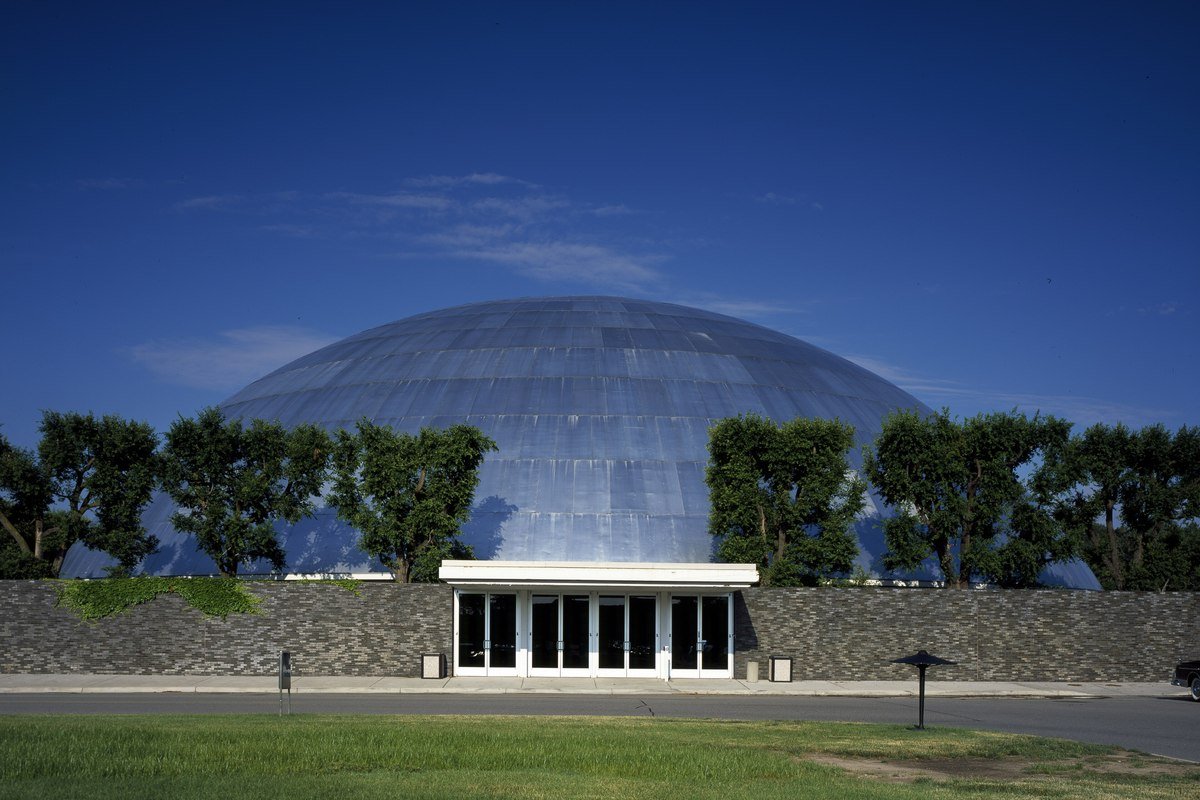
May 16, 1956, was GM at its most confident. The company dedicated its new Technical Center in Warren, Michigan, the Eero Saarinen campus Life magazine called an industrial Versailles. Around 5,000 guests showed up. Walter Cronkite ran the ceremony, President Eisenhower spoke over closed-circuit television from the White House, and four days later NBC aired a 90-minute special on the place. More than 179,000 people came through the open house that followed.
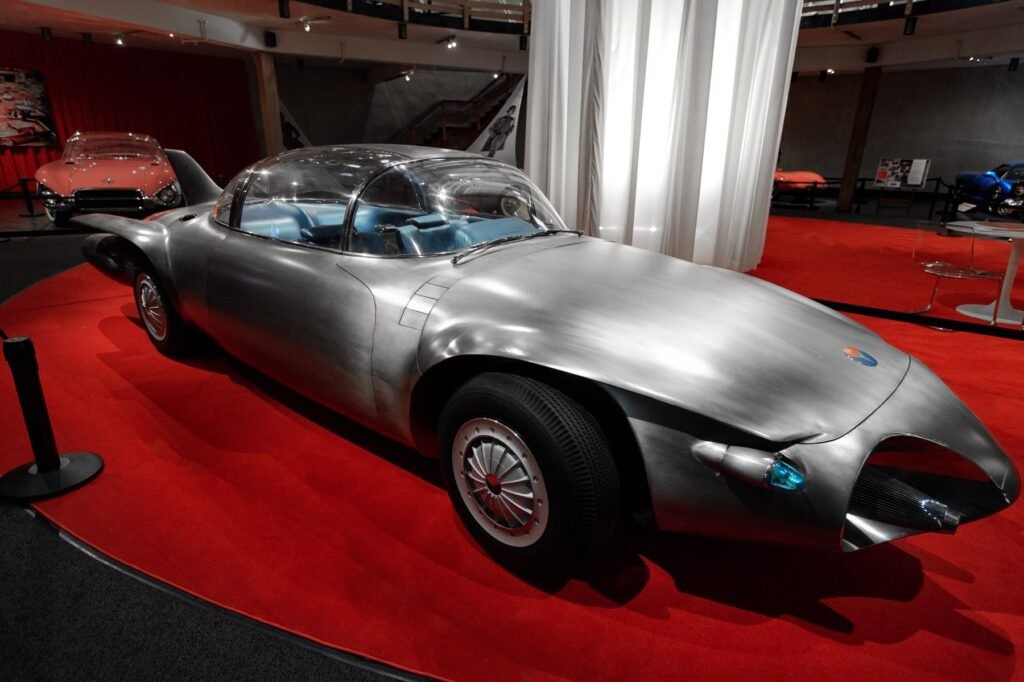
Among the hardware on display were two futuristic GM cars that looked like siblings. One was the Firebird II, the titanium-skinned turbine family car that toured Motorama that year and now lives in the GM Heritage Collection. The other was the XP-500. Charles “Boss” Kettering, GM’s retired research chief, posed next to it.
GM Research Laboratories had built the XP-500 in fourteen months and finished it just before the dedication. It had a sloping hood, a low horizontal grille, wing-like rear fenders and a glass bubble roof, with side windows that lifted along with the doors. The floor was perfectly flat, with no transmission hump, something no American car of 1956 could claim.
“Even peanut oil can power new car”
The public had already heard about it a month earlier. On April 15, 1956, The Detroit News splashed the XP-500 across its front page with a headline about peanut oil. Time ran the story a week later, reporting that Detroit engineers saw this engine as the bridge between today’s piston engine and tomorrow’s gas turbine. Automotive News called the powerplant the “GM-10-10.” By the time GM Research presented it to the Society of Automotive Engineers in 1957, it had a new name: the GMR 4-4 Hyprex.
The peanut oil wasn’t a stunt. GM said its free-piston engines had run on 100-octane gas, kerosene, diesel, Bunker C ship fuel, crude oil, shale oil, peanut oil, salad oil and whale oil. Even GM admitted nobody was going to fill up at the grocery store. The point was that the engine didn’t care.
How you build an engine without a crankshaft
Pop the hood on a 1956 Bel Air and the V8 works the way every car engine had worked for half a century. Each piston is bolted to a connecting rod, and every rod hangs on a crankshaft, which turns all that up-and-down pounding into rotation for the transmission.
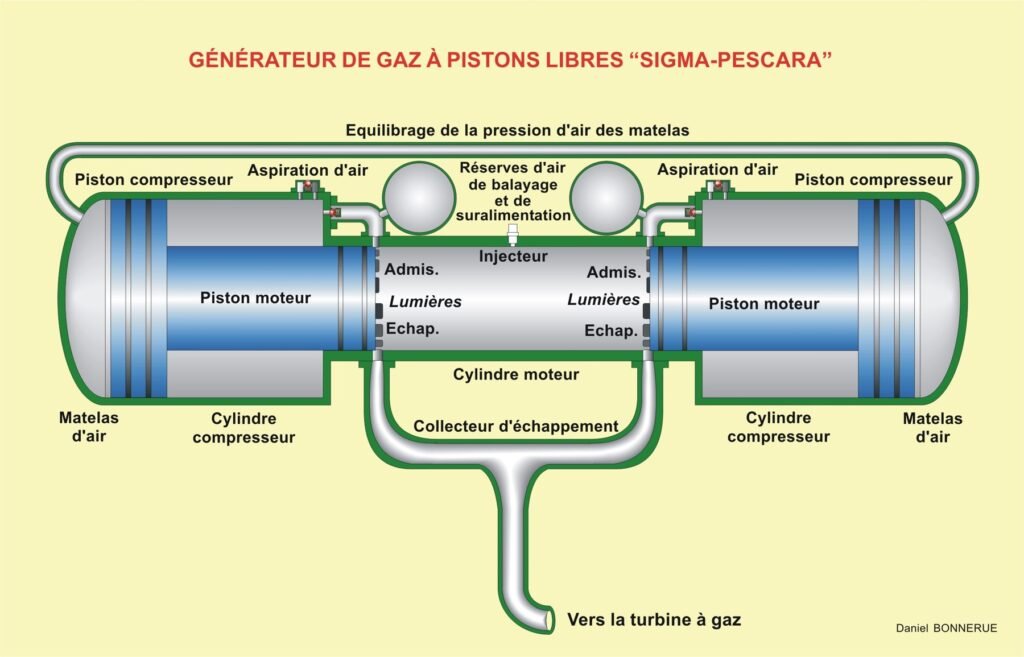
GM’s free-piston engine skips all of that. Picture a long horizontal cylinder with a piston at each end, facing each other. They charge toward the middle and squeeze the air trapped between them. Squeeze air hard enough and it gets hot enough to ignite diesel fuel on contact, which is exactly how any diesel truck engine fires without spark plugs. Fuel gets injected, it lights, and the blast throws both pistons back toward the ends.
Behind each piston is a sealed pocket of air called a bounce chamber. Think of it as an air shock. The piston rams into it, compresses it, and the trapped air springs it right back toward the center for the next firing. On that return trip, a wider section of each piston acts as an air pump, pushing fresh air into a reservoir around the cylinder. That air scavenges the cylinder, flushing out burned gas and refilling it with clean air. Every time the pistons meet, the engine fires: a two-stroke cycle.
There are no valves on top of the cylinder, either. The cylinder wall has ports, holes the pistons themselves cover and uncover as they move. As they fly apart, they uncover the exhaust ports first, then the intake ports.
The pistons weren’t entirely “free,” which GM explained in its own engineering journal. A parallelogram linkage connected them so they always moved as mirror images and small differences in friction couldn’t knock them out of step.
Here’s the trick that makes it a car engine. Nothing in this thing turns a shaft. Its only job is to produce a stream of hot, high-pressure gas, so engineers called it a gasifier. That gas goes down a pipe to a turbine, a bladed wheel much like the exhaust side of a turbocharger, only here the turbine does all the work of moving the car. A turbine spins far too fast to drive the wheels directly, so a reduction gearbox steps the speed down and the torque up.
With no crank bearings or rods, about the only friction left is piston rings on cylinder walls. According to GM’s engineering journal, that let engineers push compression past 30 to 1. Compression ratio is how many times the air gets squeezed before it burns; at 30 to 1, a cylinderful of air is packed into one-thirtieth of the space. The hottest Hemi in the optional 355-hp 1956 Chrysler 300B ran 10 to 1. That brutal compression is what let the Hyprex burn salad oil.
The Liberty ship came first
Before it went in a car, GM’s free-piston program went to sea. GM partnered with France’s SIGMA, which had finished its GS-34 gasifier in 1944, and developed its own version, the GM-14. The showcase was the William Patterson, a converted World War II Liberty ship. Six gasifiers rated at 1,250 gas horsepower each fed a single turbine making 6,000 shaft horsepower. GM billed it as the first free-piston gas turbine marine propulsion system in the United States.
GM’s gasifiers racked up more than 30,000 hours of testing. Motor Trend reported in October 1956 on a 4,500-hour run at 90 percent availability, meaning the engine was ready to work nine hours out of every ten.
On the marine plant, GM measured 44 percent efficiency for the gasifier and 83 percent for the turbine, for 36.5 percent at the output shaft. That last number is thermal efficiency, the share of the fuel’s energy that ends up as useful work instead of heat out the exhaust and radiator. GM put it in the same range as a late-1950s diesel, with the advantage of burning cheaper fuel.
Shrinking a ship engine to fit under a hood
The XP-500’s gasifier was designed under contract by Swiss engineer Robert Huber, widely called the father of the modern free-piston engine, and built by GM machinists and technicians in Detroit. The SAE paper on it was written by A. Underwood.
Packaging was the headache. Early studies showed that a single-cylinder gasifier big enough to give a car competitive performance would be about five feet long. Huber split it in two: a “siamesed” unit with two cylinders side by side and four pistons, sharing one air intake, one air reservoir and one gas outlet. The two pairs of pistons weren’t mechanically linked but ran pneumatically out of phase, one pair closing while the other opened. That reduced pumping losses, the energy wasted just moving air around, shrank the reservoir and smoothed the gas pulses headed for the turbine.
GM rated the Hyprex at 250 horsepower at 2,400 strokes per minute. Read that carefully. Strokes per minute are not rpm, because there is no crankshaft to count revolutions on; they are how many times the pistons travel out and back each minute. And the 250 is gas horsepower, the energy in the gas stream before the turbine turns it into rotation. Shaft horsepower would be lower, and no figure for it appears in the sources consulted.
For context, the Firebird II’s Whirlfire GT-304 turbine was rated at about 200 hp at 35,000 rpm. Chrysler’s 300B, America’s most powerful car in 1956, made 340 hp standard. GM quoted 32 to 36 percent thermal efficiency for the automotive Hyprex.
The gasifier sat up front. The turbine and gearbox were mounted at the rear axle, with the gas routed back along the side of the car. No driveshaft, no tunnel, flat floor.
GM saw one more advantage over the pure gas turbine. Its turbine work had shown that blades exposed to raw combustion gas need very expensive alloys. Per GM figures reported by Popular Science in 1957, gasifier exhaust ran 450 to 900 degrees. The magazine didn’t print the scale, but in Fahrenheit, standard for a US magazine, that’s roughly 230 to 480 °C. That meant ordinary turbine materials, no exhaust blast threatening the bumper of the car behind, and no waiting for a turbine to spool up.
Ford’s tractor and the free-piston race
GM wasn’t alone. Ford’s scientific research lab built its own free-piston turbine and unveiled it in 1957 in the Typhoon, an experimental farm tractor. The gasifier was about the size of a milk can. The engine was good for roughly 100 hp, but Ford held it to 50 drawbar horsepower, the pulling power left at the hitch once drivetrain and tire losses are subtracted. Ford engineers published their own SAE paper on an automotive-size free-piston turbine that same year. GM, though, was the one that put it in a car and drove it.
Living with it
GM filmed the XP-500 driving down the road. It also put its problems in writing.
You couldn’t start it like a normal car. A starter motor needs a flywheel and crankshaft to spin, and the XP-500 had neither. The pistons had to be slammed together hard enough for the first compression to light the fuel. GM mounted a compressed-air bottle on the engine and dumped that air into the bounce chambers, injecting fuel at the same instant. The car needed only 27 psi, refilled by an air compressor off a semi truck. The marine version needed 400 psi. If anything went wrong in the sequence, the bottle had to be pumped back up before the next try.
With no crankshaft, there was also no pulley to run belts from. Water pump, oil pump, power steering pump, generator: all of it needed another home. GM hung a hydraulic pump for the power steering and power brakes off an accessory gear on the turbine, and looked at adding a second turbine just for accessories.
Even the fuel pump fought back. It was driven off the piston linkage, and injection had to happen right as the pistons were slowing to reverse direction, exactly when the pump was moving slowest. GM had to tune it to start building pressure early.
Detroit history site Mac’s Motor City Garage sums up the outcome: starting, lubrication and control turned out to be problems GM couldn’t solve. Noise and the system’s inflexibility finished the job.
The Barcelona connection
Robert Huber had not come out of nowhere. From 1924 to 1962 he was technical director of the Bureau Technique Pescara, founded by the man who made free-piston engines practical in the first place.
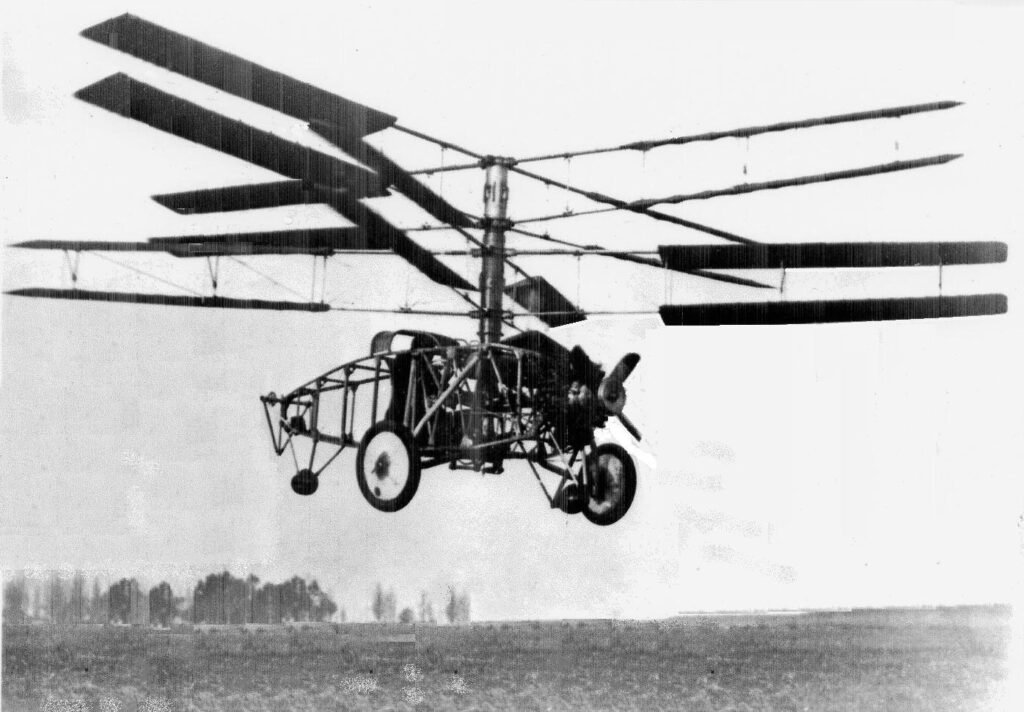
Raúl Pateras Pescara de Castelluccio was born in Buenos Aires on April 27, 1890, and died in Paris on May 7, 1966. He was a marquis, a lawyer and a prolific inventor. In 1911 he was testing a torpedo-seaplane model in Gustave Eiffel’s wind tunnel. Around 1916 he settled in Barcelona, though some sources date his workshop there to 1919; his first Spanish patent, No. 63,659, is dated July 4, 1917, and 96 more followed through 1929. In Barcelona he partnered with aviation pioneer Jorge Loring and built helicopters with coaxial rotors, two sets of blades stacked on one shaft spinning in opposite directions so their torque cancels out. His first one, in 1919, used a 45-hp Hispano car engine. He filed the key French patent, No. 533,820, from Spain on February 21, 1920.
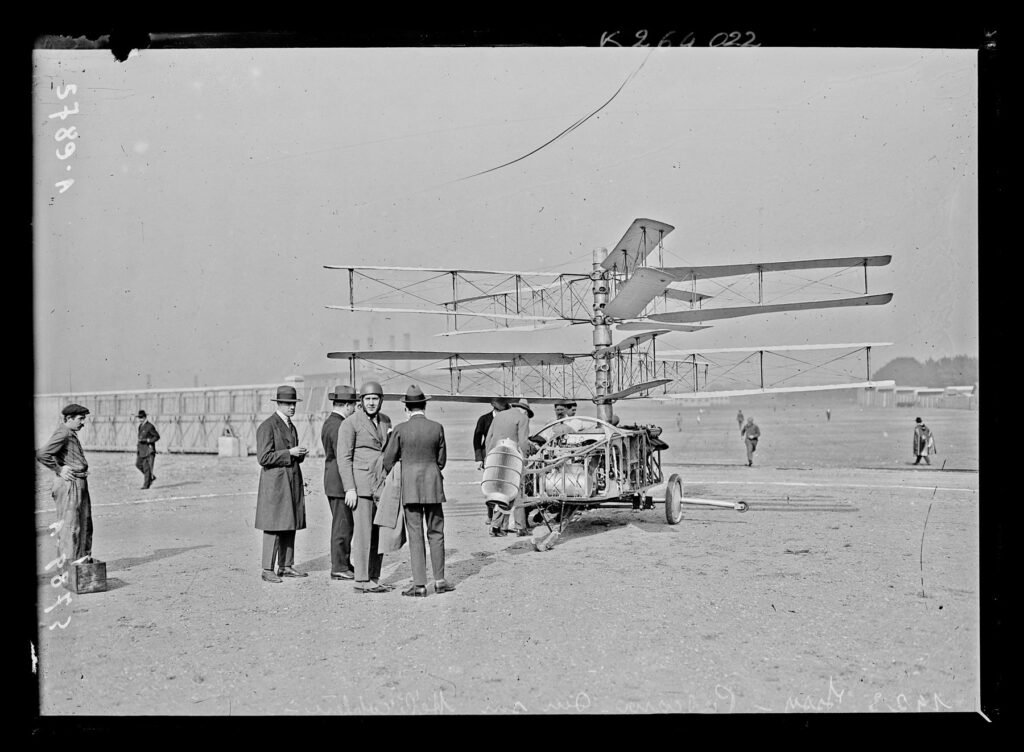
Moving to France, he set a world distance record for helicopters on April 18, 1924, covering 736 meters at Issy-les-Moulineaux. That June he filed a French patent for a free-piston motor-compressor, granted in the US on January 31, 1928, to the Pescara & Raymond Corporation of Dover, Delaware.
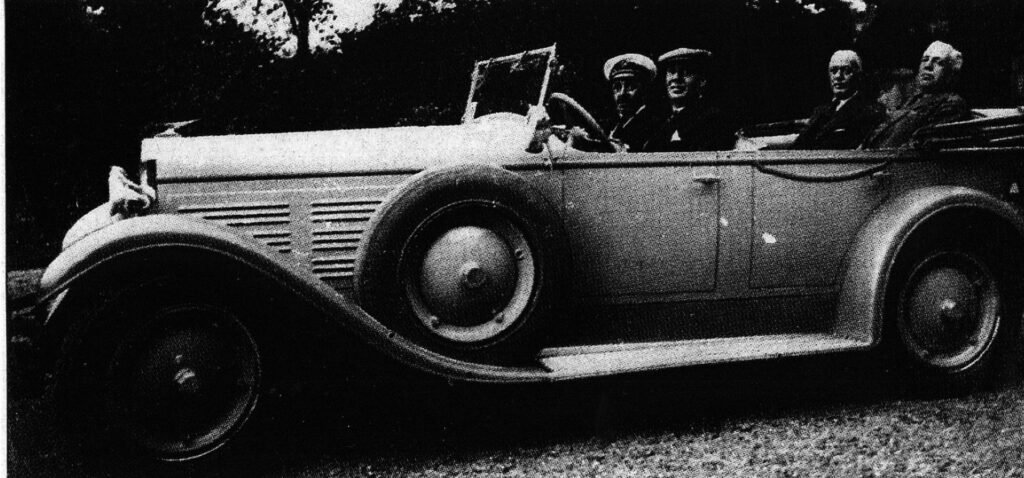
Then he went back to Barcelona and built cars. The Nacional Pescara, launched in 1929 with his brother Enrique, Italian engineer Edmond Moglia and the backing of King Alfonso XIII, was a 3-liter dual-overhead-cam straight eight making 125 hp, with a fuel tank and even disc wheels made of Elektron magnesium alloy. In 1931, Chilean driver Juan Zanelli won the European Hill Climb Championship in the racing car class for the Spanish brand, with teammate Esteban Tort second. The factory closed in 1932.
Shelved, then rediscovered
In 1959, roughly three years after the car was finished, GM ended the free-piston car program, citing technical shortcomings and more promising alternative-propulsion research. Executives had never promised production, though Time reported engineers hoped a free-piston GM wasn’t many years away. According to Mac’s Motor City Garage, the one and only XP-500 is reportedly still owned by GM, but not in exhibition condition.
The concept outlived the car. In June 2014, Toyota announced a prototype free-piston engine linear generator. It drops the turbine entirely: magnets ride on the piston, coils surround the cylinder, and the back-and-forth motion makes electricity directly. Ninety years after Pescara’s patent, a crankless engine was back in a carmaker’s lab.
Check you’re still alive.
Photos: GM Technical Center, Carol M. Highsmith (public domain, Library of Congress); Sigma-Pescara gasifier diagram, Daniel Bonnerue (CC BY-SA 2.0 FR); Firebird II, Eric Kilby (CC BY-SA 2.0); Pescara helicopters, Agence Meurisse and unknown author (public domain); Nacional Pescara with Alfonso XIII, unknown author (public domain). Via Wikimedia Commons.