Autos España: The Casa Batlló Heir Who Sold 850 Cars to an Army About to Lose Them
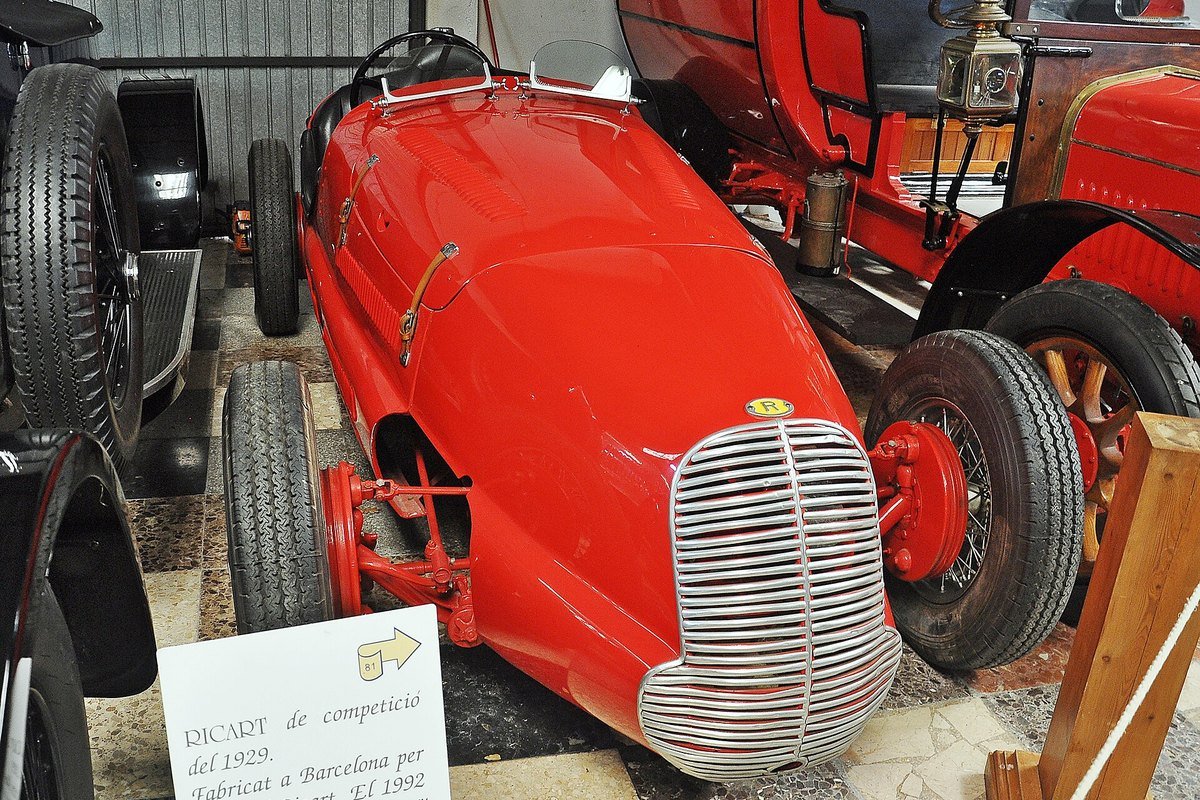
Every American who has done Barcelona has a photo of the Batlló family’s money on their phone, and not one of them knows the family built cars.
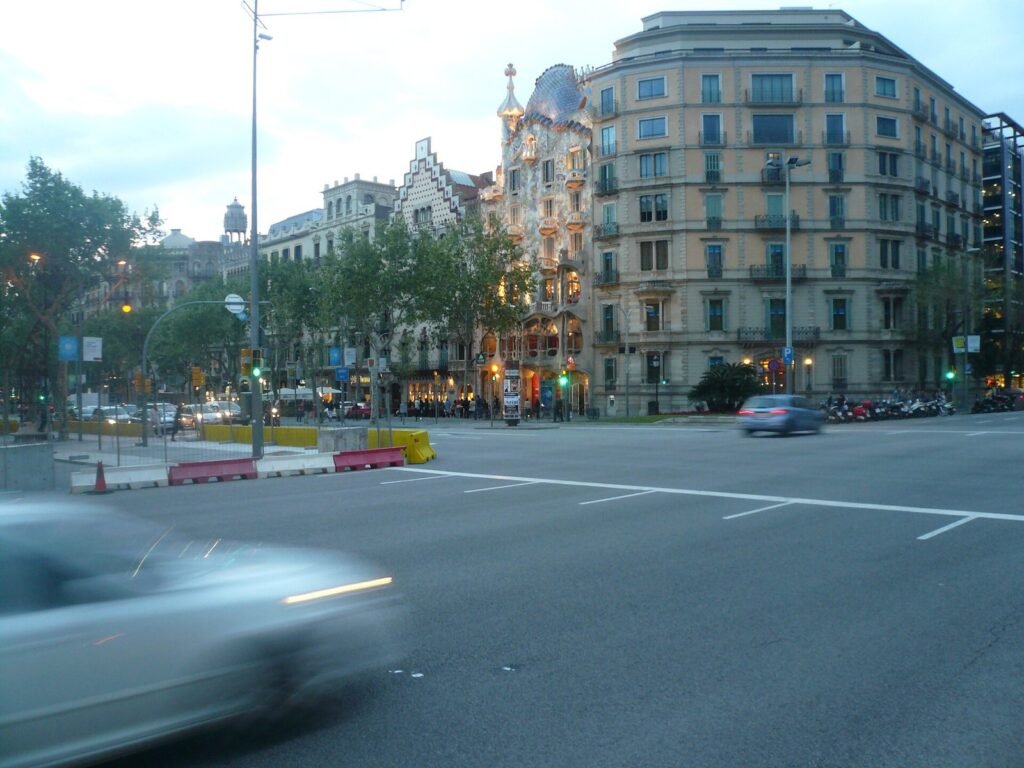
The money is Casa Batlló, the Gaudí house on Passeig de Gràcia with the bone-shaped balconies and the roof that looks like a sleeping dragon. It pulled in more than a million and a half visitors in 2023. The cars were called España, they were built in a Barcelona suburb from 1917, and exactly one of them is still running. That one spent part of the Spanish Civil War hauling corpses for an anarchist militia.
The rest of the marque’s biggest production run is rusting in the hills of northern Morocco, left behind by an army that walked into one of the worst colonial defeats any European power suffered in the twentieth century. The customer was the Spanish state. The product was 850 cars. Almost every English-language account gets that order wrong, and most Spanish ones do too.
A newspaper dynasty on his mother’s side
Felip Batlló i Godó was born in Barcelona in 1890 and died in Madrid in 1985. His father, Josep Batlló i Casanovas, was the textile magnate who hired Antoni Gaudí to remodel number 43 on Passeig de Gràcia. Of the couple’s five children, Felip was the one who caught the engine bug.
His mother is where it gets interesting. Amàlia Godó i Belaunzaran was the daughter of Bartomeu Godó i Pié, one of the two brothers who founded La Vanguardia in 1881. La Vanguardia was, and still is, Barcelona’s paper of record. In the years Felip was building cars, it was run by Ramon Godó i Lallana, his mother’s first cousin. The one detailed account of the marque, written by the family that owns the surviving car, calls Felip “the nephew of the owner of La Vanguardia.” He was closer than that. He was the founder’s grandson.
Picture a Hearst grandson opening a car plant on land the family had set aside for something else, with the family paper a phone call away. That is roughly the setup.
Whether his father approved is a matter of dispute. The surviving car’s owners say Josep Batlló watched the venture with some distaste. Other Catalan accounts claim father and son launched it together. Nothing in the documents settles it.
The heir, the land and the test mule
In 1917 Felip founded the Fábrica Nacional de Automóviles F. Batlló, a limited partnership, in Sant Andreu de Palomar, an industrial district on Barcelona’s northern edge. The plot had been reserved for expanding the family’s textile business, which already ran a mill in Sants. He put a car factory on it instead. The cars were badged España, which tells you something about his ambitions.
Felip was trained as a textile engineer, not a mechanical one. His development program for the first prototype, the Tipo I, was to drive it himself every day on Spanish roads, which in 1917 were mostly dirt, until things broke. Then fix them. Then drive it again.
That same year, a few hundred miles of ocean and a different universe away, Ford was turning out Model Ts by the hundreds of thousands. Batlló was building by hand, one car at a time.
Ten cars for the boys
The car Batlló actually wanted to build was the Tipo 2, and the version he wanted most was the one he built for his friends.
Ten of them went to fellow textile industrialists. They had no doors and no top, both deleted to save weight. The hoods were made of maillechort, the copper-zinc-nickel alloy sold as “German silver” in the States, polished until it looked like the real thing. Batlló and his friends entered the 1917 Volta a Catalunya as a team, Batlló driving the car that survives today. A photo of the outing still hangs at the Hotel La Coromina, at the entrance to the mountain town of Viladrau.
Any American collector gets this instantly. It is the Mercer Raceabout and Stutz Bearcat school of thought, the one that ran through American money in the 1910s: strip the car to the frame, put the rich boys in goggles, race your friends on public roads.
The specs nobody can agree on
Here is where the España story turns into a mess.
The commonly quoted spec sheet says the Tipo 2 launched in 1919 with a French four-cylinder engine from a supplier called Altos, 1,847 cc (about 113 cubic inches), four-speed gearbox, roughly 30 horsepower and a top speed of 75 km/h, or about 47 mph. The family that owns the survivor says 2,900 cc (about 177 cubic inches) and three forward speeds plus reverse. Production gets quoted at 850 in some sources and around 500 in others.
Then there is the date problem nobody has flagged. If the Tipo 2 launched in 1919, the friends could not have raced Tipo 2s in the 1917 Volta a Catalunya. One of those dates is wrong. As for Altos, the engine maker leaves almost no paper trail outside the España’s own spec sheets.
Bottom line: there is no reliable spec sheet for the España Tipo 2. What circulates online is copies of copies.
850 cars and a massacre in Morocco
What does hold up is where the big order came from.
Batlló already supplied uniforms to the Spanish army fighting in Morocco, which taught him how government tenders were written, who wrote them and how they were won. He used that to win a contract to motorize Spain’s military aviation, which ordered 850 Tipo 2s with side doors, mostly for officers.
The family account, and most versions copied from it, says the buyer was the Spanish Air Force. It wasn’t. Spain’s Ejército del Aire was not created until 1939. In the early 1920s military flying belonged to the Aeronáutica Militar, a branch of the army. Call it the Spanish equivalent of the US Army Air Service of the same years, before there was a separate Air Force.
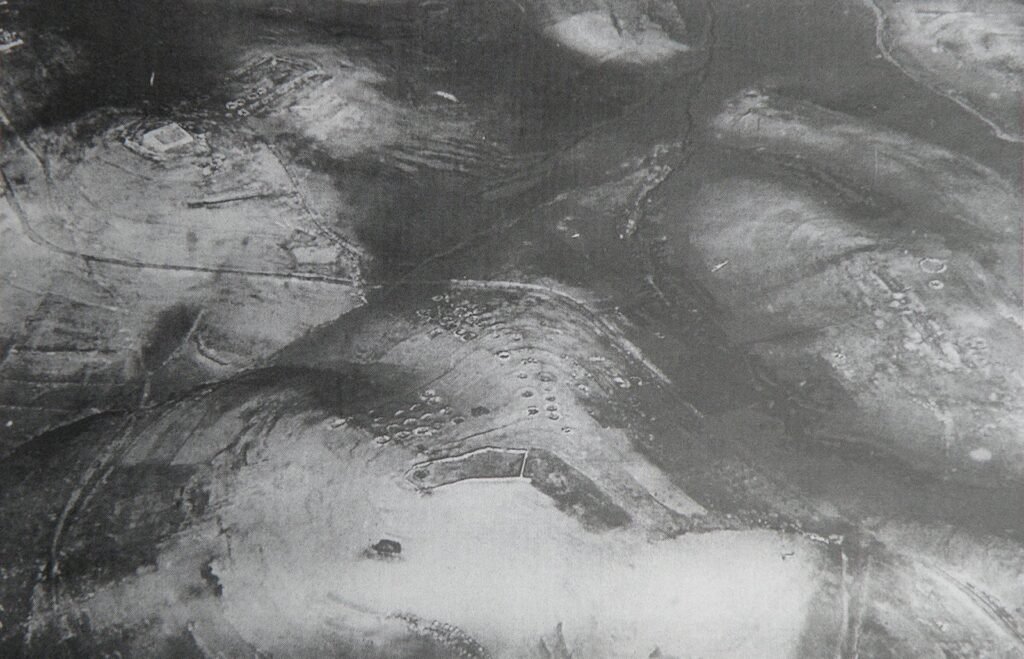
A large share of those 850 cars was lost in Morocco, above all at Annual. In July 1921, Rif tribesmen led by Abd el-Krim routed the Spanish army in the eastern zone of the protectorate. The front collapsed all the way back to Melilla. Spanish dead and missing ran to roughly 8,000; the socialist deputy Indalecio Prieto counted 8,668 that October. The army abandoned practically everything it had. The air arm lost its Zeluán airfield to the rebels in the same weeks.
For scale: Custer lost about 270 men at the Little Bighorn. Annual killed thirty times that many, and in Spain it brought down governments and paved the way for a dictatorship two years later.
So España’s one real production run was not sold to wealthy enthusiasts. It was sold to the state and destroyed in a rout. The company’s commercial peak ended up as scrap in the Rif.
A king’s car with a push-button reverse
The flagship was supposed to be the Tipo 3, a four-cylinder of roughly 3,600 to 3,690 cc depending on the source, bodied as something close to a sedanca de ville, the formal town car with an open chauffeur’s compartment.
Four were built. One went to Batlló’s father. One went to King Alfonso XIII. One went to General Miguel Primo de Rivera, who seized power in 1923 and ran Spain as dictator until 1930. The fourth stayed in the family.
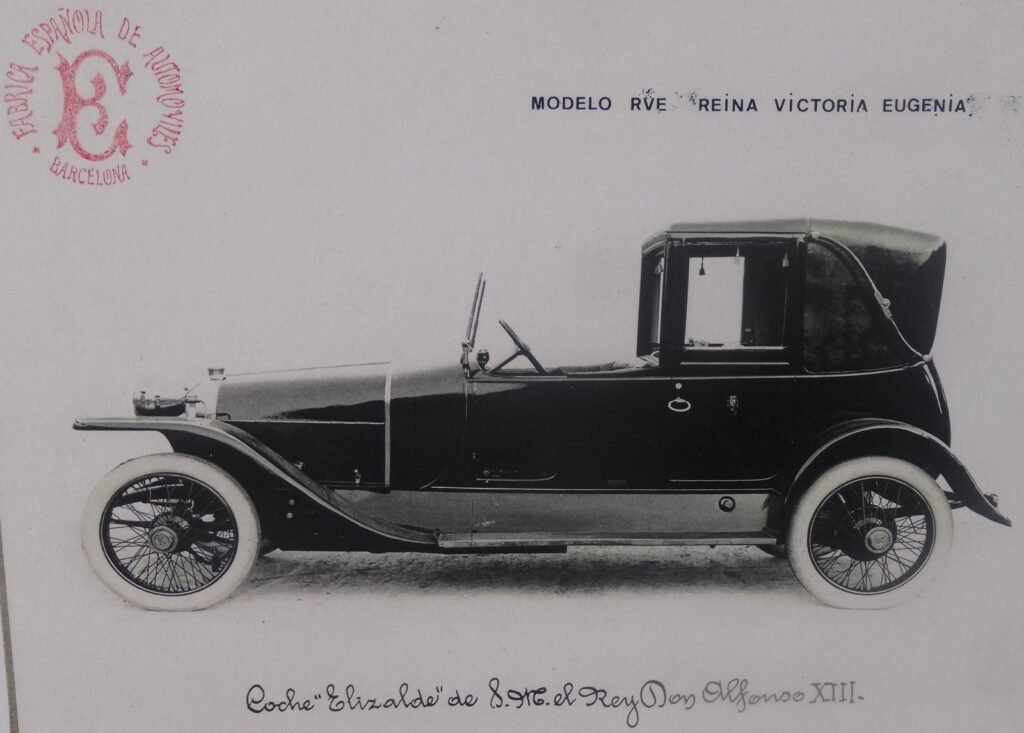
The king was not short of options. Barcelona’s Elizalde had already delivered him cars, and in 1920 it announced the Tipo 29 with a 3,817 cc overhead-valve four. Hispano-Suiza‘s H6B of 1919 carried a 6,597 cc six and went head to head with Rolls-Royce. The España Tipo 3 was not the most advanced car in Barcelona, but it sat at the same table.
The best detail about it comes from decades later. When Mercedes Freixa finished a Barcelona-Lisbon rally in the surviving España, the man waiting to greet her in Estoril was Juan de Borbón, the exiled heir and father of the future King Juan Carlos. He remembered the España they had at the palace for one thing: reverse gear went in at the push of a button. The family says there is a photo.
The Tipo 4 and a 16-valve rumor
Batlló built one Tipo 4, a 4,500 cc competition car with a supercharger, and personally put it into the second hairpin of the Rabassada hill climb above Barcelona.
You’ll read online that it had a 16-valve head. No source documenting the car supports that. What Barcelona did have in 1922 was a 1.5-liter, 16-valve four in the first car designed by Wifredo Ricart, which ran in the Barcelona voiturette Grand Prix. Five years later Ricart and Batlló would share a factory, and somewhere along the way the two engines got merged. The 16-valve claim for the Tipo 4 is unverified and almost certainly borrowed from Ricart.
Three companies, one fake brand
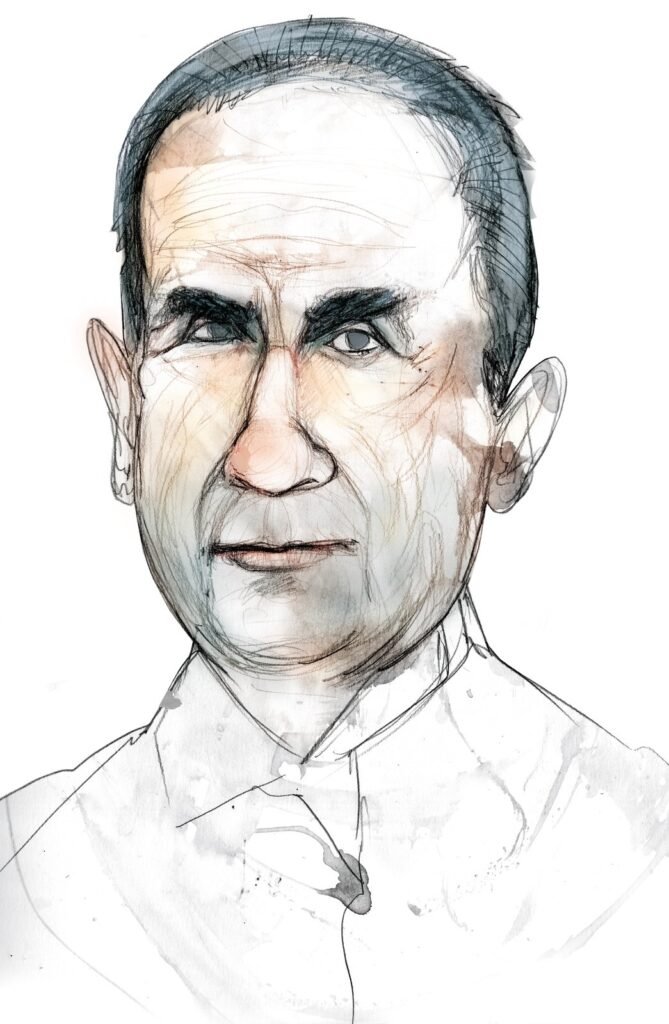
By the mid-1920s three Catalan carmakers sat down to count what each of them lacked. Elizalde had a real factory. España had a plant and its own foundry but bought its engines from France. Ricart had the best engineering brain in the country and a workshop that was really just a large shed.
The plan was APTA, the Asociación Productora y Técnica del Automóvil, pooling all three into one serious manufacturer. Elizalde did the math, realized it would be bringing nearly everything to the party, and left to concentrate on aircraft engines. Ricart and España went ahead as Ricart-España, with Ricart designing the cars and Batlló’s plant building them.
APTA, however, had already won a government contract to supply official cars, and nobody wanted to give that money back. So a handful of Ricart-Españas were registered as APTAs. A brand that never built a single car has cars titled in its name. Somebody at the ministry signed off on that.
The stock certificate that fixes a date
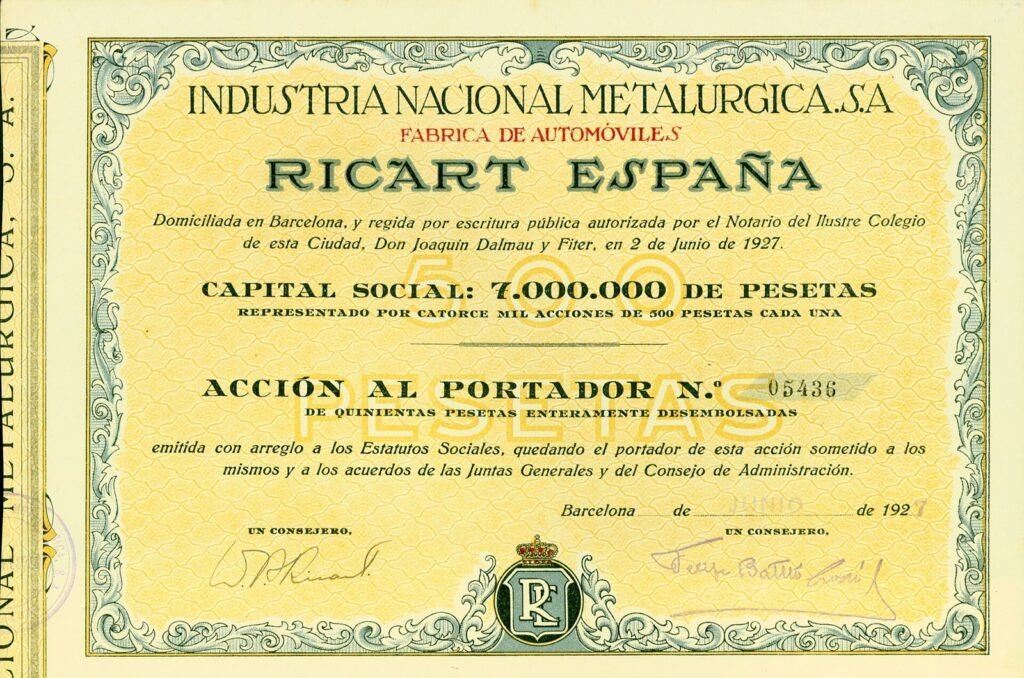
Wikipedia and the surviving car’s owners both date the Ricart-Batlló partnership to 1928. A share certificate says otherwise. The company was registered as Industria Nacional Metalúrgica, S.A., Fábrica de Automóviles Ricart España, before the Barcelona notary Joaquín Dalmau y Fiter on June 2, 1927, with share capital of seven million pesetas in 14,000 shares of 500 pesetas each. The two directors’ signatures on the certificate are W. P. Ricart and Felipe Batlló Godó, under a royal crown and an RE monogram. The company existed a year before the standard histories say it did.
Ricart was busy in those years. His 226, a 1.5-liter twin-cam six, went to the Paris salon. The owners of the surviving España call Ricart-España the grandmother of the Pegaso Z-102, and they have a point: the engineer who designed its cars went on to Alfa Romeo in 1936 and came home to build the Pegaso. Nearly a century later, his great-grandson is building cars under the Ricart name again.
Where Detroit comes in
The usual story says Ricart-España died when General Dámaso Berenguer, who took over the government in January 1930, scrapped the customs breaks that kept it alive. That is true as far as it goes.
But Detroit had been inside the house for a decade. Ford started assembling cars in Cádiz in 1920 and moved to Barcelona in 1923. General Motors set up its Spanish subsidiary, General Motors Peninsular, in 1927. By the time Berenguer touched the tariffs, assembly-line cars at assembly-line prices were already selling in Spain. A hand-built car with a German-silver hood never stood a chance against that. Berenguer only finished the job. Sources still disagree on whether production ended in 1928 or 1930.
B-3672: hearse, wreck, rally car
The surviving España wears the Barcelona registration B-3672. It is one of the doorless friends’ cars, the one Batlló drove in 1917.
It stayed with its family until 1936, when the anarchist CNT-FAI requisitioned it and used it as a hearse during the killings behind Republican lines in Barcelona. After the war it surfaced in terrible shape in a municipal impound lot on Carrer Sepúlveda, where it sat until 1958. Then the father of the current owners found it, had it restored as a two-seat racing torpedo and gave it to his wife, Mercedes Freixa. In 1970 Felipe Batlló himself, by then nearly eighty, handed over his original drawings, and a second restoration returned the car to its four-seat factory form.
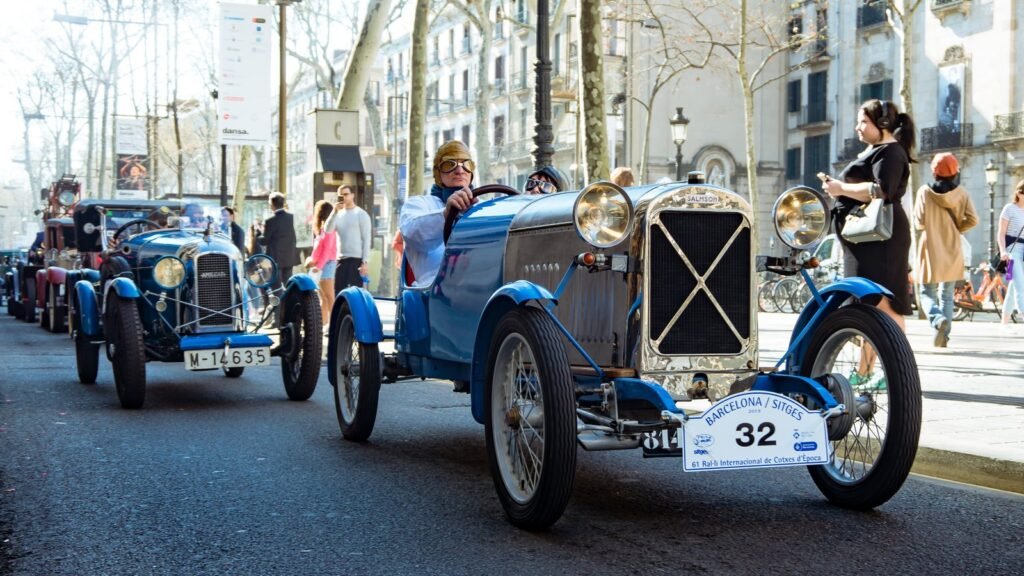
Then Mercedes Freixa went rallying, with Ana María Munné or Asunción Gomis riding with her. Paris-Vienna. Barcelona-Lisbon. The Sherry Rally. The Automobile Club de France’s museum cup. Barcelona-San Sebastián. The Balearic Circuit. Port-Vendres to Mallorca. All of it between 1960 and 1975, in an open car from 1917, before Spain had freeways, with the road west out of Barcelona running through every village and stuck behind Pegaso trucks crawling up the grades. On the Lisbon run she drove through a snowstorm between Ciudad Rodrigo and the Portuguese border.
The car does not make any of that easy. It starts on a hand crank that will dislocate a shoulder if the engine kicks back. The gas pedal sits squeezed between the clutch and the brake, so tight you press it with the edge of your foot. The clutch runs in neatsfoot oil and bites hard enough to whip your head back. The brakes need to be applied the moment something appears on the horizon. The family compares the steering to that of the Spanish army’s GMC trucks.
Today the car belongs to the three Arderiu brothers, and their children now drive it. It has run 61 editions of the Barcelona-Sitges rally and still shows up every year.
The rest of Felipe Batlló’s life
Automotive histories drop Felipe Batlló in 1930, as if he vanished with the factory. He lived another 55 years.
He joined the original Falange, Spain’s fascist party, in November 1933, according to Barcelona’s municipal broadcaster betevé. On January 30, 1939, four days after Franco’s troops took Barcelona, he was one of the seven men named to the commission that took over the Barcelona provincial government, according to that institution’s own archive. Catalan biographies add a post in Franco’s single party, FET y de las JONS, from 1939 and decorations from the regime. The exact party post still needs a first-hand document; the 1939 commission seat does not.
The man who named his cars after the country ended up in the machinery that ran it for the next four decades. You won’t find that in any car book about the marque.
Three brothers and a garage
España went the way of almost every boutique maker of its era. In 1920s Spain, building cars was a hobby that survived only while another business paid for it, and once the real business wobbled, the hobby was finished. Batlló had textile money, a newspaper dynasty and a direct line to War Ministry contracts, and he still lasted only thirteen years.
What should make Spain angry is what happened afterward. A country that sells millions of tickets a year to a Gaudí house cannot say whether the car built by that house’s owner’s son had three gears or four, or in what year it went on sale. Everybody knows the scales on the roof. Nobody knows the spec sheet.
The only surviving España has been kept alive for more than sixty years by one family. No national museum, no foundation, no heritage program. Three brothers and a garage.
Check you’re still alive.
Photos: 1929 Ricart competition car at the Salvador Claret collection, Alberto-g-rovi (CC BY 3.0); Casa Batlló, Pere López (CC BY-SA 3.0); Barcelona-Sitges rally 2019, David B.G. (CC BY-SA 2.0); Wifredo Ricart portrait, Eulogia Merle (CC BY-SA 4.0); Annual in 1921, Alfonso XIII’s Elizalde and 1927 Ricart España share, public domain. Via Wikimedia Commons.