Wifredo Ricart: The Spanish Engineer Who Made Ferrari Happen… Without Even Trying
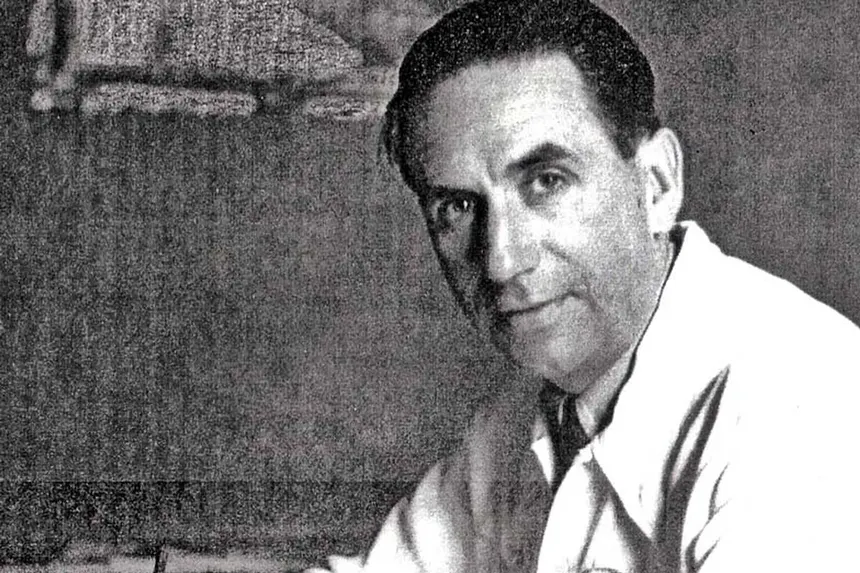
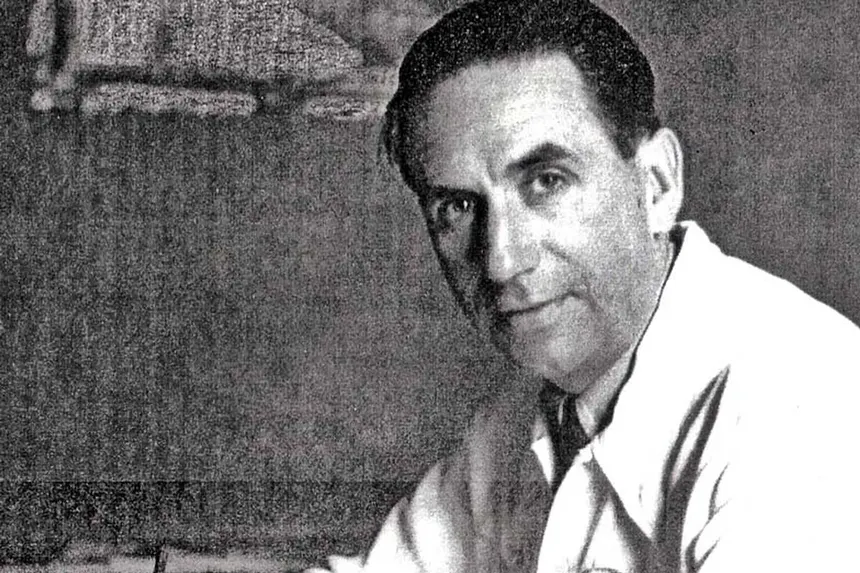
A kid from Barcelona, born in 1897. A guy who graduated in industrial engineering before turning 21. A man who designed racing cars with double overhead cams and 16 valves when most manufacturers didn’t even know those words. A Spaniard who walked into Alfa Romeo, rewired their entire competition department, earned the personal hatred of Enzo Ferrari, and — without meaning to — pushed the proudest Italian in motorsport history out the door to start his own company. And when he came back to a Spain shattered by civil war, instead of cashing a fat Studebaker check and heading to America, he stayed to build an automotive industry from nothing. The result was Pegaso. The man’s name was Wifredo Pelayo Ricart Medina. And you’ve probably never heard of him.
Sit down. This one’s going to sting.
The Barcelona Kid Who Engineered Like Others Breathed
Barcelona, early twentieth century. The city hums with industry, workshops, raw ambition. Hispano-Suiza is building cars that compete with the best in Europe. Young Wifredo grows up in that crucible, son of José Ricart y Giralt, director of the Nautical School. A normal student, they say, but with a very abnormal obsession: engines and airplanes.
In 1918, at just 21, he earns his Industrial Engineering degree from Barcelona’s Escuela Técnica Superior de Ingenieros Industriales. His first job is at Vallet y Fiol, a company manufacturing water pump engines and distributing Hispano-Suiza cars. There, facing a fuel shortage for the vehicles they sold, he invents carburol — an alternative fuel. At 21. His first job. A solution conjured from thin air.
But Wifredo wasn’t born to sell water pumps. In 1920 he starts his own company with Francisco Pérez de Olaguer: Ricart y Pérez. They build industrial engines under the Rex brand. Gasoline motors for generators, pumps, dynamos. The business works. But Ricart wants more. He always wants more.
In 1922, in less than 200 days, he designs and builds two racing cars. Everything himself. Engine, chassis, bodywork, suspension, brakes — all of it. The Ricart-Pérez is born with a four-cylinder 1,498 cc engine that, for its time, is technically insane: double overhead camshafts, 16 valves, hemispherical combustion chambers, and a rev ceiling above 6,000 rpm. In 1922. When most road cars barely cracked 3,000. Let that sink in.
Both cars debut at the II Gran Premio Internacional de la Penya Rhin in Vilafranca del Penedès. Neither finishes. One breaks down mechanically, the other crashes. But the following year, at the 1923 Rabassada Hillclimb, one of those Ricart-Pérez cars wins the 1,500 cc class, beating a Bugatti. And the engine from the other car, fitted to a speedboat, wins a competition in Barcelona harbor. Same engine. Land and water. At 25, Wifredo Ricart was already doing things nobody else in Spain could touch.
Alone Against the World: The Ricart 226 and the Paris Motor Show
Pérez de Olaguer gets tired of racing. Too much cost, too little return. They split. Ricart founds Motores y Automóviles Ricart and in 1926 presents the Ricart 226 at the Paris Motor Show. He drives one of the cars himself from Barcelona to the French capital. The 226 carries a six-cylinder 1,486 cc engine with dual overhead cams, hemispherical combustion chambers, duralumin con-rods, aluminum pistons, dry sump lubrication, and a rev range past 5,000 rpm. Top speed: 140 km/h. The international press falls over itself. The car is a jewel.
But building cars in 1920s Spain is economic suicide. In 1928 he partners with Felipe Batlló y Godó — an industrialist who manufactured the España automobiles — to create Ricart España. They produce small series of touring cars until General Berenguer strips away the tariff protections that kept the project alive. No protection, no market, no chance. Ricart España dies.
And here’s the thing that defines Wifredo Ricart as an engineer: instead of insisting on being a manufacturer, he reinvents himself. He becomes an independent consultant. At the same time Ferdinand Porsche was doing exactly the same thing in Germany. Two pioneers of engineering consulting, in parallel, without knowing it. Ricart works for Saurer, Mercedes-Benz, Lancia, designs diesel engines for Hispano-Suiza. In 1930 he joins the American Society of Automotive Engineers. A 33-year-old Spaniard, recognized worldwide. The consultancy requests keep piling up. And one of them comes from Milan.
Alfa Romeo: The Foreigner Who Conquered the Biscione
In 1936 the Spanish Civil War erupts. Ricart, reportedly on a list of people to be shot, escapes to Italy. Alfa Romeo hires him. Not as just another employee. They hire him because they’ve been consulting him on aviation diesel engines for years and they know he’s brilliant. First as an external consultant, they assign him a diesel aviation engine — a V6, 28 liters, 2,500 horsepower. Read that again. Twenty-eight liters. Two thousand five hundred horsepower. For an airplane.
Alfa Romeo at this point isn’t just a car factory. It’s been nationalized since 1933 under Mussolini’s IRI, and its primary activity is military aviation. The racing cars are a matter of national prestige. And Ricart starts climbing.
By 1938 he’s already functioning as Chief of Special Projects, and in April 1940 he receives the official appointment as Director of Studies and Experiments — overseeing all research and development for the company. Cars, trucks, airplanes, racing. Everything. That a government in the grip of nationalist fervor, in a militarized company, would accept a foreigner as its top technical authority tells you everything you need to know about Ricart’s caliber. It took a special authorization from the Italian government to make the appointment legal.
There he crosses paths with names you might recognize: Vittorio Jano, Gioacchino Colombo, Luigi Bazzi, Orazio Satta-Puglia, Giuseppe Busso. And one name you definitely recognize: Enzo Ferrari.
The War with Ferrari: The Collision That Changed History
Enzo Ferrari ran the Scuderia Ferrari, which since 1930 had managed Alfa Romeo’s racing program with broad autonomy and a generous budget. When Ricart arrives and reorganizes the competition department, Alfa Corse is created. The Scuderia is placed under the department Ricart now leads. Ferrari loses power. Loses autonomy. Loses control over the design of racing cars. And Ferrari wasn’t an engineer. In the new structure, he had no technical role.
The tension is savage. Alfa Romeo separates them: Ferrari and Colombo work in Modena on the Tipo 158 Alfetta — a supercharged 1.5-liter inline-8 producing 200 to 225 horsepower. Ricart, in Milan, develops the Tipo 162, a 3-liter V16 for Grand Prix racing, and then the Tipo 163 — a sports car using the same engine in a mid-rear layout.
Ferrari would later write, in his book “Le mie gioie terribili,” a venomous description of Ricart. He describes him with slicked-back hair, jackets with sleeves that hung too far below his wrists, and shoes with absurdly thick rubber soles. When asked about the shoes, Ricart replies that a great engineer’s brain should not be jolted by the inequalities of the ground. It was humor. Ferrari didn’t get it. He never got it.
What Ferrari never acknowledged head-on was that Ricart was technically superior. Vittorio Jano, one of the most respected engineers in Alfa Romeo’s history, described Ricart as a man of profound intellect. And Ferrari himself would end up applying, decades later in his own Formula 1 cars, the technical solutions Ricart had proposed in Milan.
In 1939, after a particularly ugly confrontation, Gobbato fires Ferrari. Enzo leaves, founds Auto Avio Costruzioni, and shortly afterward Ferrari is born. The brand worth billions today exists, in large part, because a Spaniard from Barcelona took command away from an Italian from Modena. Without looking for it. Without wanting it. Simply by doing his job.
The Tipo 512: The Racing Car That Was Twenty Years Ahead
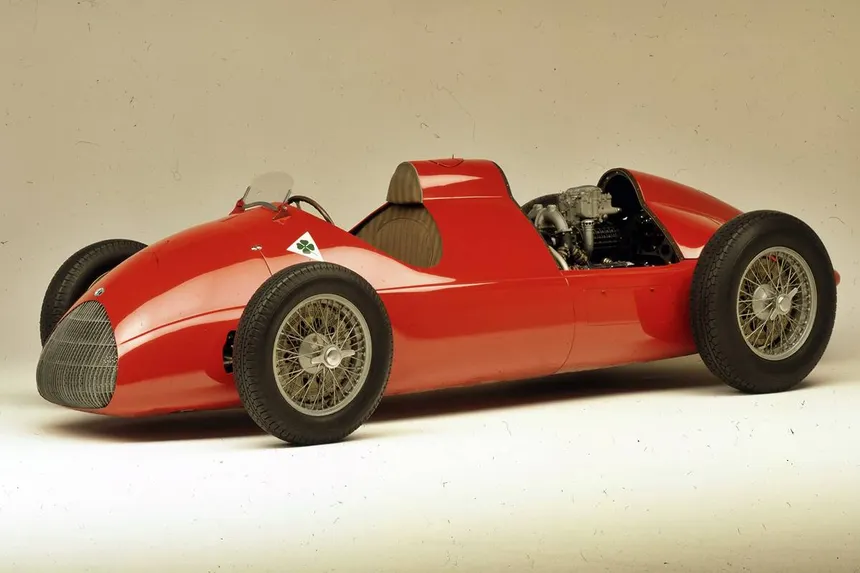
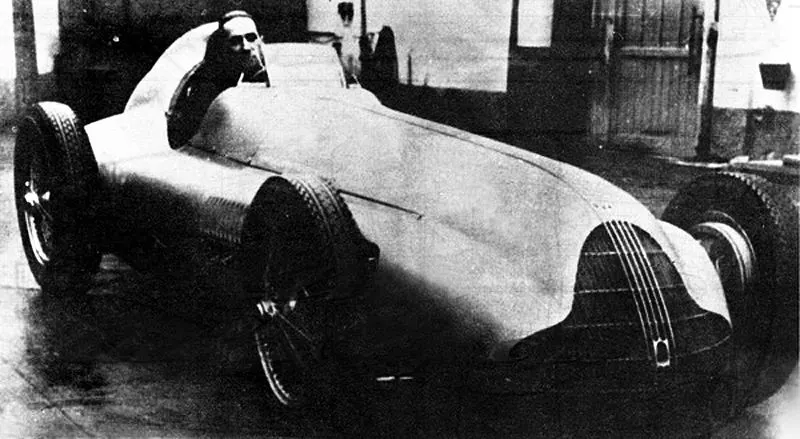
With Ferrari gone, Ricart has a clear runway. And what he designs is a revolution. The 1940 Alfa Romeo Tipo 512 is the first Alfa Romeo single-seater with a mid-rear engine. A flat-12 — technically a 180-degree V12 — displacing 1,490 cc with twin Roots-type superchargers, four overhead camshafts, and an ultra-short stroke of 54.2 mm against a 54 mm bore. On the dyno, it delivers 335 horsepower at 8,600 rpm. The Alfa Romeo Museum at Arese estimates a potential of 500 horsepower at 11,000 rpm and a top speed exceeding 350 km/h.
Think about that. 1940. Rear engine. Flat-12. In today’s Formula 1, the configuration Ricart invented — engine behind, driver in front — is what every single-seater on the planet uses. Every single one. Has been for decades. And a Spaniard proposed it in 1940, when front-engine was gospel in Italy.
The 512 features a De Dion rear axle with longitudinal torsion bars, telescopic dampers, and a five-speed gearbox integrated with the engine. The aerodynamics break with everything before it: a rounded nose that earns it the nickname “cigar car,” a pointed tail to enhance aerodynamic downforce.
On September 12, 1940, Consalvo Sanesi, Alfa Romeo’s chief test driver, takes it to Monza for the first time. It’s brutally fast. But the handling isn’t there. Months of development are needed. And then World War II arrives.
The two 512 prototypes, along with the Alfetta 158s, are hidden in a cheese factory near Gorgonzola. Six years in the dark. When the war ends, Alfa Romeo decides to continue with the 158, which is further along and needs less investment. The 512 dies without ever racing. Today, both units survive: one in the Alfa Romeo Museum at Arese, the other in Milan’s Leonardo da Vinci Museum of Science and Technology.
A personal tragedy marks this period. On June 19, 1940, Attilio Marinoni, Alfa Romeo’s test driver, dies while testing the 512’s suspension fitted to a Tipo 158 chassis, after colliding with a truck on the Milan-Varese motorway. Ricart’s engineering works. But war and death steal his chance to prove it on track.
Return to Spain: The Broken Country and the Impossible Dream
- Italy is devastated. Ugo Gobbato, the director general who had hired Ricart, is murdered in the post-war anti-fascist purge. Close collaborators are hunted. Ricart takes refuge in the Spanish consulate in Milan. With the help of Miguel Mateu, president of Hispano-Suiza, he boards a Spanish ship in Genoa and sails home.
He has an offer from Studebaker in the United States. A generous paycheck. Security. A country with infrastructure, with industry, with a future. But Juan Antonio Suanzes, president of the Instituto Nacional de Industria, convinces him to stay. The mission: rebuild the automotive industry of a country that doesn’t even have decent roads.
In January 1946, Ricart creates CETA — the Centro de Estudios Técnicos de Automoción — headquartered in Madrid. He brings with him over two dozen engineers and technicians from Alfa Romeo who are out of work after the war. Italians who cross half a continent to keep working with the Spaniard. In October of that same year, the INI creates ENASA — Empresa Nacional de Autocamiones. Ricart is named CEO. The facilities: the old Hispano-Suiza factories in La Sagrera, Barcelona.
From there he designs trucks, buses, trolleybuses, military vehicles. The Pegaso Diesel, the Z-207, the Z-403 and Z-404 coaches, the Z-501 trolleybus. He also builds the Barajas plant in Madrid from scratch. All of this in a country still rationing food. A country where people went hungry. And Ricart, on top of everything, dreams of building the fastest car in the world.
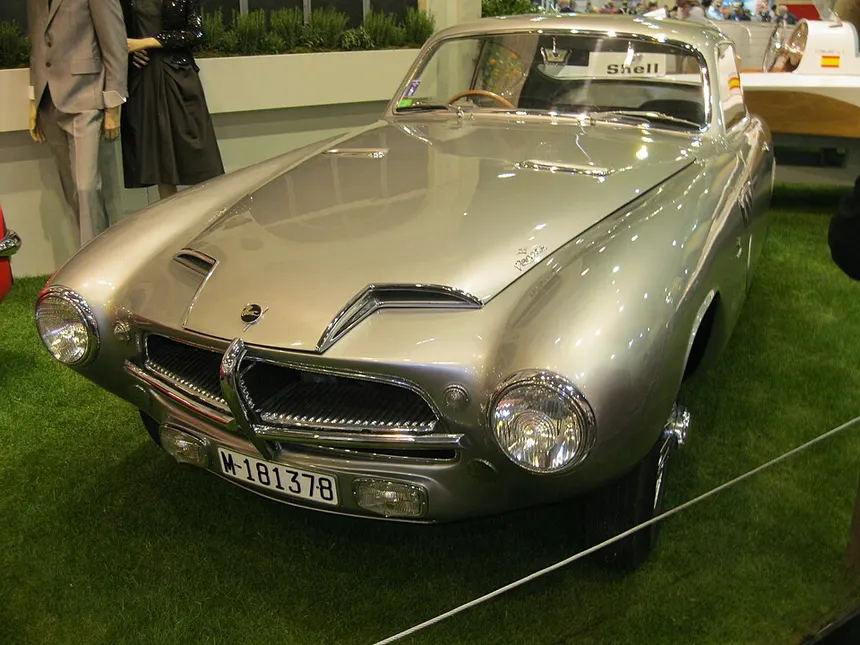
He pulls it off. In October 1951, at the Paris Motor Show, he presents the Pegaso Z-102. The same show where 25 years earlier he’d presented his Ricart 226. History comes full circle. The Z-102 commands every gaze in the room. A V8 with four overhead camshafts, light alloy construction, five-speed transmission. A Spanish supercar standing shoulder to shoulder with Ferrari, with Maserati, with the best the world had to offer.
But that’s another story. And you can already find it on NEC.
The Final Years: Lockheed, FISITA, and the Silence
In 1958, Ricart parts ways with ENASA. He’s criticized for paying more attention to technical innovation than economic reality. The engineer who designed everything with obsessive perfection wasn’t necessarily the best manager for an industrial enterprise. He knew it. Everyone knew it. But without his perfectionism, Pegaso would never have existed.
In 1959 he’s named president of Lockheed France, specialists in braking systems. Under his leadership, a fully automated plant is built near Beauvais. In 1961, Lockheed merges with Bendix and Ducellier to form the DBA group, and Ricart serves as executive director for scientific and technical progress until 1965. He also presides over FISITA — the International Federation of Automotive Engineering Societies. A Spaniard chairing the world federation of automotive engineers. In the 1960s. From a country under dictatorship. You don’t achieve that with politics. You achieve it with pure talent.
At CETA he continues working on two-stroke diesel engines, gas turbines, disc brakes, compact marine engines, high-power buses. He researches until his retirement in 1973.
Two years before his death, in an interview, he says something that sums it all up: “I have always fulfilled my duty. I am satisfied, because I dedicated my life to working on something I loved very much. Yes, I have worked, but I have led a fantastic life. I have had a wonderful time with my work.”
Wifredo Pelayo Ricart Medina dies in Barcelona on August 19, 1974, at the age of 77. In his city. Where it all started.
What Nobody Tells You
Ricart wasn’t perfect. He was obsessed with technical complexity, and some of his designs were monuments of engineering impossible to mass-produce. Jano admitted it, even as he admired him. They knew it at ENASA, where costs spiraled upward. The balance sheet suffered.
But reducing Ricart to a brilliant-but-impractical engineer is missing the point entirely. The double-wishbone front suspension he designed for Alfa Romeo became part of the brand’s DNA until the 1960s. The rear-engine, driver-forward architecture of the Tipo 512 is the foundation of all modern Formula 1. The Pegaso Z-102 was, for a few weeks in 1953, the fastest production car in the world after setting the speed record at Jabbeke, Belgium, averaging 243 km/h.
And the most important thing: without Wifredo Ricart, Enzo Ferrari would never have left Alfa Romeo. Without that forced departure, he wouldn’t have founded his own brand. Ferrari exists because a Spaniard did his job better. And nobody thanks him for it. Nobody remembers. Not even Barcelona has given him a proper street bearing his name.
Gijón has, though. On the campus of the Polytechnic School of Engineering. A small street, at a university, in a city that isn’t even his.
Wifredo Ricart designed the future of world motorsport, built the vehicle industry of an entire country, humiliated Ferrari in his own house, and died in silence. No grand awards. No statues. Without the world returning even half of what he gave.
Check you’re still alive.
1 thought on “WIFREDO RICART”