Vision BMW Alpina: They Killed a Sports Brand to Build a Maybach
There’s a video Chris Harris filmed years ago in an Alpina B7. He’s on an unrestricted stretch of autobahn, indicated needle past 280 km/h, and he keeps saying the same thing in different ways: this car is doing something the M5 cannot. It isn’t faster on a circuit. It isn’t louder. It isn’t more aggressive. It just keeps going. At that speed, in those conditions, with that steering still feeling like a steering wheel and not a video-game pad. The Alpina, Harris said, was built for the only place on earth where it could be used to its full extent. Germany. The autobahn. A country with no upper limit on a national motorway, and a workshop in Bavaria that built cars specifically for that country.
That workshop is now owned by BMW. And as of May 15, 2026, with the unveiling of the Vision BMW Alpina at Villa d’Este, that workshop no longer builds those cars.
What they showed
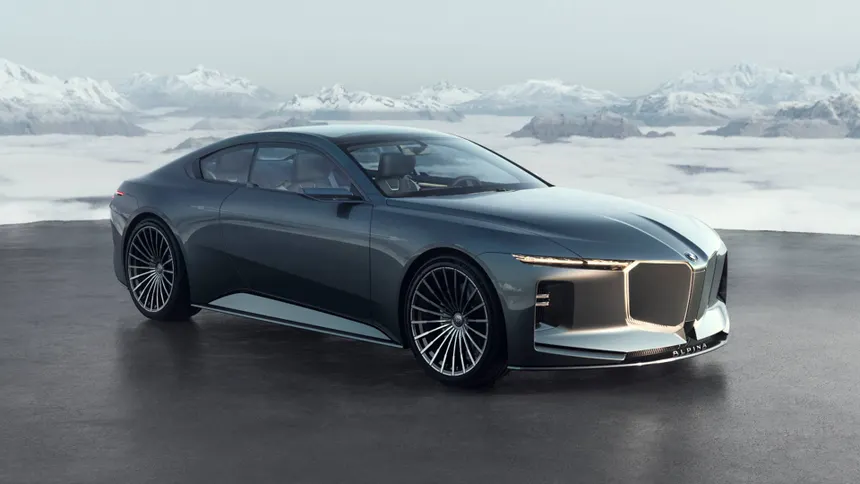
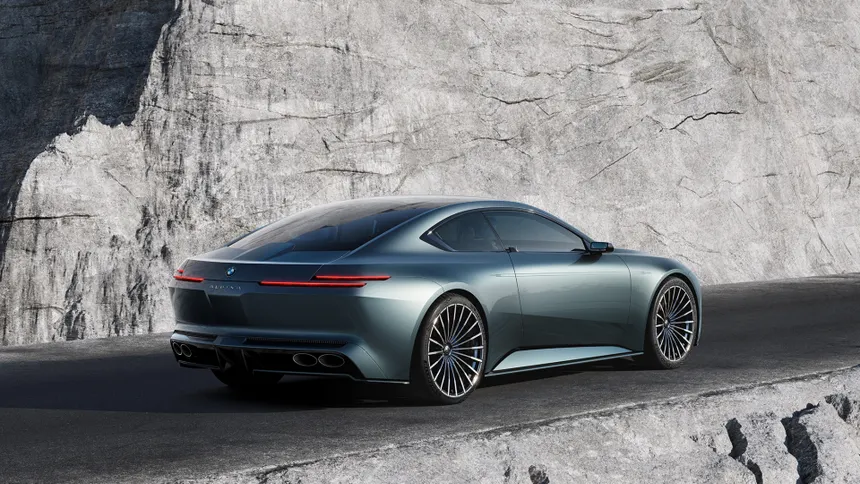
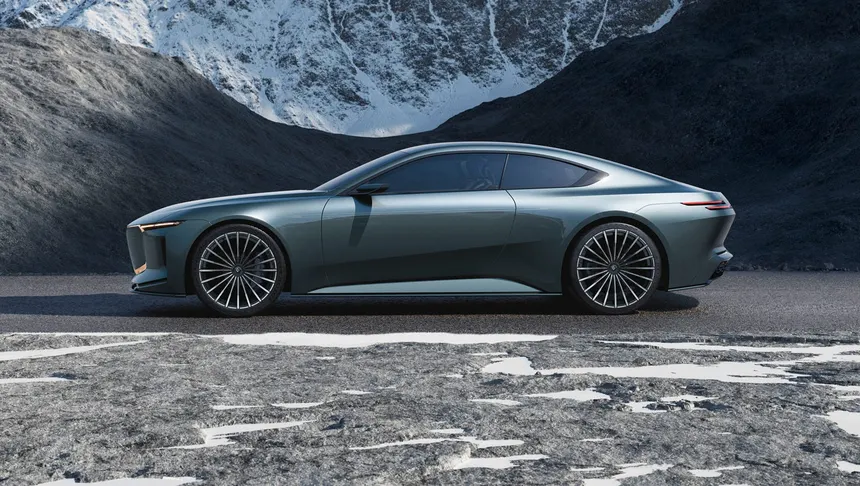
The concept is a coupé, 5.20 metres long, sixteen centimetres shorter than the new 7 Series with which it shares architecture. 22-inch wheels at the front, 23 at the rear, the 20-spoke design Alpina has used since 1971. Under the bonnet, a combustion V8. No plug. No hybrid. They announced this as if it were an act of defiance.
The drive modes are now called Comfort+, Speed and Speed+. Sport and Sport+ have been retired. The default mode, the one active when you turn the key, is Comfort+. The first thing the car says to you, before you’ve moved a metre, is “relax”. From a marque that for half a century put racing engineering inside touring shells so you could cross Germany at 280 indicated without breaking sweat.
The design is signed by Maximilian Missoni, formerly Polestar. Adrian van Hooydonk, head of BMW Group Design, describes the company’s role going forward as “the new custodians of this brand”. Custodians. The word a museum uses when accepting a donation from a widow.
What Alpina actually was
Top Gear once called Alpina “the coolest carmaker in the world”, and they weren’t entirely wrong, but they were celebrating the surface of something deeper. Burkard Bovensiepen founded Alpina in 1965, not as a tuner in the modern sense but as an engineer who rebuilt BMW engines from the inside out. New pistons. New camshafts. Reworked exhaust manifolds. Bespoke engine management before that phrase even existed. The cars left Buchloe with their own chassis numbers, registered as Alpinas, not as modified BMWs. That distinction is not semantic. It’s the entire point.
The engineering brief was always the same and always brutal: massive torque low down, linear delivery, sixth gear long enough to use on derestricted motorways, suspension firm but settled, none of the M division’s high-rpm aggression. M went to the Nürburgring. Alpina went to the autobahn. The cars weren’t slower than M cars. They were faster in conditions that mattered to one specific customer: the German businessman doing 600 kilometres from Munich to Hamburg in four hours, on a Wednesday, in a suit, without arriving sweating or deafened.
The B7 with its supercharged V8. The B12 with its hand-rebuilt M70 V12. The B10 Bi-Turbo, the 5 Series saloon that would outrun a contemporary Ferrari Testarossa to 250 km/h. The Roadster S, 250 units made. Every one of those cars was assembled by hand in Buchloe, and every one of them was quicker in the real world than the equivalent M car. Not on a stopwatch around Nordschleife. On a national road network, in a country with no upper limit, used by drivers who didn’t want to lift.
That is what BMW bought when they acquired Alpina in January 2026. And that is what they have, in less than five months, dismantled.
The thing the Vision admits without admitting
When a brand has to publicly declare “Speed, not Sport” as part of its positioning, what it’s actually admitting is that the M division has won the entire sporting territory inside the group. There is no longer room for two performance philosophies under one corporate roof. So Alpina has been sent to the other side of the building — the side with engraved crystal tumblers, a self-deploying mechanism, and a glass water bottle in the rear console. Yes, the concept has all of that. Each tumbler features twenty decolines and a six-degree rim profile. That’s now an Alpina feature.
Oliver Viellechner, the new head of the brand, said the Vision is there to “anchor the brand at the right level in the market”. The right level is the gap between top-spec BMW and entry-level Rolls-Royce. The direct rival isn’t an M5 Touring. It’s a Mercedes-Maybach S-Class. A brand that spent six decades making sport saloons for autobahn warriors is now positioned against the division Mercedes created to sell six-metre limousines to Hong Kong industrialists.
The much-celebrated combustion V8 isn’t an act of defiance. It’s a commercial calculation. The Maybach customer, the new Rolls customer, the buyer Alpina is now chasing — these people don’t want to plug anything in. They want fuel and silence. A large V8 in a 2.3-tonne car doesn’t exist to make the car fast. It exists to move mass elegantly. There’s a profound difference between those two things, and Alpina spent sixty years on the first one. The Vision is the second one.
Put it against a B7 Touring from 2008. Supercharged 4.4-litre V8, 500 hp, 1,870 kg, autobahn near Stuttgart, needle pinned at 290 indicated and stable. That was a V8 with a purpose. The Vision’s V8 is a V8 to sound good leaving the hotel.
Buchloe, two doors down
The cruel part of this whole operation isn’t the Vision itself. The Vision is a competent, well-resolved piece of design. The proportions work, the decolines painted beneath the clear coat are a clever detail, the shark-nose grille is a genuine evolution. The cruel part is that in the same town, in Buchloe, there’s another door. And behind that door are Burkard Bovensiepen’s sons, building what their father would have built.
Andreas and Florian Bovensiepen did not stay on at BMW. When the sale was signed, they founded Bovensiepen Automobiles. A year before BMW unveiled the Vision at Villa d’Este, the sons unveiled their first car at Fuori Concorso, on the opposite shore of Lake Como. A BMW M4 G83 with a carbon-fibre body designed by Zagato, twin-turbo straight-six retuned to 611 hp and 700 Nm, 0–100 in 3.3 seconds, 1,875 kg, titanium Akrapovič exhaust, bespoke Bilstein Damptronic dampers, 250 hours per car, 400-plus parts made to order. We covered that car here: BOVENSIEPEN ZAGATO: CUANDO BMW SE QUEDÓ ALPINA, LA FAMILIA NO SE FUE A CASA.
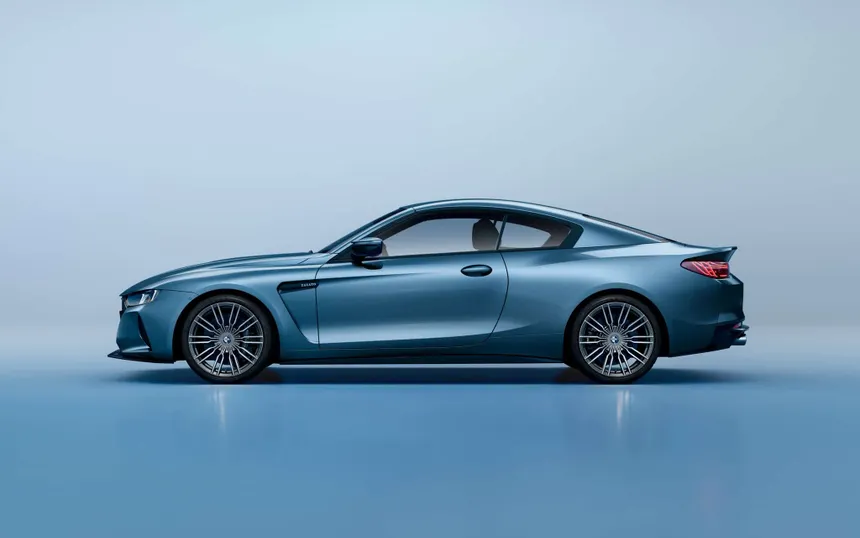
The spec sheet isn’t the point. The point is what that car says next to the Vision. While BMW unveils a Maybach-shaped Alpina with Comfort+ as default, the founder’s sons build a pillarless coupé with a Zagato double-bubble roof, an Akrapovič exhaust and a hand-rebuilt straight-six. In other words: an Alpina. A real one. Except they can’t call it an Alpina, because the name walked out the door with the corporate buyer.
Andreas Bovensiepen won the 24 Hours of Nürburgring in 1998, driving a BMW 320d to the first overall diesel victory in the race’s history. He isn’t a chief executive. He’s a racing driver. And at Fuori Concorso he said he wanted to build cars in “the tradition of German engineering and Italian design from the 50s, 60s and 70s”. That’s what his father used to say. That’s exactly what BMW stopped saying the moment they signed the cheque.
Buchloe now has two workshops. One is called Alpina and builds saloons for Maybach defectors. The other is called Bovensiepen and builds 611-hp Zagato coupés. Guess which one is continuing the original philosophy.
What’s lost when a family leaves
It happens every time a large manufacturer absorbs a small marque carrying a family name. AMG inside Mercedes is no longer Hans Werner Aufrecht’s AMG. Maserati inside Stellantis is no longer the Orsi family’s Maserati. And Alpina inside BMW is no longer Burkard Bovensiepen’s Alpina. The industrial acquisition always wins. The family always loses. And what gets lost cannot be bought back, because a technical philosophy is not an asset on the balance sheet. It has no inventory number. It lives in the heads of the people who created it. When those people walk out, it walks out with them. BMW didn’t acquire the Bovensiepens’ minds. They acquired the 20-spoke wheels, the decolines and the name. With that, they are now trying to convince the market that this is still the same brand.
It isn’t. And not because the Vision is a bad car — it isn’t. It’s because a Maybach with a Buchloe badge is no longer an Alpina, in the same way a tall flat white with oat milk in Shoreditch is not an Italian espresso, however much the chalkboard insists.
The question for the reader, and this is where NEC sticks its nose where it wasn’t invited, is this: does it matter? Does it matter that the name survives if the philosophy doesn’t? Is Alpina the badge on the nose, or the engineering underneath? The purists will say it’s the engineering. The buyers will say it’s the badge. BMW has placed its bet on the buyers, because they’re the ones writing the cheques. The first production BMW Alpina is expected in 2027, based on the 7 Series platform, with starting price estimates running between €180,000 and €250,000 according to specialist outlets such as GTSpirit and MotorTrend — BMW hasn’t confirmed an official figure, but the declared competitive set (Maybach, Bentley) tells you everything you need to know about the price ceiling.
The detail that gives the whole game away
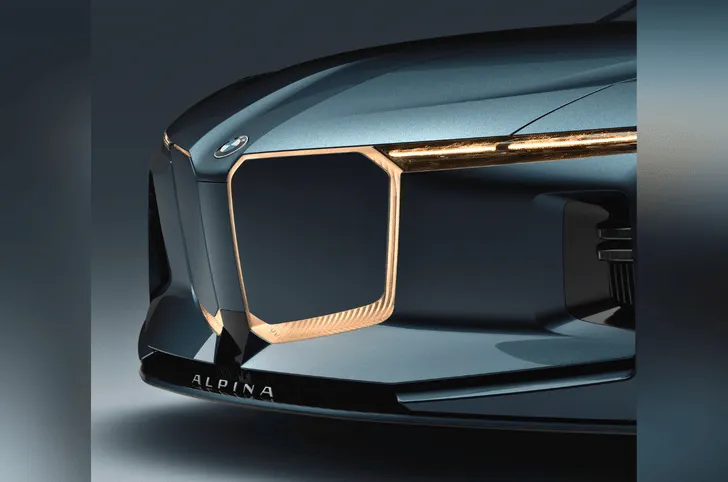
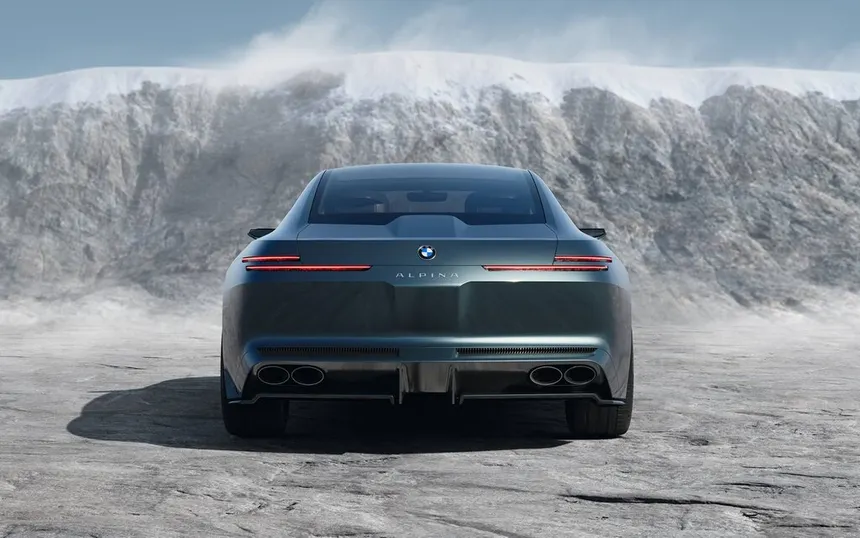
There’s one element of the Vision that tells the entire story in a single gesture. The decolines, those painted pinstripes Alpina has used as a visual signature since 1974, are on the Vision painted beneath the clear coat. Not on top. Beneath. You don’t see them at first. You only catch them up close, from an angle, when the light hits right. The official communiqué calls this “second-read sophistication”.
This would have been unthinkable on a historic Alpina. The decolines were there to be seen. Painted on top, in gold or blue, telling everyone in the outside lane that this 5 Series was not a 5 Series. It was a statement. A signature. A flag. Hiding them under the clear coat isn’t modernising them. It’s renouncing them. It’s saying “we don’t want the car to shout Alpina, we want it to whisper”. We don’t want our new Maybach customer to feel uncomfortable arriving at the country club in something with a tradition of angry saloons. We want money. And serious money, today, isn’t moved by anger. It’s moved by silence.
That decoline buried beneath the clear coat is the most elegant gravestone any marque has had laid on it in years. And the people who laid it didn’t even realise that was what they were doing.
What’s left
What’s left is the Bovensiepen Zagato. What’s left is Buchloe with two doors. What’s left is Andreas with his Akrapovič exhaust and his hand-tuned straight-six. What’s left is the real, verifiable possibility that ten years from now, when we talk about Alpinas that matter, we’ll be talking about the cars the sons built without the name — not the cars BMW built with it.
And one more thing is left. The feeling, from the bench, that marques carrying a family name have a shelf life that ends when the cheque is signed. Not when the death certificate is issued. When the cheque clears. The death certificate is just the subsequent paperwork. The Vision BMW Alpina is that paperwork. Beautifully presented. Well resolved. But paperwork.
Check you’re still alive.