AUDI QUATTRO


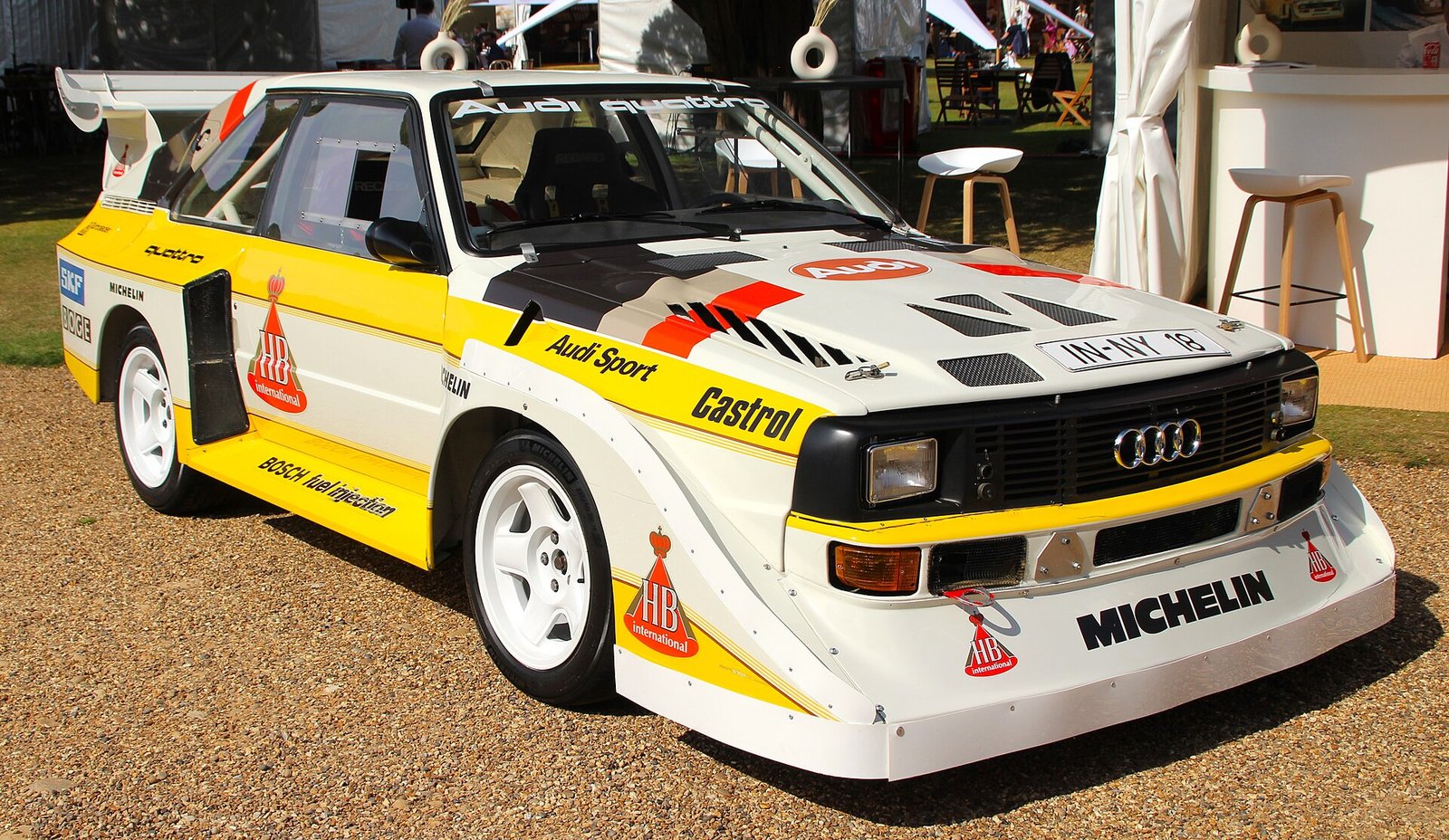
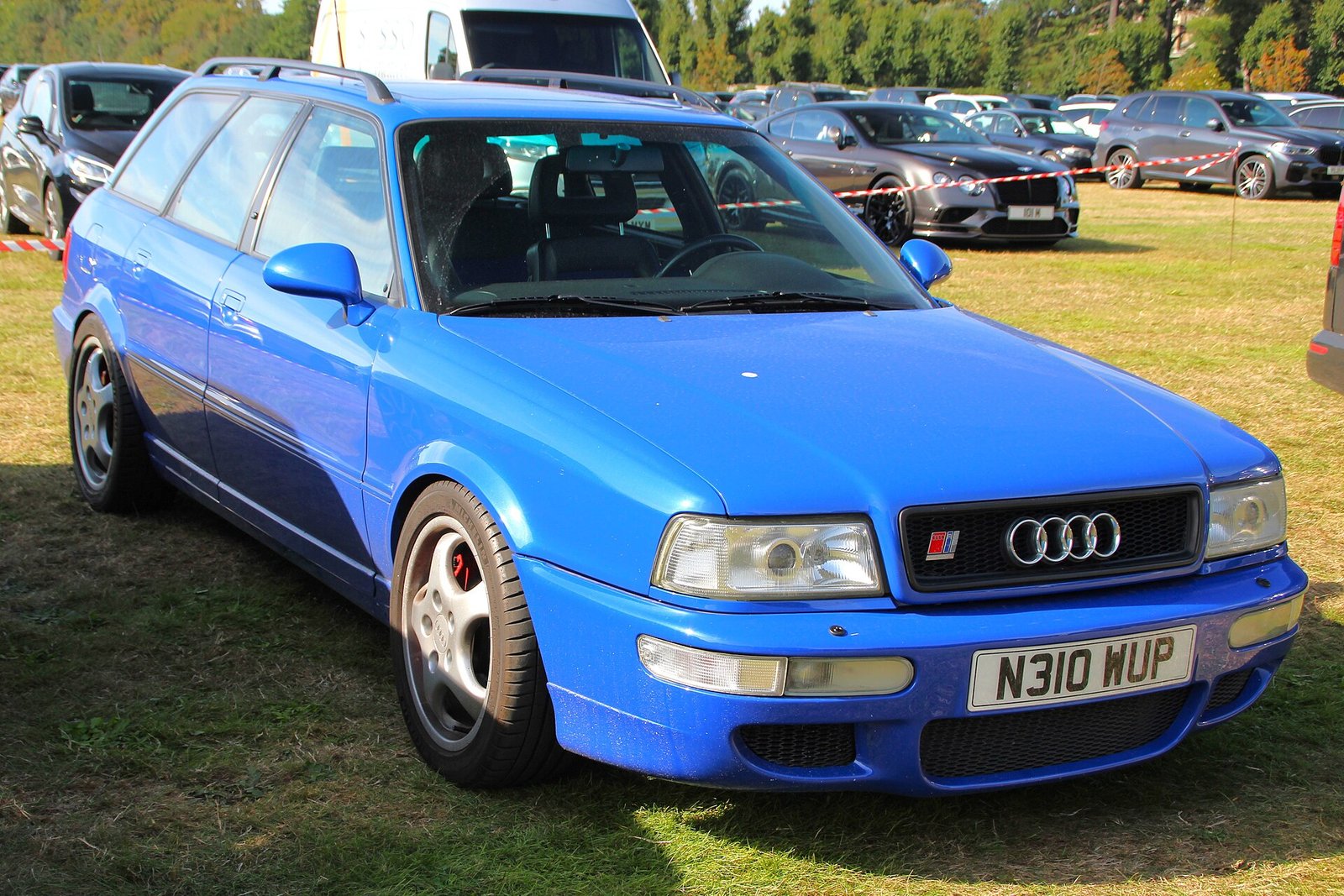
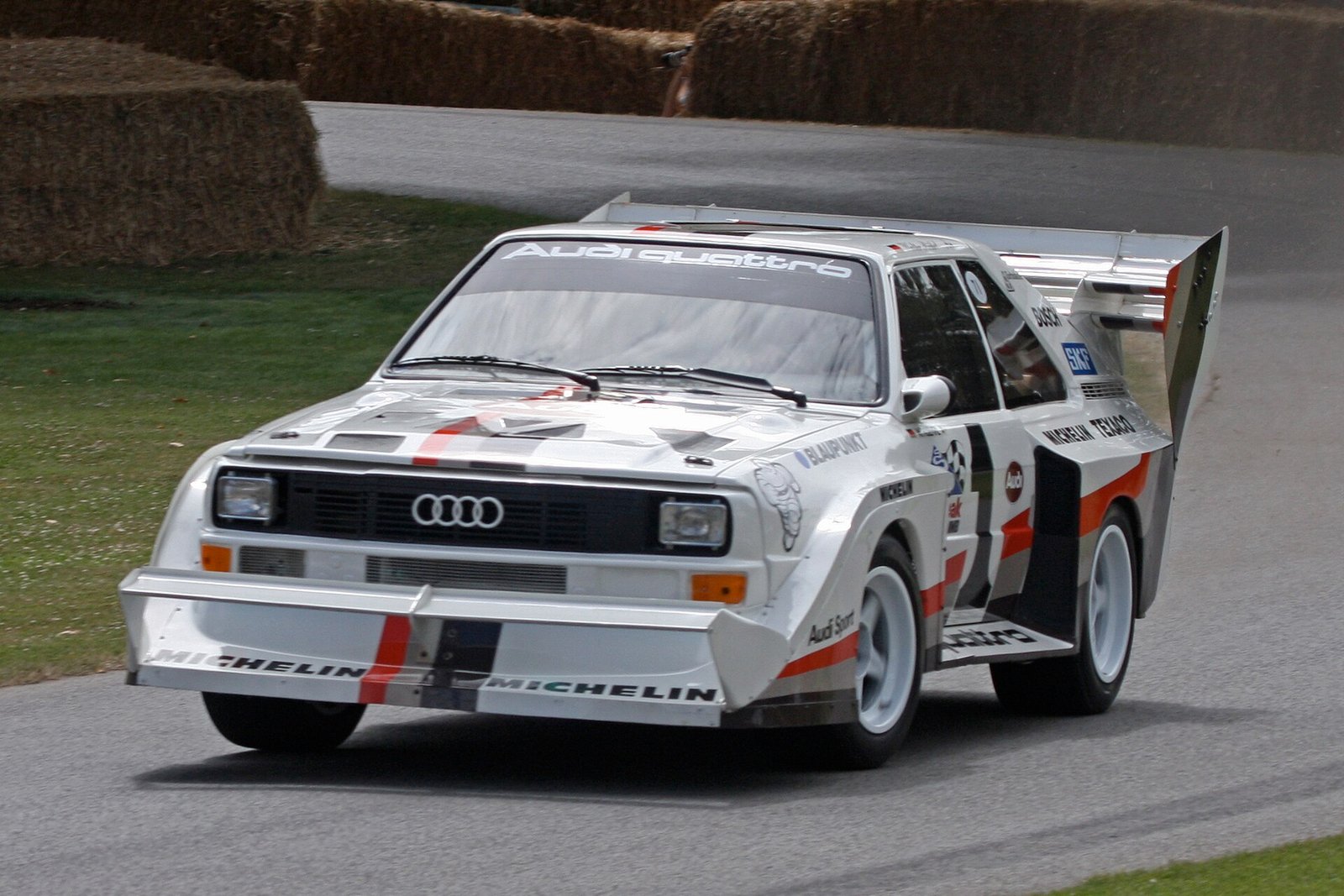
A classic Audi Sport Quattro S1 E2 spitting flames and the RS4 B5 Avant, the peak of Audi's engineering.

Introduction: When All-Wheel Drive Changed Everything

In 1981, Audi did something no one believed was possible. They took a front-wheel-drive car, stuffed a turbo in it, added all-wheel drive, and launched it into rallying. The motor world was never the same again.

But that is only half the story.

What began as a revolution in the snow and mud of the rallies turned into a corporate obsession with electronics, weight, and complexity. Today, the Audi Quattro is a concept that barely exists. What remains is a marketing label stuck to two-ton sedans with electronic systems that fail more often than they work.

This is the story of how Audi invented all-wheel drive and then systematically ruined it in the name of “innovation.”

The Original Quattro: The 1980 Revolution

The Car No One Expected

When the Audi Quattro debuted at the 1980 Geneva Motor Show, the automotive industry was divided. There were two camps: those who believed in front-wheel drive (Audi, Volkswagen, Renault) and those who believed in rear-wheel drive (BMW, Mercedes, Porsche).

Nobody believed in all-wheel drive. It was complicated, heavy, unnecessary. A luxury that only tractors needed.

Audi decided they were wrong.

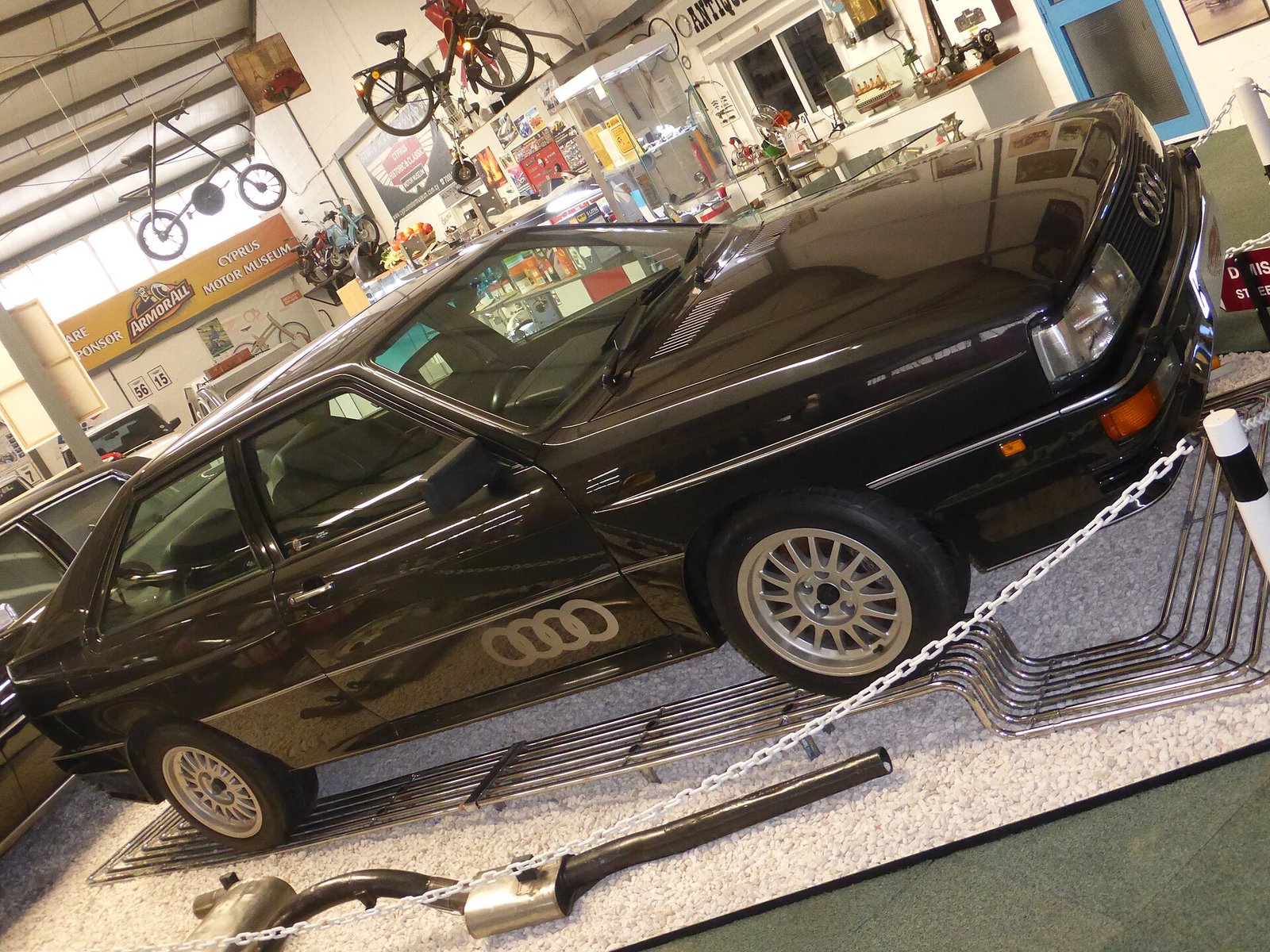
The original Quattro was a relatively modest car. Based on the Audi 80 Coupe, but with a 2.1-liter turbo engine that delivered 200 hp in its initial version. Nothing out of this world in terms of power. But the all-wheel drive changed everything.

When the Quattro arrived at the rallies in 1981, it was as if someone had changed the rules of the game. In snow, mud, and gravel, the Quattro simply disappeared into the horizon while its rear-wheel-drive competitors skidded and ran off the road. Hannu Mikkola, the legendary Finnish driver, won the 1981 Swedish Rally on his first attempt. The world was in shock.

It wasn’t magic. It was physics. The all-wheel drive distributed power to all four wheels, allowing acceleration in conditions where other cars could barely move. It was such a brutal advantage that rivals took years to react.

The Evolutions: When Audi Discovered the Turbo

But Audi didn’t settle for 200 hp. In 1982, they presented the 220 hp version. Then came the 250 hp version. And in 1984, the Sport Quattro with 280 hp and a wider, more aggressive, more extreme body.

But the real turning point came in 1985.

The Sport Quattro S1 E2: The Group B Monster

In 1985, Audi decided it was going to win the World Rally Championship at any price. They created the Sport Quattro S1 E2.

This was not a normal car. It was a weapon of war.

2.1 liters, turbocharged, 550 hp. Yes, you read that right. 550 horsepower from a 2.1-liter engine. That’s 262 hp per liter. In 1985. Without direct injection, without advanced electronic management, without anything we consider “normal” today.

The turbo lag was brutal. When you stepped on the gas, there was a second of waiting while the turbo spun up. And then, suddenly, 550 horses pushed you against the seat. Walter Röhrl, the driver who tested it, described it as “a big bang.” Literally, like an explosion.

The S1 E2 was only manufactured in small quantities for competition. Fewer than 20 units. Today, if you find one, you are looking at a museum artifact. A car that was designed in an era where safety was a suggestion and power was the only thing that mattered.

The S1 E2 won the World Rally Championship in 1985 and 1986. It was practically unbeatable. And then, in 1987, the FIA banned Group B. Too dangerous, they said. Too fast, they said.

They were probably right. But it was a shame.

The 80s-90s: The Consolidation of the Dynasty

The Road Quattro: When Competition Came to the Street

While Audi dominated the rallies, they were also creating road versions of the Quattro that were, simply, extraordinary.

The Quattro from 1980-1991 evolved from the initial 200 hp to 220, 250, and finally 280 hp. Each version was faster, more aggressive, more extreme than the last. The car weighed around 2,866 lbs (1,300 kg), had a low center of gravity, and the all-wheel drive made it practically impossible to unstick on the road.

But Audi knew it needed to take this further. It needed a car that was to sedans what the S1 E2 was to rallies. A car that was a pure performance machine.

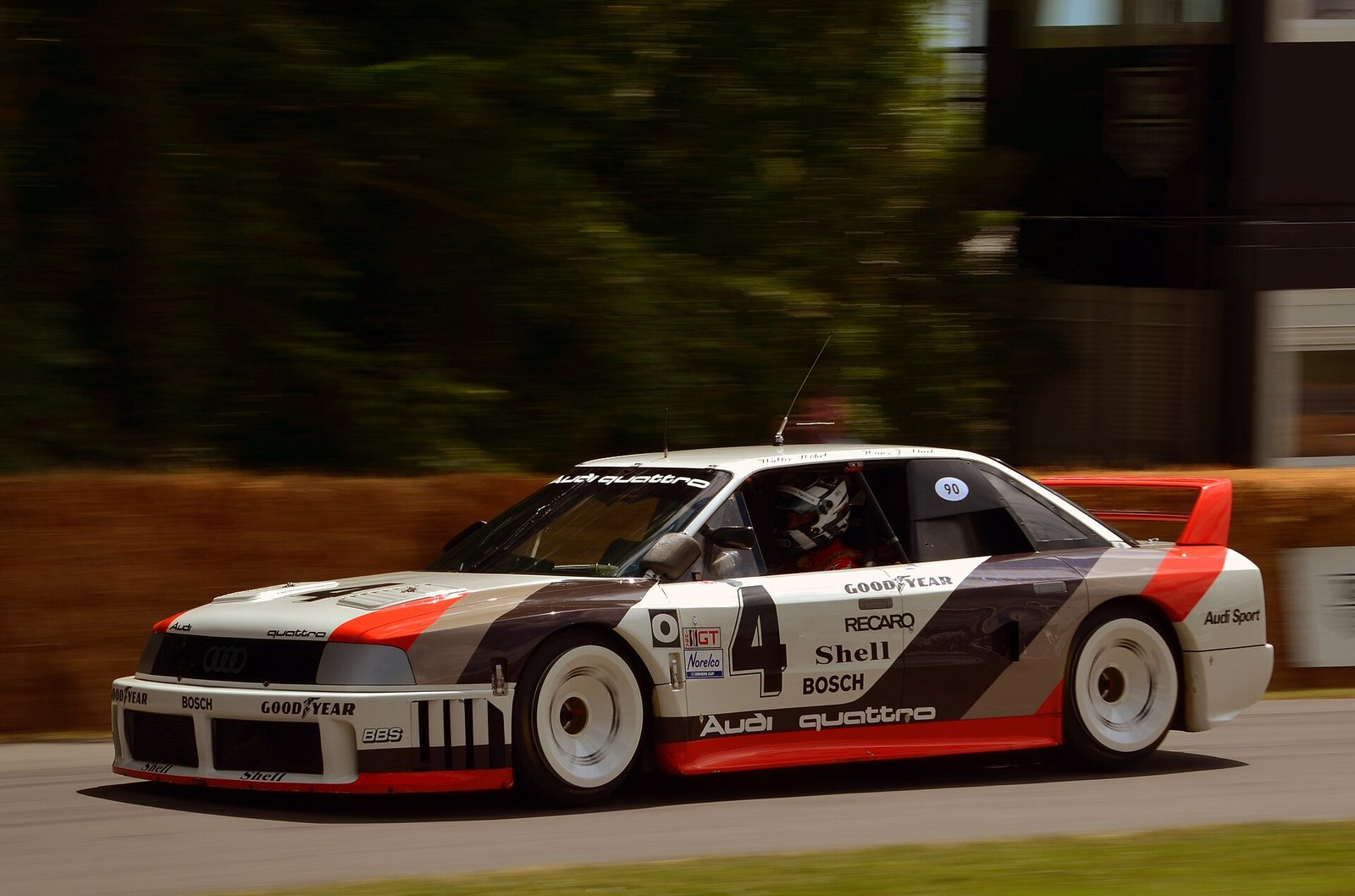
Thus was born the Audi 90 Quattro IMSA GTO in 1989. Only 292 units. A road car that was basically a race car with a license plate. 2.2-liter turbo engine, 450 hp, weight of 2,976 lbs (1,350 kg). Top speed without a limiter: 174 mph (280 km/h).

It was the fastest car Audi had ever manufactured. And almost nobody knows it.

The RS Era: When Audi Discovered It Could Build Fast Sedans

The RS2 Avant: The First True Beast (1994-1996)

In 1994, Audi did something revolutionary. They took a family wagon, stuffed a 2.2-liter turbo engine with 315 hp into it, and called it the RS2 Avant.

The motor world was in shock. A wagon. With 315 horses. And all-wheel drive.

The RS2 Avant weighed 3,516 lbs (1,595 kg). It did 0-60 mph in 4.8 seconds. Top speed: 155 mph (250 km/h), electronically limited, but without a limiter it reached 168 mph (270 km/h).

But the most important thing wasn’t the numbers. It was the experience. The RS2 Avant was a car you could use every day, take your family in, put things in the trunk, and then go to a track and compete with real sports cars. It was the definition of a practical car that was, at the same time, extraordinarily fast.

Only 2,891 units were manufactured between 1994 and 1996. Today, an RS2 Avant in good condition is worth more than $85,000 (€80,000). And it keeps rising. Because people have understood it was the first true RS. The first one built without compromises.

The RS4 B5: The Peak of Perfection (1999-2001)

But if the RS2 was revolutionary, the RS4 B5 was directly supernatural.

In 1999, Audi presented the RS4 Avant B5 with a 2.7-liter twin-turbo V6 engine that delivered 380 hp. Yes, a twin-turbo V6. Not a V8, not a V10. A V6.

The numbers seemed modest compared to what the competition offered. Mercedes had the C63 AMG with a V8. BMW had the M5 with a V8. But the RS4 B5 did something the others couldn’t do: it was light.

The RS4 B5 weighed 3,571 lbs (1,620 kg). The Mercedes C63 AMG of the time weighed 3,968 lbs (1,800 kg). The BMW M5 E39 weighed 3,858 lbs (1,750 kg). The Audi was 330-400 lbs (150-180 kg) lighter than its direct competitors.

And that made all the difference.

The RS4 B5 did 0-60 mph in 4.6 seconds. Top speed: 155 mph (250 km/h); without a limiter, 174 mph (280 km/h). But what really mattered was how it felt. The twin-turbo V6 sounded different from the competition’s V8s. Higher pitched, more technical, more… German.

And the Quattro all-wheel drive made it practically impossible to unstick. In any condition. Rain, snow, wet road. The RS4 B5 simply gripped and went.

Today, the RS4 B5 is considered by many as the best RS4 Audi has ever manufactured. It is your favorite, and you are right. It is the last RS4 that was built with the goal of being driven, not of selling numbers.

Only 8,000 units were manufactured between 1999 and 2001. Today, an RS4 B5 Avant in good condition is worth $55,000-$85,000 (€50,000-€80,000). And prices rise every year. Because collectors have understood this car represents a turning point. After this, everything changed.

The RS6 C5: The First V10 (2002-2004)

In 2002, Audi decided it needed an RS6. A car that was bigger, more powerful, more extreme than the RS4.

Thus was born the RS6 C5 with a 5.0-liter twin-turbo V10 engine that delivered 450 hp.

Wait. A twin-turbo V10. In 2002. That is Formula 1 technology in a road car.

The RS6 C5 weighed 4,100 lbs (1,860 kg). It did 0-60 mph in 3.9 seconds. Top speed: 155 mph (250 km/h) limited. Without a limiter, it reached 186 mph (300 km/h).

But here is where we start to see the first signs of what would come next. The RS6 C5 was heavier than the RS4 B5. Much heavier. Almost 550 lbs (250 kg) more. And although it had more power, the driving experience was less pure. There was more electronics. More assists. More “safety.”

The RS6 C5 was only manufactured for two years. Fewer than 5.000 units. Today it is worth $45,000-$65,000 (€40,000-€60,000). It doesn’t rise in price like the RS4 B5. Because people have understood it was the first step in the wrong direction.

The Era of Complexity: 2006-2015

The RS4 B7: When Everything Got Complicated

In 2006, Audi presented the RS4 B7 with a 4.2-liter V8 engine that delivered 420 hp.

The numbers looked good. More power than the B5. More cylinders. More… everything.

But the weight. The RS4 B7 weighed 3,902 lbs (1,770 kg). 330 lbs (150 kg) more than the B5. Why? Safety systems. Electronics. Sound insulation. Electric seats. Three-zone climate control. Adaptive suspension. Electronic power steering.

The RS4 B7 was more comfortable than the B5. Quieter. More refined. But it was less fun. Less pure. Less… honest.

And then there were the problems. The 4.2-liter V8 had a tendency to fail in the camshafts. The adaptive suspension system failed regularly. The electronics were a labyrinth of complexity that only Audi seemed to understand.

The RS4 B7 today is worth $33,000-$55,000 (€30,000-€50,000). And prices drop every year. Because people have understood it was the first RS that was designed to sell, not to be driven.

The RS6 C6: The Ultimate Twin-Turbo V10 (2008-2010)

In 2008, Audi presented the RS6 C6 with a 5.0-liter twin-turbo V10 engine that delivered 580 hp.

This was the peak. The most powerful twin-turbo V10 Audi has ever manufactured in a road car.

The RS6 C6 weighed 4,300 lbs (1,950 kg). It did 0-60 mph in 3.6 seconds. Top speed: 155 mph (250 km/h) limited. Without a limiter, it reached 199 mph (320 km/h).

But again, the weight. The RS6 C5 weighed 4,100 lbs. The C6 weighed 4,300 lbs. Almost 220 lbs (100 kg) more. For what? More electronics. More assists. More complexity.

The twin-turbo V10 was extraordinary in terms of power. But it sounded artificial. Audi had added an active exhaust system that opened and closed valves to change the sound. It was marketing. It was engineering to sell, not to drive.

The RS6 C6 today is worth $45,000-$65,000 (€40,000-€60,000). It doesn’t rise in price. Because people have understood it was another step in the wrong direction.

The Era of Electronics: 2013-Present

The RS4 B8: Total Automation (2012-2015)

In 2012, Audi presented the RS4 B8 with a 4.2-liter V8 engine that delivered 450 hp.

But here is where everything changed. The RS4 B8 had an eight-speed automatic transmission as standard. There was no manual box. Period. Audi had decided that drivers no longer wanted manual control. They wanted comfort.

The RS4 B8 weighed 3,957 lbs (1,795 kg). It did 0-60 mph in 4.1 seconds. Top speed: 155 mph (250 km/h) limited.

But the numbers don’t tell the story. What mattered was that the RS4 B8 was a completely different car from the B5. It wasn’t a car for driving. It was a car to be driven. There was an intelligent all-wheel-drive system that distributed torque automatically. There was stability control that intervened constantly. There were driving modes that changed the car’s behavior.

Is that bad? No. It’s different. It’s more accessible. Anyone can look like a pilot in an RS4 B8.

But something had been lost. The connection between the driver and the car. The feeling that you were piloting a machine. Now you were piloting a computer.

The RS4 B8 today is worth $28,000-$45,000 (€25,000-€40,000). And prices drop every year. Because people have understood it was the first RS that was designed completely for comfort, not for performance.

The RS6 C7: The 4.0-Liter Turbo Lag (2013-2018)

In 2013, Audi presented the RS6 C7 with a 4.0-liter twin-turbo V8 engine that delivered 560 hp.

Audi had abandoned the V10. The V10 was too expensive to manufacture. Too complex. Too unprofitable.

So they decided to put two turbos on a 4.0-liter V8. The result: an engine that had a lot of power but also had a lot of turbo lag.

The RS6 C7 weighed 4,300 lbs (1,950 kg). It did 0-60 mph in 3.7 seconds. Top speed: 155 mph (250 km/h) limited. Without a limiter, it reached 189 mph (305 km/h).

But the turbo lag was evident. When you stepped on the gas, there was a microsecond of waiting. The turbo had to spin up, the intercooler had to cool the air, the intake manifold had to fill. And then, suddenly, 560 horses.

It was fast. Brutally fast. But it wasn’t pure. It wasn’t honest. It was a car that needed electronic systems to be drivable.

The RS6 C7 today is worth $45,000-$65,000 (€40,000-€60,000). Prices remain stable. Because people understand it was a good car, but it was the last RS that tried to be a real car.

The Era of Madness: 2018-Present

The RS4 B9: 2.9-Liter Twin-Turbo, 450 hp, 3,968 lbs (2018-Present)

In 2018, Audi presented the RS4 B9 with a 2.9-liter twin-turbo V6 engine that delivered 450 hp.

Wait. A 2.9-liter V6. With two turbos. 450 hp. That’s 155 hp per liter. That is Formula 1 technology in a road car.

But the weight. The RS4 B9 weighed 3,968 lbs (1,800 kg). The RS4 B5 weighed 3,571 lbs. That’s about 400 lbs (180 kg) more. For what?

Safety systems. Electronics. Sound insulation. Electric seats. Four-zone climate control. Adaptive suspension. Electronic power steering. Eight-speed automatic transmission. Intelligent all-wheel drive. Stability control. Driving modes. Screens. More screens. Even more screens.

The RS4 B9 did 0-60 mph in 3.9 seconds. Top speed: 155 mph (250 km/h) limited. Without a limiter, it reached 180 mph (290 km/h).

But here is where the story gets sad. The RS4 B9 was slower than the RS4 B5 in 0-60 mph (4.6 seconds vs 3.9 seconds—yes, it is faster, but it loses in the experience). It weighed 400 lbs more. It had fewer cylinders. It had a turbo engine that needed electronic systems to be drivable.

Why? Because Audi needed to reduce CO₂ emissions. Because European governments had established increasingly strict emissions limits. Because profitability was more important than purity.

The RS4 B9 today is worth $55,000-$77,000 (€50,000-€70,000). Prices are holding. Because people understand it was a good car, but it was the last RS that tried to be a real car. After this, everything was marketing.

The RS6 C8: The 4.0-Liter Twin-Turbo, 592 hp, 4,409 lbs (2019-Present)

In 2019, Audi presented the RS6 C8 with a 4.0-liter twin-turbo V8 engine that delivered 592 hp.

The RS6 C8 weighed 4,409 lbs (2,000 kg). Yes, two tons. A car that weighs two tons. A car that is practically as heavy as an SUV.

Why? Because Audi had decided that customers wanted comfort, not performance. They wanted electric seats, four-zone climate control, touch screens, infotainment systems, 5G connectivity, and a trunk big enough to carry the whole family.

The RS6 C8 did 0-60 mph in 3.6 seconds. Top speed: 155 mph (250 km/h) limited. Without a limiter, it reached 199 mph (320 km/h).

But the numbers don’t tell the story. What mattered was that the RS6 C8 was a completely different car from any previous RS. It was a family sedan. With two tons of weight. With a turbo engine. With electronic systems that controlled practically everything.

Was it a good car? Yes. Was it fast? Yes. Was it a true RS? No. It was an RS marketing job. It was a car that had the RS label but didn’t have the RS soul.

The RS6 C8 today is worth $88,000-$132,000 (€80,000-€120,000). Prices are rising. Because it’s new, it’s fast, and people want it. But in 10 years, when the next model comes out, the RS6 C8 will be worth much less. Because people will have understood it was another step in the wrong direction.

The RS e-tron GT: The End of the Line (2021-Present)

In 2021, Audi presented the RS e-tron GT, a completely electric car with 925 hp of power.

Yes, 925 hp. More power than any previous RS.

But the weight. The RS e-tron GT weighs 5,291 lbs (2,400 kg). Two and a half tons. A car that weighs more than a 90s SUV.

Why? Because the battery weighs 1,763 lbs (800 kg). Because the cooling systems for the electric motors weigh hundreds of pounds. Because the structure has to be stronger to support the weight of the battery.

The RS e-tron GT does 0-60 mph in 3.4 seconds. It is the fastest RS Audi has ever manufactured. But it has no sound. It has no gear changes. It doesn’t have the driving experience that defines an RS.

It’s fast. Brutally fast. But it’s not an RS. It’s an RS marketing job. It’s a car that has the RS label but has nothing to do with what it means to be an RS.

The RS e-tron GT today is worth $165,000 (€150,000). In 10 years, when the battery begins to degrade, when the electronic systems begin to fail, when repairers discover that a repair costs $55,000, the RS e-tron GT will be worth $33,000. Because people will have understood it was a mistake.


The Evolution (or Devolution) Table

ModelYearsEnginePowerWeight0-60 mph (approx)Characteristic
Original Quattro1980-872.1 Turbo I5200 hp2,866 lbs7.1sRally revolution
Quattro Sport1984-872.1 Turbo I5280 hp2,976 lbs6.1sMore aggressive
Sport Quattro S1 E21985-872.1 Turbo I5550 hp2,645 lbs3.1sGroup B monster, only 20 units
Audi 90 IMSA GTO19892.2 Turbo I5450 hp2,976 lbs4.6sOnly 292 units, almost unknown
RS2 Avant1994-962.2 Turbo I5315 hp3,516 lbs4.8sFirst true RS
RS4 B5 Avant1999-012.7 V6 Biturbo380 hp3,571 lbs4.6sThe peak of perfection
RS6 C52002-045.0 V10 Biturbo450 hp4,100 lbs3.9sFirst V10, complexity begins
RS4 B72006-104.2 V8420 hp3,902 lbs4.1sMore weight, more electronics
RS6 C62008-105.0 V10 Biturbo580 hp4,300 lbs3.6sPeak of the biturbo V10
RS4 B82012-154.2 V8450 hp3,957 lbs4.1sStandard automatic, end of purity
RS6 C72013-184.0 V8 Biturbo560 hp4,300 lbs3.7sEvident turbo lag
RS4 B92018-Pres2.9 V6 Biturbo450 hp3,968 lbs3.9s155 hp/L, but 400 lbs more than B5
RS6 C82019-Pres4.0 V8 Biturbo592 hp4,409 lbs3.6sTwo tons, family sedan
RS e-tron GT2021-PresDual Electric Motor925 hp5,291 lbs3.4sTwo and a half tons, soulless

Why the Original Quattro Is the Only True Quattro

The Physics of Revolution

The original Quattro worked because it was simple. Mechanical all-wheel drive. A turbo. An intercooler. A manual gearbox. Mechanical steering. Steel suspension. Disc brakes.

That was all. There was no electronics intervening. There were no safety systems correcting your errors. There were no screens. There was no software.

When you stepped on the gas, the car responded. When you turned the steering wheel, the car turned. When you braked, the car braked. It was a direct relationship between the driver and the machine.

The RS4 B5 maintained that purity. It had electronics, yes, but it was electronics that served to improve performance, not to replace the driver. The Quattro all-wheel-drive system distributed torque automatically, but the driver was still the one controlling the car.

The Death of Purity

From the RS4 B7 onwards, everything changed. Electronics began to intervene constantly. Traction control limited power. Stability control corrected your errors. Driving modes changed the car’s behavior.

Today, in the RS6 C8 and the RS e-tron GT, electronics control practically everything. The driver is more a passenger than a pilot. The car decides when to accelerate, when to brake, how to distribute torque between the wheels.

Is that bad? No. It’s different. It’s more accessible. Anyone can look like a pilot in a modern RS.

But something has been lost. The connection between the driver and the car. The feeling that you are piloting a machine. The experience of driving.

Conclusion: Quattro Died with the RS4 B5

The RS4 B5 Avant is the last true Quattro.

After this, everything was marketing. Everything was electronics. Everything was complexity.

The original Quattro revolutionized the motor world. It demonstrated that all-wheel drive could be a brutal competitive advantage. It demonstrated that physics could beat politics.

But Audi forgot that lesson. It forgot that simplicity is beauty. It forgot that the connection between the driver and the car is what makes a car special.

Today, the Quattro is just a marketing label stuck to two-ton sedans with electronic systems that fail more often than they work.

If you want a true Quattro, look for an RS4 B5 Avant in good condition. Or if you are lucky, an RS2 Avant. Or the ultimate unicorn: a Sport Quattro S1 E2 of the 20 that were manufactured.

Pay whatever they ask, because every year they are worth more.

And every year that passes, it is better understood why.

The Quattro revolutionized the motor world. Everything else is marketing.

Where to Find These Unicorns

If you are looking for an authentic Quattro, here is your approximate price guide (2025):

  • Original Quattro (1980-1987): $55,000-$110,000 (€50,000-€100,000)
  • Sport Quattro S1 E2: $550,000+ (€500,000+) (If you find one, it’s a museum)
  • Audi 90 IMSA GTO: $165,000-$275,000 (€150,000-€250,000) (Almost unknown)
  • RS2 Avant: $88,000-$132,000 (€80,000-€120,000)
  • RS4 B5 Avant: $55,000-$88,000 (€50,000-€80,000) (Your favorite, for good reason)
  • RS6 C5: $45,000-$65,000 (€40,000-€60,000)
  • RS4 B7: $28,000-$45,000 (€25,000-€40,000)
  • RS6 C6: $45,000-$65,000 (€40,000-€60,000)
  • RS4 B8: $33,000-$55,000 (€30,000-€50,000)
  • RS6 C7: $45,000-$65,000 (€40,000-€60,000)
  • RS4 B9: $55,000-$77,000 (€50,000-€70,000)
  • RS6 C8: $88,000-$132,000 (€80,000-€120,000)
  • RS e-tron GT: $165,000 (€150,000) (Drops every year)

The prices of old models go up every year. The prices of new models go down every year. Because people have understood the difference between a car that was built to be driven and a car that was built to sell.

#AudiQuattro #RallyLegend #RS2 #RS4B5 #Petrolheads #AutomotiveHistory

Not Enough Cylinders – Technical opinion with criteria, not with an algorithm.


7 thoughts on “AUDI QUATTRO”

  1. Pingback: The 5-Cylinder Engine: History, Engineering and Sound of Motoring's Most Unique Engine

  2. Pingback: Lancia 037: The Last Rear-Wheel Drive WRC Champion

  3. Pingback: Volvo 850 T5-R: The Flying Brick – When Sweden Called Porsche to Build a Monster

  4. Pingback: Pikes Peak: La Carrera a las Nubes | Historia y Récords

  5. Pingback: Peugeot 405 T16: Vatanen, Climb Dance & Pikes Peak Legend

  6. Pingback: Ford RS200: The Group B Rally Car Two F1 Engineers Built From Scratch

  7. Pingback: Kimera Automobili: The 037 Lancia Never Built

Leave a Comment

Your email address will not be published. Required fields are marked *

Scroll to Top