VIASA: The Train Builder That Made Spain’s Forgotten Jeep
Picture the scene. It’s the late 1950s, you run one of Spain’s biggest railway manufacturers, and the order book for train carriages has just gone quiet. The factory floor is cooling down. Hundreds of workers are about to go home with nothing to do. What do you build to keep the lights on?
If you’re Construcciones y Auxiliares de Ferrocarriles —CAF, the same outfit that today builds trams and trains across the world— the answer turns out to be one of the strangest left-turns in European motoring history. You build Jeeps. American Jeeps. With Spanish parts. In a railway shed in Zaragoza. And somehow, against every reasonable expectation, you end up creating the most distinctly Spanish off-roader that ever existed.
This is the story of VIASA. It’s a story Chris Harris would love, because it’s exactly the kind of obscure, badge-engineered, licence-built oddity that turns out to be far more interesting than the famous stuff. Buckle up.
When a railway company needs a side hustle
The thing nobody tells you about VIASA is that it wasn’t born out of passion. It was born out of a balance-sheet problem.
Railway manufacturing is feast or famine. Orders come in massive, infrequent lumps, tied to government spending and decade-long cycles. When there’s no contract for rolling stock, the factory sits idle. The firm at the heart of this story began in late-19th-century Zaragoza as Carde y Escoriaza, founder of the city’s first electric trams; in 1920 it was renamed Material Móvil y Construcciones —same company, new sign over the door. In 1954, Construcciones y Auxiliar de Ferrocarriles —CAF, the railway giant that today builds trains worldwide— took control of it. Faced with exactly this feast-or-famine problem, the answer, in 1959, was a subsidiary with a name that doubled as a business plan: Vehículos Industriales y Agrícolas, S.A. Industrial and Agricultural Vehicles, Inc. VIASA.
Here’s the geopolitical detail that makes it odd. VIASA was one of just three Spanish firms licensed to build commercial vehicles at the time. The other two —ENASA, makers of the legendary Pegaso, and AISA— were state-controlled through Spain’s National Industry Institute. VIASA was the only one hanging off a privately-held railway group. From day one, it was the outsider.
The licence nobody else wanted (and how the French handed it over)
Now, how do you get the rights to build a Jeep when you’re a train company with zero automotive pedigree? Simple. You wait for someone else to drop the ball.
The French firm Hotchkiss et Cie had been building Jeeps under Willys licence. When Hotchkiss lost that arrangement, all the tooling, the dies and the machinery suddenly became available. VIASA pounced, bought the lot, and skipped half the cost of setting up a production line. It started building with the tools a Frenchman had left behind. There’s something gloriously pragmatic about that.
Production began in 1960. The first Spanish-built Jeep was photographed outside the Campo Sepulcro factory —right next to the old railway station— in a shed inaugurated that October during the Zaragoza trade fair, with the Minister of the Army and the American ambassador in attendance. Franco-era Spain needed those photographs almost as much as it needed the vehicles.
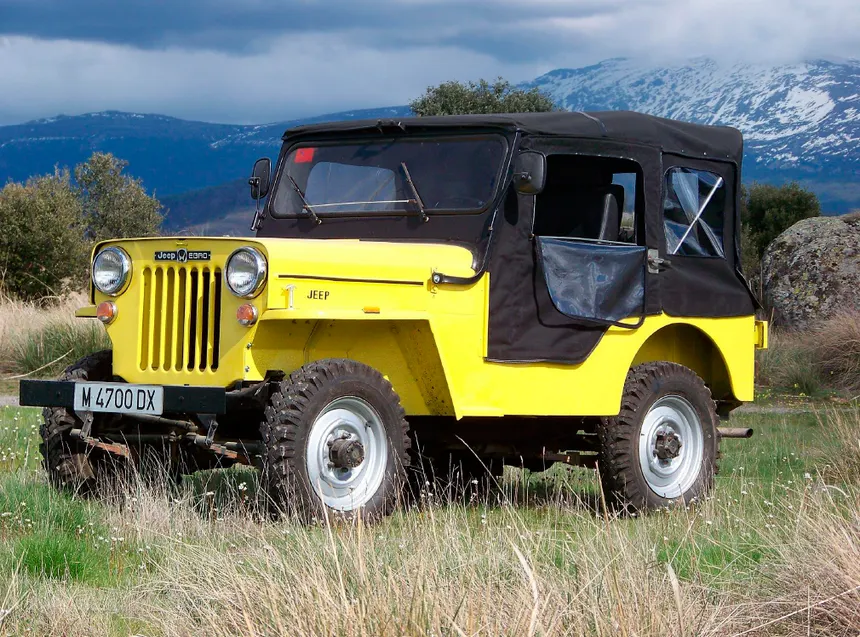
The chosen model was the CJ-3B —and here’s where any Jeep anorak sits up. The CJ-3B is the “high-hood” Jeep, the one with the comically tall bonnet line. That wasn’t styling. It was engineering necessity: when America fitted the taller Hurricane overhead-valve engine in place of the old flathead Go-Devil, it simply wouldn’t fit under the original bonnet, so they raised it. Spain, in other words, licensed a design that was already going stale in Toledo, Ohio. And then squeezed more than two decades out of it. While Willys moved on, Zaragoza froze time. Improbably, that became a strength.
Built in Spain, by law
You can’t understand any of this without understanding the economic cage it lived in. Franco’s Spain was a protectionist, autarkic economy. The Ministry of Industry dictated how much you could import and how much you had to make at home. The rules imposed progressive “nationalisation” quotas: you started with a permitted share of imported parts and, phase by phase, were forced to drive it down until almost the entire car was Spanish-built. Everything else, made at home, or nothing.
VIASA went well beyond the minimum. The very first units used leftover American mechanicals, but from unit number 200 onward —this is documented— every single component was Spanish-made. Many, in turn, built under their own foreign licences. Spain making licensed parts to assemble a licensed car: layer upon layer of technological dependence, wrapped in the flag of national pride. That was the deal.
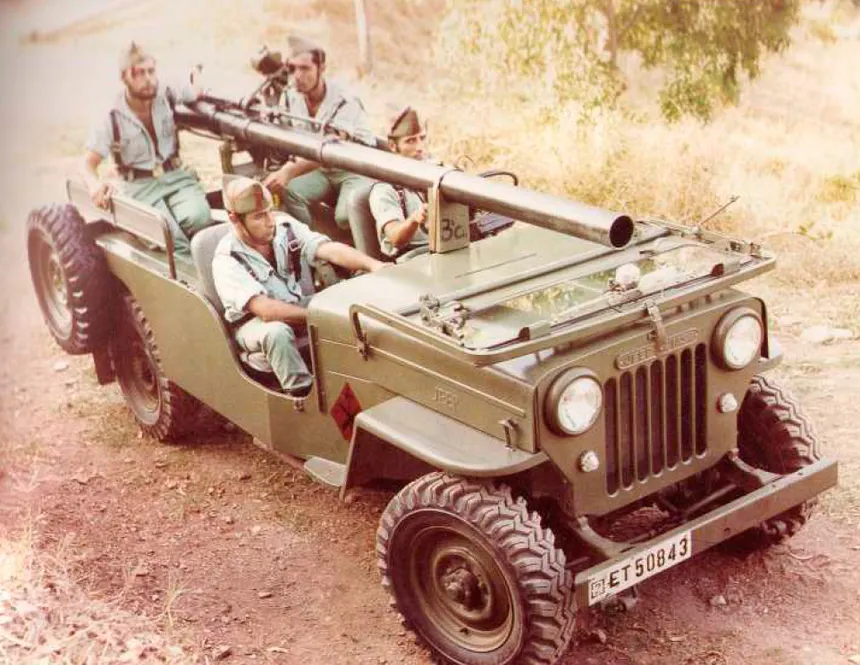
The engines tell the tale. You could have your CJ-3B with the original American petrol unit, a Perkins diesel, or a Barreiros diesel. Four cylinders, take it or leave it. These early Jeeps were sold as vehicles “of high national interest for the army and agriculture” —a polite way of saying they went to the military, the Civil Guard and any farmer who could stomach the price. And the price stung: by 1963 a Spanish Jeep ran from 180,000 pesetas for the short petrol soft-top to nearly 250,000 for the long-wheelbase pickup with a powered crane. Serious money.
The bits America never built
This is where VIASA stops being a glorified assembly shop and grows a personality, because the Spanish did things that simply didn’t exist on the other side of the Atlantic.
First, the CJ-6: a stretched, long-wheelbase development of the CJ-3B, engineered in Spain to carry more people and more load. Not a copy of anything. Pure Zaragoza ingenuity.
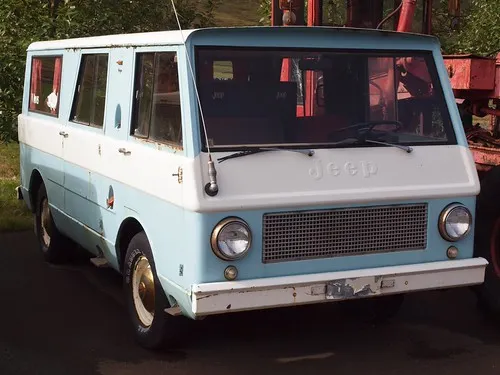
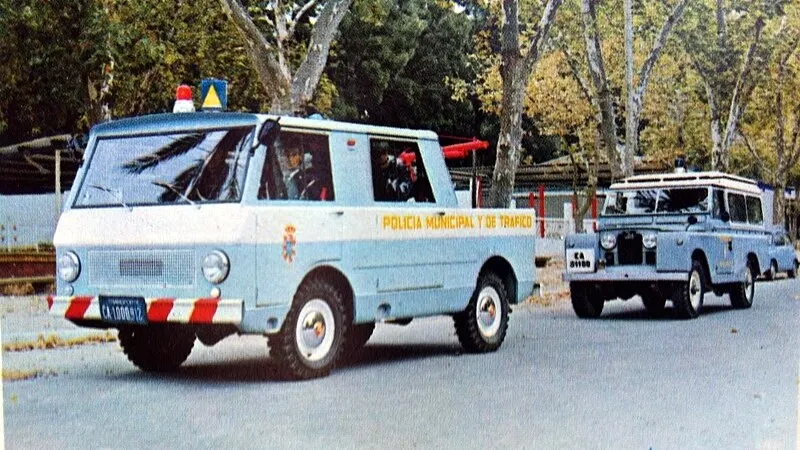
Second —and this is the good bit— the SV vans, launched in 1963. Forward-control, mid-engined vans built on Jeep running gear but wearing bodywork of entirely Spanish design. They weren’t built anywhere else on earth. Only in Zaragoza. The logic was the same one Land Rover’s Spanish cousin Santana would later apply: package the space better to make a light truck that could still go off-road. Four models on one base, a full industrial range, and today they’re genuine unicorns.
Third, and almost forgotten: VIASA built tractors too. Under licence from Italy’s Fiat, the 211R, 411R and 421R models. Because remember, the “A” in VIASA stood for Agricultural, and in rural Spain that was the business that actually paid the bills.
A railway company, building American Jeeps with Spanish parts, home-designed vans, and Italian tractors. All at once. Try finding that combination anywhere else.
The Comando: the day the Jeep put on a suit
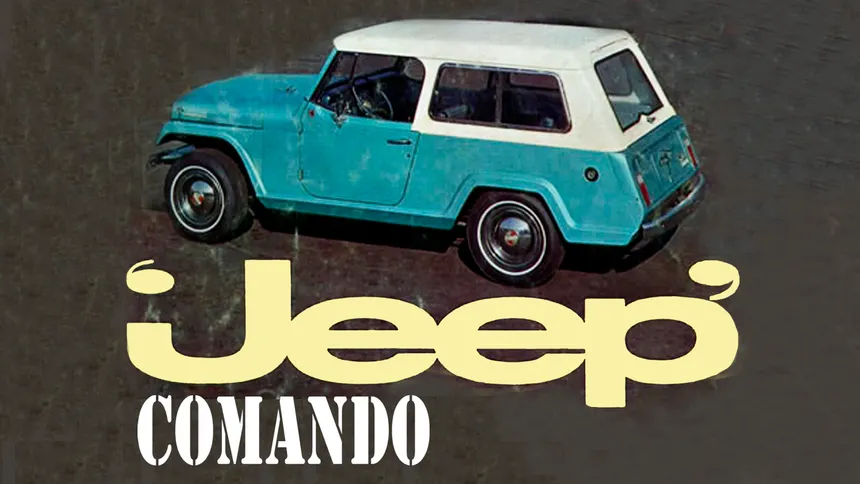
In 1968, at the Barcelona Motor Show, VIASA unveiled the Jeep Comando. And the whole character of the brand shifted.
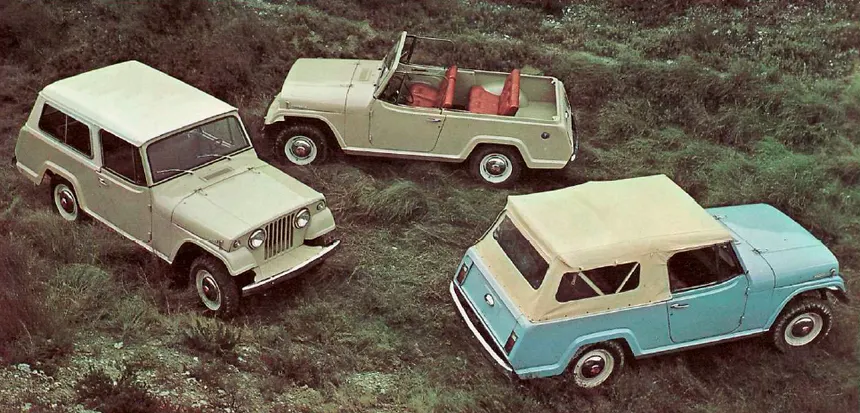
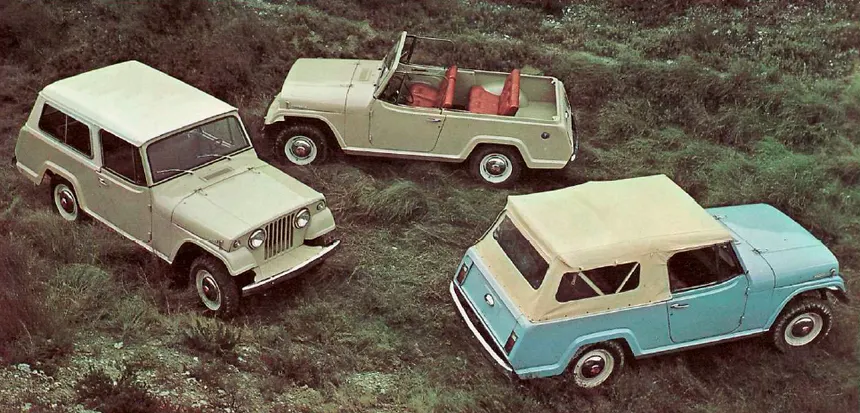
The Comando wasn’t the bare-bones CJ-3B. It was Spain’s twin of the second-generation American Jeepster Commando, a dual-purpose 4×4 with a level of trim and comfort previously unheard of in Spain for this kind of vehicle. If the CJ-3B was a workhorse, the Comando was almost a lifestyle car —the sort of thing you could imagine a Spanish gentleman farmer using to get to the coast as much as to the fields. Production started in 1968, sales in early 1969. Three body styles —open, soft-top and hardtop— and two engines: the Barreiros C-65 diesel or the Hurricane F-4 petrol. Two colours only: cream and pale blue.
It sold under a small army of names depending on body style: Furgón for the closed van, Toledo for the passenger version, Dúplex for the double cab, Campeador for the open bed. Even Hotchkiss in France —the very firm that had lost the Jeep licence years earlier— tried to sell it across the border. It flopped. Motoring history has a sense of humour.
Death by decontenting
In January 1974, VIASA signed a deal with Motor Ibérica. And here’s the myth worth killing: it was not a takeover or a buyout. It was a distribution and engineering-support agreement —Motor Ibérica would sell VIASA’s vehicles through its dealer network. VIASA kept building them.
But the effect on the cars was savage. The Comando started being sold as Jeep-Ebro and Jeep-Avia —Motor Ibérica owned the Ebro and Avia networks, the latter absorbed in 1971. And with the rebadging came a personality transplant. Out went the Barreiros, in came the Perkins 4-108, 1,760cc and 61bhp. But more importantly, out went the niceties. The plush trim vanished. The elegant, refined 4×4 turned spartan, agricultural, industrial. More load space, spare wheel under the tank, a heater and not much else. It stopped being something you’d enjoy and became something you’d work.
The CJ-3B and CJ-6 morphed too, renamed Jeep Bravo and Bravo-L, down to a single Perkins engine. The 1970s oil crisis was calling the shots, and frugality beat performance every time.
There were flashes of interest. In the mid-70s, on a commission from American Motors’ international network —AMC owned Jeep by then— Zaragoza built export units to American spec with the V-6 Dauntless petrol engine, bound for markets as exotic as Venezuela and South Africa. A handful stayed in Spain and are near-mythical today. And in 1978 came the Comando HD, “Heavy Duty,” with the 2,710cc Perkins 4-165 producing 71bhp, requiring a redesign of the chassis front crossmember just to fit it.
But these were sticking plasters. The Comando was still soldiering on with genuinely archaic engineering deep into the 1980s, and sales were collapsing.
Curtain down, courtesy of Japan
In 1980, Nissan took control of Motor Ibérica —ending up with 55% of it— and created Nissan Motor Ibérica. The Japanese had other ideas: they wanted to build the Nissan Patrol, a 4×4 that was light years ahead of the geriatric Comando.
The writing was on the wall in capital letters. Patrol production at the Barcelona Free Zone plant began in 1983, the earliest units wearing Ebro badges before the Nissan name took over. And here’s the irony: that first Spanish-built Patrol used the Perkins MD27 diesel that Motor Ibérica already made for the Jeep-Ebro vans and off-roaders —the beating heart of the old VIASA world, fitted to the very car that came to bury it. Zaragoza was surplus to requirements.
VIASA fought to the last. It floated a military prototype using Comando HD mechanicals to tempt the army. It toyed with a new civilian range based on the American CJ-7 and CJ-8 but fitted with the big Perkins. All of it came to nothing. In 1983 production in Zaragoza ceased; the last units were registered from leftover stock, though the company itself lingered on paper a while longer to wind down. Nearly 25 years of Spanish Jeep —an estimated 8,000 Comandos alone— switched off by a Patrol that did the same job, only better.
The loop that closes itself
And here’s the kicker, the bit that gives you goosebumps if you know how Spanish industry actually works.
The factory belonged to CAF. The train builder. And today, four decades after the lights went out, the Ebro name has been resurrected —this time tied to electric mobility, in the very same Barcelona Free Zone that Nissan itself would eventually walk away from. American licences, railway capital, Japanese management, electric resurrection, all tangled up in the same sheds and the same badges. Spanish industrial history is a snake that never stops eating its own tail.
Two deaths for one Jeep
VIASA died twice, and the two deaths are worth keeping apart.
The first was the death of the brand. Nissan killed that one in 1983, switching off a Zaragoza factory to make room for a Patrol that did the same job better. A balance-sheet death, decided in a boardroom thousands of miles away.
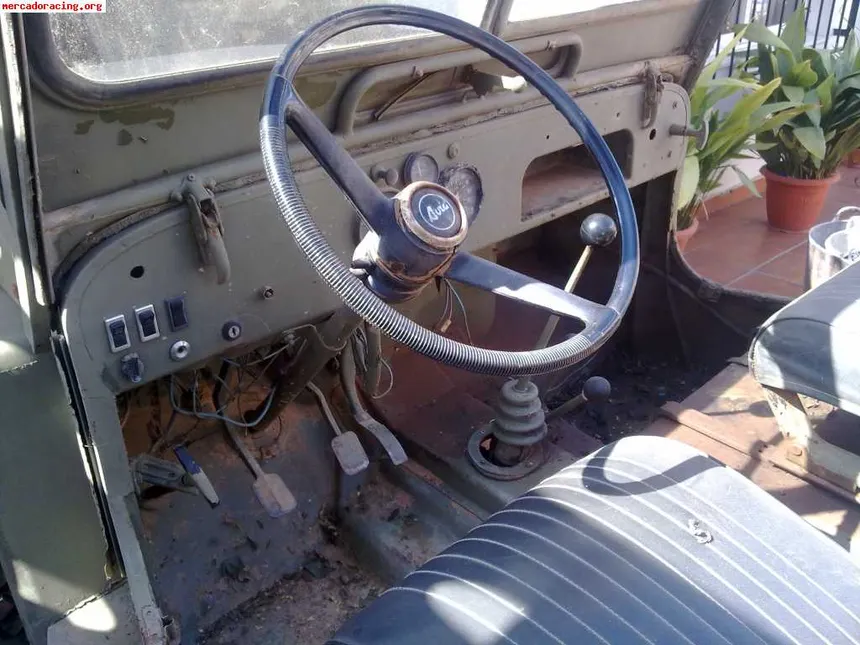
The second death I watched myself. That pale blue Comando I fixed up as a teenager spent its life working the fields of a coastal salt marsh —wetland, briny air, the worst possible environment for steel. And salt doesn’t negotiate. It doesn’t matter that a Jeep can shrug off mud, scrub, overloading and twenty years of mechanical neglect: the salt creeps into the seams, eats the bodywork from the inside, and no Perkins diesel on earth can save it. Rust got it in the end. That Comando wasn’t killed by Nissan or by a lack of spares. It was killed by the sea, slowly, while it kept on working to the very last day.
When the Jeep finally gave up, the old man retired it and brought in a Fiat-based Panda 45 to do the same fieldwork. The perfect changing of the guard: from licensed American 4×4 to humble Italian runabout, rural Spain swapping tools without ceremony. And not long after, well into his eighties, the man’s sight began to fail. They took his licence away. And that Panda —the one that had inherited the Comando’s working life— ended up in my hands, because he could no longer drive it himself.
So the train factory left me two things, years apart: the memory of a Jeep eaten by salt, and the little car that succeeded it. Two ends of the same story —an old man of the land letting go of the wheel for good, and handing the baton to a kid who didn’t yet understand what he was being given.
Because that was VIASA. Not the world’s best off-roader. Not the best-seller. But one of those machines that could only have come from here, born of a very Spanish way of doing industry: grab what someone else threw away, build it at home because the law says so, refine it when nobody asked, and let it die when it’s no longer useful. And let it die, too, in the most Spanish way imaginable: working a field beside the sea until the rust said enough.
If you ever spot a pale blue Comando on a back road, slow down and give it a nod. You’re watching a train factory drive past.
1 thought on “VIASA”