The man who lost his name and built a bigger one
Picture the kind of bloke who’d queue politely at a Baden-Württemberg bakery on a Saturday morning. Check shirt, glasses, big hands resting on the counter. You’d walk past him without a second glance. And then you find out he is the “A” in AMG, that he founded the company that builds the most operatic V8s on the planet, and that when he finally sold it for a fortune, he didn’t put his feet up. He started another one. From scratch. At sixty.
His name is Hans Werner Aufrecht. Top Gear has run features on the cars he’s touched without ever putting his face on the cover, because that’s how the man has always preferred it. The cars do the shouting. He does the work. And if you want to understand the strange double history of AMG and HWA, you have to understand him first.
Where it begins: a department being shut, and two engineers who refused
Late 1960s, Stuttgart. Daimler-Benz decides to pull the plug on its motorsport activities. Just like that, the racing department is gone. Two of the engineers working on the 300 SE competition engine are Hans Werner Aufrecht and Erhard Melcher. They lived for the work, and overnight, they had no work to live for.
Normal people accept the redundancy and move on. These two carted the engine to Aufrecht’s house in a village called Großaspach and kept developing it at nights and on weekends. No permission, no laboratory, no department. A garage. What their bosses at Daimler wouldn’t authorise inside the company, they did outside, in their own time, with their own hands. That is not the behaviour of an employee. That is the behaviour of a founder who hasn’t realised it yet.
In 1965, a Mercedes works driver called Manfred Schiek lined up for the German touring car championship in a 300 SE running their engine. Ten wins that season. Ten. Schiek took the title. The story carries a knife edge in it, because Schiek died not long after in a crash on the Tour d’Europe near Prague and the championship became posthumous. But the message stood: the engines coming out of that little Großaspach garage were faster than the ones from the official department Mercedes had shut down.
Late 1966, Aufrecht left Mercedes-Benz. He talked Melcher into coming with him. On 1 January 1967, the two of them founded a company with a ludicrously long German name. What matters are the three initials of the acronym: A for Aufrecht, M for Melcher, G for Großaspach. AMG. Headquarters: an old mill in Burgstall an der Murr. Two men, a mill, a stubborn idea.
The red pig, the hammer, and a golden cage
AMG wasn’t started to flog alloy wheels and stripe kits. It was started to make Mercedes saloons go faster than Mercedes themselves dared to make them. The miracle that put the company on the map happened in 1971. They took a 300 SEL 6.8, an enormous, leather-lined, cathedral-heavy luxury saloon, and entered it at the Spa 24 Hours. The thing finished first in class and second overall. A limousine feeding its dust to actual racing cars. The press christened it “the Red Pig”, and the image of that red barge muscling through the prototypes seared itself into the brain of every European petrolhead alive.
Aufrecht had cracked his formula and he wasn’t letting go. Take a serious Mercedes and make it unrecognisable underneath. In 1976 the company moved from Burgstall to Affalterbach, which is still the beating heart of the operation today. In 1986 came the AMG Hammer, a W124 packing a 5.6-litre V8 that humbled Porsches and Ferraris at traffic lights all over Germany. When you name a car “Hammer”, you don’t need to explain much more.
But the moment AMG earned proper respect from Stuttgart happened on the track. Between 1988 and 1993, AMG’s 190 E race cars racked up 50 wins in the DTM, Germany’s touring car championship. The golden years of the series. A boxy little saloon turned into a winged monster, and Aufrecht’s outfit was Mercedes’ hired gun, doing the muddy work for the manufacturer from outside the building.
A formal cooperation agreement followed in 1990. In 1993 came the first jointly developed car, the C36 AMG. The golden cage began to close. What had been a free-standing company started becoming an extension of the factory. More turnover, more prestige, more cars in showrooms. But less independence.
Then 1998 arrived and Aufrecht signed the biggest cheque of his life. He sold 51% of AMG to DaimlerChrysler. On 1 January 1999 the company was renamed Mercedes-AMG GmbH. The badge wearing his initial was no longer his, although he still held the remaining 49% in his pocket. Six years later, on 1 January 2005, he sold those last shares too, and AMG became a wholly owned subsidiary of the parent company. The A was still in the logo. The Aufrecht behind the A was not.
The move almost nobody talks about
This is where it gets interesting. Most founders, at sixty, with the bank account fattened by a lifetime’s work sold off, retire to the lake. Buy a wristwatch collection. Take up sailing. Aufrecht did the opposite.
On 30 October 1998 he registered a new company in the commercial register. Three letters. His initials. HWA. Hans Werner Aufrecht. And the move behind it wasn’t some opportunistic carve-up; it was a clause baked into the structure of the sale itself. HWA’s own corporate communications spell it out: all of Mercedes-Benz’s motorsport activity had to be outsourced from the deal. The marque, the road-going AMGs and the dealer network went to Stuttgart. The racing operation and the small-series special vehicle workshops had to come out. Aufrecht did the only sensible thing with that orphaned half: he picked it up, stamped his name on it, and built a new company around it.
In plain English: Mercedes bought the part of AMG that sells volume, the badge that goes on showroom-floor cars. Aufrecht kept the racing soul and the workshops that built coachbuilt specials. He held onto the glory and the grease, and let the corporate giant take the dealerships. What looks from a distance like a brilliant private manoeuvre was, in truth, the only sane thing to do with the half of the business the sale had left on the table.
The first big contract blew up in his face, mind you. In 1999, HWA was leading development of the Mercedes-Benz CLR, the prototype Mercedes was going to run at Le Mans in the new LMGTP category. On paper, a wild thing: carbon-aluminium monocoque, naturally aspirated 5.7-litre V8 lifted from the CLK LM, around 600 hp.
What happened at Le Mans that June has gone down as one of the darkest weekends in modern endurance racing. The car had a brutal aerodynamic flaw: short wheelbase, long overhangs, and under specific conditions the nose generated lift. Mark Webber, a future Red Bull Grand Prix winner, took off twice, once during Thursday practice and again in Saturday morning’s warm-up. Mercedes were so rattled they actually phoned Adrian Newey, then McLaren’s tech boss at the Canadian Grand Prix, for advice. Newey told them not to race. They ignored him. On lap 76 of the race itself, Peter Dumbreck’s CLR took off on the run to Indianapolis at roughly 300 km/h, somersaulted backwards through the air, and crash-landed in the trees beyond the barriers. By some miracle Dumbreck walked away. Mercedes pulled everything they had on site, and they have not returned to Le Mans since. Decades on, still not back.
For a brand-new HWA, that could have been the kind of opening chapter that closes a company. It wasn’t. Because while the Le Mans nightmare was being televised, another championship was about to deliver Aufrecht a coronation.
The silent empire of the DTM
In 2000, the modern Deutsche Tourenwagen Masters fired up. Mercedes needed a team to run their cars on track. The phone call went to HWA. Aufrecht, once again, exactly where he is happiest: behind the car, not on top of the podium.
What followed reads like a fixed match. HWA became the most successful team in DTM history, full stop. Eleven drivers’ titles. Fourteen team titles. Twelve manufacturers’ titles. More than 180 race wins. Bernd Schneider wins in 2000, 2001, 2003 and 2006. Gary Paffett in 2005 and 2018. Paul di Resta, the British driver who later joined Sky F1’s commentary booth, picks up 2010. Pascal Wehrlein in 2015. When Mercedes-Benz Motorsport finally walked away from the DTM at the end of 2018, they did it from the top step, HWA still running the cars. The most victorious exit imaginable from a championship they had owned for two decades.
And in parallel, HWA was building the cars Mercedes themselves wouldn’t put on a normal production line. The CLK GTR Strassenversion (20 coupés built between 1998 and 1999, plus a further 6 roadsters assembled in 2002 from leftover parts). The CLK DTM AMG (100 coupés and 80 cabriolets between 2004 and 2006). The SL 65 AMG Black Series (350 units from 2008, 670 hp, the most powerful road-going Mercedes-AMG for years). Small runs, technically savage, priced to make eyes water. When Mercedes wanted a car that broke the rulebook, the work landed in Affalterbach. In the hands of the man who didn’t work for them anymore.
The world’s quiet hypercar consultant
At a certain point, HWA realised that the expertise inside the building was too valuable to sell to a single client. They opened the catalogue. In 2016 they developed the Fittipaldi EF7 prototype, a supercar commissioned by Emerson Fittipaldi, two-time F1 world champion, in collaboration with Pininfarina. In 2018 they signed a technical alliance with Apollo Automobil for the final dynamic development of the Apollo IE, the GT1-inspired hypercar that weighs almost nothing and sounds like the apocalypse.
And from there the client list refuses to fit on one page. HWA developed the 6.0-litre naturally aspirated V12 in the Pagani Huayra, the V12 in the Aston Martin Valkyrie, and the V12 in Gordon Murray’s T.50. The three most obscene atmospheric hypercar engines of the modern era all passed through the dynos at Affalterbach. HWA also builds the Mercedes-AMG GT3 and GT4 race cars that turn up at every endurance round on the planet. And, by contract, it physically assembles the De Tomaso P72, that gorgeously sixties-flavoured restomod that brought the Italian marque back from the dead.
Here is the detail that says everything about Aufrecht. HWA builds cars that wear other people’s names. The customer gets the glory on the bonnet. Aufrecht gets the invoice and the quiet respect of knowing that the wildest thing on the Goodwood lawn passed through his workshop. That’s the stance of a man who no longer needs anyone to know who he is. The stance of someone who has been good for so long that ego has become surplus to requirements.
The new chapter: HWA wants its own name on the bonnet
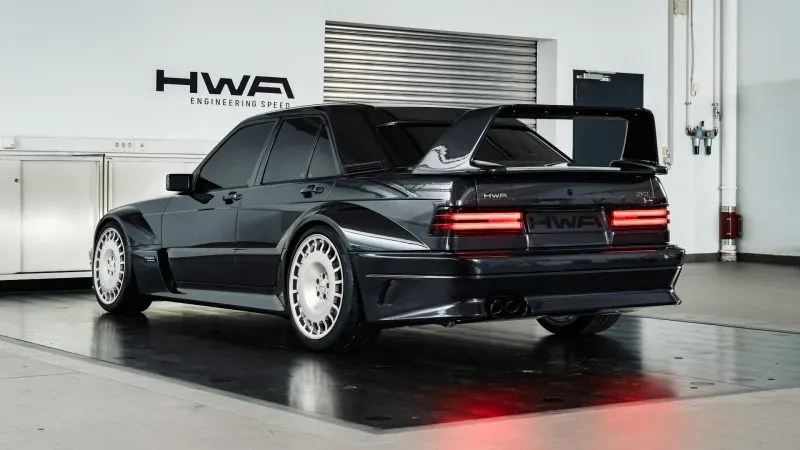
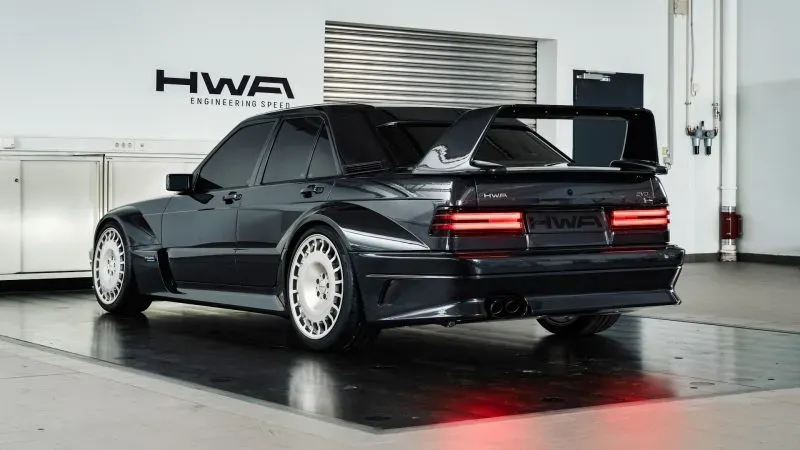
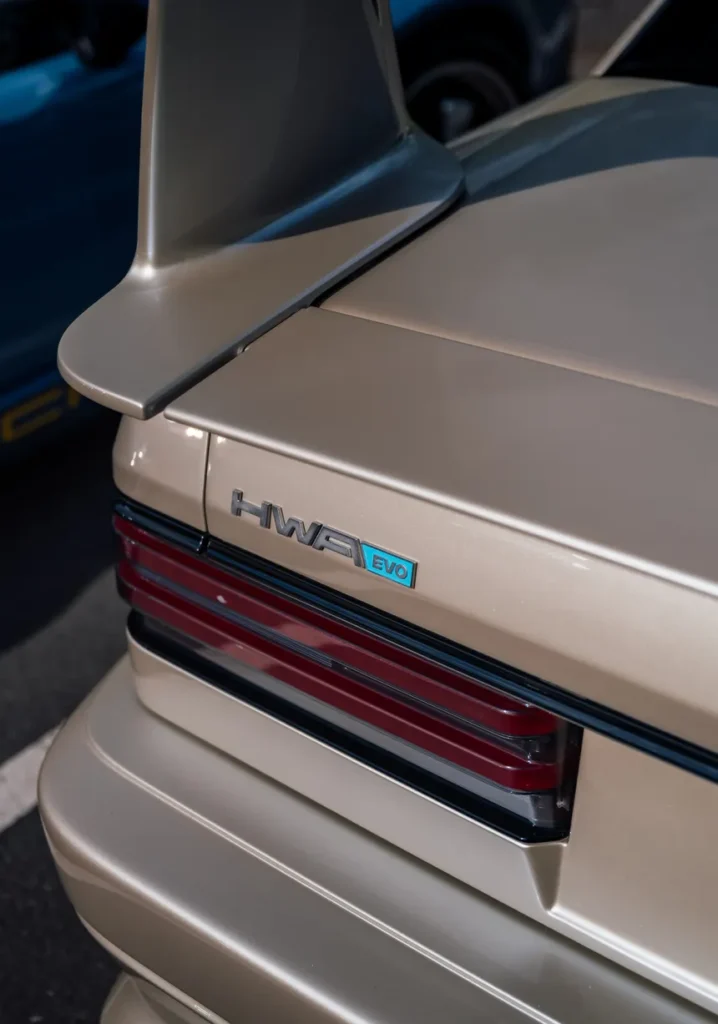
In November 2023, on the company’s 25th anniversary, HWA finally made the announcement it had been dancing around for years. It’s going to build cars under its own name. The first is the HWA EVO: a modern reinterpretation of the Mercedes 190 E 2.5-16 Evolution II, the DTM homologation special that became absolute legend. One hundred units, prices starting at €714,000 plus VAT, twin-turbo 3.0-litre V6, a proper manual gearbox, first deliveries beginning at the end of 2025. Above the road EVO sits another version, the Evo R, in a tiny run of 15 track-only examples cranked up to 552 hp. And, in case that wasn’t enough, a full competition version called the Evo.R debuts in 2026 at the Nürburgring 24 Hours in the SP-X class. I’ll dig into that car properly in its own dedicated piece, because it deserves the space.
But HWA isn’t stopping there. The company is currently applying for official status as an independent car manufacturer in Germany, and it has already confirmed a from-scratch hypercar in development, with no Mercedes underpinnings and a pure combustion engine. No hybrid pretence. No apologetic plug. Just mechanical pleasure, in an era when every new launch seems to apologise for starting up. Gordian von Schöning, HWA’s head of road-car development, said it on the record in 2025: for a car at this price point, where the value lives in the emotion, electric motors aren’t the answer.
Twenty-seven years after being founded to make other people’s cars go faster, Aufrecht’s company is stepping into a new era: the one where the machines wear his initials on the bonnet, finally, properly, in big letters.
The lesson, for anyone listening
There is one detail of this biography that deserves stamping in capitals. When he sold AMG, Aufrecht could have walked off into a comfortable retirement. He had the age. He had the money. He had his initial sitting on the logo of the highest-performance subsidiary of Germany’s most conservative manufacturer. Immortality, sofa included.
He chose to start again. At sixty. With a less famous name, in a harder market, where he would have to prove himself from scratch every single quarter. He did it because he understood something most people miss: what defines you isn’t what you’ve built, it’s how much fight you have left to build more.
AMG today is a Stuttgart-owned brand run by executives, full of models you can finance from a dealership with a coffee machine in the waiting room. HWA, by contrast, is still what AMG used to be on day one: a room full of engineers with grease under their fingernails and a slightly mad look in their eyes, capable of taking any car you hand them and giving it back breathing fire. Aufrecht didn’t clone AMG. He rewrote page one. And that is why, while AMG sells hot hatches, HWA builds the hypercars that the very rich queue up to own.
The A in AMG isn’t his anymore. The three letters in HWA still are. Between the two of them sits a whole life proving that a good engineer, as long as his hands still work, never really retires.
Check you’re still alive.