There’s a supercar being assembled in a small German town right now with a supercharged Ford Coyote V8 tuned by Jack Roush’s people, a six-speed manual and a price tag of around 1.6 million euros. It wears a De Tomaso badge. It is built by a company called HWA, and HWA was founded by the man whose initial is the "A" in AMG.
Most people who own a Mercedes-AMG have never heard of Hans Werner Aufrecht. He sold the company that made him famous, kept the racing department, put his own initials on it and spent the next quarter-century building cars, engines and race programs for other people. Here’s how that happened, and why the most interesting part of the AMG story isn’t AMG anymore.
Two engineers and a racing engine nobody wanted
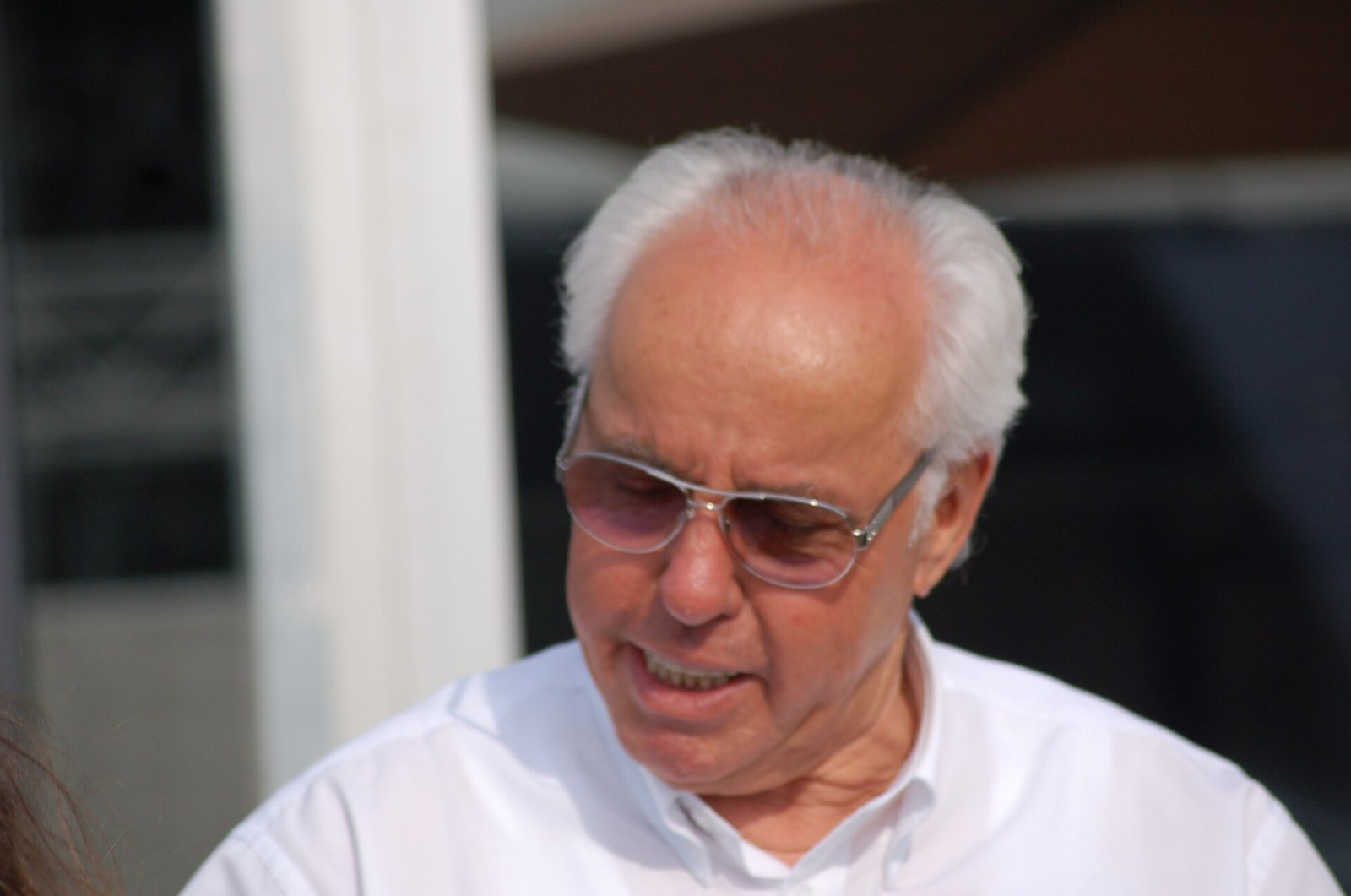
In the mid-1960s Daimler-Benz decided it was done with racing. Two of its engineers, Hans Werner Aufrecht and Erhard Melcher, had been working on the engine for the 300 SE race car, and suddenly there was no department to work in. So they kept going on their own time, at Aufrecht’s place in Großaspach, a small town near Stuttgart.
It paid off fast. In 1965 Manfred Schiek, a fellow Daimler employee, raced a 300 SE with their engine in the German touring car championship and won ten times.
Aufrecht left Mercedes, brought Melcher with him, and in 1967 they set up a company to build racing engines. Mercedes-AMG dates its founding to June 1, 1967. The name came from Aufrecht, Melcher and Großaspach: AMG. The first shop was an old mill in Burgstall an der Murr, a village northeast of Stuttgart.
The Red Pig and the Hammer
AMG made its name the hard way. In 1971 it took a 300 SEL 6.8, a huge luxury sedan, to the 24 Hours of Spa. The red monster finished first in class and second overall against purpose-built race cars. The press called it the Red Pig, and it is still the image everyone associates with early AMG.
The company moved to Affalterbach in 1976, where it still lives. In 1986 came the AMG Hammer, a W124 E-Class sedan with a 5.6-liter V8, the kind of car that embarrassed sports cars at stoplights. Between 1988 and 1993, AMG-run 190E sedans won 50 races in the German DTM. In 1992 the 190E 2.5-16 Evolution II won 16 of 24 races and Klaus Ludwig took the title.
Then the big company moved in. A formal cooperation deal came in 1990, and the first jointly developed car, the C36 AMG, in 1993. In 1998 Aufrecht sold 51 percent of AMG to what had just become DaimlerChrysler. From January 1, 1999, the company was Mercedes-AMG GmbH. He sold the remaining 49 percent in 2005. The "A" stayed on the badge. The man behind it was gone.
The part of the deal that mattered
Here’s what most AMG histories skip. Racing wasn’t part of the package Stuttgart bought. It had to be carved out. So in 1998 Aufrecht took that piece, the race shop and part of the small-series business, and founded a new company with his own initials: HWA.
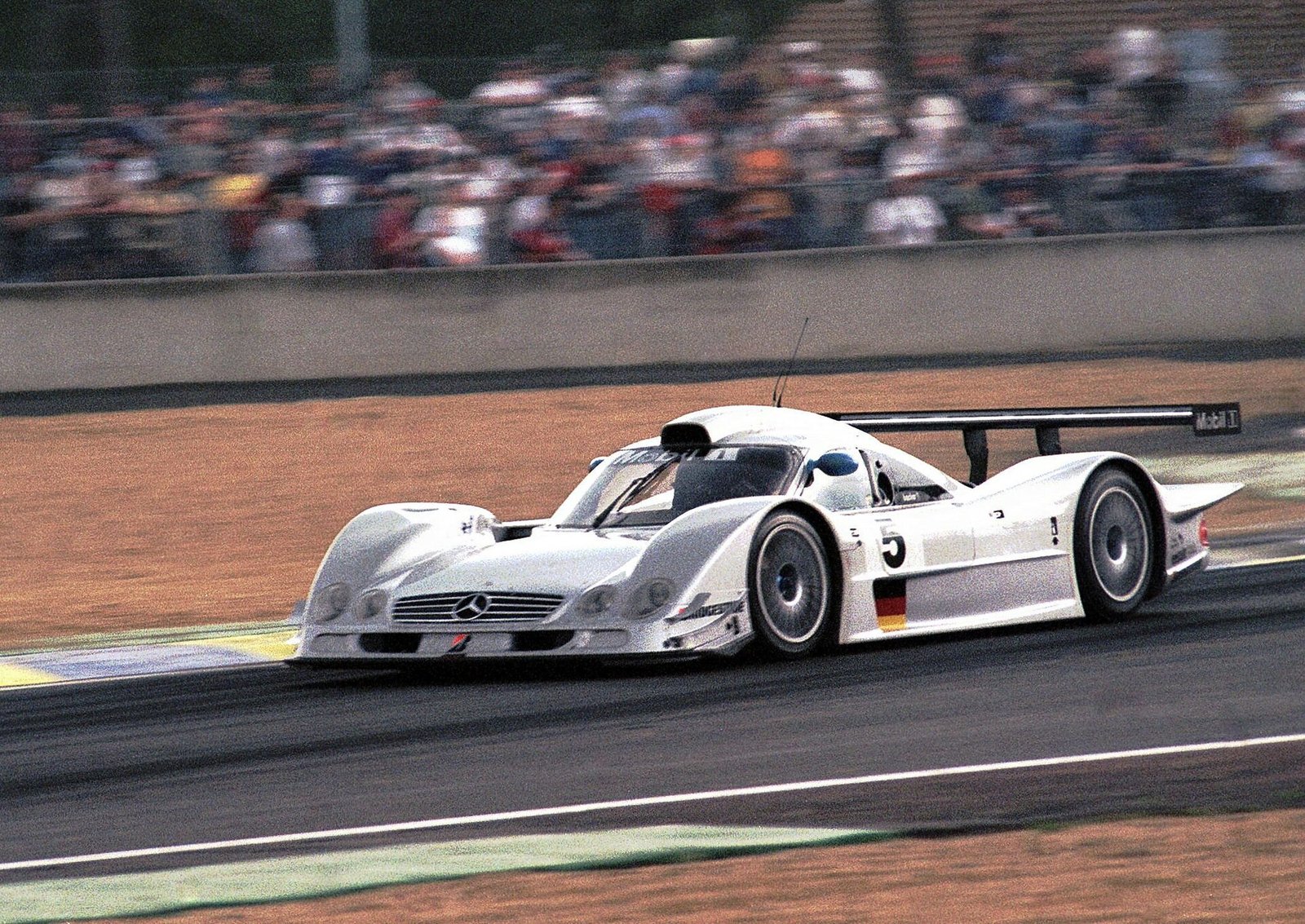
Its first big job was a disaster. In 1999 Mercedes brought the CLR to Le Mans, a carbon-and-aluminum prototype with a 5.7-liter V8 of around 600 hp. The car had a deadly flaw: in some conditions, especially running close behind another car, the nose generated lift. Mark Webber, the Australian who later became a Formula 1 race winner, flipped it twice, once in Thursday night qualifying and again in the Saturday morning warm-up. By the accounts from that week, Adrian Newey was consulted and advised Mercedes to withdraw. They raced anyway. On lap 75 Peter Dumbreck’s CLR took off at full speed, cartwheeled through the air and landed in a freshly cleared patch beside the track. He walked away.
Why did it fly? A prototype like the CLR is designed to be sucked onto the track: the shape of the floor and the diffuser at the back create low pressure under the car, and at 200 mph that holds it down far harder than its own weight. The CLR was very low and had long overhangs front and rear on a short wheelbase, which made it sensitive to pitch. Going over a crest, or running in the disturbed air behind another car, the front could lose its downforce for a split second, the nose lifted a few degrees, air rushed underneath and the whole car turned into a wing. At that speed, that’s all it takes.
Mercedes pulled its last car and didn’t return to Le Mans for a quarter of a century, until 2024, when Mercedes-AMG GT3s came back in the LMGT3 class with Iron Lynx.
Twenty years of winning the DTM
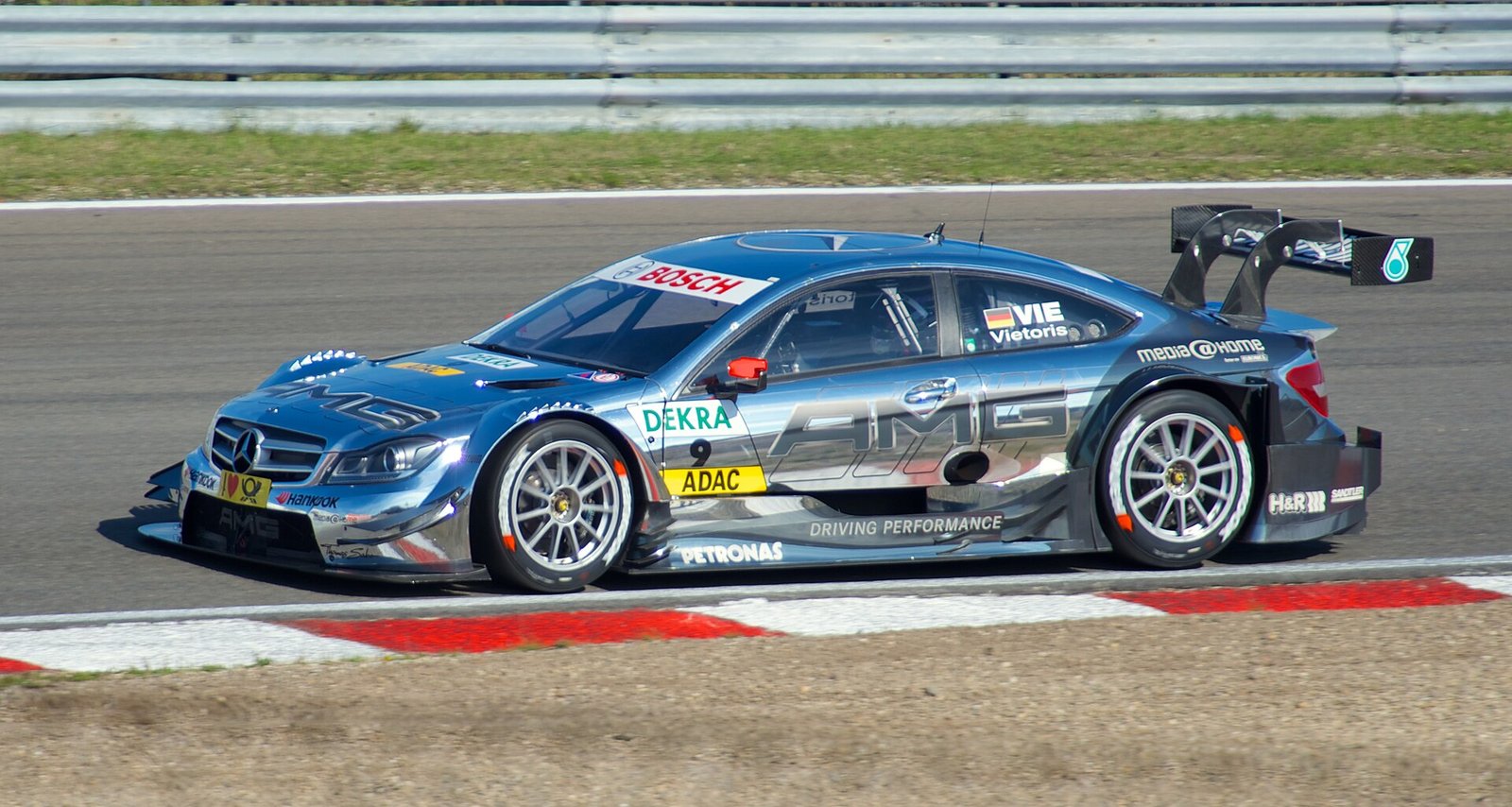
The new DTM started in 2000, and Mercedes needed someone to run its cars. That someone was HWA. By HWA’s own count, by the time Mercedes left the series in 2018 its team had won eleven drivers’ titles, fourteen team titles, twelve manufacturers’ titles and more than 180 races. Bernd Schneider was champion in 2000, 2001, 2003 and 2006, Gary Paffett in 2005 and 2018, Paul di Resta in 2010, Pascal Wehrlein in 2015. Two Spaniards came through the team too: Roberto Merhi finished second at Hockenheim in 2013, and Dani Juncadella won his first DTM race at Brands Hatch in 2018, the last season for Mercedes.
At the same time, HWA built the road cars Mercedes didn’t want to build in-house. The CLK GTR Strassenversion homologation special, 20 coupes in 1998 and 1999 and six roadsters assembled in 2002 from leftover parts. The CLK DTM AMG, 100 coupes and 80 convertibles from 2004 to 2006. The SL 65 AMG Black Series of 2008, 350 cars with 670 hp. When Stuttgart wanted something that broke its own rules, it went to Affalterbach.
The CLK GTR is the best example of why those cars existed at all. To race a car in the FIA GT1 class of the late 1990s, a manufacturer had to sell a road version. So Mercedes took a race car with a mid-mounted V12 and made just enough of them street legal to satisfy the rulebook. Porsche did the same with the 911 GT1, Toyota with the GT-One. They were never meant to make money. They were the entry ticket to the race, and today they’re among the most valuable German cars of their era.
The workshop behind other people’s badges
HWA’s real trick was realizing its know-how could be sold to anyone. It has built its own Formula 3 engines since 2002. In March 2017, two-time Formula 1 champion and Indy 500 winner Emerson Fittipaldi unveiled the EF7 Vision Gran Turismo at Geneva, designed by Pininfarina, with the V8, gearbox, suspension and brakes developed by HWA. In June 2018 Apollo Automobil brought in HWA for the final dynamic development of the Apollo IE.
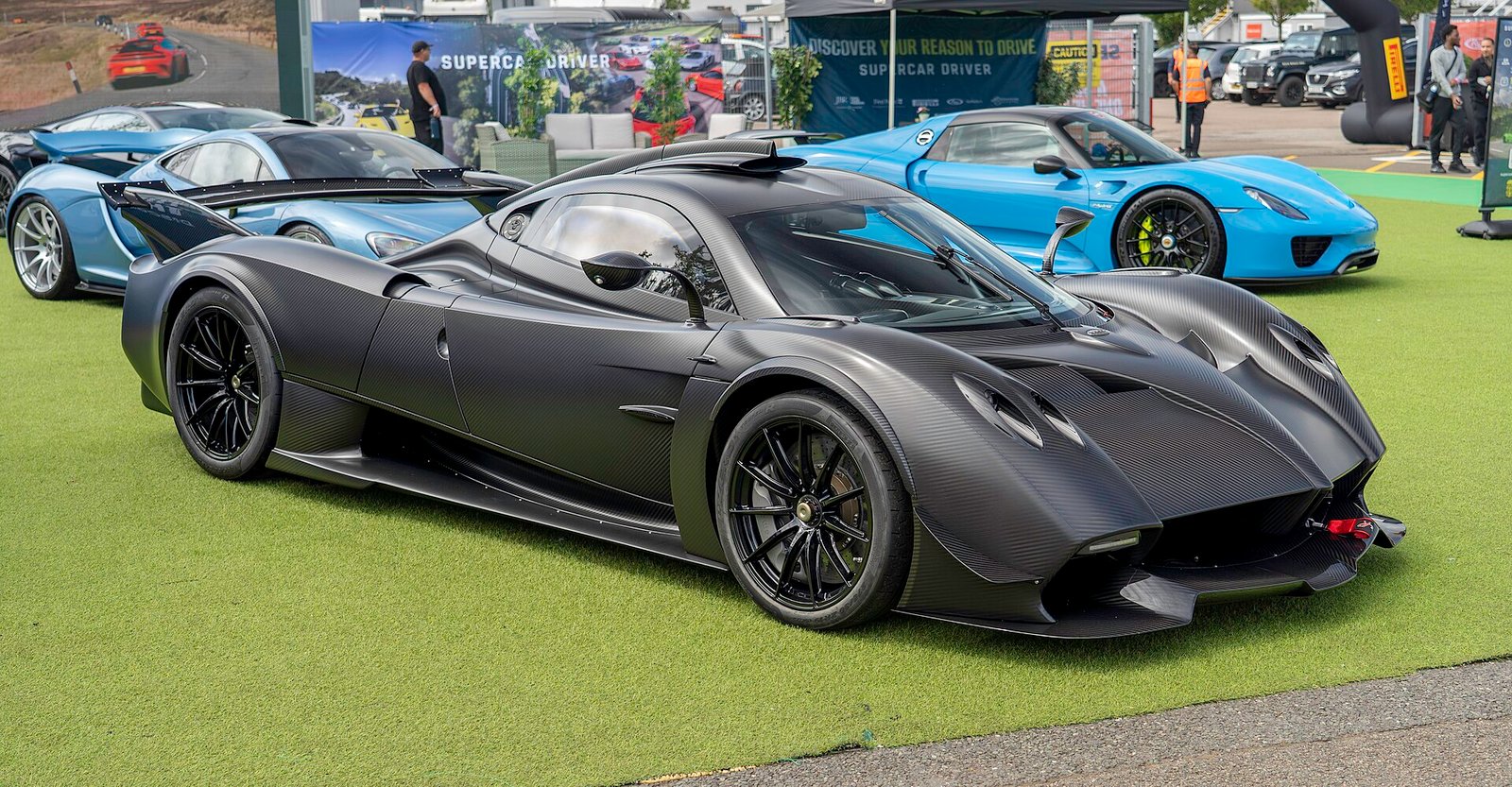
Then came engines with other names on them. The road-going Pagani Huayra uses a twin-turbo 6.0-liter V12 that Mercedes-AMG developed for it. When Horacio Pagani wanted something wilder for his track car, he didn’t go back to AMG. HWA designed the Pagani V12-R from scratch with Pagani for the track-only Huayra R: a naturally aspirated 6.0-liter V12 making 850 hp at 8,250 rpm, revving to 9,000 and weighing 198 kg, about 437 lb, in a car limited to 30 units. For the Isotta Fraschini Tipo 6 hypercar it developed a 3.0-liter twin-turbo V6.
One thing to get straight, because it gets repeated everywhere, this site included: HWA did not build the V12s in the Gordon Murray T.50 or the Aston Martin Valkyrie. Both of those are Cosworth engines. The T.50’s revs to 12,100 rpm, higher than any road car engine before it.
HWA also builds customer Mercedes-AMG GT3 and GT4 race cars, won the 2021 Formula E world championship with Nyck de Vries, and since late 2025 has been assembling the De Tomaso P72 in Affalterbach. That’s the car from the top of this story: a brand-new supercar with 1960s prototype looks, a Ford Coyote V8 supercharged by Roush to more than 700 hp, and a six-speed manual. An American engine, a German workshop, an Italian-Argentine name.
Finally, his own name on the hood
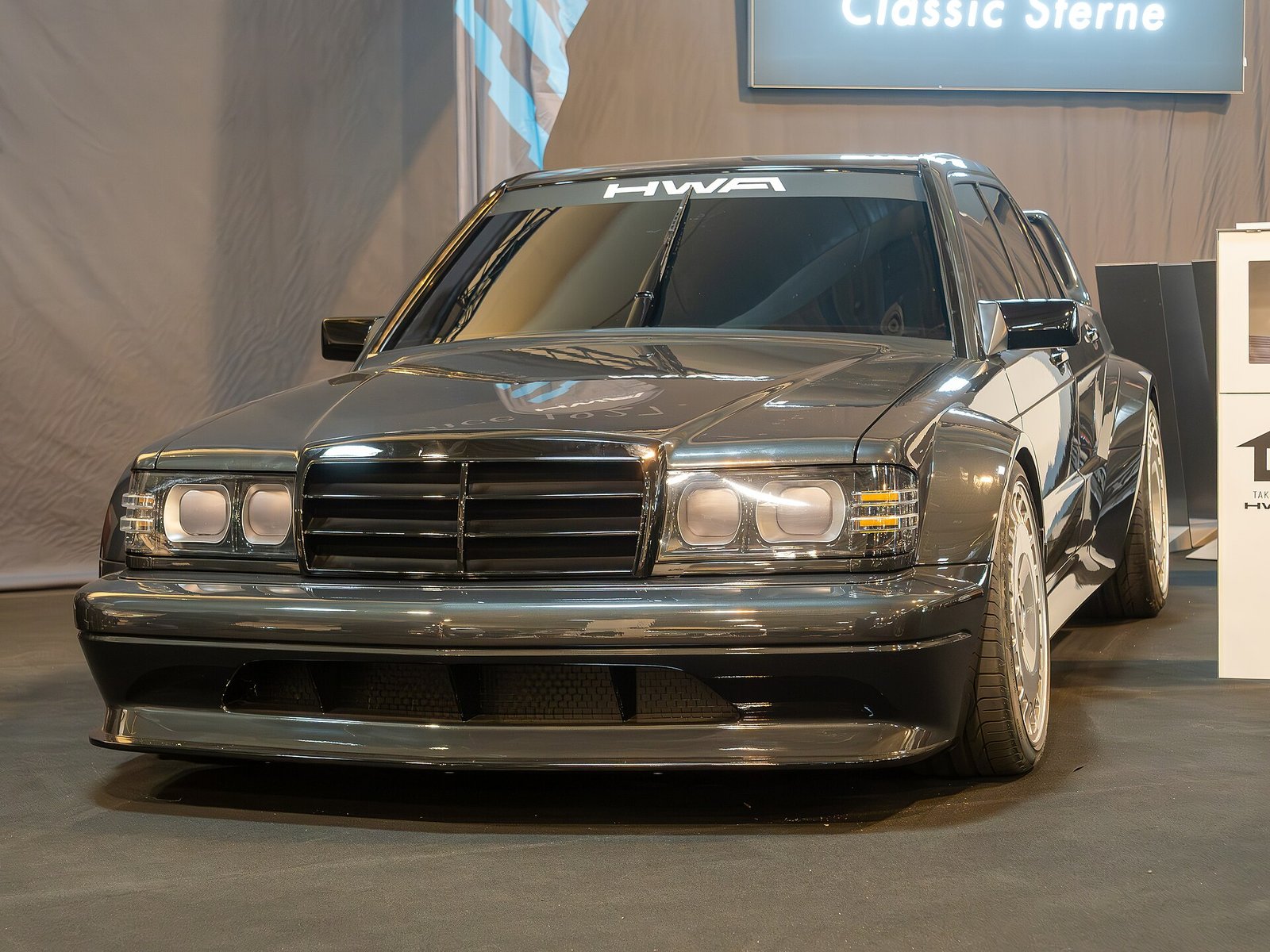
At the end of 2023, around its 25th anniversary, HWA announced it would build cars under its own name. The first is the HWA EVO, a modern reinterpretation of the Mercedes 190E 2.5-16 Evolution II, the DTM homologation sedan that made AMG’s reputation. 100 units, around 714,000 euros before tax, a 3.0-liter twin-turbo V6, a real six-speed manual, deliveries from late 2025. Above it sits the track-only EVO.R, limited to 15 cars, with around 560 hp and 670 Nm. HWA took the EVO.R to the Nürburgring 24 Hours in 2026.
The original it’s paying tribute to was a homologation special in the same spirit as the CLK GTR. To race the boxy, winged 190E in the DTM, Mercedes had to build road versions, and the 1990 Evolution II was the wildest of them: a 2.5-liter four-cylinder with 235 hp, a huge adjustable rear wing and fender flares that made a sensible compact sedan look like it had escaped from the pits. Mercedes built 502 of them. In the US, the 190E 2.3-16 was the closest most people got, and the Evo II became a poster car for a generation that never saw one in the metal. HWA’s EVO keeps the silhouette and the manual gearbox, then swaps everything else for modern carbon fiber, modern suspension and twice the power.
Next is a clean-sheet hypercar with no Mercedes underneath and a combustion engine. At a time when most new performance cars launch with an apology for having an engine at all, that’s a statement.
Same founder, two very different companies
When he sold AMG, Aufrecht could have retired with his initial on one of the best-known performance badges in the world. Instead he started over with a name almost nobody knew, in a harder business. He was approaching 60. Most founders who cash out at that age buy a boat. Aufrecht bought himself another twenty-five years of deadlines, race weekends and customers who expect miracles on a schedule.
AMG today is a Mercedes division run by executives, selling compact crossovers through dealerships with espresso machines. HWA is closer to what AMG was at the start: a building full of engineers who take a car apart and give it back breathing fire. AMG sells volume. HWA builds the cars collectors fight over.
He doesn’t own the A in AMG anymore. He owns all three letters of HWA.
Check you’re still alive.
Photos: Matti Blume (CC BY-SA 4.0); Oliver Pohlmann (CC BY 3.0); Martin Lee (CC BY-SA 2.0); kevinmcgill (CC BY-SA 2.0); MrWalkr (CC BY-SA 4.0). Via Wikimedia Commons.