SIATA Española: The Italian Dream That Ended Up Delivering Bread
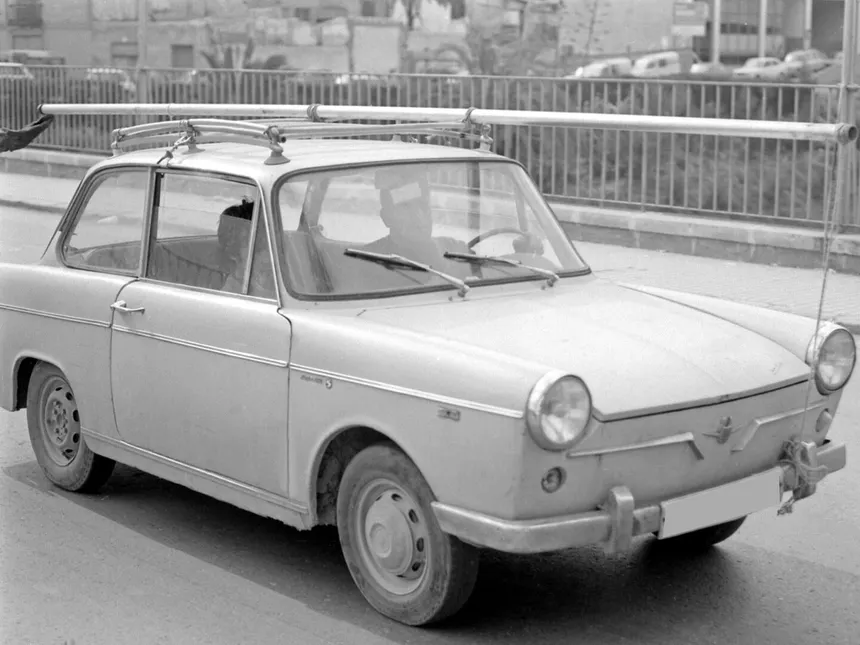
Britain had its kit-car dreamers and its backyard sports-car builders — the men who, with more passion than capital, tried to bottle a bit of Italian glamour in a draughty shed. Most failed. A few became legends. But almost none of them did it under a dictatorship, in a country where the average family aspired to a tiny rear-engined runabout, on a building site with no running water and a water tank bolted to the roof like something out of a spaghetti western.
That last one is Spain. And the company is SIATA Española — a glorious, doomed little outfit that set out to build hand-crafted Italian-styled sports cars in 1960s Tarragona and ended up, like so many beautiful industrial dreams, building delivery vans. From the catwalk to the cargo bay. This is how it happened.
A hotelier, a coffee machine, and a Turin accent
To understand SIATA Española, you first have to understand the man behind it, because he was no engineer and no motor-industry baron. Enrique Sala was a hospitality businessman — a hotelier — and, above all, a hopeless romantic about Italian cars. That unlikely combination is exactly what makes the story so Spanish and so impossible to repeat.
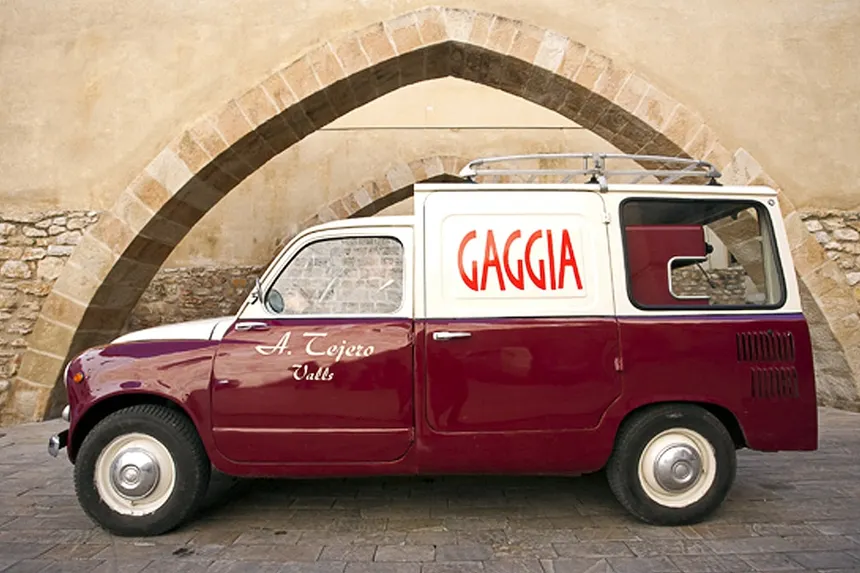
In 1954, Sala travelled to Italy, to the Turin Motor Show, and made contact with the Ambrosini family, owners of the original SIATA. The Italian SIATA — Società Italiana Applicazioni Transformazioni Automobilistiche — specialised in transforming and rebodying production cars into exclusive sports machines, the sort of thing that gave humble Fiats a dose of theatre: take an ordinary runabout and, through mechanical fettling and a fresh body, turn it into something with sporting blood. It belonged to a rich Italian tradition — the carrozzerie and tuners that thronged the industrial north — and Sala wanted a slice of it for Spain. He saw the opportunity and brought the licence home. But here’s the detail that tells you everything about the man: on that same trip he also picked up the licence to distribute Gaggia coffee machines in Spain. Which is why one of the first SIATA Formichetta vans ended up rebodied as a promotional vehicle for espresso machines. Cars and coffee, same shopping list. That’s how empires were built in Franco’s Spain.
The company was incorporated in Barcelona in 1955. The original plan was to build the factory in Barcelona’s Free Zone, right next to SEAT — which made total sense, since SEATs were what they’d be transforming. But the mayor of Tarragona, a personal friend of Sala’s, offered him land at a giveaway price and lured the operation to his city. That land had no water and no electricity. It was a desert ringed by olive and carob trees. Hence the rooftop water tank. On 20 January 1960, the first hammer fell.
Cars built by hand — and I mean by hand
It’s worth grasping how a SIATA was actually made, because it shaped everything else. This was not an assembly line. This was craftsmanship in its purest, most beautiful and most financially ruinous form.
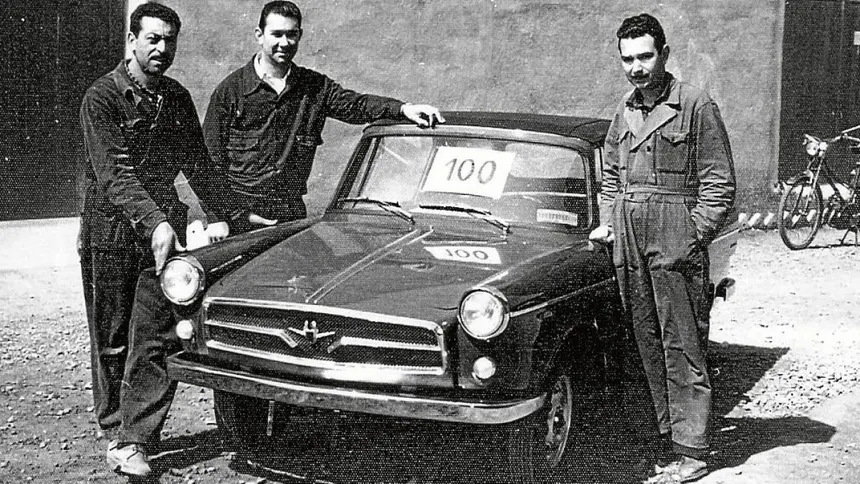
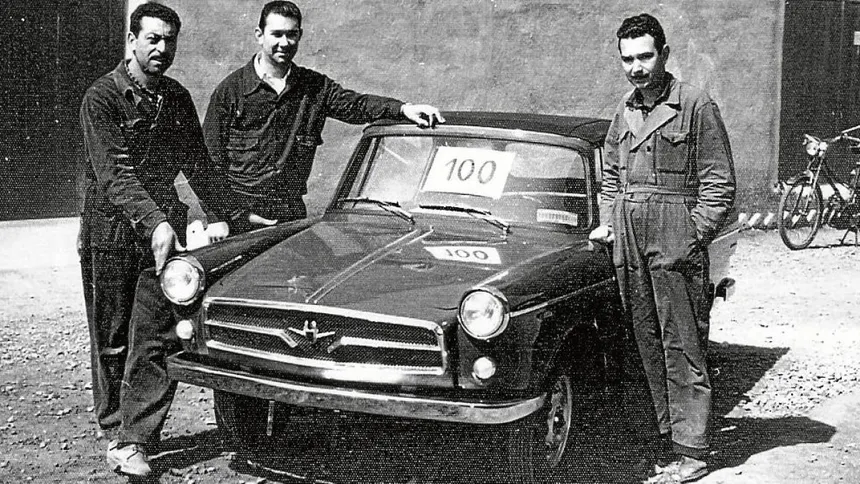
Each car was built essentially by hand, one after another, taking up to three days per unit. The body was made in two halves, front and rear, then mated onto the donor SEAT chassis. And here’s a detail straight out of another century: to shape each body, SIATA’s team of carpenters first built a wooden buck — a timber mould over which the sheet-metal panels were beaten and fitted. Carpenters making cars. Wood as the matrix for metal. The method also had a wonderful consequence: because each panel was hand-fettled to its specific car, moving parts weren’t interchangeable between units. A door from one SIATA wouldn’t fit another SIATA. So they numbered them, to avoid chaos on the floor. Each car was, quite literally, unique.
Since Tarragona wasn’t technically equipped for such a venture, Sala brought in Italian specialists and skilled panel-beaters from Barcelona to train the local workforce. And from that workshop, by the accounts of those who were there, emerged some of the finest sheet-metal craftsmen of their generation. For a young lad in 1960s Tarragona, a job at SIATA was a privilege and an aspiration — a place to learn a real trade. It’s worth dwelling on that, because it’s the part that tends to get lost. SIATA didn’t just build cars; it built people. In a provincial city with no automotive tradition to speak of, it created a small school of craftsmanship almost from nothing, the kind of hands-on, learn-by-doing apprenticeship that has all but vanished from the modern world. The cars were the headline. The trade it taught was arguably the more durable legacy.
The dream range: Ampurias, Turisa, Tarraco, Barcino
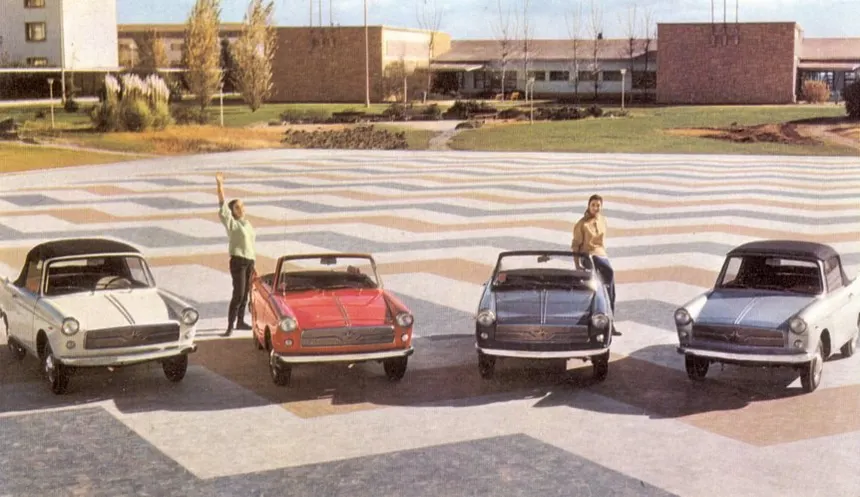
Almost every SIATA started from the same humble base: the SEAT 600, the little car that was putting Spain on wheels. But what SIATA did with it was anything but humble.
The first serious model was the Ampurias, on the 600 platform, its engine breathed on up to 750cc with new pistons for extra urge, wrapped in an elegant three-box body. It was almost an improvisation, and only 24 were made. An absolute rarity today.
Then came the Turisa, the prettiest of the lot to many eyes, offered as a coupé or an open spider, again with the 750cc engine. Around 228 spiders were built, of which perhaps eleven survive. It cost about 125,000 pesetas — a fortune that put it beyond almost anyone’s reach.
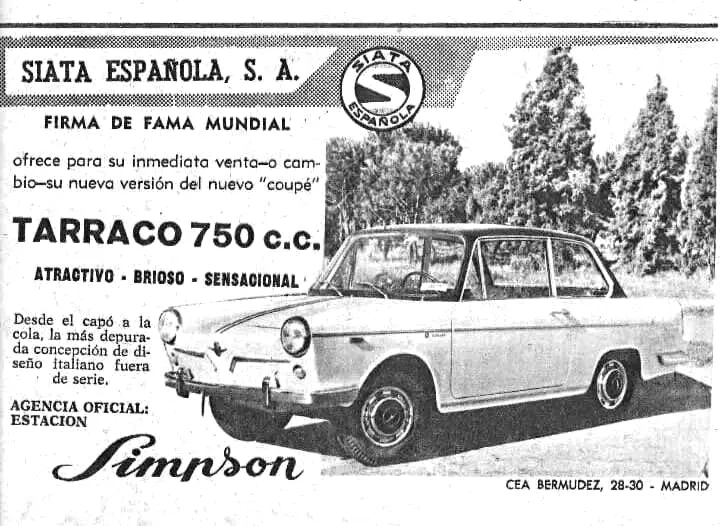
The Tarraco was the headline act, taking its name from the Roman city — the same name SEAT would resurrect decades later for an unrelated SUV. A small four-seat sports car on the 600 L base, with the original 636cc stretched to 750 (and later an 850 option), making up to 31bhp and nudging 120 km/h. And like any proper hand-built special, it was a charming collage: tail lights borrowed from a Lancia, an instrument panel inspired by the SEAT 1500’s but shrunk down, and a rear window that was, in fact, another car’s windscreen repurposed. Around 598 were built by the most-cited figures (475 of the 750cc, 123 of the 850), though some sources push the total closer to 900. Period advertising sold it as “the purest expression of bespoke Italian design.”
And then there was the Barcino, the impossible flight of fancy. A coupé shown at the Barcelona Motor Show in the early sixties, built on the SEAT 1400 C chassis with its capacity inflated to 1,700cc via an aftermarket kit. Exactly one was made. A styling exercise, a dream that never got past prototype.
The pivot: when champagne turned into bread
Here’s SIATA’s bitter lesson, the one it shares with so many Spanish industrial adventures. The sports cars were gorgeous. And almost nobody bought them.
It made sense. In 1960s Spain, a hand-built car costing over 125,000 pesetas was an object for a tiny moneyed minority. The country didn’t need elegant spiders. It needed to move goods, to deliver, to work. And SIATA — no fools they — read that tight, cash-strapped market better than anyone.
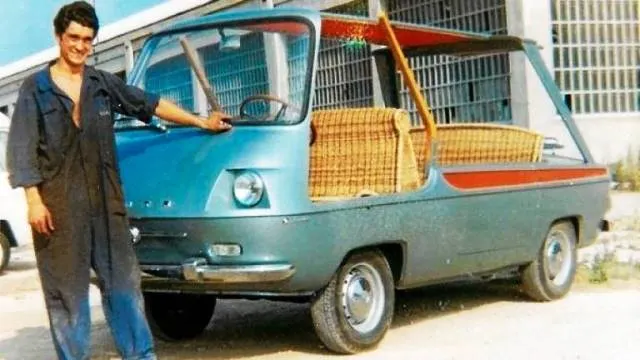
Salvation had a name: the Formichetta. A small mixed-use van, also derived from the 600, cheap and perfect for corner-shop commerce and urban delivery. That fitted the real Spain. From the Formichetta grew the Minivan delivery van in its various forms, which became the company’s genuine commercial peak. Small traders, large families and official institutions — the Ministry of Public Works, the postal service, the national airline Iberia — all embraced it. It became an ambulance, an insulated cargo van, even a hearse. By 1971, SIATA was building 23 units a day and had accumulated nearly 8,000 vans.
The change of direction came at an aesthetic and symbolic cost. Gone were the body adornments, the chrome grilles hand-worked in brass, the mouldings and trim. Everything superfluous was stripped away. The firm born to make Italian jewels reinvented itself as a maker of workhorses. And, paradoxically, that’s what kept it alive.
Ebro switches off the lights
SIATA’s end is, once again, a story of absorption — the same fate that swallowed half of Spain’s industry in that era.
In 1972, Motor Ibérica — maker of the Ebro marque, the giant born from the remains of Ford’s Spanish operation, and busy in those years gobbling up brands like Avia — made SIATA an offer and took over Minivan production. SIATA stopped being a marque and became a label within the Ebro catalogue: the van was renamed Ebro-Siata 40. When SEAT stopped building the 600 that underpinned it in 1973, Motor Ibérica adapted the van to the SEAT 850 and rechristened it Ebro-Siata 50.
SIATA Española itself closed in 1973. In its thirteen years it had built around 15,000 vehicles by some accounts, closer to 20,000 by others — the figures wobble, as they always do with these small marques. What doesn’t wobble is the shape of the story: a company born dreaming of Italian sports cars, dead and absorbed by a truck builder, its name reduced to a sticker on a van.
And that ending deserves its context, because it was no isolated case. The industrial Spain of those years was a chessboard of foreign licences and constant takeovers, where the big swallowed the small and almost everyone built under someone else’s umbrella. Motor Ibérica, the firm that bought SIATA, was the same giant that had absorbed Avia in 1971 and would end up distributing VIASA‘s Jeeps under the Ebro badge in 1974. Little SIATA of Tarragona, with its hand-built sports cars and its delivery vans, was just one more piece to fall in that industrial endgame. A beautiful piece, mind. The kind you’re sorry to lose.
What SIATA left behind
It’s easy to read SIATA as a failure. They dreamed of pocket Ferraris and ended up building post-office vans. But that reading is lazy, and unfair.
Because SIATA did something almost nobody in the Spain of its time did: it proved that this country, too, could dream of design — of beautiful lines, of cars that stirred something and didn’t merely haul. It did it on a patch of scrubland, with no resources, training panel-beaters from scratch, assembling cars from the parts of three different models and numbering the doors so as not to lose track. And when the dream stopped paying, it had the agility to reinvent itself and serve the real Spain — the one that needed to deliver and to work — without dying of shame.
That dual soul — the impossible sports car and the humble van — is what makes SIATA so deeply Spanish. It isn’t the story of a failure. It’s the story of a country that couldn’t afford its own dreams, but built them anyway, even if only a few units, by hand, on a building site with a water tank on the roof.
Very few cars survive today. A Turisa here, a Tarraco that SEAT is lovingly restoring in its heritage workshop there, the odd Minivan in a museum. Relics from when a hotelier in love with Italy decided that Tarragona deserved beautiful cars too.
But there’s a fainter, larger trace than any car. That patch of scrubland where SIATA pitched its factory, the Entrevías estate, was nothing when they arrived. It was SIATA’s adventure that lit the spark — that turned those fields of olive and carob trees into one of the industrial estates that would prove central to the development of modern Tarragona. SIATA died as a marque, its name dissolved into an Ebro sticker, its cars now countable on your fingers. But the industrial city it helped raise is still there, working every day, barely aware that it began with a handful of carpenters shaping steel over wooden bucks.
That’s SIATA’s real legacy. Not the few surviving sports cars, lovely as they are, but having been the spark. If you ever come across a SIATA in a museum, or cross the Entrevías estate without knowing what once took shape there, now you know: you’re standing in the trail of a dream that dared to exist where it had no business existing. And that, however brief, is rather more than most of us manage.