
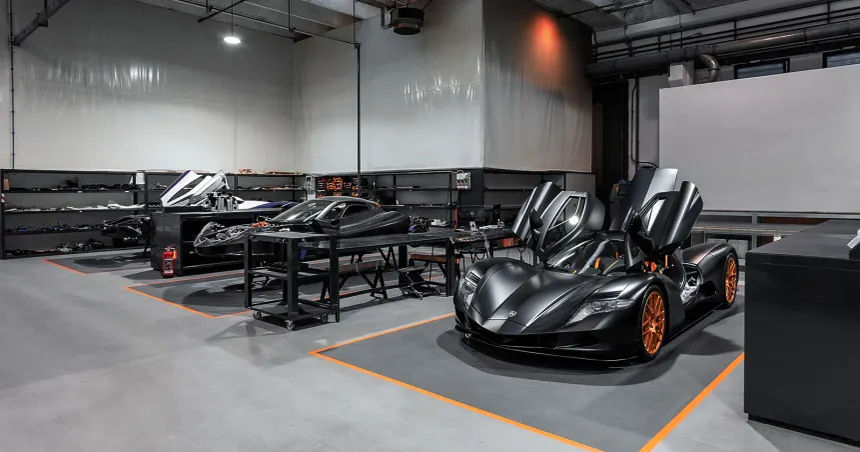
MAT: The Secret Workshop in Turin Where Other People’s Hypercars Are Actually Built
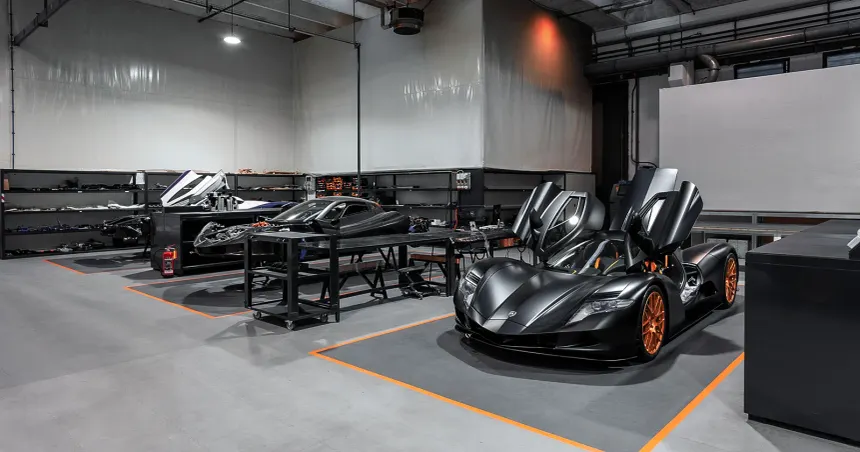
Pop quiz for the readers of Top Gear, Petrolicious, Road & Track and every magazine that ever ran a launch story on a boutique hypercar. Where is the Aspark Owl built? Where is the Glickenhaus SCG003 assembled? Where does the Apollo Intensa Emozione actually come together? Where do the 25 New Stratos being delivered to collectors get screwed down?
If you answered Japan, Connecticut, Germany and “somewhere in Italy, I think”, you are wrong on three counts and only half right on the fourth. The correct answer to all four questions is the same. A thousand-square-metre industrial unit in Turin’s old coachbuilding district, where engineers wearing blue overalls weld monocoques nobody outside the industry has ever heard of them building. The plate by the door reads Manifattura Automobili Torino. Most enthusiasts have never said those four words aloud.
That is exactly how it is supposed to work.
The factory nobody names
Here is the pattern, and once you see it you cannot unsee it.
Aspark is Japanese. The launch films say so, the press kits say so, every review says so. What none of them mention is that the car is engineered, developed and assembled in Italy, by an Italian company, with Italian hands. Glickenhaus is American. New York collector and former Wall Street trader Jim Glickenhaus, garage of dreams, the man who turned his Ferrari Enzo into the P4/5. Except the SCG003 that ran at the Nürburgring was conceived and built by MAT in Turin. Apollo, before its recent ownership turbulence, was German, the rebirth of Gumpert. The Apollo Intensa Emozione, launched in 2017 as the German marque’s resurrection statement, was developed end to end by MAT, naturally aspirated Ferrari V12 included, carbon monocoque included. The New Stratos, that homage to the 1970s rally weapon ordered by Michael Stoschek and his son Maximilian, is built by MAT under licence at a rate of 25 units, one at a time.
Four brands. Three continents on the marketing material. One address in reality.
This is not a conspiracy theory and it is not an accusation. It is how a particular corner of the car industry has always worked, and MAT is the cleanest current example of it. There is the person who has the idea. There is the person who has the money. There is the marketing department who picks the brand colour and the flag on the box. And then, separately, there is the company that actually makes the thing run, stops the doors rattling, gets it through type approval and delivers it on a flatbed. Those are different jobs. Public conversation has decided to applaud the first three and ignore the fourth, because the fourth never makes for a good cover story. The fourth turns up at seven in the morning, welds monocoques and goes home at six. The fourth does not have a face.
MAT is the fourth, for some of the most extreme hypercars built this decade.
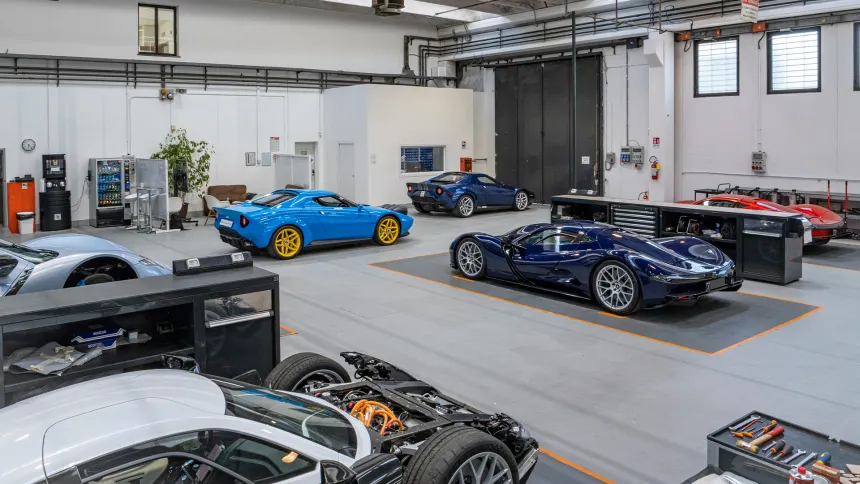
The workshop you were not meant to find
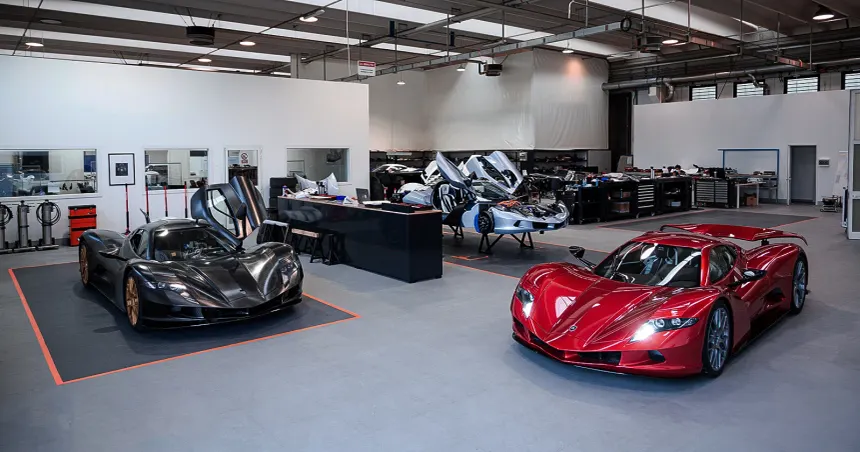
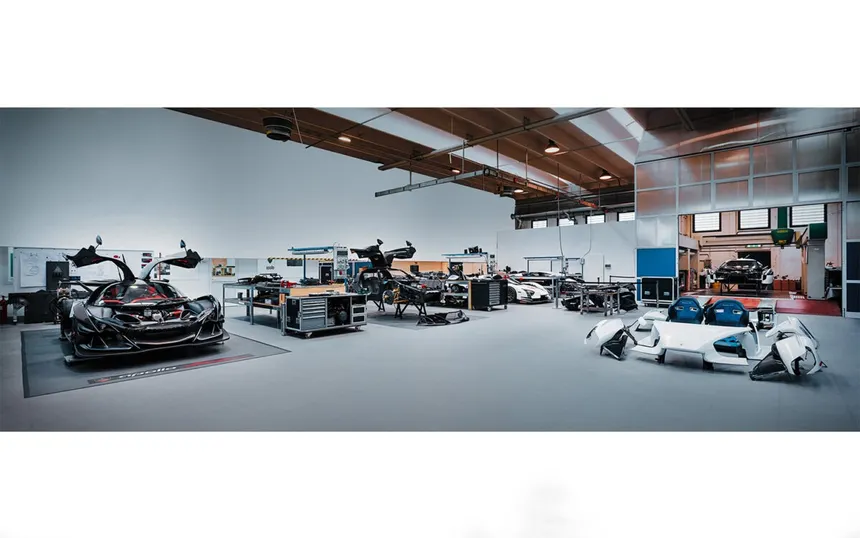
MAT is not one building. It is three. Three facilities in the Turin area totalling more than three thousand square meters, employing over fifty people, with ISO 9001 certification, which in the automotive supply chain means your processes survive a serious audit. The staff is a textbook list of automotive specialisms: mechanical engineers, composite specialists, electronics engineers, CFD aerodynamicists, rig and bench technicians, project managers, manufacturing hands. The full bill of trades you need to build a car from scratch, from the first sketch to the final number plate.
That is exactly what they sell. Not components. Not subassemblies. Whole cars. They will take your concept and deliver you a homologated vehicle with a VIN. They will take your half-finished prototype and complete it. They will take your finished single example and build you a series of twenty-five. The official line on their website calls them a boutique car manufacturer. The plain translation is: we build cars for people who cannot build them themselves but want to put their name on them.
Look at the current catalogue and the absence is loud. The active column lists Aspark Owl, Aspark Owl Roadster, Aspark SP600, Aspark Owl Jewelry, New Stratos, Kalana, 273. The legacy column lists the Apollo IE and the SCG003. Not one car carries the name MAT. MAT is what sits underneath all of them.
The man who runs the invisible empire
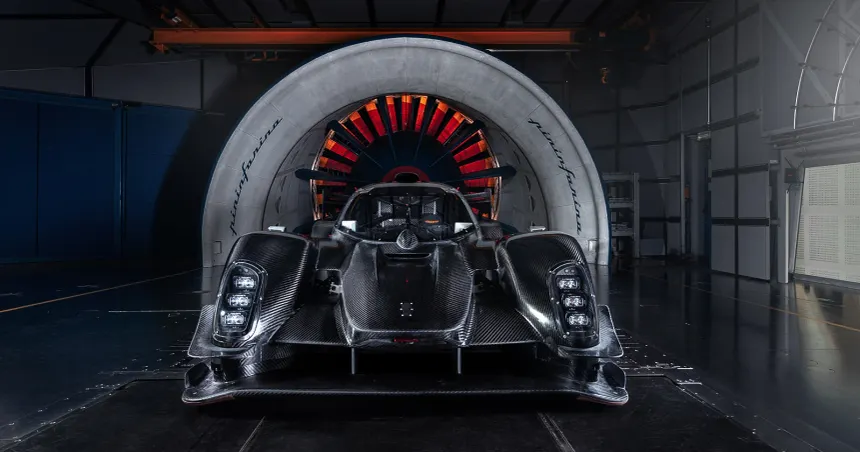
There is a protagonist to all this, and his name is Paolo Garella. Pininfarina engineer for decades, head of the Special Projects Division that in the early 2000s built some of the most expensive one-offs in living memory, the Ferrari P4/5 by Pininfarina among them. In 2014, aged 55, he founded MAT with the specific goal of doing for himself what he had spent three decades doing for other people. His personal story deserves its own piece and will have it. What matters here is that a man with thirty years of Pininfarina, Brunei royal commissions and Pebble Beach unveilings knows exactly how to build an impossible car, and just as importantly, how to build it without anyone noticing who built it. That technical discretion is part of what MAT sells. The client does not want the world to know who manufactured his hypercar. The client wants the hypercar. MAT delivers the hypercar. MAT stays quiet.
The same dynamic runs through every serious craft. The tailor does not get credited on the red carpet. The luthier does not get a bow at the concert. The structural engineer does not get a name on the skyscraper. And the bespoke car builder does not get a logo on the press release. But the suit, the violin, the tower and the hypercar exist because they were built.
What happens when you start pulling at the thread
Here is where it gets entertaining for anyone who likes looking under the paint.
The Apollo Intensa Emozione is one of the most extreme hypercars of the last decade. Naturally aspirated 4.0-litre V12, 780 horsepower at 8,500 rpm, full carbon monocoque, brutalist aerodynamic package, very limited production. When it launched, the coverage talked about Apollo Automobil, the German firm risen from the ashes of Gumpert. What almost no review mentioned was that MAT developed it end to end and builds it in Turin. Subtract MAT from the equation and the Apollo IE simply does not exist. The idea exists. The money exists. The brand exists. The car does not.
The SCG003 was Glickenhaus’s bid to take a privateer prototype to the Nürburgring and stand toe to toe with Mercedes, Audi and BMW. MAT conceived it, built it and delivered it. The car raced under American colours. It was Italian to the chassis.
The Aspark Owl is the most extreme Japanese electric hypercar of its moment. Nought to one hundred in 1.79 seconds. Top speed world record set by the SP600 variant in 2024, 438.7 km/h measured. The marque is Japanese. The car is built whole in Turin, by MAT, with MAT’s people.
The New Stratos is the homage to the Lancia Stratos HF that Michael Stoschek originally commissioned and which sat frozen as a single prototype until MAT received the licence to build 25 customer cars. Ferrari V8, manual gearbox, short wheelbase, carbon body, 540 horsepower over 1,247 kilos. Some people argue it is the best analogue car of the 21st century. Chris Harris once called short-wheelbase, manual, naturally aspirated cars the platonic ideal of driving. The New Stratos is that ideal made flesh. MAT delivers them one by one.
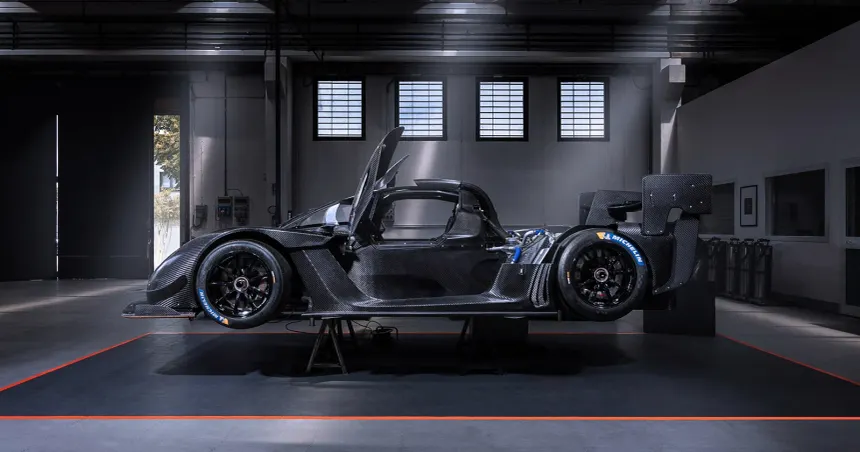
And then there are the cars MAT owns end to end. The Kalana, a time-attack weapon developed from a concept by Estonian driver Tõnis Vanaselja: 3.4-litre Judd V8, 610 horsepower at 11,000 rpm, 920 kilos dry, full carbon monocoque, over 1,400 kilos of downforce at 250 km/h, outright lap record at the Porsche Ring in Pärnu set in 2023 at 1:09.111. The 273, a 2023 one-off with a 3.9-litre twin-turbo V8 making over 700 horsepower and a single-piece three-meter carbon roof, built for a client obsessed with 1980s lines. The Jewelry line, recreating historic cars for collectors with modern manufacturing methods.
Why this matters
It matters because it changes the way you look at a hypercar. When someone tells you “this car is Japanese” or “this car is German” or “this car is American”, they are giving you the nationality of the marque, not of the car. The nationality of the car, if you cared about the craft, would be wherever it was welded, assembled and signed off. And for a non-trivial slice of the hypercars launched this decade, that nationality is the same. Italian, Turinese, a discreet industrial unit where roughly fifty people work under a Pininfarina-trained engineer.
It matters because it puts something straight that mainstream coverage never explains. When a small marque presents a hypercar and you wonder how on earth a fifteen-person company in a business park can put on the market a car that competes with Ferrari or McLaren, the answer is almost always that they did not. Behind every small marque there is a MAT, or an equivalent. Coachbuilders, engineering houses, specialist workshops, monocoque manufacturers, validation centres. A network of Italian, British and German trades that quietly makes the marquees on the bonnet possible. MAT is one of the most important nodes in that network. Probably the most important one in the turnkey, whole-car category.
It matters, finally, because credit belongs where the work is done. If the V12 of the Apollo IE makes your hair stand up, part of that is owed to an Italian team who tuned the exhaust. If you cannot stop looking at the lines of the New Stratos, part of that beauty was shaped by Turinese hands. If the acceleration figure of the Aspark Owl shocks you, part of it was made possible by the engineers who designed the monocoque. Those hands, signatures and decisions have an address. The address is MAT.
The ghostwriter
There is a figure in the publishing world that nobody mentions and everybody uses. The ghostwriter. The professional writer who writes the book that someone else signs. It happens with celebrity autobiographies, athlete memoirs, politician confessionals. The ghost writes, the famous name signs, and the reader closes the book never knowing the prose belonged to someone else. The car industry has its equivalent, and the metalwork is just as sharp. MAT is the ghostwriter of the modern hypercar.
The mark of a good ghostwriter is that you cannot tell. The Apollo IE sounds like an Apollo. The Aspark sounds like an Aspark. The SCG003 sounds like a Glickenhaus. Nobody raises a hand to say MAT’s signature is in there too. And the people at MAT do not seem to mind. They get paid, they deliver, they go home. There is another car to build tomorrow.
The one difference with publishing is that ghostwriters are usually silenced by contract. MAT is not silenced. The work appears on their website, in their press kits, in their catalogue. What has happened is that public conversation has chosen to look the other way. Brand story sells better than technical fact. Aspark, the Japanese hypercar marque, sells better than Aspark Owl, the hypercar assembled in Turin. That is what the market wants. And the market gets what it wants because everyone enjoys the story.
At NEC we do not enjoy the story. When a car launches under a German, Japanese or American flag and turns out to be screwed together fifteen minutes from central Turin, we say so. Not to spite anyone. Out of respect for the craft. Out of respect for the fifty people who turn up every morning in Italy to weld the car someone else will sign.
Check you’re still alive.