Stirling Moss: The Champion Who Chose Not to Be One
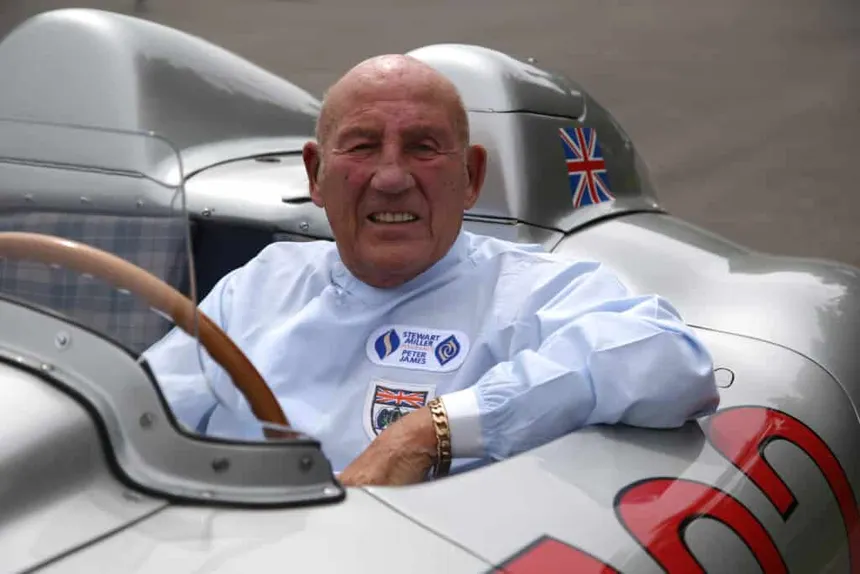
Ask any British kid of a certain age what their dad said when a copper pulled him over for speeding, and you’ll get the same answer: “Who do you think you are, Stirling Moss?” Not Hawthorn. Not Fangio. Not Hamilton, decades later. Moss. The name became the national shorthand for going too fast, and it stuck for the better part of sixty years.
Here’s the strange part. The man who became the byword for speed in an entire country never won a Formula 1 World Championship. Not once. And the reason he didn’t is the best thing about him.
Because Moss didn’t lose his title to bad luck. He gave it away on purpose. And that is a far better story than any trophy.
The crown that never came
The cold numbers first, then the good stuff.
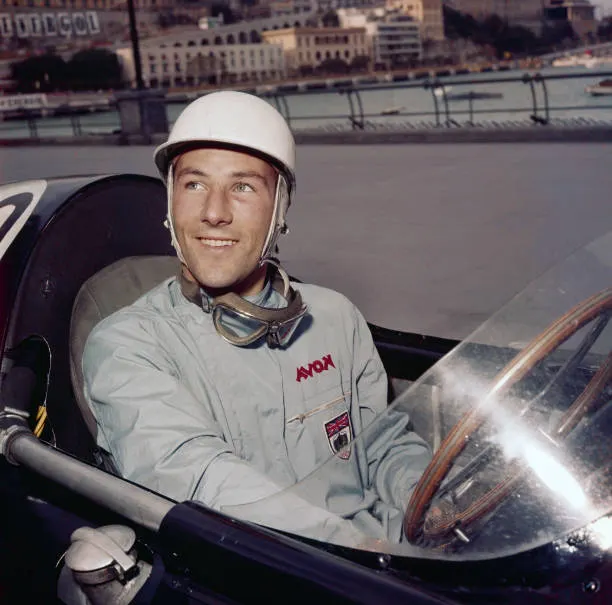
Moss raced in Formula 1 from 1951 to 1961. He won 16 Grands Prix and took 16 pole positions. And he finished runner-up in the championship four years running: 1955, 1956, 1957 and 1958. Four. In a row. Then third on three more occasions. A full decade at the sharp end, and the title slipped through his fingers every single time.
Some of the blame belongs to an Argentine. Moss’s peak years overlapped with Juan Manuel Fangio’s, the man who won five titles and remains the gold standard of the era. They were Mercedes team-mates in 1955, and Moss learned in the master’s shadow, idolising him the whole time. Sharing your best years with Fangio is like being booked to sing right after the greatest vocalist alive walks off stage. Whatever you do, the bar is already impossible.
But 1958 had nothing to do with Fangio. 1958 was Moss against himself.
And there’s a wrinkle most people skip past. In the Formula 1 of those years, Moss made two choices that deliberately made his own life harder. The first was his insistence on driving for British teams whenever he could, out of national pride, even when it meant inferior machinery. The second was his preference for privateer outfits over the big factory operations. Moss put the how above the what. He wanted to win his way, with his own people, and that carries a price in a discipline where the car matters as much as the driver. A less stubborn Moss, one less loyal to his principles, would probably have won two or three titles. But then he wouldn’t be Moss.
The gesture that cost a title
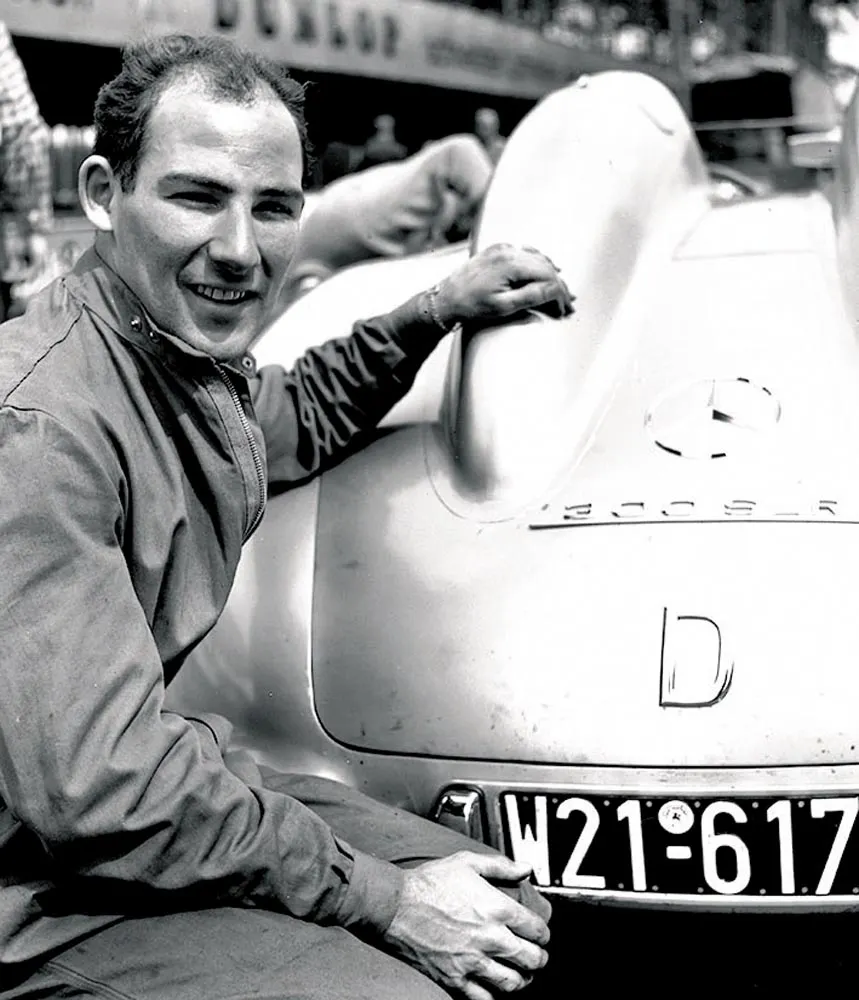
1958 season. Moss drives for Vanwall. He wins four races. His title rival, fellow Brit Mike Hawthorn, wins exactly one. One. Sit with that: a driver wins four times, his rival wins once, and the man who takes the championship is the one who won once. By a single point.
How? Because of what happened at the Portuguese Grand Prix.
Hawthorn spun. To rejoin, he made a move the stewards judged illegal, and they disqualified him. That disqualification would have stripped Hawthorn of precisely the points Moss needed to take the championship. It was done. Moss only had to keep his mouth shut.
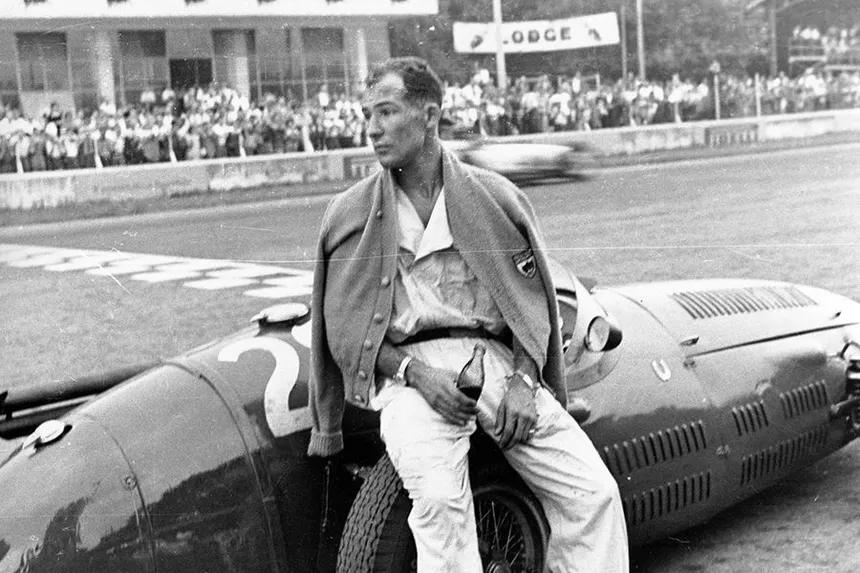
He didn’t. Moss, who had seen the whole thing from his own car, went to the stewards and testified for his rival. He explained that Hawthorn had done nothing wrong, that the move was legitimate, that the disqualification was unfair. The stewards listened. They reinstated Hawthorn. And those points, the ones Moss had defended with his own voice, were exactly the points that handed Hawthorn the title by a single point at season’s end.
Read it again, slowly. Moss surrendered the one championship of his career by defending his rival in front of the very tribunal that was about to take it away from him. And he did it knowing exactly what was at stake.
That isn’t bad luck. That’s character. That’s a man who had an idea about how you ought to behave on a track, and put it above the biggest prize in his profession.
Why that makes him bigger, not smaller
This is where people split. Some think Moss was a fool. That in elite sport, winning is winning and the rest is sentiment. That if your rival makes an illegal move, you stay quiet and pocket the title you raced all year for.
I see it the other way, and history backs me up, because look what happened. Hawthorn won that championship and almost nobody remembers it. He died in a road accident months later, already retired. His name has faded. And Moss, the man who didn’t win, is the one still spoken about almost seventy years on. He’s the one who got the catchphrase. Top Gear built whole segments on his legend. The man lost the title and won the immortality.
Winning a championship puts you on a list. Behaving the way Moss did in Portugal puts you in people’s memory. And memory outlasts lists.
Moss knew it perfectly well himself. He once said he hoped he’d keep being described as the greatest driver never to win the world championship, but that deep down it didn’t matter. What mattered was earning the respect of the other drivers. That, he managed with room to spare.
The Mille Miglia: the other Moss
To understand what this man was made of, you have to leave Formula 1 and look at what he did in May 1955 on the public roads of Italy.
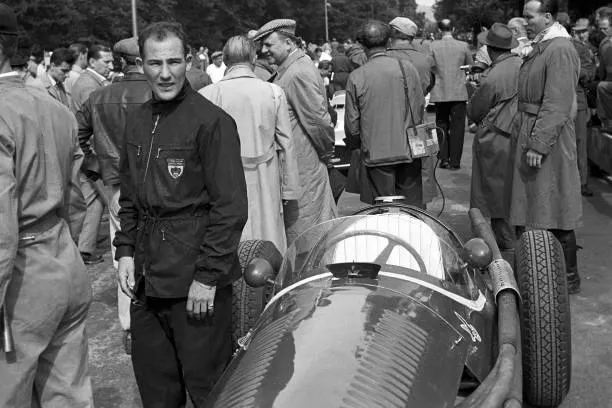
The Mille Miglia was a thousand miles across open Italian roads. Houses, trees, crowds, ravines. No barriers. No run-off. A beautiful, lethal madness that would be unthinkable today. And Moss ran it with a co-driver who wasn’t a racing driver at all: the journalist Denis Jenkinson.
What those two did changed motorsport forever. Jenkinson drove the entire route beforehand and noted every corner, every crest, every danger onto a roll of paper he wound through by hand inside the car. He called out what was coming with a set of agreed signals, because at 170 mph you can’t hear yourself think. That roll of notes is the direct grandfather of the pace notes every rally driver on earth uses today. These two invented it, on the fly, just to survive the thing.
And it worked. Moss covered the thousand miles at an average of nearly 100 mph for over ten hours straight. He smashed the course record. And he beat Fangio, in an identical car, by close to half an hour. Half an hour. In one race, over your own team-mate, who happened to be the best in the world. That drive is rated, with no asterisk and no debate, as one of the greatest in the history of the sport. The best day of one of the all-time greats. And he did it on roads he barely knew, against Italian aces who had driven those passes their whole lives, armed only with Jenkinson’s roller and his own nerve. It was preparation meeting courage, and it has never been topped.
By the way, the number on that Mercedes 300 SLR was 722, his start time. The same 722 that Mercedes resurrected half a century later to name the most savage version of the SLR McLaren. Moss’s legend is so large it still hands names to cars he never drove.
And it’s worth not romanticising any of this without a warning attached. Moss’s era was the deadliest in the history of motor racing. No belts worth the name, no full-face helmets, no barriers, no run-off, no medical teams like today’s. To race in the 1950s was to accept, race after race, that you might not come home. Many of Moss’s rivals and friends died on track. He said himself that danger was a necessary ingredient, like salt in cooking. When you judge his gesture in Portugal or his drive on the Mille Miglia, you have to remember it was all done with your actual life on the line, not as a figure of speech. That gives everything he did a different weight.
The end, and the maths
Moss’s career was cut off without warning in 1962, at Goodwood, in a horrific crash that nearly killed him and ended his professional racing for good. He was just 32. He was at his peak. He left early, like almost everything in his story.
But he left behind a tally that raises the hairs on your arm: of the 375 competitive races he finished in his life, he won 212. More than one in every two. He raced 107 different types of car. Single-seaters, sports cars, saloons, rallies, land-speed records. Whatever you put in front of him, he won in it. Front-engine, rear-engine, didn’t matter. The car was a tool and he could use any of them.
That versatility is almost impossible to picture now. Modern drivers specialise in one category and stay there a whole career. Moss lived in the age when a great had to win at everything: a Grand Prix on Sunday, a sportscar enduro the next week, a snowbound rally after that. He stood on the Le Mans podium more than once, including a memorable second in 1956, in one of the cruellest events on the calendar, where being fast isn’t enough and you have to nurse the machine for a full day. That mechanical sympathy, knowing when to push and when to spare the car, is another thing that set him apart from the pack.
And even with those numbers, even with that brutal range, the thing that defines Moss isn’t a victory. It’s a defeat he chose himself.
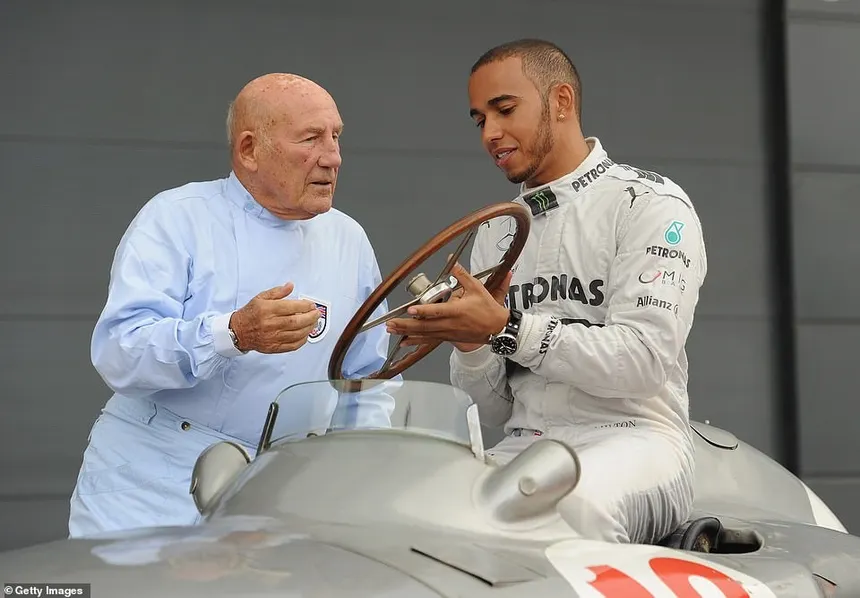
It’s telling that the establishment which never gave him a world title eventually gave him a knighthood. Sir Stirling Moss. The honour didn’t come from a points table; it came from what the whole country understood he represented. Fair play, courage, and a kind of greatness that refuses to be measured only in silverware. He spent the rest of his long life as racing’s most beloved elder statesman, driving demonstration laps in the machines of his era well into old age, the gentleman who never stopped being a tiger behind the wheel.
That’s why Moss is the greatest who never won a title. Not for want of talent, not for excess of bad luck. But because he understood, earlier and better than almost anyone, that there are ways of losing worth more than winning.
And in a sport that now argues over every millimetre of paint and every line of the rulebook, that’s a lesson that stings. Because almost nobody would race the way Moss raced in Portugal now. The title went to another man. The story stayed with him. And if you had to bet on which of the two lasts longer, you already know where to put your money. Hawthorn got the cup. Moss got the legend. History has already announced which one it prefers to keep.
2 thoughts on “Stirling Moss”