Lancia Fulvia HF Coupé: the car that taught Lancia how to win championships
Some cars win championships by brute force. They have more horsepower than their rivals, more displacement, more torque in the right places. They show up, run over everything, win. That’s one way to win.
There’s another way. Cars that win by doing exactly the opposite. Less power, less displacement, less weight, less everything. Cars that on paper lose every comparison and in reality keep climbing onto podiums because their rivals didn’t understand one thing that they did: that speed on a rally stage isn’t given by horsepower. It’s given by weight, agility, and the driver.
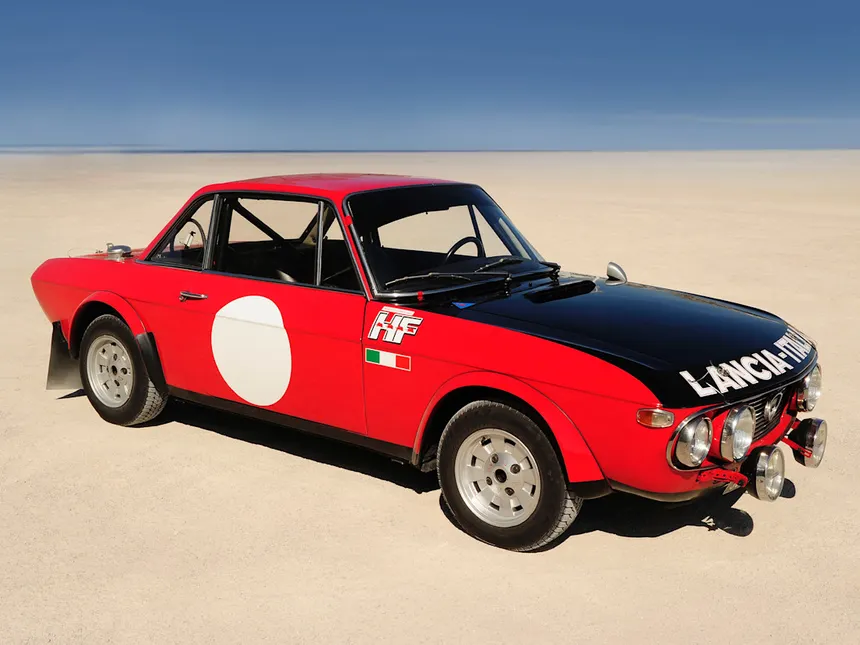
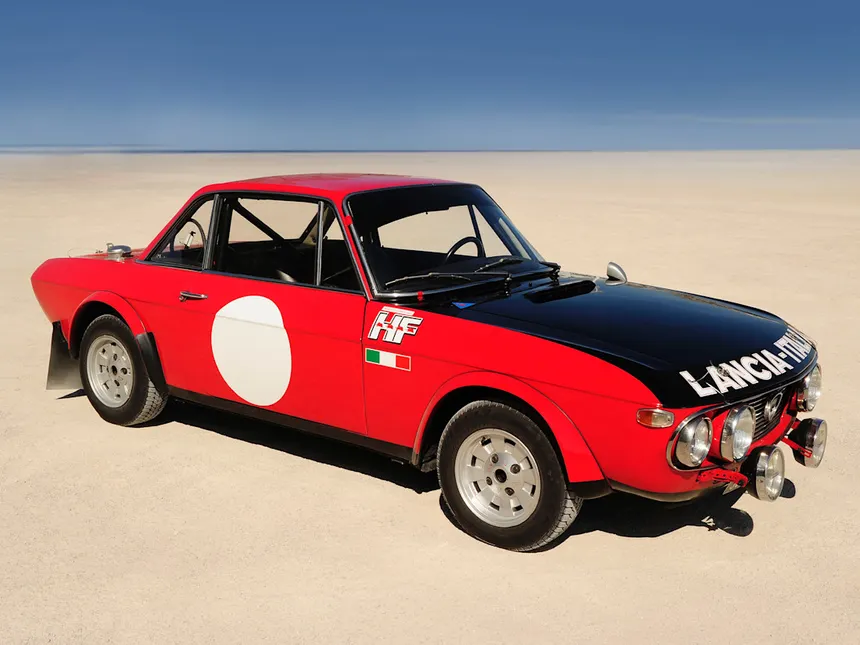
The Lancia Fulvia HF Coupé belongs in the second category. It didn’t have a thousand horsepower. It didn’t have two hundred. In its sharpest form, the 1.6 HF Fanalone, it made 115 horsepower. It weighed 920 kilograms. It had front-wheel drive — yes, front-wheel drive, in an era when nobody really believed a FWD car could win serious rallies. And with that, in January 1972, Sandro Munari and Mario Mannucci won the Monte Carlo Rally after a legendary night on the Col de Turini.
More important than that specific victory: that same year, the Fulvia HF won the International Championship for Manufacturers, the direct predecessor of the modern WRC. Lancia’s first ever manufacturers’ world championship. Without that title, there’s no Stratos. Without Stratos, no 037. Without 037, no Delta S4. Without S4, no Integrale.
The entire Lancia rally dynasty — which would go on to win ten manufacturers’ world titles, an absolute record that still stands — started here. With a small front-wheel-drive coupé, a narrow-angle V4, 920 kilograms, and a driver named Sandro Munari.
This is the story of the car that taught Lancia how to win championships.
The context: 1959, enter Pesenti, enter Fessia, everything changes
To understand why the Fulvia is what it is, you need to step back a bit. In 1955, Gianni Lancia sold the majority of the company to Carlo Pesenti, the cement industrialist who ran Italcementi. The sale was a direct consequence of the bleeding caused by Lancia’s Formula 1 D50 programme. Lancia, with Gianni gone, entered a new chapter.
The new technical director under Pesenti was a man named Antonio Fessia. Professor at the Turin Polytechnic. A respected engineer in Italy. And, most importantly for this story, an almost religious advocate of front-wheel drive.
In the 1950s, front-wheel drive was an eccentric choice. Citroën had been using it in France since the 30s. Saab and DKW in the north. But the vast majority of production cars in the world still had rear-wheel drive with longitudinal front engines. Front-wheel drive was considered complicated to engineer, mechanically fragile, and limited in the amount of power it could transmit.
Fessia disagreed. And from his office at Lancia through the 1960s, he made front-wheel drive the brand’s design philosophy for new models. First came the Flavia in 1961, already FWD. Then in 1963, the Fulvia.
The Fulvia: from saloon to coupé
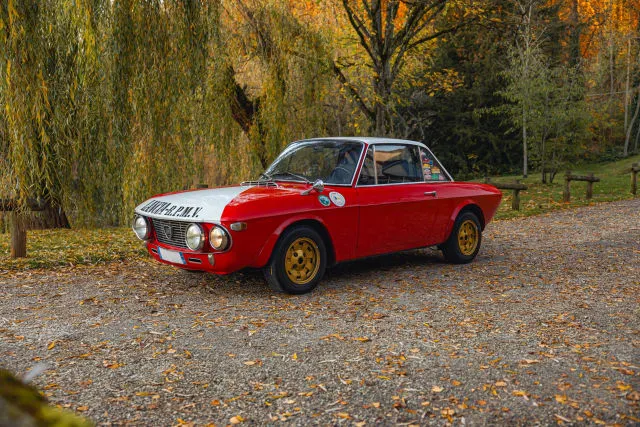
The Lancia Fulvia was unveiled at the 1963 Geneva Motor Show as a four-door family saloon. Front-wheel drive, longitudinally mounted narrow-angle V4 tilted 45 degrees, disc brakes all round. A correct car, technically more advanced than its competition, but commercially a bit dull. A small expensive saloon from a premium brand.
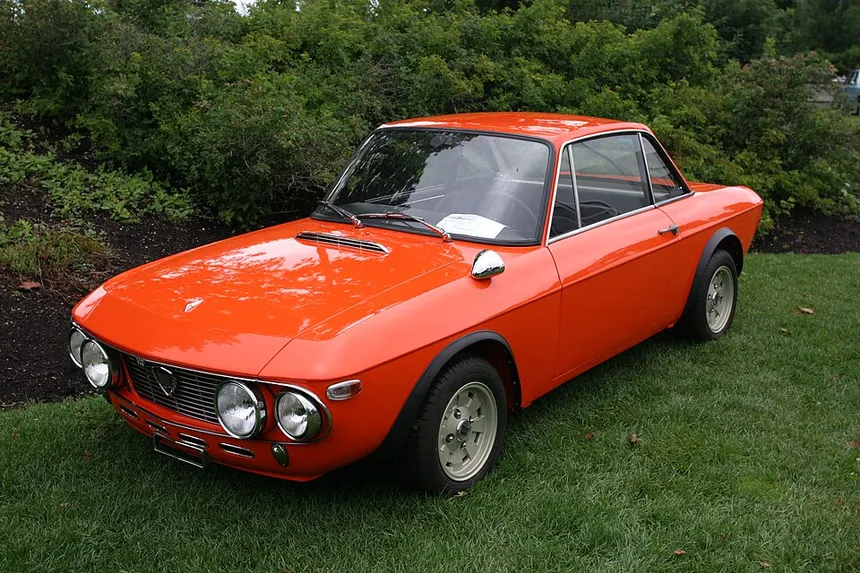
The real shift came in 1965 with the Coupé version. Designed by Piero Castagnero, the in-house Lancia stylist. The Fulvia Coupé is the opposite of the saloon: 4,000mm long, 2,330mm wheelbase (150mm shorter than the saloon), tense clean lines, two doors, 2+2 seats. The technical constraints on Castagnero’s brief were strict: maximum 4 metres long, maximum 900 kilograms, 2+2 seating to carry small families. And the saloon’s chassis and engine were givens.
What he produced was one of the prettiest coupés of the 1960s. Compact, perfectly proportioned, with a personality of its own. And, crucially, with enormous competition potential.
1965: Lancia buys HF Squadra Corse
That same year something important happened that almost nobody tells you about. Lancia bought HF Squadra Corse, a privateer racing team founded by Lancia enthusiasts. The name HF stands for High Fidelity — a deliberate nod to the premium audio world of the period. Lancia turned that private team into its official competition arm.
The detail matters. Because it marks the definitive end of the Vincenzo era. Remember: Vincenzo Lancia refused for 31 years to enter his cars in official competition. His son Gianni broke that rule briefly with Jano and the D50, but Lancia withdrew after selling the F1 team to Ferrari for one pound. From 1955 to 1965, Lancia officially didn’t compete. Ten years.
In 1965, with Pesenti owning the company and Fessia as technical director, that rule was finally broken outright. Lancia bought HF Squadra Corse, created Lancia Corse, and started entering factory cars in serious competition. The first model chosen for the new era was, logically, the Fulvia Coupé.
The engine: Fessia’s narrow-angle V4
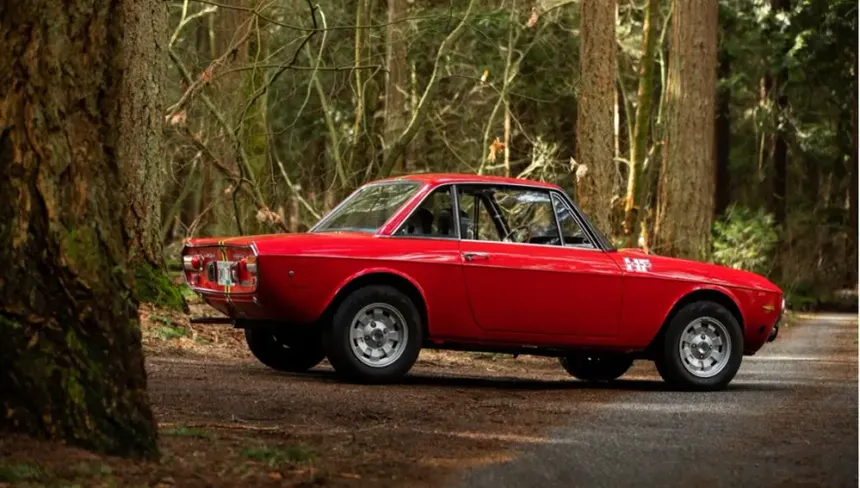
The Fulvia’s engine deserves a closer look. It’s not a normal four-cylinder.
It’s a narrow-angle V4. Four cylinders split into two banks, but with a very small angle between them — between 10 and 23 degrees depending on the version. That configuration lets you have a V-engine with compact dimensions similar to those of an inline engine.
Why do it that way? Two reasons. One, packaging: it fits into a very small engine bay, ideal for a compact car. Two, mechanical smoothness: the layout allows for a single central camshaft operating valves on both banks, reducing parts, weight and complexity.
That idea — V-engine with very narrow bank angle and a single cylinder head — was something Lancia had patented decades earlier, back with the Lambda of 1922. House DNA. And, a curious detail, Volkswagen copied it and rebranded it as VR6 in 1991, presenting it as an “innovation” for the Golf and Passat. The VR in modern Volkswagens is a direct conceptual descendant of the Fulvia’s narrow-angle V4.
The HF engine variants scaled in power across versions:
- Fulvia 1.2 HF (1966): 88bhp
- Fulvia 1.3 HF (1967): 101bhp
- Fulvia 1.6 HF “Fanalone” (1969): 115bhp in road trim, up to 132bhp in road-going competition trim
- Fulvia 1.6 HF Group 4 (rally): up to 170bhp in the most highly tuned versions
The engine was tilted 45 degrees from vertical to lower the bonnet line and improve aerodynamics. Twin Weber carburettors. Belt-driven cam. Water cooling. Aluminium alloy block and head, true to Lancia’s philosophy since the Aurelia.
The Fanalone: the road-legal racer
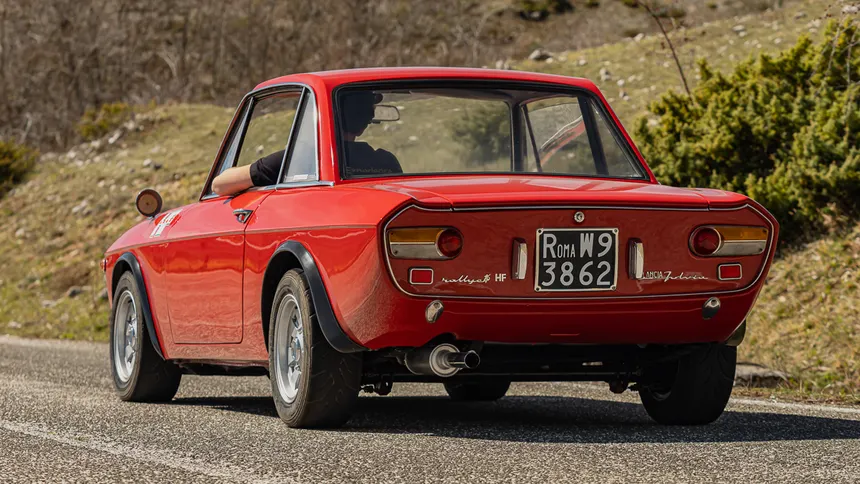
The version that defines the Fulvia HF as a rally car is the 1.6 HF “Fanalone”, launched in 1969. The nickname Fanalone means “big lamp” in Italian, a reference to the wider, more prominent front lights that visually distinguish this variant.
Fanalone numbers:
- Narrow-angle V4, 1,584cc
- 115bhp at 6,200 rpm in road trim
- 155Nm of torque at 5,000 rpm
- Five-speed manual gearbox
- Kerb weight: 920kg
- Top speed: 185 km/h
- 0-100km/h: around 10 seconds
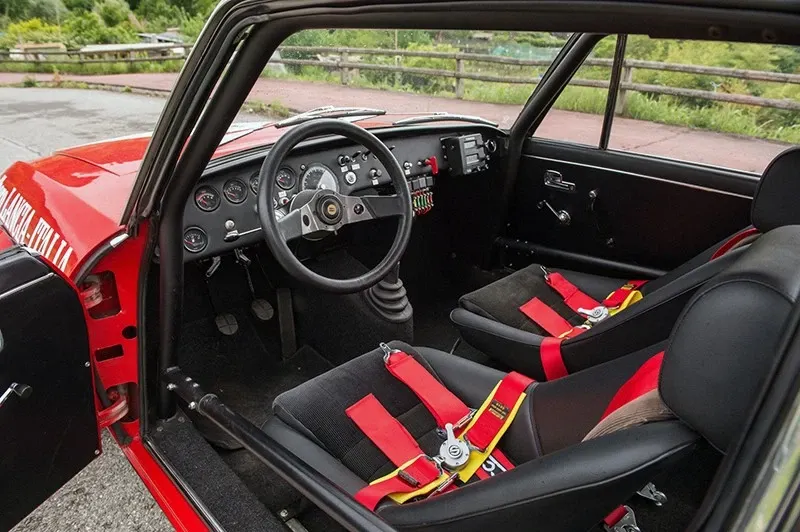
The car was sold as a road product, homologated for rally use. Meaning: you bought it at the dealership and, with very minor regulation-compliant modifications, could take it to a competitive stage. That’s what defines a properly done classic rally car: the road version and the racing version are nearly identical siblings.
In the Group 4 versions prepared by Lancia Corse, the engine was tuned up to 170bhp. The car got even lighter. Brakes got bigger. And the dynamic behaviour, in competent hands, was brutal.
Munari, Mannucci, Källström, Andersson
The drivers who took the Fulvia to the top were European top-tier talent.
Sandro Munari is the name that sticks. Italian, from Cavarzere in the Veneto. Started racing for Lancia with the Fulvia and would later become the face of the Stratos. Aggressive but surgically precise driving style, particularly good on tarmac and mountain stages. His regular co-driver was Mario Mannucci.
Harry Källström, Swedish. Different style, more conservative, more calculating. Won the British RAC Rally twice with the Fulvia, in 1969 and 1970.
Ove Andersson, also Swedish. He’d later become famous as the founder of Toyota Team Europe. But during his Lancia years he drove the Fulvia to consistent results.
The team combined Italian and Nordic styles, tarmac specialists and loose-surface experts. That mix is what allowed the Fulvia to be competitive on rallies all across the European calendar, not just the Italian ones.
1972: the championship year
The key year is 1972. The International Championship for Manufacturers — the direct predecessor of the WRC, which would launch in 1973 — was organised as a series of rallies across Europe with a points system for manufacturers.
The Fulvia HF Fanalone arrived at 1972 with six years of development behind it. It wasn’t a new car. On paper, against more modern rivals like the Porsche 911, Datsun 240Z, Saab 96, and Renault Alpine A110, it should have struggled. But Lancia Corse had the car polished to the millimetre, the drivers were at their peak, and the regulations favoured light cars.
The year opened with the Monte Carlo Rally in January. The first scoring round and traditionally one of the most prestigious. Munari and Mannucci started with car number 14 from the official Lancia team.
And then came the Col de Turini night.
The Col de Turini is a mountain pass above Nice, in the French Maritime Alps, that the Monte Carlo Rally traditionally crosses at night, in brutal conditions — snow, ice, fog, complete darkness between stages. The organisers programme it that way deliberately because that’s where the race is decided.
In the 1972 edition, Munari and Mannucci made a run over the Col de Turini that went straight into rally history. They climbed the mountain with the Fulvia HF at the absolute limit, in impossible conditions, setting times the rest of the field couldn’t match. Period accounts describe it as a mix of surgical precision and classic Italian aggression. Munari took ice-covered stretches in fourth gear when others were dropping to second.
They won the Monte Carlo Rally. Lancia took the first scoring round of the year.
And then they kept winning. Tarmac, gravel, mixed surfaces. The Fulvia HF accumulated points round after round, while the rest of the paddock realised that this small, apparently outdated coupé could beat them on any surface.
By the end of the 1972 season, the score was clear: Lancia won the International Championship for Manufacturers. The brand’s first ever manufacturers’ world title. The company that for 31 years had refused to compete officially had just won the most important championship in European rallying. Seventy years after its founding.
The Fulvia Coupé Monte-Carlo: the tribute
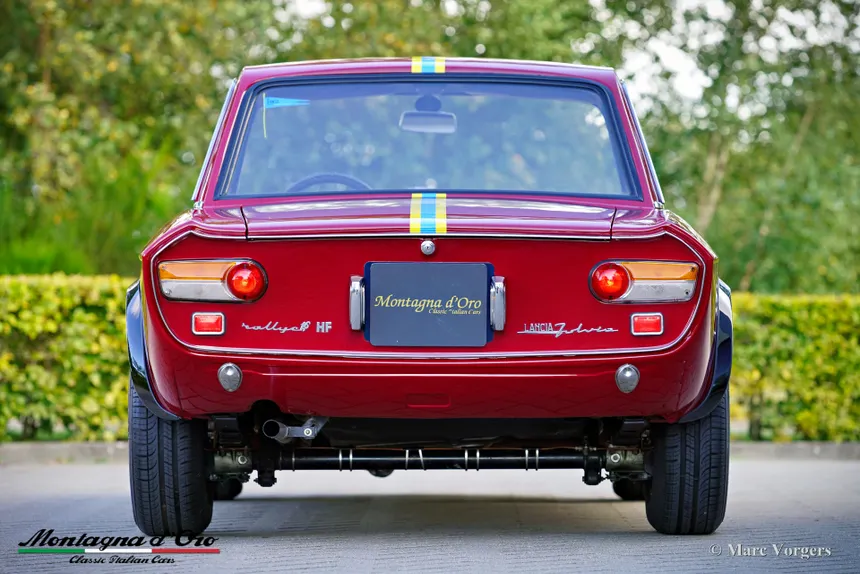
Barely a month after Munari’s Monte Carlo victory, Lancia presented at the Geneva Salon a special version of the Fulvia to celebrate it. They called it the Fulvia Coupé Monte-Carlo. It wore livery inspired by the competition 1.6 HF Fanalone. A limited edition aimed at the road market, taking advantage of the racing success to sell a few extra units of a car that already had seven years on its odometer of history.
That strategy — releasing a “celebration” road version after an important victory — Lancia would repeat with the Stratos, with the Delta Integrale, and with every one of its sporting cars. They started doing it with the Fulvia.
Why it matters: the Stratos predecessor
Here’s the historical key to the Fulvia HF. It’s the car that proved Lancia could win championships.
Before 1972, Lancia had been in existence for 66 years and had won zero manufacturers’ world titles. None. The Aurelia did spectacular things at Mille Miglia and Le Mans in the 50s, but never a full championship. The D50 won the 1956 F1 title but rebadged as a Ferrari, not as a Lancia. The Fulvia Coupé HFs started catching attention from 1965 onwards with individual race wins, but a full world title had never come home.
That 1972 title changed everything. Internally, within the company, it proved that Lancia Corse — the competition department created in 1965 — worked and could deliver commercial and image returns. Externally, against the rest of the industry, it positioned Lancia as a brand capable of winning modern rally.
And that title is what cleared the way, inside Lancia, for the next project. A car conceived from the first bolt for rallying, not a road saloon adapted. A car with a mid-mounted engine, not front. A car with a Ferrari Dino V6, not a narrow-angle V4. A car that would change the entire WRC paradigm in 1974: the Lancia Stratos HF.
Without the Fulvia’s success in 1972, Lancia Corse never would have had the budget, the internal legitimacy, or the support of Fiat’s board (Fiat by then was the owner) to approve a car as radical as the Stratos. The Fulvia HF is literally the car that makes the Stratos possible. And the Stratos is the car that makes the 037, S4, and Integrale possible.
That’s why, when you tell the story of Lancia’s rally dynasty, you have to start with the Fulvia. Not the Stratos. The Fulvia is piece zero. The foundation stone.
The Fanalone today
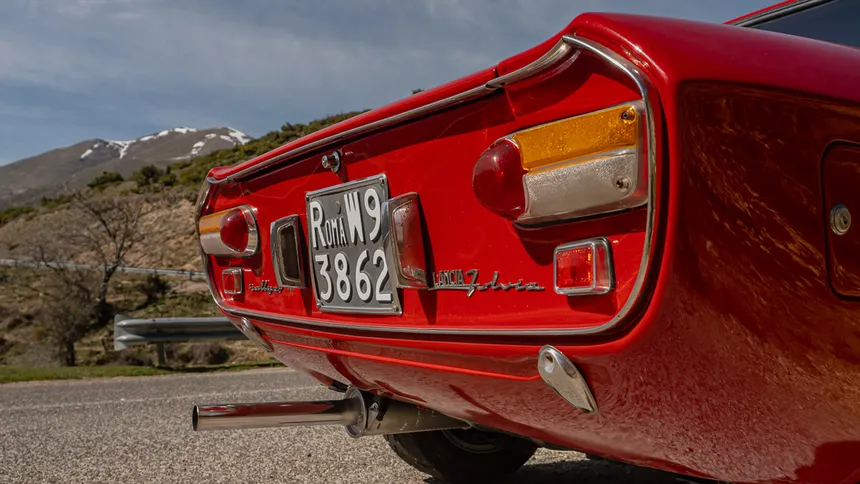
A Fulvia HF Fanalone in good condition sells today for between €60,000 and €120,000, depending on condition and history. Examples with documented competition history — the ones that ran European rallies in period — can reach €200,000 or more. It’s not blue-chip collecting like the Stratos or the Integrale Evoluzione, but it’s clearly second-tier Lancia collecting. And, more importantly, the numbers climb every year because the market has finally started to understand what this car is.
Whoever has a Fulvia HF in the garage today owns the direct ancestor of the dynasty. The piece with which Lancia learned to win. That counts for something.
Look at a photo of Munari at the Col de Turini in 1972, with the Marlboro-red Fulvia HF sliding sideways across the ice at four in the morning, the Fanalone headlamps lighting up a wall of snow, and you’ll understand why this car matters.
It didn’t have the horsepower. It didn’t have the displacement. It didn’t have the drivetrain that industrial logic said a rally car needed. It didn’t have any of what its rivals had.
It had the only thing that can’t be bought: a clear idea of how to win a rally. Light, agile, balanced, in the hands of a driver who understood what was under him. The Fulvia HF kicked off a philosophy Lancia maintained for twenty years. And won ten world championships with.
The first one, this one. In January 1972, on a freezing southern French night, with an Italian from the Veneto at the wheel.
Check you’re still alive.