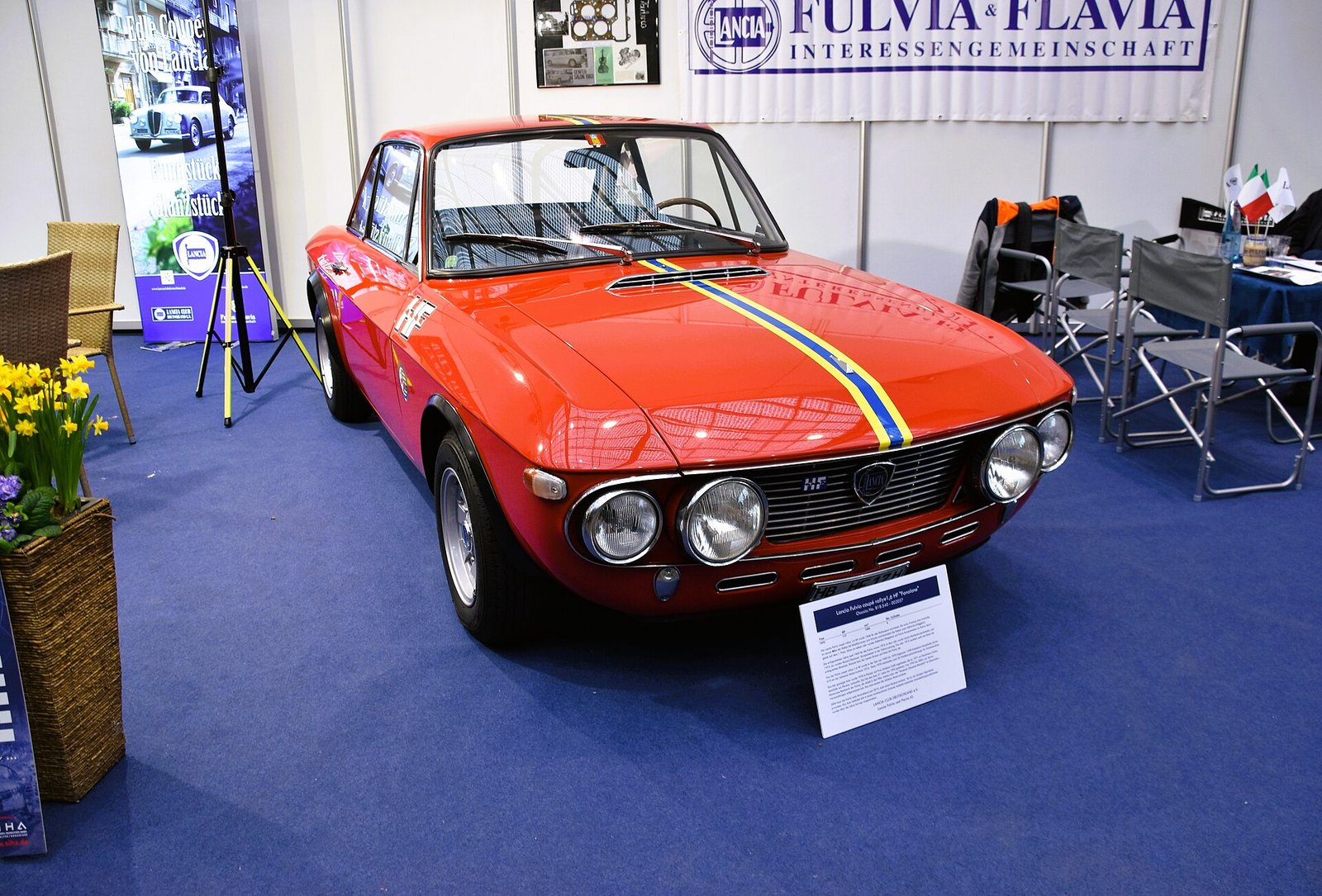
Lancia Fulvia HF Fanalone: the small front-drive coupe that won Monte Carlo and started Lancia’s rally dynasty
If you drove a Volkswagen GTI VR6 or a Corrado in the 1990s, you owned a piece of Lancia’s history without knowing it. Volkswagen’s VR6 put six cylinders in a narrow V under a single cylinder head so it could fit sideways in a compact car. Lancia had been doing the same trick with four cylinders since the 1920s, and one of the cars that made that engine famous was a little Italian coupe that won the Monte Carlo Rally in 1972 and handed Lancia its first international championship.
That car was the Fulvia HF, and in its sharpest form it had a nickname that rally fans still use with affection: Fanalone, Italian for "big headlights." It had front-wheel drive when the rally world thought that was a handicap, about 115 horsepower in road trim, and a driver named Sandro Munari. Everything Lancia achieved in rallying afterward, the Stratos, the 037, the Delta S4 and the Delta Integrale, grows out of what the Fulvia proved in 1972.
A company that hated racing
For most of its first fifty years, Lancia had an odd relationship with competition. Founder Vincenzo Lancia had been a successful racing driver for Fiat, but once he built his own cars, starting in 1906, he kept the company out of official racing. He preferred engineering. Lancia gave the world the Lambda of 1922, with a unitary body structure, independent front suspension and a narrow-angle V4 engine, and later the Aurelia of 1950, the first production car with a V6.
Vincenzo’s son Gianni changed course in the 1950s. He took the Aurelia racing and then went straight to Formula 1 with the D50, designed by Vittorio Jano. It was a brilliant car and a financial disaster. In 1955 Lancia pulled out, handed the D50 cars and equipment to Ferrari, and Gianni lost control of the company to the industrialist Carlo Pesenti, who made his fortune in cement. The D50, running under Ferrari’s name, carried Juan Manuel Fangio to the 1956 world title. Lancia got none of the credit.
The professor who loved front-wheel drive
Pesenti brought in a new technical director, Antonio Fessia, a professor at the Turin Polytechnic and a near-religious believer in front-wheel drive. In the 1950s that made him unusual. Citroën had been building front-drive cars since the 1930s, and Saab and DKW used it, but most of the world’s cars, including virtually everything Detroit built, had the engine in front driving the rear wheels. Front-wheel drive was seen as complicated, fragile and limited in how much power it could handle.
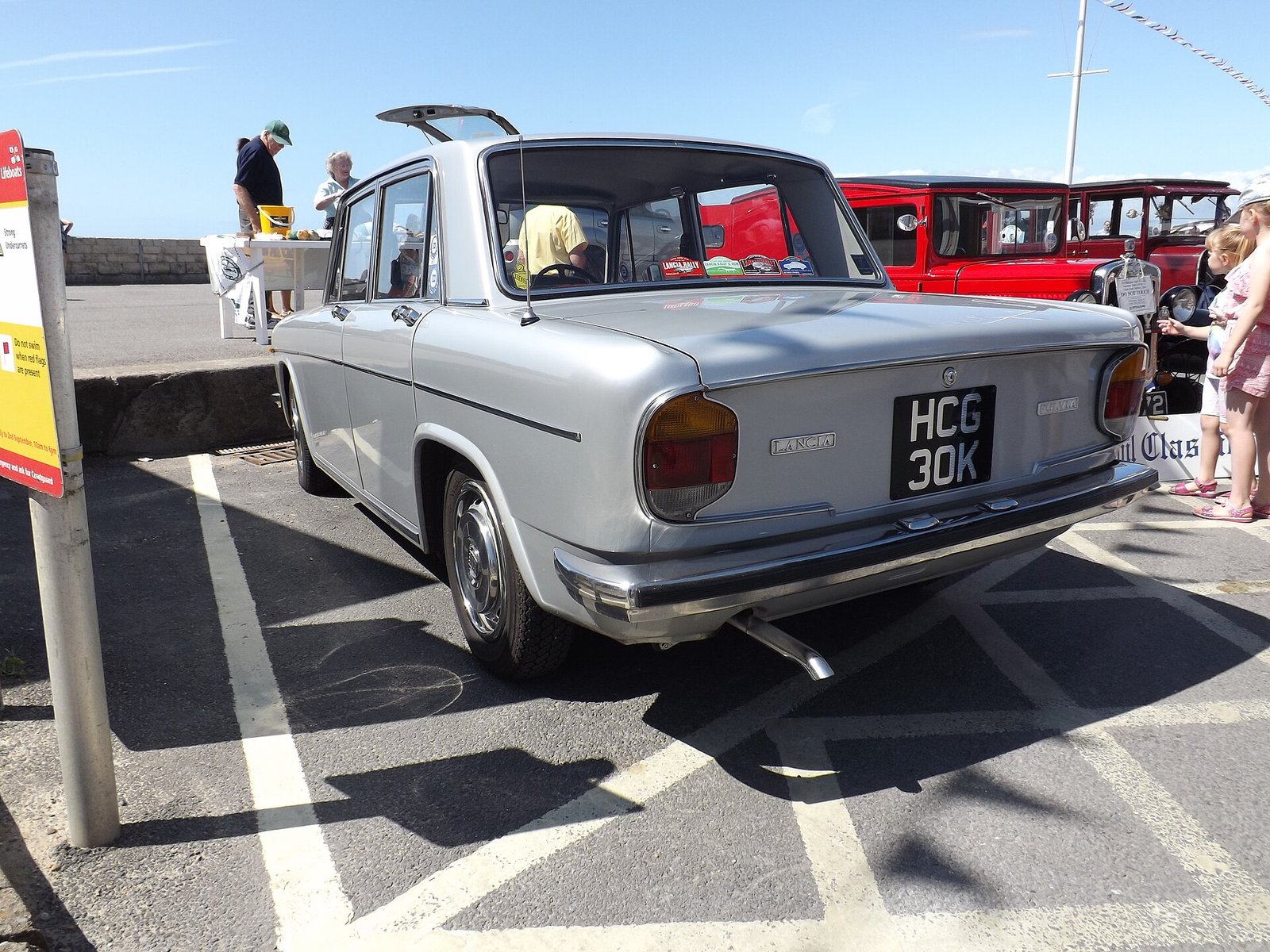
Fessia disagreed, and he made it Lancia policy. First came the Flavia in 1960, then, in 1963, the Fulvia sedan: front-wheel drive, a narrow V4 mounted lengthwise and tilted to one side, and disc brakes on all four wheels. It was technically ahead of most of its rivals and a bit plain to look at.
The coupe
The car that mattered arrived in 1965: the Fulvia Coupé, styled in-house by Piero Castagnero. It was compact, about 13 feet long, with a wheelbase shorter than the sedan’s, clean taut lines, two doors and room for two adults plus two children. The brief was strict: short, light and a proper 2+2. What came out was one of the prettiest small coupes of the 1960s, and, almost by accident, a perfect rally car.
HF: high fidelity, not horsepower
The same year, Lancia took over HF Squadra Corse, a racing outfit that had grown out of a club of loyal Lancia customers. HF stood for High Fidelity, a nod to the hi-fi craze of the period and to customers who stayed faithful to the brand. Led by Cesare Fiorio, who would go on to run Lancia’s and later Ferrari’s racing programs, the team became Lancia’s official competition department.
After a decade away from serious racing, Lancia was back, and the car it chose was the Fulvia Coupé. The "HF" badge, with its little elephant logo, became a mark of the fastest Lancias for decades afterward.
Why front-wheel drive could win
The case against front-wheel drive in the 1960s was simple. The front wheels already had to steer and do most of the braking. Asking them to put down all the power as well seemed like asking too much, especially on loose surfaces. A rear-drive car could be thrown sideways and steered on the throttle, the way drivers had done for decades.
The case for it was subtler. With the engine and gearbox over the driven wheels, a front-drive car has a lot of weight pressing those wheels into the ground, which helps traction on snow, ice and mud. It pulls itself out of corners instead of pushing, which makes it more stable and forgiving on slippery roads. And a skilled driver can use the brakes and weight transfer to rotate the car into a corner, then simply pull it straight. The Mini Cooper had already proved the point by winning the Monte Carlo Rally in the mid-1960s, and Saab’s drivers had shown it on Scandinavian gravel. The Fulvia added a stiffer chassis, more sophisticated suspension and an engine that loved to rev.
On the mountain roads of Monte Carlo, with ice in the shadows and dry tarmac in between, those qualities mattered more than outright power.
The narrow V4, explained
The heart of the Fulvia was its engine, and it was not an ordinary four-cylinder. It was a V4 with an extremely narrow angle between its two banks of cylinders, around 11 to 13 degrees depending on the version. That is so tight that both banks fit under a single cylinder head, with two camshafts operating the valves of both rows.
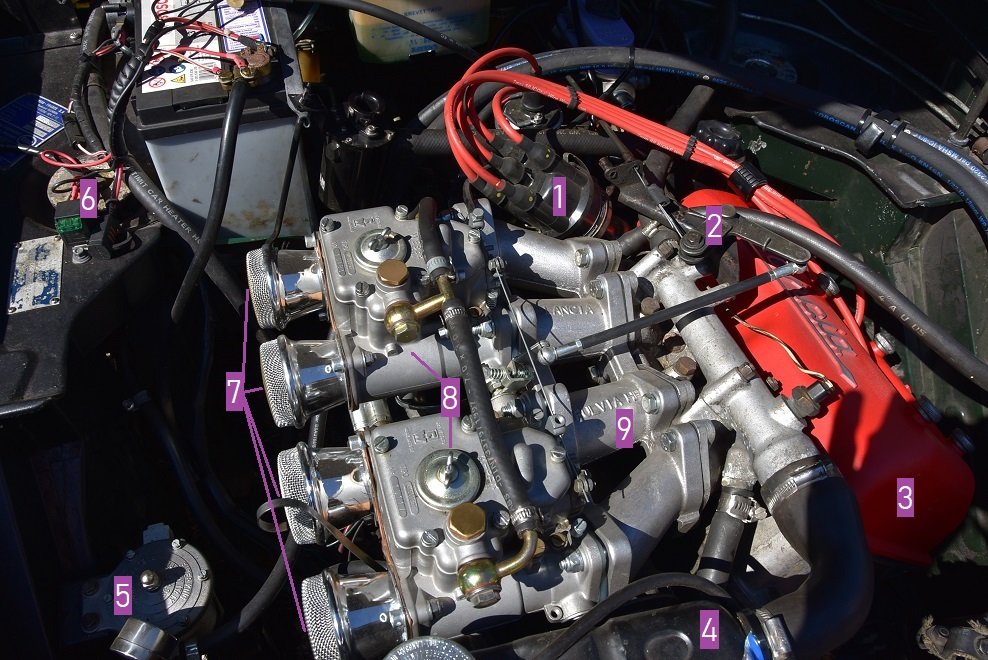
Why build it like that? Packaging and simplicity. A narrow V is almost as short as a V engine and almost as slim as an inline engine, so it fits in a small engine bay. One head instead of two saves parts, weight and cost. The engine was mounted ahead of the front wheels and tilted steeply to keep the hood low, with aluminum block and head and twin carburetors.
This was Lancia DNA going back to the Lambda. Decades later, Volkswagen applied the same narrow-angle, single-head idea to six cylinders and called it VR6, a layout American enthusiasts know from the GTI, Jetta, Golf and Corrado.
The HF engines grew steadily: about 88 hp in the 1.2-liter HF of 1966, a little over 100 in the 1.3 HF of 1967, and 115 hp in the 1.6-liter HF of 1969, with the rally versions prepared by the factory team going a good deal higher.
The Fanalone
The 1.6 HF of 1969 is the car rally fans mean when they say Fanalone. The name comes from its larger, more prominent inner headlights, which set it apart from the regular coupes. It had a 1,584 cc V4 with 115 hp at 6,200 rpm, a five-speed gearbox, weighed well under a ton and could reach roughly 115 mph.
It was sold as a road car that could be homologated for rallying, which meant you could buy one at a dealer and, with limited changes, take it to a timed stage. That is the definition of a great classic rally car: the road car and the competition car are near twins. In factory Group 4 form, the engine was tuned much further, the car was lightened and the brakes enlarged.
Zagato’s lightweight cousin
The coupe had a rakish sibling that collectors prize just as much: the Fulvia Sport, bodied by Zagato in Milan. It used the same mechanical package under a lower, more aerodynamic body, at first with aluminum panels, and it was faster in a straight line than the regular coupe thanks to its slipperier shape. It wasn’t the rally weapon the HF was, but it showed how much the Fulvia’s chassis and narrow V4 could do in different clothes, and it’s one of the reasons Fulvia enthusiasts argue about which version is the "real" one.
The drivers
The Fulvia had a remarkable lineup behind the wheel. Sandro Munari, from Cavarzere near Venice, became the face of Lancia rallying, first with the Fulvia and later with the Stratos. He was aggressive but technically precise, especially good on tarmac and in the mountains, and his co-driver was Mario Mannucci.
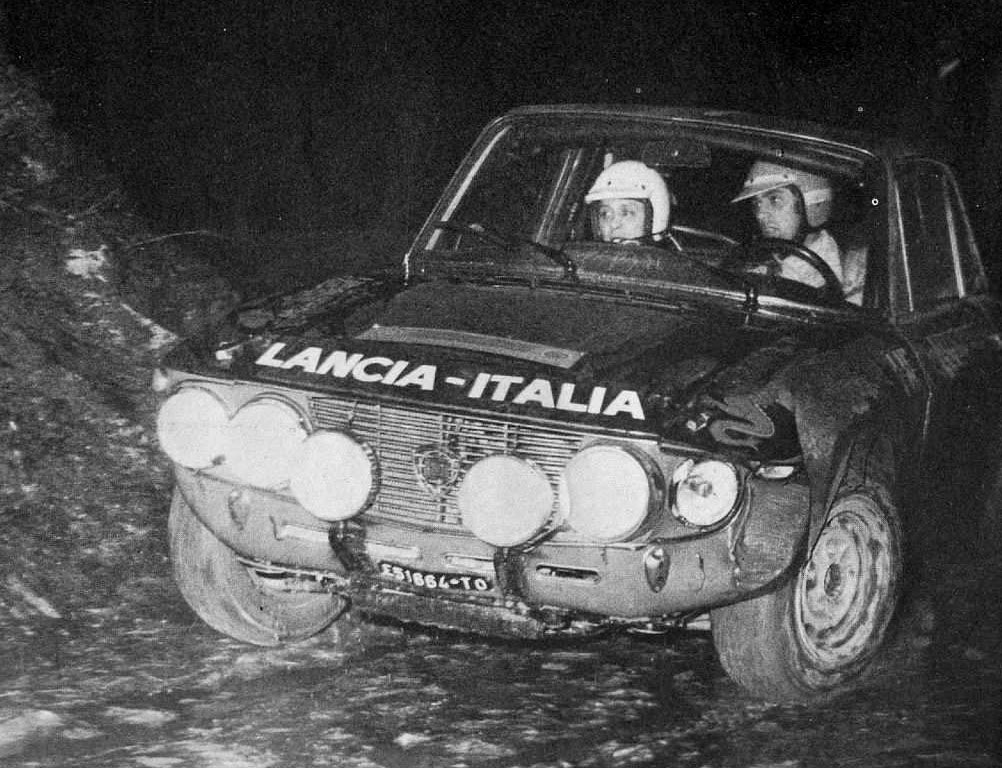
Harry Källström, a Swede, brought a calmer, more calculating style and won the RAC Rally in Britain with the Fulvia in 1969 and 1970. The team mixed Italian tarmac specialists and Scandinavians who knew gravel and snow, which made the Fulvia competitive across the European calendar, not just in Italy.
The Fulvia even went to America. Photos from Michigan’s Press-on-Regardless Rally of 1972 show a Fulvia 1.6 HF on the forest roads of the Midwest, a reminder of how international the championship had become.
The rivals
In 1972 the Fulvia was not the obvious favorite. It had been in competition for years. On paper, newer cars should have beaten it. The Porsche 911 had a rear-mounted flat-six and far more power. The Alpine A110 was light and rear-engined. Saab’s 96 had made front-wheel drive work in rallying under Erik Carlsson, but with a smaller, two-stroke or V4 engine. The Datsun 240Z, the sports car that was selling by the tens of thousands in America, was strong in endurance rallies like the Safari. And Ford’s Escort was becoming the car to beat in Britain.
What the Fulvia had was balance, low weight, a superbly developed chassis and drivers at their peak. The regulations of the time also favored light, nimble cars.
Monte Carlo, 1972
The International Championship for Manufacturers, the series that became the World Rally Championship in 1973, opened in January 1972 with the Monte Carlo Rally. It was the most prestigious event of the year, and its decisive stages ran at night over the Col de Turini, a mountain pass above Nice, through snow, ice and darkness.
Munari and Mannucci attacked the Turini in the Fulvia and set times their rivals couldn’t match. They won the Monte. The Monte of that era was a different event from the modern rally. Crews started from several cities across Europe and converged on Monaco in a long road section, the concentration run, before the competitive stages in the mountains behind the principality. The night through the Turini, with spectators lining the hairpins and lighting fires in the snow, decided the result year after year. Winning there with a small front-drive coupe against more powerful rear-drive cars was the kind of result that made headlines far beyond Italy.
Lancia had other heroes that season. Amilcare Ballestrieri won the Sanremo Rally in Italy with a Fulvia in the red-and-white Marlboro colors that would become famous on Lancia rally cars in the following years. Through the rest of the season Lancia kept scoring, on tarmac, gravel and mixed surfaces, while the rest of the field realized that the small, apparently outdated coupe could beat them almost anywhere. At the end of 1972 Lancia won the International Championship for Manufacturers, the first championship title in the company’s history, 66 years after its founding.
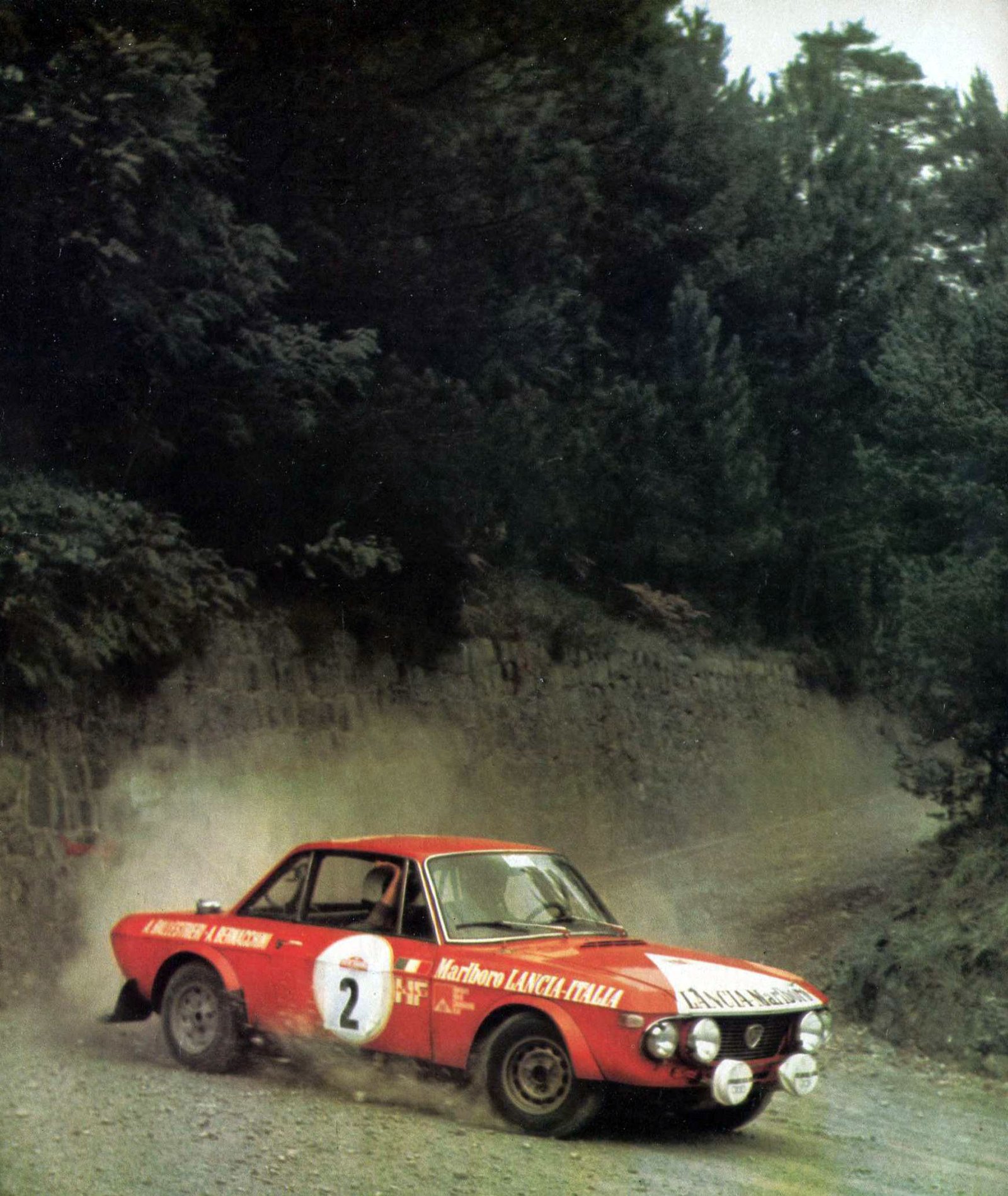
Lancia celebrated with a road car, the Fulvia Coupé Monte Carlo, a special edition launched within weeks of the win. It was the start of a long Lancia habit of turning rally victories into showroom specials, a practice the company would repeat with the Stratos and, most famously, with the run of Delta Integrale special editions in the late 1980s and early 1990s.
A long goodbye
The Fulvia didn’t disappear when the Stratos arrived. The coupe stayed in production into the mid-1970s, updated as the Series 2 and Series 3, and Lancia kept selling it as a sporty, well-built small coupe long after its rally career had ended. In competition, the Stratos took over from 1974, but private teams kept running Fulvias in national rallies for years, and the car became a staple of historic rallying once that scene developed. Today Fulvias are regular entrants in the Monte Carlo Historique, the event that retraces the old routes, which means that half a century later they still climb the Turini in the dark.
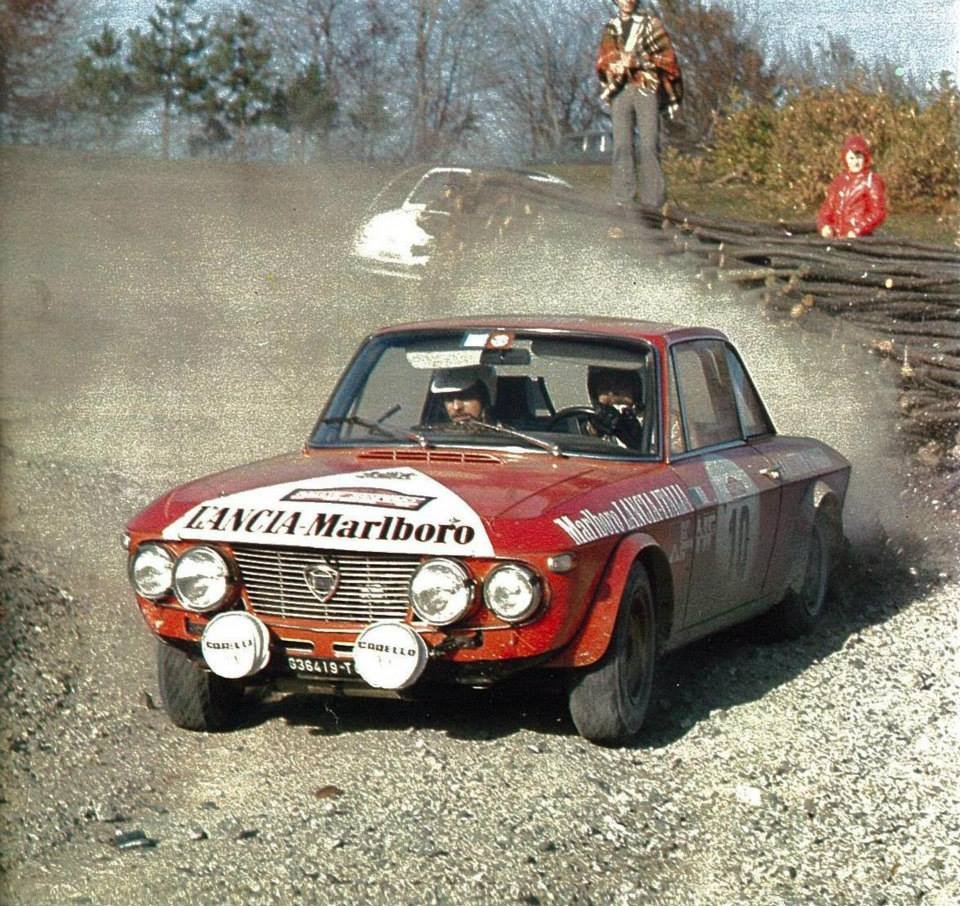
That longevity says something about the design. Few cars of the 1960s could stay competitive and desirable for more than a decade with relatively modest changes. The Fulvia did, because its basic package of low weight, a stiff body and a willing engine was right from the beginning.
Why the Fulvia made the Stratos possible
By then Lancia belonged to Fiat, which had bought the company in 1969. The 1972 title proved inside the group that the competition department worked and could deliver both results and image. That gave Fiorio and his team the credibility to push for something radical: a car designed from the ground up for rallying, with a mid-mounted Ferrari Dino V6 instead of a front-mounted V4. That car was the Lancia Stratos, which won the World Rally Championship for makes in 1974, 1975 and 1976.
From there the line runs straight through the 037, the last rear-drive car to win the title, the Group B Delta S4, and the Delta HF Integrale, which won six manufacturers’ titles in a row. Lancia’s ten WRC manufacturers’ crowns all trace back to a little front-drive coupe that showed the company it could win.
The Fanalone today
A good Fulvia HF Fanalone is now a serious collector car in Europe, and examples with documented rally history fetch a substantial premium. It is not in the same price bracket as a Stratos or an Integrale Evoluzione, but values have climbed as the market has recognized what this car started.
In the United States, Fulvias are rare, since Lancia sold only small numbers here before leaving the American market in the early 1980s. That rarity is part of their appeal at American Italian-car shows, where a Fanalone with its oversized headlights draws a crowd that a far more expensive Ferrari might not.
Living with one
Fulvias are wonderful to drive, and they have the weaknesses of their era. The narrow V4 has a distinctive, slightly gruff sound and loves revs. The steering is light and quick, the car feels tiny by modern standards, and it rewards a driver who carries speed rather than one who brakes late. The bad news is rust. Like many Italian cars of the period, Fulvias corroded badly, and Lancia’s reputation in the 1970s, especially with the later Beta, suffered for it. A good Fulvia today is often one that has been carefully restored, and buyers learn to check the floors, sills and suspension mounts before anything else.
Light beats loud
The Fulvia HF didn’t have the horsepower, the displacement or the drive layout that conventional wisdom said a rally winner needed. It had something that can’t be bought: a clear idea of how rallies are won. Light, agile and balanced, in the hands of drivers who understood exactly what was under them, it beat faster cars and set a philosophy Lancia followed for twenty years.
Check you’re still alive.
Photos via Wikimedia Commons: 1970 Fulvia HF Fanalone, Charles from Port Chester (CC BY 2.0); Fulvia sedan, Andrew Bone (CC BY 2.0); Fulvia HF V4 engine, Dacia 1410 Sport (CC BY-SA 4.0); Munari and Mannucci at the 1971 Sanremo Rally, Källström at the 1972 Sanremo Rally and Ballestrieri in the Marlboro Fulvia, unknown photographers (public domain); 1973 Fulvia 1.3 S Monte Carlo, Calreyn88 (CC BY-SA 4.0).