Lancia: the brand that invented half the modern car and ended up selling Ypsilons in Italy
There’s a question Chris Harris has asked, more than once, on camera. It goes something like this: which manufacturer, when you really dig into the history books, turns out to have invented more of the modern car than any other? Most people answer Mercedes, because they invented the actual car in 1886 and the question feels closed. A few clever ones say Citroën, because of the DS and the hydropneumatic suspension. Nearly nobody says the correct answer.
The correct answer is Lancia.
The list runs roughly like this. First production car in the world with a monocoque chassis: Lancia, 1922. First production car in history with a V6 engine: Lancia, 1950. First production car with a five-speed manual gearbox: Lancia, 1948. First European production car with a complete electrical system as standard: Lancia, 1913. First narrow-angle V4 engine with a single cylinder head — the concept Volkswagen would rebrand as VR6 eighty years later: Lancia. First manufacturer to use a wind tunnel as a standard part of car design: Lancia. First constructor to win three consecutive World Rally Championship constructors’ titles. And four. And five. And six.
Ten WRC constructors’ titles total. Absolute record. Still the record. And this in spite of the fact that Lancia left the championship in 1992 and only came back, officially, four months ago.
If all of that is true — and it is, because it’s documented in extreme detail — then the obvious question becomes: how is it possible that this manufacturer today sells one single model, mostly in Italy, and that most people under forty struggle to pronounce the name correctly?
It’s the saddest story in Italian motoring history. And probably the most fascinating.
Vincenzo: the engineer who was a racing driver first
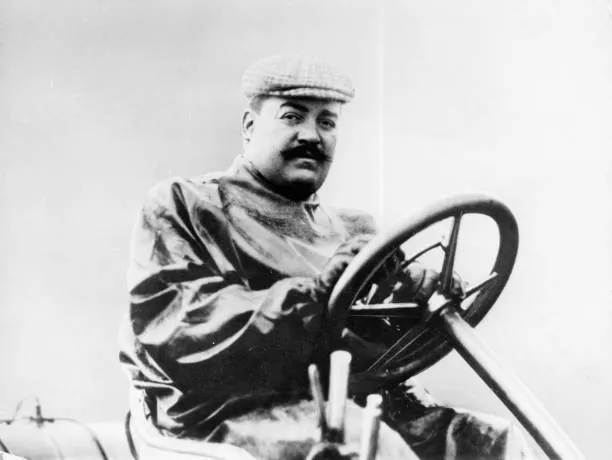
Lancia the company is impossible to understand without Lancia the man. Vincenzo Lancia, born in Fobello in the Piedmont in 1881. Son of a tinned-food industrialist. Working at eighteen in a Turin bicycle company called Ceirano. In 1899 a man named Giovanni Agnelli bought Ceirano and renamed it Fabbrica Italiana Automobili Torino. Fiat.
Vincenzo, by twenty, was a Fiat works driver. And not an ordinary one — possibly the fastest in the paddock, but with a problem that became famous in his time: he broke cars. He drove them so hard that engines and gearboxes simply gave up. He won the Gold Cup in Milan in 1906 in a Fiat 28-40 HP, but he also accumulated mechanical retirements at a rate that drove Fiat’s engineers slightly insane.
That combination — supernatural pace plus an obsessive mechanical sensitivity — became the DNA of the company he was about to found. Vincenzo understood cars from the driver’s seat and from the workbench at the same time. He knew which part was going to break before it broke. And he knew exactly how to make it better.
On 27 November 1906, aged twenty-five and still racing for Fiat, he founded Lancia & C. Fabbrica Automobili with his friend Claudio Fogolin, another Fiat driver. Small workshop on Via Ormea, on the corner of Via Donizetti, in the south-eastern part of Turin. The first car was the Tipo 51, also called the 12 HP, later renamed the Alfa — not after the Milan brand, but after the first letter of the Greek alphabet. Vincenzo would go on to name his cars after Greek letters for decades. A habit. A good one.
The Tipo 51 set the tone. Four-cylinder, mechanical refinements nobody else was fitting, obsessive attention to detail. Vincenzo would delay a car’s launch rather than release it below his standards. It was hell for the accountants and heaven for the engineers. That was the house rule for his entire life.
The Vincenzo years: 1906-1937
What Lancia did between 1906 and Vincenzo’s death in 1937 has no parallel in European industry. Three milestones that matter most.
In 1913, the Lancia Theta. First European production car with a complete electrical system as standard. Electric starter, electric lighting, full instrumentation. While the rest of Europe was still hand-cranking engines and bolting kerosene lamps to the front of cars.
In 1922, the Lancia Lambda. First production car in the world with a monocoque chassis. The entire concept of “unitary body construction” that defines a hundred percent of road cars built today starts here. Lighter, stiffer, safer. Paired with sliding-pillar independent front suspension, another Lancia invention that would stay in the company until the Appia in the 1960s. The Lambda isn’t just important. It’s the car that defined how every car after it would be built.
In 1937, Vincenzo died of a heart attack aged fifty-five. Too young. His son Gianni took over with the help of his widow Adele Miglietti and an engineer the company had just hired called Vittorio Jano.
A note that will surprise you if you didn’t know it. In 1930, Vincenzo had co-founded Carrozzeria Pinin Farina in Cambiano with his friend Giovanni Battista “Pinin” Farina. Yes. That Pininfarina. The studio that would clothe everything from the Ferrari Dino to the F40. That’s also Vincenzo Lancia. The man didn’t build cars. He built industries.
The Jano era: the first modern GT
Vittorio Jano is probably one of the most important Italian engineers of the twentieth century. He’d designed the Alfa Romeo 6C, P2 and P3 that dominated Grand Prix racing in the 1920s and 30s. He arrived at Lancia after a chain of post-war reshuffles in the Italian engineering world. And once there, in Turin, he did two things that changed the industry.
In 1948, the Lancia Ardea Series 3 became the first production car in the world with a five-speed manual gearbox. Five gears. When the rest of the industry was still using three or four. Today, the cheapest hatchback has six. The idea that more ratios meant better performance and better fuel economy began here.
And in 1950, the Lancia Aurelia B10. The first production V6 engine in history. Read that again slowly. The first production V6 engine in history. Today it’s the most common engine configuration in the world for sports and premium cars. Mercedes uses it, Audi uses it, Toyota uses it, BMW uses it, everyone has used it. Jano invented it at Lancia.
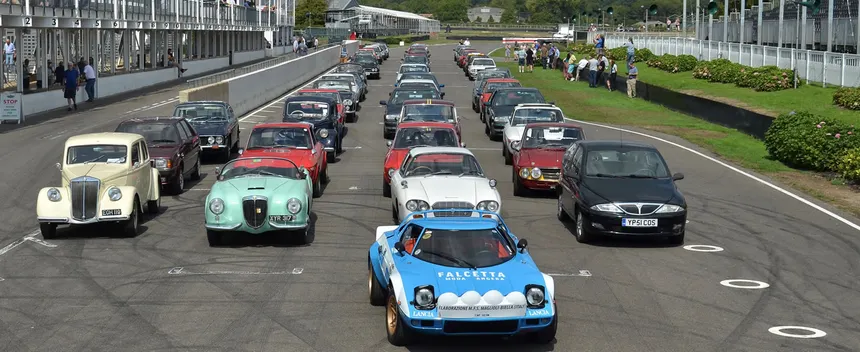
The Aurelia is the mother of the modern Grand Tourer. In B20 GT form, with the 60-degree V6 with overhead cams, Pinin Farina coachwork (family business), and a transaxle layout with the gearbox on the rear axle for weight balance — it finished second outright at the 1951 Mille Miglia. It invented an entire genre: the big, fast, elegant Italian coupé. Without the Aurelia there’s no Ferrari 250 GT, no Maserati 3500 GT, no Aston Martin DB4. Nothing.
The mad years: rally, Formula 1, near-bankruptcy
Here the story gets complicated. And more Lancia than ever.
Gianni Lancia, Vincenzo’s son, inherited a company that was very good at making cars and very bad at making money. He decided to fix it by spending more money on motorsport. Which makes sense if you understand the family mindset: if what we sell is pure engineering, we have to prove it on track. So between 1953 and 1955, Lancia did completely insane things.
They built the Lancia D24, a sports prototype with a V6 that won the 1953 Carrera Panamericana with Juan Manuel Fangio at the wheel. They built the Lancia D50, a Formula 1 car with a 90-degree V8 that doubled as a structural member — that is, the engine was the chassis. An idea Formula 1 would rediscover twenty years later via Colin Chapman.
The D50 was driven by Alberto Ascari, two-time World Champion and arguably the best Italian driver in history, alongside Eugenio Castellotti. In 1955, in a private test session at Monza, Ascari borrowed a Ferrari 750 Monza, went out on track wearing street clothes, and died for no apparent reason. Four days earlier he’d survived diving into Monaco harbour with his D50.
Lancia was devastated. Gianni, with no Ascari, no money, and an F1 programme that had eaten the books, sold the entire racing team to Enzo Ferrari for one pound. Yes. One pound. With all the cars, the blueprints, the spares, the lot. The D50s Ferrari rebadged as Lancia-Ferrari D50, and with which Juan Manuel Fangio won the 1956 Formula 1 World Championship. That title was won by a Lancia. With Ferrari written on the nose.
Within months, Gianni Lancia lost control of the company. Pesenti, a cement industrialist, took the majority. And in 1969, after a difficult decade, Lancia entered Fiat’s orbit. The Agnelli family — heirs of the same man who’d bought the bicycle company where Vincenzo had worked as a teenager — acquired the brand Vincenzo had founded specifically to do the opposite of Fiat.
There’s poetic justice in that. There’s also a certain kind of sadness.
Stratos, 037, S4, Integrale: rally as religion
Now the good part. The one every petrolhead knows. The one that has kept the Lancia name alive even though the brand itself barely has product.
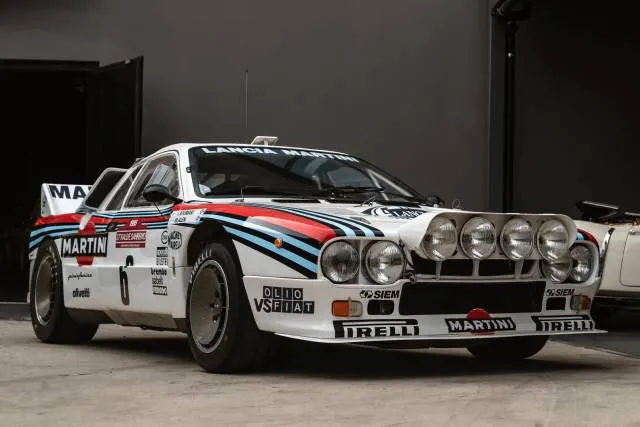
Fiat gave Lancia a clear instruction in the 70s: concentrate on image and motorsport. Lancia took that instruction and ran with it to the extreme. They built cars designed from the first screw to win rallies, without worrying about whether they’d sell. And then, almost as an excuse, they built the five hundred road examples the regulations demanded to homologate them.
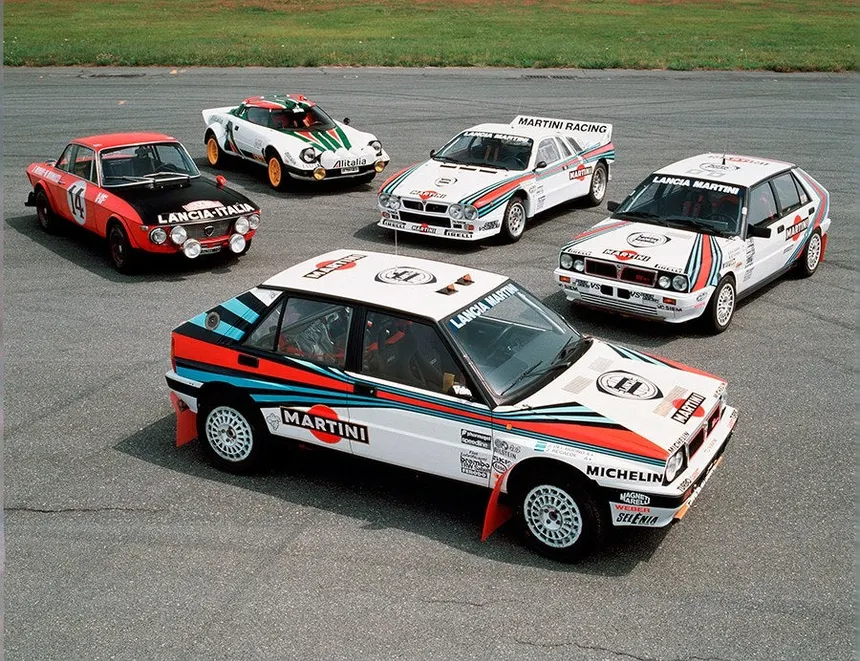
First came the Lancia Stratos HF. A mid-engined coupé with a Ferrari Dino V6, designed by Marcello Gandini at Bertone. It won the World Rally Championship in 1974, 1975 and 1976. The first car in the world designed from the ground up to win rallies, not a saloon adapted for the role. It changed the WRC paradigm forever.
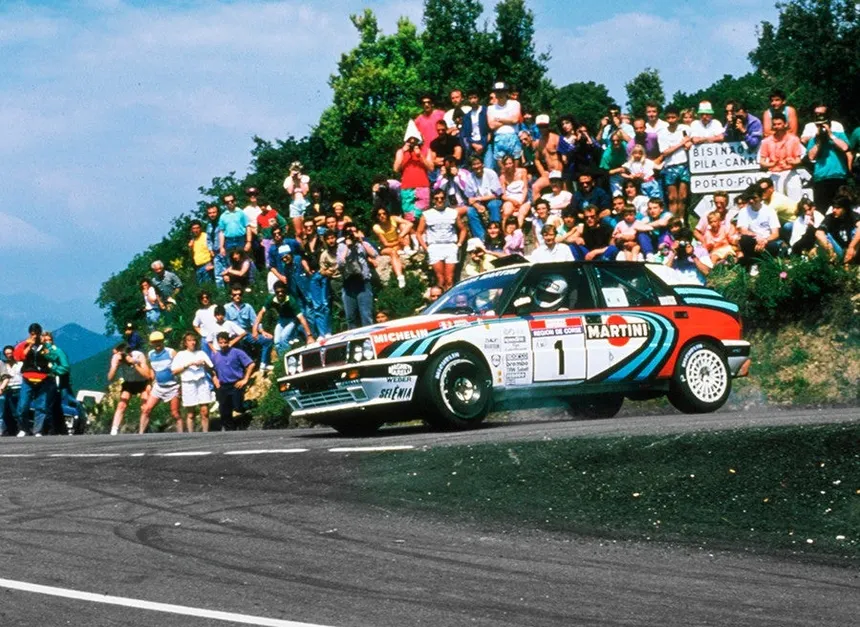
Then the 037, the last rear-wheel-drive car to win a manufacturers’ WRC title in the modern era. It beat the four-wheel-drive Audi Quattro in 1983 against every prediction. Then the Delta S4, with both a supercharger and a turbocharger, monstrous, four-wheel drive, Group B at its most extreme. After the Henri Toivonen tragedy in 1986 came the Delta HF 4WD, which became the Integrale. And between 1987 and 1992 they won six consecutive constructors’ titles with the Integrale. Six. In a row.
Ten constructors’ titles in total. Absolute WRC record. Still the record, thirty-four years later.
But behind the trophies sat a business decision. Lancia was no longer really a premium brand. It was Fiat’s covert motorsport arm. The investment went to competition. The road-car product was neglected. The Thema, the Y10, the Dedra, the Kappa — decent cars, sure, but no longer “the car that was two decades ahead”. They were better-dressed Fiats.
The decline: 1992-2024
After winning the sixth consecutive title in 1992, Lancia withdrew from the WRC. Officially, to “concentrate on the product”. In practice, because Fiat was in financial trouble and couldn’t fund two factory rally teams (Lancia and Alfa Romeo) at once. From then on, the brand slowly disappeared.
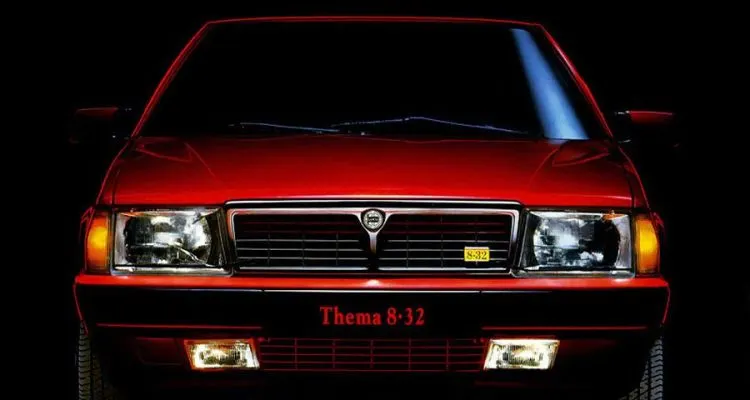
In the 90s there were still Lancias that remembered what they were. The Thema 8.32 with the Ferrari V8. The Delta HF Integrale Evoluzione II Edizione Finale, the last Integrale built. But also the Kappa Coupé, the Dedra, the Y. Correct cars. Italian. Some beautiful. None revolutionary.
The 2000s made it worse. The new Delta of 2008 didn’t quite land. The Thema II was literally a Chrysler 300 with Lancia badges, courtesy of the Fiat-Chrysler merger. The Voyager, same: a rebadged Chrysler Town & Country. Lancia had become the thing Vincenzo had spent his life despising: a styling brand without engineering of its own.
From 2014 onwards, Sergio Marchionne — then CEO of FCA — made the brutal call. Lancia would stay only in Italy, selling a single model: the Ypsilon, a small car on Fiat 500 mechanicals. Full stop. Nothing else. Twelve years like that.
Twelve years during which Lancia, the manufacturer that invented the monocoque, survived selling a small car in one country.
The comeback: 2024-2026
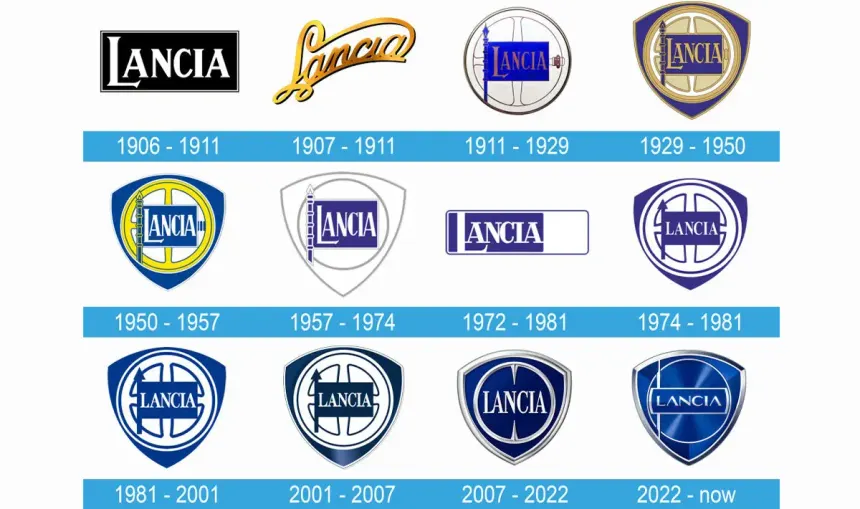
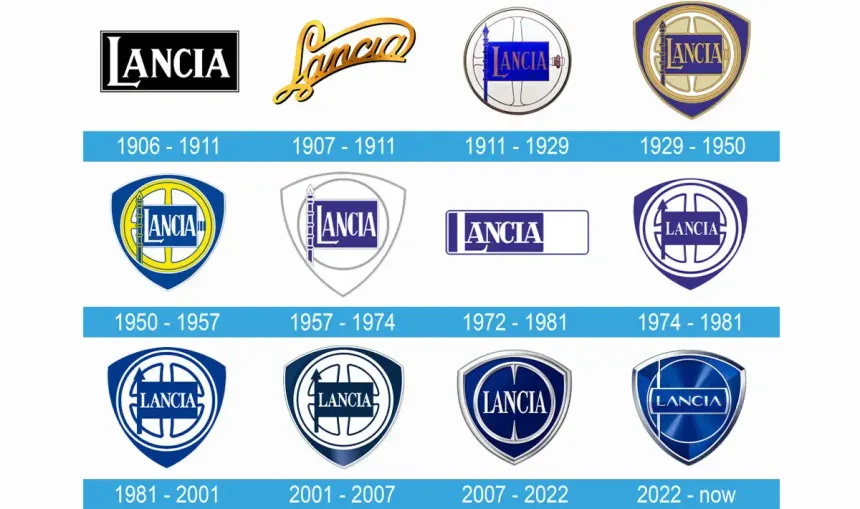
Then in 2024, Stellantis — born from the merger of FCA and PSA — decided to bring Lancia back properly. New visual identity. New Ypsilon on the Stellantis CMP platform. Three models announced for the coming years: Ypsilon, a future saloon inspired by the 2023 Pu+Ra HPE concept, and the possible return of the Gamma as a flagship. All electric or hybrid. Design led by Jean-Pierre Ploué.
And, most importantly, the announcement in November 2025: Lancia is returning to the World Rally Championship in 2026 with the Ypsilon Rally2 HF Integrale in the WRC2 category. For the first time in thirty-three years.
The car was unveiled at Stellantis Motorsport in Satory. The same engineers who’d brought home thirteen titles for the Citroën-Peugeot programme are now working on a car wearing Lancia badges. The drivers: Yohan Rossel, reigning WRC2 vice-champion, and Nikolay Gryazin, reigning WRC2 Challenger champion. Debut at the Monte Carlo Rally in January 2026. And at the second round, the Croatia Rally in April, Rossel won. Lancia’s first official WRC win since 1992.
Almost thirty-four years. Thirty-four years to hear “Lancia wins” again.
Why Lancia still matters
Because this brand encapsulates a contradiction that defines what petrolhead passion actually is. On one side, the purity. Vincenzo Lancia and his obsession with building the car right even if it cost more, sold less, took longer. That obsession gave us the monocoque chassis, the production V6, the five-speed gearbox, independent front suspension, systematic wind-tunnel design, inboard brakes, all of it. A century of modern cars built on ideas that came out of a workshop in Turin.
On the other side, the ruin. The same obsession that gave us all of that ate the company’s profitability. Lancia ended up bought, first by Pesenti, then by Fiat, then by FCA, then by Stellantis. Each owner lowering the bar a little further. Until they ended up selling Chryslers to their own customers.
But also, in the middle of all that, the rally. Stratos. 037. S4. Integrale. Ten titles. Absolute record. A motorsport legacy so brutal that the brand has been able to survive twenty-two years selling one model in one country without anybody forgetting them. Because there are forty-year-old petrolheads in Tokyo, Buenos Aires, Manchester and Munich getting Lancia logos tattooed on their arms despite having never seen one parked on their street.
Lancia is the living proof that real engineering outlives economics. That a V6 done properly in 1950 weighs more in collective car memory than three decades of Ypsilons in dealerships.
What now
Now Lancia is back. Slowly, mind you. And carefully. They’re not promising the world. They’re putting a Rally2 car in WRC2, not in the top class. They’re building a three-model range for Europe slowly. They’re renewing a brand identity that had been languishing for two decades.
Whether they’ll do it right or whether this will be another “renaissance” that lasts five years until the next Stellantis budget cut, nobody knows yet. But for the first time since the early 90s, there’s an official Lancia Corse HF team. There are cars wearing Lancia shields winning rallies. There are drivers being paid by Stellantis to take Ypsilons to the podium.
It’s small. It’s enormously more than there was two years ago. And for those of us who’ve spent decades watching one of the most important manufacturers in automotive history shrink to a single hatchback in Italy, it’s some of the best news we could have asked for.
Watch an Ypsilon HF Integrale running a Croatian stage today, in Lancia blue with white and red flashes. It isn’t a Stratos. It isn’t a 037. It isn’t a proper Integrale. It’s what Stellantis can deliver with the platform they have and the budget they’ve been given.
But it wears the Lancia shield. And it wins. And for a company that turns one hundred and twenty next November, that’s not a small thing. That’s what Vincenzo Lancia, wherever he is, has been waiting thirty years to see.
Check you’re still alive.