
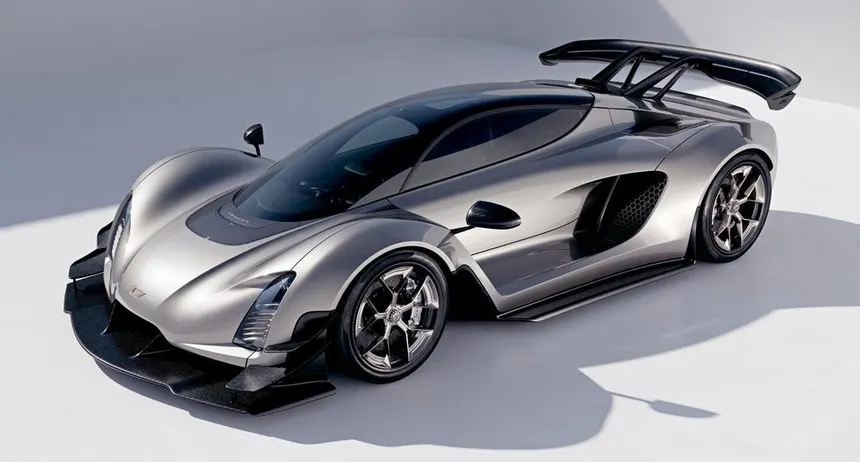
Czinger 21C: The Hypercar That’s Really a Billboard on Wheels
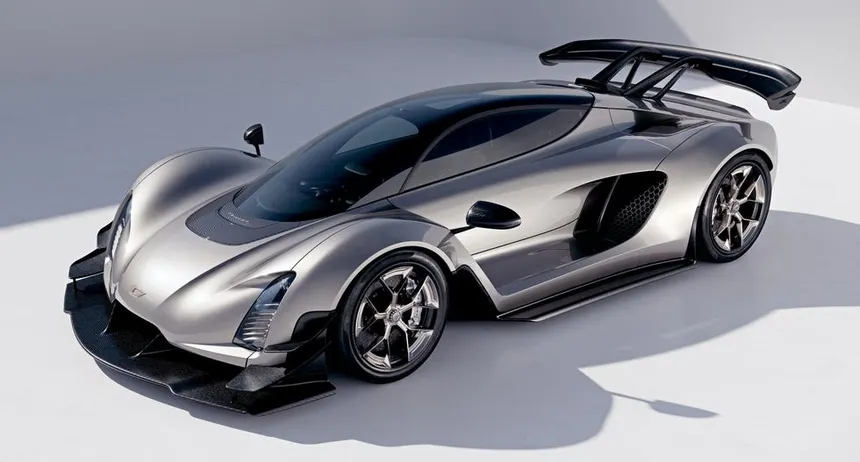
Spoiler up front: the Czinger 21C is the most expensive billboard ever built in America. Yes, it’s also a 1,250-horsepower hybrid that has taken the production-car record at Laguna Seca away from Koenigsegg, and we’ll get to every number. But stare only at the lap times and you miss what this thing was built to sell.
And it isn’t selling itself.
Kevin Czinger never wanted to build cars the Detroit way
The man behind it sounds like a character somebody made up. Kevin Czinger (say it like “zinger,” the spicy chicken sandwich) didn’t come out of the car business. He was a federal prosecutor and then a Goldman Sachs executive before he got stuck on a question most of the industry had quit asking: why is building a car still so expensive, so heavy and so dirty, more than a century after Henry Ford?
Ford’s answer, at Highland Park in 1913, was the moving assembly line, fed by stamping dies, casting molds and jigs made for one car and nothing else. It made the Model T cheap, and it locked the industry into a rule that still runs every plant from Dearborn to Toyota City: spend a fortune on tooling before the first good part exists, then crank out hundreds of thousands of identical units to pay for it. Czinger’s answer was to get rid of the tooling.
In 2014 he founded Divergent 3D in Los Angeles to make light, complex structures with no dedicated tooling at all. In 2019 came Czinger Vehicles, the car brand with his name on it. And in March 2020, with the Geneva show canceled, the 21C made its debut in London.
Notice the sequence: factory first, car second. My read, and I’m flagging it as a read rather than a fact, is that the car exists to sell the factory. Keep that in mind and the rest of the story makes sense.
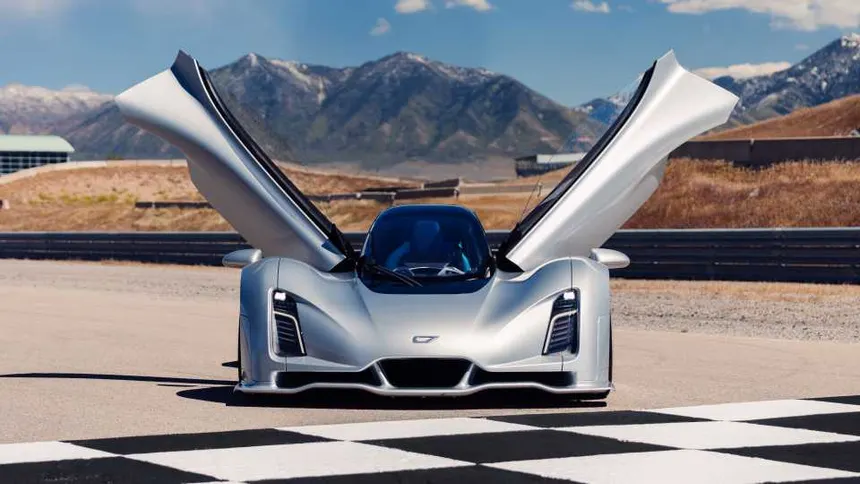
DAPS is what Divergent actually sells
The real product is called DAPS, the Divergent Adaptive Production System, a full software-and-hardware package meant to replace the way vehicles have been built since Ford. Roughly, it works like this. You tell the system what a part has to do (the loads it carries, where it bolts on, how much it’s allowed to weigh) and generative design plus topology optimization work out the shape that does the job with the least metal. A laser then fuses metal powder into that shape, one thin layer at a time, and robots assemble and bond the finished pieces.
Forget the “3D-printed titanium hypercar” line you’ve seen on YouTube. Divergent doesn’t run one magic alloy for everything. It picks the metal for each job, and it developed a lot of those alloys itself: some made to carry load, others made to crumple in a controlled way and soak up crash energy. Of the roughly 350 printed parts in the 21C’s chassis, most are aluminum alloys, and the gearbox case is printed in a proprietary aluminum-based alloy. Titanium makes a better poster than it does a spec sheet.
What comes out looks nothing like a normal car part. Divergent’s pieces look like bone, or coral: hollow, ribbed, organic, as if they grew instead of being drawn. That’s no accident. Topology optimization does roughly what evolution does, keeping material where the loads flow and deleting it everywhere else. A lot of those shapes can only exist because they were printed. You couldn’t cast them, and no CNC mill could carve the hollow insides.
The bigger deal is the money. A conventional car program begins with a staggering check: dies, molds, an assembly line laid out around one model. That’s tens or hundreds of millions of dollars, which is exactly why automakers hate changing a part halfway through a model cycle. With DAPS there’s nothing to retool. Change the file and the next part comes out different. Ten different parts cost about the same as ten identical ones, so variety stops being punished and a design can change at software speed instead of steel speed. For a business that measures a part revision in years, that’s heresy.
Czinger didn’t even like the printers he could buy. He found the metal 3D printers on the market too slow and too expensive for what DAPS needed, so Divergent worked with SLM Solutions on a twelve-laser machine, the NXG XII 600, built around its own cost and output targets. Competitors answered with multi-laser machines of their own. To get the factory he wanted, Czinger ended up dragging the whole metal-printing business forward with him.
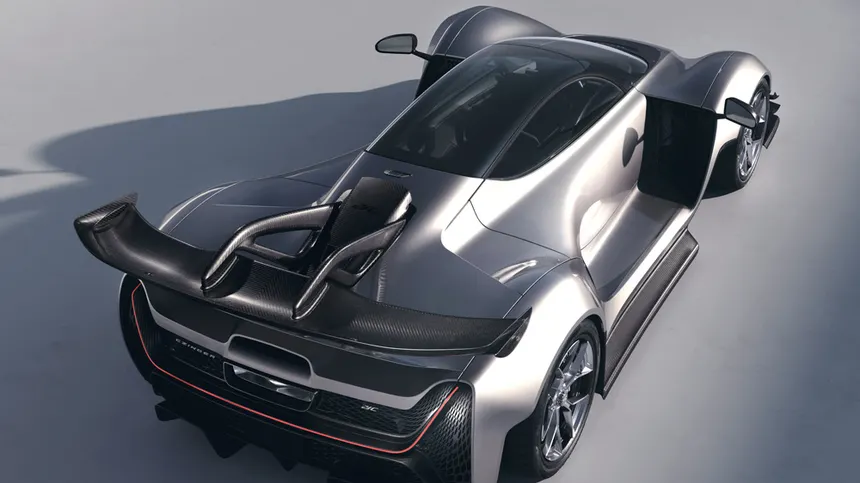
Why a hypercar and not a trade show booth
Czinger’s own engineers describe the 21C as a technology demonstrator, a rolling proof of what DAPS can build. That part is on the record. What I add on top is interpretation: that the 21C works first and foremost as a billboard, the loudest way anybody could think of to sell a new way of making parts.
Divergent had already tried the quiet route. In 2015 it showed the Blade, billed as the first car with a 3D-printed chassis. A genuine first, and almost nobody cared. It looked like a science-fair project, the press moved on in a week, and the lesson was brutal: proving a process works means nothing if the object doesn’t make anyone want it.
So the 21C went the other way. Put a printed suspension node on a booth at a manufacturing expo and a few engineers nod politely. Wrap a few hundred of them in a 1,250-hp hypercar, go chase lap records, and every magazine and YouTube channel on the planet runs your ad for free. The car is the megaphone. The bone-shaped part is the message.
It helps that the car looks like nothing else. The driver sits dead center, fighter-jet style, with the passenger directly behind in tandem. That makes the body very narrow, which is good for drag, but it also means the engine and gearbox have to be short enough to fit behind two seats in a row. Pretty much the entire layout grew out of that one packaging problem.
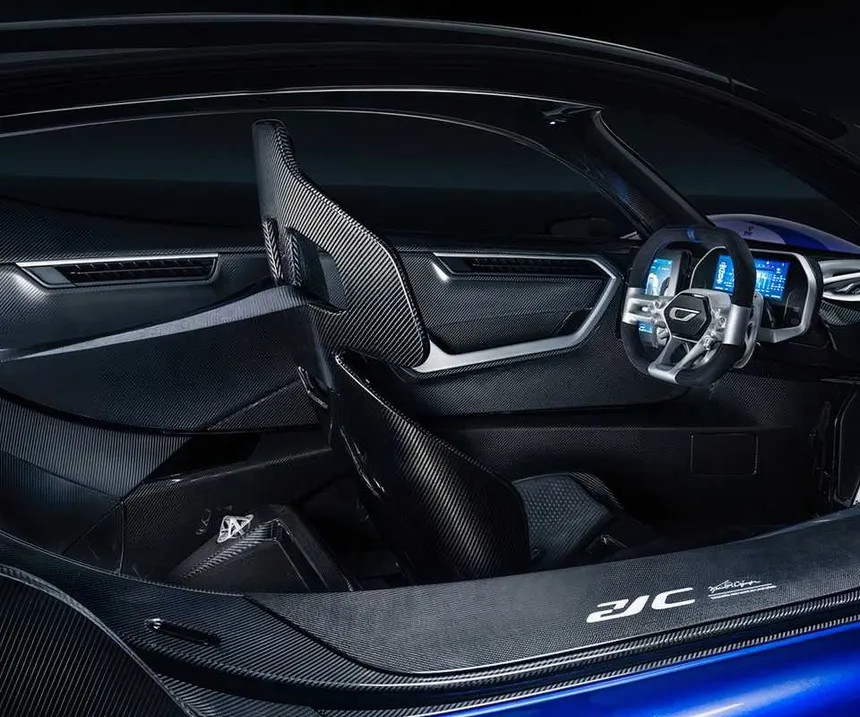
950 hp or 750 hp? Depends on the year
Behind the seats sits a 2.88-liter twin-turbo V8 with a flat-plane crank and an 11,000 rpm redline, which is superbike territory. Two power figures float around for this engine, and they get mixed up constantly. At the 2020 reveal, Czinger quoted roughly 950 hp from the V8 alone. Divide by 2.88 liters and you get the famous 329 hp per liter, which the company used to bill it as the most power-dense production engine on earth.
The production car tells a tamer story. The 2025-spec V8 is rated at 750 hp at 10,500 rpm on 91-octane pump gas, the same premium you’d buy at any California gas station. That works out to about 260 hp per liter, which is still deranged: the flat-plane 5.5-liter V8 in a Corvette Z06 makes 670 hp, or around 122 per liter. Total system output barely moved, from 1,233 hp at the reveal to 1,250, because the electric side covers the difference. Want more? The four-car Blackbird run is tuned for 101-octane fuel and makes 1,350 hp.
Czinger says the V8 is its own design. Several sources claim the block traces back to the Mitsubishi Lancer Evo four-cylinder, reworked into a V8. Nobody has confirmed it, so file that under rumor, not fact.
Up front, two axial-flux motors, one per wheel, run off an 800-volt system and add the other 500 hp. All in: 1,250 hp, 692 lb-ft and all-wheel drive.
The gearbox deserves its own paragraph, because calling it a race sequential sells it short. Xtrac, the British firm that supplies every gearbox in IndyCar, built a seven-speed automated semi-sequential with a twin-barrel shift system driven by 48-volt electric actuators instead of hydraulics. The two companies call it the fastest automated single-clutch synchromesh gearbox in existence, with shifts under 100 milliseconds. That’s their claim, and I’m passing it on as a claim.
The printed bit is the case. Czinger and Xtrac say it’s the world’s first topology-optimized, additively manufactured gearbox case, and it looks like it grew there, flowing straight into the rear structure. Buyers choose between a synchromesh version for the street and a straight-cut dog box for track days where every millisecond counts.
Czinger quotes a dry weight under 1,250 kg, about 2,755 lb. Put that next to 1,250 hp and you get one horsepower per kilo, the ratio engineers dream about and almost never hit. The company claims 0-60 mph in 1.9 seconds and 0-124 mph in 4.8. When Top Gear drove it, that worked out to roughly a second quicker than the Ferrari F80 to 124 mph, and at that speed a second is forever.
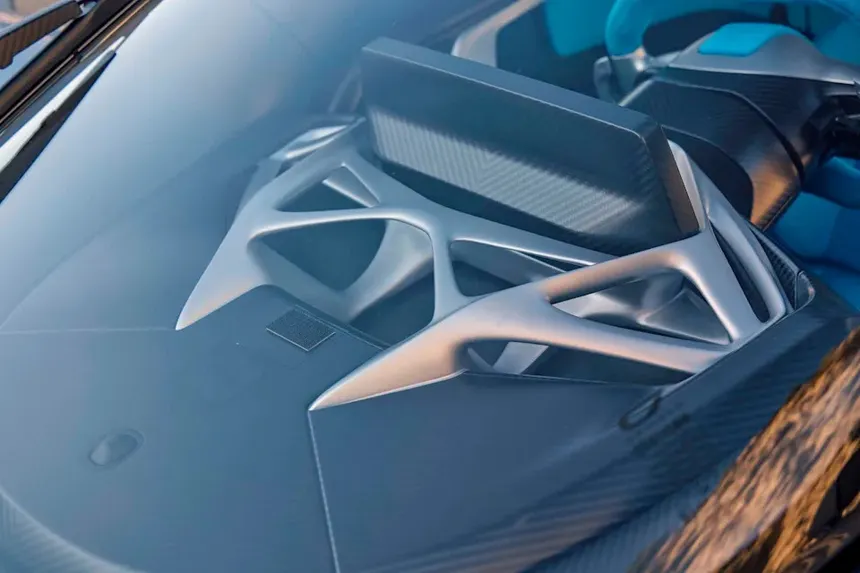
Laguna Seca, and the asterisk
Now a warning, because NEC puts numbers in context instead of swallowing them whole. Czinger lives on lap records and markets every single one, so it pays to know what each one measures. The Laguna Seca record is official, full stop. WeatherTech Raceway Laguna Seca lists the 21C in HDF (High Downforce) spec as its production-car record holder with a 1:22.30, set in December 2025. The track only counts laps run in private sessions it has approved, timed by certified equipment and under green flag the whole way; open track days and promo runs don’t qualify.
The road to that number was a headline machine. Czinger ran 1:25.44 in 2021, 1:24.75 in August 2024 and 1:24.39 in July 2025, trading the record with Koenigsegg’s Jesko along the way, then came back that December and chopped more than two seconds in one go. Every lap a press release, every press release a news cycle. When the thing you’re really selling is a factory, that’s about the cheapest ad campaign going.
The fine print is that it’s a class record, and the track itself says records are recognized by class and can’t be compared across categories. IndyCars have been lapping under 1:08 there since Hélio Castroneves put his Penske on a 1:07.722 in 2000. The 21C’s record is legit, and the car is among the fastest things you can register for the road. What deserves the asterisk is the headline that just says “lap record” and lets you assume nothing has ever gone through the Corkscrew quicker.
The factory is the business
Here’s what makes the 21C worth more than its lap times. By 2024, Divergent was printing parts for Bugatti, Aston Martin, McLaren, SpaceX and the military at the same time. The first carmaker to bolt a Divergent part onto a car was Aston Martin, with a fully printed rear subframe on the DBR22. McLaren followed with the W1, and Bugatti with structures on the Tourbillon. The same process that makes this hypercar’s chassis makes hardware for rockets and defense programs, and Divergent has poured close to a billion dollars into DAPS to get there.
That’s the play as I see it, and it’s one of the smartest I’ve watched in years. To be fair to Czinger, the 21C is also a real product: 80 cars planned across road and track versions, customers writing real checks, and nobody has shown it was conceived purely as a marketing stunt. The company certainly doesn’t pitch it that way. But build the most desirable, most outrageous object you can, a tiny-volume, eye-wateringly expensive, savage hypercar, and what ends up in the shop window isn’t the car. It’s the machine that made it. The car is the bait. The factory is the business. And it worked exactly where the old Blade flopped: to get a look at the factory, the world first had to stare at the car.
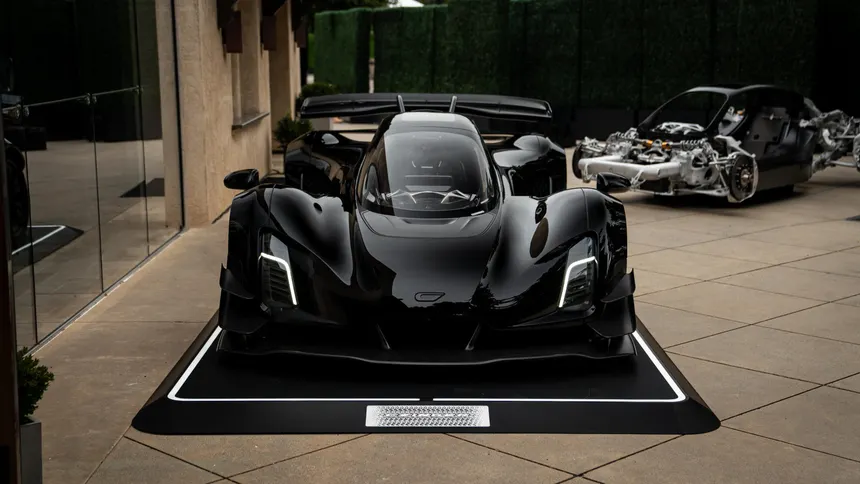
Bone-shaped parts everywhere
I’ve spent a big chunk of my life at an assembly bench, fitting parts made the way they’ve always been made: cast, stamped, machined, bolted together. Then a former prosecutor from California asks a computer what a suspension arm should look like, prints it out of metal powder in the shape of a bone and has a robot glue it in. I can’t tell you whether that’s the future or just a very expensive preview of one. I can tell you that the first time you see one of those parts up close, something in your head shifts.
The 21C is a spectacular car. But the 1,250 hp isn’t the part that’ll last. A few years from now, the car in your driveway, the jet you board at LAX or the rocket you watch climb off the pad at Vandenberg may carry a bone-shaped part born from the same idea. The 21C isn’t the product. It’s the ad, and rarely has an ad been this damn good.
Check you’re still alive.