Divergent 3D: The Hypercar Was the Bait, the Business Is Missiles
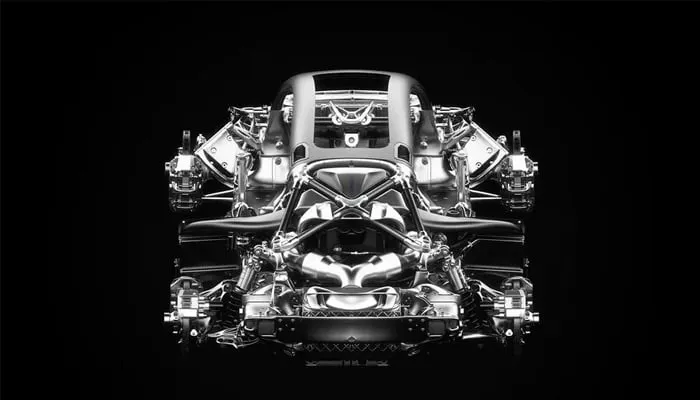
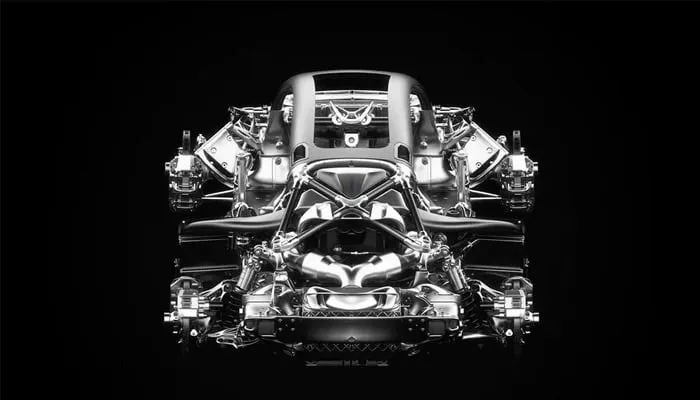
The Czinger 21C dropped jaws. 1,250 horsepower, parts that look like bones, a two-million-dollar missile printed layer by layer. Everybody looked at the car.
Nobody looked at what stood behind it.
And behind it was the real plan. That car wasn’t built to be sold. It was built to make you look. And while you stared at the hypercar, the company that fathered it, Divergent, was quietly assembling something far bigger. Today that company is worth 2.3 billion dollars, and its daily bread isn’t sports cars. It’s missile structures for the United States military.
The car was the bait. This is the story of what was on the hook.
A man who didn’t come from cars
Kevin Czinger is not a car guy. His CV refuses to sit in any box: Yale football star, then federal prosecutor, then Goldman Sachs executive. That’s not the recipe for a carmaker. It’s the recipe for something else.
It’s the recipe for a man obsessed with a question the industry can’t be bothered to ask: why is building a car still as expensive, as heavy and as filthy as it was a century ago. And the answer he gave wasn’t to design a better car. It was to bin the entire way we manufacture.
In 2014 he founded Divergent. It wasn’t his first attempt to break into electric vehicles, but it was the one that changed everything. Because this time he didn’t want to build a product. He wanted to build the factory.
What DAPS is, and why it keeps an industry awake
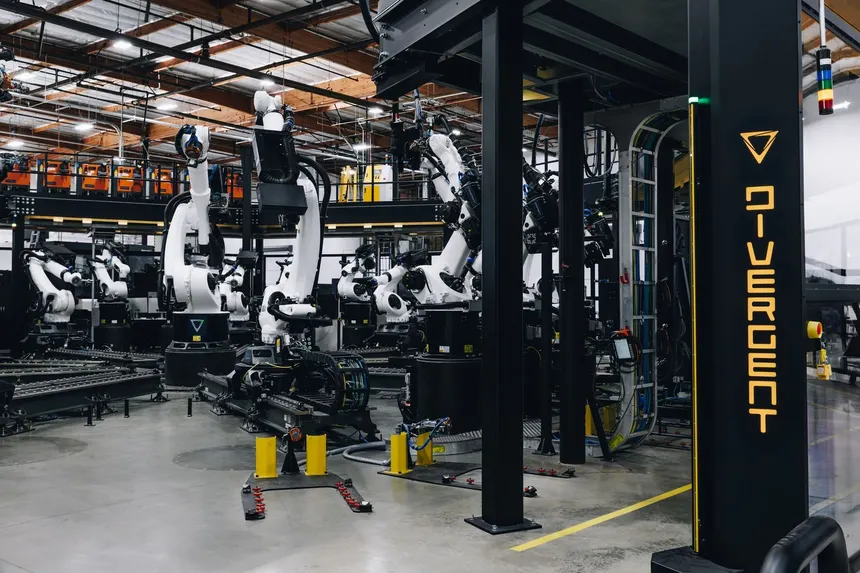
Divergent’s product is called DAPS, the Divergent Adaptive Production System. To see why it matters, you first have to understand how a normal car gets built, because that’s exactly what DAPS came to kill.
A conventional car starts with a mountain of money before the first good part exists. Casting moulds. Stamping dies. Assembly lines purpose-built for one model. Tens or hundreds of millions, recouped only by making hundreds of thousands of identical units. Which is why the old industry hates change: every tweak forces costly retooling. The system rewards the big, the uniform, the untouched-for-years.
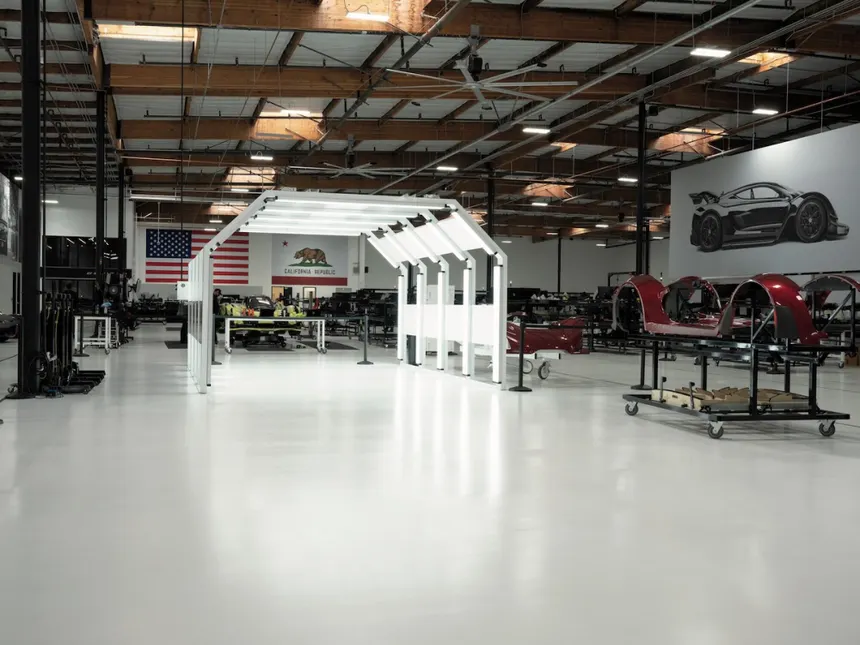
DAPS turns it inside out. It’s a complete digital factory. You feed it a part’s requirements, the stiffness it needs, the loads it carries, how it behaves in a crash, where it mounts, and the software, using AI and generative design, computes the optimal shape to meet all of that with the least material. Then that shape gets printed in metal, layer by layer, on laser machines. And robots assemble it by bonding, no welding, no fixtures.
No moulds. No dies. No dedicated lines. You change the file and the next part comes out different. Making ten different parts costs almost the same as making ten identical ones. The economics stop punishing variety and iteration, which is precisely what old-school manufacturing has never delivered cheaply.
Czinger has a grand name for what this unlocks. He calls it the “4D Age”: design, manufacturing and assembly fully digitised and sold as a service, products dematerialised so they use less material and less energy, production distributed across regional factories rather than concentrated in a handful of vast plants. Strip away the buzzwords and the idea is genuinely radical. A factory that isn’t tied to one product. A plant that can switch seamlessly from making one vehicle model to a completely different one, because the “tooling” is just software. In theory, it’s the end of the assembly line as we’ve known it for a hundred years.
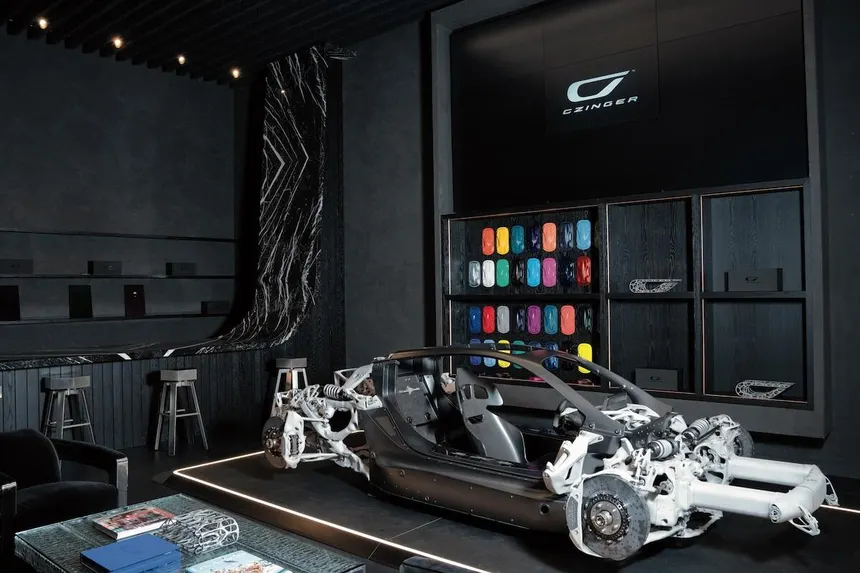
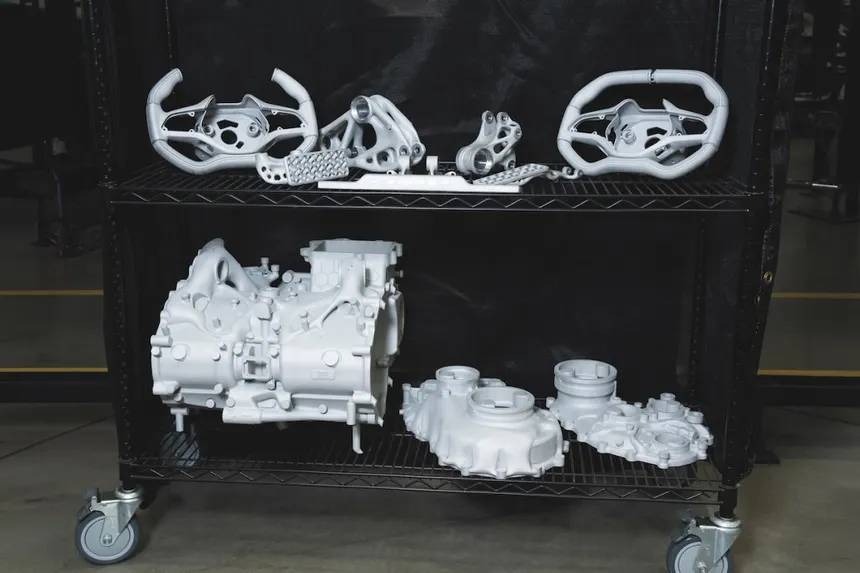
The parts that come out are unforgettable to look at. They don’t look like car parts. They look like bones. Hollow structures full of ribs, as if nature designed them rather than an engineer with a ruler. And in a way that’s true: the algorithm puts material only where it’s needed and strips it from where it isn’t, which is what evolution has done for millions of years.
There’s a detail in all this that tells you everything about Czinger’s ambition. When he built DAPS, he looked at the metal 3D-printing market and didn’t like what he saw: machines too slow and too expensive for what he needed. A half-invented industry, in his words. So instead of settling, he convinced manufacturer SLM Solutions to jointly develop a twelve-laser machine, the NXG XII 600, spec’d to fit the cost and rate structure of DAPS. That move dragged the rest of the sector along: competitors scrambled to build their own multi-laser machines to keep up. Divergent didn’t just build itself a factory. It shoved the entire metal-printing industry forward so it could have the factory it wanted.
The car was the loudspeaker
It wasn’t the first time Divergent tried to grab attention with a car. Back in 2015 it had shown the Blade, a prototype that made history as the first car in the world with a 3D-printed chassis. On paper, a bombshell. In practice, a damp squib: a crude prototype with the face of a lab experiment, and the world glanced at it and got on with its day. The tech was there. The wrapping wasn’t. The desire wasn’t.
The 21C fixed that at the root. It was born as a technology demonstrator, an experiment to show what DAPS could do. But this time the demonstrator went down so well they decided to actually build it and create Czinger Vehicles, a sister company sharing space with Divergent.
The logic is brutal. They could have printed a part and taken it to an engineering trade show. Nobody would have looked. Instead you print half a 1,250-horsepower hypercar, break records, drop it into the magazines, and the whole world stops to ask who on earth made that, and how. The car is the loudspeaker. The bone-shaped part is the message. The spectacle works for the engineering, not the other way round.
And it worked. God, did it work.
When the client stopped being Ferrari and became the Pentagon
Divergent’s first customers were exactly who you’d expect: the aristocracy of the sports car. Aston Martin commissioned the rear subframe of the DBR22, printed whole. McLaren used the tech for parts of the W1. Bugatti signed up for Tourbillon structures. The dream of anyone who loves cars: your technology inside the most exclusive marques on the planet.
It could have stopped there. A luxury supplier, an elegant Tier One for seven-figure cars.
But in 2022 Divergent started working for General Atomics, and there the story swerves in a way that changes everything. Because it turns out a factory that can print optimised, light, complex structures with no tooling isn’t only good for cars. It’s good for aircraft. For rockets. For missiles.
And it fits like a glove. A missile is exactly the kind of part DAPS does better than anyone: relatively short runs, complex geometry, obsession with weight, the need to change a design fast without rebuilding a whole factory. Everything that costs the old industry a fortune, DAPS solves by changing a file. The system designed to make cars cheaper turned out to be the dream tool for building weapons on demand.
Today Divergent holds contracts with Lockheed Martin, Raytheon, General Atomics and General Dynamics. The big names of the American arms industry. In 2025 its revenue grew more than fivefold, it added over 200 new aerospace and defence part numbers in just half a year, passing 600 unique parts across all sectors, and raised a 290-million round that valued the company at 2.3 billion dollars. Part of that money is going into a new factory in Oklahoma.
And in case there’s any doubt about where the business sits now, Lukas Czinger, Kevin’s son and chief operating officer, said it himself: metal missile airframes are, in his words, the company’s bread and butter.
The bread and butter. They started with the most desirable car on earth and today they eat off weapons. The hypercar didn’t become a sideshow by accident, it became one because the sideshow was always the point, and the main stage was somewhere the cameras weren’t pointing.
Why this matters more than any car
Here’s the part worth actually thinking about.
What’s fascinating about Divergent isn’t that it makes beautiful hypercars. It’s what its work means. The same technology, the same software, the same printer, makes the subframe of a collectible Aston Martin in the morning and the airframe of a missile in the afternoon. The line between building ludicrously expensive toys and building weapons has become a line of code. Change the file, change the world.
Kevin Czinger talks about “rebuilding American manufacturing,” about a network of regional factories, about democratising the ability to make things. Sounds lovely in a press release. But look where the project landed: in the war machine of a superpower. The pitch was ecology and efficiency; the money is in defence. And I don’t say that as a moral rebuke, I say it as a cold observation of where gravity pulls when there are billions on the table. The idealist of clean manufacturing ends up making missile airframes because that’s where the real money is.
And for the car world, a question that stings is left behind. For years we were sold that 3D printing would democratise the automobile, bring small factories, personalised cars, the end of the giant assembly line. Divergent had the technology to do it. It has it. And it chose to take it to Aston Martin, to Bugatti and to the Pentagon, not to your garage or your neighbour’s car. The tool that was going to put manufacturing within everyone’s reach ended up serving the most exclusive and the most classified. Once again the attainable dream that stays up top. Real road cars, the ones people actually buy, still come out of moulds and dies like fifty years ago, because for runs of hundreds of thousands the old factory still wins. The revolution exists, but for now it isn’t for you.
That’s the lesson Divergent leaves, and almost nobody tells it, because everyone stayed staring at the pretty car.
What’s left
Divergent pulled off the perfect magic trick. It built the most eye-catching object imaginable, a two-million-dollar hypercar that looks sculpted by the future, so nobody would notice what it was assembling behind it. And behind it wasn’t a car factory. It was the industrial skeleton of the next generation of weaponry.
The 21C was never the product. It was the neon sign over the door of a business that turned out to be far more serious, far more profitable and far darker than it looked.
A few years from now, the bone-shaped part you admire today in a show-stand hypercar could be flying inside something with a warhead on the nose. Same machine. Same software. Same titanium bone. Only the file changes.
Check you’re still alive.